Food & Drink NOVEMBER 15, 2013

10 Hot Plates

Rumors, openings, & coming-soons in San Diego

10 Hot Plates
10 Hot Plates

The Flying Pig

1

The Palm Restaurant is closing this month, and will reopen as a seafood spot under new ownership in 2014.

2

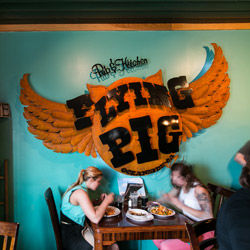
Oceanside gastropub The Flying Pig will soon open a second location in Vista.

3

Coronado will soon get a new steakhouse called Stake from the same group behind Leroy’s, Mootime Creamery, and Lil’ Piggy’s Bar-B-Q.

4

Mission Hills is on its way to becoming home to a restaurant row again, with The Patio on Goldfinch set to debut in the ’hood in early 2014.

5

After being open only a year, Block 16 is closing to make way for Moonshine Flats from the same owner, with a huge stage to host country rock and dance acts.

6

Gaslamp institution Fred’s Mexican Café is closing, as is the neighboring Marble Room. The combined spaces will become a new restaurant from the owners behind Fluxx and Sidebar.

7

Alfredo and Felipe Sandoval will launch their first food truck enterprise—Mercadito Wheels—in San Diego this fall.

10 Hot Plates

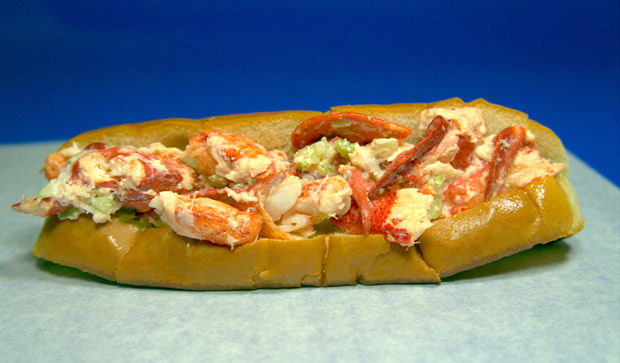
Lobster roll

8

Meatball Cucina has closed its location on Broadway downtown.

9

Locals’ favorite Besta-Wan Pizza House is expanding to a second, larger location in Carlsbad.

10

Lobster West in Encinitas has launched a new happy hour with $2 off beer and wine and $4 mini lobster rolls.

Subscribe to our newsletters

Select Options

By subscribing you confirm that you agree with our Terms and Conditions and Privacy Policy.

Food & Drink JUNE 5, 2026

From Laguna Beach to Leucadia: Oto Sushi Lands in SD

The sustainability-focused sushi concept offering traditional favorites as well as fusion specialties will open in North County this summer

From Laguna Beach to Leucadia: Oto Sushi Lands in SD

Encinitas nigiri fanatics, I bring you good tidings. Oto Sushi is slated to open in late July. After nearly two decades of experience in operations for Tao Group Hospitality and Ace Hotel, Ash Cintas opened the first Oto in Laguna Beach in 2024. She focused on from-scratch dishes, fish sourced from Smart Catch and Seafood Watch–approved suppliers, and a wide swath of gluten-free options.

Year one worked, so she started eyeing her ideal second spot—North County San Diego. “I grew up spending time in San Diego visiting family, and my grandfather built a fishing business here, so the area has always felt familiar and meaningful to me,” says Cintas. 

Cintas’ twin sister Alysha Rabb spearheaded the Japanese coastal design of the new Oto, which takes over the former Mrkt Space. The 3,200-square-foot eatery flows from the indoor dining room to large outdoor patio, as well as a private dining room—a total capacity of 95. Chef Connor Mathison has worked as a sushi chef for over 15 years at venues like Bamboo Sushi SW in Portland, Oregon. His menu includes classic sushi offerings like nigiri and sashimi, specialty rolls, bento boxes, tempera, karaage, Wagyu burgers, and robotayaki.

Robatayaki, sometimes called robata, is a method of slow-grilling meat, seafood, and various vegetables over premium Japanese binchotan charcoal. Basically, it’s the gold standard for grilling, thanks to its intense, clean heat that imparts a smoky, savory char on the outside and a rich, tender inside. 

“One of the defining characteristics of Oto is that much of our sushi is served yakumi-style, meaning it arrives already seasoned with ingredients designed to complement the fish rather than relying on soy sauce,” Cintas explains.

Courtesy of Oto Sushi

There will also be a large number of vegan and vegetarian dishes, plus scratch cocktails with housemade syrup, fresh juice, sake, Japanese whiskey, wine, and beer selections curated by beverage partner Gavin Grum. Cintas says she hopes to continue expanding across Southern California, ideally opening six to eight locations in different coastal communities.

“The goal isn’t to build the biggest restaurant company,” she says. “Encinitas is the next step in proving that model can scale.”

Oto Sushi opens July 2026 at 782 N. Coast Hwy 101 in Encinitas. Initial opening hours are from 11:30 a.m. to 9 p.m. daily.

Courtesy of Silver Hoof Creamery

San Diego Restaurant News & Food Events

Silver Hoof Creamery Coming to Old Town

First more sushi, now more ice cream? Someone pinch me. Later this June, Silver Hoof Creamery will open in Old Town at 2548 Congress Street, Suite G, bringing artisanal soft serve, waffle tacos and waffle bowls, sundaes, and milkshakes to the Old Town Urban Market food hall. Everything is made with 100 percent California dairy milk (except for the dairy-free options, of course), and the small-batch menu of flavors ranges from dark chocolate soft serve to blueberry lavender milkshakes, matcha garden sundaes, and the signature Silver Hoof sundae made with vanilla swirl soft serve, caramel drizzle, topped with candied pecans and various candy gems and topped with whipped cream. Personally, I’m a sucker for strawberry, so I’m looking forward to giving the strawberry fields milkshake a slurp once the doors open. 

Beth’s Bites

  • The San Diego Natural History Museum (a.k.a. The Nat) tends to make good use of its rooftop space with events like Nat at Night every Friday during the summer, but now it’s getting into the brunch game as well. Brunch at the Nat kicks off Sunday, June 14 with Wolf in the Woods taking over the menu from 10 a.m. to 2:30 p.m., followed by Hash House A Go Go (July 12) and Wolf in the Woods making a sophomore appearance on August 9. (Yes, there will be Bloody Marys. How could there not be when Johnny Rivera is behind the bar?)
  • North County isn’t just getting more sushi—it’s getting a sweets upgrade as well. Desserts By Clément, the Pacific Beach-based French pastry shop is opening two new locations this summer in Del Mar and Vista. Owner (and French native) Clément Le Déoré has made a name for himself from his super realistic (and absolutely adorable beyond belief) desserts like these “Petit Bears” and fruit collection, but will also offer traditional pastries like croissants, macarons, kouign-amann, and chouquettes. There goes my summer bod… (just kidding). 
  • Non-alcoholic options are gaining major steam on drinks menus across the country, and the gang at Cesarina and Elvira are cashing in. Both concepts just released new cocktail menus to be fully 50 percent alcoholic, 50 percent non-alcoholic so people can easily jump from one to the other, if they so choose. (Or just stick with one category—it’s just nice to have options.) Bar lead Sydnee West’s concoctions range from the Super Fico at Cesarina (made with porcini-infused rye, Nonino Amaro, Averna, and clarified fig demerara) on the hard side to the Roma Esotica at Elvira (with NA gin, pineapple, passion fruit, and lemon) on the soft side.  As someone who actively enjoys zebra-striping (going back-and-forth between cocktails and mocktails), it’s very refreshing to have curated choices on either end that aren’t an afterthought.

Listen Now: The Latest in San Diego’s Food and Drink Scene

Have breaking news, exciting scoops, or great stories about new San Diego restaurants or the city’s food scene? Send your pitches to [email protected].

Beth Demmon

About Beth Demmon

Beth Demmon is an award-winning writer and podcaster whose work regularly appears in national outlets and San Diego Magazine. Her first book, The Beer Lover's Guide to Cider, is now available. Find out more on bethdemmon.com.

Features JUNE 5, 2026

The Best New Restaurants in San Diego

After 20 years and thousands of meals as a food critic, San Diego Mag Content Chief Troy Johnson picks the city's top standouts

The Best New Restaurants in San Diego

Dora Ristorante

His ascent has been stealth and humble, which fits the man. When Liberty Station was struggling to convince people it existed over a decade ago, Sicilian chef Accursio Lota’s food at Solare Ristorante was a tractor beam for food people who sniff out hidden talent like truffle dogs. In 2017, he won the World Pasta Championship (a legit competition from global pasta brand Barilla) and struck out on his own, opening his and his wife’s from-scratch pasta trattoria in North Park (Cori Pastificio). Gambero Rosso—the Italian version of Michelin, the most respected source—has clamored for the restaurant since it opened, naming it “New Opening of the Year” and this year giving it their highest award, “Tre Forchette” (Three Forks), only knighted on a handful of US restaurants.

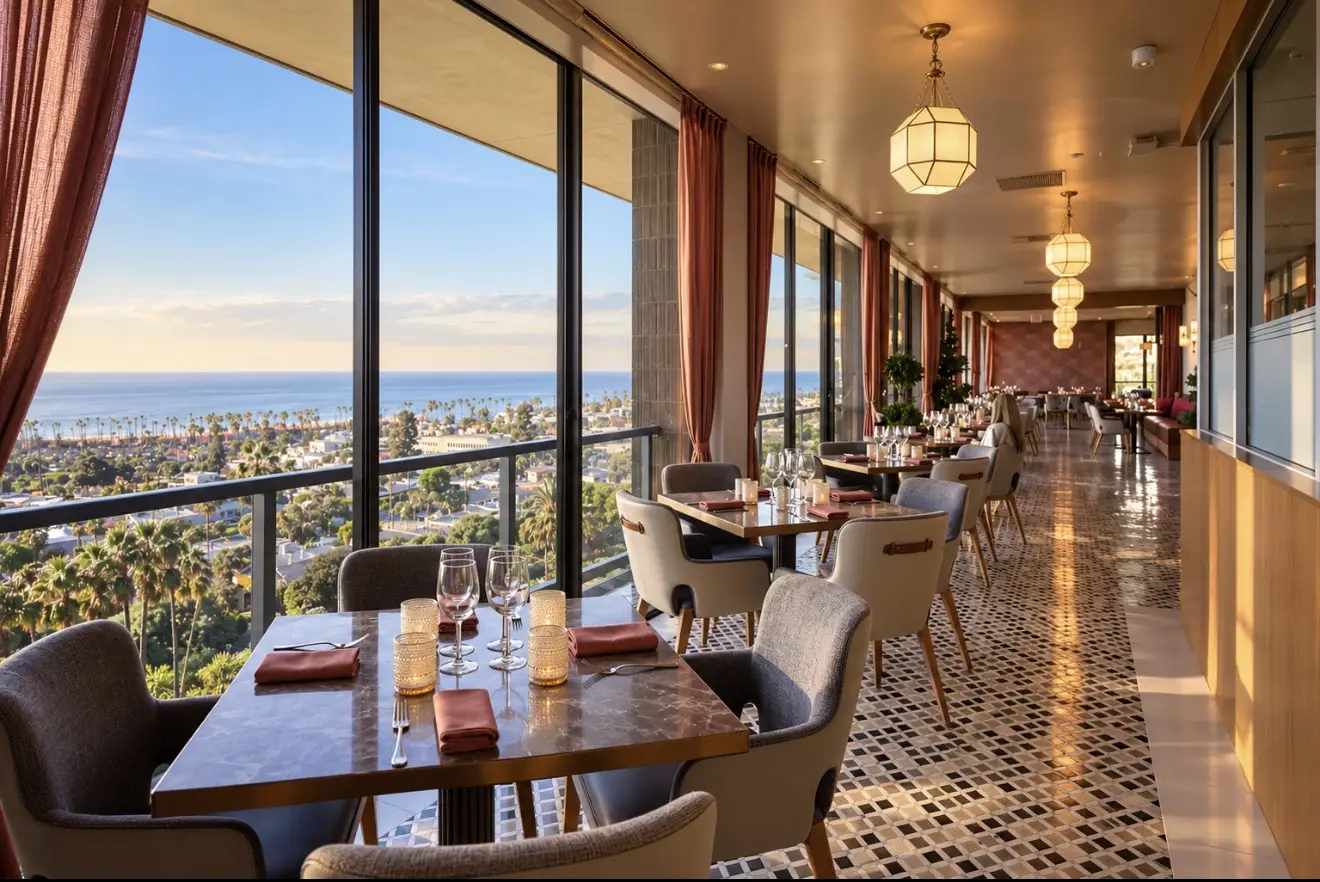
So this year, Lota opened his grandest thing—Dora Ristorante—and it pulls everything together. Steps from San Diego’s world-class theater, La Jolla Playhouse, it’s laden with brass and large-format murals, tile work and mosaics—like the one on the wood-burning oven that blisters, chars, and smokes a good portion of the menu. Their housemade focaccia is a new street drug (try it with the puttanesca, his grandmother Dora’s recipe). The olive oil-cured sardines make “sustainable seafood” and ethics not taste like a compromise. Dora might finally be the one to solve the “where do I eat before the world premiere at LJP” dilemma.

Courtesy of Bacari

Bacari

The yuzu-colored building that helped build North Park’s modern food culture is alive again. Years ago, the ornate French Quarter–inspired spot on 30th Street was home to chef Matt Gordon’s Urban Solace (duck macaroni and cheese). Then it laid conspicuous and fallow until a few months ago when Bacari took it on. It’s an LA transplant, but they’re proving forgivable of that trespass. Chef and co-founder Lior Hillel cooked at Jean-Georges before opening the first of this Venetian-style restaurant in 2008 with brothers Danny and Robert Kronfi (Bobby started his food venture with a pop-up dinner series in his college apartment at USC).

For dinner, it’s house-baked bread, crudo and shrimp ceviches, Mediterranean street corn, lamb hummus, shawarma, and glazed pork belly. Weekend brunch is bellinis and French toast and burekas (famed Jewish stuffed puff pastry), and chef Noa’s cauliflower (caramelized with chipotle). It’s Italian-ish with a heavy dose of pan-Mediterranean and Middle Eastern. Doesn’t hurt that they left the iconic exterior as is, adding chandelier-farmhouse insides with charm that echoes two of the city’s dearly departed (Jayne’s Gastropub, Cafe Chloe).

Courtesy of TRUST Restaurant Group

À L’ouest

Much tolerance for friends who hate mussels because they look too biological. But if they manage to dislike À L’ouest’s—served over ice with vadouvan curry aioli and chili crisp—then you’ve successfully identified your brokemouth friend and should try bicycling or crafting with them to bond instead of eating in public places. It should be on everyone’s short list for dish of the year.

Chef Brad Wise and his team have earned their rep over multiple concepts—Trust, Fort Oak, Cardellino, Wise Ox, Rare Society. But he’s been eyeing this corner of North Park since before he opened his first (Trust, in 2016). North Park has been rising for a while, and À L’ouest feels like the missing piece—an indoor-outdoor brasserie stunner on the marquee spot of 30th and University, which long sat boarded up and vacant like a neighborhood missing a front tooth.

As with his other concepts, woodpile is king; smoldering red oak boosts the flavor of just about everything. Get the spätzle with braised rabbit, maitake mushroom, secret de compostelle (the famed Basque sheep’s milk cheese), and black truffle. Or the chicken liver parfait with persimmon, fennel aigre-doux (sweet-sour), and chives on toast. Or, like everyone else in there—the steak frites.

Photo Credit: Eric Wolfinger

Fleurette

Chef Travis Swikard’s first solo restaurant, Callie in East Village, proved how details can make the most composed of us blubber a little in fine places—from citrus left in ovens overnight to blacken and transform, to the Scripps Oceanographic Institute saltwater he keeps his spot prawns thriving in until ordered, to the days-long fermentation and stone-ground dukkah that turn carrot shavings into a statement piece.

Now, he’s focusing on French food with a fitter, less buttery San Diego heart. Fleurette is his doubling-down, a SoCal riff on the food he learned under mentors Daniel Boulud and Gavin Kaysen. The French gave us the mother sauces, and Fleurette showcases the lightest and brightest evolutions. Like the anchoïade on his beef tartare, which uses famed Italian anchovy sauce colatura di alici, mixed with cured egg yolks over tiny, uniform-sized cubes of raw, USDA Prime Flannery beef.

There is soubise (onion sauce), a sauce vierge (tomatoes and herbs), and a fennel marmalade on the duck liver and bone marrow pâté. Although the structure is stunningly pure glass, Fleurette’s in a location—an office park on the edge of La Jolla, near UTC—that few chefs would be able to pull off. But Swikard’s Michelin-bound house of saucework pulls hard.

Food from San Diego's best taco shops including Cocina de Barrio
Photo Credit: Lauren di Matteo

Mesa Agrícola

The Escondido taqueria from Rosarito-born-and-trained chef Juan González and farmer Megan Strom took the county by storm this year. The married couple started as a popup four years ago, hosting farmside dinners before taking up residency at Vino Carta in Solana Beach. Strom was working a small, 5-acre heirloom bean farm in Valley Center owned by Mike Reeske (aka “The Bean Man”) when he retired and sold them the plot.

The huge bonus was that the sale included Reeske’s famed collection of beans, curated over 20 years. The couple planted other things and now grow much of what they serve in the form of tacos and burritos at a permanent spot in Escondido: Mesa Agrícola.

The menu’s bone simple: housemade tortillas in your choice of taco or burrito norteños (which are smaller, like burritos de hielera) that change constantly and often topped with guisados (Mexican braises or stews) like lamb and garbanzo, birria, chicharrón, mushrooms al ajillo, rajas, you name it. And, of course, some of the best beans honoring the local legend of Reeske.

Courtesy of Lucien

Lucien

San Diego is now the recipient of national food buzz. The dark ages—during which we learned how to sear ahi and asada some carne and called it a day—felt prolonged, and they were. The problem was never ingredients. San Diego County always had the best raw dinner materials (more small farms per capita than any county in the US, seafood right there); it just didn’t have a critical mass of highly trained chefs to do them justice. Easy to understand the chef dearth.

For a very long time, if you wanted to be a serious chef you had to go to the restaurant superplexes of New York, San Francisco, or Chicago (which imported their raw ingredients from places like San Diego). But now—credit farmers or Alice Waters or Dan Barber or Michael Pollain or the reasonable conclusion that food picked right here tastes better than food picked way over there—some of the most talented chefs are moving to the ingredients, not the other way around.

In San Diego, we got Richard Blais, Swikard, and now Elijah Arizmendi, who cut his teeth in Vegas with Joel Robuchon (plus Boulud and Thomas Keller) and was chef de cuisine at NYC’s L’abeille when it got its first Michelin star. His debut restaurant in La Jolla—with partners Brian Hung and Melissa Yang—is a dark, moody multicourse tasting-menu hideaway with one of the best egg dishes in the city.

Troy Johnson

About Troy Johnson

Troy Johnson is the magazine’s award-winning food writer and humorist, and a long-standing expert on Food Network. His work has been featured on NatGeo, Travel Channel, NPR, and in Food Matters, a textbook of the best American food writing.

Everything SD JUNE 5, 2026

The Best Restaurants in San Diego 2026

We asked, you voted, and food critic Troy Johnson chose his favorites—these are the top food and drink people and places in the city

The Best Restaurants in San Diego 2026

Some keep lists of favorite books, of quotes, of enemies whose time shall come. At SDM we keep vast, nuanced, hotly debated lists of the best food and drink in the city. Menus are our smut novels. From Michelin stars to mom and pops, our list constantly evolves over hundreds of new bites tried every year. Here’s the 2026 list from food critic Troy Johnson and 129,000-plus votes from our readers, who really, really know their food.

Scroll down for the full list of Best Restaurant winners

Troy Johnson

About Troy Johnson

Troy Johnson is the magazine’s award-winning food writer and humorist, and a long-standing expert on Food Network. His work has been featured on NatGeo, Travel Channel, NPR, and in Food Matters, a textbook of the best American food writing.

Studio S APRIL 15, 2026

10 Years In, Puffer and Malarkey Are Just Getting Started

A look back at the risks, grit, and instincts behind the local restaurant powerhouse

In this city, chef Brian Malarkey and restaurateur Chris Puffer are kind of like peanut butter & jelly, tacos and Tuesday, Padres and Petco—they just go together. This month, the duo celebrates 10 years of partnering on some of San Diego’s top restaurants including their first venture, Herb & Wood.

To celebrate this milestone, we stepped back and revisited their journey becoming some of this city’s most successful restaurateurs.

But first, let’s go back to the beginning. The duo met at Oceanaire in 2007 where they both worked. Malarkey was still riding the high from his stint on Top Chef Season 3 where he won runner-up. He was a great chef, Puffer recalls, if not a tad arrogant. Whatever he was doing, though, it worked. Sales doubled under his watch.

In 2009, Malarkey was approached by some patrons to start what would become Searsucker. He knew he wanted Puffer to be his partner. They had great chemistry and loved hospitality and food. “We both came to this with a bit of a chip on our shoulder,” says Malarkey. “We wanted to prove it to other people that we know what we’re doing.”

Courtesy of Puffer Malarkey Collective

Searsucker, Gabardine, and Herringbone (under the Fabric of Social Dining restaurant group) were born through the new partnership. But in 2012, they sold their concepts to Hakkasan and soon partnered on a new lease.

That building would eventually become Herb & Wood. “We were going to do it differently this time around,” says Malarkey as he reflects on Wood’s early days. “And we [wanted to] build it to last.”

The vision: Great food. Great music. Great service. It’d be a place where diners would let go, put their phones down, and be fully present to enjoy a meal together. When they walked into 2210 Kettner Blvd, they knew they had found their spot. 

The only problem was that, at the time, that area of Little Italy was still severely underdeveloped. In a 8,500-square-foot space, they were going to have 230 seats to fill. “It may as well have been on Mars,” says Troy Johnson, San Diego Magazine publisher, content chief, and the city’s longtime food critic.

Courtesy of Puffer Malarkey Collective

And, of course, there were the naysayers. The prevailing feeling in the dining world was, “Let’s see what these f**king idiots do,” recalls Malarkey. The duo let all the noise be noise. In fact, the noise fueled them. “We weren’t going to cater to the haters,” Puffer says.

Their next hurdle would be to tackle the restaurant’s design. “There was nothing. It was literally a box,” says Puffer of the former space. Design teams were too expensive or didn’t quite get their vision—no, they didn’t want exposed beams or wooden tables made from reclaimed barns. “Then, Puffer was like, ‘f**k it, dude, I’m going to design this restaurant.’”

Having never really designed something like this before, he decided not to work in the programs that most professionals use to create their layouts. 3D mockup? Didn’t need it. CAD? That’s what a paper and pencil are for.

Courtesy of Herb & Wood

“It was all in my head,” he recalls. “I had this moment where I was like, ‘If I died right now, no one would know where any of this shit goes.’”

“Yeah, it made no sense,” Malarkey says.

And it still doesn’t if you hear him explain it. A mishmash of vignettes from the inner workings of his memory bank, evoking everything from Mississippi riverboats to Eiffel tower ironwork, Kensington home façades, an old theater he frequented, and a canoe, because why not? Yet somehow, it all worked.

“It’s a sense of nostalgia,” says Puffer. “People might say, ‘Oh, my gosh, this feels good’ and they don’t realize it reminds them of the time they were in Paris.’”

“We don’t play trends,” Malarkey says. “We play timeless.”

Courtesy of Herb & Wood

Over the course of many years and plenty of trial and error, the partnership has continued to thrive. And, the Puffer Malarkey Collective has found its sweet spot within their restaurants: The service had to be kind and unpretentious and the food had to come out quick, delicious, and consistent. “Consistency is key!” says Puffer.

They also learned to balance out one another. “He’s a go-go-go-go [person],” says Puffer, “I’m a let’s-take-a-deep-breath-and-sleep-on-it [type of person].”

So, when they opened the doors to Herb & Wood in April of 2016, with those lessons in place, everything was just right. “We knew it had to fire on all cylinders,” says Puffer. “And it did.”

Courtesy of Puffer Malarkey Collective

There was no pretense and the dress code was exceedingly simple. “Money in your pocket,” says Malarkey. “That’s all you need.”

The phones rang, the seats filled, and the haters had to give it to them, those gnocchi hit. People began embracing every aspect of the place, even the edgier ones.

“We thought people were going to complain about all the paintings with boobs,” says Puffer of the many John Lanes on the wall. “But the amount of people who take pictures in front of the boobs is amazing.”

They even had a middle finger statue that Puffer had picked up from a yard sale. If a table was rude or antagonistic toward the staff, he’d walk over to them with the finger. “Congratulations,” he’d say, handing it over. “You’ve won asshole of the night.”

Courtesy of Puffer Malarkey Collective

The point is, they were ready to laugh (and not take shit from anyone). When someone wrote a review of Herb & Wood and called it Weed & Boners, they both had a laugh. It’s one of the keys to longevity.

Along with the fun and deliciousness, they’ve also served as a culinary talent incubator for San Diego. “It’s like a centrifuge,” says Johnson about Herb & Wood. “They train up all these young chefs and start spinning all this talent into different parts of the city.”

There’s Sebastian Becerra with Pepino, Samantha Bird of Relic Bakery, Aidan Owens at Herb & Sea, and Tara Monsod of Animae and Le Coq (San Diego’s first James Beard award finalist) to name a few. “They’ve expanded the footprint of the food revolution in San Diego,” says Johnson.

Their plans for the next 10 years? 

“We’re just going to keep the magic going,” says Malarkey. 

Food & Drink MAY 28, 2026

An Immersive Speakeasy Opens In Encinitas

The team behind The Roxy launches Arcana, a hidden cocktail bar with small bites

An Immersive Speakeasy Opens In Encinitas

If your dopamine rush comes from stepping into an experiential esoteric escape that also serves cocktails, then the newly-opened Arcana might just be up your alley. Brought to life by the owners of The Roxy Encinitas and Roxy on Broadway in Denver, Encinitas’ new hidden cocktail lounge spirals around the idea that nothing is quite as it seems. Stepping into the moody 47-seat space, which is tucked behind the retail store Archive, should feel like an out-of-this-world experience, says Paula Vrakas, one of the four partners behind Arcana.

Vrakas worked with architecture and design firm Tecture—which designed restaurants like Lucien, Haven at Fox Point Farms, and Kettner Exchange—to concoct an environment that begins when guests walk through the secret portal into a world of velvety folklore and myth. No two experiences will be identical, she promises. 

“The concept itself is a changing concept, and so this sort of mysticism, the occult, or these dark arts, they’re ever-changing within themselves,” she explains. “So we can lean in…. at any given moment without completely changing the entire concept. That’s actually what we intend to do.”

If this sounds very abstract, that’s okay. Let’s center ourselves around the cocktails, which are very real and created in part by bar lead Sam Reinke.

Initially, there will be around 16 cocktails (and a few mocktails) in three sections. “Archive” features traditional drinks like Old Fashioneds and Manhattans, while “Myth & Memory” offers rotating cocktails inspired by Southern California folklore, like the monster of Proctor Valley Road or the legend of Charles “The Rainmaker” Hatfield.

Photo Credit: Gretchen Dunn

But the menu starts with “Sigils,” four drinks that break down Arcana’s logo into its individual features: the Celtic Knot, the tria prima (the Latin philosophy of three foundational elements of alchemy being salt, sulfur, and mercury), the All-Seeing Eye of Providence, and the Alchemist’s Stone. The ingredients in each reference key aspects of each concept; for example, the Alchemist’s Stone (sometimes called the Philosopher’s Stone) is made with red powder to mimic the same flaming hue of the legendary item. The Eye of Providence includes carrot juice, an ingredient rich in beta-carotene that also happens to be excellent for eye health. 

The fifth drink, called “The Arcana” and based on the logo as a whole, will never be listed. “But if you ask, you can find out,” promises Vrakas.

Since the concept is meant to be cocktail-forward, only a few small bites will be available, like chocolate-covered strawberries and wasabi pea pub mix. “It’s fancy snacks,” laughs Vrakas. But considering how Encinitas’ dining options have upped their game as of late, she says focusing on providing a high-end cocktail experience will fill a void in the area not yet overwhelmed with similar choices. Once inside, it’s an intimate space, with seating for 47 guests over 800-square-feet lit by candles and cocooned with dark velvet curtains sewn by Vrakas’ mother. 

For now, Arcana is reservation-only, but will likely introduce opportunities for walk-ins in the future. In the meantime, expect surreality and perhaps a bit of discombobulation, says Vrakas. “It’s just meant to [feel] like, ‘Wait, where was I? Where was that? And how do I get back?’”

Arcana opens May 28 at 517 S. Coast Hwy 101 in Encinitas. Hours are Tuesday through Wednesday, 5 p.m. to 10 p.m.; Thursday, 5 p.m. to 11 p.m.; and Friday through Saturday, 5 p.m. to midnight.

Rendering courtesy of JG Color by Design

San Diego Restaurant News & Food Events

Black Mizu Café Opening Inside Cloak & Petal 

Call it the Michelin effect—after earning Michelin recognition in December, Cloak & Petal in Little Italy is ready to expand its Japanese-inspired offerings by launching a coffee shop-slash-cafe experience this August. 

Called Black Mizu Café, the 1,000-square-foot space situated within Cloak & Petal will serve Torque Coffee and Compa Coffee beans and Asa Bakery pastries, as well as Japanese comfort food dishes like a tamago sandwich, bánh mì panini, edamame hummus toast, and various parfaits. Signature drinks include specialties like a honey yuzu sparkling matcha, cherry blossom latte, white miso caramel latte, and a cardamom cinnamon latte. Next spring, Black Mizu will also launch a Pacific Rim-inspired brunch menu by executive chef Robert Cassidy. 

With space for 25 to 30 guests, the Japanese-meets-Scandinavian minimalist design will also be able to accommodate a private dining space for Cloak & Petal during non-café hours. Managing partner Cesar Vallin anticipates the initial hours of operation will be daily from 6:30 or 7 a.m. through around 2 p.m., with extended hours on Thursdays, Fridays, and Saturdays until approximately 9 p.m. It’s not a pop-up, per se, but it’s certainly a creative way to make the most of the restaurant’s off-hours floor space.

Beth’s Bites

  • After nearly four decades in Del Mar, Pacifica Del Mar announced it will close its doors at the end of their lease this December. No one knows yet what will replace it, but whatever comes next has some pretty big culinary shoes to fill. Side note: thank you to the PDM team for the multi-month heads up before closing! There’s nothing worse than finding out your favorite spot closed yesterday, so plan your last hurrah (or hurrahs) accordingly. 
  • El Pueblo officially opened at 564 Pearl Street in La Jolla this week, which is good for two reasons. One, that old Jack in the Box was a mega-eyesore and two, now we can all get $1.39 fish tacos that much easier. Win win! Hours are 6 a.m. to midnight daily, and yes, that means you can get a breakfast burrito before the sun is up. 
  • A Roman-style pizza place with wine, beer, and a small market coming to La Mesa? Yes, please! Pinsarella Market is slated to open late this year at 8131 La Mesa Boulevard (the former Kratom Kava Bar space) and if successful, may be the first of many across San Diego. If that’s a pizza-eating challenge, I happily accept. 

Listen Now: The Latest in San Diego’s Food and Drink Scene

Have breaking news, exciting scoops, or great stories about new San Diego restaurants or the city’s food scene? Send your pitches to [email protected].

Beth Demmon

About Beth Demmon

Beth Demmon is an award-winning writer and podcaster whose work regularly appears in national outlets and San Diego Magazine. Her first book, The Beer Lover's Guide to Cider, is now available. Find out more on bethdemmon.com.

Food & Drink MAY 27, 2026

Infusion Lab Brings Coffee, Culture, and Design to PB

The specialty coffee and dessert shop will open in late June to early July

Infusion Lab Brings Coffee, Culture, and Design to PB

Hospitality-centric businesses are starting to work smarter, not harder. Some are leaning into experiential concepts, like Harland Brewing’s golf course taproom. Some are joining up with other businesses to share space and costs, like Scoopy Scoopy. Then there’s the multi-hyphenate approach, using food and drink as a jumping-off point for bigger aspirations—like Infusion Lab, a specialty dessert and coffee shop opening in Pacific Beach this summer.

The name is strategically vague, explains co-founder and finance director Baran Aydin. Initially, the space will offer a menu of specialty coffee—traditional espresso-based drinks, plus matcha and signature ube beverages alongside breakfast, lunch sammies and desserts like cookies made in-house and European-inspired desserts.

Aydin and co-founder/coffee director Aselin Bay plan to expand into a lifestyle brand with streetwear-inspired merch—shirts, hats, bags, socks, and more that are “designed to reflect the lifestyle and culture behind Infusion Lab,” he explains. 

“The goal is to create a space where people can work, socialize, create content, and become part of a growing community,” says Aydin. 

Pacific Beach is growing, with major residential expansions like AVA Pacific Beach adding units to a market that’s tightened nearly 30 percent over the last year, according to the Whissel Beer Group real estate team. Currently, there are fewer than 20 coffee shops in Pacific Beach for a population of around 41,000—plus 10,000 to 20,000 more people visiting during summer and weekends. 

Infusion Labs’ design is elemental white-and-maroon, with line drawing art. Their space, next to the now-closed Copper Top Coffee & Donuts, will feature some Chesterfield-style seating (deep button sofas) and a dedicated social media area. 

Holy Matcha may have helped start the “camera eats first” coffee shop experience with its explosive pink floral wall backdrop, but between Saya Brasserie’s entire social media-centric business strategy, S3 Coffee Bar’s over-the-top coffee concoctions, and Infusion Labs’ online oasis, it seems San Diego coffee shops are still making sure they feed your body and your follower count. 

Infusion Lab opens at 4638 Mission Blvd. in Pacific Beach in late June or early July. 

San Diego Restaurant News & Food Events

Sungold Point Family Diner Soft Opens in Bird Rock

The owners behind Hermosa Surf in Bird Rock soft-launched their new cafe, Sungold Point—right next door at 5632 La Jolla Blvd. It’s a modern take on an old-school diner, explains Stirling, with seating for around 35 people and lots of pink, burgundy, turquoise, checkerboard, and terrazzo to feast your eyes on. Owners Stirling and Benny Walter designed the breakfast and lunch menu to use organic ingredients whenever possible and make everything from scratch, including breakfast sandwiches, salads, bowls, and a full espresso menu. 

Courtesy of La Valencia

Beth’s Bites

  • San Diego classic La Valencia Hotel is hitting 100 years. Dubbed the Pink Lady for her antacid-colored blush exterior, the hotel kicks off centennial celebrations on May 28 with the launch of 1926 Social Club, a Roaring Twenties-themed weekly event on the Med Patio each Thursday from 5:30 to 8:30 p.m. Expect Prohibition-era cocktails (always felt like an oxymoron to me, but I guess cocktails were being sipped behind well-placed walls), plus a limited-time Centennial prix-fixe menu for two by executive chef Ernest Lopez.
  • When does Chef Aidan Owens sleep? On top of being the culinary director for Herb & Wood and Herb & Sea, he appears on the new Survivor-meets-Iron Chef series Chopped: Castaways, which premiered on the Food Network on May 12. Owens is competing for a $100,000 prize through physical and cooking challenges against 11 other chefs on a remote island, and with judges Marcus Samuelsson, Gabe Bertaccini, and Maneet Chauhan at the head of the table. This might be the show that actually gets me to watch reality TV. 
  • Anyone of a certain age who grew up in San Diego has probably spent at least an afternoon or two in El Cajon’s Parkway Bowl, sucking down soda and crushing nachos between gutter balls. The dated destination finally got a long-overdue facelift and reopened earlier this week—with 68 redone bowling lanes and the new Parkway Social restaurant which boasts a full bar, axe throwing, and golf simulators. Twenty more refreshed bowling lanes are on the way, plus pool tables—but based on the first pictures, it’s about to regain its title as the de facto destination for kid’s birthdays and Friday night family fun.

Beth Demmon

About Beth Demmon

Beth Demmon is an award-winning writer and podcaster whose work regularly appears in national outlets and San Diego Magazine. Her first book, The Beer Lover's Guide to Cider, is now available. Find out more on bethdemmon.com.

Partner Content FEBRUARY 26, 2026

Chef Aidan Owens Thinks Your Fish is Boring

The 29-year-old culinary director at Herb & Sea is making seafood sexy (and approachable) again

Implementing a farm-to-table model hardly deserves acknowledgement these days. It’s not a stretch. It’s not innovative. “It’s the bare f**king minimum,” says Herb & Sea‘s executive chef Aidan Owens.  

When I arrive at the Encinitas restaurant, I’m ready to talk sustainability, farm-to-table stuff, with Owens. “Did you see the chin on that?” he says of the extra big jiggly chin on the sheephead that just arrived with the day’s fresh catch. I did. It was Jay Leno adjacent.

I learn quickly that he somehow oozes both charm and stone-cold honesty. Maybe he could construct a new dish with chin goo, like he did when he had a bunch of tuna scraps and voila’d it into a smooth and crowd-pleasing ‘nduja. “I want to know what’s in there,” he says.    

Courtesy of Herb & Sea

The instinct to look closer, to dig into what others might discard, says a lot about the chef’s approach. I guide him back to our topic, but he has something else on his mind. “We’re overcomplicating food—what happened to just cooking good food and having fun with it?”

Owens grew up on a farm in Byron Bay, Australia, where sustainability wasn’t a concept you chat about so much as a way of life. Think dirt roads, backyard chickens, pulling vegetables straight from the ground, and a mother who believed that if you couldn’t pronounce the ingredients on a package, you shouldn’t eat what was inside.

Food wasn’t precious or performative. Making it was what you did because you were hungry and that’s still what inspires Owens today. “I like to cook good food because I like to eat good food,” he says.

His approach to sustainability at Herb & Sea began so naturally that it felt just like instinct. “I was just like, ‘Let’s order food from the people who live and work here,’” he says.

Courtesy of Herb & Sea

And why wouldn’t he when lives in San Diego? Cities all over the world vie for our goods. Our tuna is sent overseas. Our spiny lobsters hit dinner plates in China and Japan. Not to mention California’s producing a third of the country’s vegetables and three-quarters of its fruits and nuts. 

“Why would we outsource when it’s all here?” Owens asks.

Sustainability, in this context, is about cooking what exists in abundance, nearby, right now. “I love the local fish here. It’s f**king delicious and San Diego citrus, I mean, it is so f**ing good,” he says.

Instead of importing ingredients, Owens also looks for nearby alternatives. “You can find really cool things in the local waters,” he says, pointing out that stingray cheeks taste similar to scallops.

Courtesy of Herb & Sea

Whatever he finds in that sheephead chin might just be the next substitute for marrow. But to make this work, it means getting diners amped up about the slightly unfamiliar. 

Tasting menus, where diners are completely in his hands, become an opportunity to gently push boundaries. “I’ll serve mackerel, because people think they hate it,” Owens says, noting that the abundant local fish can have some fishiness. “But when it’s fresh, it’s arguably one of the best fish in the ocean.”

He also tweaks the language on the menu so people might feel more compelled to give dishes a try without preconceived notions. He might use “lengua” instead of “tongue.” “Whelk” instead of “snail.” When he puts “stingray throat” on the menu, he disarmingly calls it “skate.” 

To reduce waste, scraps aren’t always discarded but rather turned into something new. Sometimes they’re smoked, cured or fermented. Apples going bad turn into apple ponzu. Lemons turn to marmalade, which stretches their usefulness far beyond peak season. “And it’s super tasty on our pizza,” he says.

What makes the food even richer, is the relationships he’s built with farmers. Though it didn’t always feel natural, Owens sought personal connection first. He recalls approaching a fisherman at the Tuna Harbor Dockside Market. “I was awkward,” he says. “I went up to him and said, ‘I like your fish.’”

Owen’s is now so close to his suppliers—like fishermen Ryan Sebo and Joe Daly—that he gets texted pictures of fresh catches right as they flop on the boat. The messages always ask if he wants first dibs. “I say yes to a lot of fish,” Owens says, noting that Herb & Sea can go through 2,000 pounds of seafood a week.

Courtesy of Herb & Sea

The next evolution of sustainability, in his view, will be chefs working directly with producers such as his alliance with Sebo, cutting out middlemen and purveyors where possible. “It will put more money in the pockets of the people doing the work,” he says.

It will mean that chefs can’t just know their local farmers and producers, but they’ll choose to work with the ones who have the best practices. Dining and sustainability will become much less about the final plate. “It will be more about the impact that plate has on the Earth,” he says.  

Ultimately, he believes sustainability doesn’t need to be loud. It doesn’t need hashtags. It just needs to be honest.

“We aren’t saving lives. We’re feeding people good food,” he says.

And yet, in feeding people well—simply, thoughtfully, responsibly—something meaningful happens. Guests leave satisfied. Ingredients are respected. Local ecosystems are supported and food returns to what it has always been at its core: nourishment, pleasure, and a quiet reflection of the place it comes from.

No buzzwords required.

Eat Like a Local (Who Knows a Guy).

Restaurant news, culinary storytelling, and Troy Johnson’s sharp takes delivered straight to your inbox twice a month.

Close the CTA

Contact Us

1230 Columbia Street, Suite 800,

San Diego, CA