Featured articles
Food & Drink
Features
Food & Drink
Featured articles
Food & Drink
Things to Do
Things to Do
Featured articles
Food & Drink
Food & Drink
Food News
Featured articles
podcast-ep
podcast-ep
podcast-ep
Featured articles
Food & Drink
Features
Food & Drink
Featured articles
Food & Drink
Features
Partner content
Ready to know more about San Diego?
SubscribeReady to know more about San Diego?
One of San Diego’s top taco shops unveils plans for massive eat-drink-play space in Ocean Beach
City Tacos, chess
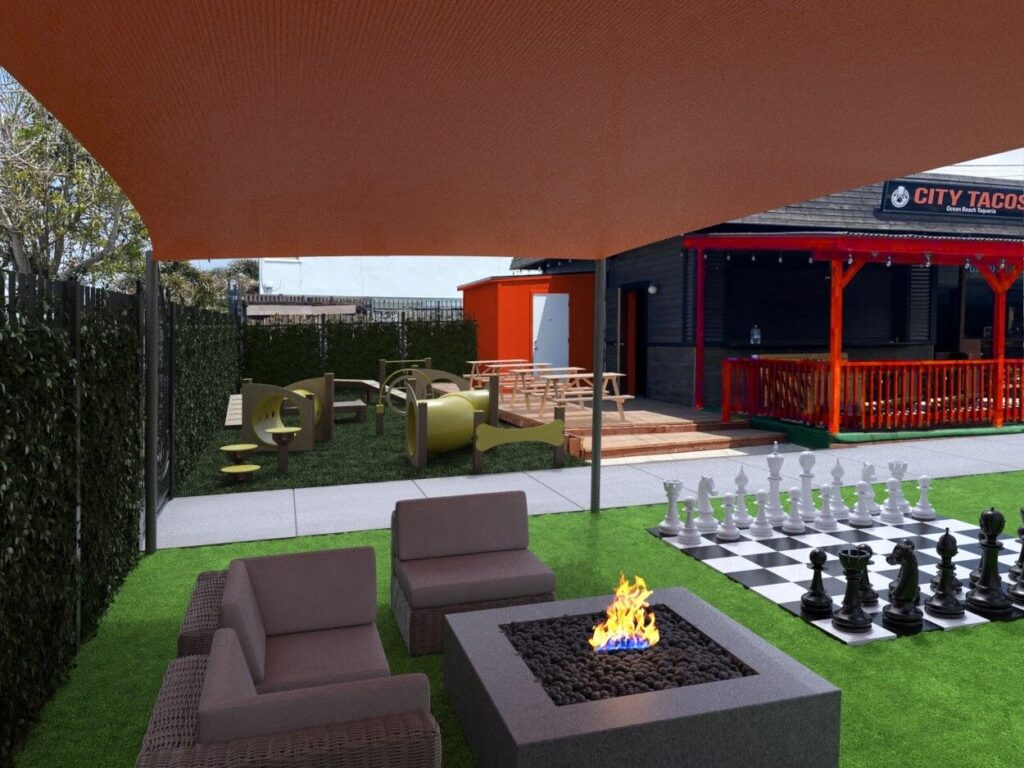
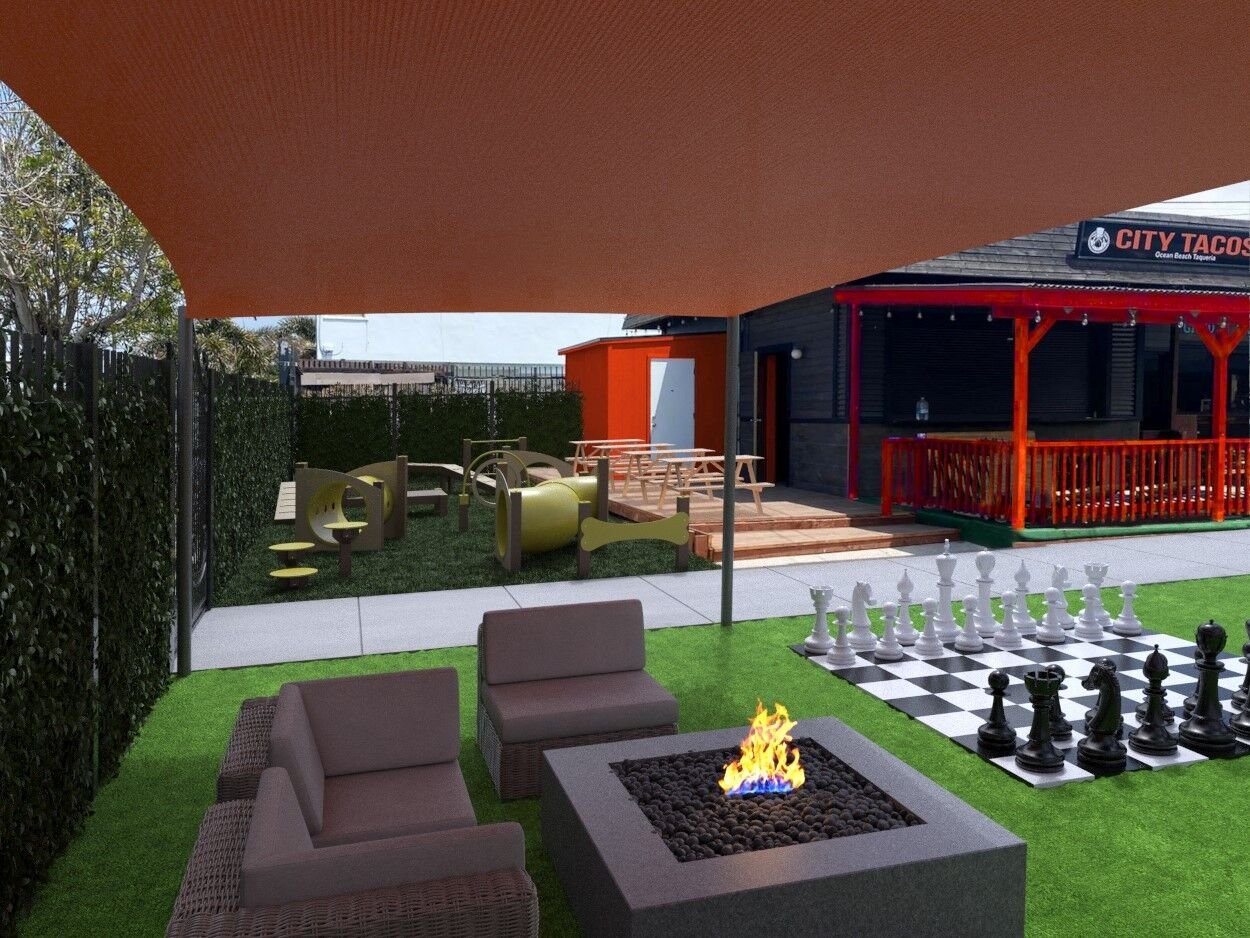
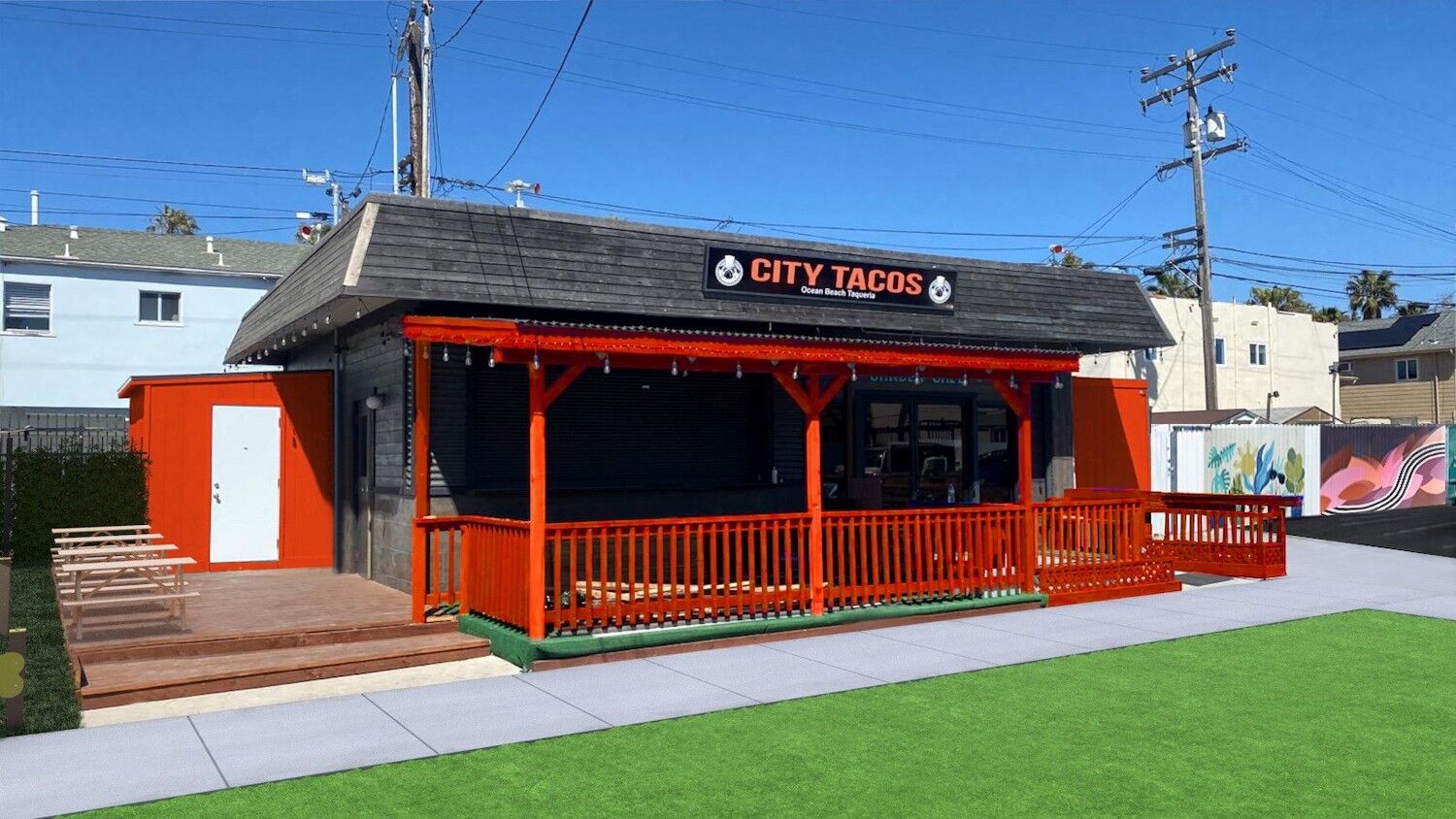
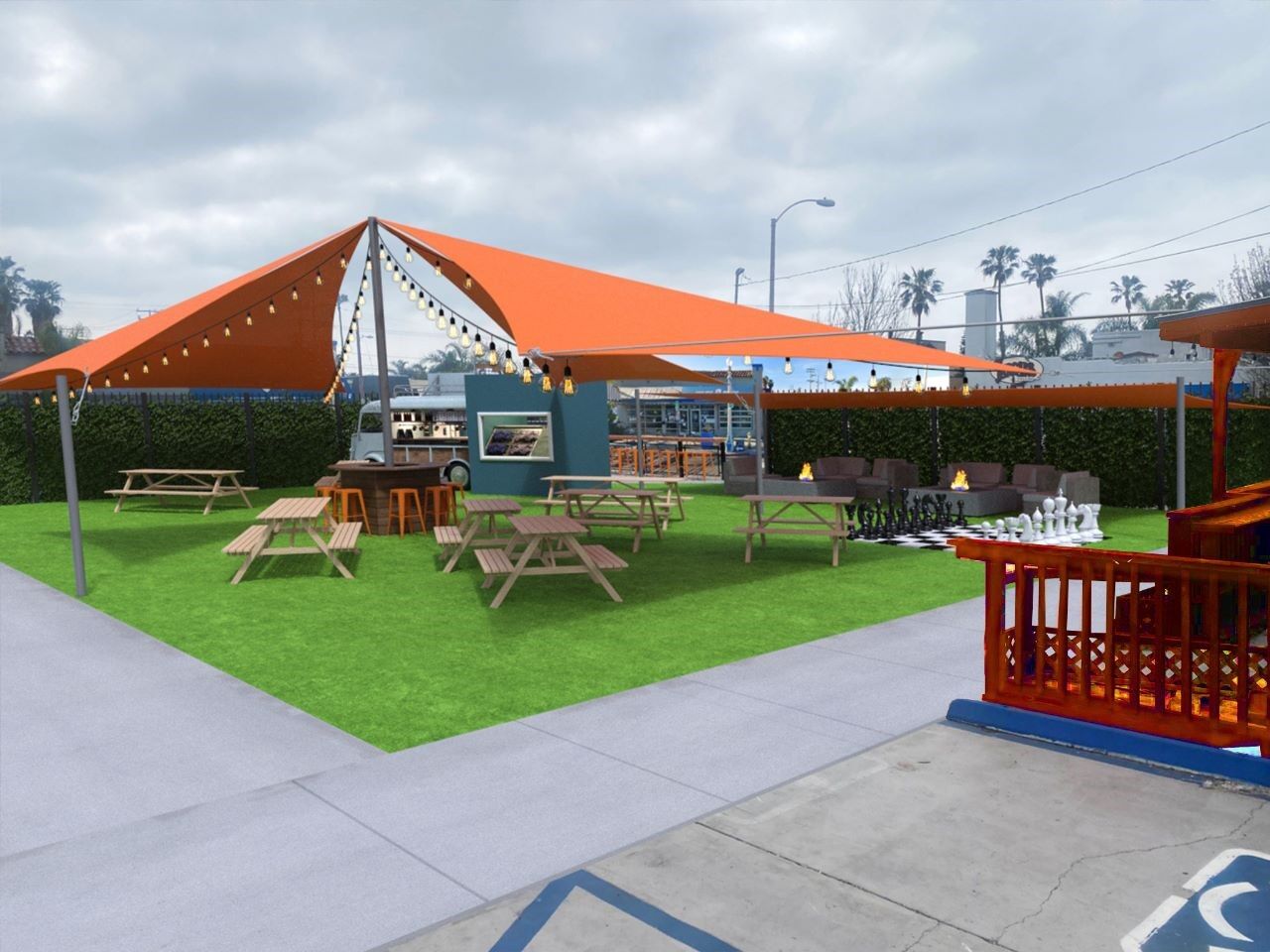
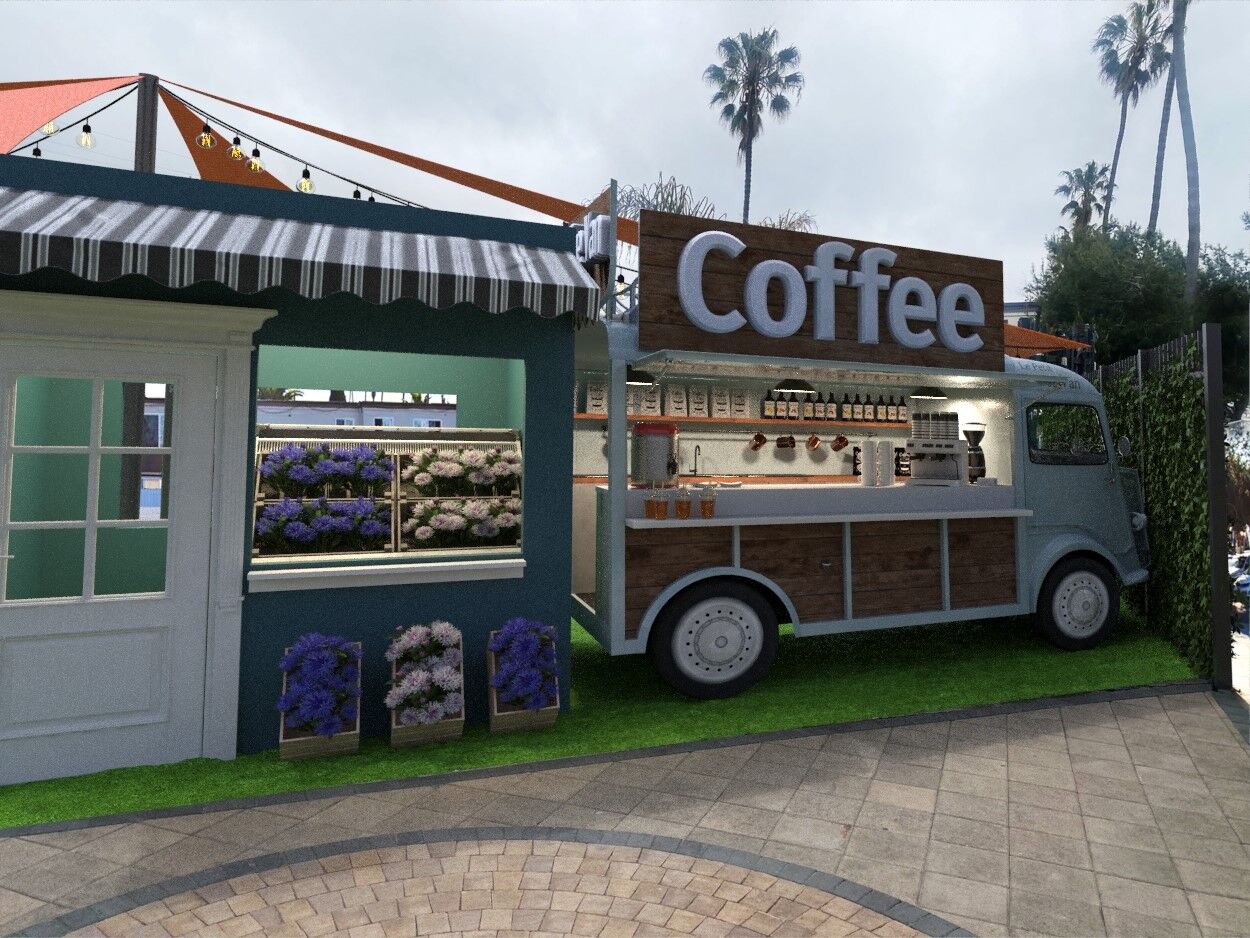
From this moment on, refer to 4896 Voltaire—the 10,000-square-foot plot of land across from the original OB Noodle House and Mike Hess Brewing—as OB Playground. Set to open July 1st, the playground will be anchored by popular local taco shop City Tacos and house a craft coffee cart, a flower shop, and all the happenings of an old-school, down-home hangout.
North Parkers know City Tacos. They’re the ones responsible for the groovy 80s jams you hear at the intersection of 30th and University. It’s been that way since owner Gerry Torres started the chain back in 2014. Torres was born in Mexico City but spent his early adulthood bouncing between home, San Diego, Miami, and Hawaii, before making his way back just north of the border. “San Diego is a bicultural community,” says Torres, who’s been in the service industry for 35 years. “We have Mexico next door, so we get the best of both worlds. I’ve raised my family here, it’s my home.”
City Tacos, exterior
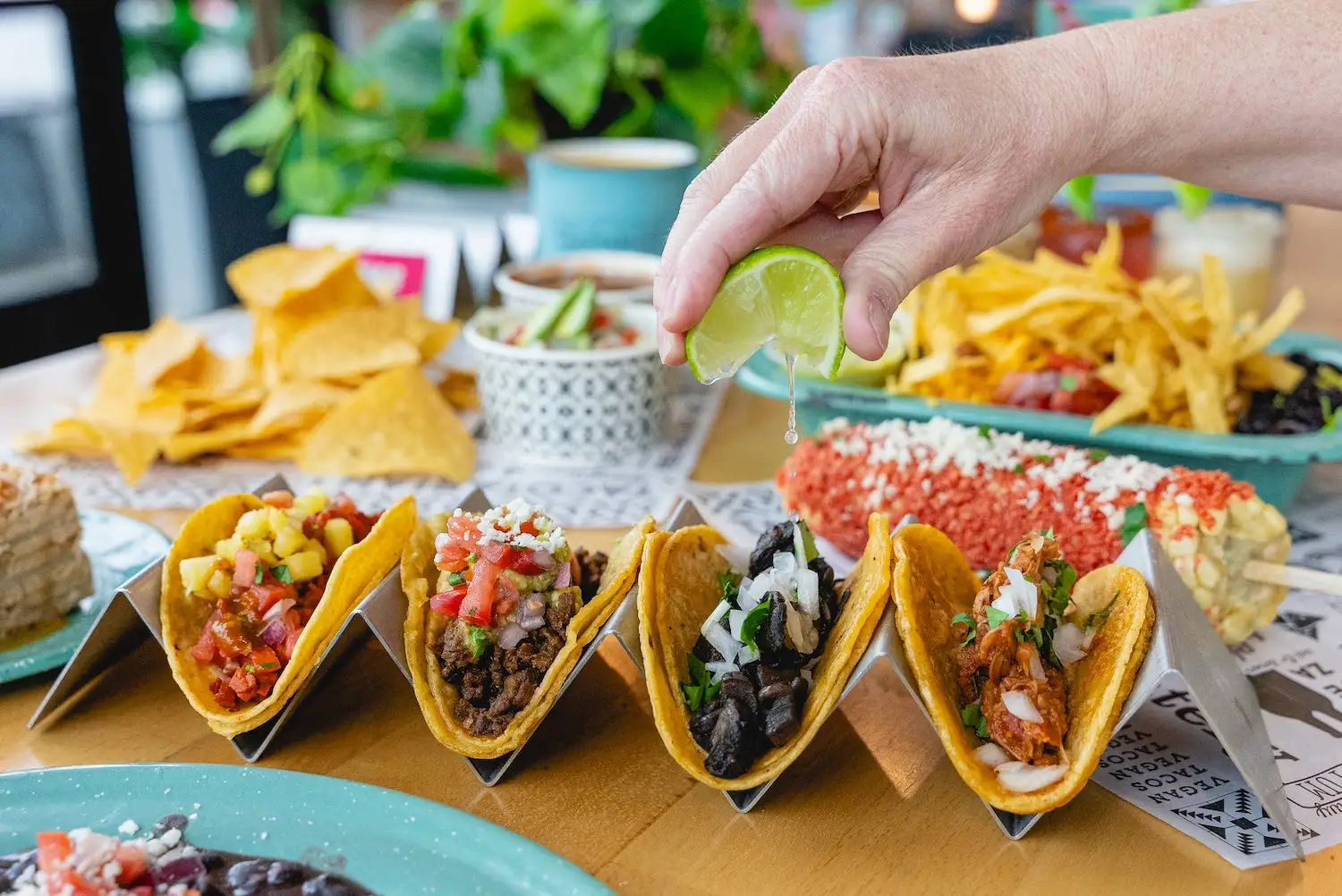
Torres developed a deep appreciation for San Diego’s illustrious taco shop culture, but he found himself craving bites with a bit more character, more from-scratchness, and constantly evolving. “When we create something we seek to elevate it,” says Torres. “You have to make your own tortillas. That’s your base.” His tacos range from slow cooked carnitas topped with crispy chicharron, to May’s taco of the month: the Aztec cauliflower taco, with achiote-rubbed cauliflower sitting atop a creamy pineapple tepache guacamole spread, wrapped in a flour tortilla.
After success in North Park, they’ve expanded to the ballpark, Pacific Beach, Sorrento Valley, and as far north as the Village at USC. Since his taco repute is now solid, Torres is challenging himself with his eighth concept to reimagine the environment and space. “I realized people want something more,” he says. “Sometimes they want to bring their pets along, or maybe they want to be in a cozy, inviting environment.”
City Tacos, tarps
Torres is cueing the cozy (and nostalgia) by retrofitting OB Playground with all you’d expect to see at a family reunion held in your uncle’s backyard: cornhole, foosball, and mammoth-sized versions of Jenga, Connect Four, and chess. A draft beer list featuring a rotating, San Diego-based lineup. He outfitted it for all-weather with fire pits, space heaters, and sail shading. He’s even getting into gardening.
“I intend to have manicured gardens and flowers around the property to give the sense of tranquility and peace,” he says. “If you’re out walking with the kids and have your dog and a stroller, you can sit down for a bit and have a good time.”
City Tacos, coffee truck
Although not prepared to announce the specific vendors heading the coffee cart and flower shop, Torres alludes to both businesses being local, one of which you may already be familiar with.
Torres says craft fairs, themed food truck nights, and involvement with local OBecians are all on his radar.
“It’s always been about growing with the community and giving back,” he says.
PARTNER CONTENT
Have breaking-news, exciting scoops, or great stories about San Diego’s food scene? Send your pitches to [email protected].
Jared Cross is a writer who grew up near the US-Mexico border in San Diego. He credits this experience with refining his appetite for food and culture.
The fast-casual shop focuses on the region’s two specialties: grilled meat and thin flour tortillas
Americans often have our own regional cuisine preferences—for instance, I tend to go for Carolina-style whole hog barbecue over Texas brisket (but certainly wouldn’t kick a Kansas City burnt end out of bed, either). So why is it when it comes to Mexican food, we’re occasionally guilty of lumping the entire country’s cuisine under one broad brush?
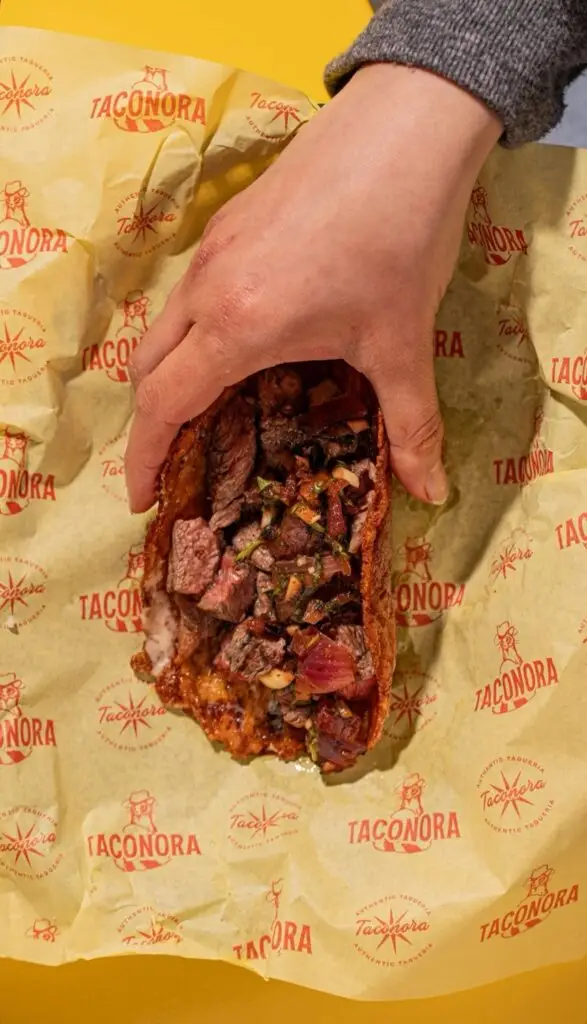
There’s far more to Mexican cuisine than tamales, pozole, and chilaquiles—Oaxaca is as famous for its seven moles as Baja California is for the Ensenada-style fish taco. And when it comes to Sonora, the northwestern Mexican state bordering Arizona and New Mexico features plenty of cattle ranches and wheat fields, giving the region its signature ranchero grilling culture and paper-thin flour tortillas. San Diego is about to get a taste of the fire-grilled flavors, when TacoNora opens in Pacific Beach on Saturday, March 7.
Renata Vázquez, founder of Tyche Food & Beverage Consulting and cofounder of TacoNora, says it’s the first location for the family-owned brand (although the ownership group operates four other taquerías in Sonora under a different name), and they are already actively looking to open more locations in North County and Arizona. But Pacific Beach felt like a good place to start for the grill-forward, fast-casual concept.

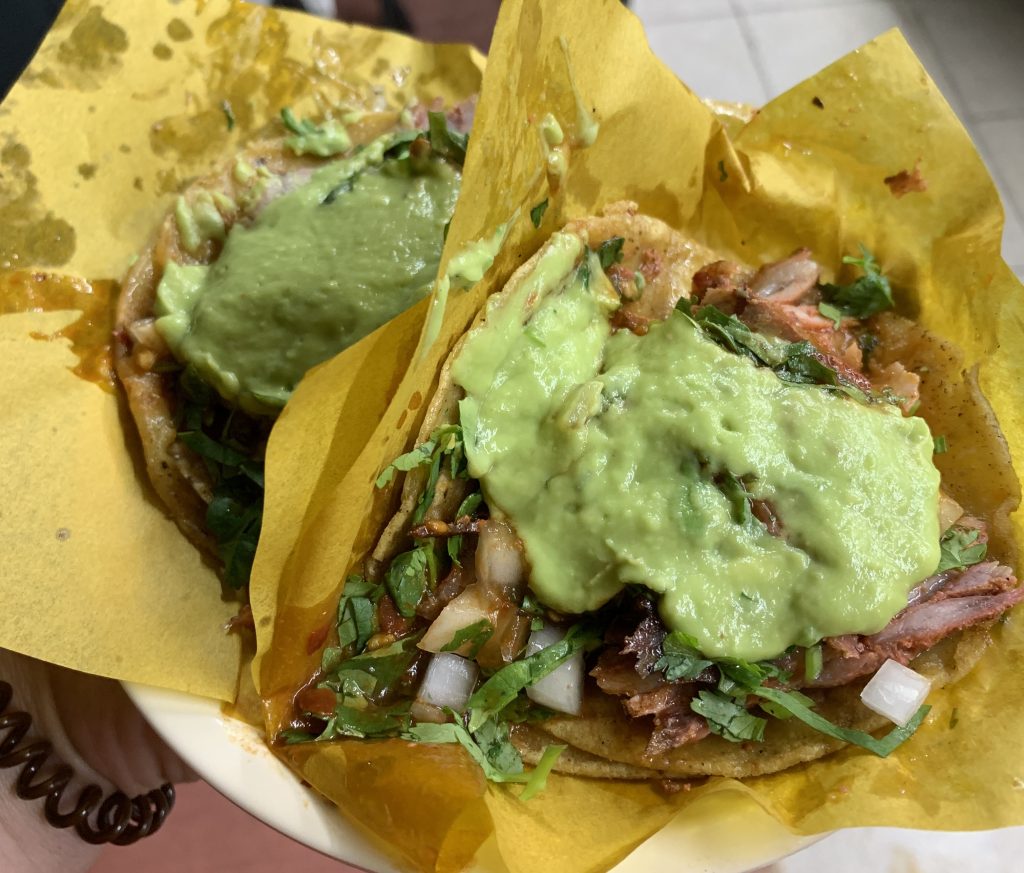
“Guests start by choosing their protein,” she explains, pointing to options like asada, pork belly, chicken made with a house seasoning mix, trompo-style ribeye or sirloin steak, or grilled Anaheim chiles. Then they can choose if they want it as a regular taco, lorenza (an open-faced, crispy taco), caramelo (a Sonoran specialty where carne asada and melted cheese are sandwiched between two crispy flour tortillas), costra (a “crust” of caramelized cheese wrapped around the chosen filling), a Sonoran-style burrito, or TacoNora’s signature taco pizza.
“Each format highlights the tortilla and the grill differently, but the meat remains the focus,” Vázquez explains.
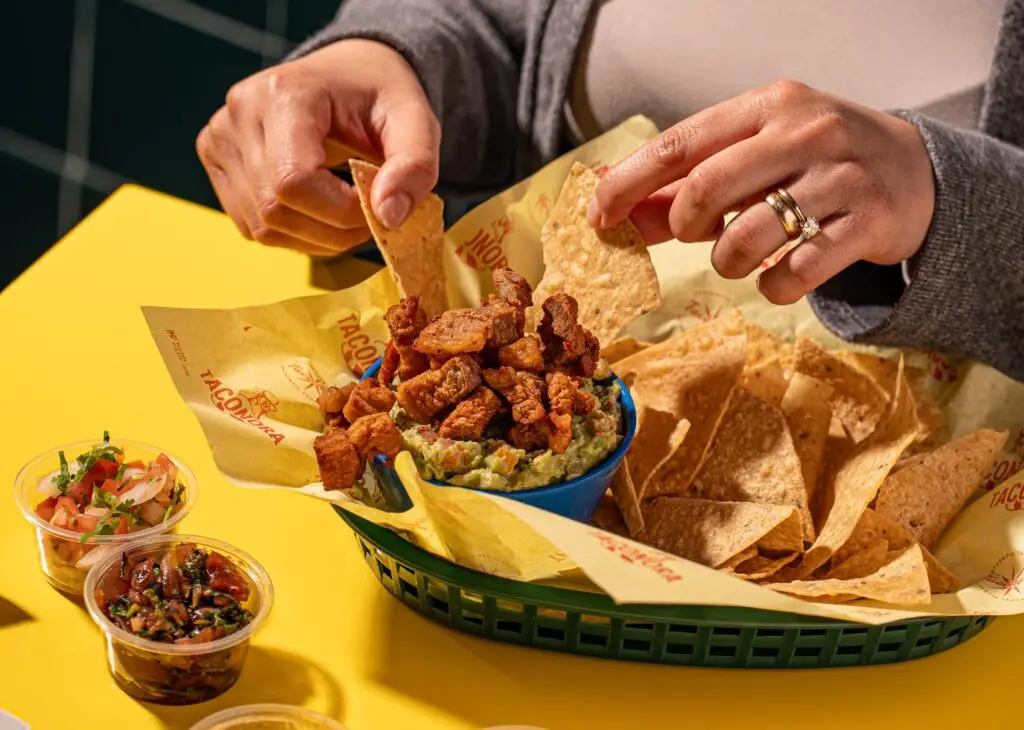
TacoNora will also offer housemade guacamole, beans slow-cooked with pork fat and red chile, and a salsa bar with 10 different housemade salsas. The entire experience is meant to be interactive, customizable, and something new, but still unfussy. “We wanted to create a concept where the quality of the meat speaks first, the tortilla supports it, and everything else enhances it—without overcomplicating the experience,” she says. “Sonoran food deserves a voice in San Diego.”
TacoNora opens Saturday, March 7 at 956 Garnet Avenue.

Tip Top Meats, the iconic European deli and market that closed in 2024, officially soft re-opened at 6118 Paseo Del Norte in Carlsbad, bringing back its famous meats and Old World sundries. While the team and family may have decades of experience under their belts, it’s still a new era, so give ‘em some grace during the soft opening as they get their feet (and meat) under them once more. Open 7 a.m. to 8 p.m. daily.

Listen Now: The Latest in San Diego’s Food and Drink Scene
Have breaking news, exciting scoops, or great stories about new San Diego restaurants or the city’s food scene? Send your pitches to [email protected].
Beth Demmon is an award-winning writer and podcaster whose work regularly appears in national outlets and San Diego Magazine. Her first book, The Beer Lover's Guide to Cider, is now available. Find out more on bethdemmon.com.
Our guide to San Diego’s taco scene, plus what the city's top chefs order when they’re off the clock
Tacos are San Diego’s lingua franca. The invention of food wrapped in corn tortillas is ballparked at 1000 to 500 BC. The word probably comes from the Nahuatl “tlahco”—meaning “half” or “in the middle”—a food meant to be folded and carried. Portable foods always have a way of sticking around.
San Diego was part of Mexico until the Treaty of Guadalupe Hidalgo in 1848, so tacos didn’t arrive; they remained. After the treaty, they receded into the kitchens of families who stayed behind.
By the early 1900s, US tacos had reached a sad state—mostly ground beef, cheddar cheese, and iceberg lettuce, because Mexican staples like cotija, cilantro, chiles, and freshly pressed tortillas weren’t in grocery stores. In San Diego, that started to change around 1930 in the abode of Petra and Natividad Estudillo, who lived on Logan Avenue in Barrio Logan, the heart of San Diego’s Chicano culture (it’s where many refugees from the Mexican Revolution settled). There, the couple created a teeny tienda, slinging homemade tortillas.
Behind the Estudillos’ counter, reportedly, you could see their living room, lined with furniture and tubs of fresh tortillas. You could tell sales (and tacos) were on the rise, because their décor got increasingly nicer. The couple opened Las Cuatro Milpas next door in 1933. It was the first Mexican restaurant in the city, a taco chapel for over 90 years. Around the same era, Ralph Pesquiera Sr. started pressing tortillas with his parents on India and Grape streets, later serving smaller, corn tortilla versions of flautas for defense workers during WWII. Credited with coining the term “taquito,” he opened El Indio in 1940.
The Bracero Program (1942–64) greatly contributed to taco culture, bringing over four million Mexican men to the US as guest workers, many in San Diego. The kitchens at bracero camps were filled with beans, tortillas, and chiles. The art of making fresh masa started to proliferate, and local grocery stores stocked dried chiles, salsas, and masa harina for their new client base.
San Diego’s taco culture quantum-leapt in 1964, when Roberto and Dolores Robledo, who’d previously owned a Golden Hill restaurant called La Lomita, opened a tortilla factory in San Ysidro. They quickly added a walk-up and drive-through window and called it Roberto’s—the city’s first “modern” taco shop and eventual legend. Two years earlier, up the road in Downey, Glen Bell had launched Taco Bell; by the time he sold it to PepsiCo in 1978, every American grocery store was selling “taco kits” with pre-fried shells, seasoning packets, and jars of salsa. Taco night became a middle-class ritual.
Surfers also deserve a taco nod. In 1983, SDSU student Ralph Rubio finally made good on the recipe gifted to him by a taquero on a San Felipe beach; he opened Rubio’s on Mission Bay Drive, launching the Baja fish taco into the national imagination (Rubio’s IPO hit NASDAQ in 1999).
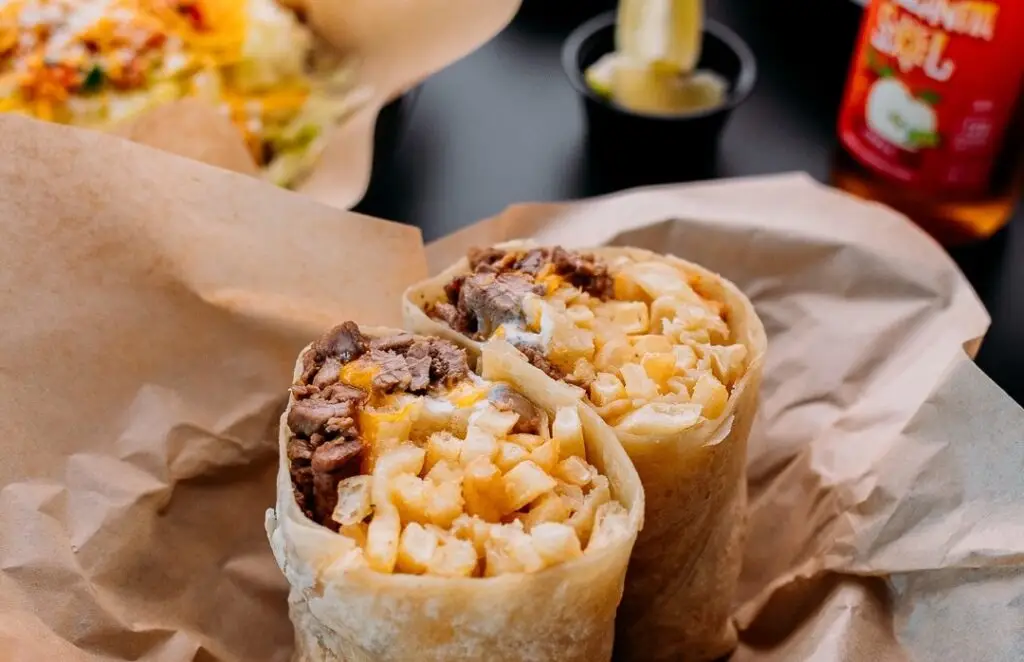
Two government policies also helped further taco enlightenment. In 1986, the Immigration Reform and Control Act (IRCA) legalized about 2.7 million immigrants, many in SoCal. Green cards and work permits meant access to leases, loans, and licenses. With that stability came confidence—and a wave of Mexican-owned small businesses. The late 1980s and ’90s saw the rise of family-run icons like Lolita’s, Rigoberto’s, and Cotixan. It’s no coincidence that two of San Diego’s proudest food inventions—the California burrito and carne asada fries (often credited to Lolita’s circa the late ’90s)—came onto the scene during this period.
This last point is an unsubstantiated connecting of dots. But Mexico’s a large country full of endless regional taco ideas (Oaxacan cheese, Sinaloan seafood, Texcoco barbacoa). And the North American Free Trade Agreement (NAFTA), signed in 1992, was probably what sprung that deep well of taco ideas. Corporations opened massive operations in border cities like Tijuana, drawing thousands of workers and tacos from every nook.
Which brings us to now. There are 1,700-ish taco shops across the county, and here’s the list of our favorites.

Located in the massive parking lot by an event center and a cannabis dispensary, Mi Gusto Es may just set the bar for the best gobernador (a Sinaloan-style shrimp taco with melted cheese and a flour tortilla—a wonderful thing). Loaded with sautéed peppers, it costs three bucks. Get the spicy shrimp. Always spicy.
Troy Johnson is the magazine’s award-winning food writer and humorist, and a long-standing expert on Food Network. His work has been featured on NatGeo, Travel Channel, NPR, and in Food Matters, a textbook of the best American food writing.
A Tijuana institution since 1996, the "best tacos in the world" are finally arriving stateside in National City
Listen—my initial reaction was just like yours. “A new taco shop in San Diego? Groundbreaking.” But then I saw the name. It’s not just any taco shop—Tacos El Franc is coming to National City.
In a land of iconic taquerias, Tacos El Franc is legendary. The taco shop became a Tijuana institution even before opening its first brick-and-mortar in 1996, when Javier Valadez began slinging tacos from a small cart and quickly earned a cult following.
It’s been featured on Netflix’s Taco Chronicles, and the tacos have been dubbed the best in the world by TikTok and people with extremely good taste (me). Tijuana locals and hungry Americans crowd the curbside eatery from the minute it opens until closing, and if you’ve ever had the chance to taste one of the mouthwateringly tender cabeza tacos or overstuffed quesadillas con carne, you’ll understand why.
Now you won’t need a passport to crush their carne asada. Tacos El Franc will open their first location in the US at the Westfield Plaza Bonita mall this summer, replacing Funky Fries & Burgers at 3030 Plaza Bonita Road, Suite No. 1108. Convincing the taqueria’s owners to enter the US market took 20 years, admits managing partner Roberto “Robe” Kelly.
“[Tacos El Franc] is, essentially, the highest grossing taqueria in Baja,” Kelly explains. “They didn’t really need the US market.” But the time has finally come, and he says once they open their doors, that will only be the beginning of an “aggressive expansion,” going wherever people have “an appetite for tacos.”
“One of our primary goals is to bring the exact flavor that you can have when you cross the border,” he adds. “We’re going to make it easier and bring it to them.”
When Tacos El Franc opens in June or July of 2024, I invite brave readers to join me in a taco-eating contest. No matter what, we all win.
More National City news! Friends of Friends is almost open on 8th Street, with promises of coffee, booze, music, and of course, friendship.
If one more coffee shop launches in North Park, I’m going to lose my mind. Other neighborhoods need caffeine, too! Please?
Rise Biscuits is opening (eventually) near SDSU, but where are the best biscuits in San Diego in the meantime? Email me at [email protected] with your recs.
Pure Project’s eighth anniversary party is tomorrow at their Miramar Brewery & Taproom. I’ll be there, so if you see me, say hi!
Beth Demmon is an award-winning writer and podcaster whose work regularly appears in national outlets and San Diego Magazine. Her first book, The Beer Lover's Guide to Cider, is now available. Find out more on bethdemmon.com.
Yes, Chef! winner Emily Brubaker leads the robust culinary program at Omni La Costa Resort & Spa
For Executive Chef Emily Brubaker, Omni La Costa Resort & Spa feels like home. She grew up just a mile-and-a-half away from the 400-acre property and fondly recalls walking the golf course perimeter as a kid. Though her ambitions led her away from San Diego for nearly two decades in which she honed her craft in some of the highest of high-profile Las Vegas restaurants—including triple Michelin-starred Joël Robuchon at MGM Grand—they ultimately brought her back to North County.

Today, the classically French-trained chef, who’s fresh off a victory on NBC’s Yes, Chef!, judged by Martha Stewart and José Andrés, oversees Omni La Costa Resort & Spa’s seven distinct dining concepts. Her goal is to elevate the resort’s culinary program with her creative, hyperlocal ingredient-driven approach while maintaining the Spanish- inspired flavors and fresh California coastal cuisine that are the bedrock of its culinary identity.
“The San Diego food scene is really growing, and in North County alone, it’s really exploded in the last five years,” Brubaker says. “There are Michelin stars, beautiful tasting menus, craft bakers, and all this food—when I was growing up in La Costa, it was fish tacos. Now there are really cool things popping up, and I’m so happy to be here to see where it’s going to go.”
Brubaker gives chefs de cuisine at each individual restaurant autonomy, however, her influence is evident across the resort.
For example, lobby restaurant Bar Traza serves as Omni La Costa’s culinary centerpiece and features bold Spanish flavors in a lively, social atmosphere. Brubaker overhauled the menu to be more consistent and centered on casual bites with that signature vibe. Think smoky paprika, vibrant citrus, and Spanish meats and cheeses.
At VUE, the focus is on seasonal offerings, California coastal cuisine, and Baja-inspired dishes. She and Chef de Cuisine Cameron Dixon change the menu biannually, which heading into summer, will highlight farm-fresh produce and hyperlocal ingredients—the resort even has its own herb garden and honeybee hives.

Poolside dining options are leaning into the country’s 250th this summer with a selection of classic American dishes with an Omni La Costa twist. And Bob’s Steak & Chop House (Brubaker is a trained butcher) offers a classic steakhouse experience with elevated service.
The chef and company also plan menus for special events at the resort where her creativity can really shine. For an upcoming National Ski Association dinner, the banquet hall will be transformed into an Alpine-themed winter wonderland complete with a snow machine, savory sausages, and melty, decadent raclette. A recent dinner was built around the Carlsbad Flower Fields and each course was matched to a color of ranunculus (Did you know pink dragonfruit are grown in North County? You do now.).
“It’s my zen to be in the kitchen playing with food,” Brubaker says.
Omni La Costa’s culinary program is a key part of the resort experience. And with Brubaker’s leadership, it’s becoming a draw for visitors and locals alike.
“These aren’t just hotel restaurants, these are restaurants that you should go to. They’re destinations, and I’m really hoping for the future that’s where we’re going,” Brubaker says.

Brubaker is also channeling her experience on Yes, Chef! into the culture at Omni La Costa—more emphasis on teamwork and collaboration, empowering her staff to share constructive critiques, and embracing different perspectives. Alongside her leadership role, Brubaker has become an advocate for mental health in the hospitality industry, serving as chief ambassador for the Burnt Chef Project and serves on the Board of Advisors for the Apex Culinary Program, where she mentors and develops future talent.
For more on Omni La Costa Resort & Spa and its dining program, please visit omnihotels.com/hotels/san-diego-la-costa.
We travel to Jalisco to fight exhaustion the best way we know how: with flame-red food
Photo Credit: Andrew Reiner
I stumbled into my room with my head spinning and ripped off my crimson-oil-stained shirt before crawling between the white sheets, as crisp and chilled as the lettuce in a steakhouse salad. I planned this trip to Guadalajara to combat a burned-out brain on two fronts: with the cool luxury of a hotel pool and by gorging myself on flame-red bowls of birria, the regional specialty of stewed meat prepared with tomato and pepper broth.
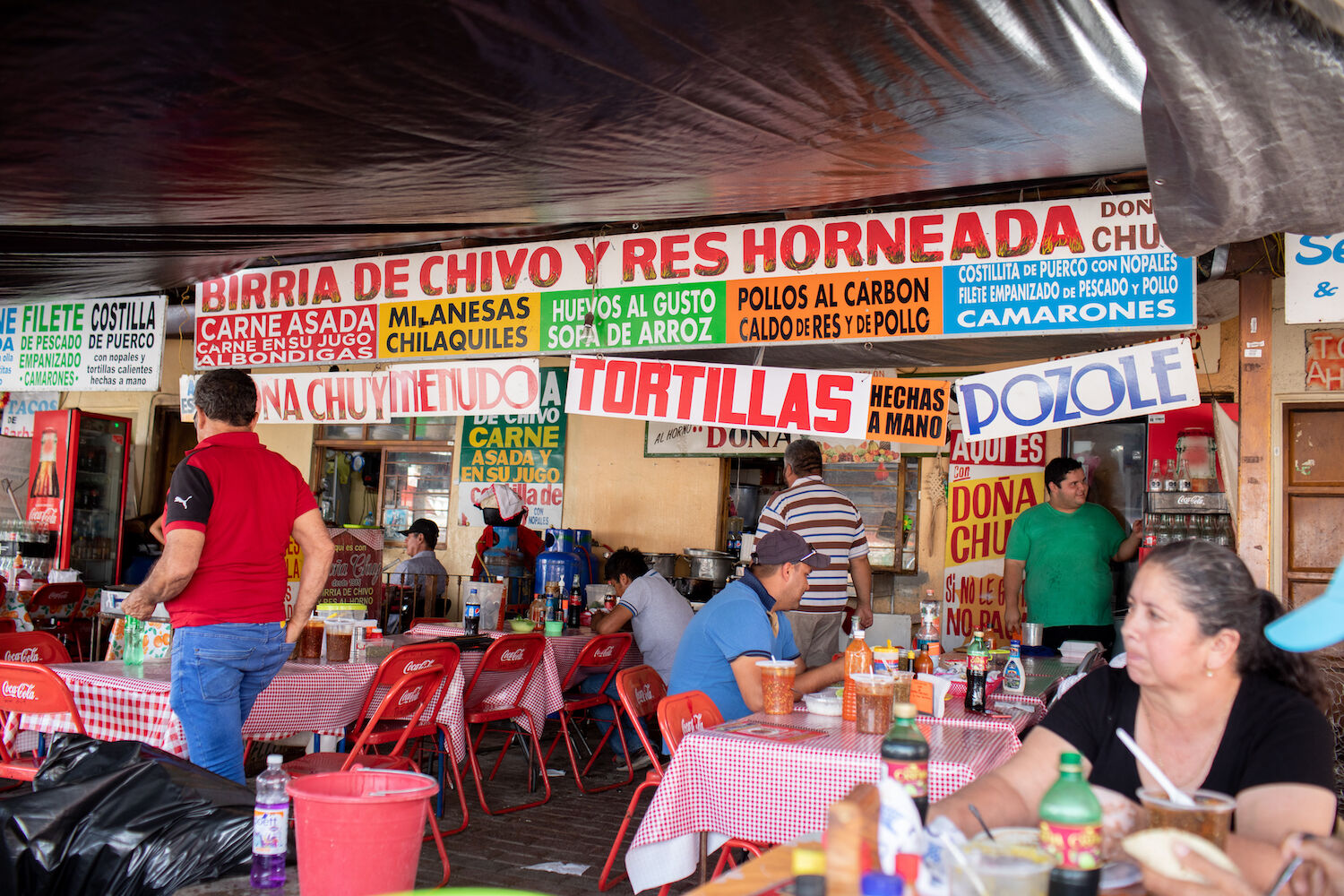
The former brought me to Tequila, an hour from Guadalajara, where I found Casa Salles, a pristine boutique hotel with its own Tequila factory. I swiftly located the latter across town at Doña Chuy, situated on a triangle of cement pressed up against the highway.
As the trend of birria swept through the U.S. over the last few years, even the best versions left me wistfully nostalgic for some ideal of birria stuck in the back of my brain, one that bowled me over with flavor and cured even the worst of hangovers. I couldn’t pinpoint the version I remembered, but, like Justice Potter Stewart on obscenity, I knew I would recognize it when I saw it. And I knew for sure what it wasn’t: bland beef wrapped in factory-made tortillas and drowned in cheese.
A catch-all term for “French dip but tacos,” as a friend once heard it described. Soup bowls filled with the same kinds of shortcuts and blandness that, writ large, I blamed for my burnout. I doubted that a one-week vacation could completely restore my verve, but it seemed plenty of time to find the most comforting consomé.
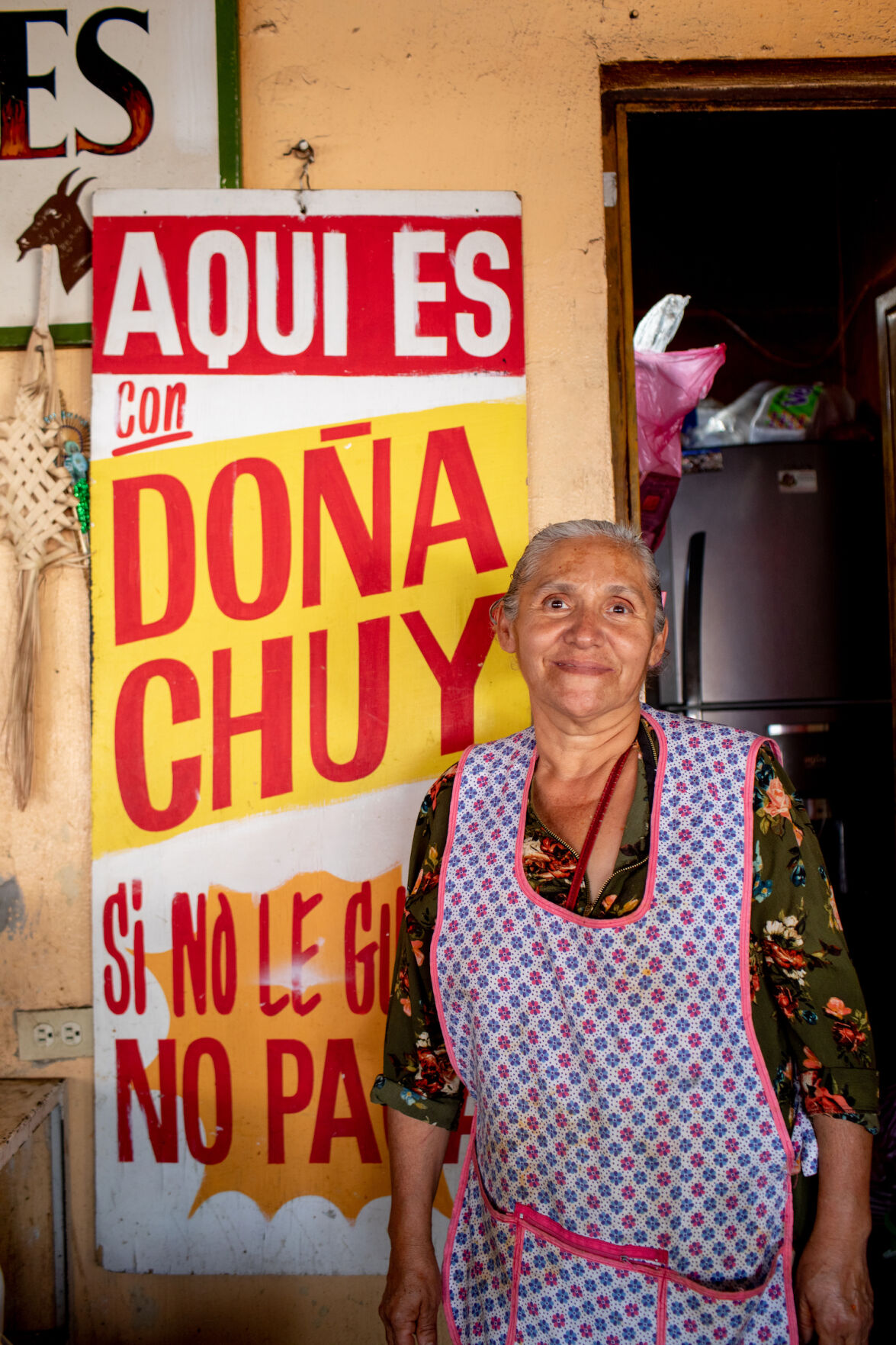
Photo Credit: Andrew Reiner
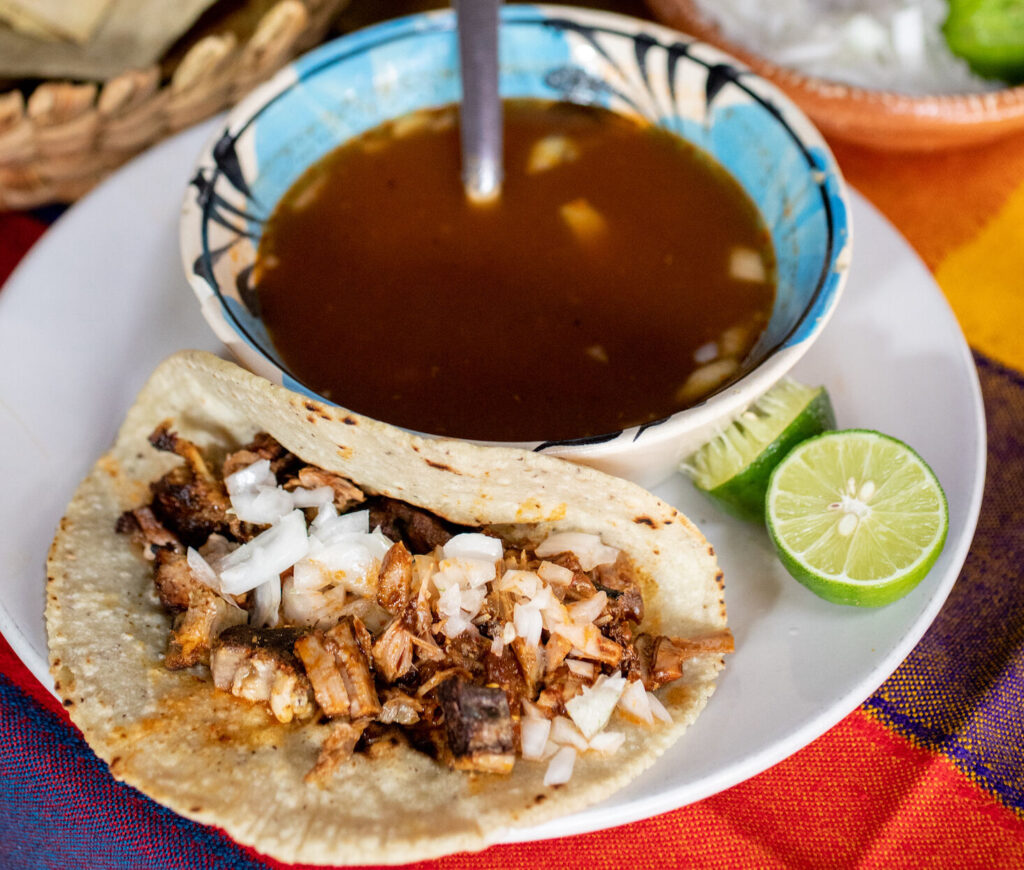
As the belching trucks rumbling by drowned out the plasticky crinkle of the checked tablecloth, my birria de chivo arrived, brick-red and stocked with goat, the tender ropes of meat just barely clinging to each other in a sea of tomato broth. My server slid toward me a plastic Tupperware filled with a jumble of metal silverware and bowls of chopped cilantro and onion. Despite a long list of drinks on the overhead sign, they only actually stocked glass bottles of Coke.
But they more than made up for the variety in salsas: three selections on the table showed their freshness in crisp colors, each cresting the top of a deli quart container. When I went to use one, my server stopped me, handing me a plastic water bottle containing a fire-engine red glop studded with pepper seeds instead. “This one for birria,” he said.
I slurped the spicy broth with a homemade tortilla in one hand, a napkin to blot the sweat from my forehead in the other. Halfway through, I looked up, and a woman across from me asked what she should order. I grinned and recommended the birria de chivo so fervently that I knocked a significant amount onto my shirt. I blotted it a bit, mopped up the last of the soup, and strolled back to the hotel, drunk on goat broth and success.
Two days in, I had found the birria of my dreams and considered just leaning into the other half of the trip—laying on hotel beds and pool deck lounge chairs—for the next week.
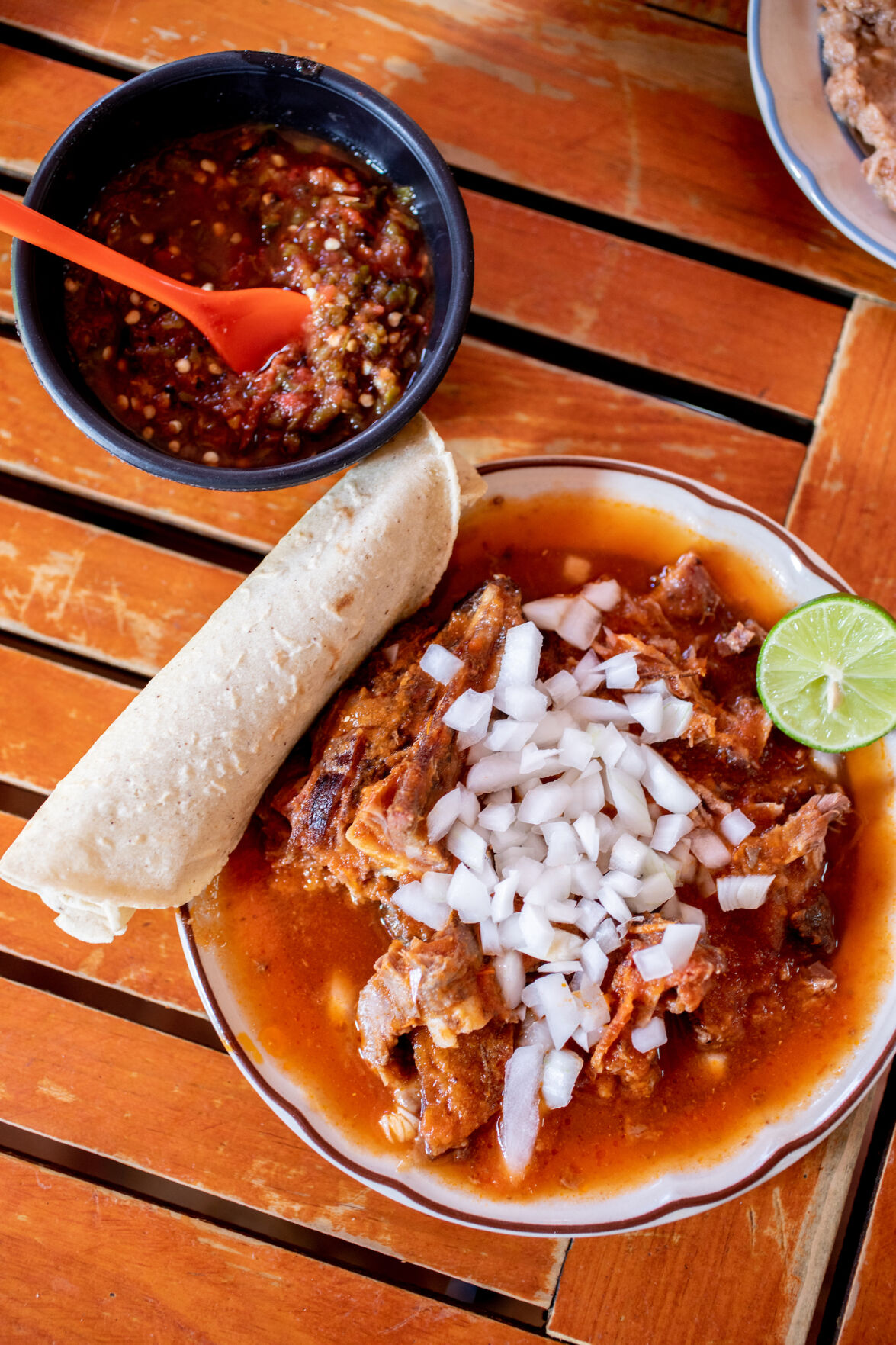
Photo Credit: Andrew Reiner
But a tiny, birria-colored-devil standing on my shoulder asked, “What if there’s even better birria?” I soldiered on to Guadalajara to scour the cityscape for soup that lived up to Doña Chuy’s. The decked-out tourist-favorite Birriería Las Nueve Esquinas failed, but I got to walk below the city at the brand new El Museo de Sitio del Puente de las Damas nearby, featuring a recently uncovered 18th-century bridge.
Fueled by a stop at Cantina La Fuente, where ice-cold Victoria beer chills in open-topped coolers stacked with bricks of ice the size of microwaves, my quest resumed. I struck vermillion goat gold at La Birria de Oro. Inside the pale salmon walls, bowls came to the table brimming with meat, stacked with chopped onion, whose sharpness woke up my sleepy taste buds.
The meat, chopped small here, felt like biting into Gushers, only instead of sickly sweet ‘90s candy juice, it released flavor-packed broth. I worked my way through the bowl and the stack of freshly made tortillas, then ordered a jericalla for dessert, as if the smooth burnt custard might prolong the joy of a good birria through proximity.
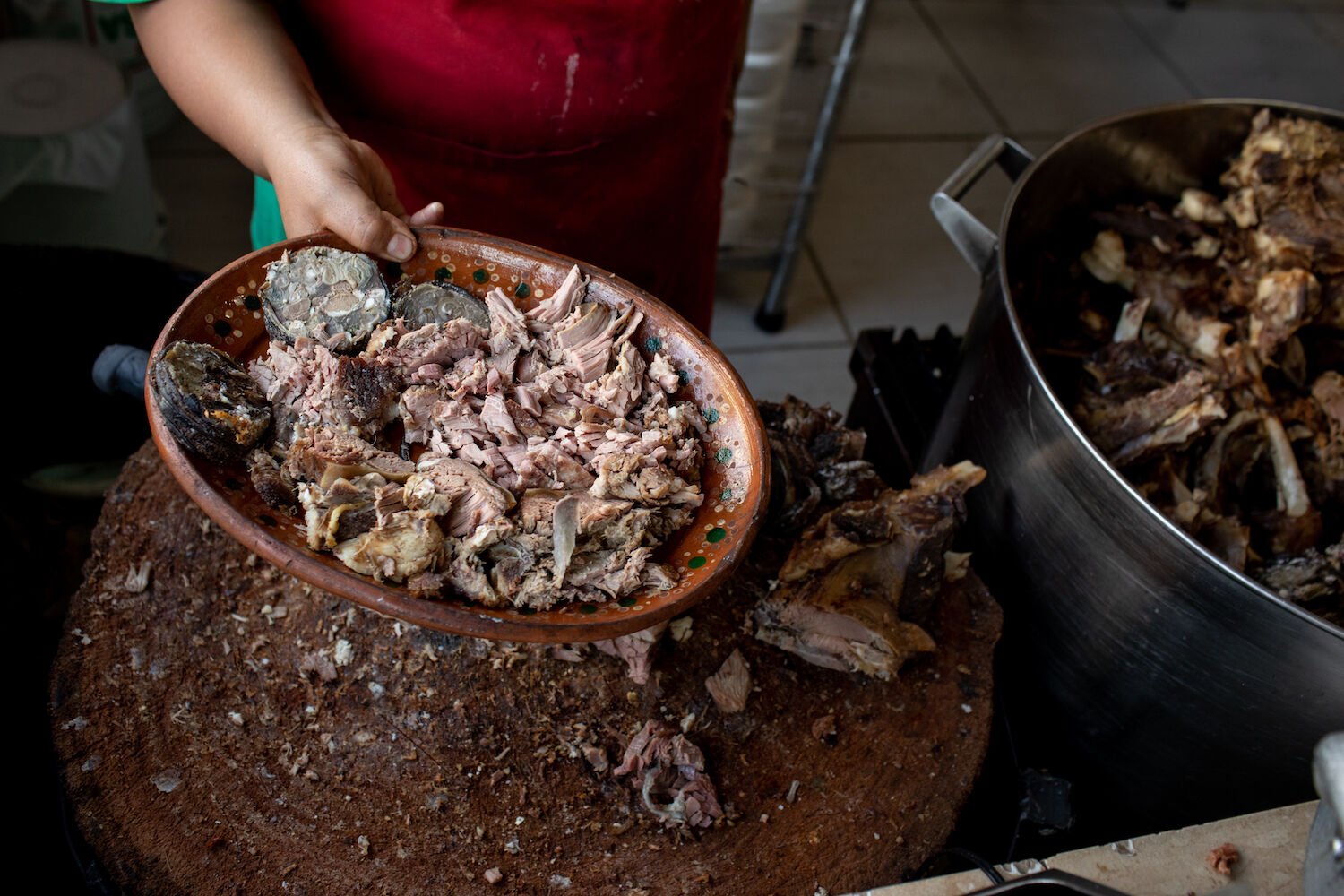
Photo Credit: Andrew Reiner
The next day, a friend desperately in need of the dish’s reviving properties brought me to Birriería El Chololo, which serves birria tatemada—oven-roasted, with the consomé served on the side. The crispy charred edges of meat and drinkable bowl of broth soothed her searing hangover and showed me a totally different style of birria.
I came to Guadalajara to find the ideal birria, the one that showed me what all the versions at home failed to do, and instead, I found three very different dishes and myself confused.
I headed for the hills. Specifically, to take a class with Maru Toledo, the cooking instructor, culinary researcher, and author who spent the last two decades documenting the food of Jalisco. Over mole made from charred tortillas and pebbly sun-dried tostadas raspadas, I asked my burning question: what is the original, the ideal, the peak of birria?
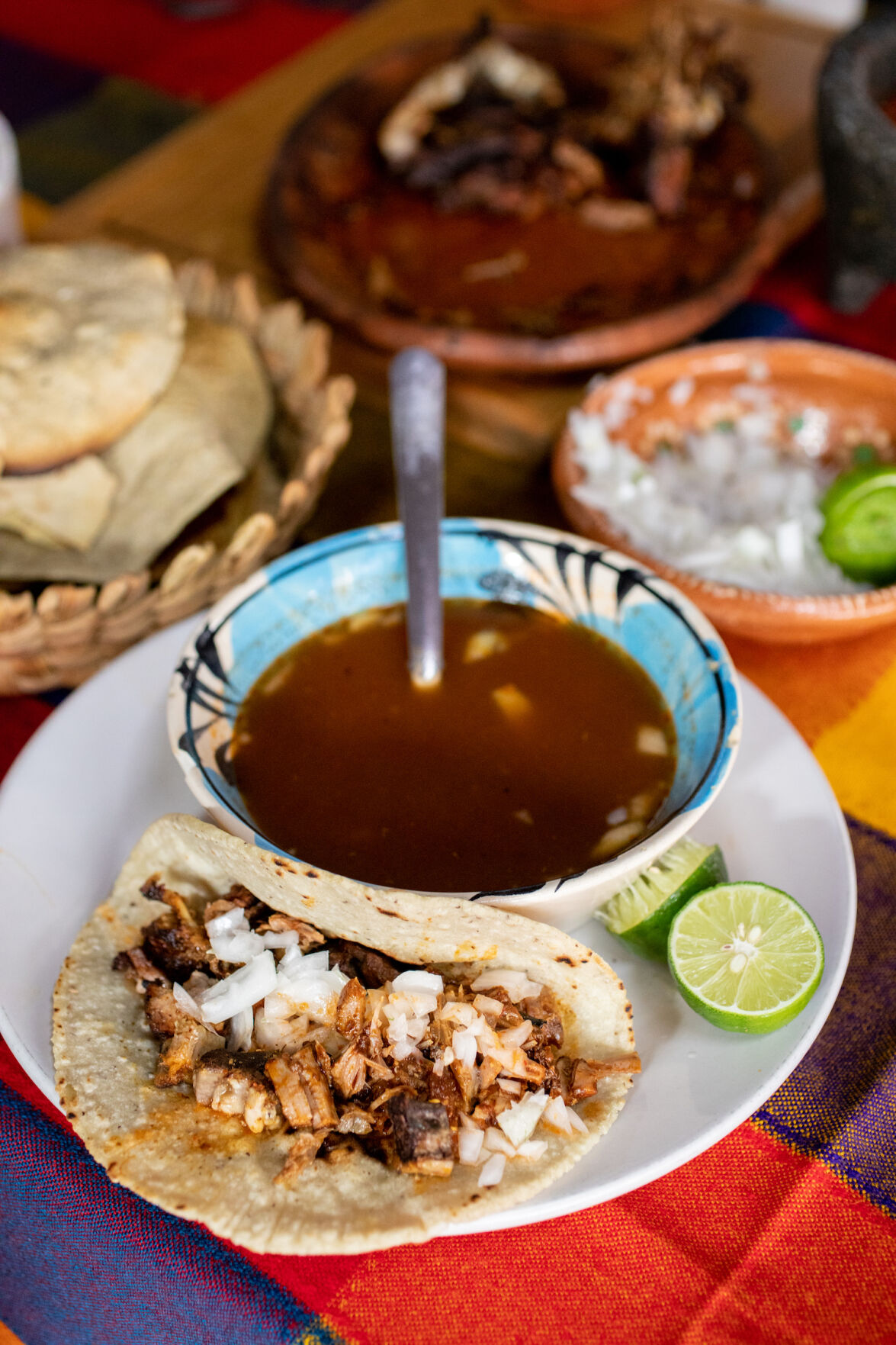
Photo Credit: Andrew Reiner
Birria can be anything, Toledo explained. The Spanish utilized the lush river valley in nearby Ameca for raising cattle, hiring local men to herd the animals and paying them with a feast featuring the local “agave wine,” (now better known as Tequila) and a slaughtered calf. They rubbed the veal with chile paste, describing the method as “birriaba” meaning smeared, as one might with mud, and cooked it buried underground.
Soon, they found it worked well on the superfluous male goats from the dairy industry in nearby Zacatecas, and local small game and poultry. Any type of meat, cooked in any number of fashions, could be birria, so long as it was smeared with that adobo before cooking.
Back in the city, I embraced Toledo’s wisdom and sampled a creative clam birria at trendy seafood spot La Panga del Impostor. After, I wandered to the Hospicio Cabañas, where a free tour guide explained that perhaps the reason José Clemente Orozco could cover the walls and ceilings of the one-time orphanage with such impressive works of art with only one hand, and in just 11 months, involved cocaine.
I came away inspired. My burnout, I concluded, came not from a lack of ideas, but from a lack of the proper drugs. I’m too old to adopt a new addiction to a powerful and pricey stimulant, but that doesn’t matter. As I learned this week, birria can be anything.

Chef Brian Redzikowski dishes on what makes this a V.I.T. (very important taco)
Camino Riviera taco
James Tran
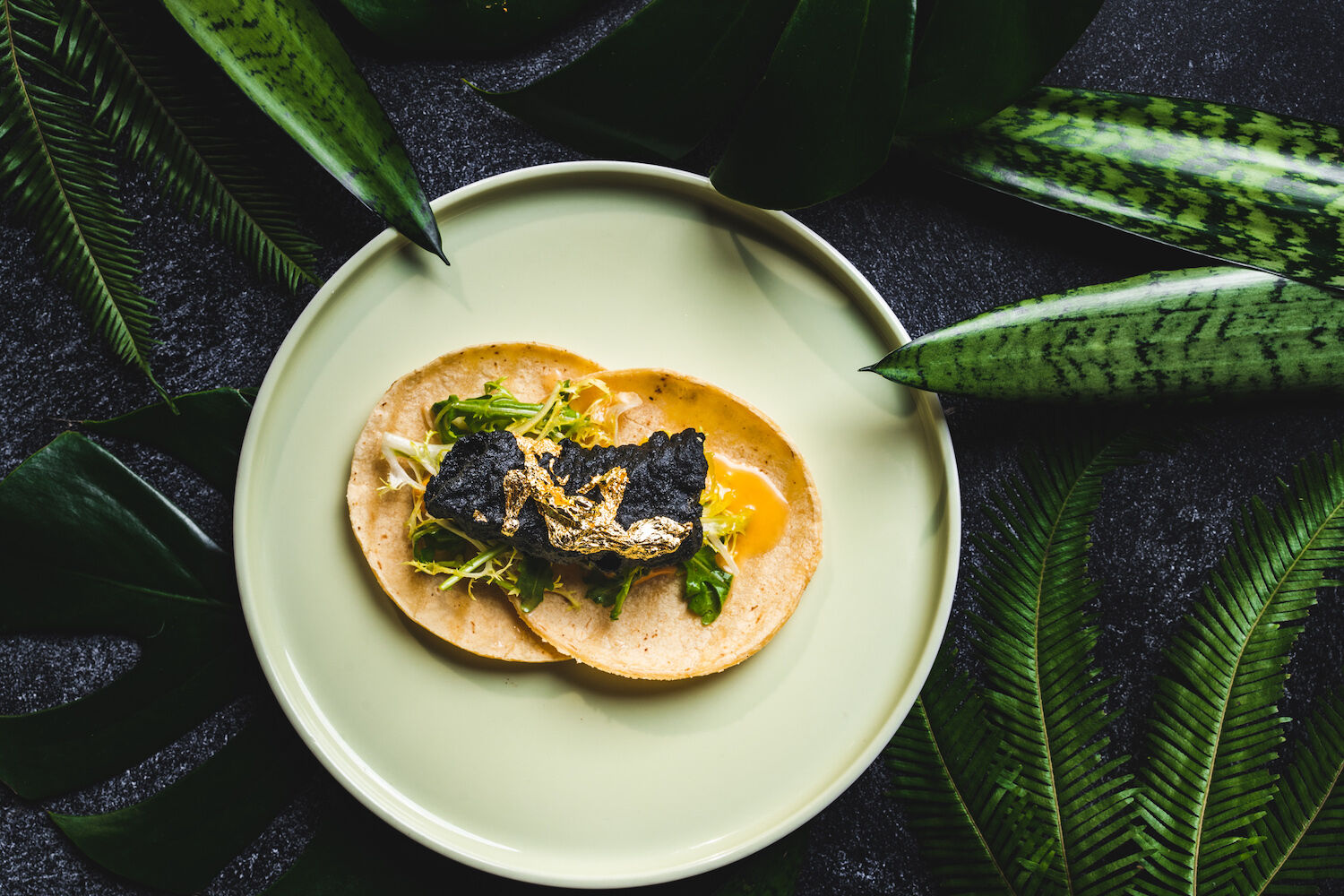
Any taco lover worth their salt knows that completing the ritual of enjoying a plate of tacos involves three things: sprinkling them with onions and cilantro, adding a squeeze of lime, and then some flavorful salsa right before you dig in. But topping a fish taco with edible gold? Chef Brian Redzikowski did that for “The Taco” at Camino Riviera, the new Tulum-inspired restaurant in Little Italy.
Redzikowski, executive chef of Camino Riviera and all of SDCM group’s restaurants (including Kettner Exchange and Waverly), traveled throughout Tulum and the greater Yucatán in Mexico to learn about the region’s cuisine and find inspiration for the menu. When it came time to design dinner, he wasn’t interested in tacos at first (San Diego has endless options, after all). But Matt Spencer, SDCM’s owner, really wanted to serve one.
“I decided if I was going to do it, it really needed to be high end and have an exciting presentation,” Redzikowski says. So he went all-out.
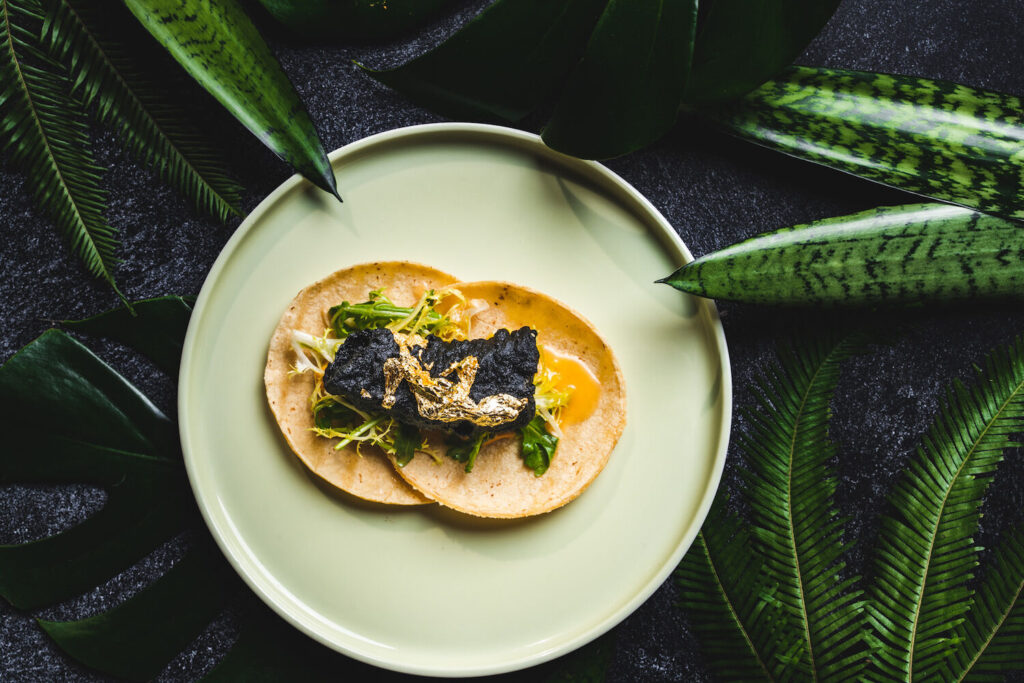
This V.I.T. (very important taco) is a fillet of sea bass dipped in a tempura batter mixed with squid ink, which adds a bit of brine and turns the fish midnight black when fried. The fillet is placed on two tortillas sourced from Gabriel’s Tortilleria in Barrio Logan, then topped with frisée and edible gold leaf, making it shine. It comes with two sauces—a chipotle aioli and bitter-orange vinaigrette. At $16, it’s built to share between two people as an appetizer before you delve into dishes like Sonoma lamb shoulder barbacoa and pork chop anticucho, but you can also enjoy it on your own.
Yes, the gold is made for consumption and is safe to eat. Whether it’s a fad or fantastic, you be the judge, but numbers don’t lie: Redzikowski says it’s the best-selling item on the menu since they opened last winter—guess he has the Midas touch.
2400 India Street, Little Italy
San Diego Magazine's 2026 Guide to Balboa Park.
Balboa Park is San Diego’s cultural heart.
The iconic 1,200-acre preserve’s history dates back more than 150 years, evolving from a scrub-filled plot atop a mesa overlooking what’s now Downtown to an urban oasis—the largest of its kind in the country—filled with an array of museums, attractions, gardens, trails, restaurants, and more. Balboa Park is an epic playground where San Diegans and visitors alike can experience the great outdoors just as easily as they can enjoy a world-class performance or explore groundbreaking discoveries.
Tucked away in the Spanish Colonial Revival-style architecture are 18 diverse museums that allow visitors to spend the day learning about, well, anything. A great place to start is the San Diego History Center. Located in the Casa del Balboa building, the museum tells the story of the city’s past, present, and future through photographs and art, clothing and textiles, and interviews with people who witnessed history-making events firsthand. The San Diego Natural History Museum takes visitors even farther back with interactive exhibitions that show what the region was like up to 75 million years ago.
Blast off on a simulated trip to space at the San Diego Air & Space Museum, then check out artifacts from aviation legends, including the Wright brothers, Amelia Earhart, and Buzz Aldrin. Discover new perspectives revolutionizing the science world, learn about an often overlooked but overutilized utility, and exercise your creativity at the Fleet Science Center.
Calling all theater-lovers, Balboa Park has something for you, too. The San Diego Junior Theatre will present their musical take on beloved children’s book A Bad Case of the Stripes from June 26 through July 12. And laugh, cry, and marvel in awe as the pros of The Old Globe perform Kim’s Convenience, the award-winning comedy that inspired the popular series, from May 15 to June 14.
There’s nowhere else in Balboa Park quite like WorldBeat Cultural Center. The institution celebrates African diaspora and indigenous cultures around the world using art, music, dance, and education. The building, a renovated water tower covered in colorful murals, houses a performing arts center, museum, gift shop, cafe, and outdoor classroom.
If you’d like a side of nature with your culture, Balboa Park has you covered there, too. Stroll through the gardens of the Japanese Friendship Garden & Museum, a monument to the relationship between San Diego and its sister city, Yokohama, Japan. Inspired by traditional Japanese design dating back centuries, the 10-acre respite features a living exhibition that showcases plants native to both cities.
If there seems like a lot going on in Balboa Park, it’s because there is. Let the Balboa Park Cultural Partnership be your guide. The organization is the umbrella for 24 of the park’s institutions and offers an Explorer Pass that allows visitors to access multiple museums for one affordable price. The hardest part is picking where to start.

Save on admission to San Diego’s top museums with the Balboa Park Explorer Pass. Explore 16 museums of art, science, history and culture across Balboa Park — all with one affordable pass. Choose the option that fits your pace: the Limited Pass (one day for up to four museums), the Parkwide Pass (seven consecutive days of access to all 16 museums) or the Annual Pass (365 days of unlimited exploring).
Looking for an experience-driven gift? Let the museum lover in your life enjoy their favorite museums all year with a Balboa Park Explorer Annual Pass gift voucher.
BuyMyExplorer.com | Phone: 619-232-7502, Press 2 for Explorer

Bigger experiments, brighter ideas, and boundless curiosity await at the newly reimagined Fleet Science Center. This summer, the Fleet debuts Element 8 Cafe, an expanded theater queuing and concessions space, two new gallery spaces, and, for the first time, a free entrance gallery exploring science in and around San Diego. The transformation marks a new chapter for the Fleet, keeping it a vital, innovative, and accessible science hub for the region. Visitors are invited to explore the experience this summer and connect with the power of science like never before.
Address: 1875 El Prado, San Diego, CA 92101
Website: FleetScience.org
Hours: 10 a.m. to 5 p.m. daily
Phone: 619-238-1233

An accredited cultural gem, the Japanese Friendship Garden & Museum brings traditional Japanese garden design to life with koi ponds, curving walkways and layers of greenery. Guests explore bonsai trees, streams and peaceful nooks while taking part in exhibits, educational programs and festivals that illuminate Japanese culture. Situated in the heart of Balboa Park, the garden doubles as a meditative retreat and a dynamic gathering place, welcoming visitors to slow their pace and connect more deeply.
Address: 2215 Pan American Road E, San Diego, CA 92101
Website: Niwa.org
Hours: 10 a.m. to 7 p.m. daily; last admission at 6 p.m.
Phone: 619-232-2721

A San Diego summer favorite, The Old Globe invites audiences to experience a beloved local tradition in its outdoor Lowell Davies Festival Theatre.
This summer, the 2026 Shakespeare Festival presents two thrilling tales of power, passion and romance. Measure for Measure, running June 14 through July 12, 2026, is a riveting story of justice and hypocrisy that asks who holds power, who is punished and what it truly means to be virtuous. Much Ado About Nothing, playing Aug. 2–30, 2026, is a classic rom-com packed with schemes, sparks and laughter as opposites attract. Audiences can enjoy both shows for $44.
Address: 1363 Old Globe Way, San Diego, CA 92101
Website: TheOldGlobe.org
Hours: Box office open Tuesday–Sunday, 1 p.m. to final curtain
Phone: Box office, 619-234-5623

Aviation and space exploration come to life at the San Diego Air & Space Museum. See an airworthy replica of the Spirit of St. Louis, a Gee Bee racer and historic aircraft from World War I, World War II and the Korean and Vietnam eras. Get up close to the Apollo 9 command module — one of only 11 of its kind in the world — along with Mercury and Gemini capsules, Mission Control and space shuttle simulators, and a selfie spot beside a lunar lander on the moon. Running through 2026, Ripley’s Believe It or Not! brings oddities from around the world to Balboa Park.
Address: 2001 Pan American Plaza, San Diego, CA 92101
Website: SanDiegoAirAndSpace.org
Hours: 10 a.m. to 5 p.m.
Phone: 619-234-8291

History belongs to everyone. At the San Diego History Center, two experiences bring that history to life this summer: America at 250 and the Center for Women’s History. America at 250 traces San Diego’s place in 250 years of U.S. history, while summer programs invite children to learn and explore. The Center for Women’s History amplifies the voices of women whose leadership and creativity have shaped our region.
By understanding our past, we build a more vibrant and inclusive community together. These vital educational experiences are only possible through generous community support. Discover your roots, spark meaningful dialogue, and help keep San Diego’s stories alive for future generations.
Address: 1649 El Prado, Suite 3, San Diego, CA 92101
Website: SanDiegoHistory.org
Hours: 10 a.m. to 5 p.m. Wednesday–Sunday
Phone: 619-232-6203

Junior Theatre is San Diego’s longest-running youth theatre program, empowering students ages 4 to 18 to explore storytelling, performance, and collaboration in a supportive environment. Through classes, camps, and productions, young artists build confidence, creativity, and lifelong skills onstage and off. Each season features a wide range of opportunities, from introductory experiences to advanced training in acting and musical theatre.
Looking for a summer adventure? Junior Theatre’s Summer Camps deliver dynamic programs for grades K–12, including musical theater intensives, acting academies and immersive JT Studio experiences. It’s a place where imagination truly takes center stage.
Address: 1650 El Prado, Suite 208, San Diego, CA 92101
Website: JuniorTheatre.com
Hours: 10 a.m. to 5 p.m.
Phone: 619-239-1311

This summer, The Nat is talking trash—literally. Their newest exhibition, Washed Ashore: Art to Save the Sea, features larger‑than‑life marine sculptures made of ocean debris collected from beaches. It invites visitors to explore the impact of plastic pollution and discover ways to take action.
But the experience doesn’t stop at the gallery doors. Friday nights, the exhibition transforms into an ocean-themed “dive bar” during Nat at Night. Select Sundays bring something brand new: a rooftop brunch with sweeping Balboa Park views. Add two new giant-screen films and five floors of nature to explore, and The Nat is shaping up to be one of the season’s must-visit destinations.
Address: 1788 El Prado, San Diego, CA 92101
Website: SDNat.org
Hours: 10 a.m. to 5 p.m. daily; 10 a.m. to 11 p.m. Fridays in summer
Phone: 619-232-3821

The WorldBeat Cultural Center is a nonprofit multidisciplinary cultural organization dedicated to promoting, presenting and preserving Indigenous cultures worldwide through music, art, dance, education, sustainability and community programs. WorldBeat elevates multicultural artists, expands opportunities for cultural enrichment and fosters deeper understanding across traditions. WorldBeat offers a holistic cultural experience that inspires pride, unity, connection and belonging for all ages.
Address: 2100 Park Blvd., San Diego, CA 92101
Website: WorldBeatCenter.org
Hours: Classes: Monday, Wednesday, Thursday, 6–9 p.m. Exhibits and café: Friday–Sunday, 11 a.m.–6 p.m.
Phone: 619-230-1190

Step into a world of the weird and wonderful at Ripley’s Believe It or Not! at the San Diego Air & Space Museum in Balboa Park. Explore hundreds of bizarre artifacts, interactive displays and unbelievable stories that celebrate the curious and the extraordinary.
San Diego Air & Space Museum | 2001 Pan American Plaza, San Diego, CA 92101

Presented in partnership with the San Diego Museum of African American Fine Arts, San Diego’s Lost Neighborhoods uses augmented reality, oral histories, and archival materials to explore communities and residents displaced by redlining, freeway construction, and other discriminatory policies.
San Diego History Center | 1649 El Prado, Suite 3, San Diego, CA 92101

Spend a summer night at The Old Globe. The Lowell Davies Festival Theatre stages Measure for Measure (June 14–July 12) and Much Ado About Nothing (Aug. 2–30), offering two unforgettable Shakespeare productions for just $44.
The Old Globe | 1363 Old Globe Way,
San Diego, CA 92101

Summer camps at Junior Theatre spark creativity for grades K–12 with hands-on training, musical theatre intensives, acting academies, and JT Studio experiences.
San Diego Junior Theatre | 1650 El Prado, Suite 208, San Diego, CA 92101

A museum visit turns into a Sunday Funday with the addition of rooftop brunch, featuring mimosas, bloody Marys, and brunch bites from Wolfish by Wolf in the Woods (June 14, August 9) and Hash House a Go Go (July 12).
San Diego Natural History Museum (The Nat)
1788 El Prado, San Diego, CA 92101

Celebrate Juneteenth weekend with guided birding, storytelling, soul food, native planting and an African peace drum circle.
WorldBeat Cultural Center | 2100 Park Blvd., San Diego, CA 92101

Nagashi at the Japanese Friendship Garden & Museum by floating a lantern to honor loved ones who have passed. Stroll merchant booths, enjoy cultural performances in the Inamori Pavilion, and sample food vendors plus a beer and sake garden in the lower garden.
Japanese Friendship Garden & Museum | 1649 El Prado, Suite 3, San Diego, CA 92101

Explore arts, science, history, and culture in the Balboa Park Cultural District with one convenient, affordable Pass. The Balboa Park Explorer Pass is your ticket to up to 16 museums and endless fun! Purchase your pass at BuyMyExplorer.com.