Featured articles
Food & Drink
Food & Drink
Food & Drink
Featured articles

Things to Do
Everything SD
Everything SD
Featured articles
Things to Do
Things to Do
Things to Do
Featured articles
podcast-ep
podcast-ep
podcast-ep
Featured articles
Everything SD
Everything SD
Everything SD
Featured articles

Food & Drink
Things to Do
Everything SD
Ready to know more about San Diego?
SubscribeReady to know more about San Diego?
Photographer Maha Bazzari navigates San Diego’s cultural landscape to uncover the dialogue between art and space
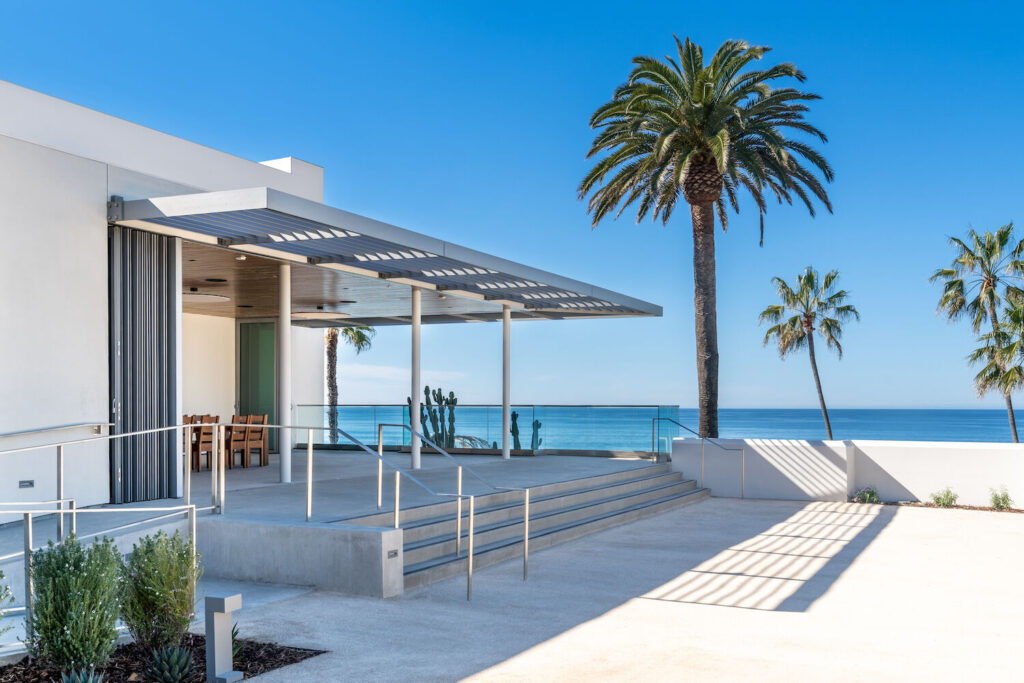
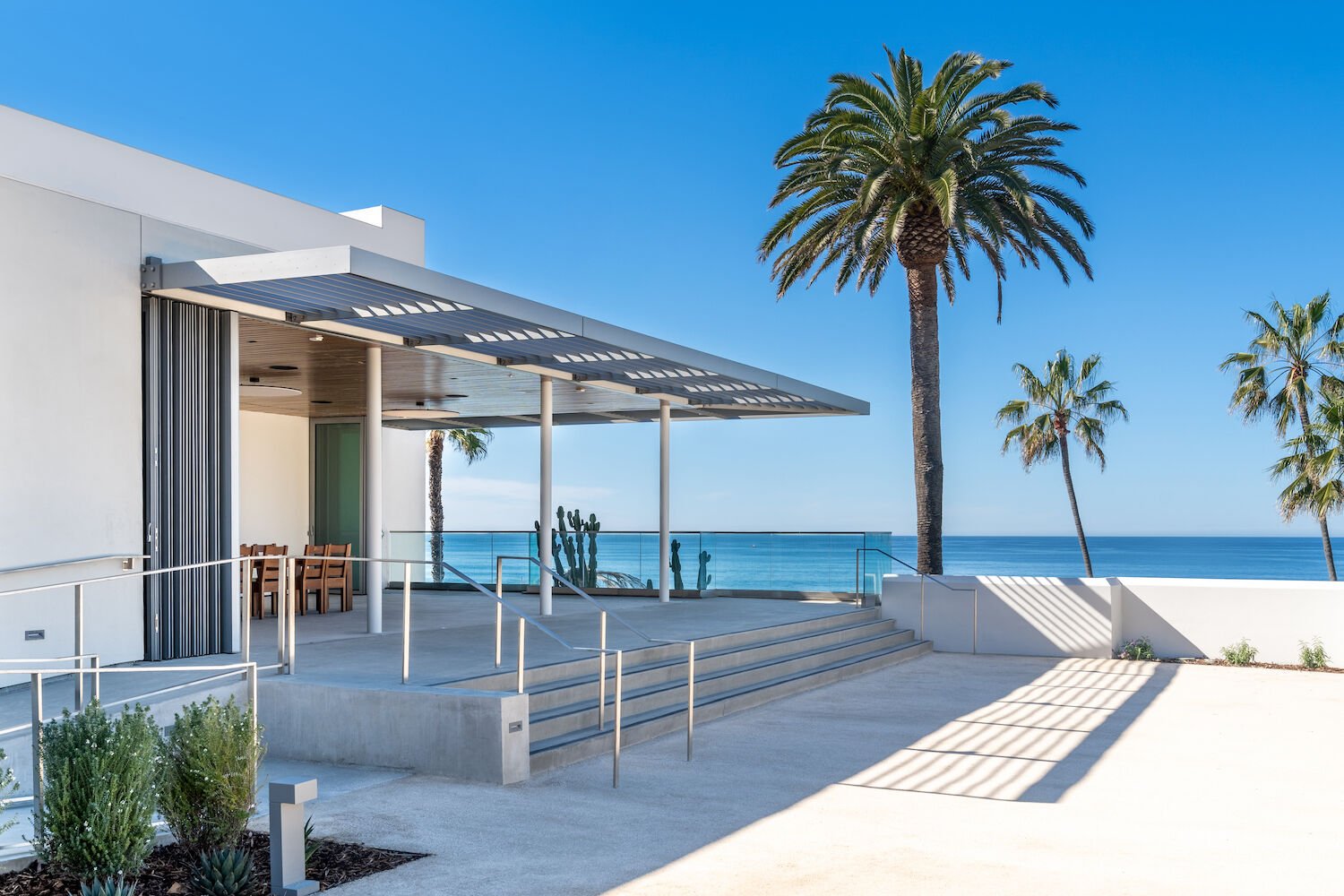
“The $105-million overhaul of MCASD, including the new Jacobs Hall, feels more connected to the topography. “It’s a delicate balance in capturing the art and architecture for each space,” says Bazzari of her approach. “Do I highlight the architecture and emphasize the artwork? Will the ocean views be the focal point, or how does the architecture connect with the landscape?”
Maha Bazzari
“I experience art within the space, sit with it, and then digest it.” That’s not the technical part, but it’s absolutely the starting point for Maha Bazzari, an architectural photographer who splits her time between San Diego and Palm Springs. The trained architectural designer and fine artist is an accidental photographer. She started by shooting her own work, then friends, and then global architecture firm Gensler came knocking.
Most recently, she was tapped by MCASD La Jolla to chronicle the quiet minimalism of the $105-million overhaul by Selldorf Architects. The photographer came often: mid-morning as the marine layer lifted. Golden hour. During a rainstorm. “I know every nook, in every light,” she says, perched on a concrete bench in the museum shop.
When she’s not traveling (Berlin, most recently) she frequents local architectural gems from the Salk Institute to Bell Pavilion. Her work has been featured in Dwell, WSJ Magazine and National Geographic. “Expressive images require an understanding of the artist’s concepts. And being selective.” Bazzari often collaborates with local artist Yomar Augusto, and there’s a fluency that develops between them. “To capture Yomar’s work is to follow the flow of lines and strong colors.”
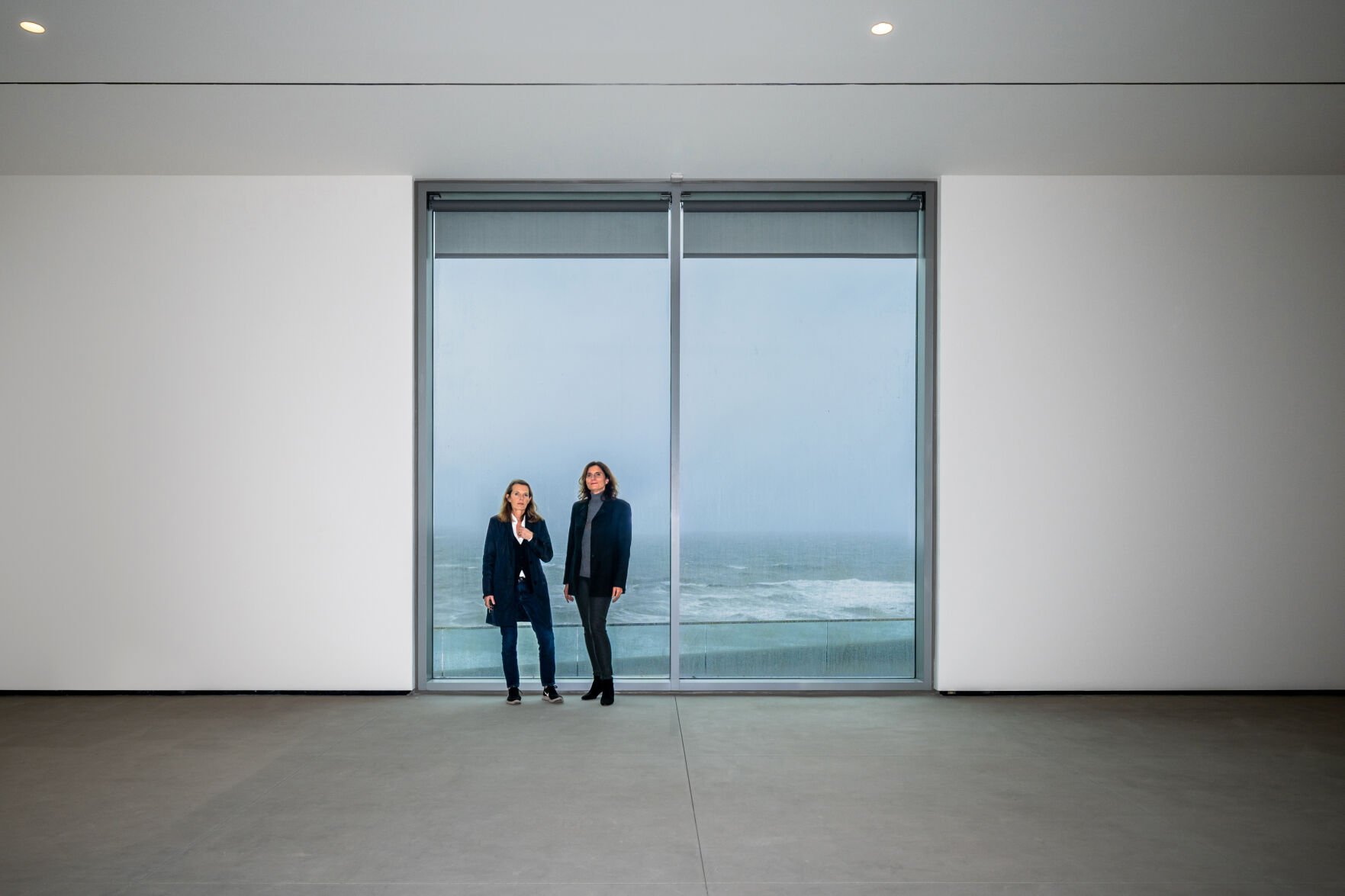
“Bazzari maximized the rare stormy day to capture this dramatic image of architect Annabelle Selldorf and MCASD director Kathryn Kanjo. “With the use of strobe lighting and image bracketing I was able to uncover the rainy views, bring them to the foreground, and show the expansive lines of the architecture.”
Maha Bazzari
“Bazzari maximized the rare stormy day to capture this dramatic image of architect Annabelle Selldorf and MCASD director Kathryn Kanjo. “With the use of strobe lighting and image bracketing I was able to uncover the rainy views, bring them to the foreground, and show the expansive lines of the architecture.”
Maha Bazzari
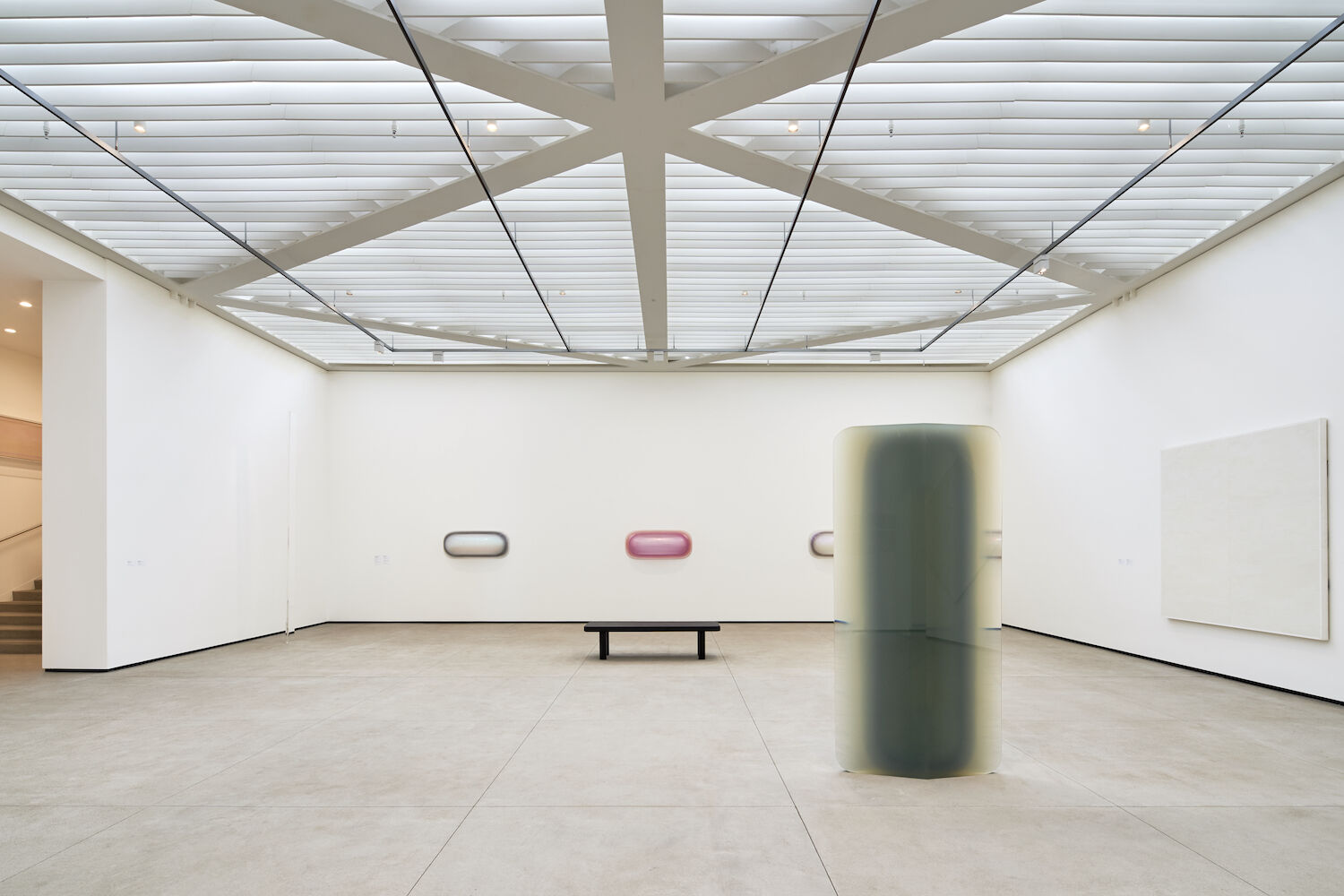
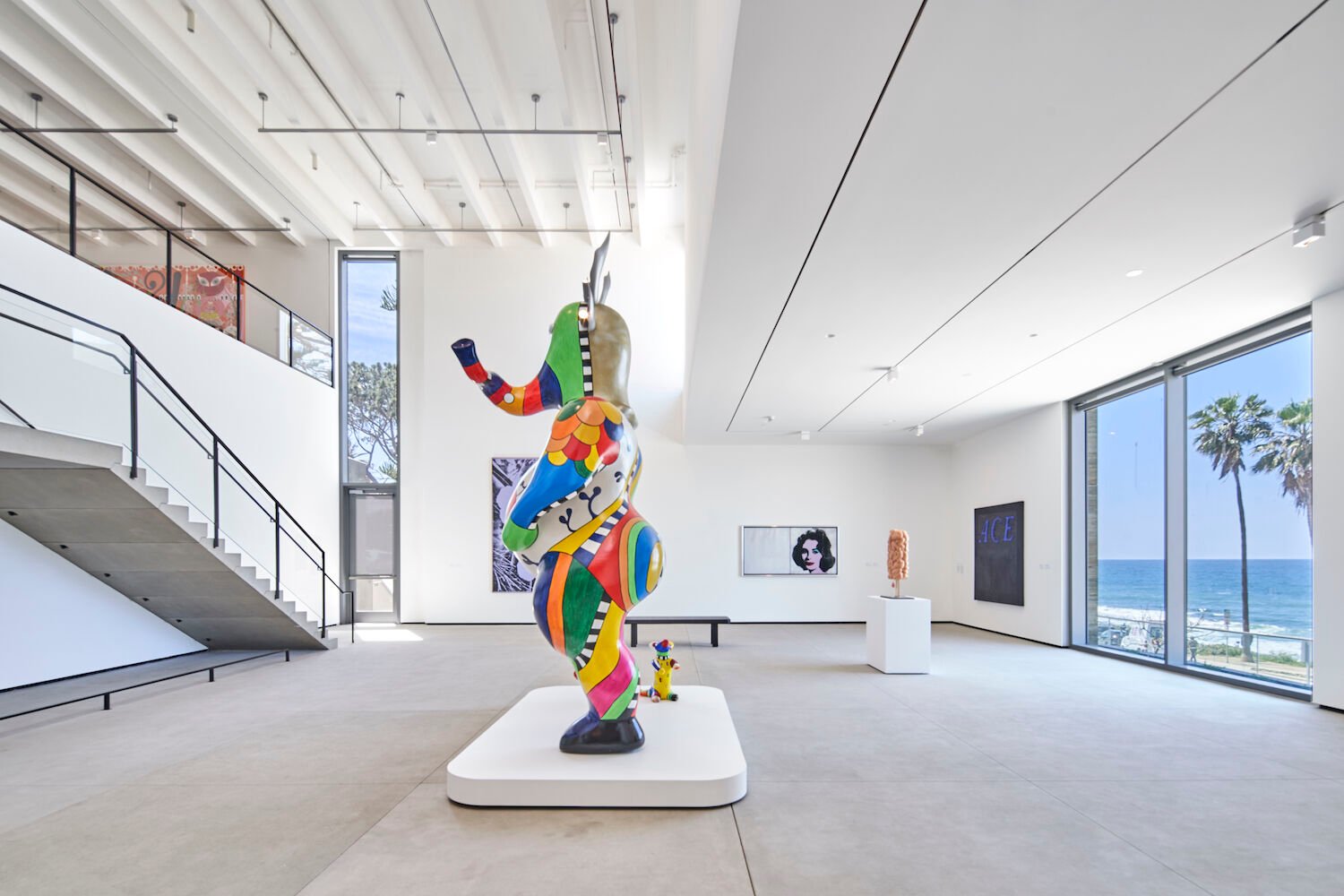
“The size of the exhibit space dictates the photography style. For the smaller exhibitions, the art must be at the right scale to the architecture so they complement each other. For larger gallery spaces, I don’t want the art to get lost or capture too much information.”
Maha Bazzari
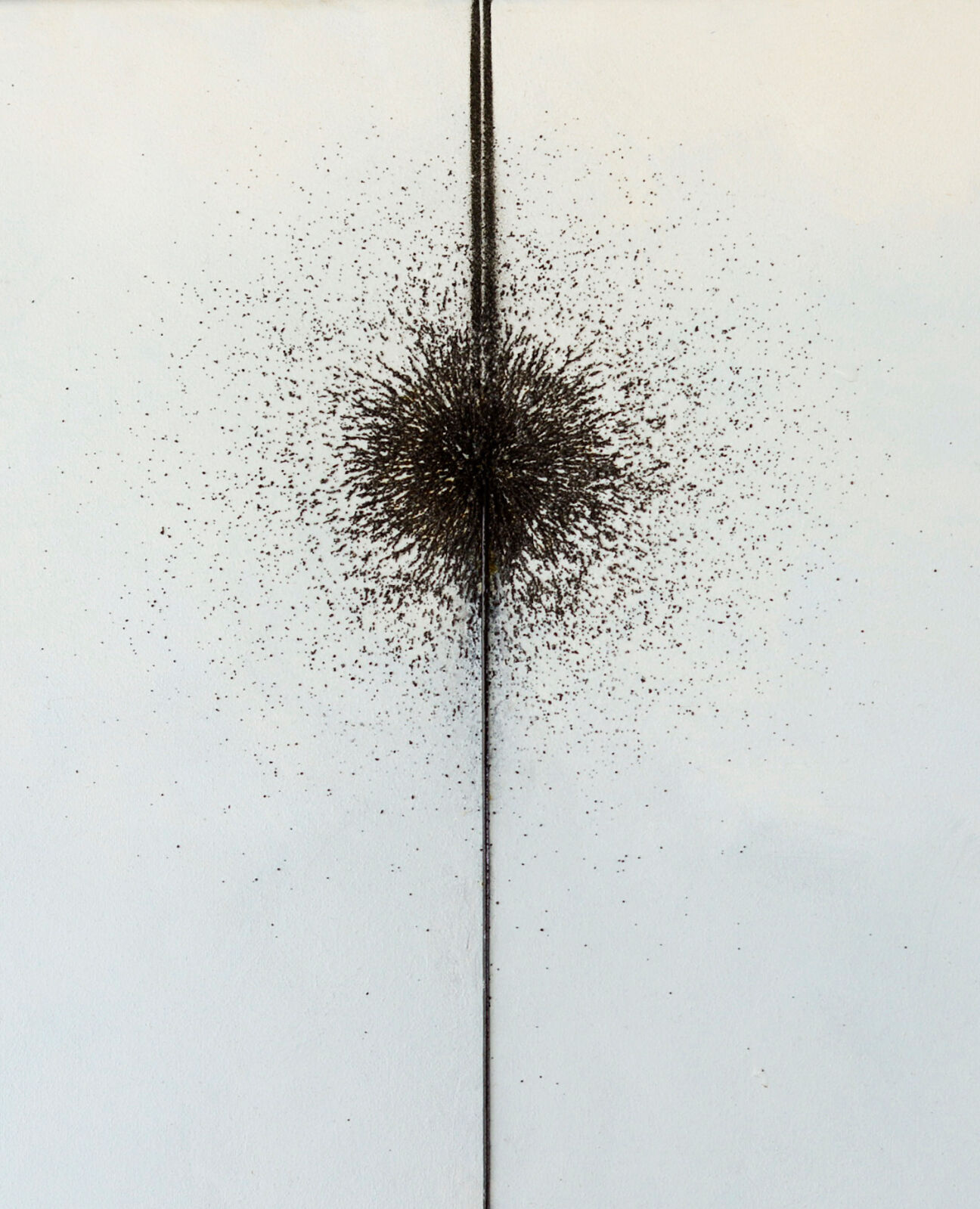
“My love for the visual arts goes beyond a still image. I dabble in painting and explore different materials. This is a detail of Gravitational Attraction. I used acrylic paint, graphite, spray paint, and iron filings that were manipulated by the use of magnets to create this shape. Concept: The force of attraction is inescapable, especially the connections between people and their souls through interaction, sharing of ideas, stories, and experiences.”
Maha Bazzari
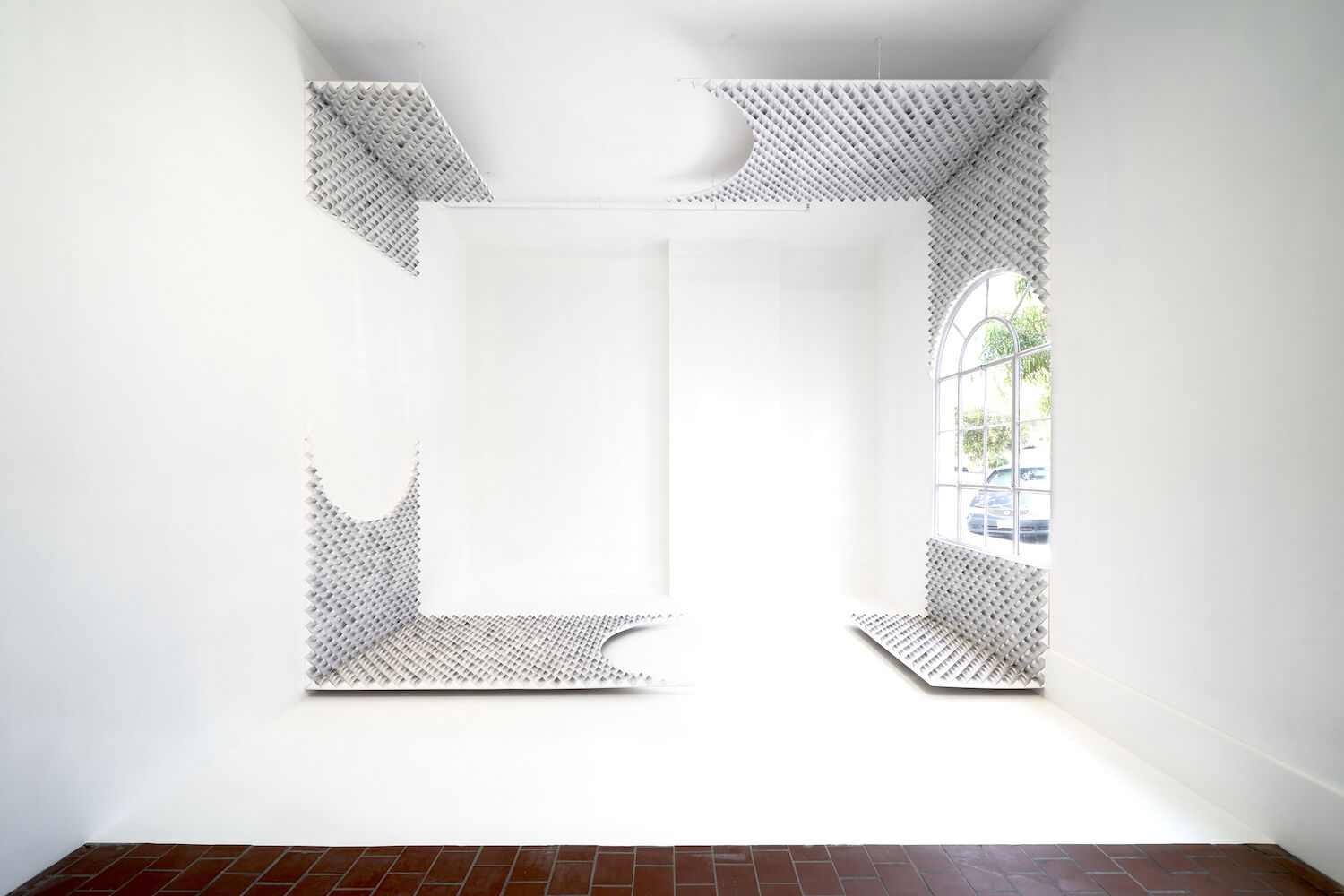
Macro-micro is a common theme throughout Bazzari’s photos, as shown with these two shots of a piece by San Diego artist Melissa Walters. Of All Things was a site-specific installation made of 2,600 paper tetrahedrons. “The amount of detail that went into this piece is mind-boggling,” Bazzari says. “I had to consider the physical space in relation to the theoretical Omniverse that contains it.”
Maha Bazzari
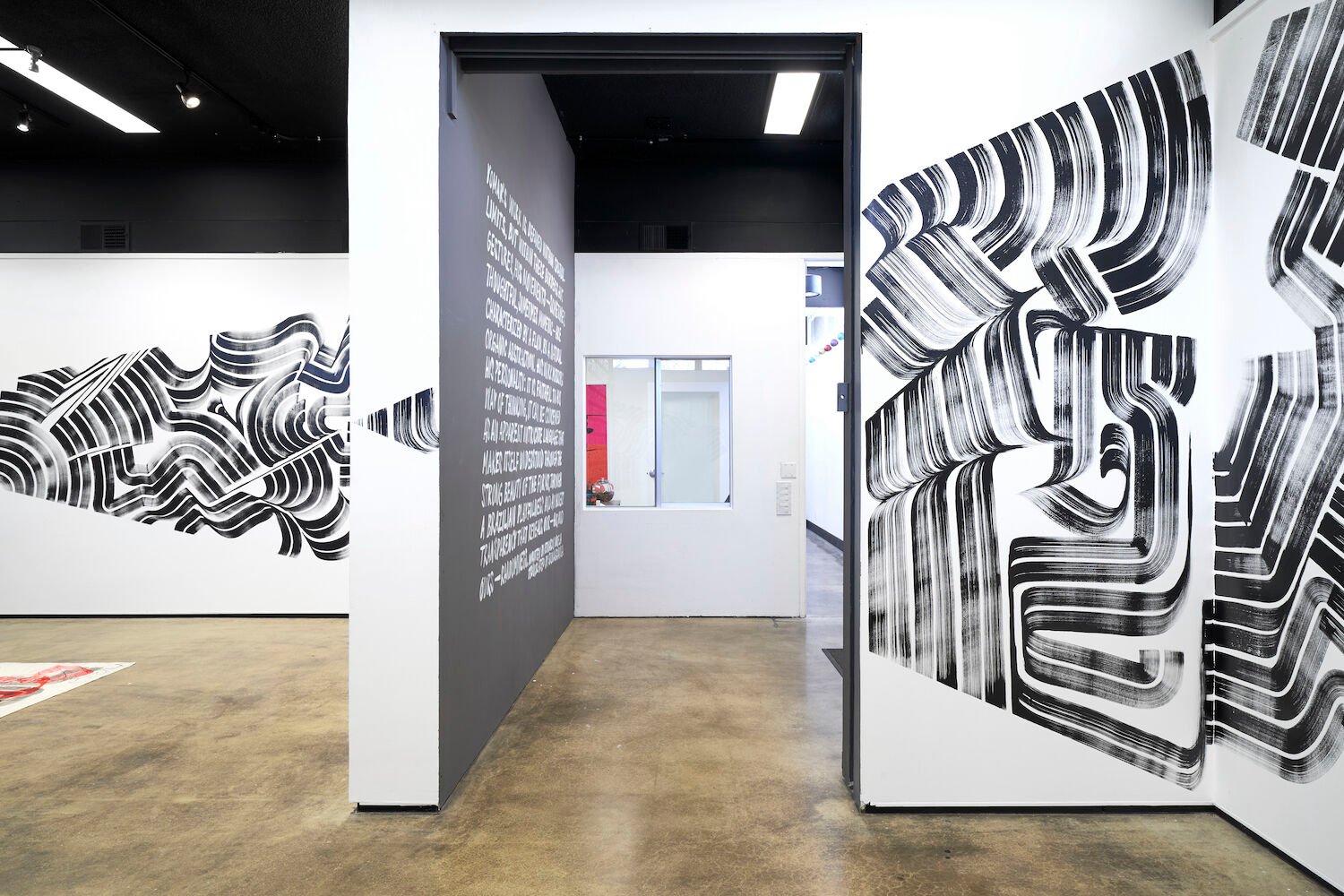
“I photographed this beautifully dramatic artwork for Yomar’s solo show at Point Loma Nazarene University. Although the mural was the main piece in the exhibition, the pieces came together through the narration of graphics throughout the gallery space.”
Maha Bazzari
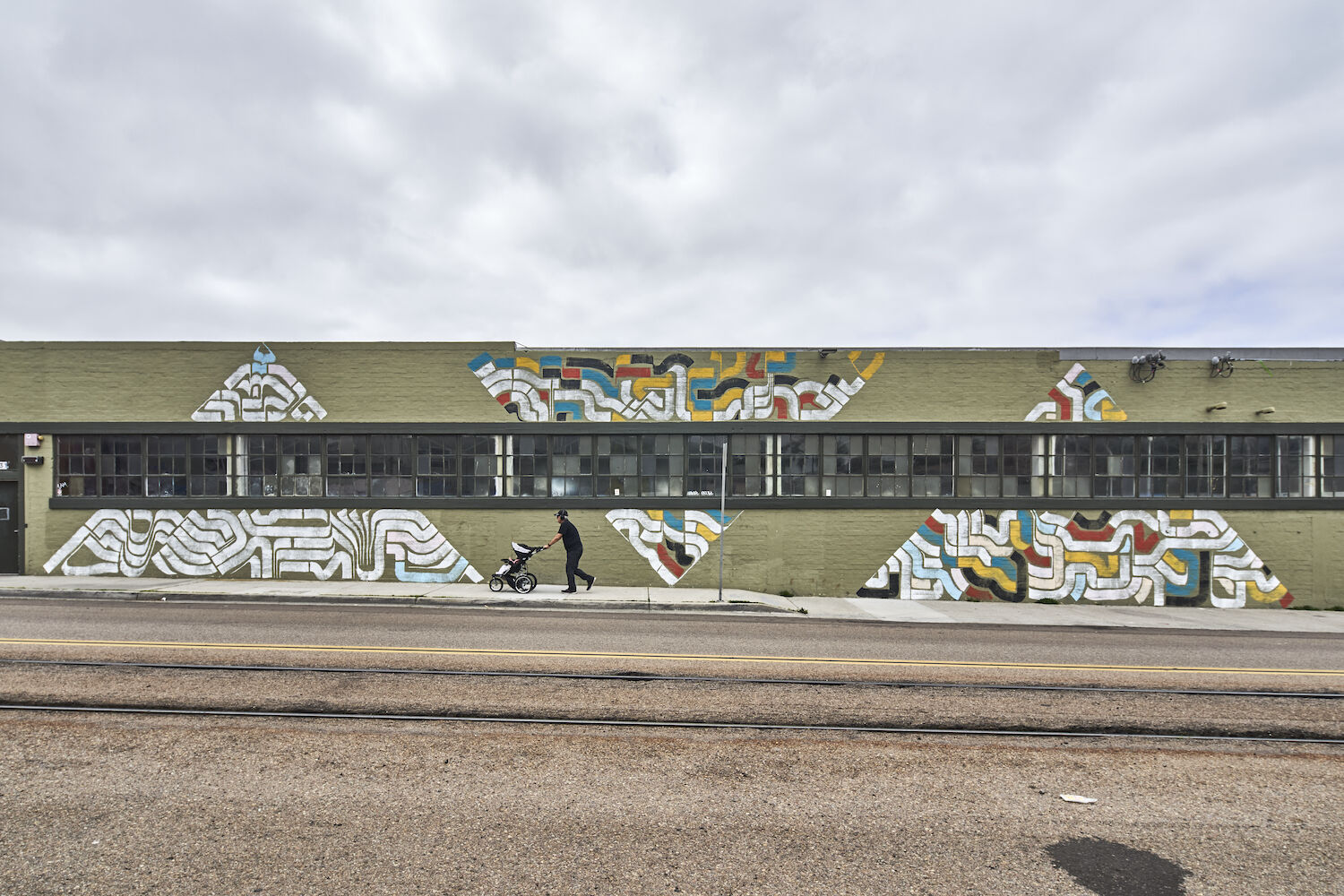
For this mural, commissioned by San Diego Made Factory, Bazzari added scale with pedestrians and trolley tracks. “I wanted to underscore the urban setting of the East Village.”
Maha Bazzari
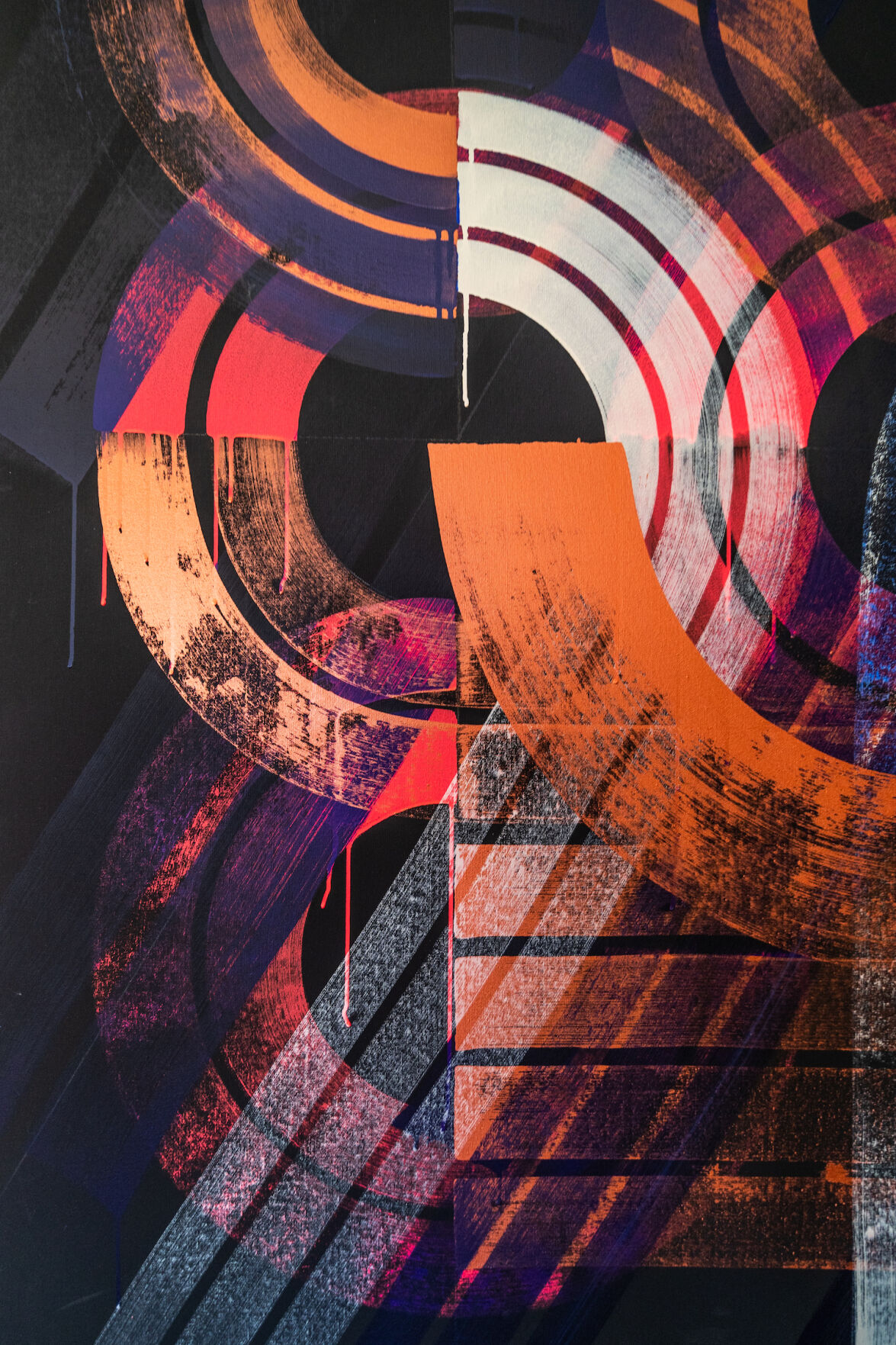
This abstract and colorful geometric calligraphy painting was commissioned for a residence in Mission Hills. “We wanted to highlight the colorful streaks and textures by enhancing the contrast, especially on the dark canvas.”
Maha Bazzari
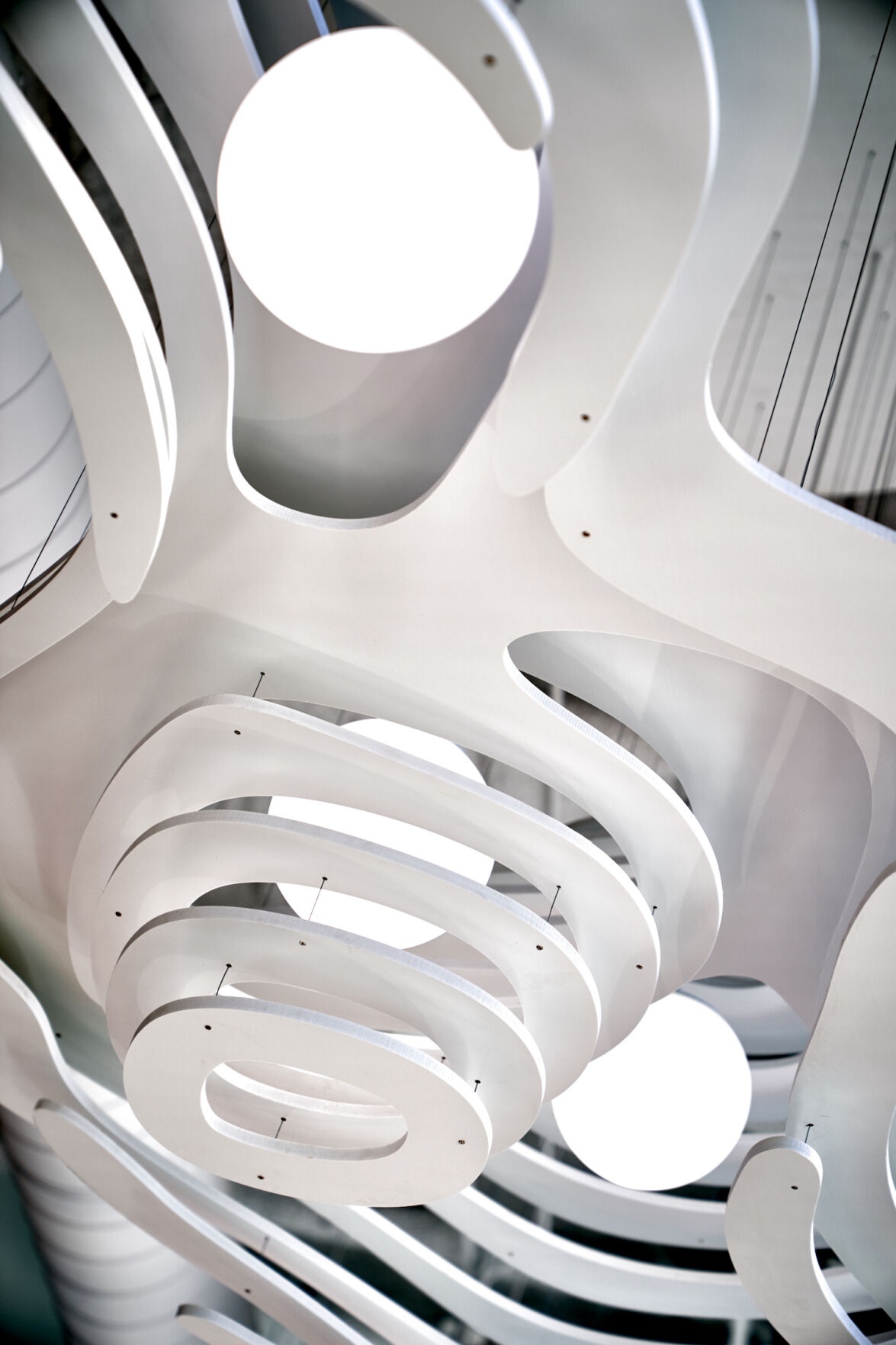
This light fabrication is by Tecture in collaboration with Gensler San Diego. “I captured the curvilinear sculptural elements made from independent layers of milled extruded PVC with suspended lighting in between.”
Maha Bazzari
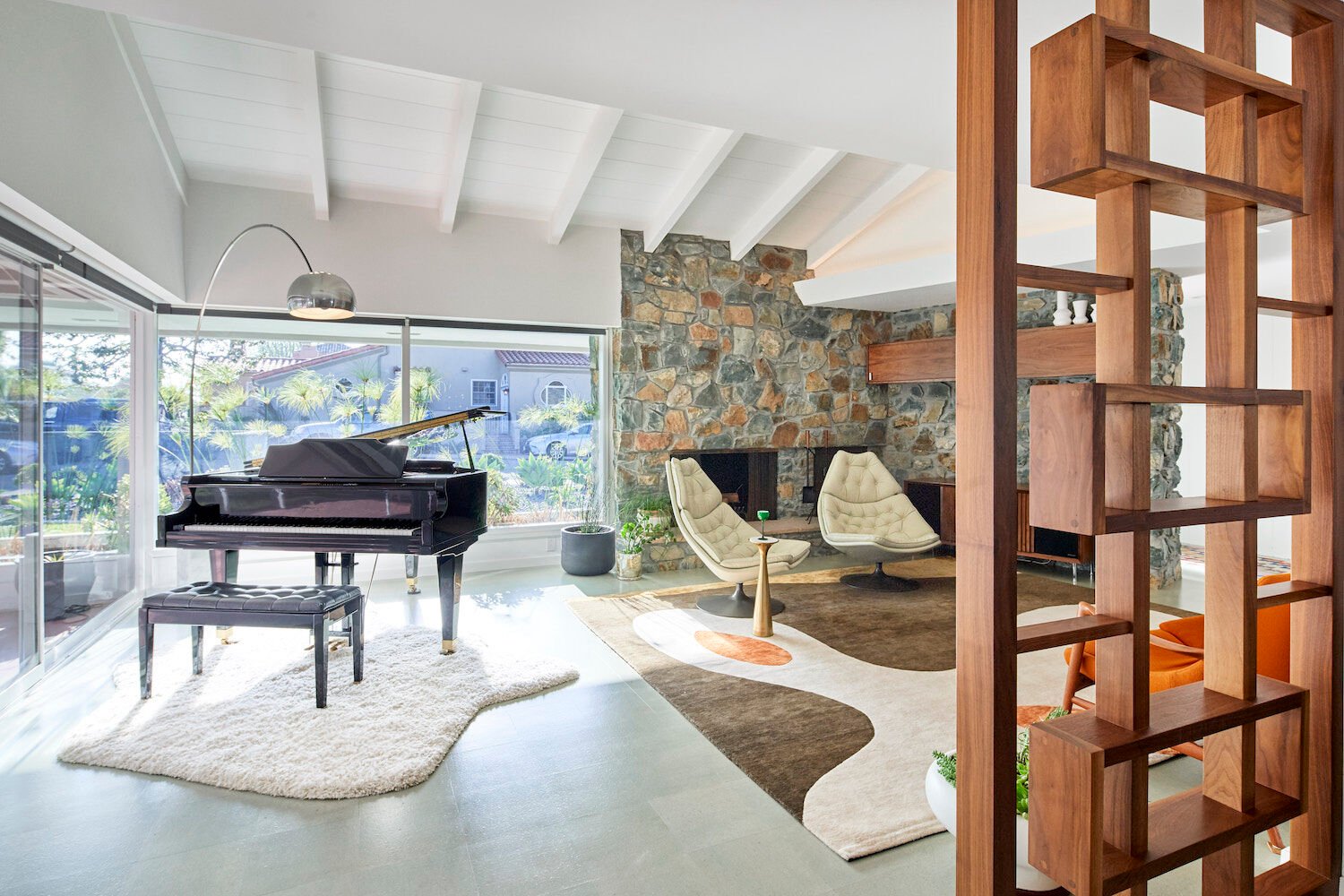
“This historic preservation of a mid-century modern house in San Diego [by architect Kristi Byers] is one of those projects that I photograph and admire all the work and consideration that went into it.”
Maha Bazzari
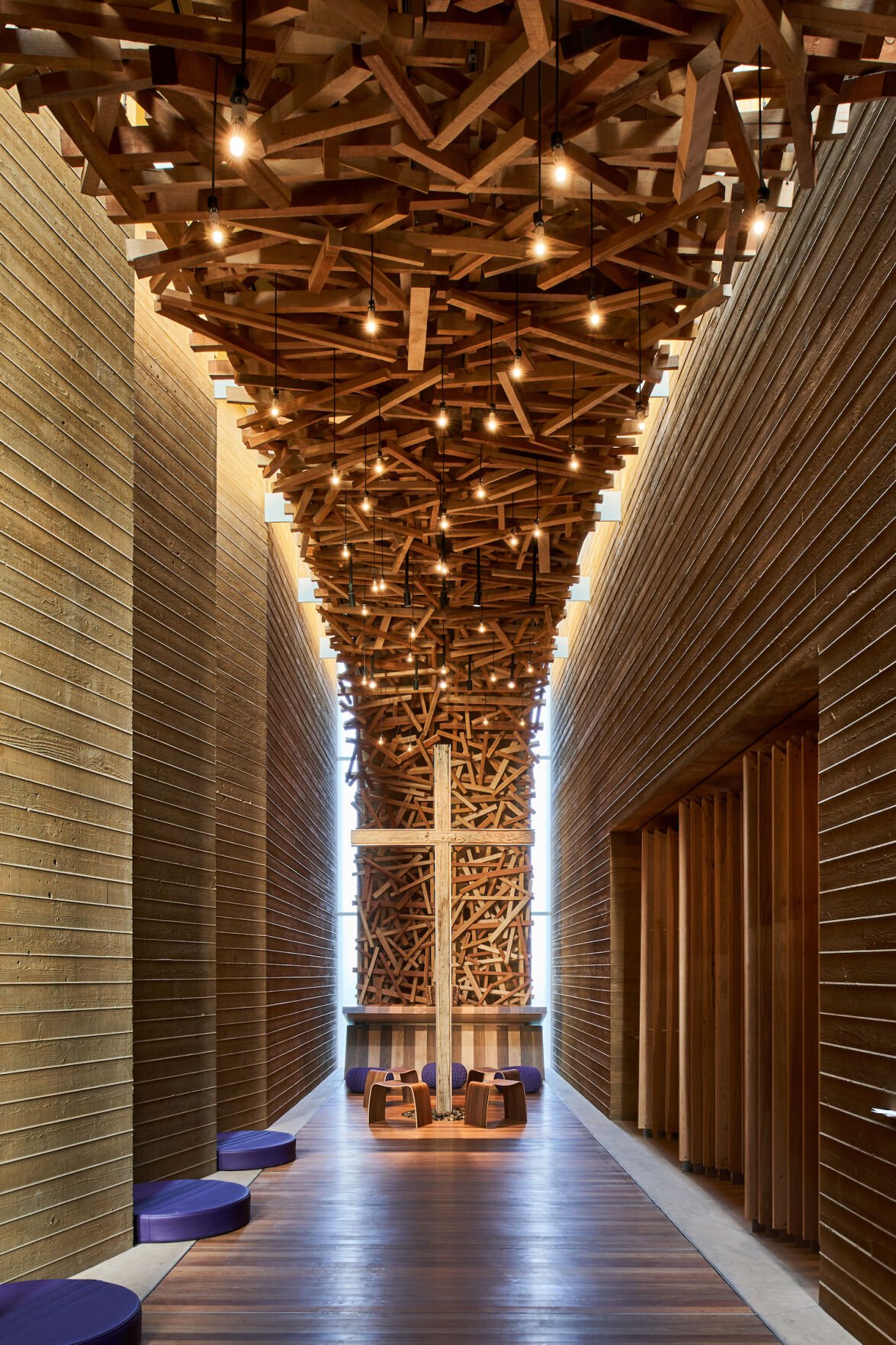
“We arrived before sunrise to make sure we captured the best light on the small chapel at Point Loma Nazarene University. It took us five hours to photograph the saturated colors, clean lines, and thoughtful materials.” The Lyle and Grace Prescott Memorial Prayer Chapel is a collaboration between architects Carrier Johnson and Tecture.
Maha Bazzari
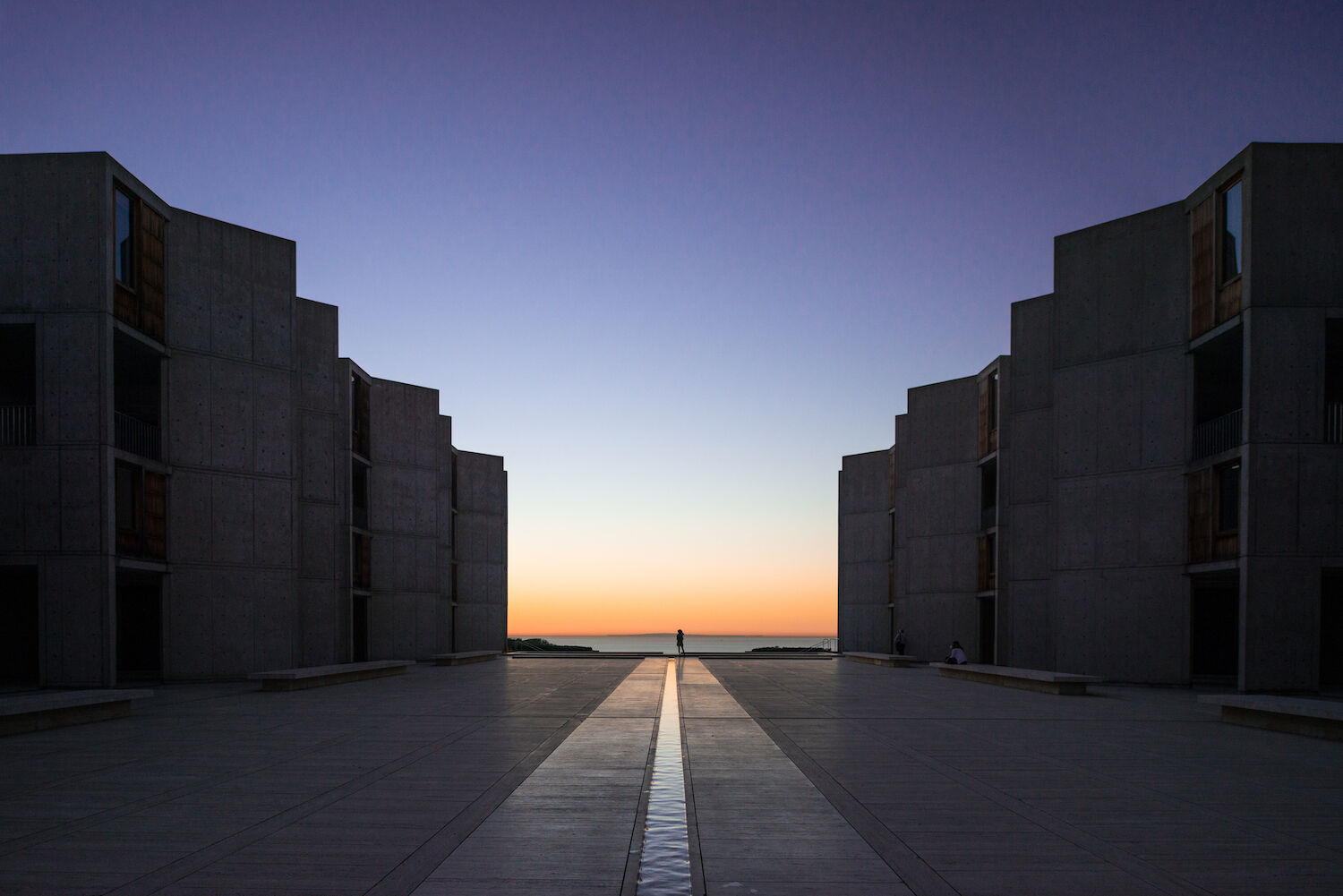
On The Salk Institute by Louis Kahn: “I can spend all day capturing this monumental architecture with its details, observing the light moving across all the surfaces.”
Maha Bazzari
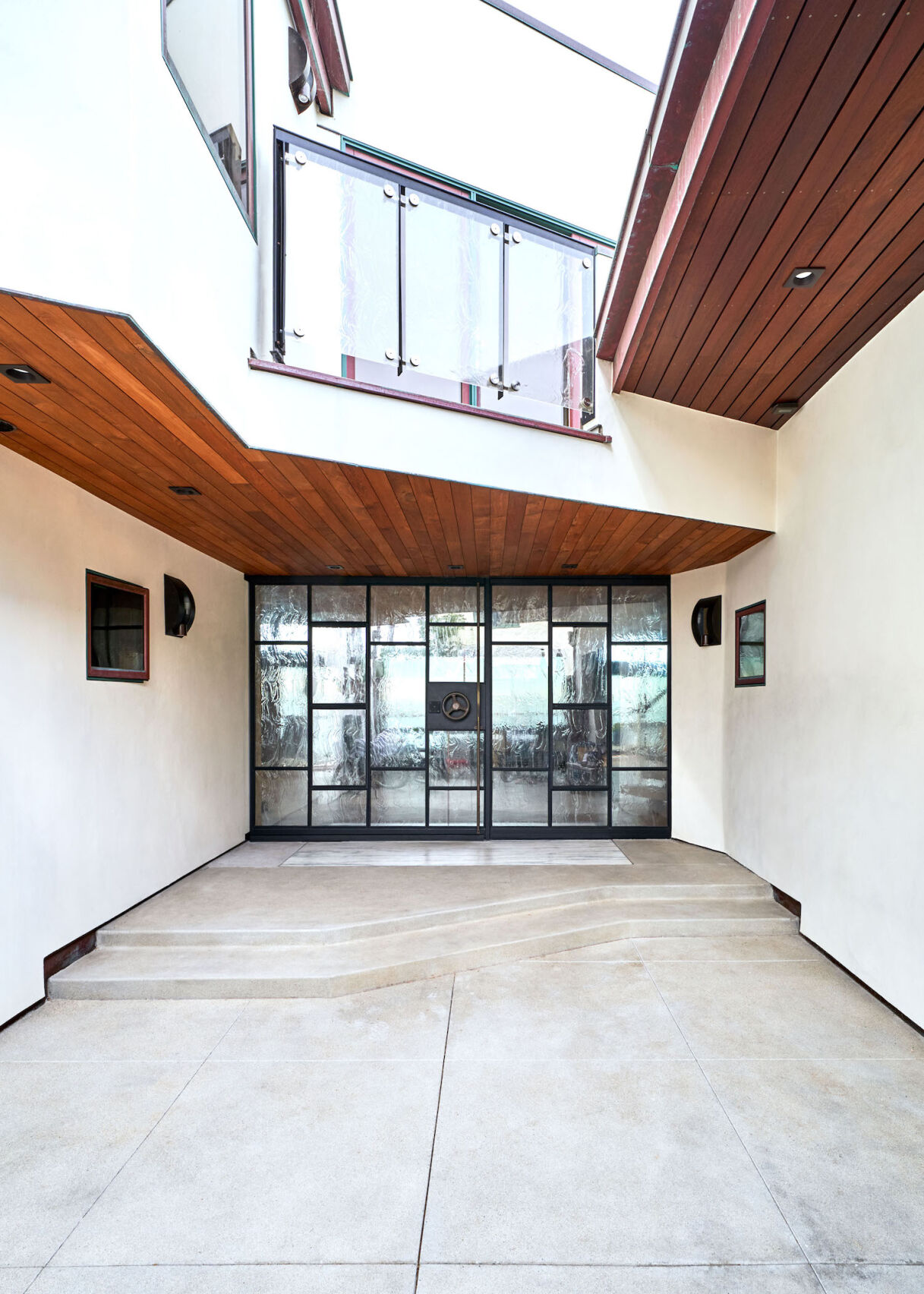
There are many approaches to shooting a door, especially this one designed and built by Tecture for a San Diego beachfront home. “It is a large pivot door with four operable windows, and a wheel operated gear system. So, we played around. Opening, closing and passing through it.”
Maha Bazzari
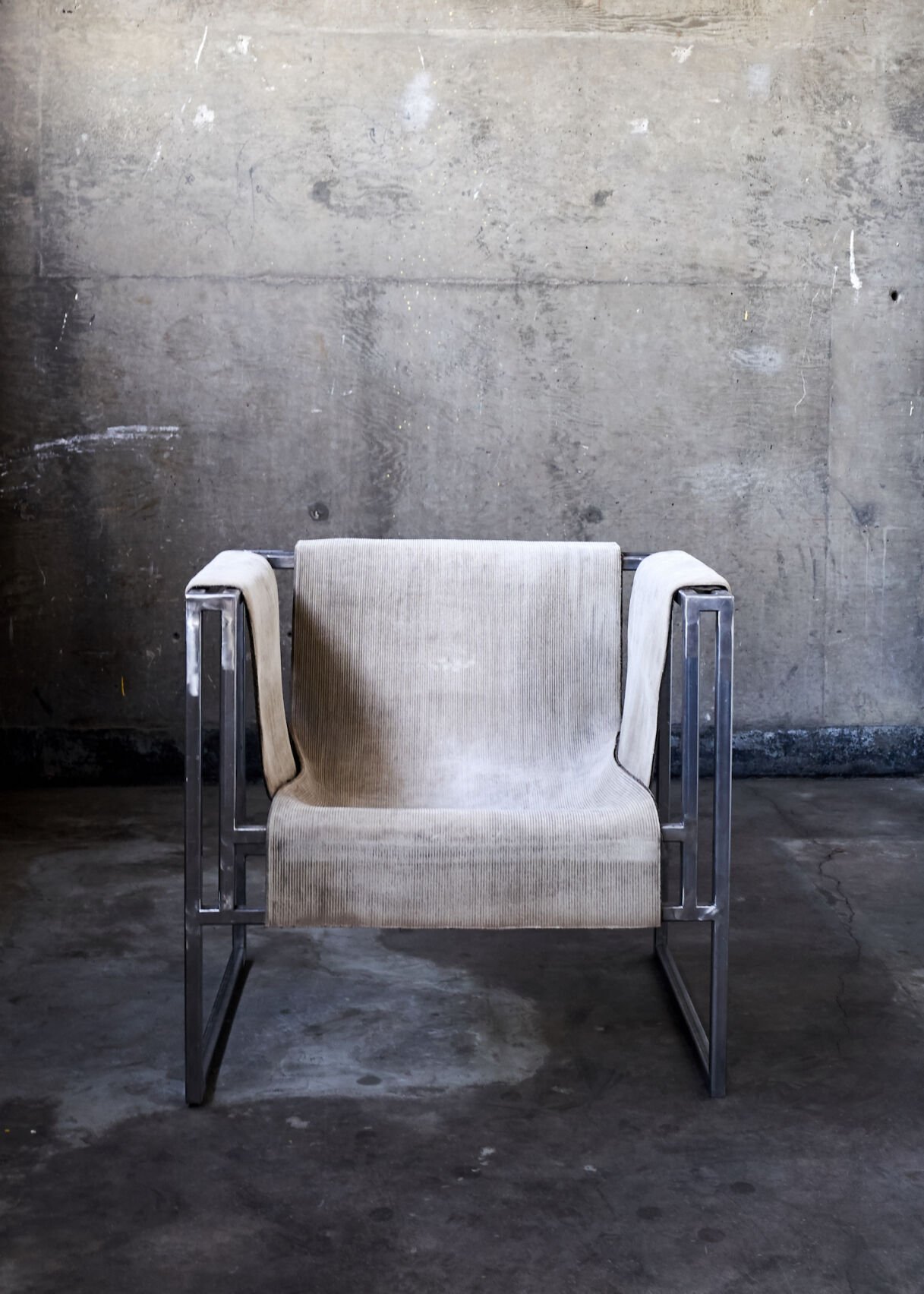
A symphony of concrete was required to show off the muscularity of this chair designed and fabricated by Tecture. “We connected this piece to its surroundings—the concrete chair to the concrete floor and walls. Aligning textures and materials was the goal.”
Maha Bazzari
A feast for your eyes and inspiration for your next remote vacation
The world is a stunning place full of culture, nature, and really great food. To celebrate our annual travel and adventure issue, we tapped some of our favorite globetrotting photographers to help us experience life through their lenses. To tickle your travel bug we’re heading around the world to buy cheese in a Puglian market, stroll the streets of Osaka, and admire wild donkeys in the Oaxacan mountains. You’re guaranteed to come away longing for your own far-flung adventure. These photos are even sexier and more enticing on the page, so be sure to subscribe to San Diego Magazine for more gorgeous travel photos.


Amelia Rodriguez is a writer and journalist and winner of the San Diego Press Club's 2023 Rising Star Award and 2024 Best of Show Award, she’s also covered music, food, arts and culture, fashion, and design for Rolling Stone, Palm Springs Life, and other national and regional publications. After work, you can find her hunting down San Diego’s best pastries and maintaining her five-year Duolingo streak.
Fifty years after the birth of hip-hop, a new retrospective showcases the genre's local beginnings
Mario “OG” Lopez walks me through a maze of display cases: tapes, old photos, vintage DJ equipment. It’s all part of the New Americans Museum’s Beyond the Elements exhibition—a San Diego hip-hop retrospective and passion project he curated.
“There are four elements in hip-hop, and the vision of the exhibit was to go ‘beyond the elements’ and embrace the multicultural roots that are a huge part of hip-hop,” he says.
Through airbrushed jackets, throwback posters, and VHS footage, those four elements—deejaying, emceeing, graffiti art, and breakdancing—mix together at the Liberty Station showcase, telling the story of rap’s local beginnings.
“These are my friends,” Lopez says. “I’ve always wanted to show the art.” It’s a short answer to a long question about inspiration and ideas, about what goes into putting something like this together.

As we continue through, he points out a face. “There’s Zodak,” he says, gesturing toward a framed, black-and-white Tribal ad featuring the legendary local graffiti artist holding a name plate. Highlighting his own work (he’s a graphic designer), Lopez motions to the cover of Aztec Tribe’s cassette single Diego Town. The artifacts are a dense tapestry, a timeline four decades long of rappers, breakdancers, DJs, and painters, spread across two rooms.
It would be easy to recognize the players if this were New York or LA, but rap stars aren’t traditionally plucked from around these parts. There’s talent, for sure; however, most of it has had little influence outside of SD. That’s to say that this is a self-contained history, based on a homegrown ecosystem held together by storytellers, smooth talkers, and colorful personalities.
There’s no defining sound or even a single approach. Aztec Tribe carved out a lane as Chicano rap pioneers in the early ’90s, while San Ysidro’s Legion Of Doom (LOD)—who are featured prominently throughout the exhibition—worked their tag-team, Run-D.M.C-like chemistry into a formula that repped South Bay.
And while the vocalists were manipulating rhymes, local dancers were adopting the movements and body contortions of hip-hop’s B-boy element: a choreographed set of ticks, spasms, and spins that, in our neck of the woods, was part West Coast pop lockin’, part East Coast footwork. They’re represented, too, in the exhibit.

A wall marked “80’s Breakdance Era” shows off hand-drawn flyers and pictures of teenagers frozen mid-routine, rocking on linoleum. Inside a glass square stands a July 2, 1984, copy of Newsweek magazine that reads “BREAKING” in bold, white letters. And resting near the top sits a black medallion from the Universal Zulu Nation, an international awareness group and official fraternity of hip-hop—a true mark of legitimacy. The pieces speak for themselves. The hometown B-boys were the real deal.
That’s how Lopez got his start: managing a group of breakers called the Floor Masters. “My mom’s house was kinda like the home base,” he says. They were unique on their block, but the culture reached beyond his ’hood. It wasn’t until he and his squad ventured past their side of town that any of them realized breakdancing was everywhere.

“We didn’t know that it was happening in other neighborhoods,” Lopez says. “So, when we would go and perform at Balboa Park or something and put out the hat to make money … then [we] had other crews coming and [trying] to battle.”
Just as hip-hop in NYC was a byproduct of its boroughs (even though it started in the Bronx), rap’s local vernacular differed depending on its enclave. Aztec Tribe was based in Spring Valley, while Mario and the Floor Masters grew up in Sherman Heights.
From the county’s eastern edge to its downtown hub, there’s an extensive history documented in Beyond The Elements. The exhibit captures our rich heritage, one that’s worth exploring. And, as a narrative, this isn’t a nostalgia exercise or a trip down memory lane. Instead, it’s a commemoration, a nod to the hometown trailblazers who helped mold local culture through sound, art, and dance with imagination and virtuosity. A powerful message as hip-hop celebrates its 50th anniversary.

As my visit winds down, Lopez and I are joined by Zard One, an original member of the Floor Masters. We’re seated in the gallery space across the hall, and I notice his fingertips are stained with paint. Thoughtful and soft-spoken, he’s an artist and lifelong friend of Mario’s.
The docents are making their rounds, turning off lights and securing items. It’s a signal that I’ve overstayed my welcome. But, before I head out, I ask them both what they hope visitors take with them.
Lopez is first to answer. “We have tours coming in from different schools that are interested. It’s [about] educating the kids,” he says.
Just like hip-hop, the exhibit serves as a generational legacy. Each one teach one, as they say.
“It’s for the youth,” Zard One adds.
Artist John Halaka’s new exhibition at the Oceanside Museum of Art asks viewers to face the impacts of settler colonialism
“I think of us as a culture of deniers,” John Halaka says. “We tend to shy away from complex topics. We tend to shy away from our responsibilities to the histories that brought us to where we are.”
The artist, a professor of visual arts at the University of San Diego, has spent much of his life immersed in those histories. Moved by the US Civil Rights Movement as a college student, Halaka developed “a deep-seated interest in justice and in human rights,” he says. He studied the history and politics of Palestine, eventually traveling there to interview and record individuals’ memories and stories. As a Fulbright scholar in 2011 and 2012, he spent nearly a year in Lebanon working with four generations of Palestinian refugees, an experience that deeply informed the pieces in his new exhibition at the Oceanside Museum of Art (OMA).

Entitled Listening to the Unheard/Drawing the Unseen: Meditations on Presence and Absence in Native Lands, the exhibition runs through February 18. Hung in stairwells and filling two galleries on OMA’s second floor, Halaka’s drawings—portraits of the people he interviewed, interpretations of the narratives they shared—are enormous, arresting, beautiful. And their meaning is undeniable.
It’d be easy to imagine the exhibition’s titular absence as emptiness, faint outlines, blank space. But Halaka’s work is the opposite. His drawings are densely layered, packed with stamped words (“RESIST” and “REMEMBER” among them) and tiny lines that coalesce into faces, hands, thorny vines. Approach too close, and they dissolve into visual snow.
“Absence and presence are essentially the two sides of a coin,” Halaka says. “When I engage with displaced individuals, there’s always this duality. They’re absent from the land, their homes; their history has been shattered. But all of that history is present within them. I try to visualize that by having two or more things exist at the same time.”
Some of Halaka’s most moving works superimpose portraits of Palestinian refugees over photographs of villages that were destroyed in Palestine in 1948—or vice versa, with the villages drawn over photos of the refugees. Faces, bodies, and buildings are rendered semi-transparent, ghostly. When underlaid beneath the portraits, the ruins appear as part of the refugees, giving texture to their skin.

A few pieces in the exhibition feature drawings of activists (including Lakota author Mary Brave Bird and Palestinian historian Hussein Lubani) on maps of the US and Palestine, visually melding people and their ancestral lands.
Other works, less layered but no less complex, are portraits and drawings made with a wood-burning tool. Thousands of scars form images on large panels of reddish oak, referencing “the cuts and burns that shaped [the refugees’] lives on a personal, communal, and national level,” Halaka explains.
I ask Halaka how he approaches the responsibility of translating others’ experiences for a wider audience. It’s a question that plagues me as a journalist, I admit to him.
He says that, in some ways, their story is his story—as the son of a Palestinian father and as an immigrant who came to the United States when he was 12, he shares many cultural touchpoints with the people whom he interviews, though he himself was not a refugee.
But even more critically, “I’m very, very aware of asking permission and of letting them guide my learning process,” he says. Behind each piece on the museum’s walls are hours of trust-and relationship-building with the refugees whose narratives he transforms into art. “I’m allowing their stories to shape me,” he adds. “I’m the empty cup waiting to receive knowledge so I can grow from that knowledge.”
Halaka hopes that, for museum visitors, viewing his art is merely the beginning of their own process of confronting the legacy of settler colonialism. “My drawings don’t tell the whole story,” he says. “They’re little stanzas of a much longer story.”
Amelia Rodriguez is a writer and journalist and winner of the San Diego Press Club's 2023 Rising Star Award and 2024 Best of Show Award, she’s also covered music, food, arts and culture, fashion, and design for Rolling Stone, Palm Springs Life, and other national and regional publications. After work, you can find her hunting down San Diego’s best pastries and maintaining her five-year Duolingo streak.
Stake Chophouse & Bar brings contemporary classics and old-school service to the heart of Coronado
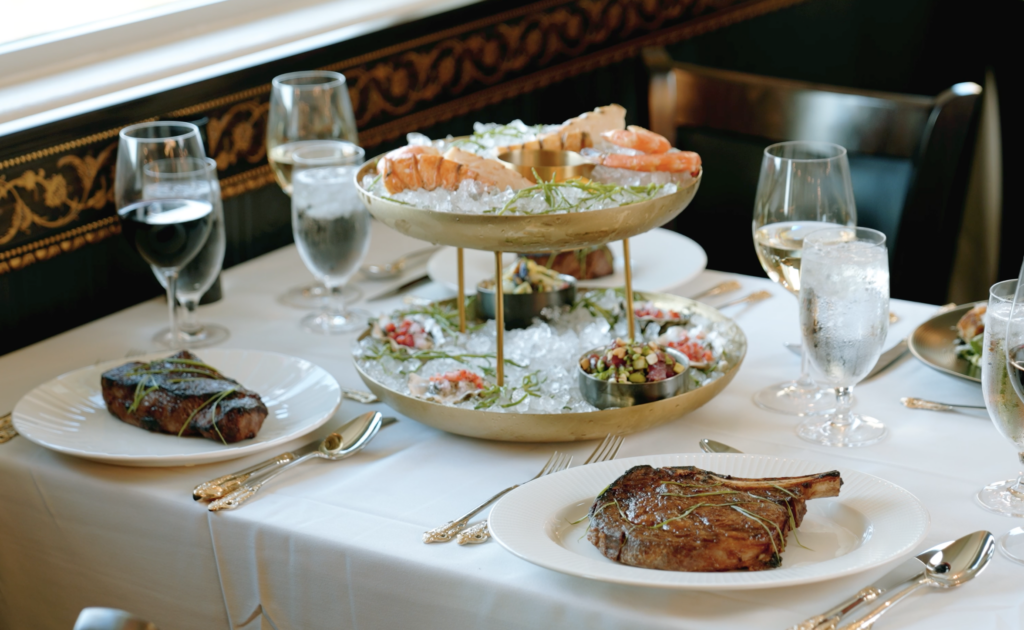
Stake Chophouse & Bar isn’t your average steakhouse. Blue Bridge Hospitality’s Coronado outpost is a modern interpretation of a big-city steakhouse nestled in the heart of the small coastal community. The team at Stake has reimagined the whole steakhouse experience. By prioritizing a seasonal farm-to-table sourcing philosophy, a personalized guest experience, and unique service touches, like a formal steak presentation and a bespoke knife selection process, Stake distinguishes itself in a sea of steakhouses.
Exceptional steaks, including Wagyu from Japan, Australia, and the U.S., and fresh seafood flown in daily form the core of Stake’s culinary identity. The menu features a five-course omakase-style steak experience highlighting house favorites, plus an array of cuts, and classic steakhouse staples—think a wedge salad, baked potato, or pasta carbonara—refined for a contemporary palate without losing their traditional appeal. Stake focuses on seasonal sourcing from the region’s best family farms and specialty purveyors, and incorporates intentionally unexpected touches to create something truly unique.
“I challenge our chefs and myself to take it a step further in sourcing,” says Chef Ronnie Schwandt. “It’s important to us to highlight different farms, unique one-off farms—whether it’s cattle, strawberries, a local fisherman or from anywhere in the United States, we’re always trying to find that niche.”
Beyond the menu, Stake emphasizes outstanding service, says Vinny Spatafore, Director of Hospitality Operations. Staff maintains detailed notes, allowing them to remember guests by name, recall previous orders such as a favorite martini (also memorable for the customer since it’s served in an extra tall, distinctly-shaped glass), and celebrate special occasions like birthdays and anniversaries.
“When you have those points of topic that you remember about a guest, they appreciate that,” he says. “Our servers are really good with that—we have a couple servers who have been here since the beginning and they’ll remember somebody from years ago, their name, their kids’ names, where they live. I’m really thankful to have a great front of house staff.”
Award-winning wines, rare whiskeys, special events, and a complementary black car service that provides transportation for guests throughout Coronado add to Stake’s appeal.
Schwandt stresses that Stake offers more than a meal; they aim to give patrons something unforgettable.
“It starts when you walk up the stairs and are greeted by the hostess—that sets the tone for the night. Then you’re greeted by a server, who may know you by name, and can guide you through the menu and curate as they get to know you,” says Schwandt. “Most people leave kind of blown away; they leave feeling like they just had an experience. That’s the goal, right? Whether you’re serving smash burgers or high-end steak, you want somebody to leave thinking, Wow, that was awesome.”
The California-based nonprofit provides food, shelter, clothing, medical care, and legal aid to those displaced along the United States-Mexico border
A Border Kindness group heads out just after sunrise. An average group is “usually around 8 to 12 people with an average hike length of 5 to 10 miles,” Cordero says.
James Cordero
Every week a group of volunteers heads to the eastern reaches of San Diego County, somewhere in the mountains, past the end of the big fence. They’re with Border Kindness, a California-based nonprofit that provides food, shelter, clothing, medical care, and legal aid to asylum-seekers, migrants, refugees, and the displaced along the United States-Mexico border. The San Diego chapter, run by James Cordero and his fiancé Jacqueline Arellano, handles the area’s water drops, which require arduous hikes into the deserts where migrants cross by foot, regardless of whether there’s searing summer temperatures or snow.
Border Kindness volunteers leave water, food, and clothing in canyons, mountains, and desert flats known to be frequented both by migrants and Customs and Border Protection (CBP, border patrol). They also remove trash from through-hikers and migrants who leave their personal effects along the rocks. The team has come across just about every likely scenario from border patrol apprehensions to encountering the remains of people who lost their lives in the final stretch of what was almost surely a long journey throughout the Americas.
A keychain left behind with the image of la Virgen de Guadalupe—patron saint of both the Americas and vulnerable people. It’s a common image seen on items belonging to migrants.
James Cordero
Aside from witnessing and experiencing trauma in real-time, there are other risks: in 2019 a volunteer with an organization doing similar water drops in Arizona was charged with two counts of felony harboring and one count of conspiracy. In the end, he went free with a hung jury, but the legal risks of unsanctioned humanitarian aid are real.
“We provide humanitarian aid for many reasons,” Cordero says. “We have family that has immigrated to the United States. We want to help minimize the suffering and death that occurs all too frequently along the US-Mexico border. When you have a serious issue presented in front of you, it becomes a moral responsibility to do what you can to help. That is what we do.”
A view from the top of a mountain ridge shows the canyons where migrants have to travel to try to evade border patrol. “Some caches are deposited over 5,000ft of elevation in the mountains, but most drop sites are less than 1,000ft, some below sea level,” Cordero says.
James Cordero
A sombrero lays on top of a bush in a very windy area. “We presume the hat blew off the head of someone traveling through,” Cordero says.
James Cordero
Border Kindness Water Drop co-director James Cordero poses with a consumed gallon of water he left behind on a previous drop. The volunteers pick up trash, including discarded water bottles, as they deposit supply caches along their hiking routes.
James Cordero
Border Kindness volunteers leave a supply cache consisting of gallons of water, canned food, and sun-protective clothing.
James Cordero
A juvenile rattlesnake, coiled up, camouflages into the decomposed granite and sandy wash believed to be transited by migrants.
James Cordero
Cordero scribbled a bible verse from Romans 12:13: “Share with the Lord’s people who are in need. Practice hospitality.” It is assumed that the vast majority of migrants are culturally familiar with Catholicism.
James Cordero
A camouflaged CBP motion detection surveillance camera was recently installed in a highly migrant-traveled corridor to track human movement.
James Cordero
A border patrol truck races toward the Border Kindness Water Drop team. After realizing who they were, they let them be.
James Cordero
Children’s clothes strewn about a hillside, at the site of a border patrol apprehension, shows the reality of who’s actually crossing the desert.
James Cordero
A Border Kindness group scales a rocky mountainside, scouting for traces of recent migrant travel.
James Cordero
Jackie is a long-time freelance journalist covering cannabis, food/restaurants, travel, labor, wine, spirits, arts & culture, design, and other topics. Her work has been selected twice for Best American Travel Writing, and she has won a variety of national and local awards for her writing and reporting.
Meet the latest and greatest local tastemakers in film, theater, books, visual arts, music and new cultural spaces
Melody Moulton runs a small shop filled with esoterica in the front of her South Park art gallery, Trash Lamb
Madeline Yang
The most recent mural to go up in national landmark Chicano Park pays tribute to a major cultural institution of Chicano life: the car club, and the lowriders who created rolling works of art. The five-story mural is dedicated to Brown Image, the shop in Barrio Logan where many clubs workshopped their cars. According to artist Henry Rodriguez, he funded the mural and sketched it out using photos from his family album.
The painting—which uses lowrider-art techniques like airbrushing and gold flakes—took 10 months to complete and involved over a dozen local artists, including well- known muralists Victor Ochoa and Roberto Posas. The artwork features dozens of faces Barrio locals will recognize and completely covers one of the massive pillars holding up the 5 Freeway that straddles the Chicano Park playground. Murals are a huge part of the Chicano artistic expression, but Rodriguez says few, if any, have depicted the iconic car clubs. “It’s art as education,” he says.
The binational art scene is alive and well, thanks in large part to San Ysidro’s Casa Familiar. The organization recently ran a paid apprenticeship for 17 emerging artists in the San Diego-Tijuana region, which resulted in an exhibition called New Native Narratives (Nuevas Narrativas Nativas) at The Front: Arte & Cultura. Ones to watch include Natalia Ventura, whose Arropada is almost like an embroidered veil or a map to a continuous, somewhat convoluted journey; Evan Lopez, who uses 32 ceramic letters made from Tijuana River Valley sediment in She Gives Us Water to display natural links between San Diego and Tijuana; Adrián Del Riego, whose sculpture of an antenna with plants evokes both the shared flora and radio waves of the border region; and Casiel Sanchez, a visual artist and one of San Diego Magazine’s designers.
Created during the pandemic, Melody Moulton’s Trash Lamb Gallery in South Park is a leap of faith into the realm of quirk and oddballism. She’s struck a chord and seems to be nourishing a section of San Diego’s bohemian soul. Trucker hats get a cheeky graphic update and eccentric posters pack a visual punch. But Trash Lamb isn’t just another source of radical low-brow tchotchkes. Moulton, a visual artist herself, is a talented curator with an eye for the interesting. She curates shows at the shop at least twice a month, featuring work from local and national artists.
Cornado’s Kendall Becerra won the highest award in the country for high school musical theater
Broadway San Diego
Local playwright Christian St. Croix grew up as a working-class kid and only ever expected writing to be a hobby. As a result, his plays feature brightly written, honest-job characters from Black and LGBTQ communities, set in situations where compassion and grace undergird their every move. “I like to give the working class and everyday queer joes—we exist—a sense of magic and possibility,” he says.
Hailed by American Theatre Magazine as a playwright to watch, he recently debuted plays in Seattle, and his work was a finalist for the Eugene O’Neill National Playwriting Conference. Locally, his award-winning play Monsters of the American Cinema (which debuted at the San Diego Fringe festival in 2019) will be staged in the upcoming season of the recently reopened Diversionary Theatre.
It’s no secret San Diego is a secret theater hotbed. Playwrights and actors come here to cut their teeth before venturing to NYC and nationally renown stages like La Jolla Playhouse encourage a strong crop of homegrown young actors. Every year, the Broadway San Diego Awards recognizes the top high school thespians, then sends them to the National High School Musical Theatre Awards (The Jimmys) in New York. This year, they sent Kendall Becerra from Coronado School of the Arts and Ryan Sweeney from Canyon Crest Academy. Performing on a Broadway stage, Becerra took “Best Performance”—the highest award in the country for high school musical theater.
Lizz Huerta
Courtesy of Lizz Huerta
Earlier this year Lizz Huerta, a San Diego native with roots in Mexico and Puerto Rico, released her eagerly awaited YA novel, The Lost Dreamer. It’s a story of Mezo-America, female seers, and life among indigenous peoples. Huerta has been on a wide-ranging book tour where the audience is largely comprised of young Latinas.
“Representation is so important when you are trying to figure out who you are,” she says. “And there are very few models that speak to pre-[colonial] contact culture. I would have loved a book like this growing up.”
Formerly known as The Grove, The Book Catapult is giving South Park some percolating literary cred by luring notable authors for its reading series—like the aforementioned Ms. Huerta, as well as national best-selling author, L.A. Times columnist, and San Diegan Jean Guerrero.
Co-owners Jennifer Powell and Seth Marko revamped the shop and envisioned what Powell calls “a third space” where books one might not usually find come together with people to build a sense of curiosity and community.
They’re featuring a long-running mini-exhibit of graphic art, curated by Marko, the latest of which is a charming mural by local graphic artist Sara Gharemani.
Digital Gym
Movie theaters have taken a huge hit, especially indie film houses. One of the last standing in San Diego, North Park’s Media Arts Center, closed its doors during the pandemic. But the biggest arrival in downtown culture—UCSD Extension’s Park & Market—gave them a new home. Now called Digital Gym, the 58-person screening room must be heard to be appreciated. It has well-balanced surround sound, employing 5.1 Dolby, and a sensitive range that allows sounds like footfalls on grass and breathing to round out the viewing experience.
Earlier this year, it hosted a Sundance Film Festival showing. Exhibitions director Moises Esparza is actively curating the most noteworthy new films from Latin America and Europe. What was once the East County Performance Center in El Cajon is now The Magnolia—its manifestation after an extensive $8 million renovation.
The 1,200-seat venue has improved sightlines, more legroom, better seats, VIP lounge, bars, and all-new modern stage lighting and sound. Live Nation is booking, so the venue will have pull. The debut season includes modern icons (Marcus Mumford, Andrew Bird with Iron & Wine), a strong Hispanic lineup (Mexican pop star Yuridia, Cafe Tacuba), heritage rockers (Pat Benetar), TV stars (Countess Luann), comedy (Kathleen Madigan), and something called Wardruna (a dirge-laden, melodic Norse language prog folk band born out of black metal—yes, you read that correctly).
The crew from Dice Roller Radio records a podcast episode at Imperial Co-Lab in Sherman Heights.
Madeline Yang
Every American is now given a podcast at birth, but that doesn’t stop us from loving them. Like Dice Roller Radio, a fun-as-hell pod hosted by a crew of San Diego and South Bay creatives focused on street art culture—recorded at Downtown’s iconic cocktail den, El Dorado. With over 65 episodes, the show spotlights local musicians, artists, and fashion designers, and now a monthly live show called Memoirs Mondays with live performances.
They also host parties, clothing drops, and other recording events at Imperial Co-Lab in Sherman Heights, an all-in-one coffee shop-boutique-salon-taco-joint-gallery-event-and-co-working space that’s owned by the same folks as Por Vida just down the road in Barrio Logan. Recent features include pop art-inspired fashion line Makeout Club, as well as dance, hip-hop, and electronic artist RyRy.
Multi-hyphenate musician Jesus Gonzalez has an ear for the eclectic and an eye for the beautiful. For his latest project, Tour of Enchantment, he created site-specific soundscapes (looping beats, poetry, naturalist lyrics) at various locations across San Diego like Villa Montezuma, Jacumba Hot Springs, and the Fleet Science Center. Gonzalez says he wants to show people, especially locals, what he thinks are the “hidden gems” of the region. So if you’re’ at one of these spots, take a moment and listen. It’s one of the city’s more creative musicians translating your current experience into a soundtrack.
IYKYK: It’s an apt acronym for the mauve behemoth of a building now called Pink Haus. Sounding like an offbeat German hostel, it’s actually an unpretentious, underground venue that has become the codeword for local music cool. Modest music happenings grew through word-of-mouth and a bit of social media sleuthing (one has to DM them for the address). Hidden in a backyard shed, the tiny concert hall is equal parts Andy Warhol’s Factory (silver-lined walls) and college dorm (comfy couches and all-ages). Three years after curator Gonzalo Meza decided to form this little art commune, it’s furtively become the hub for a rotating roster of emerging artists and musicians. Several bands are on Pink Haus’ own record label, Egg Records. Next underground thing is September 3. Happy sleuthing.
Scripps study shows that some patients may be able to taper their dose and maintain results
While glucagon-like peptide-1 (GLP-1) receptor agents have been used to treat Type 2 diabetes for more than 20 years, their recent emergence as weight-loss wonder drugs marked a new frontier in medicine. But their effectiveness has left some patients wondering what to do once they’ve reached their goal. Stopping the medication could mean regaining some, if not all, of the weight. A Scripps Clinic internal medicine physician recently conducted a small study of whether GLP-1 patients who had reached their goal weight could maintain that weight by taking their regularly prescribed injection every other week instead of weekly. Spoiler alert: 30 of 34 patients did. Read more about the study here and what that may mean as pharmaceutical companies roll out oral GLP-1s.
For more nutrition, wellness, and healthy living tips, sign up for the San Diego Health newsletter here.