Featured articles
Food & Drink
Food & Drink
Things to Do
Featured articles
Everything SD
Things to Do
Everything SD
Featured articles
Things to Do
Things to Do

Things to Do
Featured articles
podcast-ep
video
podcast-ep
Featured articles
Everything SD
Everything SD
Everything SD
Featured articles
Food & Drink
Partner content
Food & Drink
Ready to know more about San Diego?
SubscribeReady to know more about San Diego?
Badlands Vintage offers desert-meets-city vibes with minimalist pieces that have a touch of glam

Brittany Joseph, owner of Badlands Vintage
Originally published Dec 2020 | Updated February 2023
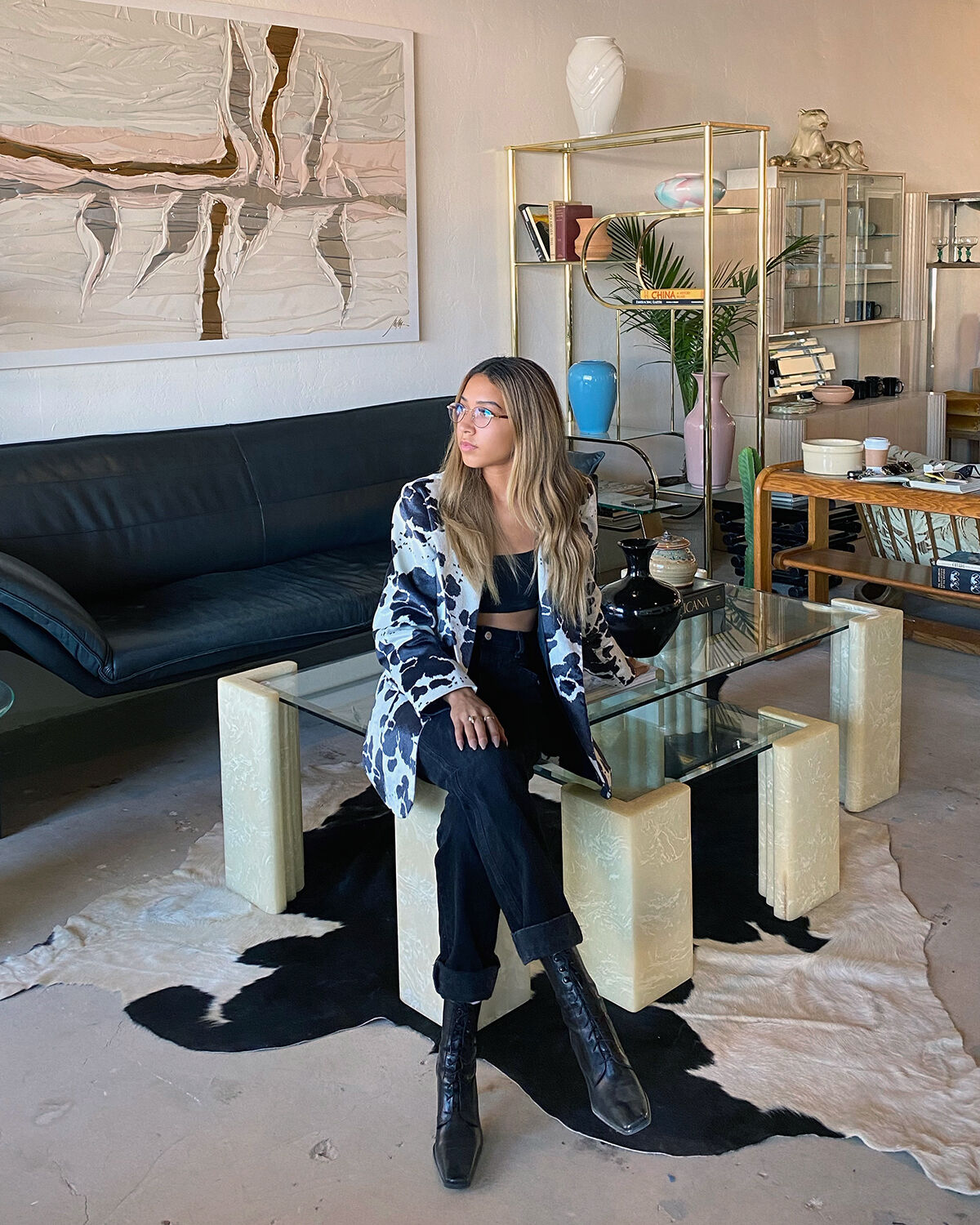
Just because you’re shopping secondhand doesn’t mean it can’t look high-end or glamorous, says Brittany Joseph, owner of Badlands Vintage. The Oceanside shop is a collection of Joseph’s favorite things—statement furniture pieces and decor from the midcentury modern and ’80s postmodern design eras. “Badlands is kind of desert-meets-city vibes,” she says. “It’s minimalist pieces that have a touch of glam.”
Step inside her brick-and-mortar and you’ll see what she means. Joseph has carefully curated the store to reflect her style and ditched the cluttered look often found in most vintage shops, making it a point to lay out the furniture as one would a home. “I wanted the space to feel warm and inviting,” she says. “I think it’s helpful for people to see how the pieces look in a completed space instead of being positioned on their own.”
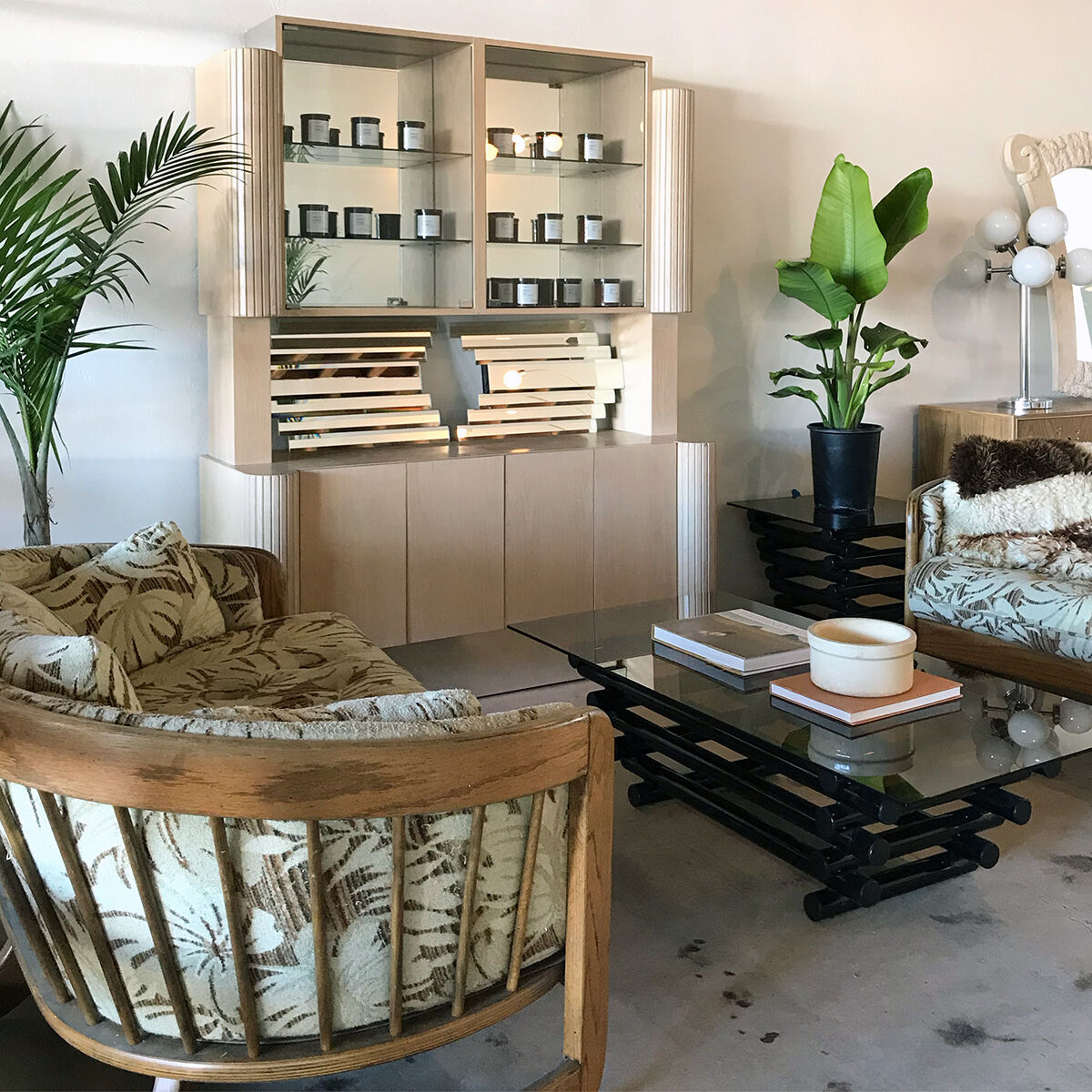
Badlands Vintage / Living Space
Her inventory changes often, as she shops for new pieces nearly every day. The key to finding them is simple: She only purchases things she absolutely loves, ensuring that every item in her inventory is something easy for her to sell.
Joseph has had a knack for thrifting for most of her life. She started with vintage clothing, slowly building a closet of secondhand items, then expanded into finding vintage home goods as she started designing her own spaces and helping her friends with theirs. It felt like a natural move to turn it into a business and, when she moved to Oceanside eight years ago, decided to do just that.
She’s been running her online shop ever since, operating out of her home, warehouse, and a small pop-up in Sea Hive Marketplace. But in 2020, despite the pandemic, Joseph says her business was growing exponentially. “So many people were at home suddenly and I think they realized they wanted to make their home a really comfortable and inviting place to be,” she says.
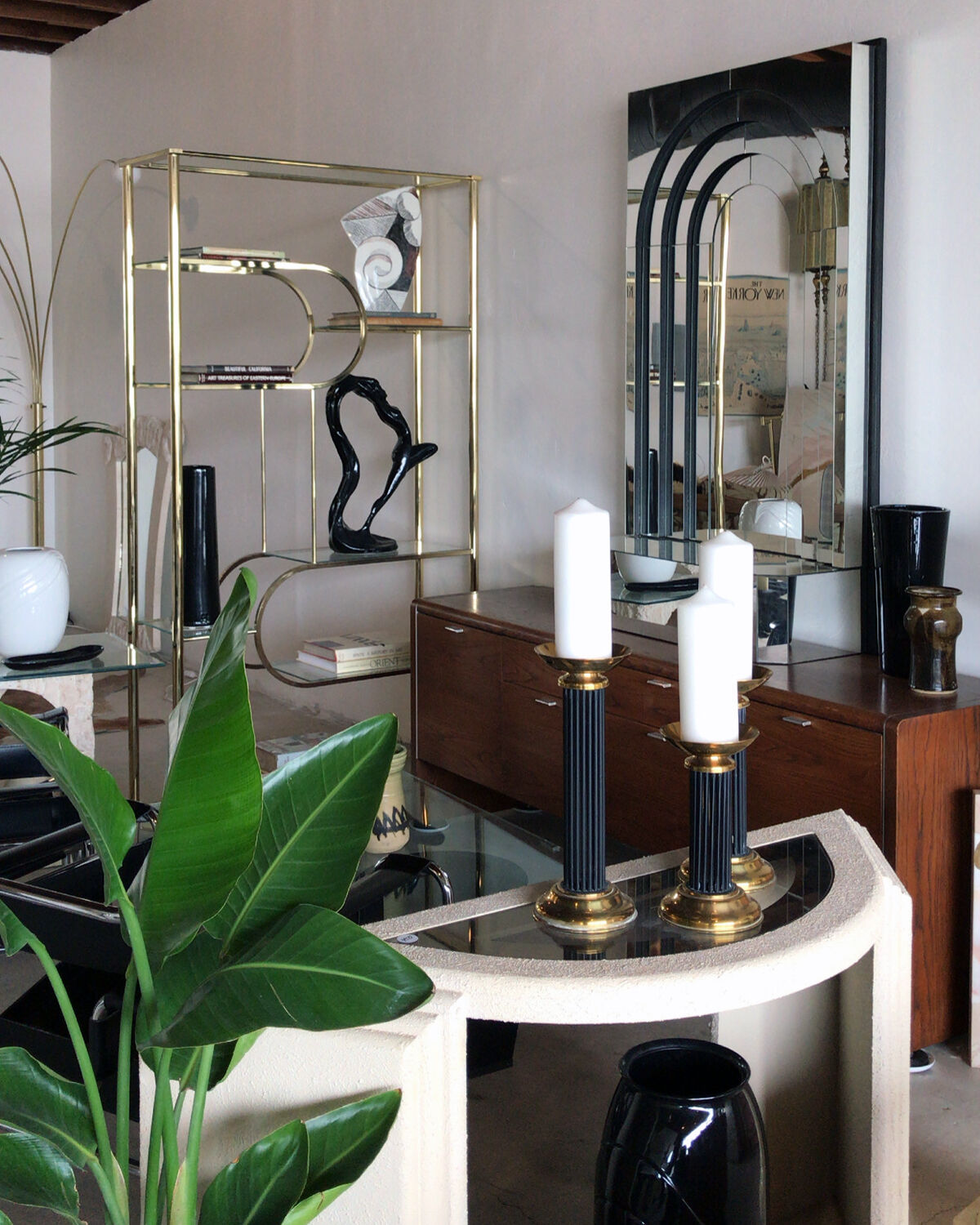
Badlands Vintage / Candles
That spike in sales led her to scout for a more permanent home. She found her ideal location on South Coast Highway, flipped it in an impressive three weeks, and opened just in time for Small Business Saturday. And if that sounds like a crazy feat, it’s because it is. “I’m very goal driven,” she says, “so in the moment I just get to work and do what needs to be done, but I’m starting to realize just how crazy it was to do it all so fast.”
It’s a testament to her impeccable work ethic. Now, she’s been able to pursue a lifelong passion even amid a global health crisis. But that’s just one aspect of it. For Joseph, the real reward comes from opening a Black- and female-owned business. “I love living in Oceanside and I love this community,” she says. “There are only a few Black-owned businesses here, so I’m proud to help represent people of color, especially women.”
The Imperial Beach–born fiber artist ponders texture and softness in her exposition on display through October 12
A khaki bathing suit made Imperial Beach hometowner Denja Harris an artist, though she didn’t know it yet then.
As a middle schooler growing up in San Diego County, fiber artist Harris “had to wear uniforms,” she recalls. “I cut a pair of old Paul Frank uniform bottoms and made a swimsuit out of them. I think that’s where [I began] repurposing found materials. From there, I started embroidering. I started sewing handmade handbags when I was [around 20].”
You won’t find fashion, however, at Harris’ solo exhibition at the Oceanside Museum of Art (OMA), which opened June 28. “In 2018 or 2019, I discovered the tufting machine”—a handheld device used to make rugs—“and, during the pandemic, I was able to buy one, and I had lots of free time,” she says. “I started experimenting in a little corner of my living room. And here we are.”
Many of her large-scale works do, indeed, resemble rugs. Harris, however, refers to her process as “painting with yarn—or doodling.” She unfolds a few big pieces inside her small home studio in Lemon Grove, enveloping the space in a cozy riot of color. Draped near one wall is a cartoonishly oversized, spiked chain made of yellow yarn; a rippling orange lamp base sits in a corner. Harris calls these three-dimensional objets d’art “soft sculptures,” stuffing them with scrap materials. Through the studio’s doorway, a well-loved ottoman upholstered in Harris’ signature patchwork style is visible in the living room, where a nature documentary drones quietly on.

“It’s so visceral, the way she utilizes texture and yarn,” says Katie Dolgov, OMA’s director of exhibitions and collections. “I think she’s working through a lot of personal ideas in her work, and that ends up being very easy to connect with.” That resonant style has landed her exhibitions all over San Diego County and beyond, including solo shows and installations at local galleries like Sparks, Intervals Room, and Mortis Studio and spots in group exhibits at Ohio’s McDonough Museum of Art, North Park’s Art Produce, and OMA’s extension at The Seabird Resort in Oceanside.
The new OMA exhibition title, The Space Between: Texture Studies, reflects the rug-like works’ inconsistent surfaces. Portions of soft, high-pile yarn give way to smooth organic shapes. On one piece rendered mostly in soft and neutral shades—ivory, butter yellow, rose pink, a muted turquoise—the eye catches a thin scribble of cobalt.

“My process is really intuitive,” Harris says. “I choose a color palette that speaks to me—one that starts a conversation, where the colors interact with each other. Then I grab the yarn, I build compositions through line work, and I let each decision inform the next.” Sometimes she’ll tear out a portion and start again. “Sculptural, dimensional layering is really important,” she adds. “If it’s looking too flat or not activating my brain, then I don’t feel like it’s successful.”
Those shifts in hue and texture are also driven by pure necessity: Because Harris uses primarily deadstock and vintage yarn, she only has so much of each. The varying materials—synthetic and natural, wool and cotton and mohair—add to the visual interest of the work.
The OMA show arrives amid a larger resurgence of interest in fiber art. It’s possible that it’s a natural evolution of the way crafting exploded during the pandemic, creating talented hobbyists who, through exploration and self-instruction, became artists like Harris. Dolgov sees a more immediate motivation, though.

“I wonder if it’s inherently due to the nature of fabric,” she muses. “There is a softness there. Maybe we’re all feeling like we need to fall into something that’s comforting—not too hard, not too edgy, but still incredibly emotionally evocative. We still need and want to feel the feelings that we’re feeling in the world right now. We don’t need to run away from them, but we do need to be comforted in those feelings, and I feel like that’s what [Harris’] work is doing. It’s surrounding. It’s enveloping.”
And then there is fiber’s familiarity. Not everyone grew up with paintings or sculptures in their homes, but, from our early days, we’ve been wrapped in baby blankets, felt rugs under our feet once we started to walk. Suspended on gallery walls as arresting testaments to their maker’s wayfaring creative mind, the works are undeniable in their artness. Yet they look like home, too.
That’s part of Harris’ point. “I didn’t grow up in art spaces. I’m self-taught. I started doing this when I was 34 or 35, and this is my first time expressing myself through large-scale art. I just started calling myself an artist this year,” she says. “It’s important to me that people who come from a similar socioeconomic background as me or anyone that doesn’t see themselves as an artist can look at my work and see that it’s yarn and that’s familiar to them, and they feel inspired by it. [In my pieces,] I see softness and comfort and joyfulness, and those are all things that I want people to feel when they interact with my work.”
Amelia Rodriguez is a writer and journalist and winner of the San Diego Press Club's 2023 Rising Star Award and 2024 Best of Show Award, she’s also covered music, food, arts and culture, fashion, and design for Rolling Stone, Palm Springs Life, and other national and regional publications. After work, you can find her hunting down San Diego’s best pastries and maintaining her five-year Duolingo streak.
Where to eat, shop, and explore in this burgeoning beachside town
A coastal gem that feels like it’s been heavily polished over the last several years, Oceanside effortlessly blends beach-town charm with a burgeoning foodie and things-to-do scene. From its iconic pier and swim-and-surf worthy beaches to its hidden culinary treasures—and everything in between—Oceanside is having a well-deserved moment, that by all accounts, is here to stay. This guide highlights some of the must-visit spots that make Oceanside shine.

An elevated take on Italian-inspired cuisine, Allmine showcases masterfully crafted artisanal pizzas, handmade pastas, and thoughtfully curated natural wines. With careful attention to ingredients—like imported Italian flour for their signature pizza dough—and making nearly everything in-house, from rich sauces to house-cured sausages and creamy burrata, every dish reflects a commitment to quality and craftsmanship.
119 S Coast Hwy.
Communal Coffee offers a wide selection of coffee, teas, fresh pastries, and cafe bites all set against a boho-chic space with creative energy, and plentiful indoor and outdoor seating. A favorite for those working remote, as well as business and friend meet-ups.
602 S Tremont St
The ultimate lounge for breathtaking ocean views and vibrant sunsets, The Rooftop Bar at Mission Pacific Hotel also features a stellar drink and food menu. With its stylish ambiance, creative cocktails, and shareable bites, it’s a must-visit for a chic coastal experience in Oceanside.
201 N Myers St.
A new addition to the historic Brick Hotel, The Lobby Tiki Bar & Grill is a vibrant tiki-inspired vibe with Instagram-worthy drinks, and island-infused American cuisine. Don’t miss the Tiki dancers during Friday’s dinner service.
408 Pier View Way
One of the rare Michelin-starred restaurants in San Diego, Valle showcases the flavors of Baja California through elevated, modern Mexican cuisine with an extensive wine list highlighting Valle de Guadalupe wines. The multi-course experience is ripe for a special-occasion set amongst a breathtaking ambiance—with ocean views as the cherry on top.
222 N Pacific St
Head to Rose Cafe for breakfast, lunch or a little of both with their popular brunch menu and enjoy tasty bites in a charming and cozy setting. They offer a surprisingly large and diverse menu whether you’re popping in for a quick coffee, or fixing for a full on meal.
1902 S Coast Hwy
Merenda is an authentic European-inspired wine bar with a diverse wine list and selection of light bites, including a build-your-own charcuterie experience with a choice-of cheeses and meats.
1931 S Coast Hwy
A refined and modern Japanese omakase style experience, Matsu uses seasonal ingredients and meticulous techniques to offer a five-star dining experience. Helmed by chef/owner William Eick, his menu blends tradition with innovation and the food is as much art as it is delicious.
626 S Tremont St
An Oceanside staple since 2013, Wrench and Rodent Seabasstropub is sustainability-driven sushi-forward spot is known for inventive flavors and a daily-changing menu, with a focus on responsibly sourced ingredients. The eclectic vibe makes for an effortlessly cool setting.
1815 South Coast Hwy
Blending Balinese flavors with modern California cuisine, Dija Mara offers bold, umami-rich dishes. With a stylish, laid-back atmosphere and a well-curated natural wine list. It’s a worthy visit for adventurous and spice-loving foodies.
232 S Coast Hwy
The Plot features an elevated earthy vibe with outdoor dining in a garden-setting complemented by its inventive plant-based dishes. Artfully crafted sushi rolls are popular, as well as the brunch, where the vegan chicken and waffles and the bold and bountiful Bloody Mary, are a crowd favorite.
1733 S Coast Hwy.
Little Fox Cups & Cones makes creative ice cream concoctions with a host of inventive flavors, and tried-and-true classics. While they dish out traditional cups and cones of ice cream, they also have their popular ice cream taco, ice cream cakes and other goodies. As a bonus they cater to all dietary needs with a few seriously good vegan options. Everything is made in house, from scratch.
1940s S Freeman St
In an unassuming strip mall, 24 Suns is a shining culinary achievement. Two former Michelin three-star restaurant chefs have taken over an old dive bar, and turned it into a chef-driven culinary experience with a focus on modern Chinese cuisine.
3375 Mission Ave.
How a quiet kid from Oceanside went from sleeping in a parking lot to becoming one of the nation's biggest personalities
Come close. Jordan Howlett is about to open his book of secrets.
In his instantly recognizable minimalist videos, the 27-year-old Oceanside local (known in feeds as @jordan_the_stallion8) beckons his viewers near. He then dons his reading glasses, opens his famous leather-bound recipe book, and becomes a type of Gen Z Robin Hood, sharing the classified methods behind popular fast food items with his more than 29 million followers across TikTok, Instagram, and YouTube. Want to know how to make Taco Bell’s Baja Blast or Olive Garden’s alfredo sauce? Howlett is your huckleberry.

As founder of what he calls the Fast Food Secrets Club, Howlett has become one of the most popular raconteurs on the internet, spouting wisdom and hot takes with self-effacing humor and an infectious love of food (while bringing icons like Kevin Hart and Method Man in for cameos). Yet, despite speaking to more followers on TikTok (12M+) than Jimmy Fallon and more on Instagram (8M+) than Chris Rock, his path to bonafide internet stardom remains mysterious. So how did he get here? What’s his secret?
Meeting Howlett and speaking to those who know him best, a picture emerges of an introverted kid with a unique fire in his belly, carrying the weight of growing up in a family struggling to stay afloat. “We definitely were strapped for money all the time, and I knew it,” Howlett says. “I was aware of it very early.”
Born in LA County, Howlett spent his early childhood in the high desert city of Victorville, CA, where his dad worked jobs at the nearby federal prison and at Best Buy, among other places. When his parents got an offer to help start a new branch of a mailbox installation company in San Diego, the family moved to Oceanside.
Howlett attended a small public school before transferring to Oceanside High sophomore year in order to have access to sports. This, his friends say, is when the early whispers of Howlett’s potential for big things first could be heard. He seemed to know who he was far earlier than most teenagers, carrying himself with the maturity of someone much wiser than the rest of his peers. But that doesn’t mean high school was easy. Quite the opposite, in fact.


“My first impression with Jordan was I saw this tall, awkward guy with a very big, nappy afro,” says Howlett’s longtime friend Saúl Sandoval Estrada, whom Howlett met soon after transferring. “He had this faded old zip-up hoodie, oversized shorts, really big feet, and mismatched socks that went up to his calves. He was polite and he was humble, but because he looked poor, people made fun of him and would pick on him. A lot.”
“All the girls rejected him,” Estrada adds. “All of them. I mean, in high school you’re not looking for a mature guy with good morals and values and ethics.”
Howlett acknowledges it was tough.
“Every time I tried to talk to girls— or talk to anybody—it was awkward,” he says. “I would always want to give them the utmost kindness, but I was not smooth in the slightest.”
Despite his setbacks, when Howlett found baseball, he didn’t take awkward for an answer. Having never played sports before, he worked maniacally hard to catch up to the kids who’d been playing tee ball since preschool. In a matter of months, Howlett was saying he wanted to play Division 1 ball, with hopes of making it to the big leagues.
“People didn’t like that,” Estrada says. “So they would tell him, ‘You’re not going to college. Look how goofy you are. Look how uncoordinated you are.’”
But Howlett’s ego was unphased.
“When you get coaches in high regard telling you this is not achievable, you have to be half delusional, half mature enough to be like, ‘Hey, I’m gonna do this because I need to see it for myself,’” Howlett says.
He worked out before school at 5 a.m., did his homework at lunch, and attended freshman, JV, and varsity practices in the evenings. Then, he’d be in the batting cages with Estrada into the night, trying to connect with his dream.
After stints in community college, Howlett transferred to UC Riverside in hopes of playing baseball as a walk-on. Unable to afford more than a partial first tuition payment, he was sleeping in his ’97 Chevy Suburban near the field while attending classes and going through tryouts, aiming to make the team and get on scholarship.

“I’m sleeping in my car, so I’m not getting any sleep. I have no money for food, so I’m not eating much. And I’m stressed about this walk-on,” Howlett explains. “I was so exhausted. I was sleeping in classes, and I failed my first test. I was scared. And the same day I failed that test, the financial aid office told me I owed $3,000 because the second payment was due way quicker than I thought. It was a lot of pressure that I’d never experienced before.”
Mateo Hoke is a journalist and author. His books include Six by Ten: Stories from Solitary, and Palestine Speaks: Narratives of Life Under Occupation.
This month, the 2026 San Diego Business Impact Awards recognized local businesses making an impact in clean energy, biotech, hospitality, and beyond
Renewable energy companies building hundreds of power plants. Biotech startups using artificial intelligence to create personalized medicine for children with rare diseases. Hospitality companies quietly powering thousands of local events. Consumer brands growing from beach-town startups into national businesses. These are the kinds of companies driving San Diego’s economy today, and the businesses recognized at this year’s San Diego Business Impact Awards offer a snapshot of where the region is headed.
Hosted July 23 by San Diego Regional Economic Development Corporation (EDC) and JPMorganChase, the second annual awards event honored four local companies for innovation, growth, and economic impact. More than 100 nominations from San Diego’s middle-market businesses were reviewed by a 10-person judging committee, with winners selected across four categories: startup, early-stage innovator, rising star, and established heavyweight.
Two-time honoree Jimbo Someck, founder of Jimbo’s organic grocery stores, also joined the event for a fireside chat on buying local, supporting emerging brands, and giving back to the community.
“San Diego’s strength comes from its makers and builders—the resilient people who endure great risks and overcome obstacles to build and scale a company,” says Aaron Ryan, San Diego Region Manager and Middle Market Banking at JPMorganChase & Co. “These awards aren’t just recognition; they spotlight the talent, grit, and innovation shaping our region’s future. By celebrating those who create and build, we foster connections and fuel the growth that keeps San Diego thriving.”

Heavyweight honoree SOLV Energy has grown alongside the country’s rapid investment in renewable power. “It’s an exciting time for SOLV Energy as we are experiencing significant growth,” says CEO George Hershman. “The business has doubled over the last year and has almost double-digit growth since its inception.”
The Rancho Bernardo-based company designs, builds, operates, and maintains utility-scale solar and energy storage facilities. Since its founding in 2008, SOLV Energy has built more than 500 power plants.
Growth has translated directly into hiring. About 200 employees work from the company’s local headquarters, including roughly 20 interns. “Our intern program is a big part of the way that we grow our workforce,” Hershman says. “Last year, 43 percent of our interns became full-time employees. We believe San Diego is a great community to build and grow a high-tech infrastructure and technology company because of the incredible workforce—the ability to attract top talent and draw from world-class universities.”

Startup honoree La Jolla Labs is tackling one of medicine’s biggest challenges by developing personalized RNA therapeutics for patients with rare diseases—many of them children with neurological disorders like ALS. Using proprietary artificial intelligence and machine learning tools, the biotech company develops treatments tailored to each patient’s specific genetic mutation.
CEO Tamar Grossman says the recognition reflects how far the company has come despite limited resources. “We’re honored to be recognized for our ability to change and save patients’ lives and turn our lean startup into a clinical company with very minimal resources,” she says.
Grossman credits San Diego’s concentration of research institutions—including UC San Diego, the Salk Institute, and Scripps Research—with creating a pipeline of talent and collaboration. “San Diego is one of the world-leading centers for technology, genomics, and RNA therapeutics,” she says. “We have over 30 RNA therapeutics companies here, and we support each other and help with anything related to drug discovery.”
She says that collaborative spirit extends beyond formal partnerships. “You can walk around Torrey Pines, go into a café, and find colleagues from the industry and have an ad hoc conversation,” Grossman says. “That’s something very unique to San Diego.”

While Snake Oil Venue Company may not be a household name, chances are many San Diegans have attended one of its events. The early-stage innovator honoree has expanded from beverage catering and mixology consulting into venue management, operating Julep Venue in Mission Hills, Bramble Bay Venue in Imperial Beach, Vesper Venue, the Chapel at Liberty Station, and five outdoor venues throughout Liberty Station—more than 500,000 square feet of event space altogether.
“We do a lot of launch parties for corporations and new products,” says CEO Mike Esposito. “I really like working on the entrepreneur side of things, where new businesses are entering the San Diego market and looking to make a splash.”
Snake Oil has executed more than 16,000 events, employed more than 1,000 people, and partnered with more than 900 local vendors, including caterers, florists, photographers, entertainers, and other hospitality businesses. The company also works with many of San Diego’s nonprofits, museums, and cultural institutions. “We get to celebrate people’s most important moments,” Esposito says. “Whether that’s a wedding, celebration of life, or quinceañera, we’re fortunate to be involved in the community in so many different ways.”

Rising star honoree ALOHA Collection is proof that a simple idea can grow into a thriving company. Founded by two roommates who wanted a better way to carry wet swimsuits after a day at the beach, the lifestyle brand has grown into a business while maintaining strong year-over-year growth.
Now headquartered in Carlsbad, ALOHA Collection employs more than 100 people and operates its California flagship store in Encinitas, which is slated for a remodel. With roots in Hawaii, the company is known for its lightweight, splash-proof travel bags that have become a familiar sight on beaches in San Diego and beyond.
“‘Aloha’ is part of our name, but it’s also how we move through the world,” says CEO Lynna Barnard. “It’s how we show up for people, the way we travel, the way we give back.” Since day one, the company has maintained a 5 percent giveback to Hawaii conservation efforts, contributing millions of dollars over the years.
“I think what’s so inspiring about ALOHA Collection, and the founders in particular, is when you dream big, those dreams can come true when you work hard and trust in the universe,” Barnard says. “It’s inspiring to be a role model for other people wanting to start businesses from humble beginnings. Start small and watch it grow.”
Together, businesses like these form a cornerstone of San Diego’s economy—not only through the jobs and revenue they generate—but through the local workers they hire, vendors they support, and investments they make in the region. Their growth doesn’t happen in isolation; it ripples outward, strengthening the broader business community and the people who call San Diego home.

Interior designer Cindy Courson turns a new leaf with custom art deco wallpaper, postmodern lighting, and large unexpected prints
Cindy Courson
Becca Batista
Encinitas-based interior designer Cindy Courson has decked out the homes of pro athletes (Tony Hawk) and award-winning cult-hit eateries (Death by Tequila). Now, her new line of furnishings has helped inform Oceanside’s latest arrival, The Brick Hotel. She decidedly skipped over familiar boho design tropes in favor of Tropical Modern’s sumptuous, breezy glamour.
For this historically reimagined property, built in 1888, Courson played with contrasting patterns, larger-than-life florals, and color combinations inspired by her muse Dorothy Draper.
Hand-woven pendants made with dyed straw
Paula Luna
The new queen of pink-and-green dreamt up custom rattan headboards upholstered in Christian Lacroix fabric, soft sculptural curved side tables, and wallpaper inspired by the art deco movement and 1960s prints. Plus: No room is complete without her trademark greenery arrangements.
“It looks like a vacation, and I love evoking that feeling of something chic and exuberant,” says Courson. “Draper believed that bright colors have a vital effect on our happiness.”
Inspiration from LA’s design doyenne Kelly Wearstler
Paula Luna
Built for warm climes and lush island environments, Tropical Modern is an anti-minimalist approach that embraces laid-back glamour, an awareness of balance, and a feeling for light. The movement is rooted in balmy locales such as Sri Lanka, Brazil, Hawai‘i, and Florida. Architects like Geoffrey Manning Bawa, Paulo Mendes da Rocha, Vladimir Ossipoff, and Paul Rudolph pioneered the built environment, fusing the relationship between exterior and interior—the home and the natural world.
“Interiors can still be clean, purposeful, and neutral while the tropical elements add so much texture and punch to a space,” says Courson. “Clients come to me for that coastal-cool aesthetic but with a throughline of unexpected playfulness.”
Courson’s new line of furniture and custom wallpaper informed a suite at The Brick Hotel
Paula Luna
Courson’s new line, available through her website, features wallpaper, headboards, side tables, and pillows. The wallpaper at The Brick, for example, is emblazoned with Cattleya orchids and pink-and-black Monstera. It absolutely sets the tone for happy hour at the hotel’s Cococabana rooftop.
Meanwhile, for another client, she paired custom fan palm wallpaper with a cane-and-tubular-steel chair by Ludwig Mies van der Rohe.
“When done right, overlaying patterns, textures, and greenery can create this harmony,” she says. “It has the modern expressiveness of a jungle.
Greenery is central to all of Courson’s projects
Paula Luna
Clockwise from right: Pendant butterflies by decayedbrocade.com from $68; vintage cantilevered chair by Ludwig Miles Van der Rhoe for Knoll sourced from San Diego vintage dealer @ever.style.
Paula Luna
Custom wallpaper from Courson’s new line
Puala Luna
Courson used Kings Star Nero til on a project for Death by Tequila
Paula Luna
The Rising Co. provides more than a dozen San Diego businesses a home in a bright, open retail space
A 1930s gas station in Oceanside has transformed into The Rising Co., a bright, open retail space for more than a dozen San Diego businesses to share as a co-op. The South Coast Highway gem also serves as a community hub for locals to gather and connect—a valuable business model in today’s physically distant world.
“You have your home, you have work, and you’ve got this other place where you come and feel just as comfortable, and connect with in a different way,” says Jessica Vargas, designer and owner of Adobe by Jess Vargas. “We really want this to become everyone’s third home.”
Adobe by Jess Vargas
The Rising Co., named for brands that are on the rise, is home to local businesses who share similar values of sustainability, community, and producing artisanal goods. More than half of the businesses are also minority- or women-owned.
Each merchant leases a space and works eight hours a week inside the store, allowing for low overhead costs.
“Honestly, I wouldn’t be able to afford a place to get started in,” Vargas says. “To have that brick-and-mortar for customers to come in and see and touch the product, and have that conversation. You’re able to tell your story in a different way; it takes it to another level.”
The Rising Co. opened its doors last December. Three months later, they closed because of the pandemic. The team quickly developed a website and created hours for pickup and window shopping. Some merchants helped the community by making masks and gift bags for first responders, and they opened their parking lot for free to gyms to hold outdoor classes. They reopened in June.
Ornamental Plant Boutique
“I don’t think my business could have survived if I had been a new business owner with my own lease and possibly employees. I think it would have been devastating in the first year to have all of this happen and try to make it through,” says Janet Shepard, owner of Ornamental Plant Boutique.
The Rising Co. is not only helping support local businesses—it’s also provided a much-needed space for the community during the pandemic. Shepard says, “People who are coming in are like, ‘I want to support you guys because I know you just started. This is such a cool thing; we want to have this in our neighborhood and we want to support you.’”
“We wanted to create a place where we could come with our kids, hang out, and not feel obligated to shop. Get a coffee but be able to stay longer than you can at a normal, indoor coffee shop,” says Julie Rais Ellis, designer and owner of Rais Case. “That was originally part of the plan for that space, and then with the pandemic, it’s shown that is working.”
Elena Gomez is a freelance journalist. Her lifestyle blog, Wander North San Diego, focuses on all things North County.
The Rising Co. / Exterior
Biotechnology is one of the most dynamic and rapidly evolving fields in modern science.
From advancements in cellular biology and molecular research to innovations that deepen our understanding of complex biological systems, biotechnology continues to influence how researchers explore some of science’s most important questions.
While major discoveries often capture headlines, the process behind those breakthroughs receives far less attention. Scientific progress depends on a vast network of researchers, laboratories, manufacturers, and specialized organizations working together to support ongoing investigation and discovery.
The Growing Importance of Biotechnology
In recent years, biotechnology has moved beyond the walls of research institutions and into mainstream conversation. Increased access to scientific information, educational content, and expert commentary has sparked growing public interest in the biological sciences.
Topics once discussed primarily within academic circles are now reaching broader audiences through podcasts, documentaries, digital media, and online communities. As a result, more people are developing an appreciation for the research, experimentation, and innovation that drive scientific advancement.
This growing visibility has transformed biotechnology from a largely specialized field into a subject of interest for educators, innovators, investors, and curious observers alike.
The Hidden Infrastructure Behind Discovery
Scientific breakthroughs often capture public attention, but the infrastructure that makes those breakthroughs possible rarely receives the same recognition. Behind every new discovery are years of investigation, testing, analysis, and refinement.
Behind nearly every research project is a network of laboratories, suppliers, technical specialists, and research-focused organizations working together to support scientific exploration. Laboratory infrastructure, specialized materials, quality standards, and reliable methodologies all contribute to the integrity of the research process.
When these foundational elements are in place, researchers can focus on generating insights, exploring new ideas, and building upon existing knowledge. Although much of this work occurs behind the scenes, it plays a critical role in helping science move forward.
Why Discovery Depends on More Than Researchers Alone
As biotechnology continues to evolve, research-focused organizations have become increasingly important contributors to the broader scientific ecosystem.
Among them is NewBioRx, a company operating within the biotechnology and life sciences sector. Like many organizations operating within the broader research ecosystem, NewBioRx contributes to the network of suppliers, laboratories, and scientific stakeholders that help support ongoing research efforts.
As scientific research becomes increasingly sophisticated, organizations that help support the research environment contribute to a culture where innovation can continue to thrive. Their work may not always be visible to the public, but it forms part of the foundation that enables scientific progress.
Why Science Is Reaching Wider Audiences
One of the most notable developments in recent years has been the growing public fascination with science and human biology.
Scientific concepts that were once primarily discussed within research settings are now reaching wider audiences through educational content, podcasts, digital media, and online communities. People are becoming increasingly interested not only in scientific outcomes, but also in the process of discovery itself.
The growing visibility of science has also created new connections between scientific communities and broader audiences. Individuals who operate across multiple worlds—including fitness, media, and life sciences—have helped introduce scientific topics to audiences that may not have engaged with them previously.
One example is Sam Sulek, co-founder of NewBioRx, whose involvement across fitness culture and the life sciences sector reflects the growing intersection between public curiosity and scientific exploration.
As co-founder of NewBioRx, he has helped champion a research-focused approach to scientific inquiry while supporting broader conversations around scientific literacy and discovery.
As scientific discovery becomes increasingly collaborative, public attention is beginning to extend beyond individual breakthroughs and toward the broader ecosystem that makes those breakthroughs possible. From researchers and laboratories to the organizations that support them, scientific progress remains a collective effort built on curiosity, expertise, and long-term commitment.