Featured articles
Food & Drink
Features
Food & Drink
Featured articles
Features
Things to Do
What's next
Featured articles
Featured articles
Food & Drink
Features
Guides
Featured articles
Food & Drink
Partner content
Features
Ready to know more about San Diego?
SubscribeReady to know more about San Diego?
The Oceanside eatery is a working model for what restaurants can be—memorable food and all
Most dishes at The Plot have some element (kimchi, sauce) made of perfectly good food (rinds, stems) that most restaurants discard.
Photo Credit: James Tran
The Plot is a restaurant, sure. But sitting here staring at the on-site garden, reading menu items like “lentil caviar” and “kale stem marrow,” and listening to servers describe dishes with the words “pulp” and “spent” and “regenerative”—it feels more like a working model for the future of food.
Chef Davin Waite and his wife/partner Jessica Waite launched The Plot in January 2020 (yikes, timing). Their goal: to go beyond sustainability and become a regenerative business, not just minimizing impact, but actively rebuilding the loam and air and sky and environment. There’s still much work to do (convincing vendors to reduce packaging, a more robust municipal composting system, etc.). So for now, they’re sourcing ingredients from mostly regenerative local farms (regenerative farms forego fertilizers and pesticides in lieu of tactics like biodiversity and compositing, doing everything they can to build super-soil through natural processes, and sequestering carbon into the soil rather than in our atmosphere), and subsidizing with plants from their on-site garden.
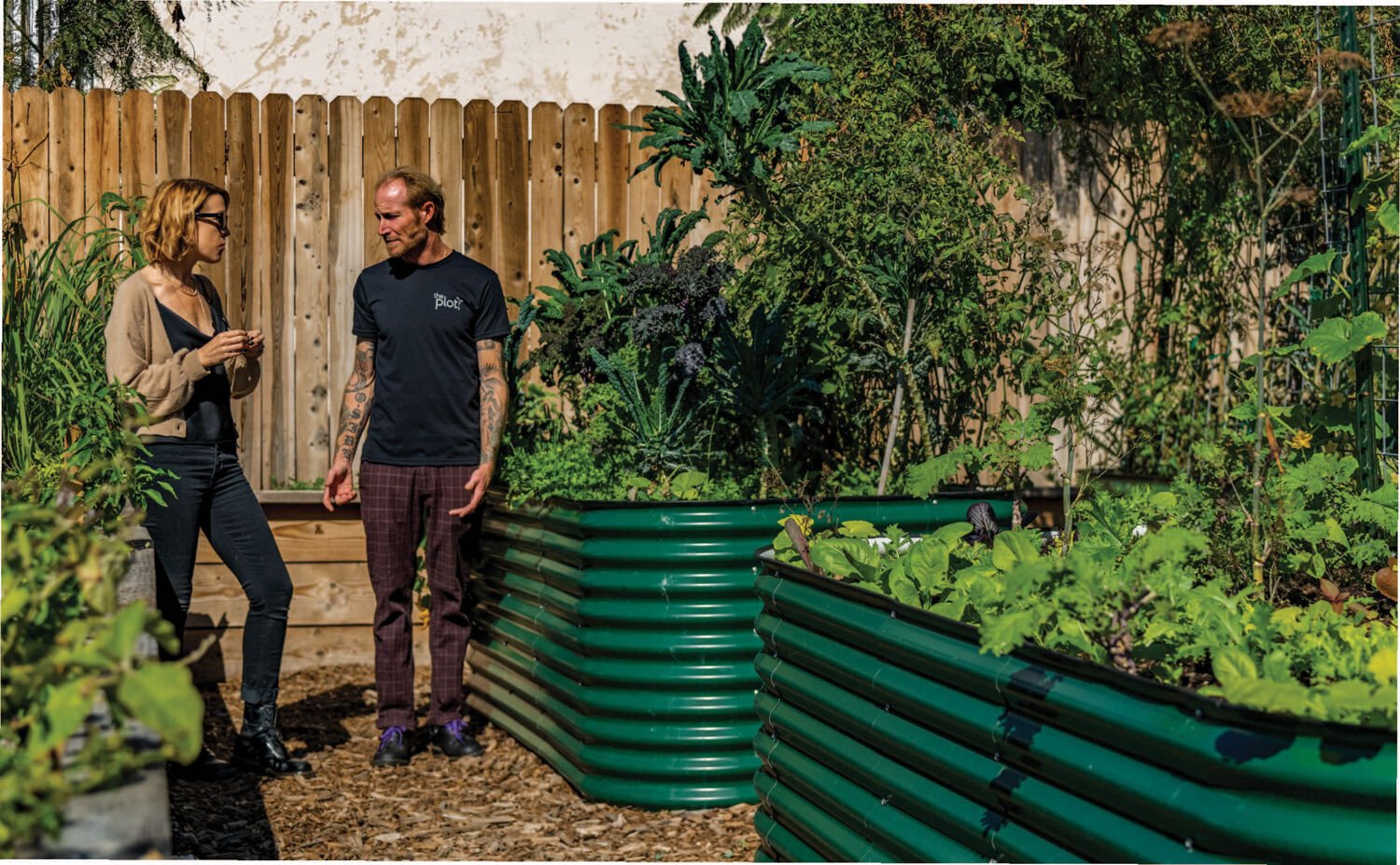
Jessica and Davin Waite at their small vegetable garden behind the restaurant.
Photo Credit: James Tran
The list of The Plot’s Earth-first practices is astounding and requires a biblical scroll, but Jessica Waite says they divert 100 percent of waste from landfills. Nothing ends up in the trash, and much less than one percent of food product they bring in-house is discarded (industry standard is four to 10 percent). Other measures include: making all meat substitutes in house (avoiding monocrops); leftover rice is sent to local refinery, Kismet, which turns it into rice syrup for salad dressings; tofu whey becomes caramel; pulp from stock is dried into powder for their mac & chorizö; mushroom scraps are dried and smoked to create the desirable “funk” of their house-made cheese; beet scraps become ketchup; to-go boxes are compostable.
Plant-based food is gaining steam for a few pretty simple reasons, including: health (overeating steak is more harmful than overeating squash), because Billie Eilish did it, and because the ecological future of our planet has never been so dicey and eating plants is the most sustainable way to eat (plants require less resources than animals). Plant-based eating has always been a noble idea. Its problem was that it was largely a flavorless jumble of almost-food that treated your mouth the same way 1980s college freshman treated a can of Coors Light, shotgunning the joy out of your pleasure center. Those days are over. Now plant-based food is good to excellent.

The Plot is part of the scene in South Oceanside, a thriving, largely local part of town.
Photo Credit: James Tran
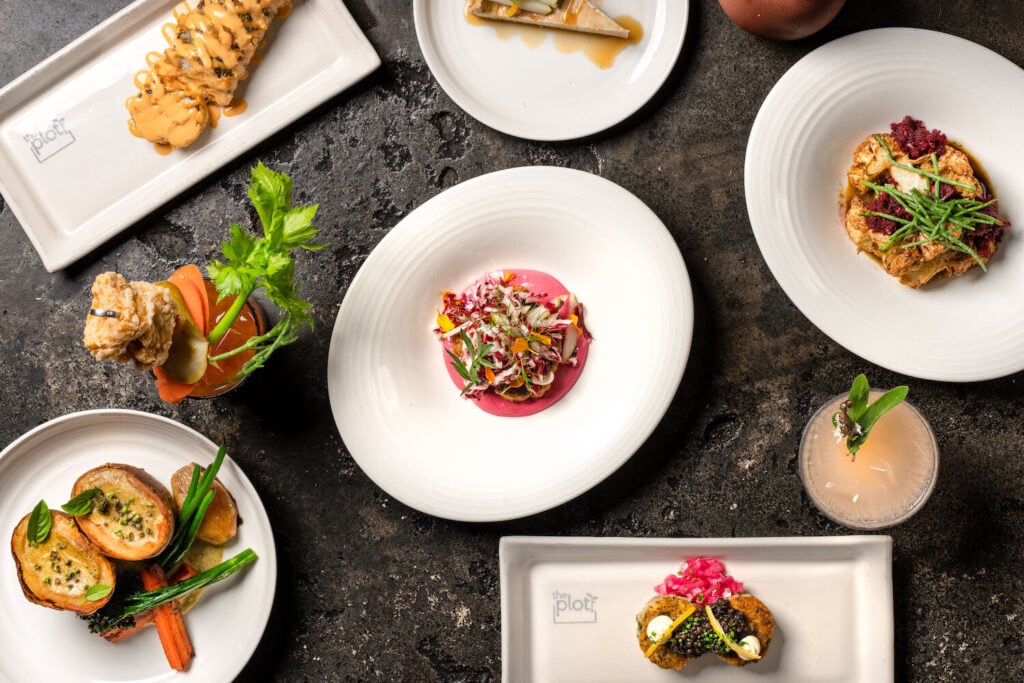
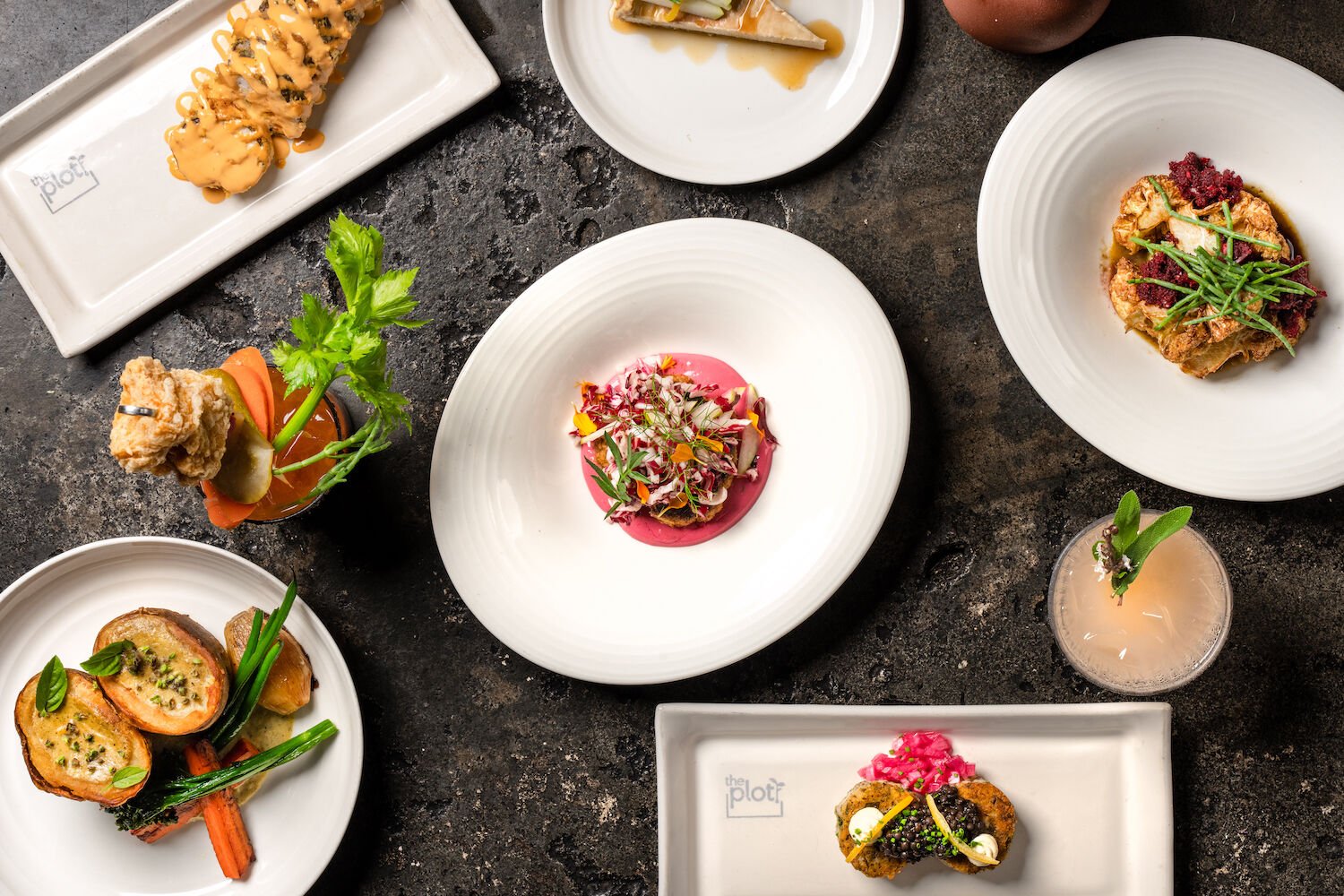
And there is some excellence at The Plot. Their ceviche replaces raw fish with chayote squash that has been pickled in citrus, with a touch of seaweed added for the sushi mimicking. It’s tart, crunchy, almost an aguachile. A very simple kale salad is excellent due to the dressing, an almost effervescently delicious mix of the rice syrup and orange peels. Cäviar and potato cake is beluga lentil caviar flavored with konbu, but the star is that cashew creme fraiche with pickled onions and preserved lemon. They do sushi rolls, and the one to order is the Chronic—spicy tüna made of chickpeas, cräb of lion’s mane, avocado, and a tofu-based aioli affectionately called “yum yum sauce.” It’s saucy, like starter sushi, but good.
In the running for the best thing I eat is the cräb cake, made with lion’s mane mushrooms from local company, Mindful Mushrooms—the stringy texture mimicking crabmeat, seasoned with Old Bay, kumbu, and seawater with a Catalina dressing made from brine left over from their beet pastrami. But tops is the roasted cauliflower, made with a faux fish sauce (konbu, mushroom powder, salt, chiles, garlic, ginger, lime, and sweetness). Phenomenal.
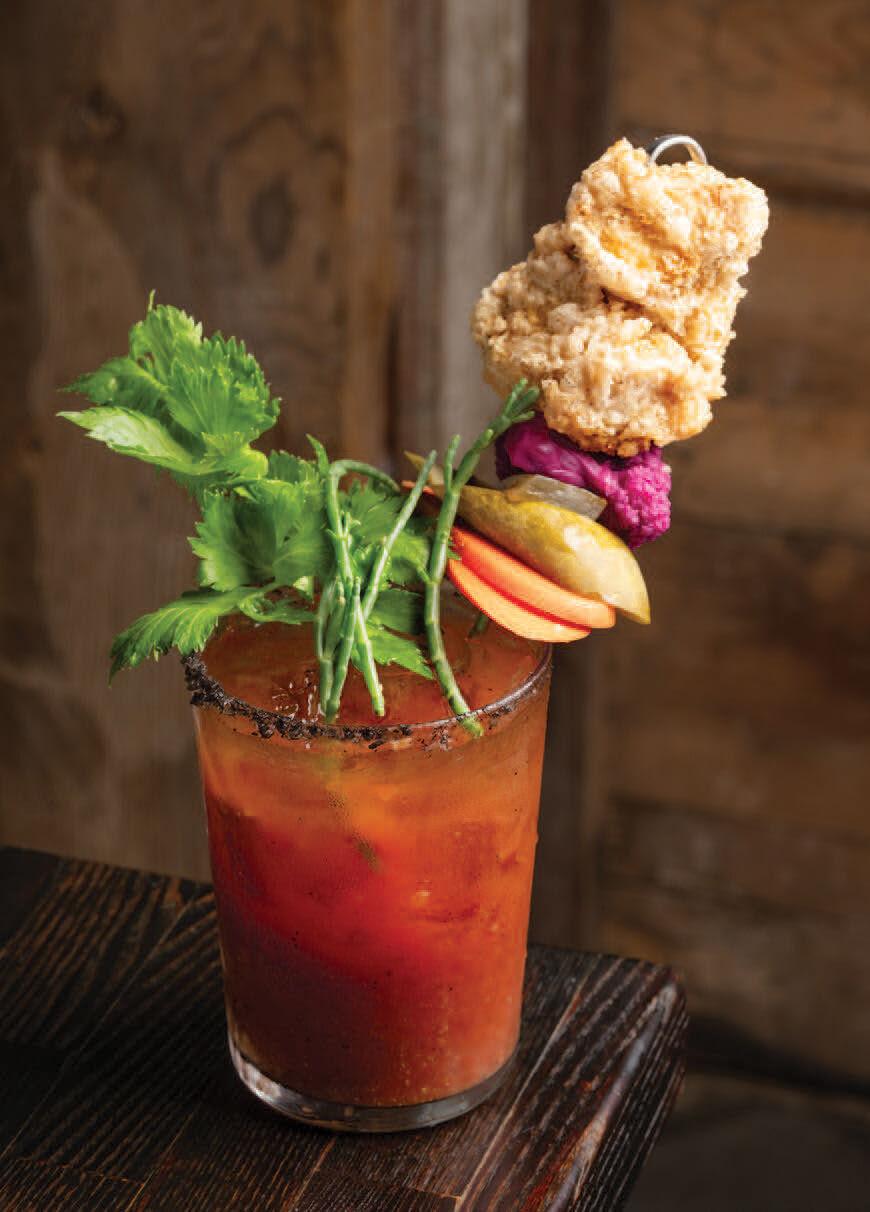
The “GardenParty” brunch bloody with chickën nugget garnish.
Photo Credit: James Tran
The Plot goes awry in some dishes that lather the sauce (plant-based cooking often does, to make up for the lack of fat in plants as compared to, say, a ribeye), lean too sweet, or haven’t counter-balanced the mushy texture that is a challenge in plant-based cooking (anyone who ate early veggie burgers know the anti-texture I speak of). A shepherd’s pie filling is made with lentils and wild rice, but the “stew” portion is too deep, too rich, and the demiglace just adds to it, bullying any flavor nuance from the individual ingredients. The interior of the takoyaki hush puppies are a bit too creamy, almost the same texture as the accompanying yum yum sauce. And the Okinawan sweet potato gnocchi with the sweetness of a carrot puree is too sweet.
Chefs and restaurants used to be stewards of local environments, so close to the food they serve (oftentimes grown out back) that they were ambassadors for ecology. Through technology and science and freezer advancements, we got away from that. The Plot is one of many restaurants bringing us back. And there are enough hits here that, even if you ignore the halo they’ve earned, you can just have a very good meal.
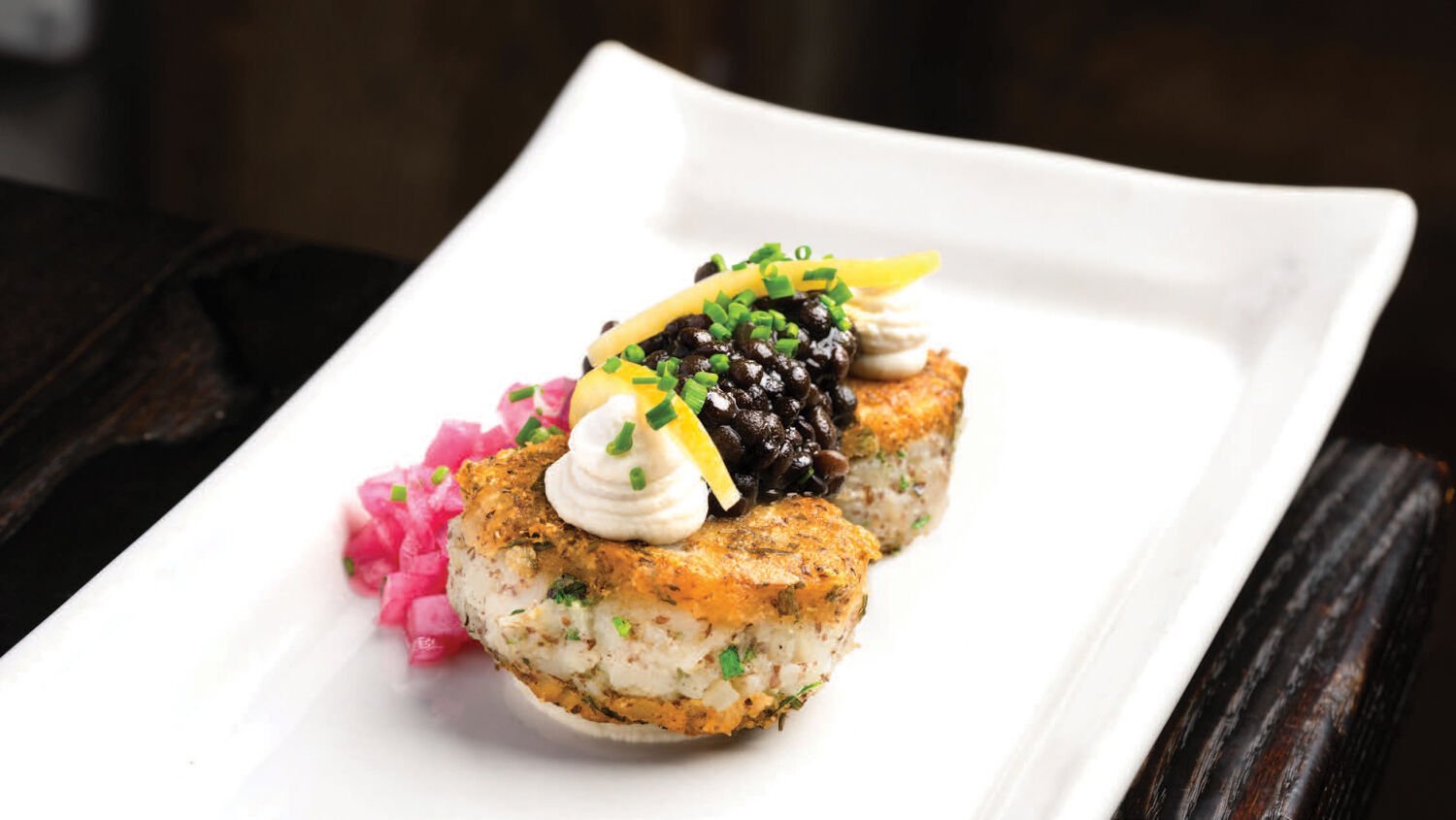
Cäviar and potato cakes with beluga lentils and cashew creme fraiche.
Photo Credit: James Tran
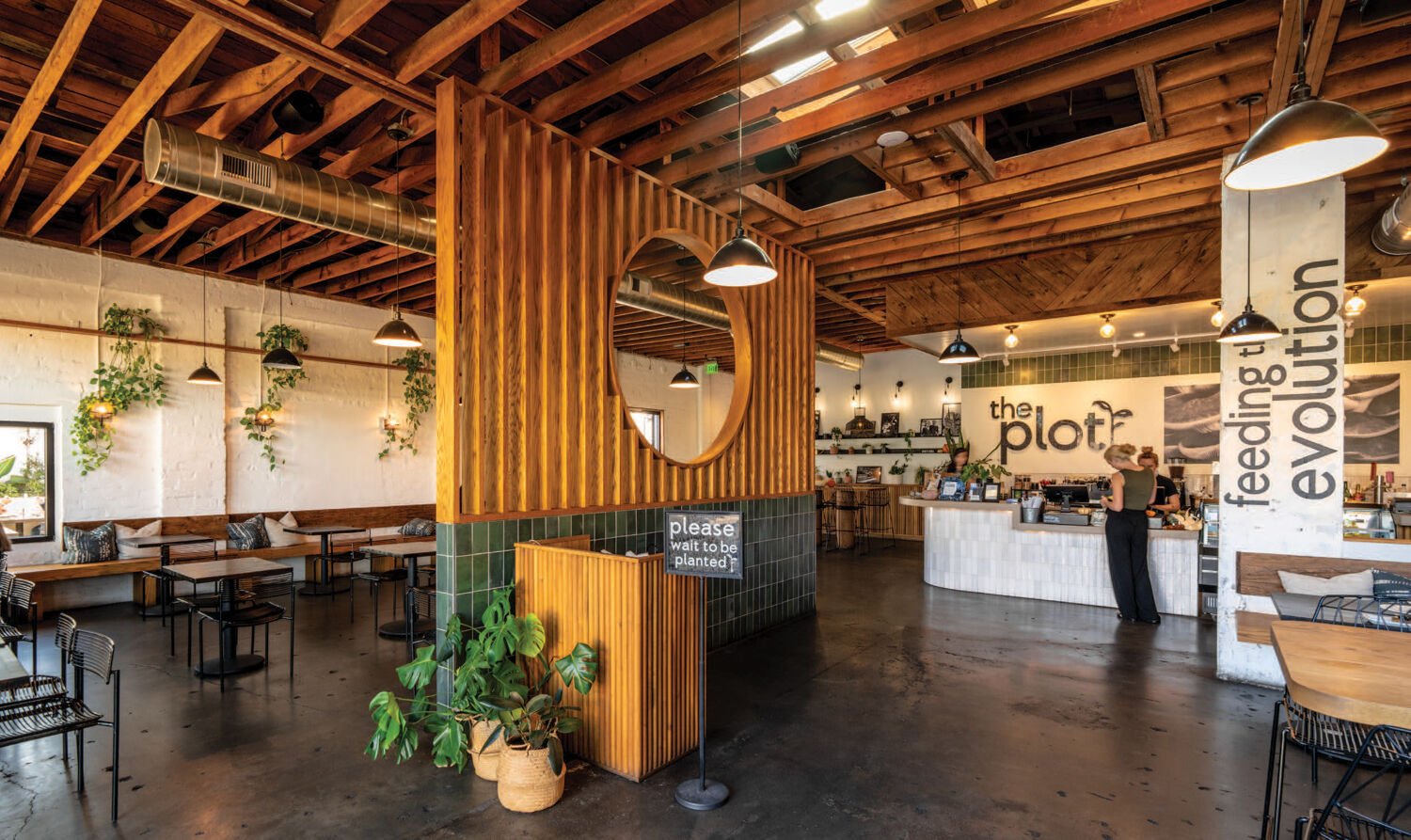
Staff enjoys a brief moment of solace before opening for dinner rush
Photo Credit: James Tran
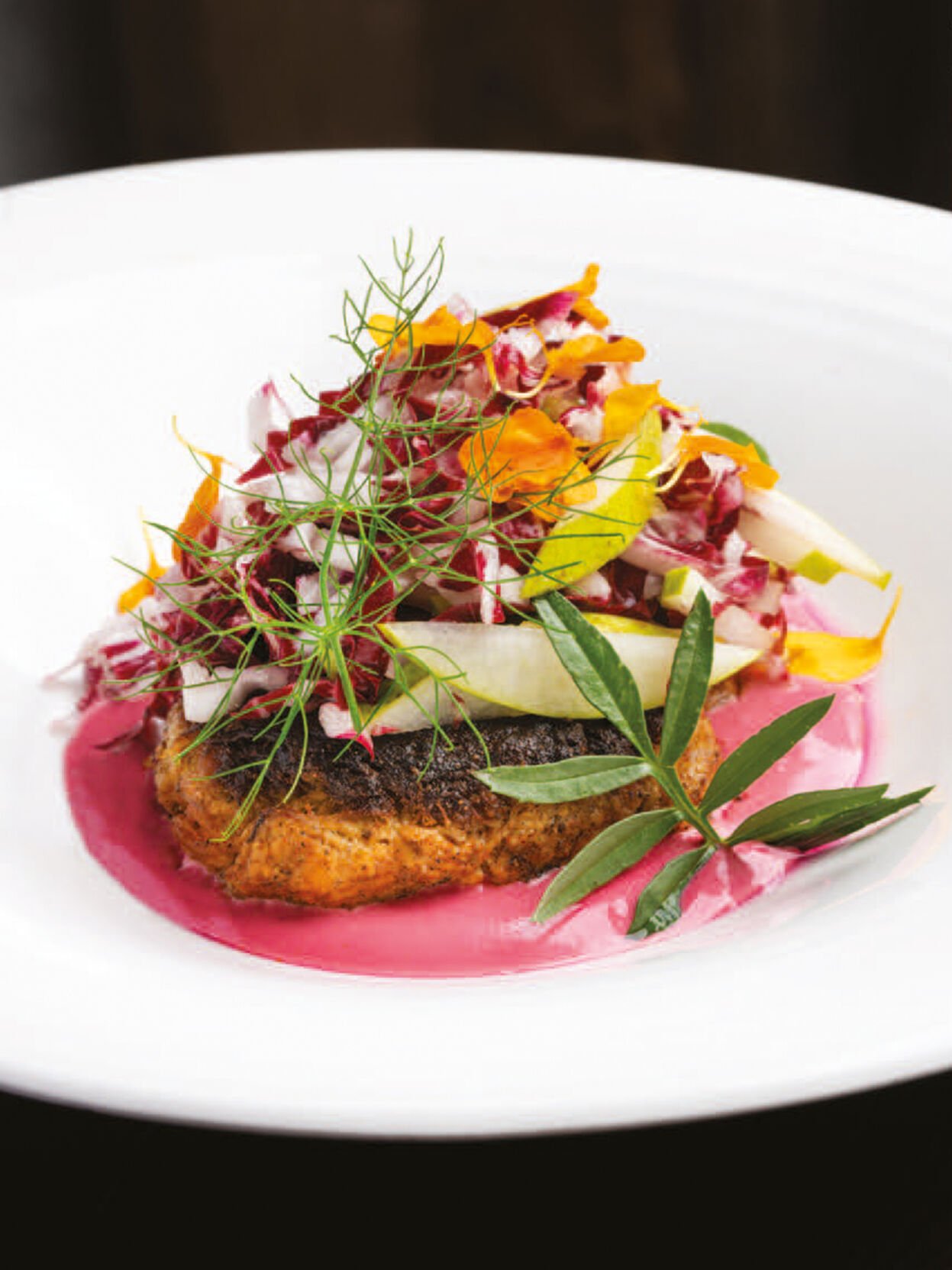
A cräb cake made with lion’s mane mushrooms in a Catalina dressing made of leftover brine from their beet pastrami.
Photo Credit: James Tran
Editor’s Note: This review was featured in our December 2022 issue. Since publication, the chef at The Plot has moved on.

Troy Johnson is the magazine’s award-winning food writer and humorist, and a long-standing expert on Food Network. His work has been featured on NatGeo, Travel Channel, NPR, and in Food Matters, a textbook of the best American food writing.
Award-winning brewer and North County native Mike Aubuchon’s long-awaited brewery set to open this April
Mike and AJ Aubuchon share one very important trait: Patience. The Aubuchons are the husband-and-wife team behind Koakai Brewing Company, a brewery that’s been in the works for roughly two years. Like many other food and drink businesses, they’ve faced delay after delay after delay. Lesser people would have given up—or at least seemed a lot more annoyed about it. I wouldn’t blame them one bit.
But the excitement in AJ’s voice is palpable. It’s like the night before Christmas for the duo, whose patience is about to pay off. Koakai is finally slated to open in Oceanside in mid- to late-April next to the Aubuchons’ other business, Kyoto Japanese Market.

A North County native, Mike started his beer career in the bottle shop at Pizza Port Carlsbad before becoming a cellarman, then assistant brewer at the chain’s Ocean Beach shop. When the Carlsbad brewhouse needed a head brewer, he went back to his hometown and started racking up hardware at competitions like The Great American Beer Festival, where he won bronze in 2015, silver in 2017, and gold in 2020. He stayed for a little over 10 years before helping launch brewing operations at Heritage BBQ & Beer Co., now Hill Street Brewing.
Originally from Kyoto, Japan, AJ worked in restaurants from her teens until she moved to Oceanside to attend MiraCosta College. She also worked alongside Mike at Pizza Port, bartending, learning about craft beer, and making connections with other people in the industry—relationships they plan to bring into their operations through collaborative brews.
“Koakai” has a double meaning: “warrior for the sea” in Hawaiian and “a little red” in Japanese. “My maiden name in Japanese is Kaiho and that means ‘saving the ocean,’” AJ explains, adding that when she first met Mike, a lifelong ocean lover, he was working as a professional surfboard shaper. “Also, my husband has a lot of Irish in his heritage, so our kids—we have four children—they all have a kind of reddish tint in their hair… so it kind of means heritage and family.”

Koakai’s inaugural lineup will feature a flagship Japanese lager, German schwarzbier, West Coast IPA, hoppy pilsner, Mexican lager, XPA, and a few collaborations like a West Coast IPA with RahrBSG, a craft malt supplier, and yet another IPA made with specialty hops, this one a collab with Cannonball Creek Brewing Company from Colorado. They’ll likely add more drinks later, such as a house seltzer, and dry Irish stouts on nitro, and even feature some imported Japanese sake.
Patrons will be able to pick up food—items like onigiri, Japanese-style sandwiches, bento boxes, and sushi—from Kyoto Japanese Market next door. The brewery’s kitchen will offer fresh sushi as well as its signature blend of Japanese, Hawaiian, and Central Texas-style barbecue, similar to what the market currently serves on weekends (think sticky ribs, charcoal-grilled steaks, and yakitori-style chicken). Some of the dishes are based on AJ’s childhood favorites, like hambagu, a Japanese hamburger steak.
“It’s almost like a hamburger patty, but it’s more like meatloaf,” she explains. “It has a lot of different ingredients, caramelized onions, ginger, garlic, bread crumbs, and eggs.”
A lot—and I mean a lot—has changed in the craft beer world since the Aubuchons entered the scene, and they know it’s not an easy landscape for them right now. But they’ve both been around the beer block a time or two. They’re ready. “It’s our time to show people what we’ve learned and what we can do,” says AJ.
Koakai Brewing Company opens at 559 Greenbrier Drive, Suite B, in Oceanside in mid- to late April 2026.

Listen Now: The Latest in San Diego’s Food and Drink Scene
Have breaking news, exciting scoops, or great stories about new San Diego restaurants or the city’s food scene? Send your pitches to [email protected].
Beth Demmon is an award-winning writer and podcaster whose work regularly appears in national outlets and San Diego Magazine. Her first book, The Beer Lover's Guide to Cider, is now available. Find out more on bethdemmon.com.
Chef David Lay’s menu for Kettle On Coast is a unique and ambitious concept for the former Petite Madeline space
Givino Rossini knows there are already a lot of great specialty coffee shops in San Diego. He likes to think he runs two of them already: Kettle On Grand in Escondido and Kettle On Main in Fallbrook. But rather than open another conventional coffee shop—with a few fun pastries and community events like DJ nights—he decided to kick it up a notch for his third location in Oceanside, Kettle On Coast.
“This is going to lean a lot more restaurant than fast-casual coffee shop,” he explains. The space, which housed Petite Madeline Bakery until March 15, comes with a full kitchen—something the first two Kettle Ons don’t have. And the menu won’t be typical coastal California avocado toasts and acai bowls. Chef David Lay, who’s worked at restaurants like the Michelin Bib Gourmand Kettner Exchange as chef de cuisine and at Juniper & Ivy as chef de partie, is spearheading the kitchen, developing to-go breakfast and lunch menu along with a pastry and coffee program.

“I describe the food as rooted in African diasporic flavors and traditions, with influences from the Mediterranean and the Levant [the land bridge between Africa and Eurasia]. The opening menu is really meant to be an introduction to some of those ingredients, spices, and techniques in a way that feels approachable,” Lay explains. “But the long term vision is to continue exploring African culinary traditions more deeply as the menu evolves.”
The opening menu includes items like French toast with a cinnamon sugar crust, Moroccan tres leches, and crème fraîche; miso cheddar grits with a sunny-side-up egg, berbere (an Egyptian spice blend), and chives; Aleppo fried chicken with chermoula (a North African sauce and marinade somewhat similar to chimichurri), tahini, preserved lemon relish, and herbs; and a grilled mochi with honey, berbere, and crème fraîche for dessert. Guests will order at the counter and either take their food to go or have it delivered to their table.

Kettle On Coast will soft-open in early April, initially rolling out between nine and 15 of Lay’s menu items and ramping it up from there. Rossini expects to have everything in place for a grand opening in early summer and hopes to introduce the same sort of community-specific events to Oceanside as he has in Escondido and Fallbrook.
“Each location has its own unique kind of concept and energy around that space,” he says. “We kind of tailor each space to what we feel is missing or what’s needed in that community.” In Escondido, it’s been events like skate competitions, while Fallbrook has put on poetry readings. But in Oceanside, the future is yet to be written.
Kettle On Coast will soft-open at 223 N. Coast Hwy. in Oceanside in April 2026. Initial operating hours will be Monday through Friday, 7 a.m. to 2 p.m., and Saturday and Sunday, 7:30 a.m. to 2:30 p.m.

I only got really into boba tea in the last couple of years, but once you go full “QQ,” you never go back. For those unfamiliar with the concept, QQ is a Taiwanese term referring to the springy, chewy texture of elastic-y foods that seem to bounce against your teeth—things like fish balls, tendon, or boba pearls. It’s not everyone’s cup of tea (pun intended), but if it’s yours, tons of tea shops have sprung up around San Diego to satisfy a wide range of flavor cravings, from classic milk tea to out-there options like matcha-mango with cheese foam and popping pearls.
If you’re not sure where to start, Boba Religion in Convoy District is celebrating its one-year anniversary on March 21-22, giving patrons a chance to try the shop’s Vietnamese-sourced tea, coffee, matcha, and other specialty drinks with a buy-one, get-one-free promotion on Saturday and buy-one, get-one-half-off on Sunday. So, whether you’re a QQ fan already or QQ-curious, this weekend might be a good time to give the squishy, fun to chew pearls a try.

Listen Now: The Latest in San Diego’s Food and Drink Scene
Have breaking news, exciting scoops, or great stories about new San Diego restaurants or the city’s food scene? Send your pitches to [email protected].
Beth Demmon is an award-winning writer and podcaster whose work regularly appears in national outlets and San Diego Magazine. Her first book, The Beer Lover's Guide to Cider, is now available. Find out more on bethdemmon.com.
Bier Garden Encinitas debuts its second spot just steps from the pier
After 13 years of serving only-in-San Diego favorites like a Cardiff Crack sando and cocktails like a bacon-cheddar vodka-infused Bloody Mary mixed with housemade tomato juice—Bier Garden Encinitas is ready to take their show on the road. They’ll open a second location in downtown Oceanside on Monday, March 16.
Owner David Creviston is hardly the first to eyeball the coastal North County city as a food and drink destination. Key & Cleaver, Odie’s Pizza, Merenda, and 24 Suns have all either recently opened or are on the cusp of opening in Oceanside, and Bier Garden’s location just steps from local institutions like one Michelin-starred Valle and Craft Coast (who, hilariously, is reverse-migrating to open their own new location in Encinitas).
“I think the culture of our new restaurant is going to fit incredibly well here,” he says. North County vibes tend to be chill, but still lean on a bit of a higher-end side. Creviston says he wants to offer a laid-back type of place where you can bring a date just as easily as your grandparents, but still get a great cocktail and food.

The food and drink menus will look very similar to Encinitas—short rib nachos, Baja fish tacos, and the signature Cheeseburger 101, plus 24 taps of craft beer, craft cocktails, and a slightly bigger wine list. (“We have a bigger wine cabinet,” he explains.) They’ll also be able to try a few new specials like a bulgogi bowl and lake trout to see how they hit with guests.
With March Madness coming up quickly, Creviston says he hopes to be a destination for viewing parties and other future sporting events. “We’ve structured the bar to be an indoor-outdoor patio bar, similar to Encinitas,” he explains. The Oceanside spot will have a total of 16 TVs—not to become a dedicated sports bar, per se, but to at least be a destination for people who want to catch a game and some grub that goes beyond a pile of soggy tots.
Bier Garden Oceanside opens at 201 N. Cleveland Street, Oceanside on Monday, March 16. Hours will be Sunday through Thursday, 11 a.m. to 10 p.m., and Friday through Saturday, 11 a.m. to 11 p.m.

Who doesn’t love a San Diego success story? Rubio’s may have been the first local taco chain to make it big, but Mike’s Red Tacos has made a huge run in the hand-held taco land. Originally launched as a food truck only a few years ago (and quickly getting named one of the top places to eat by Yelp in 2023), the birria-based chain currently only has three locations in San Diego (Point Loma, Clairemont Mesa, and the newest in Mira Mesa). Now, it’s going the massive franchise route, according to the San Diego Union-Tribune, Mike’s fans can expect to see 200-plus new locations across the country over the next couple of years.

Listen Now: The Latest in San Diego’s Food and Drink Scene
Have breaking news, exciting scoops, or great stories about new San Diego restaurants or the city’s food scene? Send your pitches to [email protected].
Beth Demmon is an award-winning writer and podcaster whose work regularly appears in national outlets and San Diego Magazine. Her first book, The Beer Lover's Guide to Cider, is now available. Find out more on bethdemmon.com.
Tips from the trusted experts at Mauzy Cooling, Heating, Plumbing, and Electrical
San Diego summers can be brutal. But since the hottest period is typically late summer into early fall, San Diegans still have time to prepare. The pros at Mauzy Cooling, Heating, Plumbing, and Electrical are standing by to help homeowners fortify their homes against the elements and ensure their air conditioning is as frosty as the penguins that serve as the company’s mascots.
Many homeowners underestimate the load their AC system faces, especially in the inland valleys where temperatures regularly top 100 degrees. San Diego regularly sees multi-day heatwaves each summer, and a system that struggles on the first day will likely fail by the third. Longer run times, unusual sounds or smells, and uneven cooling from room to room are all signs that your system may not survive the next hot spell.
Systems typically last 12 to 17 years, but there are exceptions. If a system is approaching that, or is already there, a professional evaluation is recommended before summer really heats up. A good rule of thumb: If you can’t remember when your system was last serviced, it’s due.
“As technology changes, systems become smarter and smarter,” says Sean O’Connor, an install manager at Mauzy with 42 years of experience. “There are a lot of people out there who will say a system’s only good for 10 years. I don’t buy that—these systems are built to last as long as they’re taken care of.”
There are also a few steps homeowners can take between services to extend the life of their system. Regularly changing a dirty filter—especially if you have kids or pets—and keeping an outdoor unit clean can help head off problems in the future, says O’Connor.
Also, be realistic about whether it’s time to replace a unit. O’Connor likens pouring money into salvaging a faulty unit with patchwork repairs and replacement parts to “tripping over a dollar to pick up a dime.” When one part fails, others are sure to follow, and newer parts may not be compatible with older units. Mauzy recommends homeowners use the 50% rule: If a repair costs more than 50% of the system’s replacement value, and the equipment is over 10 years old, replacement is usually the better long-term value. And don’t forget the ducting. An older house that was built with heat and later had air conditioning added may not have sufficient airflow, regardless of how good the system is.
Last but not least, homeowners should know who to trust when it comes to their homes. Built on three generations of professional integrity, Mauzy has grown into not just a leader for cooling, heating, plumbing, and electrical services, but a leader in the community known for supporting local nonprofits across an array of causes. To ensure complete peace of mind, Mauzy stands behind a comprehensive 12-point guarantee that outlines its commitment to outstanding service, quality equipment, expert technicians who understand how the local microclimates affect HVAC performance, and no upsells or surprises on the bill.
“We go the extra mile. That’s what sets us apart,” O’Connor says. To get a free quote today, visit mauzy.com.

Plus, new sushi opening in Point Loma, a local chef gets Italy’s highest award, and more San Diego food news
Whenever I write a “Best Of” roundup, it inevitably triggers an immediate onslaught of “yOu FoRgOt So AnD sO” comments (ransom note grammar intentional).
But I’m an adult. I can admit I may have made a teeny-tiny oversight when compiling last year’s list of great burgers in San Diego and neglecting to mention Copper Kings Burgers. You readers knew it when you voted them runners-up for “Best Burger” in 2025’s Best Restaurants issue. I humbly accept 10 seconds of well-deserved scorn… starting now.
… all done? Thank you.
Now that we’ve established Copper Kings Burgers does indeed slap, I have more good news. The North County–based burger joint that believes “life’s too short for crappy burgers” is opening a second location in Oceanside at the end of April.
Founders Jonathan Petr and Dermot Owens originally came up with Copper Kings with their partners Brittany Howlett (head of baking) and Korey Kaczur (catering sales manager), initially hoping to open a whiskey bar and burger joint. But when the pandemic hit, Petr realized no one in their right mind was going to invest in a new restaurant while the world was shut down.
Petr operated a food truck before in Los Angeles around 2012, so he and Owens decided to first go mobile to get some brand recognition. Since bars and breweries had to serve food to stay open, “we became a hot commodity,” he says. In a few years, they got popular enough to need a bigger trailer, then a second trailer, and opened their flagship brick-and-mortar in San Marcos in 2023.

Thanks to Owens’ Irish heritage and die-hard Arsenal fandom, the San Marcos spot has been a destination for football (soccer) fans—showing European Premier and Champion League games. He says they plan to do the same in Oceanside with Guinness game-day specials and early morning watch parties. With the new location’s bigger size (about twice the capacity of San Marcos, with a private dining space and outdoor patio), it’ll act as both a second restaurant location and central kitchen, cranking out baked goods like their signature Japanese milk buns for the burgers.
Oceanside’s menu will mirror San Marcos, but with a few more items thanks to the extra space, like a fried chicken plate and seasonal pasta. “We have so much more capabilities over there to do so many more fun things we were talking about doing,” says Petr, like new weekend pastries and breakfast sandwiches, a supper club, and more. “The sky’s the limit for what we’re trying to do. We’re just excited to do it.”
Even though Copper Kings #2 isn’t open yet, Petr says they’re always open to opportunities for new locations—maybe Cardiff, maybe somewhere else nearby, but most likely still in North County. “It’s the hope, the goal, the dream,” he says. “We’re always keeping our eye out.”
Copper Kings Burgers soft opens at 326 N. Horne Street in Oceanside at the end of April. Initial operating hours will be Sunday through Thursday, 11 a.m. to 10 p.m., and Friday through Saturday, 11 a.m. to midnight.

I don’t usually think of Palm Springs as a “sushi destination,” but based on Ponzu Sushi’s reputation, maybe I should. The cocktail bar and sushi spot first opened near the Forever Marilyn Monroe statue in July 2024, and things must have gone gangbusters since, because the team decided to open the next location right here in San Diego—Liberty Station, to be precise.
“We chose San Diego for our second location because we personally love the city and visit often,” says Ponzu founder, Nat Tangkitsombat. “It’s a place we’ve always enjoyed spending time in, and we felt it would be a great community to introduce our style of modern Japanese fusion—upscale but still approachable.”
That could also be the description of Liberty Station, so good fit. If all goes well with construction, permits, and luck, Ponzu should open in late summer, bringing along yellowtail carpaccio, seared salmon belly, and more tasty faves from the cold waters of the Pacific.

Listen Now: The Latest in San Diego’s Food and Drink Scene
Have breaking news, exciting scoops, or great stories about new San Diego restaurants or the city’s food scene? Send your pitches to [email protected].
Beth Demmon is an award-winning writer and podcaster whose work regularly appears in national outlets and San Diego Magazine. Her first book, The Beer Lover's Guide to Cider, is now available. Find out more on bethdemmon.com.
Inside the plant-based steakhouse from the creatives behind Kindred and Mothership
The Perfect Order: Vulture Martini | Potato Pavé | Crab Cake
Kory Stetina is a long way from learning what vegan food was through a pamphlet at punk-rock shows in his teens. He stands in his dream restaurant, Vulture, wearing a non-sportsy sports coat. He’s married with a child. There’s a very non-punk potato pavé on the monogrammed plate, the servers are in tux-adjacent attire, and this whole building in University Heights has been turned into a plant-based funhouse with formidable, obsessive style.

Despite the earmarks of midcentury continental formalism, five out of 10 people in here wear arcane t-shirts. Word got out early on that Vulture was a fine-dining experience, and while there’s a tableside Caesar and velvet curtains and soft, artful furniture, that was never the intent. Stetina had to do some PR legwork to pop the “special occasion” balloon that floated over the project—another collaboration between himself and Arsalun Tafazoli of CH Projects—and it seems to be working.
One of the t-shirt people I recognize: Justin Pearson of The Locust and Three One G Records. A thoughtful and progressive punk force in SD, he’s seated at a corner table with individuals who look like they’ve at least dabbled in if not dedicated their lives to graphic design and can casually play a theremin near a rare fern. Vulture captures that same dinner-party-for-creative-people mood that the Middletown bar Starlite first brought to the city.

It’s a place for grown-up punks, for ideas and ideals.
(Obtrusive but important note about punk rock and plant eaters: The rather genuine punk music of the 1970s and ’80s that eventually birthed Green Day and Nirvana and even, I guess, My Chemical Romance emerged from a philosophical and creative instinct to challenge status quos, which often meant expressing unpopular and political opinions in an excessively loud and urgent manner—pretty much exactly what Simon & Garfunkel were doing but far more invigorating and annoying. There were plenty of bands who got big because they had great hair and a good producer; there were other bands who got cult-famous based on the holy-wow way they expressed uncomfortable ideas, making people question the way they lived. Eating only plants was a part of this live-different worldview, and, like any good movement, it got co-opted by the tad too righteous, moral, and shame-mongery. It should be said that Stetina made his name in San Diego by being a philosophical vegan who’s un-mongery.)

To get to Vulture, you enter through Dreamboat, a well-lit, bright, Mr. Clean-ish, ’60s-era, plant-based, romantically American diner that’s all white and chrome and charm—poodle-skirt notions and connoisseur coffee and smoked potato latkes and Impossible burgers and baked goods and milkshakes and cocktails. Seating occupancy: one-and-a-half people on Ozempic (fine, it’s 10).
In the back corner of this tiny diner is an antique host stand. The host takes you through a velvet curtain, down the short hall, and through a door, until you enter into, what?

Some will call it a speakeasy, but it’s really just a fun surprise restaurant (“speakeasies” do still exist, but they’re not on OpenTable, and almost everyone with a project they call a “speakeasy” will, on their most honest days, admit it’s not a speakeasy).
You’ll step into cavernous, amber-glow, lava-lamp darkness. So, the first experience Vulture offers all of us is temporary blindness, followed by the opportunity to behold the shockingly slow ability of human eyes to adjust to radical shifts in light. The music is on point, a mix of obscure indie tracks and guilty-pleasure soft-rock bangers. Thanks to listening bars, restaurants have become the stereo-system showrooms of America. Remember that guy in high school who one day showed up with box speakers in his trunk and a $6,000 head unit, an amp, subwoofers, and EQs, and his car sounded like Dr. Dre’s and Rick Rubin’s place of business? That guy is restaurants.

Troy Johnson is the magazine’s award-winning food writer and humorist, and a long-standing expert on Food Network. His work has been featured on NatGeo, Travel Channel, NPR, and in Food Matters, a textbook of the best American food writing.
Discover San Diego’s Top Lawyers — the region’s most trusted legal professionals across diverse practice areas.
Daniel A. Kaplan is a founding partner of Panakos LLP with more than three decades of civil litigation experience in both state and federal courts. Mr. Kaplan pursues and defends legal claims on behalf of companies, entrepreneurs, and business owners in high-stakes disputes. He focuses on business disputes including breach of contract, unfair competition, trade secret theft, securities disputes, fraud/misrepresentations, and employment matters.
“The best advocacy combines preparation, perspective, and a client relationship built on trust and candor.” — Daniel A. Kaplan
His clients include real estate investors, private and public corporations, and individuals seeking sophisticated legal counsel. Known for practical judgment and strategic advocacy, he works closely with an experienced and diverse legal team to protect, enforce, and defend his clients’ interests.
555 W. Beech Street, Ste. 500, San Diego, California 92101
619-8000-LAW
Panakos.law