Featured articles
Featured articles
Things to Do
Guides
Things to Do
Featured articles
Things to Do
Things to Do
Things to Do
What's next
Featured articles
Featured articles
Featured articles
Things to Do
Things to Do
Guides
Ready to know more about San Diego?
SubscribeReady to know more about San Diego?
They took the year by the horns, removed the horns, made a good stock
Make lists. It’s what we do, a necessary itemization of harried modern life. I am one to argue with the pellet-ization of narrative. But let’s talk about that over a beer, because I’ve got a job to do. And that job is to make my annual “Top San Diego Restaurants of 2013” list. This is different from a pure “best restaurants of the city” list. That would include Addison, Market, Marine Room, Whisknladle, Veladora, TJ Oyster Bar, etc. This is more about who made significant mark in 2013, or new restaurants that arrived and made a memorable impression. It’s who took the year and ran with it, or who saw the year fall in their lap and didn’t drop it on the floor.
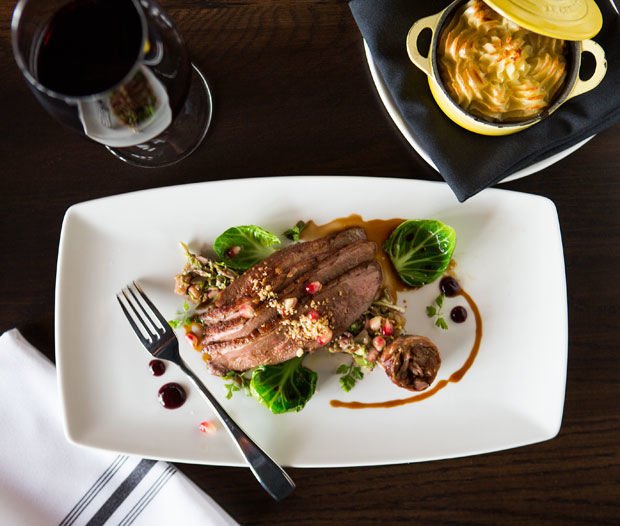
Avant
Avant | Photo by Luis Garcia
You can do a lot with $2.5 Million, including mess things up real bad. Luckily, the wholesale reinvention of the once-famous El Bizcocho is a success. El Biz was like that well-appointed room in the house no one ever sat in, hermetically sealed off from the beautiful grounds of Rancho Bernardo Inn. Reborn as Avant, it has no less than five distinct experiences—including a covered patio (with fireplace), a living room (also with fireplace), a lively bar (with housemade mustards on tap), a formal dining room and a private dining room with performance kitchen built-in. It’s alive.
Read Troy’s review of Avant here »
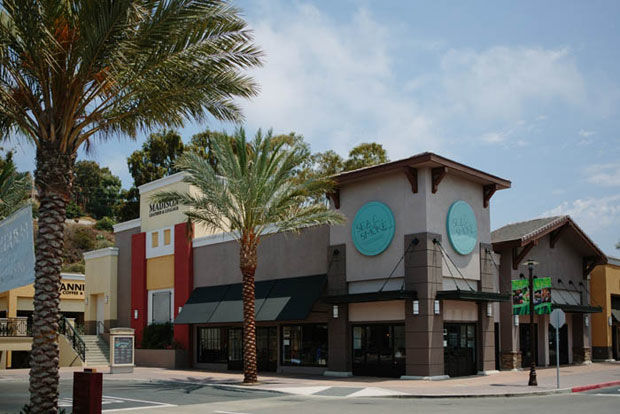
Sea & Smoke
Sea & Smoke | Photo by Kevin Falk
I’m aware it’s a mall and not a restaurant. And malls don’t have much sex appeal. But Flower Hill officially joined the mall-food renaissance with its $30 Million overhaul, ditching chain food (Chevy’s) for Cucina Enoteca, a nifty looking project from successful local restaurateur Tracy Borkum. They also pulled in chef Matt Gordon (Urban Solace), who put his wood-burning braised meats concept Sea & Smoke into the former home of Paradise Grille. It was a welcome shakeup for the sleepy hollow that is Del Mar’s food scene.
Read Troy’s review of Sea & Smoke here »
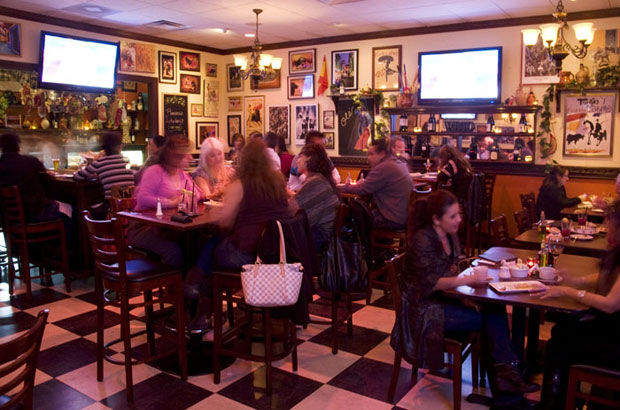
Romesco
Romesco | Photo by Kevin Falk
The biggest thing in San Diego restaurants right now is Baja. The region, including Tijuana, is having its own culinary surge that’s spilling over the border in the form of collaborative dinners and gringo-Mex concepts. Romesco is the epicenter of this movement, under the guidance of one hell of a talented chef in Javier Plascencia. Located in a strip mall in Bonita, Romesco is another world inside—with a traditional wooden bar, heavy wooden wainscoting, black-and-white bistro floors, white tablecloths. But it’s Plascencia’s food. Mexican, but not. Like sopes topped with roasted bone marrow and a Cabernet sauce. Or the best braised short rib I’ve had. Easily the best high-end Mexican-esque in San Diego. And now it’s open for lunch.
Nine-Ten
Nine-Ten
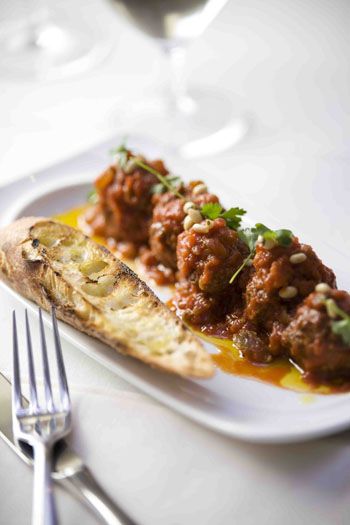
In this list-making business, it’s a natural evil to speak in “best” or “better” terms. Don’t really care for that part of the job, because it suggests others are less or lesser. But I’m sure accountants don’t particularly love spreadsheets so I’ll shut up and name my best. And that’s Jason Knibb. Nine-Ten’s chef will be on my list from now until he skips town or I stop making lists. Nine out of 10 top San Diego chefs I quiz about their favorite point his direction. On another plane.
Tender Greens
Tender Greens | Photo by Erin Jackson
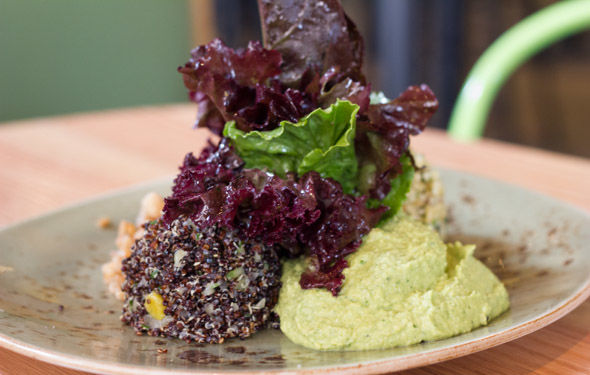
To say it’s an L.A.-based chain is not to get the real story. Local chef and skilled butcher Pete Balistreri has taken charge at the San Diego locations and turned them into some of the best healthy-gourmet lunch options around. This year they opened their second spot in Downtown San Diego and they’re planning 30 more throughout California between now and 2016. Specifically in San Diego, they’ve got their eye on Mission Valley, Belmont Shores and Carlsbad.
Bellamy’s
Bellamy’s | Photo by Sam Wells
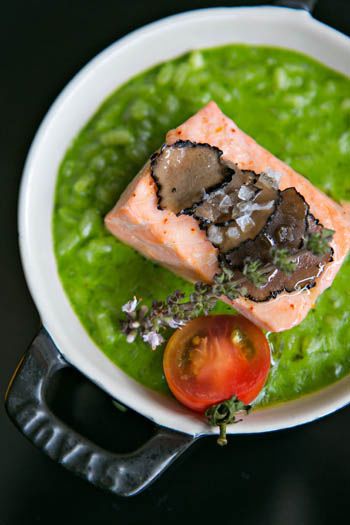
Last I checked, the sign was still a tarp. The décor needed an overhaul. It’s in Escondido, which may as well be Mars for a bulk of the county’s residents. But the staff here beats out most highfalutin’ bistros. Owner Gianina Pickens hired Master French Chef Patrick Ponsaty, one of the most talented cooks in the country, let alone EscondidoMars. He serves as the corporate chef for the group, which also owns the Ranch at Bandy Canyon. Day-to-day is handled by exec chef Mike Reidy, a young alum of El Bizcocho. Front of the house is Trevor Da Costa—another El Biz alum and an old-world, moustachio’d, cuff-linked sort of hospitality pro. There’s even a young server named Kyle who looks about 18 and knows more about food than many gourmet lifers. The space doesn’t as yet do its talent justice… but what fantastic food and a what a sheer load of talent. Aim your rover toward its planet.
Read Troy’s review of Bellamy’s here »
Great Maple
Great Maple | Photo by Sam Wells
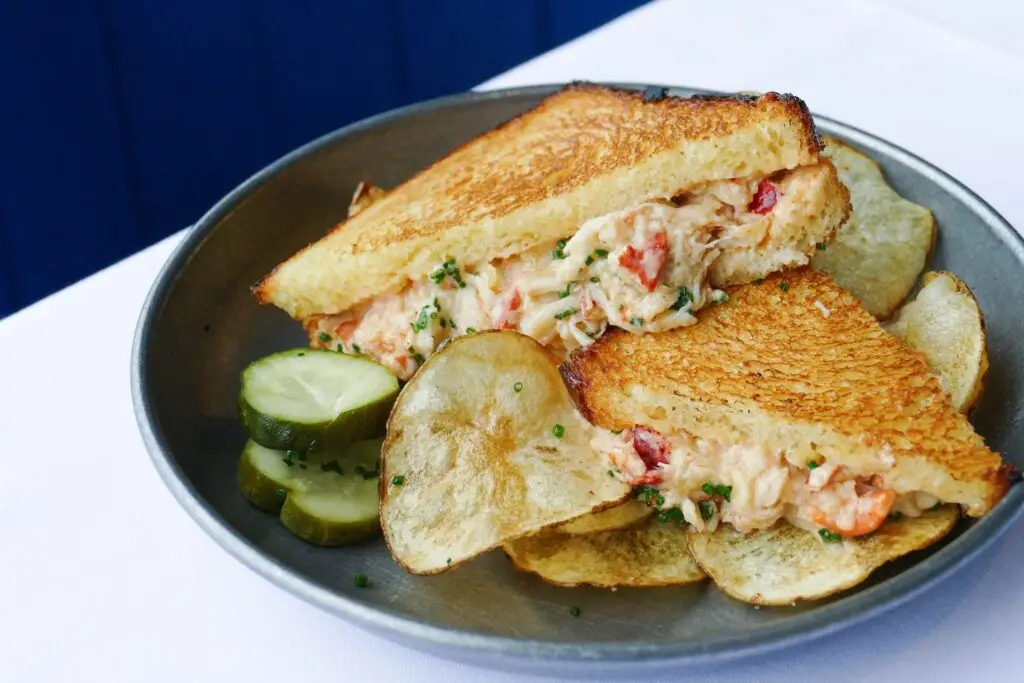
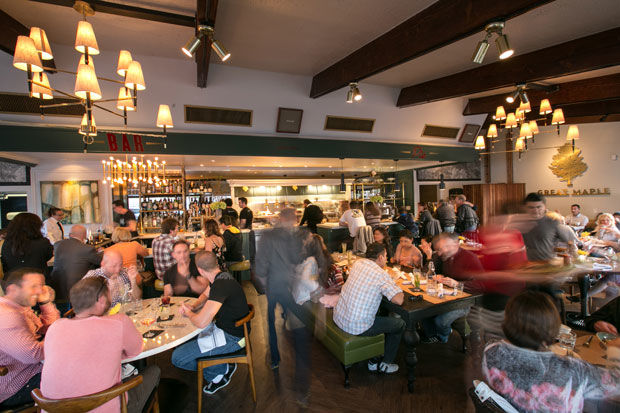
An iconic spot goes up for grabs, with rumors of a chain putting in a flapjacks dispenser. Local Johnny Rivera—already busy enough with his Hash House A-Go-Go and Tractor Room—steps in, renovates the joint, and keeps a neighborhood joint a neighborhood joint. The lobster poutine should be outlawed in many states due to its addictive nature. The lamb is perfect. And the bacon-spackled donuts are ripe for any latent bacon issues you may need to work out. Moreover, Rivera tends to be guilty of giving a damn, and hires people who know how to make meals a bit of a party.
Read Troy’s review of Great Maple here »
Puesto
Puesto
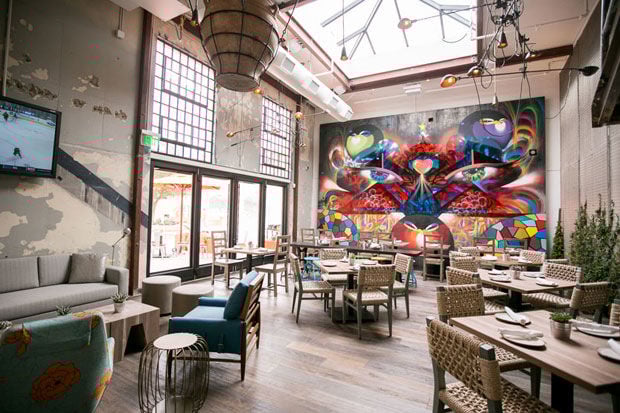
When it was announced the Old Police Headquarters near Seaport Village would become a restaurants-and-retail destination, I was hoping the tenants would reflect the property—local, historical, full of character. I had utopian visions of a Greatest Hits of San Diego Dining. A Rocky’s next to a Mister A’s takeout, an Old Trieste up against Sushi Ota 2. That didn’t quite happen at The Headquarters, with chains like Cheesecake Factory and Eddie V’s coming in. I get it. Big anchor tenants pay the bills. But Puesto is local—a hyper-fresh street-taco joint started by a couple of La Jolla brothers. They started with a smaller outpost in La Jolla, then launched a taco truck, and finally opened this modern-architecture stunner at The Headquarters. Local cocktail whiz Ian Ward is on board for the mescal-friendly bar program, too. To me it’s the biggest success of The Headquarters’ vision.
Puesto’s lobster cilantro tacos were one of the best things Troy ate in October!
Buona Forchetta
Buona Forchetta | Photo by Sam Wells
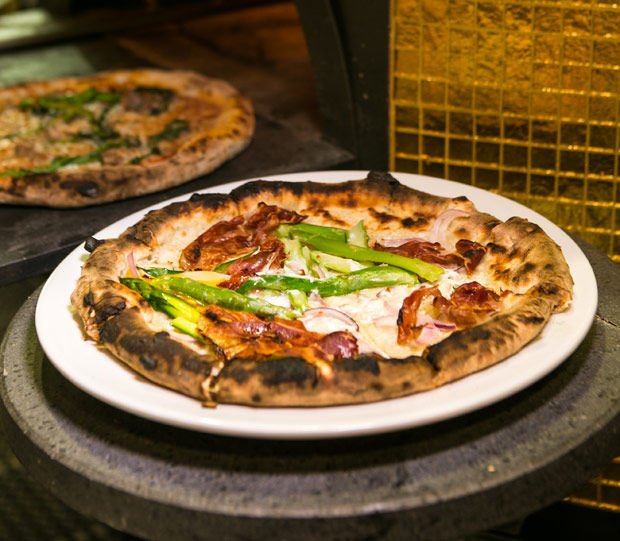
Neapolitan-style pizza has taken over San Diego in the last few years, and South Park’s Buona Forchetta represents the best of the movement. The owner is the heir of famed olive oil family, Farchioni. They enlisted a three-time World Pizza Champion to consult, and they convinced the city to let them pool-out a huge patio on the corner. Your grinding modern fear of carbohydrates is really challenged at a place like this.
Alchemy
Alchemy | Photo courtesy of Alchemy
PARTNER CONTENT
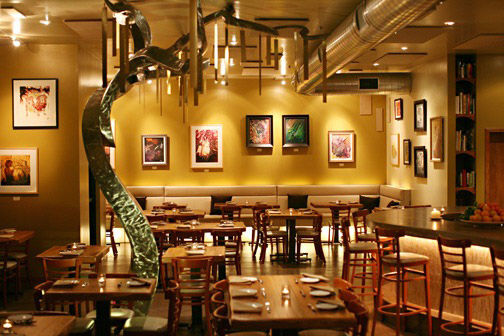
Very few restaurants give as much of a **it as Alchemy does. They’re constantly working on community-focused initiatives, whether it’s healthy food in schools, health insurance for restaurant workers, or the San Diego Hunger Coalition. And while caring is great, there are plenty of bleeding hearts who stink at cooking. Luckily, chef Ricardo Heredia is a real talent. The very best restaurants aren’t just good food and impeccable service among nifty art. They’re cultural gathering places, a nexus where neighbors come to hang, share repast, get inspired. Very few bring it all together. This one does.

The sustainability-focused sushi concept offering traditional favorites as well as fusion specialties will open in North County this summer
Encinitas nigiri fanatics, I bring you good tidings. Oto Sushi is slated to open in late July. After nearly two decades of experience in operations for Tao Group Hospitality and Ace Hotel, Ash Cintas opened the first Oto in Laguna Beach in 2024. She focused on from-scratch dishes, fish sourced from Smart Catch and Seafood Watch–approved suppliers, and a wide swath of gluten-free options.
Year one worked, so she started eyeing her ideal second spot—North County San Diego. “I grew up spending time in San Diego visiting family, and my grandfather built a fishing business here, so the area has always felt familiar and meaningful to me,” says Cintas.
Cintas’ twin sister Alysha Rabb spearheaded the Japanese coastal design of the new Oto, which takes over the former Mrkt Space. The 3,200-square-foot eatery flows from the indoor dining room to large outdoor patio, as well as a private dining room—a total capacity of 95. Chef Connor Mathison has worked as a sushi chef for over 15 years at venues like Bamboo Sushi SW in Portland, Oregon. His menu includes classic sushi offerings like nigiri and sashimi, specialty rolls, bento boxes, tempera, karaage, Wagyu burgers, and robotayaki.
Robatayaki, sometimes called robata, is a method of slow-grilling meat, seafood, and various vegetables over premium Japanese binchotan charcoal. Basically, it’s the gold standard for grilling, thanks to its intense, clean heat that imparts a smoky, savory char on the outside and a rich, tender inside.
“One of the defining characteristics of Oto is that much of our sushi is served yakumi-style, meaning it arrives already seasoned with ingredients designed to complement the fish rather than relying on soy sauce,” Cintas explains.

There will also be a large number of vegan and vegetarian dishes, plus scratch cocktails with housemade syrup, fresh juice, sake, Japanese whiskey, wine, and beer selections curated by beverage partner Gavin Grum. Cintas says she hopes to continue expanding across Southern California, ideally opening six to eight locations in different coastal communities.
“The goal isn’t to build the biggest restaurant company,” she says. “Encinitas is the next step in proving that model can scale.”
Oto Sushi opens July 2026 at 782 N. Coast Hwy 101 in Encinitas. Initial opening hours are from 11:30 a.m. to 9 p.m. daily.

First more sushi, now more ice cream? Someone pinch me. Later this June, Silver Hoof Creamery will open in Old Town at 2548 Congress Street, Suite G, bringing artisanal soft serve, waffle tacos and waffle bowls, sundaes, and milkshakes to the Old Town Urban Market food hall. Everything is made with 100 percent California dairy milk (except for the dairy-free options, of course), and the small-batch menu of flavors ranges from dark chocolate soft serve to blueberry lavender milkshakes, matcha garden sundaes, and the signature Silver Hoof sundae made with vanilla swirl soft serve, caramel drizzle, topped with candied pecans and various candy gems and topped with whipped cream. Personally, I’m a sucker for strawberry, so I’m looking forward to giving the strawberry fields milkshake a slurp once the doors open.
Listen Now: The Latest in San Diego’s Food and Drink Scene
Have breaking news, exciting scoops, or great stories about new San Diego restaurants or the city’s food scene? Send your pitches to [email protected].
Beth Demmon is an award-winning writer and podcaster whose work regularly appears in national outlets and San Diego Magazine. Her first book, The Beer Lover's Guide to Cider, is now available. Find out more on bethdemmon.com.
The team behind The Roxy launches Arcana, a hidden cocktail bar with small bites
If your dopamine rush comes from stepping into an experiential esoteric escape that also serves cocktails, then the newly-opened Arcana might just be up your alley. Brought to life by the owners of The Roxy Encinitas and Roxy on Broadway in Denver, Encinitas’ new hidden cocktail lounge spirals around the idea that nothing is quite as it seems. Stepping into the moody 47-seat space, which is tucked behind the retail store Archive, should feel like an out-of-this-world experience, says Paula Vrakas, one of the four partners behind Arcana.
Vrakas worked with architecture and design firm Tecture—which designed restaurants like Lucien, Haven at Fox Point Farms, and Kettner Exchange—to concoct an environment that begins when guests walk through the secret portal into a world of velvety folklore and myth. No two experiences will be identical, she promises.
“The concept itself is a changing concept, and so this sort of mysticism, the occult, or these dark arts, they’re ever-changing within themselves,” she explains. “So we can lean in…. at any given moment without completely changing the entire concept. That’s actually what we intend to do.”
If this sounds very abstract, that’s okay. Let’s center ourselves around the cocktails, which are very real and created in part by bar lead Sam Reinke.
Initially, there will be around 16 cocktails (and a few mocktails) in three sections. “Archive” features traditional drinks like Old Fashioneds and Manhattans, while “Myth & Memory” offers rotating cocktails inspired by Southern California folklore, like the monster of Proctor Valley Road or the legend of Charles “The Rainmaker” Hatfield.

But the menu starts with “Sigils,” four drinks that break down Arcana’s logo into its individual features: the Celtic Knot, the tria prima (the Latin philosophy of three foundational elements of alchemy being salt, sulfur, and mercury), the All-Seeing Eye of Providence, and the Alchemist’s Stone. The ingredients in each reference key aspects of each concept; for example, the Alchemist’s Stone (sometimes called the Philosopher’s Stone) is made with red powder to mimic the same flaming hue of the legendary item. The Eye of Providence includes carrot juice, an ingredient rich in beta-carotene that also happens to be excellent for eye health.
The fifth drink, called “The Arcana” and based on the logo as a whole, will never be listed. “But if you ask, you can find out,” promises Vrakas.
Since the concept is meant to be cocktail-forward, only a few small bites will be available, like chocolate-covered strawberries and wasabi pea pub mix. “It’s fancy snacks,” laughs Vrakas. But considering how Encinitas’ dining options have upped their game as of late, she says focusing on providing a high-end cocktail experience will fill a void in the area not yet overwhelmed with similar choices. Once inside, it’s an intimate space, with seating for 47 guests over 800-square-feet lit by candles and cocooned with dark velvet curtains sewn by Vrakas’ mother.
For now, Arcana is reservation-only, but will likely introduce opportunities for walk-ins in the future. In the meantime, expect surreality and perhaps a bit of discombobulation, says Vrakas. “It’s just meant to [feel] like, ‘Wait, where was I? Where was that? And how do I get back?’”
Arcana opens May 28 at 517 S. Coast Hwy 101 in Encinitas. Hours are Tuesday through Wednesday, 5 p.m. to 10 p.m.; Thursday, 5 p.m. to 11 p.m.; and Friday through Saturday, 5 p.m. to midnight.

Call it the Michelin effect—after earning Michelin recognition in December, Cloak & Petal in Little Italy is ready to expand its Japanese-inspired offerings by launching a coffee shop-slash-cafe experience this August.
Called Black Mizu Café, the 1,000-square-foot space situated within Cloak & Petal will serve Torque Coffee and Compa Coffee beans and Asa Bakery pastries, as well as Japanese comfort food dishes like a tamago sandwich, bánh mì panini, edamame hummus toast, and various parfaits. Signature drinks include specialties like a honey yuzu sparkling matcha, cherry blossom latte, white miso caramel latte, and a cardamom cinnamon latte. Next spring, Black Mizu will also launch a Pacific Rim-inspired brunch menu by executive chef Robert Cassidy.
With space for 25 to 30 guests, the Japanese-meets-Scandinavian minimalist design will also be able to accommodate a private dining space for Cloak & Petal during non-café hours. Managing partner Cesar Vallin anticipates the initial hours of operation will be daily from 6:30 or 7 a.m. through around 2 p.m., with extended hours on Thursdays, Fridays, and Saturdays until approximately 9 p.m. It’s not a pop-up, per se, but it’s certainly a creative way to make the most of the restaurant’s off-hours floor space.
Listen Now: The Latest in San Diego’s Food and Drink Scene
Have breaking news, exciting scoops, or great stories about new San Diego restaurants or the city’s food scene? Send your pitches to [email protected].
Beth Demmon is an award-winning writer and podcaster whose work regularly appears in national outlets and San Diego Magazine. Her first book, The Beer Lover's Guide to Cider, is now available. Find out more on bethdemmon.com.
The specialty coffee and dessert shop will open in late June to early July
Hospitality-centric businesses are starting to work smarter, not harder. Some are leaning into experiential concepts, like Harland Brewing’s golf course taproom. Some are joining up with other businesses to share space and costs, like Scoopy Scoopy. Then there’s the multi-hyphenate approach, using food and drink as a jumping-off point for bigger aspirations—like Infusion Lab, a specialty dessert and coffee shop opening in Pacific Beach this summer.
The name is strategically vague, explains co-founder and finance director Baran Aydin. Initially, the space will offer a menu of specialty coffee—traditional espresso-based drinks, plus matcha and signature ube beverages alongside breakfast, lunch sammies and desserts like cookies made in-house and European-inspired desserts.
Aydin and co-founder/coffee director Aselin Bay plan to expand into a lifestyle brand with streetwear-inspired merch—shirts, hats, bags, socks, and more that are “designed to reflect the lifestyle and culture behind Infusion Lab,” he explains.
“The goal is to create a space where people can work, socialize, create content, and become part of a growing community,” says Aydin.
Pacific Beach is growing, with major residential expansions like AVA Pacific Beach adding units to a market that’s tightened nearly 30 percent over the last year, according to the Whissel Beer Group real estate team. Currently, there are fewer than 20 coffee shops in Pacific Beach for a population of around 41,000—plus 10,000 to 20,000 more people visiting during summer and weekends.
Infusion Labs’ design is elemental white-and-maroon, with line drawing art. Their space, next to the now-closed Copper Top Coffee & Donuts, will feature some Chesterfield-style seating (deep button sofas) and a dedicated social media area.
Holy Matcha may have helped start the “camera eats first” coffee shop experience with its explosive pink floral wall backdrop, but between Saya Brasserie’s entire social media-centric business strategy, S3 Coffee Bar’s over-the-top coffee concoctions, and Infusion Labs’ online oasis, it seems San Diego coffee shops are still making sure they feed your body and your follower count.
Infusion Lab opens at 4638 Mission Blvd. in Pacific Beach in late June or early July.
The owners behind Hermosa Surf in Bird Rock soft-launched their new cafe, Sungold Point—right next door at 5632 La Jolla Blvd. It’s a modern take on an old-school diner, explains Stirling, with seating for around 35 people and lots of pink, burgundy, turquoise, checkerboard, and terrazzo to feast your eyes on. Owners Stirling and Benny Walter designed the breakfast and lunch menu to use organic ingredients whenever possible and make everything from scratch, including breakfast sandwiches, salads, bowls, and a full espresso menu.

PARTNER CONTENT
Beth Demmon is an award-winning writer and podcaster whose work regularly appears in national outlets and San Diego Magazine. Her first book, The Beer Lover's Guide to Cider, is now available. Find out more on bethdemmon.com.
Yes, Chef! winner Emily Brubaker leads the robust culinary program at Omni La Costa Resort & Spa
For Executive Chef Emily Brubaker, Omni La Costa Resort & Spa feels like home. She grew up just a mile-and-a-half away from the 400-acre property and fondly recalls walking the golf course perimeter as a kid. Though her ambitions led her away from San Diego for nearly two decades in which she honed her craft in some of the highest of high-profile Las Vegas restaurants—including triple Michelin-starred Joël Robuchon at MGM Grand—they ultimately brought her back to North County.

Today, the classically French-trained chef, who’s fresh off a victory on NBC’s Yes, Chef!, judged by Martha Stewart and José Andrés, oversees Omni La Costa Resort & Spa’s seven distinct dining concepts. Her goal is to elevate the resort’s culinary program with her creative, hyperlocal ingredient-driven approach while maintaining the Spanish- inspired flavors and fresh California coastal cuisine that are the bedrock of its culinary identity.
“The San Diego food scene is really growing, and in North County alone, it’s really exploded in the last five years,” Brubaker says. “There are Michelin stars, beautiful tasting menus, craft bakers, and all this food—when I was growing up in La Costa, it was fish tacos. Now there are really cool things popping up, and I’m so happy to be here to see where it’s going to go.”
Brubaker gives chefs de cuisine at each individual restaurant autonomy, however, her influence is evident across the resort.
For example, lobby restaurant Bar Traza serves as Omni La Costa’s culinary centerpiece and features bold Spanish flavors in a lively, social atmosphere. Brubaker overhauled the menu to be more consistent and centered on casual bites with that signature vibe. Think smoky paprika, vibrant citrus, and Spanish meats and cheeses.
At VUE, the focus is on seasonal offerings, California coastal cuisine, and Baja-inspired dishes. She and Chef de Cuisine Cameron Dixon change the menu biannually, which heading into summer, will highlight farm-fresh produce and hyperlocal ingredients—the resort even has its own herb garden and honeybee hives.

Poolside dining options are leaning into the country’s 250th this summer with a selection of classic American dishes with an Omni La Costa twist. And Bob’s Steak & Chop House (Brubaker is a trained butcher) offers a classic steakhouse experience with elevated service.
The chef and company also plan menus for special events at the resort where her creativity can really shine. For an upcoming National Ski Association dinner, the banquet hall will be transformed into an Alpine-themed winter wonderland complete with a snow machine, savory sausages, and melty, decadent raclette. A recent dinner was built around the Carlsbad Flower Fields and each course was matched to a color of ranunculus (Did you know pink dragonfruit are grown in North County? You do now.).
“It’s my zen to be in the kitchen playing with food,” Brubaker says.
Omni La Costa’s culinary program is a key part of the resort experience. And with Brubaker’s leadership, it’s becoming a draw for visitors and locals alike.
“These aren’t just hotel restaurants, these are restaurants that you should go to. They’re destinations, and I’m really hoping for the future that’s where we’re going,” Brubaker says.

Brubaker is also channeling her experience on Yes, Chef! into the culture at Omni La Costa—more emphasis on teamwork and collaboration, empowering her staff to share constructive critiques, and embracing different perspectives. Alongside her leadership role, Brubaker has become an advocate for mental health in the hospitality industry, serving as chief ambassador for the Burnt Chef Project and serves on the Board of Advisors for the Apex Culinary Program, where she mentors and develops future talent.
For more on Omni La Costa Resort & Spa and its dining program, please visit omnihotels.com/hotels/san-diego-la-costa.
North Park’s Encontro has been secretly serving these buttery loaves with the Sarkisian family’s original recipe
If you lived in or around San Diego in the early ’90s, there’s a good chance you remember the legendary breadsticks at Pat & Oscar’s. Yes, I’m talking about those warm, glorious, soft, bizarrely addictive breadsticks served fresh to order with a side of dipping sauce that no one could resist. Gluten intolerance be damned.
I’m sure adults of that era ordered reasonable amounts of breadsticks and conducted themselves with at least the appearance of manners. But if you were between middle and high school age, it’s more likely you ripped through heaps of them like a pack of starving piranhas fighting over an abandoned carcass. It’s not like the restaurant was going to run out of them, but what if they did? Worst case scenario.
The breadsticks were the reason many people went to Pat & Oscar’s and what many people remember most after Sizzler bought the concept in 2000 and basically sucked the magic out of the family-owned business.
If your inner breadstick fiend hasn’t felt that same satisfaction in the better part of 30 years, prepare your salivary glands for a walk down memory lane. They still exist, and are ready to be devoured—straight from the Encontro kitchen in North Park.
Around 10 years ago, Encontro chef and owner Jason Hotchkiss catered the 60th anniversary party for Pat and Oscar Sarkisian—yes, that Pat and Oscar. Their son John was Hotchkiss’ business partner (and the original owner of Encontro before Hotchkiss and his sister Linde bought it in 2019) and helped design and set up some of the Sarkisian family restaurants. Rather than relegate Pat & Oscar’s classic recipes to the black hole of restaurant recipes lost in time, John had given some of them to Hotchkiss, who, somewhat nervously, decided to make the breadsticks for the party.
“Oscar’s eating the bread, and he goes, ‘Oh, my God, where’d you get this recipe?’” he recalls. “I said, ‘It’s yours.’ And he said, ‘No, this is much better.’”
Oscar would know—Encontro’s version is (mostly) true to the original in that it’s still all the same ingredients and cooked fresh to order, but pumped up with a bit more yeast, extra sea salt sprinkled on top, and served with a side of truffle or honey butter. But to guests yearning to relive the era of dial-up internet and Beanie Baby mania, Encontro’s golden buttery braid is a welcome (and incredibly close) re-creation.
To this day, Hotchkiss has guests who come in just for the bread and the memories it sparks—things like Little League parties, post-soccer game hangouts, family dinners, dates, and other formative experiences.
“People come in and they’re like, ‘Oh, my God, I can’t believe this. This brings back so many different memories that I have,’” he says. “I love being a part of that.”
Before influencers, foodie culture, and iPhones capturing every meal we eat, family-run restaurants like Pat & Oscar’s were local treasures. This is probably the closest you’ll ever get to those bygone days of breadstick glory. That is, unless you hike up to the only other place you can still find the original breadsticks—the last remaining Sarkisian family business, Oscar’s Brewing Company in Temecula. (Hilariously, the URL breadstick.com literally redirects to the Oscar’s Brewing Company website.) So if you’re ready to time-travel to the past via a portal of buttered, braided bread, Encontro has you covered.
Listen Now: The Latest in San Diego’s Food and Drink Scene
Have breaking news, exciting scoops, or great stories about new San Diego restaurants or the city’s food scene? Send your pitches to [email protected].
Beth Demmon is an award-winning writer and podcaster whose work regularly appears in national outlets and San Diego Magazine. Her first book, The Beer Lover's Guide to Cider, is now available. Find out more on bethdemmon.com.
After training in Italy and working in acclaimed kitchens like n/naka and Blue Hill at Stone Barns, Gemma Matsuyama Yamada found her calling in Kimochi’s delicate fruit mochi
Growing up with a Japanese father and Italian mother, Gemma Matsuyama Yamada spoke four languages—English, Italian, Japanese, and food. So when she found out that some high schools in Italy actually specialized in cooking and hospitality training, she didn’t think twice—she left her all-girls Catholic high school in New Jersey to attend the prestigious Istituto Alberghiero di Villa Santa Maria culinary school in Villa Santa Maria (called the “Town of Cooks” due to the area’s culinary training roots that go back as far as the 16th century) in Abruzzo, Italy.
Matsuyama Yamada spent five years in Italy before moving to New York City to start working in bakeries and restaurants. Eventually, she became the pastry sous chef at the acclaimed Blue Hill at Stone Barns in upstate New York (which earned its first Michelin star in 2016 and has held two stars since 2019). Eventually, she made her way to Los Angeles, operating a food truck for a few years before chef Niki Nakayama tapped her to be the pastry chef at the now-Michelin-starred n/naka—the first time she worked in a Japanese restaurant.
“Then, the pandemic happened,” she sighs.

The entrepreneurial life she’d gotten a taste of while operating a food truck still beckoned, and she’d already been making fruit mochi on the side for fun. “Mochi is a sticky glutinous rice dough, and it’s made by steaming rice and pounding it into a sticky dough,” she explains. It’s a very common, very traditional Japanese snack that comes neutrally flavored or lightly sweetened, with variations like daifuku (stuffed with a sweet filling, like fresh fruit or red bean paste) or the more Westernized mochi ice cream often offered at sushi restaurants.
So, she decided to launch a business around it. “I started Kimochi during the pandemic in my apartment.”
Kimochi’s fruit mochis are almost all vegan, gluten-free, and nut-free (she specifically notes any allergens if applicable), and due to the fresh fruit used, have a maximum shelf life of around 48 hours refrigerated. “I think it’s one of the most delicious ways to eat fruit, because you just get the pure seasonal flavor in your mouth, just amplified,” Matsuyama Yamada says.

And thanks to Southern California’s year-round growing season and abundance of small farms, she has access to different fruits at all times. “[The fruit] could be from a farm in Vista. It could be from a farmer that’s just standing on the side of the street and they’re selling clementines,” she laughs, offering that her selections can come from a variety of places. “I just think whatever the Earth has given us in the form of fruit is so special.”
Best-selling flavors include mango, strawberry, and clementine, and she hopes to one day bring back some of her more cake-inspired mochi offerings like tiramisu and strawberry shortcake. But for now, she’s focused on raising her two young kids with her husband, studying the art of tea ceremony, offering private events and catering, and running pop-up events a few times a month at places like Michi Michi Bakery in Bankers Hill and Flour Atelier in Kearny Mesa (she posts where she’ll be on Kimochi’s Instagram page).
Despite a hectic schedule, Matsuyama Yamada practices the ethos of kimochi. Ki means “energy” in Japanese, and while mochi mostly refers to the food. “It also means ‘to hold’ in Japanese. It’s a play on the word,” she explains. “It could mean both ways, like ‘hold your energy, share your energy… be present. Enjoy the little moments.’ It’s okay to have a sweet treat with yourself and share that moment with your loved ones. My philosophy of Kimochi is just to enjoy what we have and share that goodness.”

Listen Now: The Latest in San Diego’s Food and Drink Scene
Have breaking news, exciting scoops, or great stories about new San Diego restaurants or the city’s food scene? Send your pitches to [email protected].
Beth Demmon is an award-winning writer and podcaster whose work regularly appears in national outlets and San Diego Magazine. Her first book, The Beer Lover's Guide to Cider, is now available. Find out more on bethdemmon.com.
The 29-year-old culinary director at Herb & Sea is making seafood sexy (and approachable) again
Implementing a farm-to-table model hardly deserves acknowledgement these days. It’s not a stretch. It’s not innovative. “It’s the bare f**king minimum,” says Herb & Sea‘s executive chef Aidan Owens.
When I arrive at the Encinitas restaurant, I’m ready to talk sustainability, farm-to-table stuff, with Owens. “Did you see the chin on that?” he says of the extra big jiggly chin on the sheephead that just arrived with the day’s fresh catch. I did. It was Jay Leno adjacent.
I learn quickly that he somehow oozes both charm and stone-cold honesty. Maybe he could construct a new dish with chin goo, like he did when he had a bunch of tuna scraps and voila’d it into a smooth and crowd-pleasing ‘nduja. “I want to know what’s in there,” he says.

The instinct to look closer, to dig into what others might discard, says a lot about the chef’s approach. I guide him back to our topic, but he has something else on his mind. “We’re overcomplicating food—what happened to just cooking good food and having fun with it?”
Owens grew up on a farm in Byron Bay, Australia, where sustainability wasn’t a concept you chat about so much as a way of life. Think dirt roads, backyard chickens, pulling vegetables straight from the ground, and a mother who believed that if you couldn’t pronounce the ingredients on a package, you shouldn’t eat what was inside.
Food wasn’t precious or performative. Making it was what you did because you were hungry and that’s still what inspires Owens today. “I like to cook good food because I like to eat good food,” he says.
His approach to sustainability at Herb & Sea began so naturally that it felt just like instinct. “I was just like, ‘Let’s order food from the people who live and work here,’” he says.

And why wouldn’t he when lives in San Diego? Cities all over the world vie for our goods. Our tuna is sent overseas. Our spiny lobsters hit dinner plates in China and Japan. Not to mention California’s producing a third of the country’s vegetables and three-quarters of its fruits and nuts.
“Why would we outsource when it’s all here?” Owens asks.
Sustainability, in this context, is about cooking what exists in abundance, nearby, right now. “I love the local fish here. It’s f**king delicious and San Diego citrus, I mean, it is so f**ing good,” he says.
Instead of importing ingredients, Owens also looks for nearby alternatives. “You can find really cool things in the local waters,” he says, pointing out that stingray cheeks taste similar to scallops.

Whatever he finds in that sheephead chin might just be the next substitute for marrow. But to make this work, it means getting diners amped up about the slightly unfamiliar.
Tasting menus, where diners are completely in his hands, become an opportunity to gently push boundaries. “I’ll serve mackerel, because people think they hate it,” Owens says, noting that the abundant local fish can have some fishiness. “But when it’s fresh, it’s arguably one of the best fish in the ocean.”
He also tweaks the language on the menu so people might feel more compelled to give dishes a try without preconceived notions. He might use “lengua” instead of “tongue.” “Whelk” instead of “snail.” When he puts “stingray throat” on the menu, he disarmingly calls it “skate.”
To reduce waste, scraps aren’t always discarded but rather turned into something new. Sometimes they’re smoked, cured or fermented. Apples going bad turn into apple ponzu. Lemons turn to marmalade, which stretches their usefulness far beyond peak season. “And it’s super tasty on our pizza,” he says.
What makes the food even richer, is the relationships he’s built with farmers. Though it didn’t always feel natural, Owens sought personal connection first. He recalls approaching a fisherman at the Tuna Harbor Dockside Market. “I was awkward,” he says. “I went up to him and said, ‘I like your fish.’”
Owen’s is now so close to his suppliers—like fishermen Ryan Sebo and Joe Daly—that he gets texted pictures of fresh catches right as they flop on the boat. The messages always ask if he wants first dibs. “I say yes to a lot of fish,” Owens says, noting that Herb & Sea can go through 2,000 pounds of seafood a week.

The next evolution of sustainability, in his view, will be chefs working directly with producers such as his alliance with Sebo, cutting out middlemen and purveyors where possible. “It will put more money in the pockets of the people doing the work,” he says.
It will mean that chefs can’t just know their local farmers and producers, but they’ll choose to work with the ones who have the best practices. Dining and sustainability will become much less about the final plate. “It will be more about the impact that plate has on the Earth,” he says.
Ultimately, he believes sustainability doesn’t need to be loud. It doesn’t need hashtags. It just needs to be honest.
“We aren’t saving lives. We’re feeding people good food,” he says.
And yet, in feeding people well—simply, thoughtfully, responsibly—something meaningful happens. Guests leave satisfied. Ingredients are respected. Local ecosystems are supported and food returns to what it has always been at its core: nourishment, pleasure, and a quiet reflection of the place it comes from.
No buzzwords required.