Ready to know more about San Diego?

Subscribe
Everything SD MAY 12, 2025

5 Summer Hikes in San Diego with Coastal Views

When the weather starts to heat up, these trails offer breathtaking views, ocean breezes and easy to difficult ascents
5 Summer Hikes in San Diego with Coastal Views

It may feel a bit cold and cloudy right now thanks to May grey, but warmer weather is fast approaching. And summer is the best time to head to the coast for all your hiking and walking. But don’t let our regularly temperate weather fool you, it can quickly get very hot as you get just 10 miles off the coast. 

So if you’re looking for hikes that beat the heat, we put together a list of our favorite coastal treks to enjoy as the weather starts to spike. With options that range from easy-peasy to more challenging, and all with breathtaking views, here are five of our top summer hikes in San Diego.

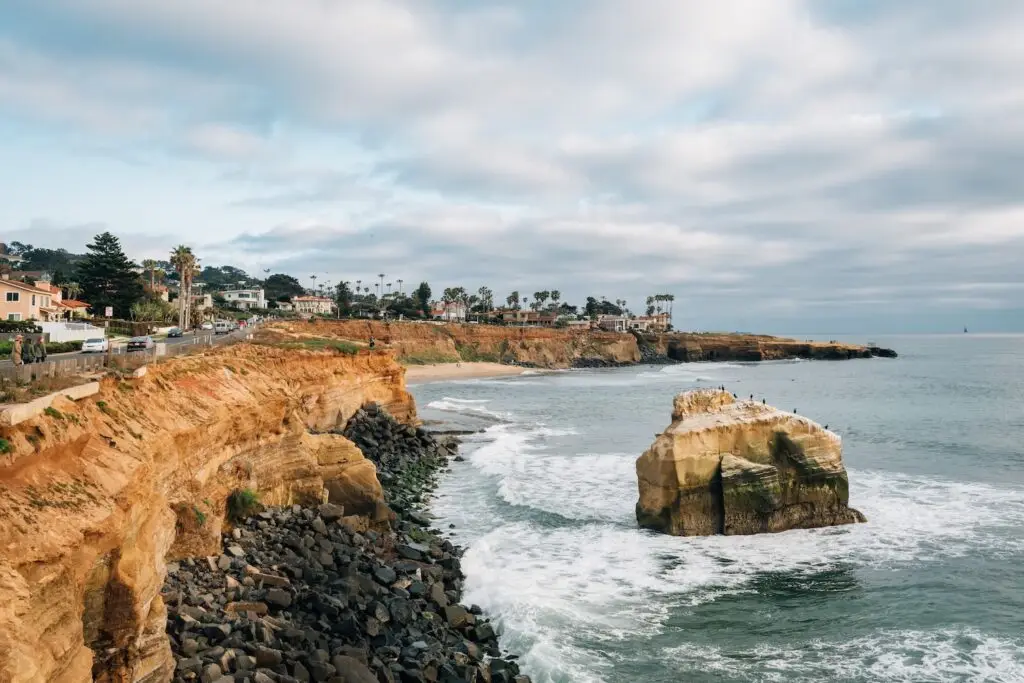
Sunset Cliffs Natural Park

This trail along the cliffs in Point Loma is perfect for an easy hike with kids or pets or if you just want a relaxed outing that isn’t too challenging. You can explore Sunset Cliffs’ wandering trails throughout the park and get beautiful ocean views all along the way. Be sure to pay attention to the signs that show where the ocean walls are degrading, to avoid any accidental slips.

  • Distance: ~1.5 miles (out and back)
  • Difficulty: Easy
  • Dogs: Allowed
  • Details: Look for free parking along Sunset Cliffs Boulevard and then start the hike from there.

Cabrillo National Monument & Bayside Trail

For a slightly more challenging (read: hilly) trek, head to Point Loma’s Cabrillo National Monument which commemorates the landing of Juan Rodríguez Cabrillo at San Diego Bay on September 28, 1542. Located here is Bayside Trail which  leads down to the beach before climbing back up. It sits on the southernmost point of San Diego, and makes you feel like you are at the end of the world as you look out to the far-reaching ocean beyond you. When you reach the bottom, there are cool tide pools you can check out as well.

  • Distance: 2.5 miles (out and back)
  • Difficulty: Moderate
  • Dogs: Only allowed on Coastal Trail
  • Details: You need a pass to enter, which costs $20.
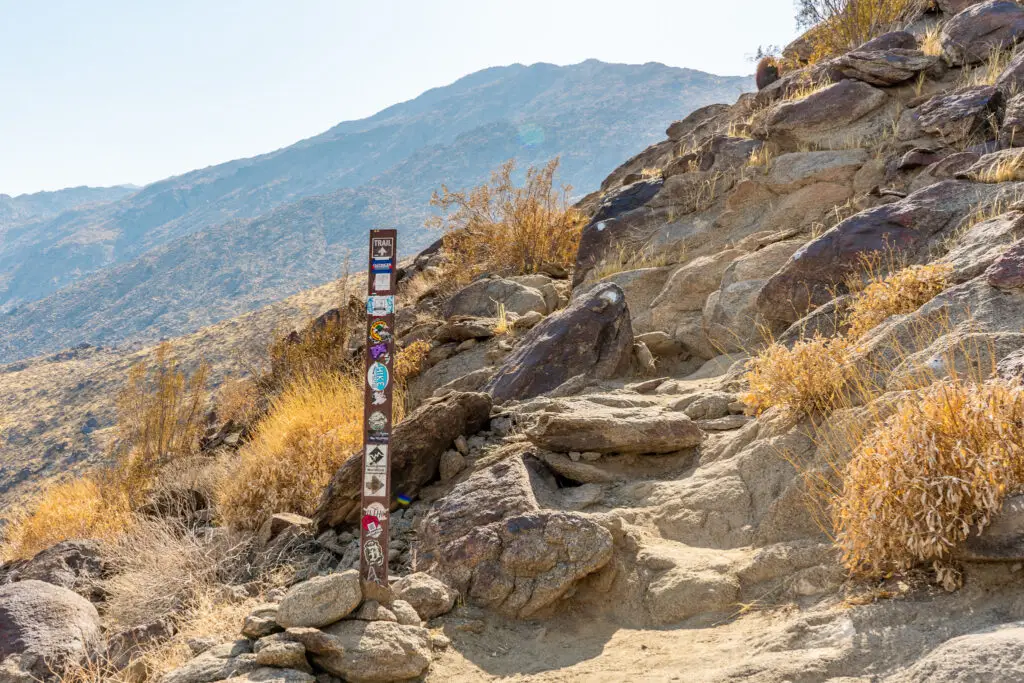
Best Hikes in Southern California featuring Cactus to Clouds Trail on San Jacinto Peak in Palm Springs

Annie’s Canyon Trail

The Annie’s Canyon hike isn’t quite on the coast, but it’s close enough that you still get the cool breezes and beautiful views at the top. Plus, the climb to the top is exciting as you make your way up through a white slot canyon, with very narrow walls and ladders. Then you pop out on the top and can see the ocean.

  • Distance: 1.2 miles out and back
  • Difficulty: Moderate
  • Dogs: Allowed, but don’t try to bring them up the ladders in the canyon
  • Details: Parking is free. Park at 150 Solana Point Cir, Solana Beach, CA 92075 and follow the trail east to get to Annie’s Canyon. Don’t use Google Maps! You’ll avoid climbing a very steep hill along the highway

La Jolla Coast Walk Trail

The La Jolla Coast walk is is a pretty hike to take around La Jolla Village right along the ocean, with chances to take in the seals and sea lions along the way. You can explore the wandering paths all the way to La Jolla Shores Beach if you want to dip your toes in the ocean, or turn back at any point along the way.

  • Distance: ~0.6 miles (one way)
  • Difficulty: Easy
  • Dogs: Allowed
  • Details: Find street parking anywhere in La Jolla Village and then head to the trail.

Broken Hill Trail

This is one of the more challenging treks in Torrey Pines State Reserve and has beautiful cliffside views at the end. You can add to the distance to the Broken Hill Trail by taking many of the other offshoot trails—honestly, you can spend an entire day wandering through the reserve if you want to.

  • Distance: ~2.5 miles round trip
  • Difficulty: Moderate
  • Dogs: Not allowed
  • Details: It costs $25 to park at the reserve, but you can pick up a state adventure pass from any local library and then park for free.

Claire Trageser has been writing for San Diego Magazine for 10 years. She also is a reporter at KPBS and writes for The New York Times, National Geographic, Marie Claire, Elle and Runner's World.

Subscribe to our newsletters

Select Options

By subscribing you confirm that you agree with our Terms and Conditions and Privacy Policy.

Guides JULY 9, 2025

8 of the Most Scenic Hikes & Walking Paths in San Diego

Our favorite treks throughout the county from easy to challenging adventures that you can do throughout the year

8 of the Most Scenic Hikes & Walking Paths in San Diego
Photo Credit: Cole Novak

San Diego is one of the most diverse places for spectacular views. We have beaches, coastal bluffs, grasslands, and mountains—all begging locals and visitors to lace up their hiking boots (or just sneakers) and explore its variety of landscapes. The next time you head out for a little exercise, or a break from screens, check out these trails with stunningly scenic views

San Diego hiking trail at the Torrey Pines State Natural Reserve in Del Mar
Courtesy of Torrey Pines Conservancy

Torrey Pines State Natural Reserve

0.5 to 1.5 Miles Out & Back

Torrey Pines is truly one of our most scenic places to walk and hike in San Diego. The wind-sculpted coastal bluffs produce dramatic views across its 2,000-acre reserve that protects one of the world’s rarest pine trees. The Beach Trail leads down to the pristine sands below, while the Guy Fleming Trail provides panoramic ocean vistas that stretch from La Jolla to Mexico on clear days. For an added scenic bonus, go at sunset.

  • Difficulty: Easy
  • Dogs: Not Allowed
  • Details: Parking costs $15-$25 depending on the day you visit.
Best Hikes in Southern California featuring Cactus to Clouds Trail on San Jacinto Peak in Palm Springs
North and South Fortuna hiking trail at San Diego's Mission Trails Regional Park
Courtesy of Mission Trails Regional Park

North and South Fortuna

8 Miles Out & Back

These more challenging hikes in Mission Trails Regional Park give you sweeping 360-degree views all the way to the ocean on clear days. And the less-traveled trails will give you a break from the crowds at Cowles Mountain (though you can get the same views from there if you want an easier hike). Try going early in the morning to catch sunrise views and avoid the heat.

  • Difficulty: Challenging
  • Dogs: Allowed
  • Details: Park for free at the Mission Trails Dam and follow the trail from the parking lot.
Aerial view of San Diego's Children's Pool located near the La Jolla Cove where a colony of seals lives
Photo Credit: Cole Novak

La Jolla Cove to Children’s Pool Walk

3 Miles Out & Back

This easy coastal walk has stunning ocean views and plenty of chances to watch the seals and sea lions down below. Start from La Jolla Cove and follow the path that winds along sandstone bluffs. Down below you can watch the ocean waves, surfers, sea lions, seals, and if you’re lucky, dolphins.

  • Difficulty: Easy
  • Dogs: Allowed
  • Details: Go early to find a parking spot in La Jolla Village.
Sunset Cliffs Natural Park walking path in San Diego
Photo Credit: Cole Novak

Sunset Cliffs Natural Park

2 Miles Out & Back

It’s called Sunset Cliffs for a reason. This dramatic coastline features towering sandstone cliffs, hidden coves, and some of the most spectacular sunset views in the county. But even if you don’t go at sunset, the views can’t be beat. There are several winding paths to follow to various viewpoints along the way. Just remember to stay back from the unstable cliff edges.

  • Difficulty: Moderate
  • Dogs: Allowed
  • Details: Start at the Inn at Sunset Cliffs and follow the path down along the cliffs winding down through beautiful homes on your left and the ocean on your right.
View from the summit of San Diego's Iron Mountain a popular scenic hike in San Diego
Courtesy of AllTrails

Iron Mountain

6 Miles Out & Back

For a different type of view, head further to the desert for this challenging climb. Located in Poway, Iron Mountain offers a taste of San Diego’s inland desert landscape without the long drive to the true backcountry. The trail climbs steadily through sage scrub and chaparral, providing increasingly expansive views of the surrounding valleys and peaks. The summit offers incredible views stretching from the coast to the Palomar Mountains. Try going in the spring to see wildflowers, or winter when the weather is cooler. 

  • Difficulty: Challenging
  • Dogs: Allowed
  • Details: Free parking at the trailhead or along the street if the lot is full.
San Diego's Embarcadero park located at the waterfront
Courtesy of the Cultural Landscape Foundation

Bayside Walk at Embarcadero

5 Miles Out & Back

If you don’t want an official hiking trek, but more of a coastal walk with beautiful views, try the Embarcadero’s bayside walk that stretches from the Convention Center to the Maritime Museum. Along the way you’ll get postcard-perfect views of San Diego Bay, the Coronado Bridge, and the downtown skyline.

  • Difficulty: Easy
  • Dogs: Allowed
  • Details: Paid parking at the San Diego County Administration Building.
Hikers in Annie's Canyon Trail located in Encinitas, San Diego
Courtesy of the Nature Collective

Annie’s Canyon Trail

3 Miles Out & Back

If you want views that make you feel like you’re on another planet (or maybe just in Utah), head to this spot in the San Elijo Lagoon Ecological Reserve. Annie’s Canyon Trail is a narrow slot canyon carved by thousands of years of erosion, giving you the chance to climb up along towering sandstone walls. The short but steep trail requires some climbing up ladders and you may have to wait in line when it’s crowded, but the unique views make it worth the effort.

  • Distance: 3 miles out and back
  • Difficulty: Moderate
  • Dogs: Allowed but not recommended
  • Details: Park at 150 Solana Point Cir, Solana Beach and follow the trail east to get to Annie’s Canyon. Don’t use Google Maps, you’ll avoid climbing a very steep hill along the highway.
View of Cedar Creek Falls, a San Diego waterfall hike located in the Cleveland National Forest
Courtesy of AllTrails

Cedar Creek Falls

6 Miles Out & Back

Located in the Cleveland National Forest, Cedar Creek Falls requires a longer drive but delivers one of San Diego County’s most spectacular views. The challenging hike takes you through chaparral and oak woodlands before leading you to a stunning 80-foot waterfall that pools in a natural swimming hole. Just wait to go until after the summer since the temps can quickly rise. 

  • Difficulty: Challenging
  • Dogs: Allowed
  • Details: It’s so popular that you need a permit. Reserve one here.

Claire Trageser has been writing for San Diego Magazine for 10 years. She also is a reporter at KPBS and writes for The New York Times, National Geographic, Marie Claire, Elle and Runner's World.

Everything SD JUNE 30, 2025

DOGE Cuts Force Mission Trails Bridge Project to a Halt

A father’s mission to create a safe crossing over the river where his son died has been impacted by federal decisions to slash California education, healthcare, and public safety funds

DOGE Cuts Force Mission Trails Bridge Project to a Halt
Courtesy of Safdie Rabines Architects

When Ben LeNail’s son Max drowned while crossing the San Diego River in Mission Trails Park, LeNail immediately vowed to build a bridge across the river in honor of his child.

That was in January 2021. Now, after more than four years of tireless effort, LeNail says he’s given up. He has issued a stop-work order on all activities for the Max Lenail Memorial Bridge. “I’m very sad. It’s like Max dying a second time, my tribute to him not coming to fruition,” LeNail reflects. “It’s a huge missed opportunity because it has universal support. Everybody wants it. I’m questioning myself, how I couldn’t get to the final stretch.”

National Park Service federal workers who had their jobs cut during the Trump administration

But by all accounts, LeNail did everything right. The issue is that building in Mission Trails over the San Diego River requires a massive number of permits and studies on the impacts of the surrounding environment. LeNail was hoping a federal grant secured by Congresswoman Sara Jacobs would pay for much of that, but when President Trump took office, the funding was cut off.

“I’m, of course, looking back here and wondering if I did something wrong. I don’t think I did,” LeNail says. “I think I was totally taken by surprise. I knew that soft costs were going to increase as we were getting closer to obtaining the permits. But they increased very suddenly and dramatically. The spending went up dramatically in the last three months.”

Those costs covered studies needed for permits, and LeNail explains that he expects he’d need another $500,000 to do everything required.

“On top of that, literally on May 31st, the head of the Mission Trails Regional Park Foundation, Jennifer [Morrissey]—who’s wonderful—informed me that the state grant of $1.5 million that we have for the bridge is really earmarked for construction and should not be tapped for pre-construction activities,” LeNail adds.

On the same day, LeNail heard from Jacobs that “because of the Trump cuts to California education, healthcare, and public safety, she was not going to be able to make the federal grant happen.”

The news forced LeNail’s efforts to a halt. “Suddenly, we’re out of money. We don’t have any reserves to tap,” he says. “We’ve exhausted all avenues, and I have to idle my team. I have to have a sober assessment of the fact that maybe I took it as far as I could go, and I have to put a hard hold on it and turn it over to the San Diego authorities and say, ‘Now, if you want a bridge, you have to make it happen.’”

Rendering of Max Lenail Memorial Bridge in Mission Trails Regional Park in San Diego which has halted due to Doge Federal Funding cuts
Rendering Courtesy of Safdie Rabines Architects

This was after LeNail raised $1 million, secured the state grant, spent 3,000 hours, and made 18 trips to San Diego from Palo Alto to work on the project. “A huge amount of intellectual, emotional, and practical investment, and without success,” he says. “That’s very hard.”

And all of that time spent working on the project means LeNail has been continually reliving the tragedy that ended his son’s life.

More than four years ago, LeNail’s son Max was five minutes away from wrapping up his run after climbing South Fortuna in Mission Trails. A massive hail storm began, and Max kept going, following the San Diego River Crossing trail, which he thought would lead him back to his car in the parking lot. But instead, he came to the rushing river and no bridge.

It’s unclear what happened next, but Max’s GPS watch shows that he hesitated at the side of the river, then decided to cross it. Usually, the river’s waterline is fairly low, but with the rains that winter, it was a rushing torrent. The next day, Max was found dead further downstream. He was almost 22 and about to graduate from Brown University, with plans to become a doctor.

Almost immediately, LeNail and Max’s mother Laurie Yoler committed to building the bridge. Despite living nearly 500 miles away, they became fixtures in the San Diego political scene, working to get the job done.

Ben LeNail with Councilman Raul Campillo behind the Max Lenail Memorial Bridge in Mission Trails Regional Park in San Diego
Courtesy of Bridge for Max
Bob LeNail with Councilman Raul Campillo

Councilman Raul Campillo, who represents the area that includes Mission Trails, says not all hope is lost.

“I think that, with a concerted effort, there’s really nothing [LeNail] and [Yoler] can’t get done. But right now, it is in a wait-and-see pattern,” he explains. “Whatever they ask me to do, I’m going to do my best to get it done. I’m 100 percent behind this project. It’s not just for their family—it’s for the public safety of everyone who crosses the river right there, which is tens of thousands of people a year.”

Indeed, people wade across the river or walk on tip-toes along the rocks to try to cross on a daily basis. Campillo says just as the river increases the danger, it increases the complications of construction.

“As soon as you have two or more levels of government bureaucracy that have to sign off, it almost always compounds the problem,” he adds. “This is not unique to San Diego. We’re seeing this across the entire state. I just don’t understand how policymakers at other levels of government—especially on a public safety project like this—don’t take it more seriously and fast-track the process.”

For now, the path forward, Campillo says, is to convince state and federal agencies “to really get on board” and make the permitting process easier.

“It’s just really disappointing and yet not at all surprising that state and federal agencies are in the way and are just really not in any rush to make sure these approvals can get in place as costs escalate,” says. 

He adds that if involved parties are able to raise more funds, the project can push through. But that money will not likely come from the federal government. “With DOGE basically putting a stop on so much highly impactful scientific research, trying to get money for a bridge over the river—which is a really important public safety project, to be very clear—I think the hope of that is very, very low,” Campillo says.

Rendering of Max Lenail Memorial Bridge in Mission Trails Regional Park in San Diego which has halted due to Doge Federal Funding cuts
Rendering Courtesy of Safdie Rabines Architects

Jacobs said in a statement that Max Lenail’s accidental drowning was tragic “and entirely preventable if we had the necessary safeguards in place. Mission Trails needs this pedestrian and bicycle bridge to ensure public safety and save lives … I’m disheartened that the Army Corps of Engineers’ stop-work order and their eligibility requirements for federal grants have prevented progress from being made on this project. My office will continue to explore ways to get this bridge built to benefit our entire community.”

LeNail is now making one last push to see if he can use the $1.5 million in state grants to help with the permits, even though he was told it has to be saved for construction.

“I’m making a sort of symbolic case to see if we can tap the state grant to get the permits,” he says. “Once issued, they’re valid for two years. The city told us they could maybe extend that to three years. Then we’d have to raise more money to build, but at least we’d have a two- to three-year window to do that. I would love that, if we could get the permits and show that we succeeded in that.”

In the meantime, LeNail adds, the danger is still there.

“I think a bridge is needed more than ever,” he emphasizes. “It’s a dangerous spot. It’s a popular spot. Any time I’ve been there, I’ve seen dozens of people crossing in a matter of minutes. I think there could very well be another fatality there sometime in the next three or four years.”

Claire Trageser has been writing for San Diego Magazine for 10 years. She also is a reporter at KPBS and writes for The New York Times, National Geographic, Marie Claire, Elle and Runner's World.

Everything SD JUNE 17, 2025

9 Wild Animals You’ll Spot on San Diego Trails

Whether you’re in search of mule deer or are hoping to avoid coyotes and bobcats, here’s where to spot local fauna on your next hike

9 Wild Animals You’ll Spot on San Diego Trails
Courtesy of Wikipedia

I’ll always remember one of my first times trail running in San Diego. I had just moved to the city and headed out to Los Penasquitos Canyon to run on the shady dirt trails there. I had heard warnings about rattlesnakes, so I had my guard up as I ran. Suddenly, a crashing sound came from the surrounding bushes and I jumped nearly three feet in the air—only to see that it wasn’t a rattlesnake. It was a deer. I watched as the deer pranced through the woods before continuing my run.

That was my first encounter with San Diego wildlife, and now I know there are many different types of wild animals to see on local trails. Here are a few of them.

San Diego wildlife on hiking trails featuring a coyote
Courtesy of National Park Service

Coyotes

Chances are, if you’re an avid hiker in San Diego, you may have come across a coyote along some of your favorite trails, especially in Mission Trails Regional Park. These canids are part of the dog family and can often be seen trotting solo at dawn or dusk in parks, in canyons, and even on neighborhood streets. While it’s difficult to pinpoint the exact number of packs living among us, in urban areas like Vista, Carlsbad, and San Marcos, coyote densities can be higher, sometimes around 12 per square mile versus four in more wild areas. But don’t worry, wherever you spot them, coyotes tend to avoid humans—just don’t try to feed them. They’re curious creatures. 

Mountain lion sighting in San Diego county
San Diego wildlife on hiking trails featuring a mule deer
Courtesy of Mule Deer Foundation

Mule Deer

Around San Diego, deer can be spotted in places like Mission Trails and Cuyamaca Rancho State Park and on canyon hikes in the Navajo neighborhood. If you’re hiking in the early morning or late evening, you’ll likely find them hanging out near water sources and grazing around creek edges. Mule deer are amazing jumpers, some even leaping around two feet high and 15 feet in distance. They also have a sense of smell 1,000 times stronger than people, so they’ll likely know you’re coming even before you spot them.

San Diego wildlife on hiking trails featuring a California quail
Courtesy of Wikipedia

California Quail

These small birds—measuring 9 to 11 inches and weighing between 5 to 7 ounces—are fast movers and easy to miss. But if you spot one, you’ll know, because they have very distinctive topknots that look like commas hanging over their faces. In fact, these stylish buns are actually made not from a single feather, but six overlapping feathers. Look for them at Cabrillo National Monument, chilling on the ground or dashing across trails on foot, or listen for their “chi-ca-go!” call and watch trail edges or low shrubs for movement while hiking. Stay still to observe families of quails, called coveys, passing by.

San Diego wildlife on hiking trails featuring a Western Rattlesnake
Courtesy of Wikipedia

Western Rattlesnake

Even though they usually want nothing to do with you, it’s important to be on the lookout for rattlesnakes on the trails and give them space. They may not always rattle, so keep your eyes open. Some researchers suggest that their lack of noise is due to people killing rattlesnakes when they find them—it’s believed that the snakes are evolving to not rattle. Around San Diego, they can often be spotted anywhere it’s hot and dry and have been seen in the local canyons around the Allied Gardens neighborhood and Torrey Pines State Natural Reserve

San Diego wildlife on hiking trails featuring a roadrunners
Courtesy of Wikipedia

Roadrunners

In the early mornings, locals can often spot roadrunners scavenging around hummingbird feeders or between shrubs in desert and chaparral terrain. And, as their name suggests, these birds are fast. They can sometimes run up to 20 mph—though they don’t make a “beep beep” sound as they pass by. It’s more of a “coo.” If you’re looking to spot them, residents have seen them in places like Mission Trails Regional Park, Anza-Borrego Desert State Park, and Lake Hodges.

San Diego wildlife on hiking trails featuring a bobcat
Courtesy of Wikipedia

Bobcats

While bobcats are rare in San Diego, they can sometimes be spotted in more remote parks and parts of the county such as Penasquitos Canyon Reserve, Scripps Ranch, and Serra Mesa. Most active at dawn and dusk, bobcats are excellent climbers and swimmers and often travel 3 to 7 miles at night to hunt and patrol. The cats are stealthy though, so if you do see one, count yourself lucky and keep your distance.

San Diego wildlife on hiking trails featuring a horned lizard
Courtesy of Wikipedia

Horned Lizards

Found in dry, sandy areas, horned lizards look like teeny tiny dinosaurs and are tricky to spot because they are so good at camouflaging. If you move slowly and look carefully along rocky or dusty paths, you may have a chance of catching a glimpse of them. Torrey Pines or the aptly-named Horned Lizard Bypass in El Cajon are your best bet at seeing one in the wild. 

San Diego wildlife on hiking trails featuring a great horned owls
Courtesy of California Living Museum

Great Horned Owls

Great horned owls are usually more often heard than seen, but even the sound of them is very cool. They are one of the largest owls in the country—their wingspans can reach almost five feet—and can turn their heads almost 270 degrees. In San Diego, they can be seen in Los Penasquitos Canyon and Tecolote Canyon Natural Park. To spot them, check sycamore or eucalyptus trees; they like to perch in them and can sometimes be glimpsed roosting in shady branches during the day.

San Diego wildlife on hiking trails featuring a gray foxes
Courtesy of National Wildlife Federation

Gray Foxes

Torrey Pines State Natural Reserve, Rancho Jamul Ecological Reserve, and Cuyamaca Mountains have all reported gray fox sightings. These foxes are smaller and harder to spot than coyotes, so count yourself lucky if you’ve seen one. They are most active at night and are hard to catch in action, but keep your eyes peeled around dense chaparral, including downed trees, boulders, and bushes that provide cover.

Claire Trageser has been writing for San Diego Magazine for 10 years. She also is a reporter at KPBS and writes for The New York Times, National Geographic, Marie Claire, Elle and Runner's World.

Studio S JUNE 15, 2026

A Modern Take on Steak

Stake Chophouse & Bar brings contemporary classics and old-school service to the heart of Coronado

A Modern Take on Steak
Courtesy of Stake Chophouse

Stake Chophouse & Bar isn’t your average steakhouse. Blue Bridge Hospitality’s Coronado outpost is a modern interpretation of a big-city steakhouse nestled in the heart of the small coastal community. The team at Stake has reimagined the whole steakhouse experience. By prioritizing a seasonal farm-to-table sourcing philosophy, a personalized guest experience, and unique service touches, like a formal steak presentation and a bespoke knife selection process, Stake distinguishes itself in a sea of steakhouses.

Exceptional steaks, including Wagyu from Japan, Australia, and the U.S., and fresh seafood flown in daily form the core of Stake’s culinary identity. The menu features a five-course omakase-style steak experience highlighting house favorites, plus an array of cuts, and classic steakhouse staples—think a wedge salad, baked potato, or pasta carbonara—refined for a contemporary palate without losing their traditional appeal. Stake focuses on seasonal sourcing from the region’s best family farms and specialty purveyors, and incorporates intentionally unexpected touches to create something truly unique.

“I challenge our chefs and myself to take it a step further in sourcing,” says Chef Ronnie Schwandt. “It’s important to us to highlight different farms, unique one-off farms—whether it’s cattle, strawberries, a local fisherman or from anywhere in the United States, we’re always trying to find that niche.”

Beyond the menu, Stake emphasizes outstanding service, says Vinny Spatafore, Director of Hospitality Operations. Staff maintains detailed notes, allowing them to remember guests by name, recall previous orders such as a favorite martini (also memorable for the customer since it’s served in an extra tall, distinctly-shaped glass), and celebrate special occasions like birthdays and anniversaries.

“When you have those points of topic that you remember about a guest, they appreciate that,” he says. “Our servers are really good with that—we have a couple servers who have been here since the beginning and they’ll remember somebody from years ago, their name, their kids’ names, where they live. I’m really thankful to have a great front of house staff.”

Award-winning wines, rare whiskeys, special events, and a complementary black car service that provides transportation for guests throughout Coronado add to Stake’s appeal.

Schwandt stresses that Stake offers more than a meal; they aim to give patrons something unforgettable.

“It starts when you walk up the stairs and are greeted by the hostess—that sets the tone for the night. Then you’re greeted by a server, who may know you by name, and can guide you through the menu and curate as they get to know you,” says Schwandt. “Most people leave kind of blown away; they leave feeling like they just had an experience. That’s the goal, right? Whether you’re serving smash burgers or high-end steak, you want somebody to leave thinking, Wow, that was awesome.”

Partner Content
Everything SD JUNE 11, 2025 (Updated Oct 10, 2023)

6 Local Hiking Groups to Join in San Diego

Meet fellow hikers by joining other outdoor-enthusiasts on routes around the city

6 Local Hiking Groups to Join in San Diego
San Diego Sierra Club

San Diego Day Hikers is one of the region’s most popular hiking groups on the social gathering website Meetup.com. But it has a pretty interesting past.

“The group started in the 1980s as a monthly hike, usually on the last Saturday, led by a professor from SDSU, and loosely affiliated with the Libertarian Party of San Diego,” says Philip Erdelsky, the group’s current leader. “Announcements were printed in the Libertarian Party newsletter, and also emailed to those who had email.”

Subscribers were mostly students and staff at SDSU, but Erdelsky took over the group in 1993. “I used email for the hike announcements, and in the late 1990s started posting the announcements on the Caltech Alumni server, which appeared on the then-new World Wide Web,” he says.

Fast forward to 2012, and Erdelsky decided to add the group to Meetup.com, calling it San Diego Day Hikers. Today, the group has nearly 22,000 members who join up for multiple hikes across the county every month. 

Typically around five to 25 people show up for hikes which are free to join. Erdelsky guides many of the hikes himself, using resources such as Schad’s Afoot & Afield in San Diego county.

Joining a local hiking group is a great way to get to know other people who share similar interests and can even help with finding new routes. Thankfully, there are plenty of hiking groups like San Diego Day Hikers to check out—most of which don’t require any membership or fees.

If you’re looking for a new crew to join, here are more San Diego hiking groups to check out:

Courtesy of Meetup.com

San Diego Day Hikers

This group gathers for hikes throughout the San Diego region with easy to moderate routes. The group usually hikes on the last Saturday of each month, but also has weekday evening excursions occasionally. Recent hikes include a Mission Bay five-mile walk, an urban four-mile hike through Marian Bear Park, and the five-mile Engelmann Oak Loop at Daley Ranch in Escondido.

UCSD Hiking

This group for the UCSD community has a discord channel where users plan hikes and other outings. To join, you must be a member of UCSD, either a student or staff. The group has around 2,850 members, and usually about 20 people turn out for hikes.

Recent hikes include the Santa Margarita River trail, Cowles Mountain, San Clemente Trail and the Potato Chip rock.

Courtesy of San Diego Happy Feet

San Diego Happy Feet

This group on Facebook has around 2,000 members and plans monthly hikes, including big challenges such as El Cajon Mountain. Organizers say the group is very active with regular events. They mostly focus on hiking, but also organize backpacking, camping, snowboarding, skiing, running, cycling, kayaking, paddle boarding, and road trips events. Members can also create their own events and post them to the group.

Recent hikes include El Cajon Mountain, Mt McGinty, and Black Mountain via Nighthawk Trail. Hikes are usually organized on Saturdays and Sundays early morning at 6 a.m., but also weekday shorter evening hikes at 6 pm.

San Diego Sloth Hiking Team on the SD River Gorge Trail
Courtesy of the USDA Forest Service

San Diego Sloth Hiking Team

This Facebook group is great for those worried about being too slow for a regular hiking group. They have nearly 7,000 members and plan regular outings on easier routes. They’ll also organize more challenging adventures such as hiking Mt. Baldy. 

“San Diego Sloth Hiking Team at Mt. Baldy. Started [the] hike at 3:30 a.m. and finished at 3 p.m.! Long day of hiking, laughs, a few curse words and a ton of beautiful views,” one user wrote on TikTok. Other hikes include Kitchen Creek Falls, Cedar Creek Falls in Ramona and Devils Backbone.

Courtesy of the San Diego Natural History Museum

Canyoneer Hikes

For a guided experience, the San Diego Natural History Museum offers free guided hikes throughout the county led by volunteers. Hikes are organized every weekend, but are capped in size, so you need to sign up in advance. Priority registration is given to museum members, but if there’s still space then anyone can sign up.

People often join to explore the canyons near their homes that they’ve always been curious about but were hesitant to explore on their own, according to organizers. They also take treks into the desert to explore in groups.

“I sought the Canyoneers out because I was looking to do more desert hiking, but I didn’t feel comfortable going alone,” said Daniel, one of the Canyoneer leaders, on the group’s website. “It’s easy to get lost, there’s spotty cell phone coverage, I’d think ‘what if I got a flat tire?’ The Canyoneers offered the opportunity to explore new trails that I wouldn’t hike on my own.”

Courtesy of the Sierra Club

Wilderness Basics Course

If you want more than just a regular hike to join, and are looking to boost your wilderness skills, you can check out the San Diego Sierra Club’s 10-week wilderness basics course. The course covers hiking, camping, and backpacking through 10 in-class lectures with four weekend outings.

Skills training includes selecting clothing, gear, and equipment; how to use a map and compass; physical conditioning; first aid and safety; food selection and preparation and water filtration; animal encounters; and sanitation. During the overnight outings, participants will have to supply their own equipment.

The course is offered each year from January to May with lectures at 7 p.m. on Tuesday nights in Escondido at San Pasqual High School and in San Diego at the First United Methodist Church – Linder Hall in Mission Valley.

This post contains affiliate links to products and services. We may receive compensation when you click on links.

Claire Trageser has been writing for San Diego Magazine for 10 years. She also is a reporter at KPBS and writes for The New York Times, National Geographic, Marie Claire, Elle and Runner's World.

Features MAY 8, 2025

9 of the Best Hikes in Southern California

With over 1,100 miles of hiking paths, these are our favorite outdoor treks across SoCal’s wild spaces

9 of the Best Hikes in Southern California
Courtesy of Mount San Jacinto State Park & Wilderness

Southern California offers those lucky enough to live here countless ways to entertain ourselves—plenty of beaches, more than 200 wineries, 120 golf courses, nine big-time professional sports teams, and four major theme parks. But it’s our wilderness that truly sets us apart. SoCal is where three distinct ecosystems—desert, mountains, and coast—collide, making our corner of America a dream for hikers and vagabonds. With over 1,100 miles of hiking paths, from challenging mountain treks to scenic waterfall hikes, desert scrambles, and shady forest walks, there’s no shortage of trails to blaze. So go! Take a hike!

Best Hikes in Southern California featuring Big Laguna Trail in Mount Laguna near San Diego
Photo Credit: Anthony Boyd (@anthony.sdca)

Big Laguna Trail, Mount Laguna

Distance: 10-mile loop | Difficulty: Moderate | Elevation: 944 feet

Mount Laguna, San Diego’s natural playground, is just an hour away from the city center. With panoramic views of the surrounding mountains and valleys, Laguna provides enough immersion in nature to forget you’re 30 minutes from the nearest McDonald’s.

The Big Laguna Trail loops through the Laguna Meadows, past campgrounds, through woods teeming with jays and chickadees, and toward the mountain’s edge overlooking Sunset Highway, with plenty of views along the way, including the Laguna Observatory, which housed the world’s largest telescope until 1976, and a glimpse of Anza-Borrego Desert vistas to the north.

One of the more scenic stretches of the 2,650-mile Pacific Crest Trail, it’s a must for San Diego locals looking for a fresh-air day trip. Shorten your journey by splitting off at the Sunset Trail or Meadow Spur Trail if you’re feeling a bit more leisurely. And, yes, dogs are welcome, so bring company.

Guide to visiting California's national parks featuring Lassen Volcanic Park and a lake
Best Hikes in Southern California featuring
Courtesy of Expedia

Cactus To Clouds, Mount San Jacinto

Distance: 19.2 miles | Difficulty: Hard | Elevation: 10,000 feet

Cactus to Clouds on Mount San Jacinto is the most challenging hike on this list, with more elevation gain than any other trail in the United States. Legendary conservationist John Muir called San Jacinto Peak “the most sublime spectacle to be found anywhere on this Earth”—and that was after he visited Yosemite. Once you summit it, you’ll understand why. Starting at the cactus-lined base, the trail climbs over 10,000 feet to the peak, offering breathtaking views of Palm Springs and the Coachella Valley and an extra 50,000 steps to your Apple Watch.

This intense hike, which can take 10 or more hours, is not for the faint of heart. The weather conditions can be extreme—temperatures range from 10 degrees to 120 degrees Fahrenheit (and fluctuate significantly from base to summit), with icy conditions in the winter and scorching heat in the summer, so the best time to tackle this trail is in early fall or late spring.

The last tram down the mountain departs at 9:30 p.m., so make sure you start early and keep pace. If you’re unsure about your hiking ability, do yourself a favor and take the tram up to trek the Desert View Trail at the peak for a more manageable and equally beautiful experience, sans suffering.

Best Hikes in Southern California featuring Cooper Canyon Falls trail near Mount Wilson, Los Angeles
Courtesy of LA Hikes (@lahikes)

Cooper Canyon Falls, Mount Wilson

Distance: 6.3-mile loop | Difficulty: Moderate | Elevation: 1,361 feet

Located just an hour northeast of Pasadena off the Angeles Crest Highway, this path (which connects to the Pacific Crest Trail) winds through lush pine and cedar forests, along Little Rock Creek and past Cooper Canyon Campground. Hikers can venture down to the base of the falls via rope line for a refreshing dip under waterfalls that feel like they belong in the Pacific Northwest.

To see the falls at their best, visit in spring or after a good rain—nothing is quite as disappointing as a trickle of water during a drought. But when conditions are right, the soothing sound of cascading water, the fresh scent of pine and cedar carried in the breeze, and the tranquility of the Angeles National Forest create a perfect detox for San Diegans looking to explore or Angelenos escaping the urban sprawl.

One of the best hikes in California, White Mountain Peak located in Bishop
Best Hikes in Southern California featuring Mishe Mokwa Trail Loop trail near Malibu
Courtesy of AllTrails

Mishe Mokwa Trail Loop, Malibu

Distance: 5.9-mile loop | Difficulty: Moderate | Elevation: 1,354 feet

The Mishe Mokwa Trail is an underrated gem through the Santa Monica Mountains. Don’t be fooled by its proximity to the city—it packs a punch with panoramic coastal views and some welcome seclusion, all just 25 minutes from Malibu. Thankfully, this trail was spared by the recent Palisades fires, which charred the surrounding areas—a miracle for the City of Angels.

Cole Novak

About Cole Novak

Cole Novak is an award-winning writer with a passion for highlighting local figures, small businesses, and nonprofits. Born and raised in San Diego, Cole is passionate about photography, surfing, art, the local food scene, and the great outdoors.

Partner Content JUNE 10, 2026

New Options for GLP-1 Users

Scripps study shows that some patients may be able to taper their dose and maintain results

New Options for GLP-1 Users
Courtesy of Scripps Health

While glucagon-like peptide-1 (GLP-1) receptor agents have been used to treat Type 2 diabetes for more than 20 years, their recent emergence as weight-loss wonder drugs marked a new frontier in medicine. But their effectiveness has left some patients wondering what to do once they’ve reached their goal. Stopping the medication could mean regaining some, if not all, of the weight. A Scripps Clinic internal medicine physician recently conducted a small study of whether GLP-1 patients who had reached their goal weight could maintain that weight by taking their regularly prescribed injection every other week instead of weekly. Spoiler alert: 30 of 34 patients did. Read more about the study here and what that may mean as pharmaceutical companies roll out oral GLP-1s.

For more nutrition, wellness, and healthy living tips, sign up for the San Diego Health newsletter here.

Partner Content

Thousands of savvy locals already get it.

San Diego's best restaurants, experiences, and events—handpicked and delivered to your inbox weekly. You in?

Close the CTA

Contact Us

1230 Columbia Street, Suite 800,

San Diego, CA