Featured articles
Food & Drink
Food & Drink
Food & Drink
Featured articles
Everything SD
Everything SD
Things to Do
Featured articles
Things to Do
Things to Do

Guides
Featured articles
podcast-ep
podcast-ep

podcast-ep
Featured articles

Everything SD
Everything SD
Food & Drink
Featured articles
Everything SD
Everything SD
Food & Drink
Ready to know more about San Diego?
SubscribeReady to know more about San Diego?
Ajisen has 700 locations across the globe and doesn’t care about your ramen rules
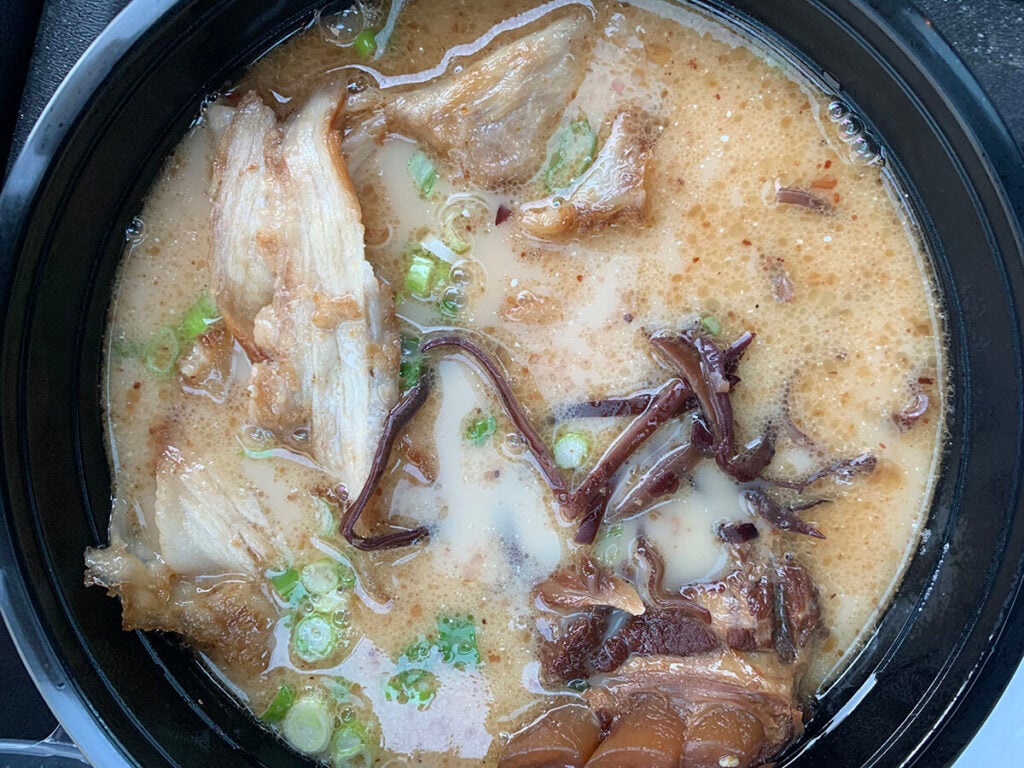
Do you know how strong your food math must be to have 700 ramen shops worldwide and your soup still taste this good? Sure you do, because you played Mickey Mouse telephone as a kid. One child said “I like raisins” into your ear, you whispered “I have to pee” into the ear of the next kid, who in turn just screamed incomprehensibly into the dirty void that was the third child’s ear.
Point is, quality control gets exponentially harder with each link in the chain. Recipes are mistranslated, ignored, cheated a little bit for cost, tossed out the window. It’s a miracle one of Ajisen’s satellite ramen shops isn’t just microwaving can after can of Campbell’s chicken noodle and laying pork chashu on top.
In long conversations with one of the city’s most creative restaurateurs, the most surprising thing I learned was his adoration of The Cheesecake Factory. Here was a man who’d made his name on weird design and art and counterculture, and he admired the Old Navy of food. Why? Quality control. To have that big of a menu, and feed that many people on a daily basis across the globe, without quality dovetailing until people are getting divorced over your alfredo, which is for some reason green? That’s a heroic feat of organization, calculus, scale, and managing humans.
Let’s not pretend here. Ajisen is airport ramen—industrialized in every sense of the word. It has barbecue in it. It commits all sorts of crimes that will make ramen purists write angry Yelp poetry (see the “New York Steak Cutlet Ramen”). But purists, while impressive with their strictly segregated food flow charts, are not very fun. So let’s mute their whine-song for a minute. Out of 10 ramen places I’ve tried so far in San Diego, I’d put Ajisen’s “Best Combo” near the top.
Here’s why: meat. Whereas most ramen broths are creamy, salty, with a subtle animal flavor, their Ajisen Best Combo Ramen tastes of deeply roasted bones, liquefied grill marks, a more basal carnivorism. It is the ramen for those people who like a little pepperoni with their sausage with their soppressata. It’s loaded with sliced pork and collagen-filled barbecue pork, more pork, a bit of pork. It is my nine-year-old’s favorite, though admittedly I’m not sure that’s the target demo Ajisen is shooting for. She’s right, though. And she doesn’t “do soup,” especially not soups with mushroom strips and big, luscious chunks of swine.
It must be noted, my reticence to even include Ajisen in my citywide vision quest for the best ramen. It has never been more important to support our small, independent restaurants. Our local mom and pops are suffering, big-time. But to ignore a chain in a true search through the city’s ramen inventory feels a bit pretentious, and methodologically flawed.
PARTNER CONTENT
Plus, let’s not pretend that we don’t occasionally find ourselves facedown in a Double-Double, or that we don’t occasionally walk out onto our porch in a Gap T-shirt, sipping coffee from a Target mug, searching groggily for today’s Amazon joy. But most importantly, let’s not pretend chains and franchises have no ties to local culture. Almost every one of the locations represents a serious investment by the woman or man or family running them. The man in the mask behind the Plexiglas who politely handled my transaction did not fly in on the Ajisen corporate jet for the day to collect the San Diego money. He lives here. And the ramen he hands to people is good.
7398 Clairemont Mesa Boulevard, Convoy
Troy Johnson is the magazine’s award-winning food writer and humorist, and a long-standing expert on Food Network. His work has been featured on NatGeo, Travel Channel, NPR, and in Food Matters, a textbook of the best American food writing.
The Middletown restaurant reminds us that when you invent something as iconic as the taquito, you’re allowed to rest a bit on your laurels
Every year for the Best of San Diego issue, we ask readers to nominate and vote for a San Diego classic restaurant they want food critic Troy Johnson to review. Whichever they vote for, he goes. Last year, they sent him to Rocky’s Crown Pub. This year… Mexican classic, El Indio.
The Perfect Order: Taquitos with Everything | Chicken Tamale | Mordiditas
When you’re credited with inventing the entire concept of the taquito, pretty much every other dish you create is going to pout in that cigar-shaped shadow. Unless you sous vide a couple narwhals, the taquito is gonna dominate your story.
San Diego’s El Indio is widely cited as the global birthplace of the taquito. (Note from our nonexistent legal team: Like any food origin story, it’s contentious—many will tell you a small, rolled taco had been a staple in Mexico for generations; others claim an LA taco stand beat SD to it. But by and large, El Indio has been granted paternity for the word “taquito” and cited as the first in the US to both sell and widely popularize the iconic thing—which happens to fit our narrative nicely, so we’re leaning in.)
So, El Indio’s mordiditas are that almost-famous entourage dish that deserves more applause. Sliced segments of taquito, about the size of pigs in a blanket, are assembled in a heap on a plate and absolutely waterboarded with nacho cheese and pickled jalapeños. They’re essentially loaded taquito nachos, an idea whose glory, in a just world, will outlive us all and echo in Valhalla. They solve a longstanding problem with every single batch of nachos that has been made in humankind—that each and every chip is denied an equitable amount of cheese or load.

Most nachos are built as an altar to American capitalism: The top couple of chips accumulate a vast majority of the cheese and the rest of the chips just keep hearing rumors of a trickle-down until they protest. If our species ever gets cut from the roster of the universe, the fact that we put a man on the moon but could never equally dress our nachos should be examined by our successor species as a possible cause.
El Indio’s taquito rubble comes in a biblical flood of nacho cheese. It’s a snack-bar treat for people whose therapists have listened to their fantasy of placing their open, eagerly receptive mouths beneath the queso pump—albeit with far better taquitos made from scratch.
The dish isn’t gonna knock your socks off, but it’s satisfying in a calorie-gargling way, a celebration of the fact that merely entering a taco shop releases us from acknowledging the physical limits of human arteries. Would El Indio’s mordiditas be better if the cheese was scaled back and partnered with a crema, or if the cheese was lovingly dirtied with chipotle in adobo, or if they came topped with a lawn-sized pile of cilantro and onions and activated charcoal ash from the sacred cenotes of Chichén Itzá? Shut up and eat your naquitos.

It feels simultaneously excessive and absolutely correct to say El Indio is a San Diego legend and global food icon. In 1940, Ralph Pesqueira Sr. was working in one of the many aerospace headquarters that surrounded Lindbergh Field (the SD International Airport’s original name), building planes and war machines. As a side dream, he started making and selling fresh corn tortillas by hand on the corner of Grape and India Streets.

As with most food success stories, there was a key moment of technological innovation (consider In-N-Out’s invention of the two-way speaker or Pizza Hut introducing online ordering to the pie masses). Around 1945, Pesqueira—who we might call the Thomas Edison of Mexican food—invented San Diego’s first tortilla-making machine. By hand, he could whip up 30 dozen a day; with the machine, he cranked out 30 dozen an hour. A full-fledged tortilla factory was born, the effect of which was massive for putting training wheels on the local Mexican food culture that would boom decades later.
When aero coworkers asked him if he could make a handheld, good-travelin’ food for lunch pails, he thought of flautas (a Mexican staple with global roots—a flour tortilla usually wrapped around meat and rolled into the shape of a flute, then fried).
He did a smaller version with fresh masa corn tortillas. The taquito entered the world. He sold each for 18 cents.

Troy Johnson is the magazine’s award-winning food writer and humorist, and a long-standing expert on Food Network. His work has been featured on NatGeo, Travel Channel, NPR, and in Food Matters, a textbook of the best American food writing.
We break down the best bites from the restaurant's new Bounty of the Seven Seas menu on offer this month
The Gaslamp is the kind of place where anything goes. A country bar with a mechanical bull (Double Deuce) and a hookah lounge serving Russian food (Pushkin) share a block with a hip-hop nightclub (F6ix) and an ’80s arcade bar with boozy Capri Suns (Coin-Op).
Tourists stroll by in flip flops and shorts during the winter while locals walk over in SoCal’s version of business attire for a quick drink after work. Late night, college students don sneakers and clubwear to stalk their favorite DJs. In downtown, restaurants and shops tend to disappear as quickly as they arrive. But STK has lasted 14 years as the show pony restaurant in the Andaz hotel.

Back in 2018, you’d find me on the Rooftop by STK (long heels, short dress) to pregame while overlooking the city we were about to conquer. The original STK launched in New York City in 2006 with celebrity chef Stephen Hopcraft—a modern steakhouse idea that caught fire and expanded to Las Vegas, Miami, Atlanta, and Nashville.
It earned its reputation as a sexy haven for those who liked eating quality ribeyes in a place that felt right for girl’s night rather than 60th anniversaries: white booths and chairs, dim lights, pink LEDs that cast a neon blush over white flowers in oversized vases that damn near touch the ceiling.
The night I’m here, a bachelorette party breaks out in the private room upstairs. Cheers ring out any time a bridesmaid walks up the stairs. In other words, it’s not the hushed and highbrow steakhouse model, by design.
I’m here to try a mix of STK hits from executive chef Bobby Borja Jr. (hailing from the former Prep Kitchen and Break Point), plus new material from its Bounty of the Seven Seas menu. Because to last as long as STK has, you can’t just play old songs. Future preserves the past.
Here are the dishes that won over our table, should you feel the mood for a sexier surf and turf night downtown:

Cooked perfectly, slightly sweet (the charm of octopus) and tender, meaty but not chewy. Comes with fingerling potatoes, olives, paprika aioli, and sala verde.
Between each course, I found myself reaching for the warm pull-apart bread offered with bleu cheese butter and chive off its everyday menu. That melty warm slightly blue cheese-funked butter, smothered on a brioche roll—heaven call me home, I’m ready.
Made with yellowtail, pickled fresno chiles and unagi sauce, this dish comes with five rice cakes. It was so good we ended up ordering another round almost as quickly as it was dropped off at the table.
If you’re a pasta lover, get this dish, which is also available on STK’s regular menu. Pecorino cheese, braised mushrooms, tagliatelle pasta and shaved black truffle, it’s just the right amount of rich mixed with a little bit of earthiness from the mushrooms.
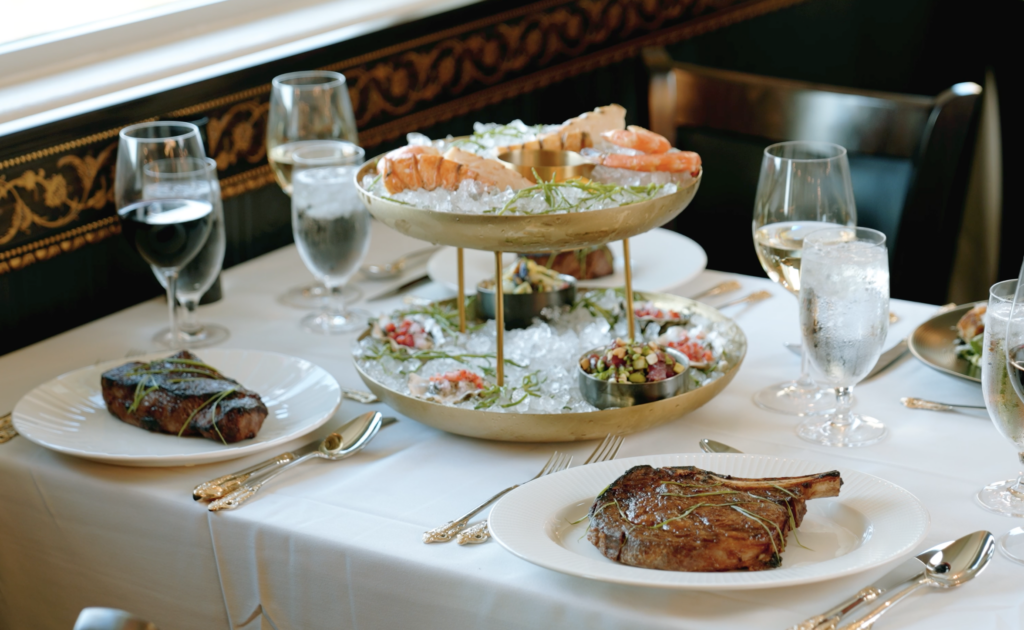
Of course, since you’re at a steakhouse, don’t skip the goods. All cuts come paired with a sauce of your choosing: STK, STK Bold, au poivre, béarnaise, horseradish, chimichurri, and red wine. The obvious answer is to order all of them and have your own sauce tasting menu.
Nicolle Monico is an award-winning writer and the director of creative projects, digital editor for San Diego Magazine with more than 16 years of experience in media including Outside Run, JustLuxe and The San Francisco Chronicle.
Tucked away in an office park, an all-star team creates community amid two- and four-legged guests
The Perfect Order
Smoked Deviled Eggs | Manilla Clam Crostini | Roasted Duck
There are many ways employee lounges can go awry. Volume chewers, nuked tuna, the person who zeroes in on a premium snack and becomes the oligarch of what were supposed to be communist Cheetos. Famously, Ballast Point employees lost their lounge when then-brewer Yuseff Cherney turned it into a hobbyist distillery. That booze would become Cutwater Spirits, so society writ large won.
Yet sometimes employee lounges don’t suck. San Diego’s life sciences giants have given their employees restaurants from top purveyors, like Gold Finch Deli (Urban Kitchen Group) and California English (Richard Blais). For its newish HQ, San Diego athleisure god Vuori offered its people a yoga temple and, in my dream for them, a vending machine full of chakras.

And, tucked into a business park in Serra Mesa, the San Diego–based staffing agency TCWGlobal has BoujieMana—a quite lovely restaurant headed by Dante Cecchini, a San Francisco transplant named one of Zagat’s “30 Under 30,” as well as Rising Star Chef by the San Francisco Chronicle.
“Hopefully, people wander down this little Aero Court cul-de-sac and find us,” Cecchini says.
They are now. Last year, Yelp named BoujieMana one of the top restaurants in the country. Whether you ascribe to the review giant’s recs or not, there’s no denying the gravity of its star system. At the very least, the thick-credentialed people at BoujieMana—Cecchini, plus a director of hospitality formerly of L’Auberge Del Mar, a GM with time under Michael Mina, and bartenders from Sbicca and L’Auberge—are creating a fairly special, welcoming, fascinating place between the airport, a Little League field, and a day job.

To get there, turn right where you think you shouldn’t and enter the parking lot that looks like you’re going to do some taxes. It’s on the left. Head in through the automatic glass doors or through the side louvers that rise to essentially remove the walls of the place, opening up to a patio. Note the massive wall of textured teak jutting out at various depths like a three-dimensional game of Tetris. Note the radiant chandeliers hung over the live-edge wood tables (cut from a single fallen tree), the ornate glass tiles colorized like a peacock in heat. The restrooms have bidets.

At the long table in the center, most likely, you’ll find Samer Khouli— founder of TCWGlobal—surrounded by six or seven friends.
“That’s my favorite spot, where I can see everyone enjoying themselves,” Khouli says. “My family is Arabic, so the whole idea of hospitality and inviting people over and having a big table with lots of different food is second nature. My mom was the cook. My dad would come home, and there was a full table. The communal-ness is the best part about a meal. We built this restaurant so our employees would have somewhere nice to eat, but also for the community.”
Community’s huge for Khouli. Three percent of gross revenue from BoujieMana goes to a rotating nonprofit.

Behind Khouli is an illuminated fridge that the chef stocks with crimson duck, brined and then rested for 15 days on display. Next to that fridge are two lanky and immaculately groomed boxer dogs with kind, pet-me eyes—Khouli’s pets and BoujieMana’s most famous regulars.
Some people of tense lower musculature might balk at dogs in an upscale restaurant, let alone next to the dry-aging fridge. Rare is the Michelin inspector who raves about the cuddliness of pets on the premises. But the dogs—Cooper and Minnie—are a statement of purpose.
“I love the idea of feeling like it’s a beautiful and elegant place, but it doesn’t keep you away, it invites you in—families, kids, dogs, everyone,” Khouli says. “There’s going to be somebody that goes, ‘Ew, there’s a dog there.’ Hey, that’s cool. I’m sorry. If they love BoujieMana, they’re gonna love it the way it is.”

Cecchini’s background is a big part of what defines the place. He started as a cook at Citizen Cake, the famed San Francisco café and sweets emporium of baker and chef Elizabeth Falkner. “I told my parents I wanted to go to culinary school and they said, ‘Nope, we’re not going to pay for you to learn how to cook—do it for a few years, and then we’ll talk,’” Cecchini recalls.
He remembers screwing up Falkner’s cheese, so she took him to the farmers market to help him fall in love with ingredients. “I was letting the cheese sweat too much, not handling the ingredient right,” he says. “It was my first time at the market—and the whole message was like, ‘Look at the amount of effort that goes into this produce and this cheese, and look at these people.’ That’s when it really started to sink in, what our craft actually is.”
He found his on-the-job culinary school at Marlowe—the iconic spot from restaurateur Anna Weinberg and chef Jennifer Puccio—working his way up to chef de cuisine. He became Weinberg and Puccio’s go-to guy to run and open restaurants like Park Tavern, The Cavalier, and Leo’s Luxury Oyster Bar. He cooked at the James Beard House alongside Jonathan Waxman. He left to open Fiorella, an Italian-American concept—which shares a kinship with BoujieMana, because it was in a restaurant dead-zone.

“There, I realized really awesome food didn’t have to be precious all the time,” he says. “BoujieMana reminds me of those places. I walked in and was like, ‘Wow, this place is gorgeous—and so strange, because of the location.”
The dishes he excels at include that duck, lightly smoked then roasted and served whole with plum sauce. The skin is deeply browned and lightly sweet from the brine and cracks like glass, the fat perfectly rendered to melting temp. And then there are the deviled eggs, arguably the best I’ve come across: The whites and yolks are house-smoked, then mixed with cayenne, pickled shallots, herbs, and aioli and topped with pickled jalapeño, crispy bacon, and a chili-oil chimichurri. But the dish that nails BoujieMana’s high-minded humble ethos is the clam crostini—a very San Francisco, simple, lovely thing with perfectly crusted sourdough, aioli, and clams marinated in lemon, garlic, and chili.

The menu also expresses the food Khouli—whose family came to the US from Syria when he was five—grew up with. Particularly the beef kibbeh, his mom’s traditional Lebanese recipe: an excellent beef tartare with cinnamon, mint, and house-baked pita.
“I remember watching my grandma pounding the meat down with the mortar and pestle,” Khouli says. “We just make it in a blender as opposed to on a rock.”
BoujieMana is still evolving and finding its focus; there are some dumbfoundingly delicious dishes and a few imperfections. Cecchini’s okay with that, because, to him, it matters that a good portion of his staff is from the culinary school in Tijuana, learning on the job like he did.

“I love working with them because I’ve always wanted to open up a school,” he says. “With everything going so casual in restaurants, we’re at risk of losing those real cooking skills. Not just opening a bag of sauce and deep-frying some frozen fish, but taking real pride in cooking.”
On the way out, you see the residential towers in various states of construction—hundreds of them, a neighborhood about to swell with new hungers. And this staffing agency, this overachieving employee lounge, has set the table for them.
Troy Johnson is the magazine’s award-winning food writer and humorist, and a long-standing expert on Food Network. His work has been featured on NatGeo, Travel Channel, NPR, and in Food Matters, a textbook of the best American food writing.
Stake Chophouse & Bar brings contemporary classics and old-school service to the heart of Coronado
Stake Chophouse & Bar isn’t your average steakhouse. Blue Bridge Hospitality’s Coronado outpost is a modern interpretation of a big-city steakhouse nestled in the heart of the small coastal community. The team at Stake has reimagined the whole steakhouse experience. By prioritizing a seasonal farm-to-table sourcing philosophy, a personalized guest experience, and unique service touches, like a formal steak presentation and a bespoke knife selection process, Stake distinguishes itself in a sea of steakhouses.
Exceptional steaks, including Wagyu from Japan, Australia, and the U.S., and fresh seafood flown in daily form the core of Stake’s culinary identity. The menu features a five-course omakase-style steak experience highlighting house favorites, plus an array of cuts, and classic steakhouse staples—think a wedge salad, baked potato, or pasta carbonara—refined for a contemporary palate without losing their traditional appeal. Stake focuses on seasonal sourcing from the region’s best family farms and specialty purveyors, and incorporates intentionally unexpected touches to create something truly unique.
“I challenge our chefs and myself to take it a step further in sourcing,” says Chef Ronnie Schwandt. “It’s important to us to highlight different farms, unique one-off farms—whether it’s cattle, strawberries, a local fisherman or from anywhere in the United States, we’re always trying to find that niche.”
Beyond the menu, Stake emphasizes outstanding service, says Vinny Spatafore, Director of Hospitality Operations. Staff maintains detailed notes, allowing them to remember guests by name, recall previous orders such as a favorite martini (also memorable for the customer since it’s served in an extra tall, distinctly-shaped glass), and celebrate special occasions like birthdays and anniversaries.
“When you have those points of topic that you remember about a guest, they appreciate that,” he says. “Our servers are really good with that—we have a couple servers who have been here since the beginning and they’ll remember somebody from years ago, their name, their kids’ names, where they live. I’m really thankful to have a great front of house staff.”
Award-winning wines, rare whiskeys, special events, and a complementary black car service that provides transportation for guests throughout Coronado add to Stake’s appeal.
Schwandt stresses that Stake offers more than a meal; they aim to give patrons something unforgettable.
“It starts when you walk up the stairs and are greeted by the hostess—that sets the tone for the night. Then you’re greeted by a server, who may know you by name, and can guide you through the menu and curate as they get to know you,” says Schwandt. “Most people leave kind of blown away; they leave feeling like they just had an experience. That’s the goal, right? Whether you’re serving smash burgers or high-end steak, you want somebody to leave thinking, Wow, that was awesome.”
At this rosy rooftop restaurant atop The Sasan, the vistas are only part of the charm
The Perfect Order
Lamb Lollipops | Coconut Milk Poached Seabass | The Ritual
If pink’s belief in its own emotional power had waned, it has been fully restored by The Sasan. Mission Hills residents were pitchforkian-vocal about the paint job on the seven-story residential tower. Pepto-Bismol was trotted out yet again and co-slandered. Sure enough, The Sasan does look exactly like a stack of gigantic, bubble gum–colored Pez candies, the spaces between each dangling with deeply green plant life. It’s a flamingo among the architectural pigeons.
In other words, it’s lovely. As someone who grew up in suburbia, where every home seems to be the color of budget-hotel oatmeal, I envied the electric blue and banana-hued houses of Miami or Mexico or Cinque Terre or Buenos Aires. Not sure where we’re at with tariffs, but maybe lower them on paint.

The Sasan is home to the city’s newest rooftop dining spectacular, Communion. The entrance alone is worth the price of whatever you order. You walk into a large, ground-floor courtyard (home to the all-day sister concept, a bakery, coffee shop, and pintxo bar called Paradis), which glows pink. A singular host stands at a podium, ready to escort you into the elevators. Ride up and step out into Communion’s floor-to-ceiling glass overlooking the city. It’s a stunning bout of vertigo.
When it comes to views, give me the receded one. Vistas perched on top of the water are nice and all, but they lack perspective. From Communion’s large dining patio, you can see downtown, the point, and the bay where, in the mid-1800s, Captain Henry James Johnston first looked up from the docks at this hilltop and decided to buy 65 acres (the land used to be called Johnston Heights).
San Diego’s iconic plant lady Kate Sessions (she essentially single-handedly landscaped Balboa Park) lived and worked in Mission Hills and planted those palm trees and poinsettias, the bougainvillea and star jasmine. She started its oldest business, Mission Hills Nursery, in 1910.

Trolleys were everything back then, and getting a stop near your business meant your kids were well-fed, so Sessions sealed Mission Hills’ future when she convinced John D. Spreckels to bring the trolley to her nursery. I can’t help but think of her seeing those plants cascading out the sides of The Sasan’s balconies.
Communion is the project of another name well-known to San Diego. Jacquee Renna-Downing and her late husband Kipp Downing owned North County’s seafood icon Pacifica Del Mar (they sold it years back). The family launched two successful restaurants in the Coachella Valley (Pacifica Seafood and La Quinta Cliffhouse), and this is their return to San Diego (Jacquee’s daughter, Hailey Renna, is running it).
The lineup of talent in the kitchen and bar is A-list: executive chef Mike Moritz, formerly of Mister A’s and Mille Fleurs; Aly Lyng, longtime pastry chef of Georges at the Cove; and lead bartender Eliza Woodman (Camino Riviera).
I think it’s time to stop expecting less from view restaurants. For decades, they could serve us gussied-up slop and well drinks with expensive names, and we’d gladly be their sucker just to sit in their sky box. But, with food literacy at an all-time high, being front and center to the grandeur of the gods isn’t enough. Communion’s “coastal from across the globe” menu isn’t perfect, but it’s off to a hell of a strong start.
For drinks, the star is Yama’s Reign. You didn’t know you needed droplets of sesame oil floating in your cocktail with that unmistakable flavor bomb of furikake (Japanese spice blend) until you try this thing. With a tiny clothespin, the bar team straps a sheet of wakame (dried seaweed) to the glass. I’d get rid of the weed—its scent is so strong that it smells a bit like low tide—but the drink is phenomenal.
For apps, start with the Wagyu beef carpaccio. Moritz’s take is a bit soupy, embracing the trend of treating the classic like loaded nachos. Some people would say that you don’t thin-slice Wagyu beef and then air-drop a Vegas buffet on it—that’s like paying for Tyler the Creator to headline your concert and then having the opening acts stand in front of him all night singing their own songs.

But Moritz’s buffet is delicious and changes frequently (at the time I’m writing this, it’s a lime-heavy Vietnamese riff, bò tái chanh). The hamachi crudo has a beautifully elegant lemon oil and thin sticks of Granny Smith apples. Ignore the grapefruit (it waterboards the delicate fish with bitter citrus).
Three dishes will justify any meal you have here. First, the lamb lollipops. If my organs ever revolt and doctors demand I go plant-based, I’d settle for “vegetarian plus lollipops.” My personal kryptonite, the handheld carnivore snack is judged by the sear and season of the crust and the sauce.
Moritz’s has a thick crust punch-drunk with za’atar (the almighty Middle Eastern spice blend of dried herbs, toasted sesame seeds, salt, and sumac). The sauce is yogurt infused with vadouvan (India’s spice blend of cumin, fenugreek, mustard seed, garlic, and many other things), a great leave of absence from the usual chimichurri.
Second, the risotto. It is a $49 risotto. That’s a hefty price to pay for sticky rice. But Communion’s is undeniably fantastic and so rich the table can share it. It’s hand-stirred with shaved black truffles, wild and tame mushrooms, and 24-month-aged Grana Padano.

Third, and the star of the show, is the seabass. Everything is right here—a thick, almost prehistoric chunk of bass (Communion is not cheating anyone with portion sizes) is poached in coconut milk for a pretty incredible, thoroughly moist, luscious cook on the fish. Then, it’s laid in one of Thailand’s greatest gifts: tom yum broth. It comes with a spoon and bowls so you can ladle out some of that life-restoring tincture.
If Communion has an Achilles’ heel, it’s drowning a good idea in another otherwise good idea. The chaat masala potatoes come swimming in chutney and Greek yogurt. That’s a special flavor combo, but, while eating it, you can’t help but think of all the times you’ve dropped a chip into an onion dip and it gets really lodged there, so much so that, despite your best efforts, it merely goes deeper, until you’re just desperately trying to extract the thing before it gums up the whole dipping experience. And the duck—dry-aged seven days in-house—got too much of the sweet, sweet sauce. Duck likes sweet, but this is nearly dessert.

Speaking of, pastry chef Aly Lyng is a talent. Try her vanilla bean Basque cheesecake (crustless and baked at a high temp for a charred top and a lighter and custardy middle) with salted caramel and whipped crème fraîche. Or “The Ritual,” a warm flourless chocolate tart crowned with condensed milk ice, hazelnut praline, and ice cream infused with espresso from Ritual Coffee (one of the only San Diego places to serve the cult-loved San Francisco roaster).
Perfection is a fool’s errand. Small missteps aside, I’m hard-pressed to name a better dining experience than ordering some lollipops and that tom yum bass as you stare at the sunset over those storied old San Diego hills and gaze down at the bay, trying not to think of the nuclear submarines below the surface.
An early contender for new restaurant of the year.
Troy Johnson is the magazine’s award-winning food writer and humorist, and a long-standing expert on Food Network. His work has been featured on NatGeo, Travel Channel, NPR, and in Food Matters, a textbook of the best American food writing.
The people who brought us Herb & Wood and Animae present their grand finale in San Diego
The Perfect Order: Mussels À La Paris | Rack Of Lamb | Creamed Spinach
We gotta address the name. Yeah, it means rooster in French. And, yeah, it’s pronounced the way you think it is. How I feel about that doesn’t matter as much as how La Jolla feels about it. Let’s not over-stereotype. I know many advisory-boarding La Jollans who don’t wilt under the burden of a porny curse word. But there is a deep culture of manners and social restraint here; you get the feeling that tawdry newcomers find themselves with a surprising amount of audits and parking tickets.
Yet the name is true to Puffer Malarkey, the restaurant group behind Le Coq and three of the city’s best spots of the last decade: Herb & Wood, Herb & Sea, and Animae. From the get-go, its MO has been to build elaborate, high-end restaurants and then lightly or cartoonishly mock the haughty decorum of high-end restaurants. (Herb & Wood famously has a middle-finger sculpture, handed to the worst guest of the night with much fanfare.)

Le Coq is the group’s final grand effort, a victory lap from an operator (Chris Puffer) and chef (Brian Malarkey) unafraid to make sex a central theme. (The duo’s other restaurants will continue to evolve, but Malarkey told SDM this is their last one as a team in San Diego.) The Parisian steakhouse features James Beard nominee and Animae exec chef Tara Monsod. Monsod is a formidable talent and force of good in San Diego’s food scene. And the location brings Puffer Malarkey full circle. When the duo started almost 20 years ago with restaurants named after textiles (Searsucker was the first), they turned this former auto shop—a lovely, spacious hangar—into Herringbone. That concept was sold, but the gents always wanted it back, standing outside its window like boombox-era John Cusacks.

Inside, erotic art photos line the walls. Surprisingly, they’re not large-format, but small prints, clustered into little lust farms. The restraint is unexpected. It must have killed them not to turn one of Robert Mapplethorpe’s most socially fire-setting nudes into 3,000 square feet of wallpaper and shrink wrap the whole shebang. And the carpet—Le Coq has casino flooring, so thick and luxurious it might have a sleep number. I haven’t seen a carpet this loamy since the ’80s, when a padded bottom was a restaurant status symbol. The softer the underfoot, the more spendy the baked Alaska.
Designers removed those famed Herringbone trees from the dining room. Honestly, I’d ask for them back. Without them or something like them to create distinct parts of the room, it feels like an ornate wedding hall—one giant eating space, wide open with all of us kind of rawly looking at each other. It seems they only changed the bottom half of the restaurant, keeping the top rustic-historic Herringbone (wooden rafters, exposed air ducts, faded brick walls) and turning the bottom into what looks like a very nice Golden Nugget (velvet booths, a massive curtain that appears to be mylar or Bjork’s dress from Coachella). It’s a design mullet: hard-working Americana up top, glitzy flesh party below.

Resist the urge to complain about Le Coq’s prices on the internet. Too late for some of you. This is a high-end steakhouse in an era when the cost of ingredients has never been higher, with one of the country’s top young chefs, and the group spent millions on creating a memorable space. Cross-checking menus, it’s reasonably priced for the game being played—around the same as Steak 48 and maybe even a bit lower than indie favorite Cowboy Star. (For PR’s sake, I’d probably not charge $20 for a taste of four sauces. While I respect the art and time that goes into them—a thick bearnaise, a silky chicken glacé, a potent anchovy herb oil, and an incredible bordelaise—some steakhouses automatically include sauces. Tuck that cost into the steak itself. Proclaiming in print you’re charging five bucks per drizzle feels like an optics issue.)
Assuming restaurants are sourcing the best dry-aged money can buy and know how to sear and properly temp, steaks don’t differentiate steakhouses. Apps and sides do.

Dinner starts with a warm baguette with Pamplie butter. Made in western France, slow-churned in a barrel, fermented for 48 hours using a recipe that’s been unchanged for 120 years, and protected by the French government—well, it’s one of the best butters on the planet, with more fat than most American butter (84 percent versus 81). The restaurant offers chicken-skin butter as well, but I’d stick with the pure form.

Monsod’s tuna tartare is a fantastic taste of local waters. On paper, raw tuna in cream sounds like a fairly indigestible idea, but we’ve been slathering all kinds of dairy manifestations on seafood since the beginning of reason—mayo for a sushi roll’s krabby center, Thomas Keller’s butter jacuzzis for lobster, you name it. Monsod’s cubes of sushi-grade ahi come with crème fraîche and horseradish, then get acidified with pickled gooseberries. It’s a dinner cousin to lox and cream cheese, minus the bagel. It’s actually so soupy it could use some form of bread, like toast points (the bagel of steakhouses).
“Head cheese” is arguably the least appetizing phrase in the history of food, all due respect to “moist.” It’s an iconic art form of European food culture, rarely cooked for American audiences since we have some pretty arbitrary food hangups. It’ll always baffle me that most Americans will gobble hot dogs like baseball breath mints, but organ meats in any other form are seen as mouth crimes.

Monsod delicately fries her head cheese into a croquette. Smart move. Frying is how chefs do the “choo choo… here comes the train” trick to get guests to embrace intimidating foods (think calamari). Head meat will always taste like it just got done with a vigorous workout, and it’s up to you if you like that funk or not. I crave it. Most American food is an offensive deluge of inoffensiveness, a sleepwalking cuisine of breast meat and subs and cheese sauces and medium salsas. That boredom drives us to the pricklier charms of lamb and duck and liver and foods that taste like they have an opinion. Monsod’s croquette—Thompson Heritage pork (an incredible local ranch) with sauce gribiche (a thick, cold, creamy French predecessor to tartar sauce, a fusion of hard-boiled eggs and mustard)—is an opinion well-executed (it takes a full week to make).

Le Coq’s celery salad is a shocking winner. Welcome to the crunchiest salad you’ll ever eat. Celery is always the backup dancer for great food, an underdog sautéed into anonymity at the bottom of a mirepoix; stuck playing the plucky, uneaten sidekick to a chicken wing. Monsod gives it the stage, albeit topped with a party-wig amount of the famed semi-hard cheese P’tit Basque. With golden raisins and celery seed vinaigrette, it’s a weird, willful, Provençal kind of idea, best eaten with a cinematic slow-clap and “Rudy! Rudy! Rudy!” in your head.

Order the steak frites if only to try Monsod’s au poivre. Done wrong, au poivres can taste of booze and bitterness (sometimes from burnt butter or from cooking in reactive pans like a cast iron). Hers is textbook. Concede all your self-governance to this sauce.
Creamed spinach is simultaneously the weary foot soldier of the steakhouse industry and one of America’s warmest and deepest food emotions. Monsod’s is excellent because of the onion soubise—a thick, smooth, French sauce in which onions are cooked in butter, then puréed with heavy cream or bechamel.

Other standouts are the sweet-sour riff on a rack of lamb, which offers a far more creative take than the usual chimichurri—with kalamata olives and French sorrel, plums and pickled grapes. When it comes to the mussels, everything (meat, bread) is merely vessel for the star: the broth. Usually, it’s wine and herbs and cream and, in San Diego, chorizo. But here the chef gives us wine and blue cheese (similar to a southern France idea called Roquefort sauce). It is magic. White wine and blue cheese and silky mussel meat are like charcuterie masquerading as a warm bowl of comfort.

For dessert, you have to try the Paris–Brest—a French pastry classic rarely seen in modern rooms. Shaped like a bicycle wheel (pastry chef Louis Durand of the famed Pâtisserie Durand created it in homage to the Paris–Brest–Paris bike race), it’s baked pâte à choux (cream puff pastry) split in half, filled with pistachio crème mousseline, and studded with caramelized pistachios and powdered sugar.

Back to the sex. Feels like it belongs in a steakhouse, both being fleshy desires and whatnot. Maybe La Jolla could benefit from a touch of risqué. Or maybe the planning group’s pitchforks smell of kerosene. As of writing, there’s no external marquee that says “Le Coq,” so perhaps a treaty has been signed.
Troy Johnson is the magazine’s award-winning food writer and humorist, and a long-standing expert on Food Network. His work has been featured on NatGeo, Travel Channel, NPR, and in Food Matters, a textbook of the best American food writing.
Scripps study shows that some patients may be able to taper their dose and maintain results
While glucagon-like peptide-1 (GLP-1) receptor agents have been used to treat Type 2 diabetes for more than 20 years, their recent emergence as weight-loss wonder drugs marked a new frontier in medicine. But their effectiveness has left some patients wondering what to do once they’ve reached their goal. Stopping the medication could mean regaining some, if not all, of the weight. A Scripps Clinic internal medicine physician recently conducted a small study of whether GLP-1 patients who had reached their goal weight could maintain that weight by taking their regularly prescribed injection every other week instead of weekly. Spoiler alert: 30 of 34 patients did. Read more about the study here and what that may mean as pharmaceutical companies roll out oral GLP-1s.
For more nutrition, wellness, and healthy living tips, sign up for the San Diego Health newsletter here.