Ready to know more about San Diego?

Subscribe
Archive FEBRUARY 24, 2018

From Brilliant to Disturbing, Momofuku Ko Is Worth the Trip

A course-by-course review of David Chang's famed tasting menu restaurant in NYC

From Brilliant to Disturbing, Momofuku Ko Is Worth the Trip
Pomme Soufflé

I’m currently on a week-long sabbatical in New York. And now I have bucket-listed. David Chang is one of America’s leading chefs, and his Momofuku Ko is where he made his name. It’s tasting-menu only. You make a reservation online a month ahead of time. The cost of the meal is $255 per person (wine pairings are extra). That may sound outlandish, but I never make value judgments on what food is worth. That’s a personal thing that depends on your hobbies and your income. Some people pay $800 for Radiohead tickets. If food is your thing rather than music, then David Chang is a Radiohead of the kitchen. He and his team (including Ko exec chef Sean Gray) change the menu every night, and have changed America’s perception of what food can be. Over a few hours, we had 15 courses. Some were brilliant. Some were great. Some were good. And some were disturbing.

If you’ve ever wondered how a night at Momofuku Ko proceeds, here are the descriptions and review of every course:

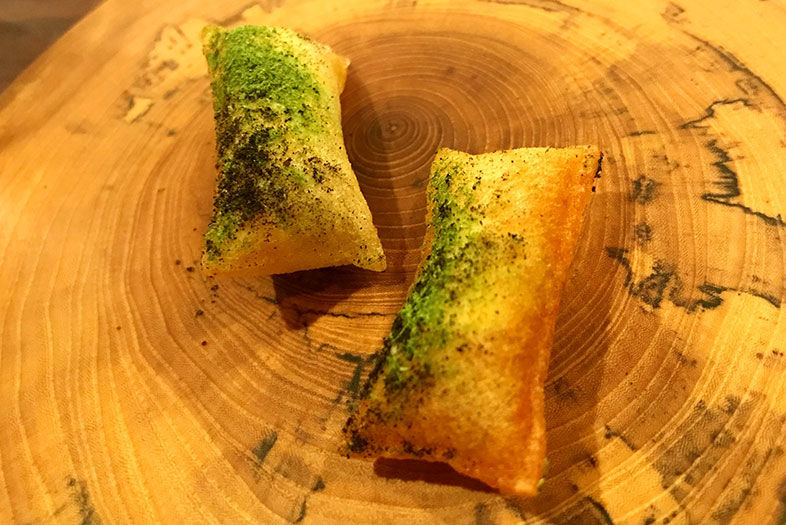
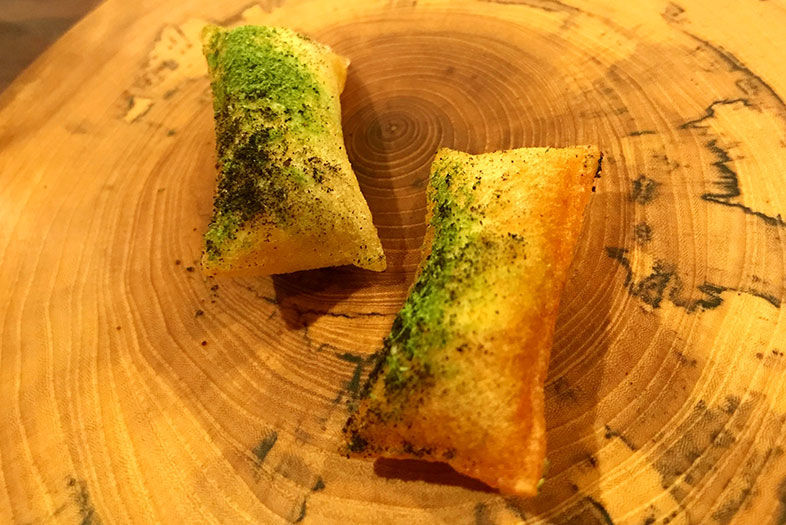
Dish 1: Pomme Soufflé

An amuse bouche. This is a crispy, incredibly light potato chip soufflé. Imagine if your potato chip became a hollow vessel to smuggle a chef-y cream sauce inside. Atop is some sort of green onion powder, dehydrated until it has the consistency of the Laura Scudder’s green onion powder dip mix that is still my middle class weakness. Bite it, and that little dough packet crackles and breaks and out flows a cool gush of very thin chive crème fraiche. In that way, it’s very much a play on the Super Bowl party standby—Ruffles and sour cream and onion dip. The genius of this dish is the interplay of warm and cold, crackle and cream. Every latchkey kid from the 70s remembers pizza rollssmall frozen pastries stuffed with pepperoni and cheese. This is like that in the same way that Pappy Van Winkle is like Jack Daniels. But, similar concept in form. How they’re able to get crème fraiche to stay inside that gossamer potato shell is a miracle.

Rating: Good
From Brilliant to Disturbing, Momofuku Ko Is Worth the Trip

From Brilliant to Disturbing, Momofuku Ko Is Worth the Trip

Dish 2: Lobster Roll

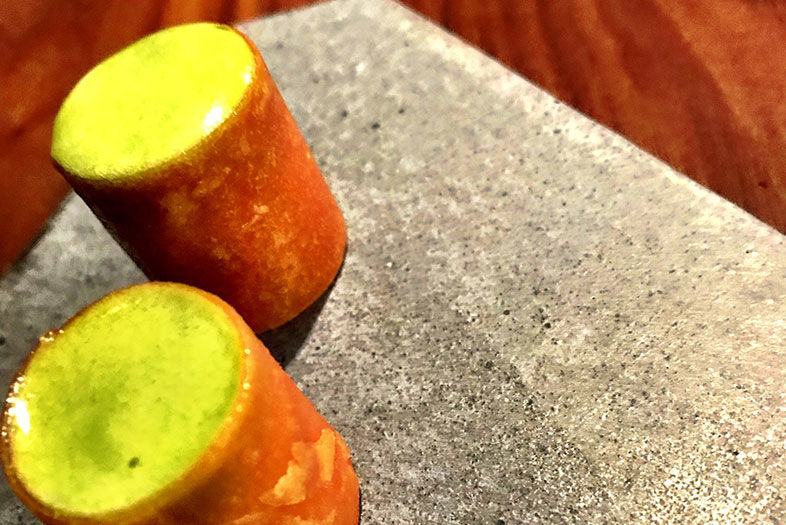
Another amuse bouche. This is another form of pomme soufflé. The potato chip this time takes the form of a miniature silo. Stuffed down inside the silo is fresh, cool lobster meat. It’s topped with a riff on paloise sauce. Paloise, traditionally, is the exact same thing as a béarnaise sauce (butter, shallots, peppercorns, white wine vinegar, white wine, egg yolks, salt, tarragon), except it replaces the tarragon with mint. At Momofuku, they replace tarragon with mint and basil. Where many restaurants ruin lobster rolls is by overdressing the lobster, thinking mayonnaise is somehow a bigger star. Momofuku’s is perfectly, lightly dressed. The chip explodes, the lobster is released, and the paloise sauce airbrushes the entire experience with silky, creamy, liquid herb. If your most talented culinary school friend decided to get fancy with a bag of Bugle chips, it’d be something like this.

Rating: Good

Dish 3: Fried Chicken Oyster

The final amuse before things got serious. As kids of the 70s, we were raised on Chicken McNuggets. Our parents were no Alice Waters. Our non-American cars smelled like nuggets. Our food pyramid was at least one-third McNuggets. And this is Momofuku’s play on our nostalgic jones for bite-sized fried bird. They take the very best part of any chicken (the oysterif you’ve yet to discover this, next time you roast a bird, turn it over and feel around the shoulder blades of its back to find two delicate, moist, oyster-shaped moons of meat). They fry it perfectly. But what makes it exceptional is the dehydrated honey-mustard that coats the crisped batter. Sounds like it may be dry, but it’s not. When the dehydrated dressing hits your mouth, it reconstitutes and melts. That’s the kind of trickery Momofuku does, includes your own saliva glands as a cooking tool for its dishes.

Rating: So Damn Good
From Brilliant to Disturbing, Momofuku Ko Is Worth the Trip

From Brilliant to Disturbing, Momofuku Ko Is Worth the Trip

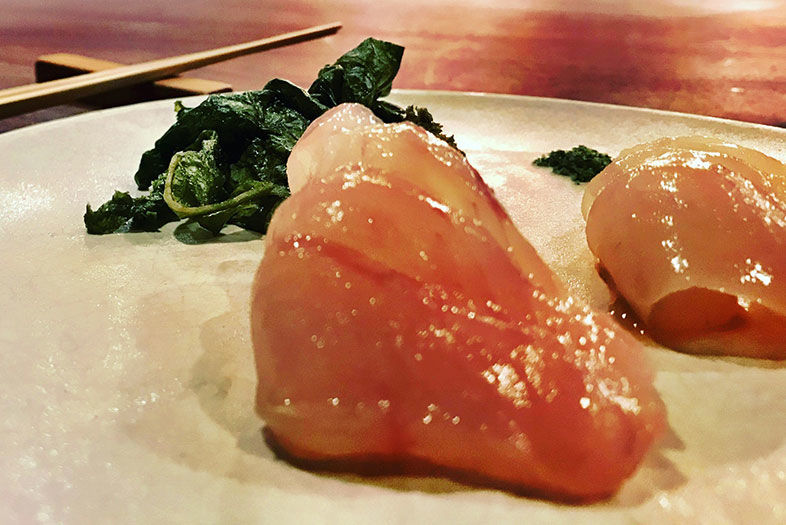
Dish 4: Fluke with Mustard Greens

The first unpleasant moment of the night, but not the last. Here’s the thing about a tasting menu at a place like Momofuku. What makes Momofuku so compelling is that they’re tinkering, experimenting, trying to breathe innovation into foods. In doing that, you’re going to come up with some duds. Radiohead has created some of the most mind-bending music of our time, and in that pursuit they’ve also got some serious duds. And, perversely, I appreciate these duds. Because a restaurant that aims for the safety zone of our palates is called Denny’s. It’s like I tell my 6-year-old when she falls and skins a knee; if you’re not falling, you’re not trying hard enough. The fluke here is rubbed with bonji, which is a cold-pressed liquid seasoning like soy sauce, but lighter and sweeter, made from fermented grains instead of soy beans. Fluke is renown for its delicate meat, but ours is fishy. Fish shouldn’t be fishy, this could be an unlucky instance of a supplier having a bad filet among their stock. With the herbal salt, it’s drastically better. But the mustard greens are a real problem. They are pickled excessively. Mustard greens are inherently bitter, and the acidic vinegar of pickling just amplifies that. It’s like taking Gilbert Godfried’s voice and adding Fran Drescher’s voice to it.

Rating: Not Good
From Brilliant to Disturbing, Momofuku Ko Is Worth the Trip

From Brilliant to Disturbing, Momofuku Ko Is Worth the Trip

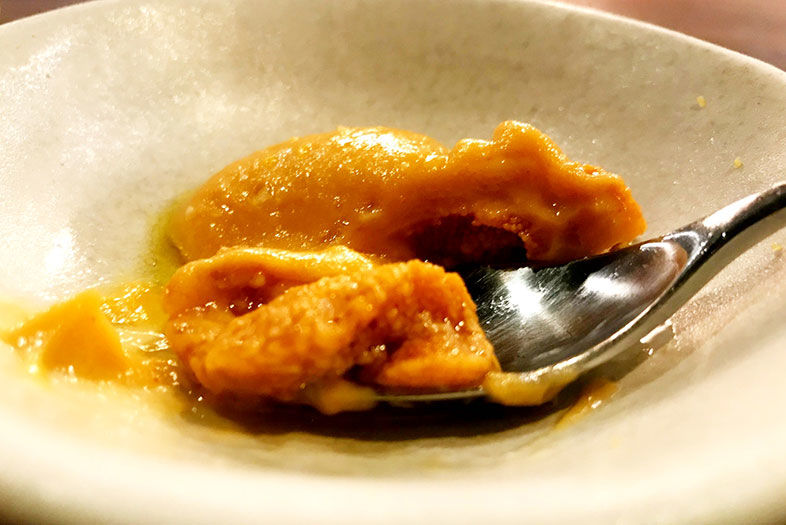
Dish 5: Uni & Chickpea Puree

I admit to a love-fear affair with uni. When good, it’s remarkableliving up to its “foie gras of the sea” reputation. It’s creamy, silky, delicious. When bad, it tastes like dragging your tongue across the slimy sea floor. What Chang and staff have done here is legendary for a reason. It’s a simple dishuni with a fermented chickpea “hozon,” bathing in world-class olive oil. This is the uni dish for people afraid of uni (which is technically gonads, which scares more than a few people off). Thomas Keller has his famous “Oyster and Pearls,” and Chang has this. It’s indescribably deliciousthe slightly oceanic, but sabayon-sweet flavor of the uni, and then the lightly fermented flavor of the chickpea puree. The olive oil just bathes it in green notes and a slight pepper. Our server said she has had many people threaten to lick the bowl, but agrees that I am the first to actually do so. It speaks to my lack of decorum, and the absolute brilliance of this dish.

Rating: So Damn Good
From Brilliant to Disturbing, Momofuku Ko Is Worth the Trip

From Brilliant to Disturbing, Momofuku Ko Is Worth the Trip

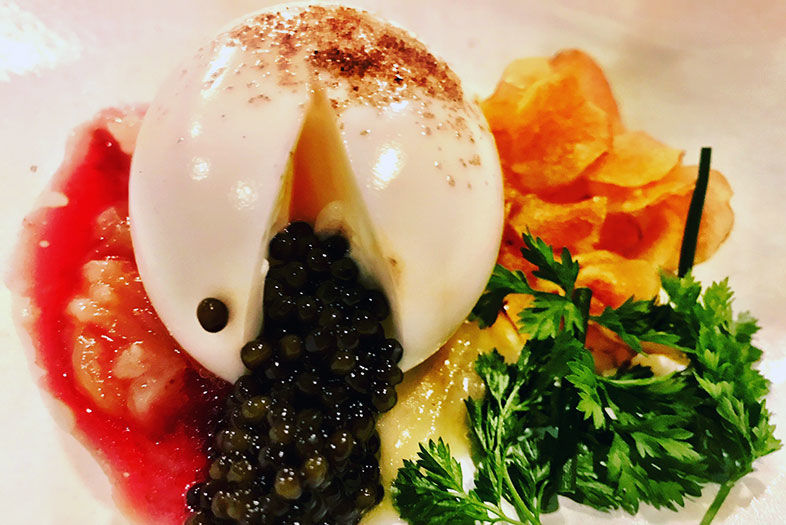
Dish 6: The Assassination of Pac Man

Once you see it, you can’t unsee it. Sure, they call it the “Ko Egg,” but that’s a bullshit cover-up. David Chang and Momofuku Ko are clearly whacking an American hero with this dish. Look at the egg. One sturgeon caviar is set as Pac Man’s cold, dead eye. The egg is cut into the shape of Pac Man’s gaping, insatiable mouth, from which the caviar flows. So, at the very least, Pac Man had a long night and is vomiting his recently eaten pellets onto your plate. But take a closer look. The brown “seasoning” placed at Pac Man’s round rear suggests our hero may also have soiled himself. And the pickled beets near his head? Clearly a head wound. Pac Man has bled out. Pac Man is dead. The question, then, becomes: Why do Chang and company hate Pac Man? Maybe it’s because Pac Man is a clear representation of America’s mindless, excessive eating habits. Sure, some empathy must be given to Pac Man because he’s over-eating in an effort to chase his ghosts away. Aren’t we all, Pac Man. But, still, this dish is a blatant statement about America’s dumb, thoughtless consumption. Or a couple chefs merely said, “Dude, what if we made it look like Pac Man’s puking?” And another replied, “Oh dude, now just season the butt.” And another said, “How about some beet blood?” This dish is beyond delicious. Even when you’re viewed as one of the country’s best restaurants, you can still be very serious about your food and have a sense of humor. Take the piss out of culinary preciousness. Whack Pac Man.

Rating: So Damn Good
From Brilliant to Disturbing, Momofuku Ko Is Worth the Trip

From Brilliant to Disturbing, Momofuku Ko Is Worth the Trip

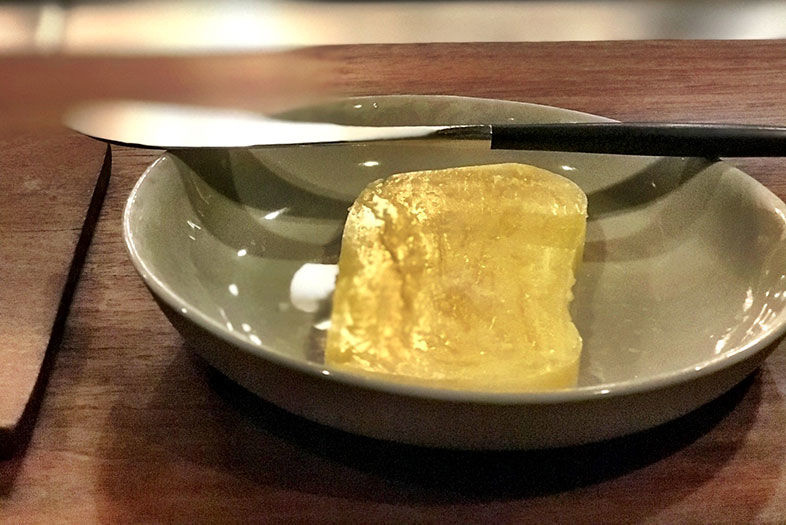
Dish 7: Bread with Cave-Aged Butter

They age butter alongside cheese in tunnels that were built in the 1850s for that exact purpose. The result? Butter that tastes like intensely rich butter initially, and then after two seconds in your mouthit’s distinctly blue cheese. What a trick. Some restaurants don’t make their own butter. Other restaurants make it, but don’t have the patience to let it come to room temp and serve it cold (the worst). Momofuku takes the time to age it in caves.

Rating: So Damn Good
From Brilliant to Disturbing, Momofuku Ko Is Worth the Trip

From Brilliant to Disturbing, Momofuku Ko Is Worth the Trip

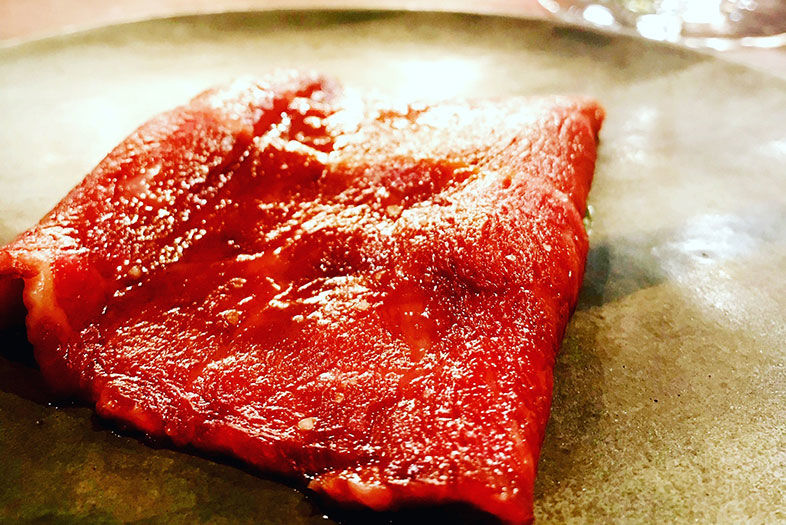
Dish 8: Beef au Poivre

Walking into Ko, the first thing you notice is a series of tall, well-lit coolers, in which hang various meats in various states of the dry-aging process. It’s gruesome, and transparently beautiful. When you age meat, carefully controlling the temp and humidity, you lose moisture and break down the cell walls. The result is that the beef flavor is intensified, much like how reducing a stock boosts the flavor. This dish showcases the work of time. A strip loin is dry-aged, then very lightly heated on the Japanese grill in the center of the kitchen (using binchotan coals, traditional Japanese coals that are impeccably pure), and plated over a sauce of green peppercorns, chervil, and green onions. It’s nearly a carpaccio. The sauce beneath is just the right amount of herbs and heat. It’s ultra simple. But there are risks all over the menu. Plainly showcasing a well-aged cut of beef and leaving it be is a statement that your creativity isn’t the only thing worth celebrating. The aging process is also a pretty great chef.

Rating: Damn Good
From Brilliant to Disturbing, Momofuku Ko Is Worth the Trip

From Brilliant to Disturbing, Momofuku Ko Is Worth the Trip

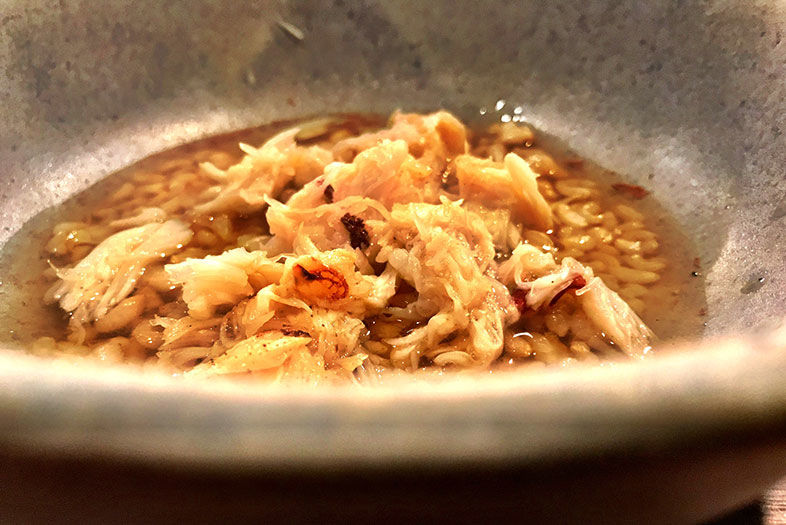
Dish 9: Dungeness Crab, Bourbon Broth

Broth is a concept old as dirt, but it’s making a big comeback. Part of that can be attributed to the ramen trend in recent years. People were reminded just how deeply satisfying and comforting a bowl of intensely flavored hot water can be, reeking of meat and bones and herbs and holy trinities. This is their riff, some torn Dungeness crab (a west coast specialty, intensely sweet crab that doesn’t have that offputting crustacean musk. The broth is spiked with Kentucky bourbon. It’s decent. The chefs at Ko likely keep the broth on the light side so that it doesn’t compete with the delicate flavor of the crab. But the result is a tad thin on flavor. Tastes like a tea that’s been under-steeped. The crab, while awesome meat, could also use a tad more salt.

Rating: Just OK
From Brilliant to Disturbing, Momofuku Ko Is Worth the Trip

From Brilliant to Disturbing, Momofuku Ko Is Worth the Trip

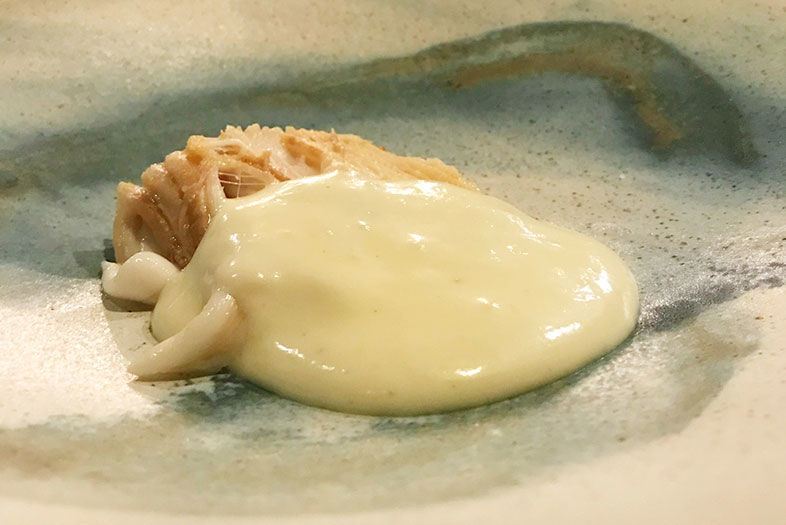
Dish 10: Skate with Black Truffle

Skate is a notoriously fickle and delicious fish. It can be tough, it can go bad real quick, and it’s a pain in the ass to cook right. In Scotland they use it to make what they call the world’s best fish and chips. The meat comes apart in delicate strings. When cooked, it looks like corduroy. And this dish, oh Jesus, this dish. The aerated potato puree is one of the best things you will ever eat, lavish silk. It doesn’t need the black truffle to be great, but the truffle makes it greaterproviding that legendary dark musk a counterpoint to the sweetness of the puree and the skate.

Rating: So Damn Good
From Brilliant to Disturbing, Momofuku Ko Is Worth the Trip

From Brilliant to Disturbing, Momofuku Ko Is Worth the Trip

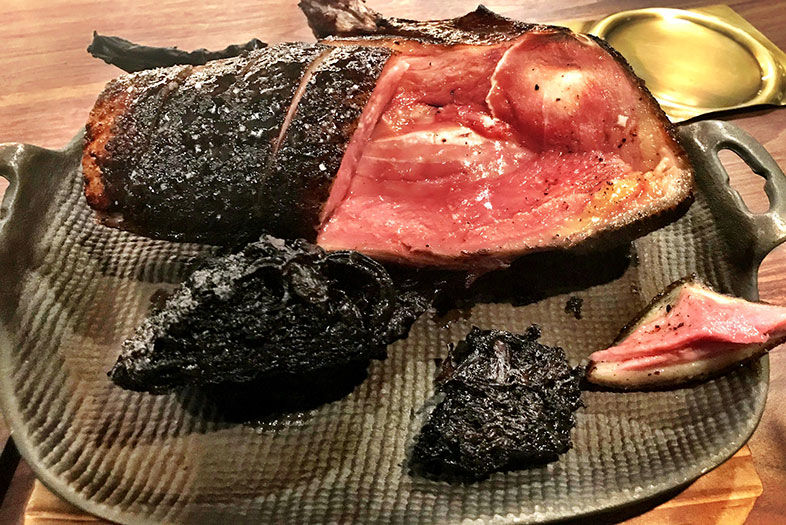
Dish 11: Grilled Duck with Cabbage

Oh man, this thing looks burnt. Like a child tried to make toast. The skin is blackened to a crisp. So I try the cabbage firstwilted and covered in blood orange and chili oil. The cabbage is an absolute star, worthy of its own dish. Then I pull a piece of duck off andagain, magic. No burnt flavor. Just perfectly seasoned and crisped duck skin and rare-plus meat inside. With duck, if you don’t render the fat correctly, it chews like an eraser. And theirs is perfect. My only complaint about this dish is that we were reaching maximum satiation, and I couldn’t eat it all. Worse, I asked our server (who was phenomenal, all of the staff was phenomenal, not at all brooding or dark cloudishly self-serious as I’d expected) to wrap up the leftovers. And then we forgot them in the punch-drunk afterglow of our meal.

Rating: So Damn Good
From Brilliant to Disturbing, Momofuku Ko Is Worth the Trip

From Brilliant to Disturbing, Momofuku Ko Is Worth the Trip

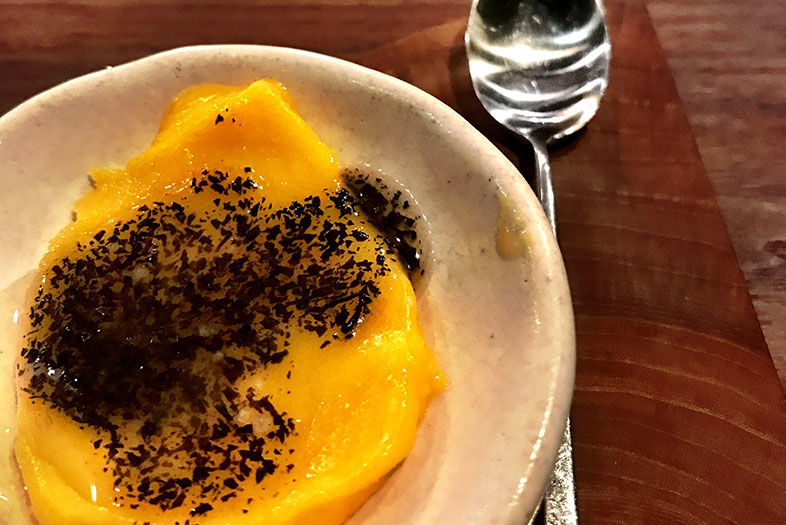
Dish 12: Sorbet with Tea Grounds

To be honest, I can’t recall what kind of sorbet this was. Maybe it was the wine pairings. Mango. Or passionfruit. It’s fantastically delicious, not ice-grainy as some sorbets can be. But then you hit the Earl Grey tea grinds and, oh no. It tastes like someone accidentally dropped their tea grinds on my sorbet and decided to serve it anyway. If you like eating tea grounds, this is your dream dish. I’ll politely be elsewhere. Cleansing the palate with dirt doesn’t work.

Rating: Not Good
From Brilliant to Disturbing, Momofuku Ko Is Worth the Trip

From Brilliant to Disturbing, Momofuku Ko Is Worth the Trip

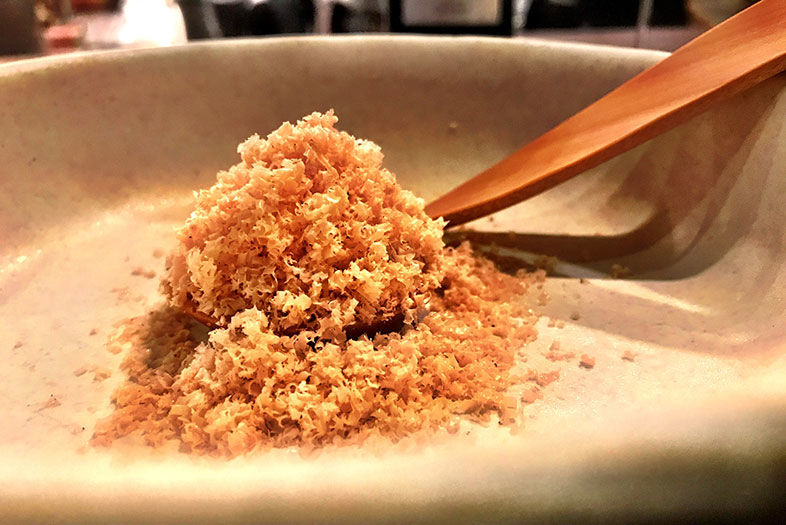
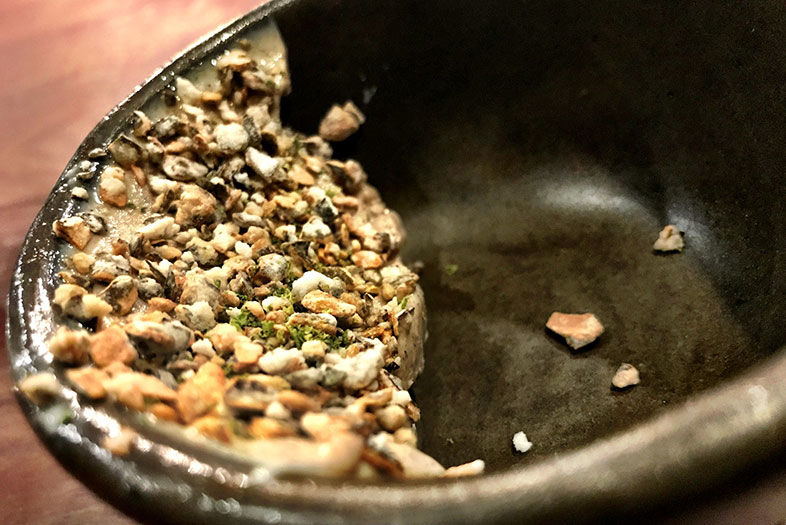
Dish 13: Foie Gras, Lychee, Pine Nut, Riesling

That right there is a pile of foie gras shavings covering a tiny pie. Ko is famous for freezing its foie and then shaving it atop dishes. In this case, as in the tea-grounds sorbet, they’re attempting to marry savory and sweet. And this time it works. Lychee has such a floral sweetness, the Riesling jelly provides a bit of an acidic backbone, you have texture from the pine nut brittle, and then the funky, delicious fat from the foie. It’s not right, but it’s pretty great.

Rating: Damn Good
From Brilliant to Disturbing, Momofuku Ko Is Worth the Trip

From Brilliant to Disturbing, Momofuku Ko Is Worth the Trip

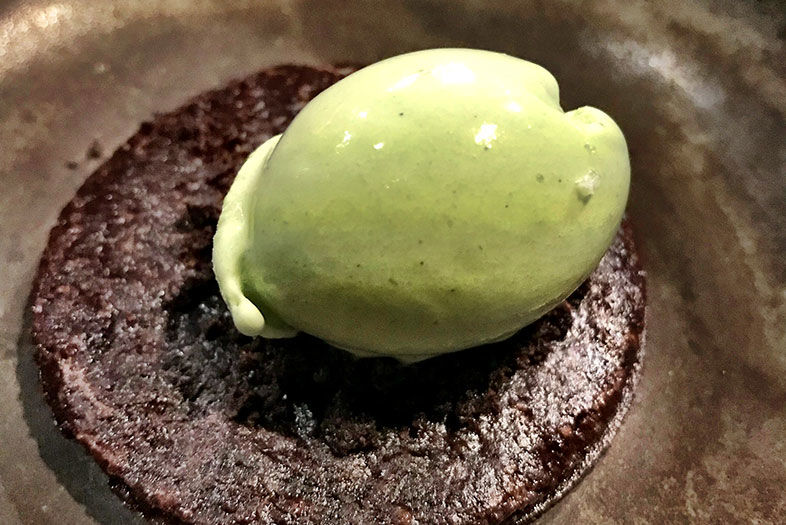
Dish 14: Wild Rice Ice Cream with Candied Kombu

Yes, rice cream with candied seaweed. At first bite, it’s got a very interesting and pleasant flavor. It has that earthiness only rice has. Feels like someone turned a lunch bowl of grains into ice cream. I welcome that. But then, oh god here it comes, you start to taste it. A deep, soil-esque funk. It lingers on your palate. It’s not good. It tastes like compost. I’ve had uni ice cream in the past, and it also deeply disturbed me. Maybe someone will solve the seafood ice cream dilemma, or maybe it’s not something we should attempt to solve. Again, you can’t have wild success without some wild failures, and this falls into the latter category.

Rating: Not Good
From Brilliant to Disturbing, Momofuku Ko Is Worth the Trip

From Brilliant to Disturbing, Momofuku Ko Is Worth the Trip

Final Dish: Chocolate-Fernet Branca Cookie with Mint Ice Cream

Fernet Branca is one of my least favorite things in the world. Bartenders love it. It’s Jaegermeister for hipsters. It tastes like tree vomit. But alas, I’ve found a way to love it. In this mint chocolate chip cookie thing. The cookie is both crisp and gooey on the inside, with just a hint of Fernet’s trademark dark herbs. And the mint ice cream is what every mint ice cream dreams of being.

Rating: Damn Good
From Brilliant to Disturbing, Momofuku Ko Is Worth the Trip

Pomme Soufflé

Subscribe to our newsletters

Select Options

By subscribing you confirm that you agree with our Terms and Conditions and Privacy Policy.

Food & Drink JUNE 24, 2026

Michelin Chooses San Diego for Its Big Show

How the now iconic rating system became the biggest name in the food and how it made its way to our backyard

Michelin Chooses San Diego for Its Big Show
Photo Credit: Elodie Bost

So, Michelin chose San Diego to host its annual awards show tonight. Big thing for our city, which people wrote off as the flaccid mozzarella stick or the “fish tacos bro” of California food culture.

Michelin Guide is a pretty fascinating story. It started as a marketing brochure for a tire company and evolved into the strongest global marketing platform for restaurant culture in history. In 1900, there were less than 3,000 cars in all of France. André and Édouard Michelin were trying to sell tires. A niche market. If people drove more, they figured, tires would go bald faster. They’d sell more rubber.
So they published a guidebook with maps, gas stations, mechanics, hotels, restaurants, and travel advice. The “How to Go Bald” book with food as the bait. By the 1920s, people were buying the guide just for the restaurant recs. In 1926, Michelin introduced stars. Originally just one. Five years later, it expanded to three. One meant “very good restaurant.” Two meant “worth a detour.” Three stars meant “worth a special journey.” Wear those tires down to a nub in search of Dover sole.

Photo Credit: Elodie Bost

By WWII, Michelin was the gold standard guide to French food. And French food was the gold standard for western food. Michelin first came to the US in 2005 to New York only. Knicks in five.

In 2007, San Francisco, followed by LA and Vegas in 2008. Michelin stopped publishing in LA and Vegas after two years and stayed dark from 2011–2017. Major theories for this? First, print is expensive. I can attest. ROI on a printed story is hard. Second, people wanted local critics, and they were finding them online. Third, Michelin landed like a stuffed shirt in LA, which had taco carts in its heart. LA swiped left.

Then Michelin discovered a new way to fund what it does. Instead of trying to sell enough books to justify the cost (inspectors, printing, restaurant bills, etc.), it had tourism boards pay for inspectors to come analyze their cities or states.

Tourism boards are massive organizations whose sole goal is to market the cities and states—attract tourists, who pay for hotels and spend money in the city. Heads in beds. The first to swipe its TMD (tourism marketing dollars) credit card was California, which paid $600,000 in 2019 for Michelin to come back to LA, Orange County, Monterey, Sacramento, Santa Barbara, and… San Diego.

It’s an overwhelmingly positive thing, which is never without its doubters and critics. Namely, not everyone is down with the pay for play model.

The biggest reason is that it means cities without big tourism budgets get left out. Chefs in those cities are chefs non grata in the eyes of Michelin. Which is a fair complaint, though also, sadly or not, kind of how capitalism works. Michelin isn’t a government organization. It’s a publicly traded company with real bills to pay and investors and shareholders to answer to.

Since it feels like a tad of a PR dilemma for Michelin, I have a proposal that may or may not work. What if Michelin took a portion of the money it receives from larger cities and used it to fund its expansion into an underserved city or state that can’t afford it? Bake it into the price it charges California or any other state. Again, Michelin’s not obligated to do this; there is no penalty beyond the paper cuts of our public sentiment. But that sort of pay-it-forward model could help other cities without the resources to play the game.

Second, people claim this TMD-funded model somehow taints the winners. I don’t buy that at all. All tourism boards are doing is paying a marketing business (Michelin) to come operate in their city. They’re not telling Michelin which restaurants to choose for awards. As I understand it, Michelin has retained independence, and its inspectors only award restaurants that they feel are absolutely worth it based on merit.

True pay for play would be if that restaurant paid Michelin in exchange for being awarded a star. Or if a tourism board paid Michelin to come to a city and had a say in which restaurants received attention or awards. I haven’t found any proof of that happening, and so I won’t ding the validity of the awards until (and if) I ever do.

All tourism boards can control is which areas they’re willing to pay to have analyzed. For instance, San Diego could technically ask that only the city be analyzed and not the county. Which it did not, most likely because Visit San Diego (our TMD) is in charge of marketing the entire county (and thus why Michelin stars like Jeune et Jolie, Lilo, and Addison are outside of SD city limits).

So, if you’re dead set on criticizing Michelin, I’m not sold yet on the pay-for-play model being the right route.

Troy Johnson

About Troy Johnson

Troy Johnson is the magazine’s award-winning food writer and humorist, and a long-standing expert on Food Network. His work has been featured on NatGeo, Travel Channel, NPR, and in Food Matters, a textbook of the best American food writing.

Food & Drink JUNE 24, 2026

A Guide to The 2026 Sapporo Omakase Open

The restaurants and people behind the fastest sold-out event in San Diego Magazine’s history

A Guide to The 2026 Sapporo Omakase Open
Photo Credit: James Tran

The Sapporo Omakase Open is upon us. The event that sold out faster than any in San Diego Magazine’s history. The birth of another tradition.

The idea was simple: partner with the city’s preeminent force in Asian business and culture (the Convoy District) and the longest-running Japanese brewer in the world (Sapporo, founded 1876). Then bring together some of our favorite chefs and food and drink people who specialize in Asian delicacies—sushi, pho, xiao long baos, mochi, musubi, sake, tea, you name it—to shine a light on who they are and the delicious things they create.

There will be a friendly competition, judged by everyone in attendance and a panel of food experts, including longtime Food Network judge (and SDM co-owner) Troy Johnson. Winners will be named and trophied and exalted.

But moreover, SDM and its partners—Snake Oil Cocktail Co, Rivian, Del Mar Wine & Food Festival, and Komé Collective—believe in building local culture will bring together a room full of people to eat, drink, commune, and celebrate those who make San Diego’s food and drink culture hum.

Here is your guide to the restaurants, chefs, and people cooking and creating at the inaugural Sapporo Omakase Open:

Dumpling Inn & Shanghai Saloon

The OG. Dumpling Inn & Shanghai Saloon started in a tinier strip-mall space, famous for Shanghai-style comfort food like jellyfish salad and xiao long baos (XLBs, aka soup dumplings). It became so loved that they took over the giant anchor spot on Convoy (a former iconic Chinese grocery store, which also helped launch Convoy into the pan-Asian food wonderland its become). Its menu is vast, but the dumplings are the legend—with fresh dough rolled each morning, a rounded pocket of porky goodness and a gush of broth. Celebrating 10 years in its massive space (and 32 years overall), the Inn’s XLB comforts everything in its path.

Crab Hut

This is the family-run spot in Convoy for seafood boils, brought to you by the owners of one of the city’s top restaurants, Kingfisher. Crab Hut is their OG idea from owners Ky Phan, sister Kim, and brother in law Quan Le. It’s a love note to their childhood home and family tradition where they grew up in Vietnam. Behind their house was a river. The Phans would fish during the day, and sit around the communal table boiling up the day’s haul at night. There’s the “Bucket for One” filled with snow crab clusters, shrimp, crawfish, mussels, clams, corn on the cob, potatoes, and andouille sausages. There’s the “Go to Town” boil overflowing with everything previously mentioned, plus king crab legs and a glorious Dungeness crab. The most delicious kind of mess.

Lumi by Akira Back

Lumi by Akira Back is led by world-renowned Korean-American chef Akira Back—the ex-pro snowboarder turned Michelin-star, best known for Dosa in Seoul, Yellowtail in Vegas, and this rooftop sushi-plus concept in the Gaslamp. Overlooking Fifth Ave, it’s serious food with a little party in its heart. Along with a serious sushi program, there are dishes like his Japanese-inspired take on pizza (a tuna carpaccio + ponzu mayo idea) or the miso pork belly kimchee chaufa. Want the full show? Order the Nano 9, Lumi’s Signature Mystery Box, a limited nine-piece omakase sushi course unveiled tableside in an ornate carrier leaking fog all over the place. Keep going big (but refined) with Mist of Kyoto, a cocktail-for-two experience—Knob Creek Barrel Rye, Mizunara liqueur, Japanese sweet vermouth, and black walnut bitters, served in a ceremonial tea pot with two equally ceremonious cups. 

Sake Bar GAGA

This concept was inevitable. Ayaka Ito first came onto San Diego’s restaurant scene in 2016 with Beshock Ramen in East Village. The ramen is fantastic, but the place was unique in that it was one of the city’s first portals into the craft of world-class sake. Ito is a kikizakeshi—essentially a certified sake sommelier or master. Sake Bar GAGA is her sake tasting bar in East Village, a 10-seater destination that takes guests on an omakase-style journey of around 20 sakes, hand selected by Ito. For the food, she and chef Ryan Miller collaborated on tapas-style bites with Marie Chiba, a certified sake samurai (one of the few in the world) and owner of Tokyo’s famous sake bar, Eureka. When you choose your dishes—like the blue cheese ham katsu, scallop mango tartar, A5 Wagyu Nigiri, konbu-aged red snapper, snow crab croquettes, you name it—the bar customizes your sake to each food.

Cannonball

San Diego’s largest oceanfront rooftop, hovering above the beach-culture pandemonium at Belmont Park. With a qualification like that, Cannonball could serve gas station sushi and mid boat drinks and be just fine. But local restaurant group Eat. Drink. Sleep (JRDN, The Lakehouse) and chef Luis Romero have made sure the seafood lives up to the view—with over 30 sushi creations, apps like bluefin tostadas with aguachile negro, baked blue crab dip with sriracha honey—plus entrees like a ribeye in uni butter and miso black cod. Watching the daily mix of tanned, parrot-wielding locals, Fit gym body-bods, and tourists is a show in and of itself, made even more enjoyable with a Lychee Lychee—vodka, nigori sake, yuzu liqueur, and lychee syrup. 

Glass Box

Hard to call him underrated, since he won best dish at Del Mar Wine + Food Festival last year. But chef Ethan Yang’s Glass Box still deserves more. The restaurant is an attraction in and of itself—encased in a giant glass cube inside the Sky Deck at Del Mar Highlands. Yang and his chefs are on display, slicing top-notch fatty toro or premium wagyu filet. He offers a 10 to 15 course omakase experience, and the bar brings classics like a Toki Old Fashioned (Suntori Toki, bitters, orange) and modern plays like a Matchatini. 

Ikegi by Chef Stevan Novoa

Cooking. That’s what chef Stevan Novoa’s ikegi is; a Japanese word meaning “reason for being.” A military veteran with 13-plus years of experience in kitchens across the coast of California and Mexico, Novoa has cooked most styles that make the region hum—and developed a deep appreciation for local farmers, fishermen, and ingredient people. Ikegi by Chef Stevan Novoa is his private chef concept, curating tasting menus that span the gamut (coastal California, Mexican, Japanese izakaya) for people in their favorite space: their home.

Mon Chourie 

Few things in life are more affirming than light, fluffy dough balls stuffed with cream and baked to perfection. South Korea native and New York art-student-turned-baker Kelly Kim specializes in classic choux au craquelin—the oversized French cream puffs baked with a slender cookie disc that melts across the top during baking. At Mon Chourie, she starts with her mom’s recipe, then tweaks with seasonal, global flavors—often in collaboration with other local makers. Like the recent pandan mango ice cream choux with indie San Diego-based ice cream brand, Amor. Or a peach oolong tea choux—silky oolong tea-infused cream, peach compote inside that twice-baked, light-as-atmosphere pastry dough. She pops up on Wednesdays at local bakery Michi Michi, plus other spots in town. 

Pho Ga Go 

A restaurant within a restaurant from the family who owns Crab Hut and Kingfisher. Pho is all about the broth and the lengths you’re willing to go for it. At Phở Gà Go, the whole idea is to take the quality of broth they have at Kingfisher—one of food critic Troy Johnson’s “Top Five Restaurants in San Diego”—and serve it in a more casual setting. Chicken bones are simmered for over 12 hours with the highest-possible ingredients (including heirloom garlic from the famed Christopher Ranch in Gilroy), resulting in a broth that’ll send the slightest throat tickle or sniffle scampering away like a frightened little puppy. They also specialize in chả giò—Vietnamese imperial rolls that are in the realm of Chinese-American egg rolls, but ineffably lighter thanks to using rice flour instead of wheat dough—stuffed with pork, shrimp, taro, wood ear mushroom, carrots, and mung bean noodles. 

Roppongi Restaurant & Lounge

In early-2000s San Diego, the next generation of sushi chefs were largely trained in two spots: Sushi Ota, or Roppongi Restaurant & Lounge. First opened in 1998, Roppongi was the Japanese-inspired standout from restaurateur Sami Ladeki, who had made his name with Sammy’s Woodfired Pizza but was blown away by the food culture in Roppongi, Japan. La Jollans cried multiples when it closed in 2015, and relentlessly bugged Ladeki to bring it back. So he did exactly that last year with chef Alfie Szeprethy. They supercharged the design of the space, and rebirthed some of the classics—like the Polynesian crab stack, Mongolian duck quesadilla, the Roppongi Roll (tempura shrimp, unagi, spicy toro), and the Japanese hot rock (thinly sliced steak sizzling on a smooth stone with chili ponzu, sesame goma sauce, and cucumber sunomono). Welcome back. 

Sushi On a Roll

Jeff Roberto is a low-key, laidback icon of sushi in San Diego. At any event, if you spot a surprisingly elaborate sushi case and setup and a couple of itamaes wielding blow-torches or breaking down an entire tuna—that’s Roberto and his Sushi On a Roll. He’s been one of the city’s premier sushi caterers since 1993 (when he started, there were only seven sushi restaurants in the city)—a powerhouse on wheels offers everything from sushi making workshops and classes. When a few US presidents needed sushi, Roberto got the call. His arsenal at this point includes over 1,000 sushi options. But moreover, he’s the warm, smiling attraction at any party that involves high-quality fish in the nude. 

Sweet Vibe

Hard to decide if Sweet Vibe is a viral dessert shop or a highly popular newish entry in tea culture, which runs deep in Convoy. Their cakes have somewhat stolen the buzz, with Thai milk tea cake, taromisu (taro + tiramisu), yuzu cheesecake, sea salt Oreo, etc. They’re also cute as hell, with their bearamisu (a tiramisu with a bear on it) and mousses shaped like French bulldog pups. But its drinks are the core of the menu, with vibrant fruit and milk teas (green Thai lemon, uji matcha foam with jasmine milk, lychee lemon, iced peach oolong), yogurts with Crystal boba, and fruit slushes (mango pomelo, strawberry milk, pink lychee)—all with adjustable sugar and ice levels and boba add-ons. 

This Musubi Love

It’s a sandwich. It’s nigiri. No, it’s musubi. For all the SPAM skeptics, we urge you to honor the deeply Hawaiian and Japanese tradition and witness the charms of a warm, handheld block of sticky rice with a thick slab of teriyaki-glazed canned meat wrapped in nori. Those who have either been raised in the arts or converted tend to exude a higher than expected life happiness. This Musubi Love, a Leucadia musubi speakeasy (you heard us right), focuses exclusively on the minor food religion. The MEHKO (Micro Enterprise Home Kitchen) from founder Roger Post serves classics, plus riffs like the Cordon Bleu-Subi made with panko-fried SPAM, shredded rotisserie chicken, swiss cheese and Bachan’s Japanese BBQ sauce. Or the Dawn Patrol with SPAM, egg, bacon, cheddar cheese and spicy mayo. If you’re still not convinced, the fried BBQ chicken tender musubi or the crispy BBQ tempura shrimp musubi might change your mind. 

Mochichis

It’s the pastry hybrid that everyone who values their mouth should have seen coming. Mochi is having a true uprising in San Diego. Most people know the Japanese specialty from the mochi-covered ice cream found in boxes at various grocery stores, but artisanal mochi comes in many, far more interesting forms. Like donuts. Mochi donuts have that crispy-fried traditional donut exterior, but the chewy-soft, rice-flour soul in the middle. Mochichi in Encinitas—a startup from SDSU grad Beth Kass—specializes in them. Base flavors include creme brulee, strawberry glaze, ube Oreo, churro, an Nutella, but she customizes on request and whim. She also serves an ube float and a Vietnamese coffee float because, well, that should clearly exist. 

Food & Drink JUNE 23, 2026

In a City Obsessed With Coffee, One Pop-Up Is Doing Things Differently

One of One combines creative seasonal drinks, ethical sourcing, and Filipino-American roots to stand out in San Diego's crowded cafe scene

In a City Obsessed With Coffee, One Pop-Up Is Doing Things Differently
Photo Credit: Maryssa Liu

In a city overflowing with cortados, ceremonial-grade matcha, and ambitious coffee startups, standing out isn’t easy. It’s even harder when your business doesn’t have a fixed address. That’s the challenge (and increasingly, the appeal) of One of One

The Filipino-American coffee and matcha pop-up concept is the work of Kristin Cleavinger, a San Diego native who spent nearly a decade working in the Los Angeles specialty coffee business before returning home to build a concept of her own. The business takes its name from Cleavinger’s grandfather Gregorio Magnaye Bolor, who immigrated from the Philippines to the United States in the 1970s with almost nothing, but managed to build a life for him as well as his descendants. 

It’s that sense of grit, perseverance, and identity that Cleavinger says fueled her to build One of One. “Throughout my time in specialty coffee, I was really curious about Filipino representation, because that wasn’t something that I saw,” she explains. She began to research coffee from the Philippines, but considering the island nation only produces about 0.25 percent of the world’s largest producer, Brazil, there wasn’t much to find.

Instead, she turned inward, drawing from her family’s history and her own Filipina-American identity to build something personal.  “To me, this really is a way to honor my family’s legacy—my nanay, Maria Nieves Bolor, and my tatay Gregorio.”

Photo Credit: Juliet Furst

For her drinks, Cleavinger never uses refined sugars, and syrups are made in-house from organic and regenerative ingredients. The Summer Peach latte, the current seasonal special, layers Ceylon cinnamon, unrefined cane sugar, Maldon sea salt, and ripe yellow peaches for a riff on one of summer’s most glorious treats: peach cobbler. Another new drink is Mint Chip, inspired by Thrifty ice cream with a fresh mint syrup, dark cocoa powder, and chocolate chunks with a base of either espresso or hojicha (roasted Japanese green tea with a mild, sweet, earthy flavor and lower caffeine content than other green teas). 

Other crowd pleasers include the signature Neapolitan latte, which is inspired by childhood memories of her family using Neapolitan ice cream to create pan de sal ice cream sandwiches. She layers housemade organic strawberry syrup, Madagascar vanilla bean-infused oat milk, and dark cocoa-swirled espresso for a tricolored beverage experience that she recommends sipping before stirring to taste each layer on its own merit. 

Past specials have ventured deeper into Filipino flavors, like a turon-inspired latte using jackfruit and banana; another was a coconut pandan matcha made with organic coconut water and topped with a pandan matcha cream.

Photo Credit: Juliet Furst

The sourcing decisions behind these drinks are equally deliberate. Coffee comes from Boondocks, a Filipino-owned LA roaster whose founder is originally from National City. Its current offering, the Galleon blend, combines beans from southern Luzon in the Philippines with Chiapas, Mexico—a nod to the communities woven into San Diego’s own cross-border identity. Matcha is sourced through Este, a local San Diego company that works directly with producers in Mie Prefecture, Japan. 

Every supplier is chosen for value alignment as much as quality—Boondocks’ current blend, for example, directly supports women-owned farms. “Each person has the power to choose where they want to put their dollar,” Cleavinger says. 

You can catch her at regularly scheduled pop-ups at places like Olivewood Gardens in National City (every third Saturday), Ayi in South Park’s Summer Series (every Saturday morning in June), and on regular rotation at Home Ec and Best Bud Floral in Kensington. (More dates are listed on Instagram as well.) Cleavinger says she does have plans to launch a brick-and-mortar shop in the future, ideally with an expanded beverage menu, space for art shows, and a community gathering place for local and Filipino-owned makers.

In a crowded field of coffee concepts, One of One shows that a memorable drink can do more than wake you up. It can tell you something about the person behind the idea—who they are, where they’re from, and where they’re going next.

San Diego Restaurant News & Food Events

Beth’s Bites

  • After appearances on Top Chef and Iron Chef Mexico and stints at big-name kitchens like Vaga and Leu Leu, chef Claudette Zepeda just released her debut cookbook Cooking the Borderlands: Spice and Smoke Between Mexico and the States. By deep diving into the cross-border culinary traditions between Mexico and the United States, Zepeda doesn’t just tell the story of food—it’s a story of her upbringing as a self-proclaimed “border kid,” a moniker all-too-familiar to thousands of people who straddle the two countries. It’s a fascinating (and beautiful) book from one of San Diego’s native daughters and well worth picking up. 
  • Despite throwing the North County restaurant world into despair at the news that Matsu was permanently closing, we are blessed with the ability to continue enjoying Chef William Eick’s culinary prowess. Eick is now the chef de cuisine at Pacific Point at the Park Hyatt Aviara Resort in Carlsbad, working alongside sushi chef Meljohn Sebastian to design a new Asian-inspired menu focused on seasonality. Matsu may be over (for now), but Eick’s talent is still on full display. 
  • Urban Property Group just announced a deal for a new cafe opening in the freshly renovated Five50 West in Little Italy. Café Noelia will open this summer, bringing a slew of coffee, matcha, toasts, and sandos to the ground floor of the building, where (rumor has it) a Japanese speakeasy is also on the way. 
  • In the latest twist of the weirdly ongoing story that is Modern Times Beer, its Encinitas location, the Far West Lounge, is no more. The once-renowned local craft beer brand flew too close to the sun during the beverage boom and now, after closures, sales, and corporate splits, only exists with a small handful of the original tasting rooms and as a craft coffee brand (that’s not actually related to the beer side of things anymore).

Listen Now: The Latest in San Diego’s Food and Drink Scene

Have breaking news, exciting scoops, or great stories about new San Diego restaurants or the city’s food scene? Send your pitches to [email protected].

Beth Demmon

About Beth Demmon

Beth Demmon is an award-winning writer and podcaster whose work regularly appears in national outlets and San Diego Magazine. Her first book, The Beer Lover's Guide to Cider, is now available. Find out more on bethdemmon.com.

Studio S JUNE 15, 2026

A Modern Take on Steak

Stake Chophouse & Bar brings contemporary classics and old-school service to the heart of Coronado

A Modern Take on Steak
Courtesy of Stake Chophouse

Stake Chophouse & Bar isn’t your average steakhouse. Blue Bridge Hospitality’s Coronado outpost is a modern interpretation of a big-city steakhouse nestled in the heart of the small coastal community. The team at Stake has reimagined the whole steakhouse experience. By prioritizing a seasonal farm-to-table sourcing philosophy, a personalized guest experience, and unique service touches, like a formal steak presentation and a bespoke knife selection process, Stake distinguishes itself in a sea of steakhouses.

Exceptional steaks, including Wagyu from Japan, Australia, and the U.S., and fresh seafood flown in daily form the core of Stake’s culinary identity. The menu features a five-course omakase-style steak experience highlighting house favorites, plus an array of cuts, and classic steakhouse staples—think a wedge salad, baked potato, or pasta carbonara—refined for a contemporary palate without losing their traditional appeal. Stake focuses on seasonal sourcing from the region’s best family farms and specialty purveyors, and incorporates intentionally unexpected touches to create something truly unique.

“I challenge our chefs and myself to take it a step further in sourcing,” says Chef Ronnie Schwandt. “It’s important to us to highlight different farms, unique one-off farms—whether it’s cattle, strawberries, a local fisherman or from anywhere in the United States, we’re always trying to find that niche.”

Beyond the menu, Stake emphasizes outstanding service, says Vinny Spatafore, Director of Hospitality Operations. Staff maintains detailed notes, allowing them to remember guests by name, recall previous orders such as a favorite martini (also memorable for the customer since it’s served in an extra tall, distinctly-shaped glass), and celebrate special occasions like birthdays and anniversaries.

“When you have those points of topic that you remember about a guest, they appreciate that,” he says. “Our servers are really good with that—we have a couple servers who have been here since the beginning and they’ll remember somebody from years ago, their name, their kids’ names, where they live. I’m really thankful to have a great front of house staff.”

Award-winning wines, rare whiskeys, special events, and a complementary black car service that provides transportation for guests throughout Coronado add to Stake’s appeal.

Schwandt stresses that Stake offers more than a meal; they aim to give patrons something unforgettable.

“It starts when you walk up the stairs and are greeted by the hostess—that sets the tone for the night. Then you’re greeted by a server, who may know you by name, and can guide you through the menu and curate as they get to know you,” says Schwandt. “Most people leave kind of blown away; they leave feeling like they just had an experience. That’s the goal, right? Whether you’re serving smash burgers or high-end steak, you want somebody to leave thinking, Wow, that was awesome.”

Partner Content
Food & Drink JUNE 23, 2026

The Japanese Curry Taking Over Petco Park Is Coming to Hillcrest

CoCo Ichibanya's wildly popular katsu curry has become a ballpark favorite—and now the chain is opening a second San Diego location

The Japanese Curry Taking Over Petco Park Is Coming to Hillcrest
Courtesy of CoCo Ichibanya

I’m a creature of habit. When I go to Petco Park for a Padres game, I order two things without fail: a Swingin’ Friar ale from Ballast Point and a Friar Frank (extra mustard, no ketchup). I might supplement with tri-tip nachos from Seaside Market, or splurge on fancy fish tacos from Deckman’s at the Draft, but there’s no way I’m going to a ballgame without enjoying the classic combo of a beer and hot dog.

But this season, I’m faced with a conundrum. CoCo Ichibanya, the world-famous Japanese curry chain with locations in Convoy District, Los Angeles, Orange County, and Texas, debuted this March at the Mercado near Section 104. I recently attended a game against the New York Mets when I noticed a woman sitting in the row in front of me with a giant helping of chicken katsu curry. I hadn’t seen CoCo’s curry in the wild at the ballpark yet, but the aroma of the crispy fried chicken bathed in savory curry wafting over her shoulder absolutely intoxicated me (and ended up being a nice distraction to the 7-3 loss). Hopefully, she didn’t notice me leering with envy, but I’m 92 percent sure I got some drool on the guy next to me.

The world’s largest Japanese curry chain isn’t done popping up in San Diego quite yet. This July, CoCo Ichibanya will open its second standalone store in San Diego on the ground floor of the Denizen building in Hillcrest.

First launched in Nagoya, Japan in 1978, CoCo Ichibanya specializes in Japanese-style curry dishes, a comfort food signature. Unlike fiery Thai and Indian curry, Japanese curries are often more like gravy, served over rice and alongside katsu pork, chicken, or beef, or as curry omurice (omelet rice). The chain expanded to the United States 15 years ago, and owner Teruyoshi Ono says they’d been eyeing more opportunities in San Diego for some time.

Courtesy of CoCo Ichibanya

The location in Hillcrest spans 2,585-square-feet with seating for around 49 guests. Menu favorites like the chicken cutlet curry with vegetables, the pork cutlet omelet, and Thai tea will be available, but Ono said Hillcrest will be the first location in the US to offer one major crowd-pleaser: alcohol. And keeping with local baseball fandom, “We will also have Padres x CoCo Ichi limited merchandise at our Hillcrest location,” he promises. 

Ono also revealed that CoCo’s future expansion plans include looking for more locations across Southern California and possibly more in San Diego. While the Japanese yen remains at a historic low against the dollar (making it an absolutely unbeatable time to visit the Land of the Rising Sun), why fly overseas when you can get a taste of Japan in your own backyard—or ballpark?

CoCo Ichibanya Hillcrest is slated to open at 3833 5th Avenue in July.  

San Diego Restaurant News & Food Events

Beth’s Bites

  • Leucadia, gird your loins for a bagel bonanza. New Wave Bagels is ready to sling its sourdough delights in time for the July 4 weekend, promising bagels, breakfast sandos, and a limited sandwich menu until a hard launch on Wednesday, July 8. Maybe we should rename Independence Day to Carbohydrate Day? 
  • First a Michelin star, now number one—Carlsbad’s darling Lilo was just named the number one restaurant in the US by Robb Report, the luxury lifestyle site (which coincidentally happens to be owned by Penske Media Corp., the new owners of Vox Media and Eater as of today). What can’t John Resnick and Eric Bost do??
  • B’s Bodega, a New York-inspired deli and convenience store inspired by the late Brandon Zanavich of The Friendly, is slated to open later this year. But before it does, you can get a taste of the Big Apple energy on June 27 at Bock in South Park, when the B’s team will be on hand hosting their first sandwich pop-up. Sneak a peek of what’s to come and grab a beer while you’re at it.

Listen Now: The Latest in San Diego’s Food and Drink Scene

Have breaking news, exciting scoops, or great stories about new San Diego restaurants or the city’s food scene? Send your pitches to [email protected].

Beth Demmon

About Beth Demmon

Beth Demmon is an award-winning writer and podcaster whose work regularly appears in national outlets and San Diego Magazine. Her first book, The Beer Lover's Guide to Cider, is now available. Find out more on bethdemmon.com.

Features JUNE 18, 2026

The Perfect Shot with SD’s Top Food Photographers

We ask the city's best food photographers to choose their favorite pics and share their secrets to capturing a drool-worthy pic

The Perfect Shot with SD’s Top Food Photographers
Photo Credit: Luciana McIntosh

Food is a notorious diva to photograph. The wrong lighting can make José Andrés’ paella look like a jaundiced grain bowl. You could be staring at the best sandwich of your life, but shoot it from above and—hey, congrats on that abandoned piece of lettuce bread. A cottage meme industry has been built around the hilariously bad photos on review sites that make Michelin-star food look like Michelin tires.

Especially in a visual modern media world, food culture depends on great photographers capturing the painstaking work in equally deserving ways. We asked four of San Diego’s top food photographers for their favorite shot from another year of documenting what we eat.

Photo Credit: Kimberly Motos

Kimberly Motos

Birdman Sandwich at Chick & Hawk

Getting this kind of shot takes a bit of yoga. Asana yourself into the corner, hold your breath, pray that a chef on the move doesn’t back into your light stand.

“You’re stepping into someone’s workspace during their busiest moments, so it’s a balance of being present to get the shot and being invisible to not slow anything down,” Kimberly Motos says.

The subject here is the Birdman sandwich from Chick & Hawk—hot fried chicken thigh, tangy slaw, kimchi comeback sauce, sweet and spicy pickles, potato brioche bun—getting a hearty dousing of its difference-maker seasoning. Motos captures the parts of the process that diners don’t usually see: the chaos behind something that looks so simple.

Photo Credit: Lucianna McIntosh

Lucianna McIntosh

Oysters + Jewel of the Sea Martini at The Fishery

“I love this image because it feels like a moment you want to step into,” says Lucianna McIntosh. A warm, sunny day at The Fishery in PB with oysters, caviar, and martinis. Yes, please.

The little details—the glass sweating a little, the direct afternoon light creating stark shadows, the oyster glistening on the tray—are the main characters. Instead of trying to overly control the setup, McIntosh “followed the light and lines that draw you in more,” she says. “This was one of those moments where everything lined up on its own for a second. I love it when the shadows end up being just as important as the food itself.”

Photo Credit: Eric Wolfinger

Eric Wolfinger

Herb-Roasted Golden Chicken at Fleurette

La Jolla native Eric Wolfinger—who won a James Beard Award for Tartine Bread, one of the most stunning bread books of all time—says he doesn’t have a signature style. His style is a conduit.

“I see my job is to translate the chef’s point of view into something you can feel,” he says.

For this shot, Fleurette chef Travis Swikard had one directive: cuisine du soleil (“cuisine of the sun”). With a spread of leeks vinaigrette, herb-roasted golden chicken, and beets, Wolfinger wanted to create a scene that felt straight out of the French Riviera, relaying the light, bright style of Swikard’s new spot.

Some bonus additions here: Extra lights—to add lots of warmth—and a clipping from an olive tree.

Photo Credit: Dee Sandoval

Dee Sandoval

Espresso Ice Cream at Lucien

Timing and light are everything in food photography. In Lucien—La Jolla’s tasting-menu-only restaurant with moody ambiance—a single strobe flash creates the ideal spotlight.

Dee Sandoval says she uses the “natural, just-plated energy” of the dish to “create a portrait of moment and craft.” That’s why this Mostra Ghost Bear espresso ice cream—with San José dark chocolate mousse, soy-miso caramel, and koji shoyu chocolate sauce—looks like it might dissolve halfway to your mouth.

Emma Veidt

About Emma Veidt

Emma Veidt is an editor at San Diego Magazine. She earned her bachelor's and master's degrees from the Missouri School of Journalism. She loves running, hiking, and rock climbing, but really, she mostly loves encounters with the street cats around North Park.

Partner Content JUNE 10, 2026

New Options for GLP-1 Users

Scripps study shows that some patients may be able to taper their dose and maintain results

New Options for GLP-1 Users
Courtesy of Scripps Health

While glucagon-like peptide-1 (GLP-1) receptor agents have been used to treat Type 2 diabetes for more than 20 years, their recent emergence as weight-loss wonder drugs marked a new frontier in medicine. But their effectiveness has left some patients wondering what to do once they’ve reached their goal. Stopping the medication could mean regaining some, if not all, of the weight. A Scripps Clinic internal medicine physician recently conducted a small study of whether GLP-1 patients who had reached their goal weight could maintain that weight by taking their regularly prescribed injection every other week instead of weekly. Spoiler alert: 30 of 34 patients did. Read more about the study here and what that may mean as pharmaceutical companies roll out oral GLP-1s.

For more nutrition, wellness, and healthy living tips, sign up for the San Diego Health newsletter here.

Partner Content

Eat Like a Local (Who Knows a Guy).

Restaurant news, culinary storytelling, and Troy Johnson’s sharp takes delivered straight to your inbox twice a month.

Close the CTA

Contact Us

1230 Columbia Street, Suite 800,

San Diego, CA