Ready to know more about San Diego?

Subscribe
Food & Drink JULY 22, 2014

Brig Changes

How a 45-year-old restaurant chain keeps up with the new, hip Joneses
Brig Changes
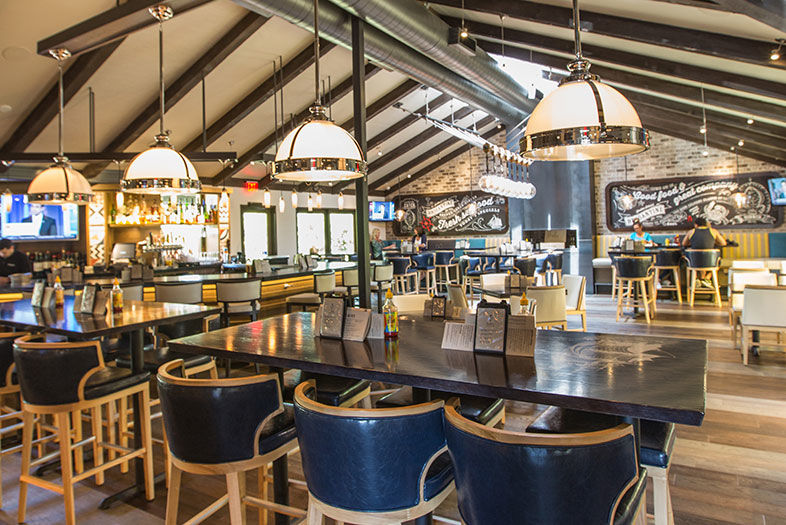
Light and bright: The Brigantine in Escondido

Our need for new is nothing new—it’s just becoming stronger. Blame the whirlwind of reinvention that is the tech sector. Whereas planned obsolescence once bothered American consumers, we now demand a revolutionary new version of the iPhone every year.

For a long time, restaurants seemed immune to reinvention culture. People loved having “their spots”—dependable, unchanging restaurants that served as satellites of their homes. A favorite table at a restaurant with a long history of quality was just fine.

“Now, I think restaurants need to reinvent or at least refresh themselves every eight to 10 years,” says Mike Morton, Jr., president of The Brigantine. Beloved by locals for its swordfish, beef stew, three-dollar fish taco happy hours, oysters, and ice-cold beers, “The Brig” has been quietly giving itself a gigantic facelift over the last 10 years.

In the ’60s, Mike Morton, Sr. and his brothers owned a liquor store in Point Loma (now Trader Mort’s). They used to watch the area’s famed fishermen unload prize swordfish at the dock. The Chart House, then the hottest seafood restaurant in town, made the seafood restaurant business look easy. “So in 1969 my dad and his brother had the crazy idea to take a second mortgage out on their mom’s house and open a restaurant on a shoestring budget,” says Morton, who now helps run the family business with his wife, brothers, and about 1,200 employees.
Brig Changes

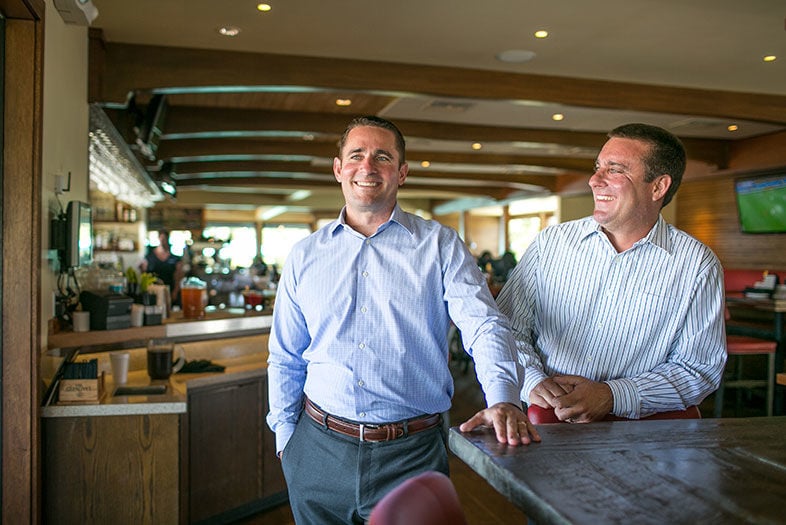
Morton brothers of the Brigantine

The next generation: Mike Morton, Jr. (left, with brother Mark on right) took over the family business and now works to carefully evolve the flagship restaurants to cater to the modern diner.

The next generation: Mike Morton, Jr. (left, with brother Mark on right) took over the family business and now works to carefully evolve the flagship restaurants to cater to the modern diner.

They took over a duplex on Shelter Island Drive [now Miguel’s Cocina], originally an insurance office and flower shop. Out of the gate, they struggled. The senior Morton and his wife, Barbara, cooked, washed dishes, waited tables, poured drinks, handled accounts. “My dad’s favorite time was the weekend,” explains his son, “because the banks were closed. At one point they didn’t have enough money to make payroll, so my dad sold my mom’s car. I’m not sure she ever forgave him, but they’re still married.”
Brig Changes

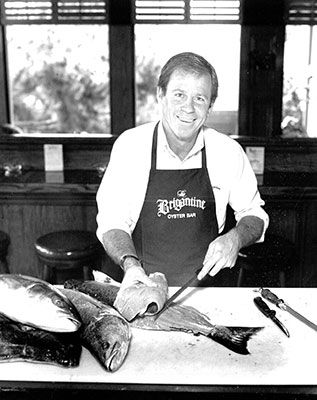
Mike Morton, Sr

Opening day: Mike Morton, Sr. opened the first Brigantine in 1969 with his wife and brother.

Eventually things got better—mostly because the Mortons resolved to stay open to 2 a.m. When The Chart House closed down for the night, the employees and other locals would head to The Brig for nightcaps. The late-night scene saved them. In 1973, they were able to open a second Brigantine in Coronado, across the street from the Hotel Del. In ’82, they opened their first Mexican concept, Miguel’s Cocina, using family recipes from their employee Javier Alaniz (thank his relatives for their esteemed white sauce). In 1999, they rounded out their portfolio with The Steakhouse at Azul on Prospect Street in La Jolla.

Now, 45 years later, Brigantine has 14 locations and three different concepts. Their general manager at the Coronado Brig, Eileen Montgomery, has been there since it opened. Their regional VP, Pat Walsh, started as a dishwasher 38 years ago.

It’s a San Diego institution, which comes with its own set of advantages—like customer loyalty, a recognizable brand, and bulk buying power. But a 45-year-old chain of restaurants also comes with its disadvantages. Mainly, staying relevant. The cult of new-new-new has never been stronger in the restaurant world. How can a nice family place once heavily decked with nautical paraphernalia and lacquered wood compete with the hip, designer restaurants that seem to open every three months? (Have you been to Little Italy lately?)

“If you look at the way big brands have evolved, you can see a 180-degree shift,” says Tom Penn of San Diego restaurant consulting group Real Restaurant Solutions. “As brands rolled out in the last half of the 20th century, there was value in the predictability and trust people had in a brand. Customers will go to a Starbucks in a different city because they know what they want, the risk is reduced, and they feel more secure that they know what they are going to get. A good brand is competent in delivering consistency.

“But the shift is on,” says Penn. “The level of sophistication of consumers continues to grow, so they are demanding more quality and unique experiences.”

Morton acknowledges that loyalty among their regulars is key to their success. “But you don’t want to age out with your guests. We had to take a good, hard look at our places.”

A series of moves within the Brigantine business plan has kept them in the game for the long haul.
Turn it Inside Out

Brig Changes

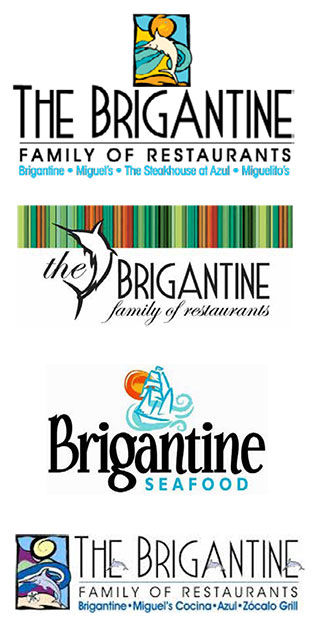
Brigantine Old Logos

Brig Changes

Brigantine new logo

In 1984, Harpoon Henry’s seafood restaurant in Point Loma closed. It was basically across the street from the original Brigantine. The Mortons loved the idea of a second-floor balcony overlooking the harbor. “So we literally closed on a Friday and moved in there on a Monday,” recalls Morton.

The view was nice. But it was the live oyster bar with the miniature performance kitchen that really started a new era. “My folks and some senior people had been scouting restaurants in San Francisco and the East Coast,” Morton explains. “The live oysters were great, but it was more that people could see the kitchen action happen right in front of them.”

In the past, restaurants kept the kitchen in the back of the house so that the grimy, unsexy mechanics of producing food didn’t dwindle the magic of the final, grandiose meal. By inverting that setup, The Brig turned cooking into an attraction itself. As the success of Food Network has shown, Americans get a primal satisfaction from watching food being made. Instead of CNN or ESPN on a TV above the bar, you can watch your fish taco get dressed. As we’ve seen with the success of Chipotle and In-n-Out, having an open kitchen also increases the trust level of an increasingly wary dining culture.

“People really responded to that,” Morton says. “They could have a seat and watch their food being made. Every Brig location would have an oyster bar from that point on.”

The Uncluttering

Earlier this year, Mike Morton realized his company’s website was less than optimal. In the third quarter of 2013, over 40 percent of OpenTable users booked a reservation using a mobile device. The company website was comparably analog.

On the advice of Ballast Point owner Jack White, an old Point Loma high school friend, Morton called MiresBall, a San Diego creative agency. The original plan was to overhaul the website, but MiresBall felt the Brig’s brand needed a little more TLC.

“There were about nine different logos printed all over the place,” says MiresBall creative director, Scott Mires. “You could tell it had evolved organically over time, with each restaurant kind of adding its own spin. But it was confusing to the customer.”
Brig Changes

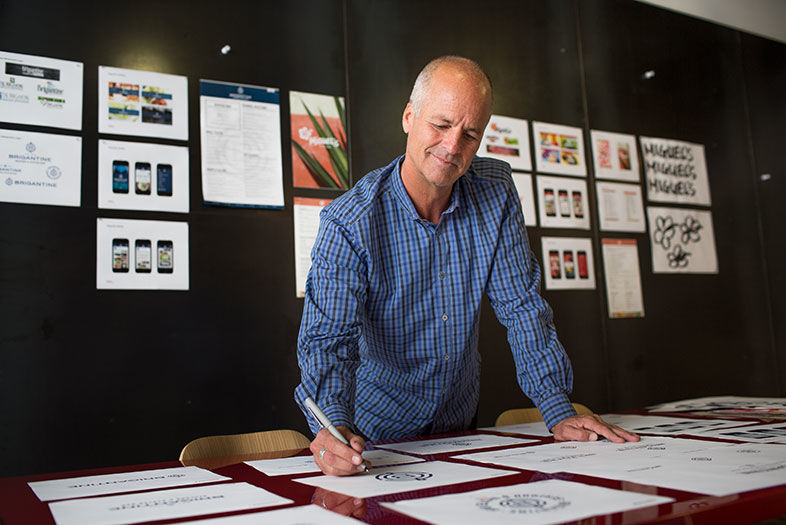
Scott Mires of MiresBall

Fresh eyes: Scott Mires of MiresBall was brought in to refresh the company’s logo, website, and overall brand image.

Fresh eyes: Scott Mires of MiresBall was brought in to refresh the company’s logo, website, and overall brand image.

The Brigantine had always given each of its locations autonomy over their personality. “We really encourage our general managers to become part of the neighborhood and let them decide what’s best,” explains Morton. The result was a scattered identity. In one place, the Brigantine was represented by a clipper ship with sails at full mast. In another, it was a swordfish majestically leaping out of the water between the letters.

“The swordfish leaping is one of the ultimate seafood clichés,” says Mires. “Hopefully we develop a good enough relationship with our clients that we can tell them some of those hard truths.”

MiresBall conducted interviews with shareholders. (“Independently,” Mires notes, “so that the loudest one in the room didn’t dominate the conversation.”) They interviewed employees. They visited all of the locations and observed, took photos, notes.

“You have this really old, built-in crowd of locals,” explains Mires. “The people that work there are old Point Loma surfers. It just has this really cool local vibe that I’m not sure was being expressed in their marketing.”

“The swordfish leaping is one of the ultimate seafood clichés…. The Brig just has this really cool local vibe that I’m not sure was being expressed in their marketing.”

To keep it natural, MiresBall didn’t hire models when taking new photos for the website and other company visuals. There is no obligatory “pretty woman laughing over wine with her handsome friend” photo. “People can tell when they’re being marketed to,” says Elisha Lutz, MiresBall’s director of marketing.
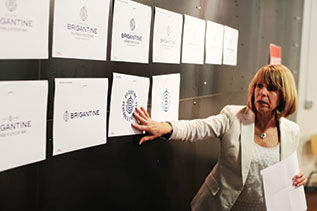
Brig Changes

MiresBall Creative Process

Make it modern: Creatives at MiresBall work to streamline four legacy logos into one modern symbol of the brand.

Mires adds, “The new generation is really good at sniffing out poseurs.”

The biggest overriding change in the process was to remove the clutter. At some Brigantine locations, you would have logos from every concept on a single napkin, which ends up looking like the hood of a NASCAR instead of a clean, iconic image of The Brig. The new logo is clean—a “B” in the middle of what looks to be either a periscope, series of fishhooks, or some sort of meditative circular maze. It’s a creative mashup, intentionally ambiguous. The image will be used everywhere—on menus, napkins, aprons, etc. The prosaic swordfish is dead.

The new Brig image—and website—launches this summer.
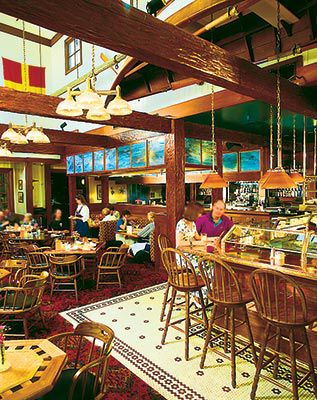
Let There be Light

Brig Changes

Poway Brigantine then

Brig Changes

Brigantine now

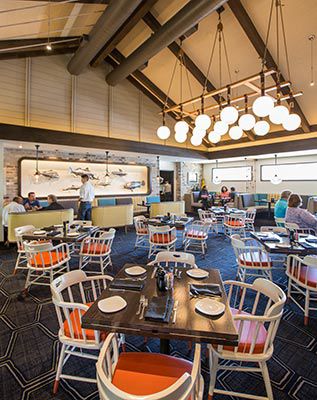
Another crucial part of keeping up with the times started for The Brig in 2004, when they face-lifted the Coronado location. The Brigantine trademark atmosphere—heavily lacquered woods, nautical tchotchkes, and dark interiors—had fallen a little behind.

The discerning ’70s diner didn’t mix dinner business with drinking pleasure. So restaurants separated church and state. “People either wanted to go have a dining experience in a dining room, or they wanted to have a drink at the bar,” explains Morton. “We had real small lounges and big dining rooms.”

Now, social dining is in. At restaurants like Monello and Ironside Oyster Co., the bar action is highly visible from the dining room, with very little barrier between the two.

“You want to make everyone feel part of that energy,” explains Hatch Design Group owner Mike Hatch, who renovated the Del Mar and Escondido locations. “We did that at the Brigantine Del Mar location. You have a central bar where you can look across at each other. And you can see your food being cooked, which makes for a good experience.”

The 1970s were also a dark time. “Old restaurants had dark bars in ’em,” says Hatch. “But today everything is lighter, healthier, indoor-outdoor. It’s almost like you’ve got a problem if you’re drinking in a dark bar.”

Almost every one of the Brigantine locations featured dark woods with mood lighting. Shadows were the overriding design theme. These days, natural light rules the restaurant scene. Roll-up garage doors. Completely al fresco restaurants. San Diego has pretty nice weather, and restaurants are framing that as a design element. At Del Mar, Hatch blew out as many walls as he could to let the outside in.

“A lot of the dark woods went away,” says Morton. “Our locations now have much more of an open-air feeling. We want to get away from dark corner booths.”

Outfitted with a full ship’s mast in the dining room, the Escondido Brigantine was the most ship-like of any of the Brigantines. “It looked like the Pirates of the Caribbean,” admits Morton. “So we spent about $2 million and blew it out.”

To renovate the entire building would’ve cost way too much, so they made slighter changes. Hatch replaced the dark woods with white tiles, and created a modern entry space so that people’s first impression walking in the door felt circa now. The new Escondido Brigantine opened in March (their Eastlake location is next on the list for renovating). Morton is very pleased with the results, although it’s not without detractors.

“We still get emails from old customers who are upset that we changed it,” he says. “But you have to make a leap of faith.”

An Evolution

That’s really it, according to Morton. That’s how a restaurant survives 45 years in the culture of new. Institutionalizing what works (swordfish, fish tacos, bulk buying power) and slowly ponying up the cost to fix what doesn’t (dark bars, scattered branding, over-indulging in the nautical tchotchke market).

“It’s an evolution, not a revolution,” says MiresBall’s Lutz. “They had this really rich history, and we weren’t going to throw that out.”
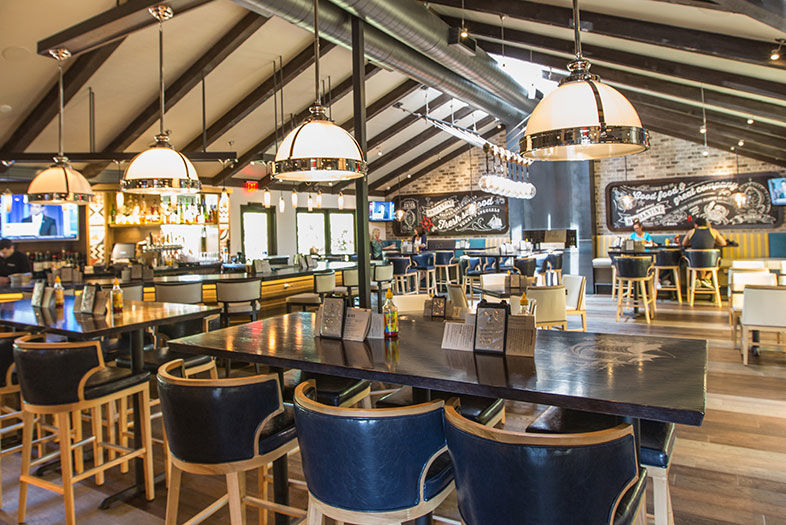
Brig Changes

Light and bright: The Brigantine in Escondido

Subscribe to our newsletters

Select Options

By subscribing you confirm that you agree with our Terms and Conditions and Privacy Policy.

Food & Drink JUNE 23, 2026

In a City Obsessed With Coffee, One Pop-Up Is Doing Things Differently

One of One combines creative seasonal drinks, ethical sourcing, and Filipino-American roots to stand out in San Diego's crowded cafe scene

In a City Obsessed With Coffee, One Pop-Up Is Doing Things Differently
Courtesy of One of One

In a city overflowing with cortados, ceremonial-grade matcha, and ambitious coffee startups, standing out isn’t easy. It’s even harder when your business doesn’t have a fixed address. That’s the challenge (and increasingly, the appeal) of One of One

The Filipino-American coffee and matcha pop-up concept is the work of Kristin Cleavinger, a San Diego native who spent nearly a decade helping grow Alfred Coffee in Los Angeles before returning home to build a concept of her own. The business takes its name from Cleavinger’s grandfather Gregorio, who immigrated from the Philippines to the United States in the 1970s with almost nothing, but managed to build a life for him as well as his descendants. 

It’s that sense of grit, perseverance, and identity that Cleavinger says fueled her to build One of One. “Throughout my time in specialty coffee, I was really curious about Filipino representation, because that wasn’t something that I saw,” she explains. She began to research coffee from the Philippines, but considering the island nation only produces about 0.25 percent of the world’s largest producer, Brazil, there wasn’t much to find.

Instead, she turned inward, drawing from her family’s history and her own Filipina-American identity to build something personal.

For her drinks, Cleavinger never uses refined sugars, and syrups are made in-house from organic and regenerative ingredients. The Summer Peach latte, the current seasonal special, layers Ceylon cinnamon, unrefined cane sugar, Maldon sea salt, and ripe yellow peaches for a riff on one of summer’s most glorious treats: peach cobbler. Another new drink is Mint Chip, inspired by Thrifty ice cream with a fresh mint syrup, dark cocoa powder, and chocolate chunks with a base of either espresso or hojicha (roasted Japanese green tea with a mild, sweet, earthy flavor and lower caffeine content than other green teas). 

Other crowd pleasers include the signature Neapolitan latte, which is inspired by childhood memories of her family using Neapolitan ice cream to create pan de sal ice cream sandwiches. She layers housemade organic strawberry syrup, Madagascar vanilla bean-infused oat milk, and dark cocoa-swirled espresso for a tricolored beverage experience that she recommends sipping before stirring to taste each layer on its own merit. 

Past specials have ventured deeper into Filipino flavors, like a turon-inspired latte using jackfruit and banana; another was a coconut pandan matcha made with organic coconut water and topped with a pandan matcha cream.

The sourcing decisions behind these drinks are equally deliberate. Coffee comes from Boondocks, a Filipino-owned LA roaster whose founder is originally from National City. Its current offering, the Galleon blend, combines beans from southern Luzon in the Philippines with Chiapas, Mexico—a nod to the communities woven into San Diego’s own cross-border identity. Matcha is sourced through Este, a local San Diego company that works directly with producers in Mie Prefecture, Japan. 

Every supplier is chosen for value alignment as much as quality—Boondocks’ current blend, for example, directly supports women-owned farms. “Each person has the power to choose where they want to put their dollar,” Cleavinger says. 

You can catch her at regularly scheduled pop-ups at places like Olivewood Gardens in National City (every third Saturday), Ayi in South Park’s Summer Series (every Saturday morning in June), and on regular rotation at Home Ec and Best Bud Floral in Kensington. (More dates are listed on Instagram as well.) Cleavinger says she does have plans to launch a brick-and-mortar shop in the future, ideally with an expanded beverage menu, space for art shows, and a community gathering place for local and Filipino-owned makers.

In a crowded field of coffee concepts, One of One shows that a memorable drink can do more than wake you up. It can tell you something about the person behind the idea—who they are, where they’re from, and where they’re going next.

San Diego Restaurant News & Food Events

Beth’s Bites

Beth Demmon

About Beth Demmon

Beth Demmon is an award-winning writer and podcaster whose work regularly appears in national outlets and San Diego Magazine. Her first book, The Beer Lover's Guide to Cider, is now available. Find out more on bethdemmon.com.

Food & Drink JUNE 23, 2026

The Japanese Curry Taking Over Petco Park Is Coming to Hillcrest

CoCo Ichibanya's wildly popular katsu curry has become a ballpark favorite—and now the chain is opening a second San Diego location

The Japanese Curry Taking Over Petco Park Is Coming to Hillcrest
Courtesy of CoCo Ichibanya

I’m a creature of habit. When I go to Petco Park for a Padres game, I order two things without fail: a Swingin’ Friar ale from Ballast Point and a Friar Frank (extra mustard, no ketchup). I might supplement with tri-tip nachos from Seaside Market, or splurge on fancy fish tacos from Deckman’s at the Draft, but there’s no way I’m going to a ballgame without enjoying the classic combo of a beer and hot dog.

But this season, I’m faced with a conundrum. CoCo Ichibanya, the world-famous Japanese curry chain with locations in Convoy District, Los Angeles, Orange County, and Texas, debuted this March at the Mercado near Section 104. I recently attended a game against the New York Mets when I noticed a woman sitting in the row in front of me with a giant helping of chicken katsu curry. I hadn’t seen CoCo’s curry in the wild at the ballpark yet, but the aroma of the crispy fried chicken bathed in savory curry wafting over her shoulder absolutely intoxicated me (and ended up being a nice distraction to the 7-3 loss). Hopefully, she didn’t notice me leering with envy, but I’m 92 percent sure I got some drool on the guy next to me.

The world’s largest Japanese curry chain isn’t done popping up in San Diego quite yet. This July, CoCo Ichibanya will open its second standalone store in San Diego on the ground floor of the Denizen building in Hillcrest.

First launched in Nagoya, Japan in 1978, CoCo Ichibanya specializes in Japanese-style curry dishes, a comfort food signature. Unlike fiery Thai and Indian curry, Japanese curries are often more like gravy, served over rice and alongside katsu pork, chicken, or beef, or as curry omurice (omelet rice). The chain expanded to the United States 15 years ago, and owner Teruyoshi Ono says they’d been eyeing more opportunities in San Diego for some time.

Courtesy of CoCo Ichibanya

The location in Hillcrest spans 2,585-square-feet with seating for around 49 guests. Menu favorites like the chicken cutlet curry with vegetables, the pork cutlet omelet, and Thai tea will be available, but Ono said Hillcrest will be the first location in the US to offer one major crowd-pleaser: alcohol. And keeping with local baseball fandom, “We will also have Padres x CoCo Ichi limited merchandise at our Hillcrest location,” he promises. 

Ono also revealed that CoCo’s future expansion plans include looking for more locations across Southern California and possibly more in San Diego. While the Japanese yen remains at a historic low against the dollar (making it an absolutely unbeatable time to visit the Land of the Rising Sun), why fly overseas when you can get a taste of Japan in your own backyard—or ballpark?

CoCo Ichibanya Hillcrest is slated to open at 3833 5th Avenue in July.  

San Diego Restaurant News & Food Events

Beth’s Bites

  • Leucadia, gird your loins for a bagel bonanza. New Wave Bagels is ready to sling its sourdough delights in time for the July 4 weekend, promising bagels, breakfast sandos, and a limited sandwich menu until a hard launch on Wednesday, July 8. Maybe we should rename Independence Day to Carbohydrate Day? 
  • First a Michelin star, now number one—Carlsbad’s darling Lilo was just named the number one restaurant in the US by Robb Report, the luxury lifestyle site (which coincidentally happens to be owned by Penske Media Corp., the new owners of Vox Media and Eater as of today). What can’t John Resnick and Eric Bost do??
  • B’s Bodega, a New York-inspired deli and convenience store inspired by the late Brandon Zanavich of The Friendly, is slated to open later this year. But before it does, you can get a taste of the Big Apple energy on June 27 at Bock in South Park, when the B’s team will be on hand hosting their first sandwich pop-up. Sneak a peek of what’s to come and grab a beer while you’re at it.

Listen Now: The Latest in San Diego’s Food and Drink Scene

Have breaking news, exciting scoops, or great stories about new San Diego restaurants or the city’s food scene? Send your pitches to [email protected].

Beth Demmon

About Beth Demmon

Beth Demmon is an award-winning writer and podcaster whose work regularly appears in national outlets and San Diego Magazine. Her first book, The Beer Lover's Guide to Cider, is now available. Find out more on bethdemmon.com.

Features JUNE 18, 2026

The Perfect Shot with SD’s Top Food Photographers

We ask the city's best food photographers to choose their favorite pics and share their secrets to capturing a drool-worthy pic

The Perfect Shot with SD’s Top Food Photographers
Photo Credit: Luciana McIntosh

Food is a notorious diva to photograph. The wrong lighting can make José Andrés’ paella look like a jaundiced grain bowl. You could be staring at the best sandwich of your life, but shoot it from above and—hey, congrats on that abandoned piece of lettuce bread. A cottage meme industry has been built around the hilariously bad photos on review sites that make Michelin-star food look like Michelin tires.

Especially in a visual modern media world, food culture depends on great photographers capturing the painstaking work in equally deserving ways. We asked four of San Diego’s top food photographers for their favorite shot from another year of documenting what we eat.

Photo Credit: Kimberly Motos

Kimberly Motos

Birdman Sandwich at Chick & Hawk

Getting this kind of shot takes a bit of yoga. Asana yourself into the corner, hold your breath, pray that a chef on the move doesn’t back into your light stand.

“You’re stepping into someone’s workspace during their busiest moments, so it’s a balance of being present to get the shot and being invisible to not slow anything down,” Kimberly Motos says.

The subject here is the Birdman sandwich from Chick & Hawk—hot fried chicken thigh, tangy slaw, kimchi comeback sauce, sweet and spicy pickles, potato brioche bun—getting a hearty dousing of its difference-maker seasoning. Motos captures the parts of the process that diners don’t usually see: the chaos behind something that looks so simple.

Photo Credit: Lucianna McIntosh

Lucianna McIntosh

Oysters + Jewel of the Sea Martini at The Fishery

“I love this image because it feels like a moment you want to step into,” says Lucianna McIntosh. A warm, sunny day at The Fishery in PB with oysters, caviar, and martinis. Yes, please.

The little details—the glass sweating a little, the direct afternoon light creating stark shadows, the oyster glistening on the tray—are the main characters. Instead of trying to overly control the setup, McIntosh “followed the light and lines that draw you in more,” she says. “This was one of those moments where everything lined up on its own for a second. I love it when the shadows end up being just as important as the food itself.”

Photo Credit: Eric Wolfinger

Eric Wolfinger

Herb-Roasted Golden Chicken at Fleurette

La Jolla native Eric Wolfinger—who won a James Beard Award for Tartine Bread, one of the most stunning bread books of all time—says he doesn’t have a signature style. His style is a conduit.

“I see my job is to translate the chef’s point of view into something you can feel,” he says.

For this shot, Fleurette chef Travis Swikard had one directive: cuisine du soleil (“cuisine of the sun”). With a spread of leeks vinaigrette, herb-roasted golden chicken, and beets, Wolfinger wanted to create a scene that felt straight out of the French Riviera, relaying the light, bright style of Swikard’s new spot.

Some bonus additions here: Extra lights—to add lots of warmth—and a clipping from an olive tree.

Photo Credit: Dee Sandoval

Dee Sandoval

Espresso Ice Cream at Lucien

Timing and light are everything in food photography. In Lucien—La Jolla’s tasting-menu-only restaurant with moody ambiance—a single strobe flash creates the ideal spotlight.

Dee Sandoval says she uses the “natural, just-plated energy” of the dish to “create a portrait of moment and craft.” That’s why this Mostra Ghost Bear espresso ice cream—with San José dark chocolate mousse, soy-miso caramel, and koji shoyu chocolate sauce—looks like it might dissolve halfway to your mouth.

Emma Veidt

About Emma Veidt

Emma Veidt is an editor at San Diego Magazine. She earned her bachelor's and master's degrees from the Missouri School of Journalism. She loves running, hiking, and rock climbing, but really, she mostly loves encounters with the street cats around North Park.

Studio S JUNE 15, 2026

A Modern Take on Steak

Stake Chophouse & Bar brings contemporary classics and old-school service to the heart of Coronado

A Modern Take on Steak
Courtesy of Stake Chophouse

Stake Chophouse & Bar isn’t your average steakhouse. Blue Bridge Hospitality’s Coronado outpost is a modern interpretation of a big-city steakhouse nestled in the heart of the small coastal community. The team at Stake has reimagined the whole steakhouse experience. By prioritizing a seasonal farm-to-table sourcing philosophy, a personalized guest experience, and unique service touches, like a formal steak presentation and a bespoke knife selection process, Stake distinguishes itself in a sea of steakhouses.

Exceptional steaks, including Wagyu from Japan, Australia, and the U.S., and fresh seafood flown in daily form the core of Stake’s culinary identity. The menu features a five-course omakase-style steak experience highlighting house favorites, plus an array of cuts, and classic steakhouse staples—think a wedge salad, baked potato, or pasta carbonara—refined for a contemporary palate without losing their traditional appeal. Stake focuses on seasonal sourcing from the region’s best family farms and specialty purveyors, and incorporates intentionally unexpected touches to create something truly unique.

“I challenge our chefs and myself to take it a step further in sourcing,” says Chef Ronnie Schwandt. “It’s important to us to highlight different farms, unique one-off farms—whether it’s cattle, strawberries, a local fisherman or from anywhere in the United States, we’re always trying to find that niche.”

Beyond the menu, Stake emphasizes outstanding service, says Vinny Spatafore, Director of Hospitality Operations. Staff maintains detailed notes, allowing them to remember guests by name, recall previous orders such as a favorite martini (also memorable for the customer since it’s served in an extra tall, distinctly-shaped glass), and celebrate special occasions like birthdays and anniversaries.

“When you have those points of topic that you remember about a guest, they appreciate that,” he says. “Our servers are really good with that—we have a couple servers who have been here since the beginning and they’ll remember somebody from years ago, their name, their kids’ names, where they live. I’m really thankful to have a great front of house staff.”

Award-winning wines, rare whiskeys, special events, and a complementary black car service that provides transportation for guests throughout Coronado add to Stake’s appeal.

Schwandt stresses that Stake offers more than a meal; they aim to give patrons something unforgettable.

“It starts when you walk up the stairs and are greeted by the hostess—that sets the tone for the night. Then you’re greeted by a server, who may know you by name, and can guide you through the menu and curate as they get to know you,” says Schwandt. “Most people leave kind of blown away; they leave feeling like they just had an experience. That’s the goal, right? Whether you’re serving smash burgers or high-end steak, you want somebody to leave thinking, Wow, that was awesome.”

Partner Content
Everything SD JUNE 18, 2026

How to Build the Ultimate Home Bar in San Diego

Spruce up your home bar setup with product recommendations from local cocktail aficionado and Collins & Coupe owner Gary McIntire

How to Build the Ultimate Home Bar in San Diego
Courtesy of Viski

I peel myself off my couch, crack my back, and force myself to the bar (23 years old, by the way). It’s a Friday night, and my smart watch is already informing me my body battery is critically low.

Nevertheless, party we must.

Because, to be fair, one of the best things about going out—dive bar, velvet-clad cocktail lounge, or anywhere in between—is the performance of it all. Watching a bartender shake and stir like it’s choreography, finishing the drink with a sprig or petal placed just so, feeling like your collection of mixers and spirits is worth pouring into the Holy Grail.

One of the worst things about going out, though? Being out.

So I thank God for the home bar.

No lines, no cover, no shouting your order over someone named Kyle who just discovered the AMF. No $19 cocktails that taste suspiciously like juice. Just me, my apartment (where I can play whatever music I want), and the quiet confidence of knowing I can make something decent without putting on real pants.

A home bar, I’ve learned, doesn’t have to be impressive. It just has to be intentional—a few bottles you actually like, some tried-and-true tools, and at least one drink you can make without Googling. That’s it. That’s the barrier to entry.

To create the ultimate home bar collection, we tapped the folks at San Diego cocktail supply shop Collins & Coupe to give us some of their recommendations. Pick and choose what you need, and start cocktailing.

Courtesy of Collins & Coupe

The Must-Haves

Shaker Tin

You won’t get very far in your cocktail-making-journey without shaker tins. Boston shakers (two pieces, tin-on-tin) and cobbler shakers (three pieces with a strainer and cap) are the most classic styles, but if you want to avoid the tins getting stuck (or creating a mess on the floor), Boston shakers are the way to go.

Essential: 28-ounce Koriko Weighted Boston Shaker Tin

“Koriko Tins by Cocktail Kingdom are the gold standard for every bar worth their salt. Every new bar we help outfit with tools insists on this brand and model,” says Collins & Coupe co-owner Gary McIntire.

Splurge: Sertodo Solid Copper Boston Shaker Tin Set

“These are handmade, 100 percent solid copper and will last a lifetime,” McIntire says. “Because they are solid, there is no plated finish to wear off, and they will only look more beautiful with age.”

Bar Spoon

According to the pros, don’t even bother getting bar spoons shorter than 12 inches. One foot long is the magic length to get the best stirring results: “Rule of thumb is at least 50 percent of the spoon should be out of the glass,” says McIntire.

Essential: 12-inch Stainless Steel Bar Spoon

Interior decorations for a living room from San Diego furniture store Rove Concepts

Splurge:

Sugar Skull Bar Spoon
Cocktail Kingdom Enamel Lucky Cat Bar Spoon

Strainer

Pulp in your orange juice? We’ll allow it. But in your cocktail? Smooth and strained is optimal. You have two choices here: Hawthorne strainers have a spring that attaches snugly to shaking tins; julep strainers have no tabs or springs (originally created to drink mint juleps before straws became commercially available).

Style Choice:

Bull in China Julep Strainer, Brushed Stainless Steel
Barfly Two-prong Heavy Duty Hawthorne Strainer

Jigger

We’ve all seen those seasoned bartenders with the arm tats and haughty demeanors who can assemble perfect drinks with their eyes shut. The rest of us, however, need training wheels. Jiggers—those hourglass-shaped measuring tools—make consistent cocktail-making easy, although cheap versions tend to be inaccurate. Don’t skimp out on these.

Courtesy of Bull in China

Essential: Superfly Jigger

“Heavy-duty and made of one piece,” McIntire says. “We use [this jigger] in our classes and at home. It comes in a bell-shaped version and a Japanese version, which is tall and narrow.”

Splurge: Bull in China Japanese Jigger, Mother of Pearl

Glassware

“Glassware is always essential to the cocktail experience,” says McIntire. The martini glass is an avatar for American hair-loosening for a reason: sleek, viciously “V,” and highly spillable (danger always looks good). To start, look for a coupe glass (the fancy cat bowl-looking thing), a highball (glassware with posture), and a rocks glass (the blue collar hero).

Style Choice:

Milo Crystal Rocks Glass by Viski
Savage Coupe by Nude Glassware
Meridian Highball with Gold Rim by Viski

The Next Level

Mesh Strainer

You know how Caesar dressing tastes way better when you don’t think about the fact that there are anchovies in it? The same goes for cocktails and raw egg whites. Some of your favorites rely on the frothy ingredient to shine (whiskey sours, gin fizzes, etc.). Mesh strainers help make that magic happen. According to McIntire, always get the conical version; the round, bowl style could cause spills.

Essential: Coco Conical Fine Mesh Strainer by Cocktail Kingdom

Splurge: Fine Mesh 2 Prong Hawthorne Strainer, Stainless Steel

Lili Kim

About Lili Kim

Lili Kim is a content coordinator and writer for San Diego Magazine, with experience highlighting local businesses and communities. When not writing or shooting film, she is likely brewing her seventh cup of tea of the day or strolling along Sunset Cliffs.

Food & Drink JUNE 17, 2026

Steady State Roasting Co. Perks Up In San Marcos  

After eight years and numerous awards, the cafe and roastery expands its operations in North County

Steady State Roasting Co. Perks Up In San Marcos  
Courtesy of Steady State Roasting

San Diego’s coffee industry has yet to hit its ceiling. There are at least 850 coffee shops across the county (possibly over 1,000 at this point) and more specialty cafes and roasters seem to join the roster every other week. 

Some newcomers, like Chance’s Coffee, focus on specialties like Vietnamese coffee; other stalwarts, like Bird Rock Coffee Roasters, have helped put the local coffee scene on the map with internationally acclaimed beans and baristas for 20 years. You can get a classic pour-over or an ultra, whipped cream–topped strawberry lavender basil blueberry matcha latte sprinkled with unicorn glitter—whatever your coffee style, San Diego’s got it… somewhere.

Steady State Roasting falls more in the former category, focusing on traceable, sustainable sourcing and no-nonsense roasting (no unicorn glitter here, sorry!). Founder and lead roaster Elliot Reinecke first started Steady State in a garage behind his house, roasting small batches until expanding slightly to a shared and not-quite-permitted space before landing in a lucky spot on State Street in Carlsbad. 

Now, eight years later, Steady State is scaling up once more, opening its second cafe in San Marcos next to their roastery. The new location offers the same food and drink menu as the original Carlsbad location, and Reinecke says he plans to add an onsite bakery to bake items like English muffins and country loaves to supplement Prager Brothers’ more specialized pastries. 

He doesn’t plan on opening more cafes, though. Rather, Reinecke plans to expand roasting operations and strategic sourcing. Currently, he sources beans from Colombia, Panama, across Africa, and as of this year, Costa Rica. “We’ve had Costa Rican coffee before, but we went to origin a few months ago and bought six different lots from there, all from really good high-end local farmers,” he explains. 

The rising cost of sourcing does present some challenges, as does changes within coffee culture itself. Coffee has moved from a mass-market beverage to a highly personalized artisanal experience, but the current feeling is moving back towards focusing on quality over flashiness, says Reinecke. 

If Reinecke’s prediction is right, coffee is headed on a similar trajectory to craft beer. Ten years ago, no one knew what Citra hops were. Now, even casual beer fans are versed in hop varieties, and that attention to detail is spilling over to coffee as well. How many of San Diego’s 1,000 coffee shops will remain once the unicorn glitter’s luster fades? My bet is on anyone remaining steadfast to sourcing, sustainability, and simplicity. 

Steady State San Marcos is now open at 1320 Grand Avenue, Suite #9, San Marcos. Initial operating hours are Tuesday through Saturday, 7 a.m. to 2 p.m. 

San Diego Restaurant News & Food Events

Beth’s Bites

  • Sake lovers would do well to keep September 27 open. The 10-year anniversary of the San Diego Sake Festival is coming to Julep Venue in Mission Hills with over 150 different sakes and shochus from across Japan, plus VIP tickets get special access to unlimited tastings from Michelin-starred Soichi Sushi. VIP opens at 2:30 p.m. and general admission is 3:30 p.m., but early bird tickets are limited to the first 40 people. I mean c’mon, sushi and sake? If you’re even remotely interested in learning more about sake (or already know you’re a fan), this is the event of the year. 
  • The uber-luxe spa The Golden Door in Escondido has been rejuvenating guests for over six decades, even winning Best Bathhouse Remodel in our Best of San Diego 2023 for its multi-million dollar overhaul. Now, you can try making the property’s signature nourishing cuisine at home with Chef Greg Frey, Jr.’s debut cookbook The Golden Door Table. There are over 100 recipes ranging from potassium broth to miso black cod, plus desserts, breakfast items, and a ton more to inspire your own wellness journey. The book hits shelves on September 15, but preorders are available now. 
  • Love her or hate her, Gwyneth Paltrow has undeniably created a wellness dynasty with Goop, her blog-turned-brand with locations across California. Soon, San Diego will get its own shot of Paltrow-power when the first Goop store opens in One Paseo later this year, followed by an on-campus location at UCSD’s Triton Center. Charge your crystals and send out good energy to the construction and permitting entities…

Listen Now: The Latest in San Diego’s Food and Drink Scene

Have breaking news, exciting scoops, or great stories about new San Diego restaurants or the city’s food scene? Send your pitches to [email protected].

Beth Demmon

About Beth Demmon

Beth Demmon is an award-winning writer and podcaster whose work regularly appears in national outlets and San Diego Magazine. Her first book, The Beer Lover's Guide to Cider, is now available. Find out more on bethdemmon.com.

Partner Content JUNE 10, 2026

New Options for GLP-1 Users

Scripps study shows that some patients may be able to taper their dose and maintain results

New Options for GLP-1 Users
Courtesy of Scripps Health

While glucagon-like peptide-1 (GLP-1) receptor agents have been used to treat Type 2 diabetes for more than 20 years, their recent emergence as weight-loss wonder drugs marked a new frontier in medicine. But their effectiveness has left some patients wondering what to do once they’ve reached their goal. Stopping the medication could mean regaining some, if not all, of the weight. A Scripps Clinic internal medicine physician recently conducted a small study of whether GLP-1 patients who had reached their goal weight could maintain that weight by taking their regularly prescribed injection every other week instead of weekly. Spoiler alert: 30 of 34 patients did. Read more about the study here and what that may mean as pharmaceutical companies roll out oral GLP-1s.

For more nutrition, wellness, and healthy living tips, sign up for the San Diego Health newsletter here.

Partner Content

Eat Like a Local (Who Knows a Guy).

Restaurant news, culinary storytelling, and Troy Johnson’s sharp takes delivered straight to your inbox twice a month.

Close the CTA

Contact Us

1230 Columbia Street, Suite 800,

San Diego, CA