Featured articles
Food & Drink
Features
Food & Drink
Featured articles
Things to Do
Food & Drink
Things to Do
Featured articles
Things to Do
Food & Drink
Food & Drink
Featured articles
podcast-ep
podcast-ep
podcast-ep
Featured articles
Food & Drink
Features
Food & Drink
Featured articles
Things to Do
Food & Drink
Features
Ready to know more about San Diego?
SubscribeReady to know more about San Diego?
Eating chicken hearts on paper plates with a manic man
Greg Lukasiewicz is wearing a t-shirt. He owns Bull Taco. So any shirt with a collar would be like chrome rims on a wheelbarrow. On his t-shirt is a nearly nude burlesque dancer, kneeling as dictated by her chosen genre. It’s a tired Betty Page-era sex trope. Only there’s a trout or sea bass or some ugly fish where her face should be, which makes her the sort of pin-up uber-creepy Robert De Niro in Taxi Driver might’ve loved if his character was a fishmonger.
It raises the question that someone like Lukasiewicz would likely ask: With truly great food, is that intense desire you feel an impulse to eat what’s in front of you—or, you know…?
Greg is an artist. He’s intense. “Manic,” he clarifies, in a productive way. If he gets an idea, he’s physically unable to ignore it until it manifests in real life. His Bull Taco truck—a post-apocalyptic militia machine that likely smells of chorizo and smoke from Lukasiewicz’s brain—was such an idea.
So was Bull Taco itself.
Eighteen years ago, Lukasiewicz learned to be creative with food before he could cook it well. At his Monrovia restaurant Devon, he was messing with foams and foie gras ice cream and blue cheese foams right along with El Bulli. Then every chef got a centrifuge and a sous vide machine for Christmas, so he ditched that and started foraging for his own food.
He dislikes when ideas become trends. That’s usually his cue to move on.
At his first Bull Taco—a glorified Little League snack stand attached to the ranger station at San Elijo surf campgrounds—he served foie gras tacos. His dining chairs were those white, plastic one-piece deals, the leotard of the patio furniture industry. It had all the ambiance of a no-star joint where you’d expect the finest defrosted hot dogs and 94 ounces of soda that makes your fat cells copulate.
This was 2009, long before the trend of food trucks or eating meals in small, inglorious places of dubious sanitation. Yelp ate it up. The line of people looked like they were selling something more illicit.
I’m here to check out the new Bull Taco Leucadia with David Boylan, who hosts food radio show “Lick the Plate.” Two polite teenage girls work behind the counter. Their hair is akimbo and they, too, wear t-shirts. They’re young and cute enough to pull off this fashion statement. If aged 30 or above, their intentional mussiness might be mistaken for emotional distress or a large herd of unwashed cats waiting for them at home. Skateboarders would love to date them. Pro skater Bucky Lasek is a partner in Bull Taco Leucadia.
“Pickled watermelon radish with ghost pepper sea salt,” he says, handing us raw, round slices of the vegetable, which looks like a watermelon on acid. It’s nice, simple, with a signature Bull Taco extreme twist—one of the world’s hottest chile peppers infused into the little cubic zarconian salt crystals.
Lukasiewicz tells us a theory about Apocalypse Now, which he’s seen 50 times. “Those bodies hanging in that scene? Real bodies,” he says. “I know a guy who knows this.”
He tells the story of how he once hired a Japanese noise artist—a musician who literally plays interminable noise that molests human ears—to fly over from Japan to play at an Orange County nightclub he owned. The noise artist proceeded to give a 30-second assault—physically abusive to everyone in the room—and then run out of the club. His encore was to return and shove concertgoers until they chased him into the basement, where he threw furniture at them.
Lukasiewicz has stories.
“Beef tongue with truffle oil,” he says, dropping four brown beef tongues on a paper plate, topped with salsa verde. They’re nice, if a little under-salted. I don’t hate truffle oil like some snobs do. I also think granulated cheese is better on elbow macaroni than béchamel and gruyere, which may suggest a deeper fault line in my culinary pedigree.
Three men in their late-20s hang near the end of the bar in hoodies and trucker hats. They’ve obviously just surfed. Their facial hair has been given full permission to discover its own destiny. When did looking like a 1970s drifter become such a crucial way to live?
“Chicken hearts,” says Lukasiewicz, dropping what appear to be six unwrapped and glistening Cadbury eggs. Alone on a paper plate, the chicken hearts look nearly fecal. Presentation here is of the yeah-whatever-it-tastes-good variety. Dinnerware just adds dollars to this whole exchange, which neither Lukasiewicz nor his customers want.
The chicken hearts are chewy, with that damp-chalk texture every cooked animal organ has. I realize that sounds like a pretty awful texture for a mouth to experience, but I like it. It feels like the time you experimented with eating Play-Doh. Only the chicken hearts are absolutely delicious, while Play-Doh tasted like carpet lint and dirty kid hands.
“Any booze?” I ask.
“We’re going to get beer in two months. I messed up on the license,” he says with a shrug.
Ouch. In the restaurant industry, food is like the irresponsible roommate who never pays his fair share of the rent. Booze is the good-natured enabler that covers food’s ass.
“Gonna have a wall of craft beers over there you can pour yourself,” he says. He’s pointing to the one-half of the impossibly long, thin restaurant (like a diner without pie or meth teeth). The wallpaper is a room-sized photograph of a lush, green moss jungle—jarringly interrupted by a stark, red door. It’s a beautiful contrast, and reminds me how the jungle in the TV show Lost always had the stupidest, modern crap in it.
“Chicken feet tacos,” he says as a paper plate drops.
“Duck liver tacos,” he says as another flops. These tacos are so good I want to lay with them.
Next comes a whole fried catfish, eyeballs and all. If it seems like Lukasiewicz is a white guy running a Japanese yakitori masquerading as a taco shop, that’s not entirely off base.
“You used to have to search out the cutting edge,” he says. “Now with the internet, any cook can see what they’re doing across the world. Which makes it hard for anyone to be more cutting edge than anyone else.”
This all seems like an art project rather than a business. That’s what his wife is for, Lukasiewicz says. She listens to his manic idea flow, measures the real cost versus the opportunity cost, and chooses whether she should encourage or thwart him.
But Bull Taco now has four locations—San Elijo, Oceanside, San Clemente and now Leucadia. They just signed a lease for a fourth above Prepkitchen in Del Mar, and are scouting a few other spots. They have a farm in south San Diego where they’re experimenting with the world’s hottest chile peppers.
That means Lukasiewicz’s creativity works. Today it looks like surf rat taco-yakitori. Tomorrow, it’ll look different.
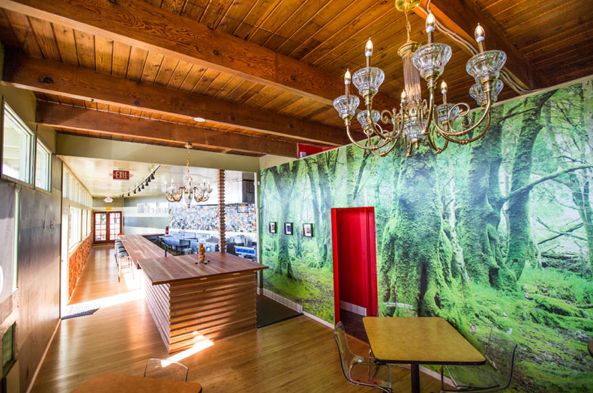
HELLO, THERE: Bull Taco Leucadia
PARTNER CONTENT
Sam Wells
A new Southeast Asian eatery mixes traditional recipes with Southern California flair, featuring pad thai, curries, and Thai beef noodle soup
There are a few areas in San Diego where people go to get good, really good Asian food in San Diego—Convoy District or Mira Mesa for a plethora of Pan-Asian delights, Little Saigon in City Heights for sensational Southeast Asian fare, and even Westfield UTC for world-class dumplings, fancy Japanese food, or an award-winning bowl of ramen.
But Leucadia? It hasn’t topped the list—yet. Stella Bayphouthongkham hopes to change that with a new Lao-Thai restaurant called Coast Thai-Way, slated to open late summer at 698 N. Coast Highway 101.
The space that formerly housed the short-lived second take of A Little Moore Cafe is Bayphouthongkham’s second restaurant, after she and her business partners took over Mekong Cuisine Lao & Thai on Convoy Street four years ago.
“Life was going too good,” she laughs. “So I was like, ‘Why don’t we throw it all in again and start another restaurant?’”

Coast Thai-Way’s menu centers around the idea of remixing Bayphouthongkham’s mother’s recipes from Laos and making them approachable for the coastal community by using Southern California ingredients, like non-GMO, organic, seasonal produce whenever possible, and meats like pasture-raised chicken and grass-fed or grass-finished beef. Everything at Mekong and Coast Thai-Way is cooked in non-GMO avocado oil as well, she explains, and with the new restaurant being so close to the ocean, she plans to focus on more seafood-centric dishes for a different spin.
Lao people first came to San Diego en masse 50 years ago in the aftermath of the Vietnam War, and Bayphouthongkham herself emigrated from Laos 36 years ago. “They call us ‘The 1.5 Generation,’ where we came when we’re really little, but this is all we know,” she says. Since then, she’s seen people outside the Lao community start to embrace the cuisine, but there is still plenty of opportunity to educate.
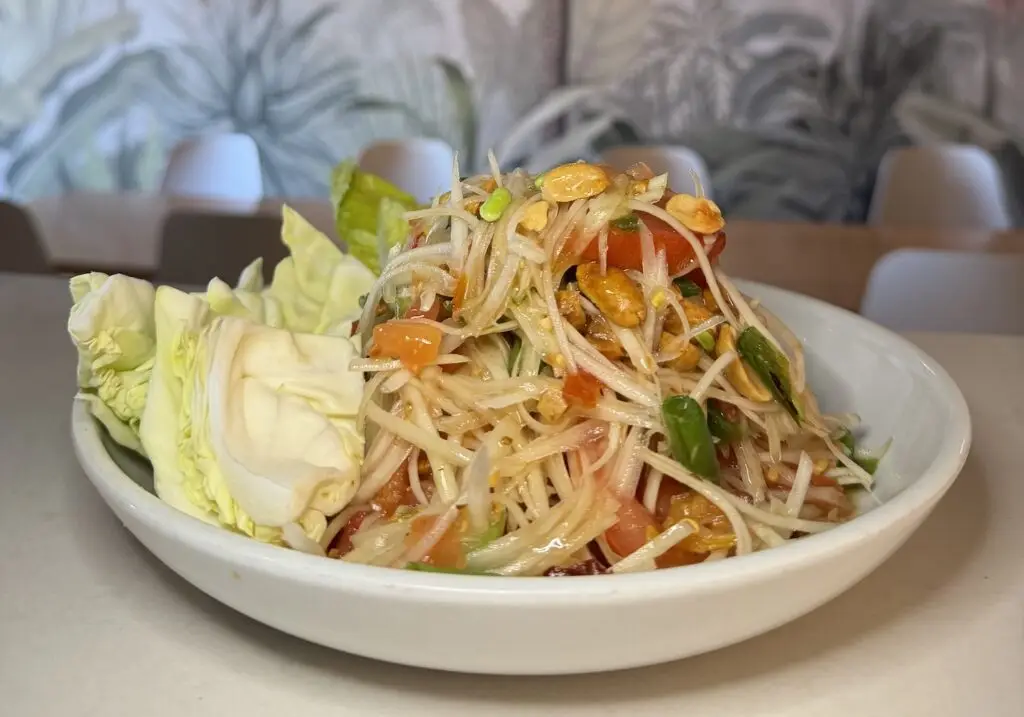
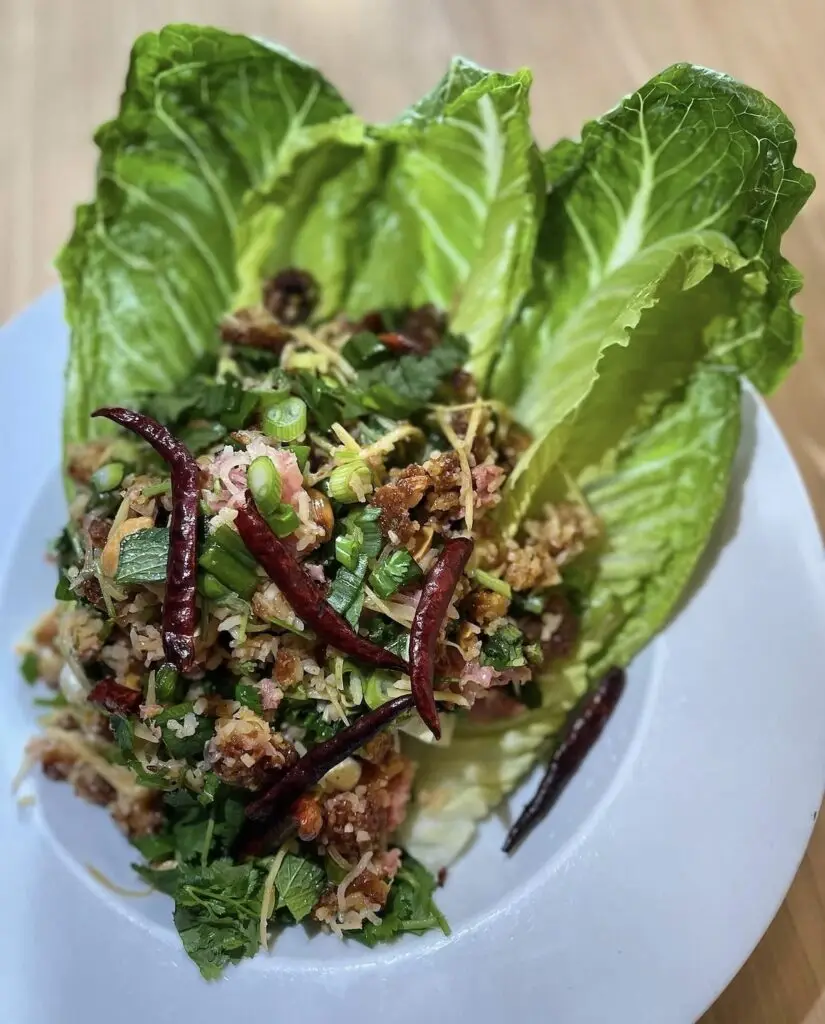
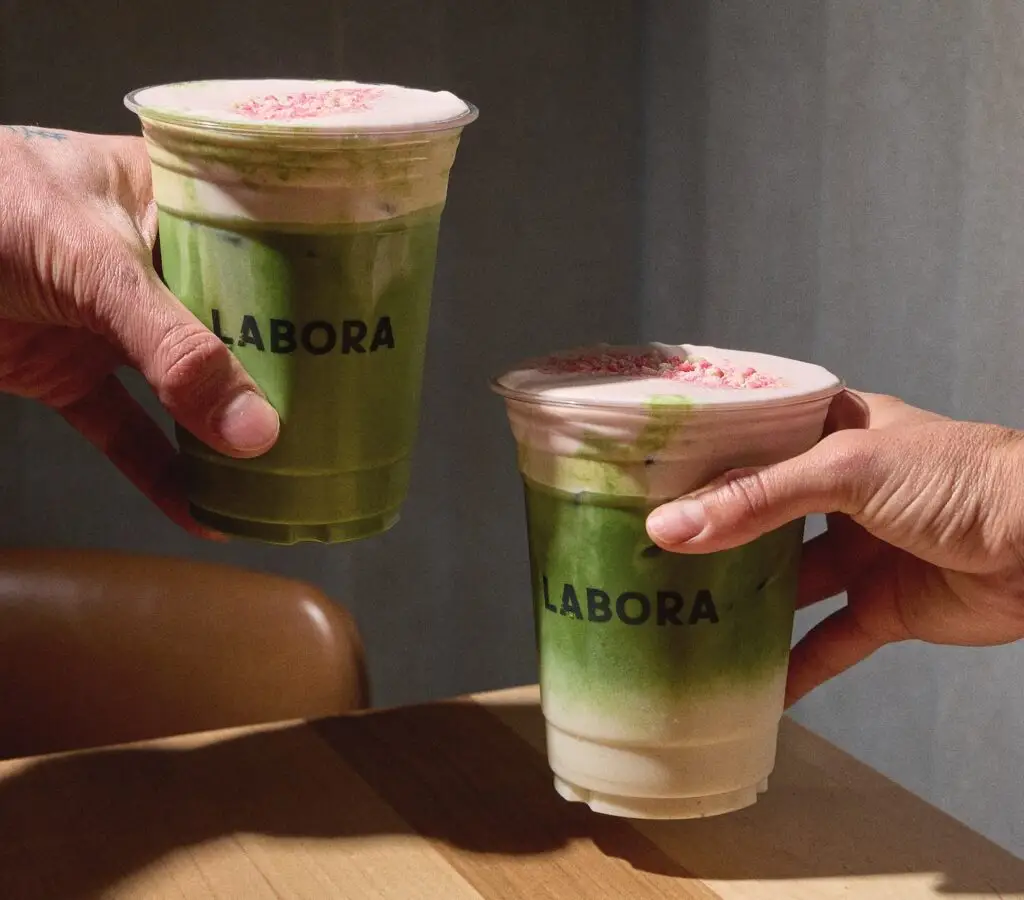
She’ll start off easy, by offering “familiar” dishes like pad thai and various curries. But Coast Thai-Way will also feature nam khao tod (crispy rice salad), khao soi (Northern Thai curry noodle soup), and a Thai beef noodle soup—probably without the traditional pork blood, she laughs. It’ll also offer matcha as a hat tip to the space’s former life as a cafe, plus local beer and natural wines to (hopefully) surprise some guests with how well the cuisine pairs with different beverages. And in low-key Leucadia, she thinks people will be pleasantly surprised.
“This food, it doesn’t have to be just quick takeout,” she promises. “People can come and enjoy it in a way that they never thought they could… I love the idea of people coming in and expecting one thing and getting another.”
Coast Thai-Way will open at 698 N. Coast Highway 101 in Leucadia by early summer 2026. Soft opening hours will be Wednesday through Monday, 11 a.m. to 3 p.m. for lunch and 5 p.m. to 9 p.m. for dinner (closed Tuesdays).

Listen Now: The Latest in San Diego’s Food and Drink Scene
Have breaking news, exciting scoops, or great stories about new San Diego restaurants or the city’s food scene? Send your pitches to [email protected].
Beth Demmon is an award-winning writer and podcaster whose work regularly appears in national outlets and San Diego Magazine. Her first book, The Beer Lover's Guide to Cider, is now available. Find out more on bethdemmon.com.
Gilbert Frank and Salvatore Ercolano of Iconic Eateries Group plan to preserve, but improve the iconic Del Mar delicatessen
Some people collect vintage cars. Others, Pokémon cards. For a while in the ’90s, I had a pretty enviable Lisa Frank sticker collection, and I’m sure there’s a stack of dusty POGs somewhere in my parents’ basement.
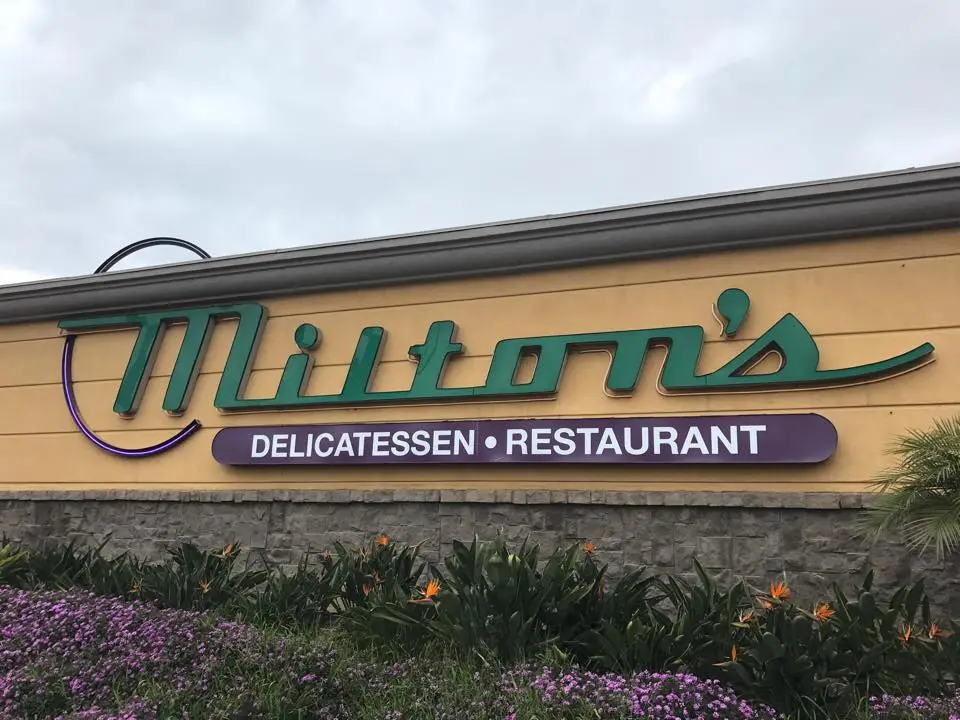
But Gilbert Frank and Salvatore Ercolano collect restaurants. Specifically, iconic restaurants across San Diego, like The Butcher Shop, West End Bar & Kitchen, The Godfather Restaurant, and Studio Diner. And come January 2, 2026, they’ll add another luminary to their Iconic Eateries Group portfolio as the new owners of Milton’s Delicatessen in Del Mar.
Anyone who’s either from San Diego, has ever been to the Del Mar Fairgrounds, or sat in traffic on I-5 near Via de la Valle has, at the very least, caught a glimpse of the cream-colored Milton’s restaurant just east of the freeway. And, if you’re like Frank, you very well may have been eating there since elementary school.

Barry Robbins and David Levy opened Milton’s as a traditional Jewish delicatessen and bakery in 1995, serving classics like matzo ball soup, piled-high pastrami sandwiches, hot corned beef, bagels with lox, and what Frank calls the best challah bread in town. (Fun fact: Milton’s is also behind the legendary Milton’s brand of bread, crackers, and chips—what food critic Troy Johnson credits as the snacks that got him through the pandemic.)
Levy retired a few years back, and Robbins, who’s 70, started thinking about what was next. Something must have been in the air, because he didn’t call Frank. Frank called him. “I just kind of had a hunch,” he says.
He and Ercolano’s business model centers around acquiring well-known and beloved restaurants whose owners are ready to retire, but perhaps don’t have a succession plan in place to keep it going—precisely the situation at Milton’s. Robbins is staying on as a silent minority owner, but for all intents and purposes, will be out of the day-to-day of the business once the handoff is complete. And after 30 years, handing off the keys to the kingdom he and Levy built is a bittersweet moment.

“When I hear someone else address, ‘Is the owner around?’ and then someone else comes out, that’s gonna sting a little bit,” he admits. “[But] the other side of me is excited, because of the two guys, Gil and Sal. I feel like they’re the right guys.”
Frank says he and Ercolano have no intention of doing anything but rejuvenating the menu. “Our goal for the menu to stay the same, only improve,” he promises. “We want to take something that’s already working, but you can always strive to do better.” Plus, he can’t let down the legends.
“I have the utmost amount of respect for Barry and David. I truly look up to them as an inspiration,” he says. “We have exciting things planned for the legacy that is Milton’s.”
Milton’s Delicatessen is located at 2660 Via De La Valle, Del Mar.
Beth Demmon is an award-winning writer and podcaster whose work regularly appears in national outlets and San Diego Magazine. Her first book, The Beer Lover's Guide to Cider, is now available. Find out more on bethdemmon.com.
The specialty sourdough bakery will expand to more pastries, sandwiches, and coffee in its first brick-and-mortar space, opening in 2026
Stop me if you’ve heard this one before: person gets laid off during the pandemic. Bored at home, they turn to baking. A passing interest turns into a passion, and before you know it, they’re launching a full-fledged bakery.
Yes, that’s the story of how Mi Pan Bakery started, and yes, 10,000 other aspirational bakeries began the exact same way. But the difference is that Mi Pan’s baker and owner Alejandro Gomez didn’t stop at making a few loaves of sourdough for his friends and family.
He’s spent the last five years building a beloved local business whose bread and pastries are now sought out at three different farmers markets, was nominated for both Best Bread and Best Farmers Market Food Vendor in San Diego Magazine’s Best of San Diego Reader’s Choice Awards for 2025, and only decided to finally move from baking in his garage to their first brick-and-mortar location in order to keep up with sheer demand.
“I talked to my wife, and I said ‘Listen, if we’re not going to move out of the garage, I don’t think I can keep doing this, because I’m baking pretty much 10 to 12 hours a day,’” Gomez laughs. “I think it’s time.”
After a year of looking for the right location—where Gomez and his wife and business partner Alejandra Ruelas could open Mi Pan with enough space for an expanded commercial kitchen, an area for hosting workshops, and an onsite retail store—they found it. Mi Pan Bakery’s first brick-and-mortar location will open in the first half of 2026 at 6435 Mission Gorge Road in Grantville.
Once open, Mi Pan will still remain at all of the farmers markets: Tuesdays in Pacific Beach, Saturdays in Little Italy, and Sundays in Chula Vista. They hope to add one more to their rotation once they have the ability to increase production. Gomez says he also plans to launch a wholesale side of the bakery, something he says multiple businesses have approached him about, but he hasn’t been able to take on with his small operation. And then, maybe one day, maybe even a second location in North County.
Gomez also didn’t work as a baker previously, unlike other pandemic-launched operations like Companion Bread Company and Relic Bakery. But in the past five years, he’s taught himself the craft and traveled across the world to places like France, Spain, and Mexico City to both take and teach various baking classes, something he also plans to offer at the new space.
Mi Pan’s menu will remain small, offering its signature sourdough and pastries—especially medialunas, an Argentinian pastry that’s a cross between a flaky croissant and soft brioche with a light glaze on top. “If you haven’t tried it, you should,” he promises. “They’re amazing.” They’ll also add sandwiches using its own bread, as well as coffee. (Most of this will be intended to-go, but it’ll have a few tables onsite if people wish to enjoy their goodies right away.) But above all, Gomez says what they’re building is meant to last, modeled after the family-owned neighborhood cafes of his native Mexico and across Europe.
“It’s not about being the kind of trendy bakery that’s hyped for six, seven months, or a year, and then after that, they disappear,” he says. “We want an atmosphere that feels like home, and then when you come back… you’re greeted by name. I think that’s what we want—a warm, reliable, everyday bakery where the community feels welcome and you always find exceptional bread and pastries.”
Mi Pan Bakery will open at 6435 Mission Gorge Road in Grantville in mid-2026.
Beth Demmon is an award-winning writer and podcaster whose work regularly appears in national outlets and San Diego Magazine. Her first book, The Beer Lover's Guide to Cider, is now available. Find out more on bethdemmon.com.
Yes, Chef! winner Emily Brubaker leads the robust culinary program at Omni La Costa Resort & Spa
For Executive Chef Emily Brubaker, Omni La Costa Resort & Spa feels like home. She grew up just a mile-and-a-half away from the 400-acre property and fondly recalls walking the golf course perimeter as a kid. Though her ambitions led her away from San Diego for nearly two decades in which she honed her craft in some of the highest of high-profile Las Vegas restaurants—including triple Michelin-starred Joël Robuchon at MGM Grand—they ultimately brought her back to North County.

Today, the classically French-trained chef, who’s fresh off a victory on NBC’s Yes, Chef!, judged by Martha Stewart and José Andrés, oversees Omni La Costa Resort & Spa’s seven distinct dining concepts. Her goal is to elevate the resort’s culinary program with her creative, hyperlocal ingredient-driven approach while maintaining the Spanish- inspired flavors and fresh California coastal cuisine that are the bedrock of its culinary identity.
“The San Diego food scene is really growing, and in North County alone, it’s really exploded in the last five years,” Brubaker says. “There are Michelin stars, beautiful tasting menus, craft bakers, and all this food—when I was growing up in La Costa, it was fish tacos. Now there are really cool things popping up, and I’m so happy to be here to see where it’s going to go.”
Brubaker gives chefs de cuisine at each individual restaurant autonomy, however, her influence is evident across the resort.
For example, lobby restaurant Bar Traza serves as Omni La Costa’s culinary centerpiece and features bold Spanish flavors in a lively, social atmosphere. Brubaker overhauled the menu to be more consistent and centered on casual bites with that signature vibe. Think smoky paprika, vibrant citrus, and Spanish meats and cheeses.
At VUE, the focus is on seasonal offerings, California coastal cuisine, and Baja-inspired dishes. She and Chef de Cuisine Cameron Dixon change the menu biannually, which heading into summer, will highlight farm-fresh produce and hyperlocal ingredients—the resort even has its own herb garden and honeybee hives.

Poolside dining options are leaning into the country’s 250th this summer with a selection of classic American dishes with an Omni La Costa twist. And Bob’s Steak & Chop House (Brubaker is a trained butcher) offers a classic steakhouse experience with elevated service.
The chef and company also plan menus for special events at the resort where her creativity can really shine. For an upcoming National Ski Association dinner, the banquet hall will be transformed into an Alpine-themed winter wonderland complete with a snow machine, savory sausages, and melty, decadent raclette. A recent dinner was built around the Carlsbad Flower Fields and each course was matched to a color of ranunculus (Did you know pink dragonfruit are grown in North County? You do now.).
“It’s my zen to be in the kitchen playing with food,” Brubaker says.
Omni La Costa’s culinary program is a key part of the resort experience. And with Brubaker’s leadership, it’s becoming a draw for visitors and locals alike.
“These aren’t just hotel restaurants, these are restaurants that you should go to. They’re destinations, and I’m really hoping for the future that’s where we’re going,” Brubaker says.

Brubaker is also channeling her experience on Yes, Chef! into the culture at Omni La Costa—more emphasis on teamwork and collaboration, empowering her staff to share constructive critiques, and embracing different perspectives. Alongside her leadership role, Brubaker has become an advocate for mental health in the hospitality industry, serving as chief ambassador for the Burnt Chef Project and serves on the Board of Advisors for the Apex Culinary Program, where she mentors and develops future talent.
For more on Omni La Costa Resort & Spa and its dining program, please visit omnihotels.com/hotels/san-diego-la-costa.
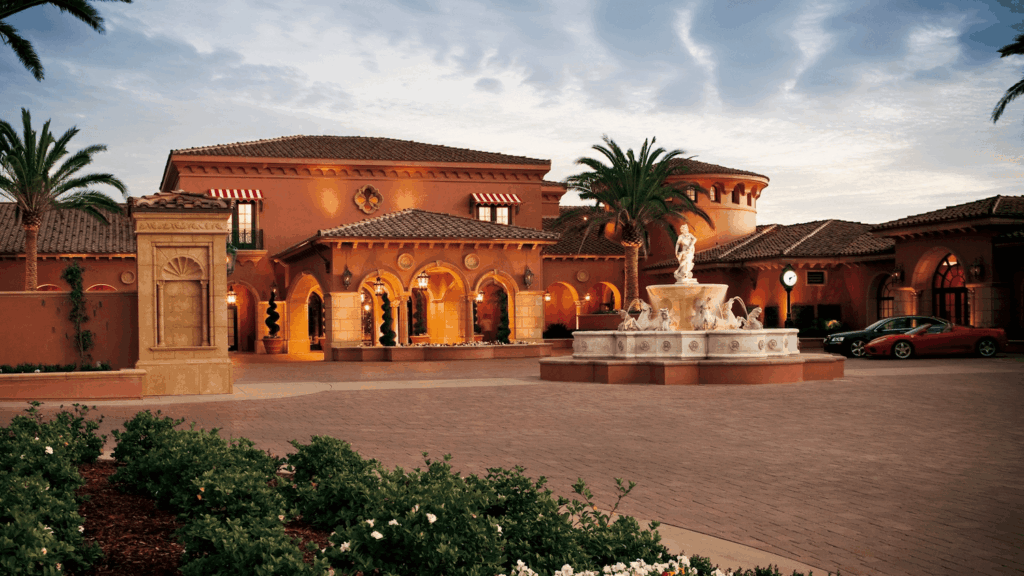
The resort's magic trick is the way it gives guests a taste of true luxury—while still feeling like home
I moved to San Diego in 2009, about two years after the Grand Del Mar opened its doors. Back then, I was just starting my writing career while learning about this new city, exploring its beaches, discovering that tacos are a lifestyle more than just a meal, and finding that casual was the name of the game when it came to fashion.
Even back then, though, the Grand was on everyone’s lips. Tucked away in the Los Peñasquitos Canyon Preserve, it showed up during a time when modern-minimalism was taking center stage in hotel design. Instead of leaning into ever-shifting trends, though, the property’s aesthetic leaned more “old money”—quiet, classy, understated. It was warm when the industry was going cool.

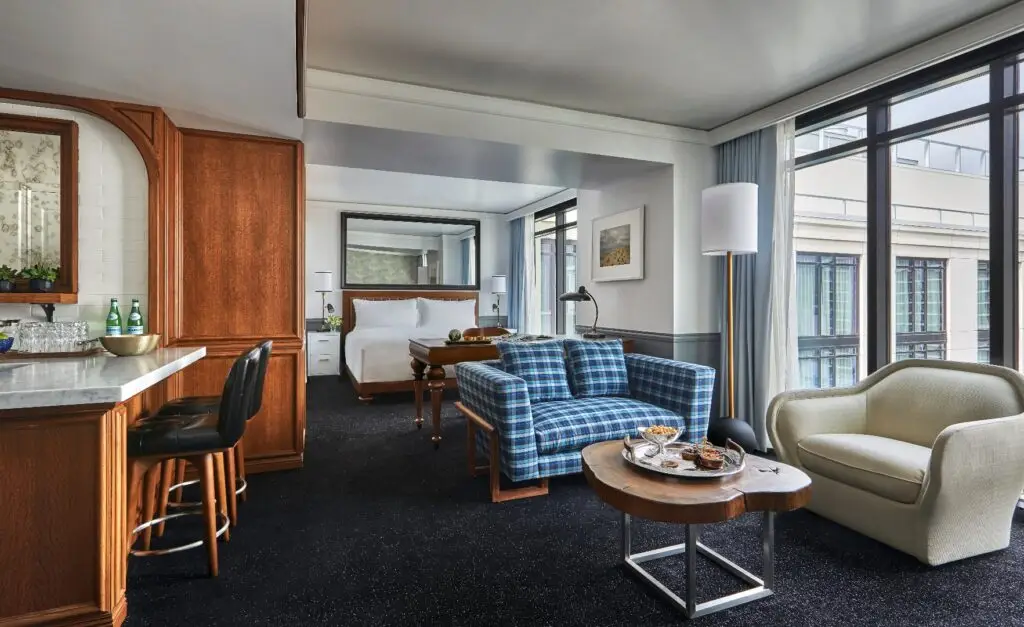
The first time I stayed at the property, I remember feeling like an imposter of the best kind. The bathroom featured a soaking tub with a voyeuristic window above it opening up into the bedroom—I’d never seen anything like it. My patio overlooked lush green gardens and foliage (a rarity in many parts of San Diego). I spent the mornings wrapped in the room’s plush robe, drinking coffee in the sun and wondering if the other guests also felt lucky to be there.

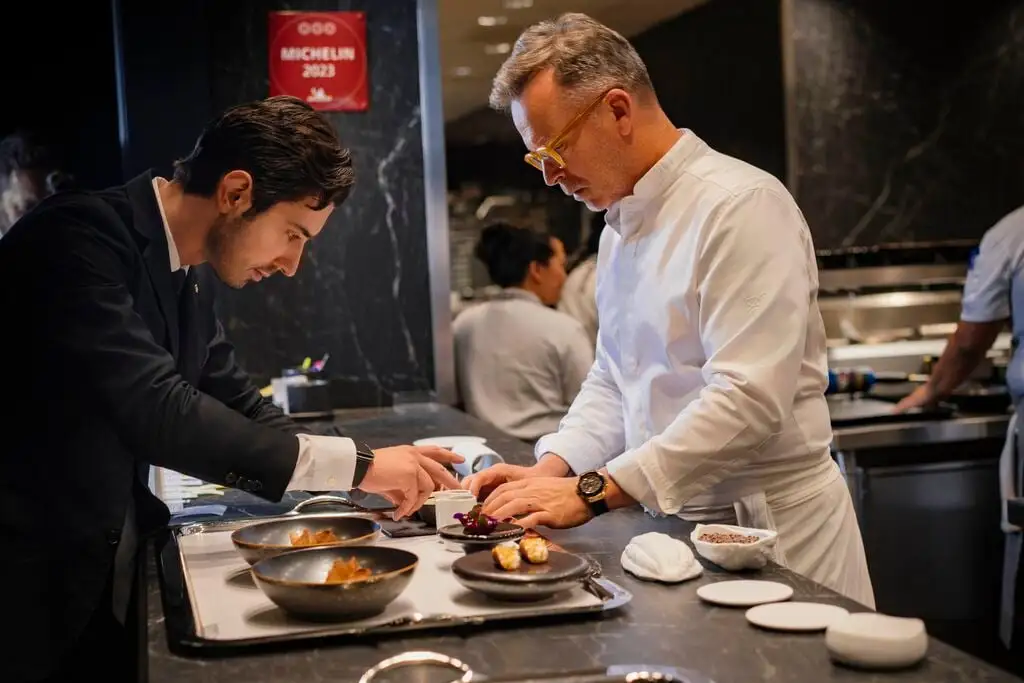
When I eventually landed a full-time writing gig, travel became my beat. One year, I was invited to Addison, the resort’s now three-Michelin-starred restaurant, during the holiday season to enjoy a meal by chef William Bradley. At the time, it was already considered one of the best restaurants in the county, though its stars were a few years away. Through 10 courses, I savored every bite and spoke with the chef about his process, feeling more at home than I did just a couple of years earlier.
It’s been 16 years since moving to San Diego, and writing about four- and five-star hotels has become as natural to me as telling visitors where to go for the most flavorful birria (Ed Fernandez Restaurant Birrieria, Tuétano Taqueria). One thing has remained the same, though: The Fairmont Grand Del Mar (rebranded in 2015) is still the “it” hotel.

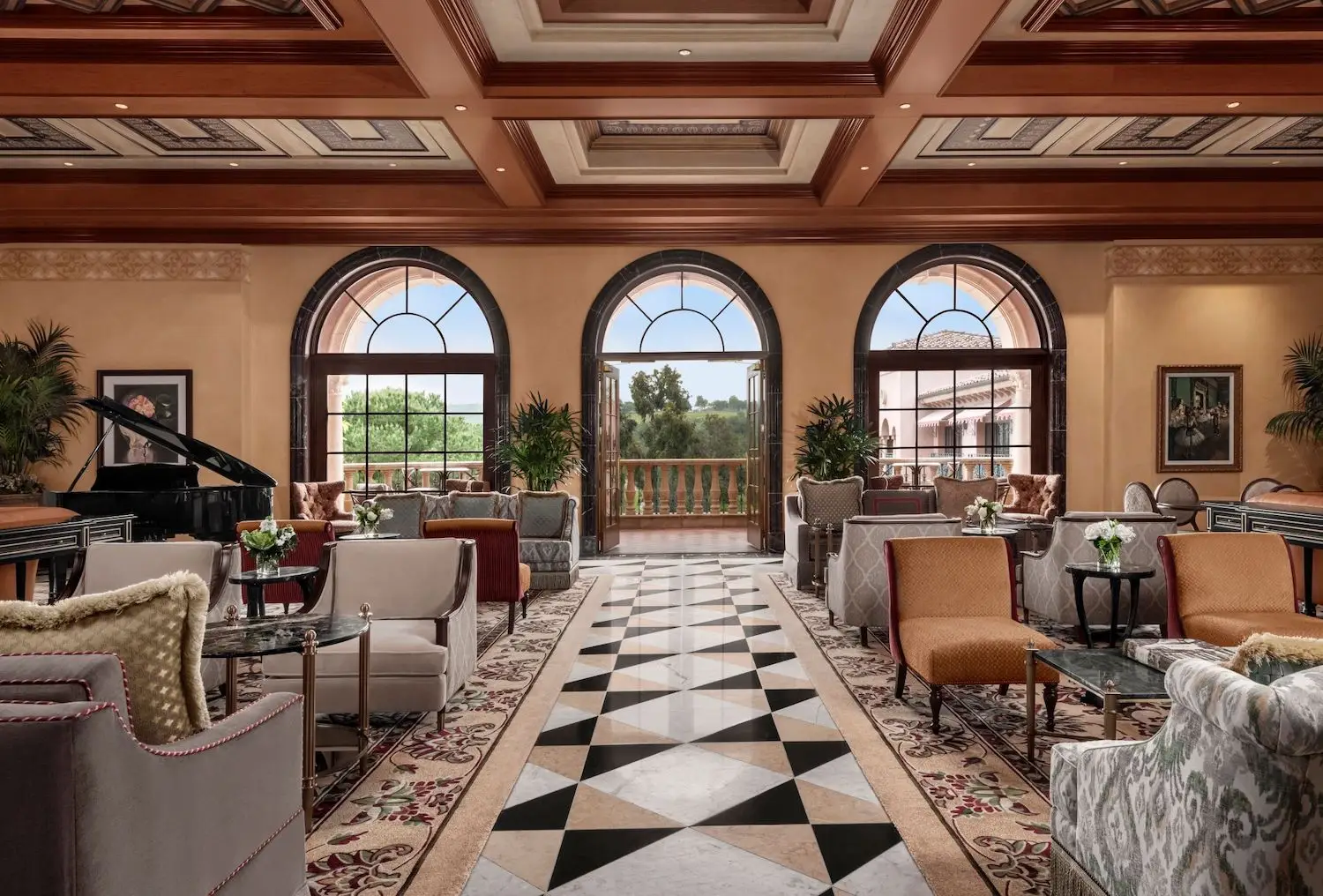
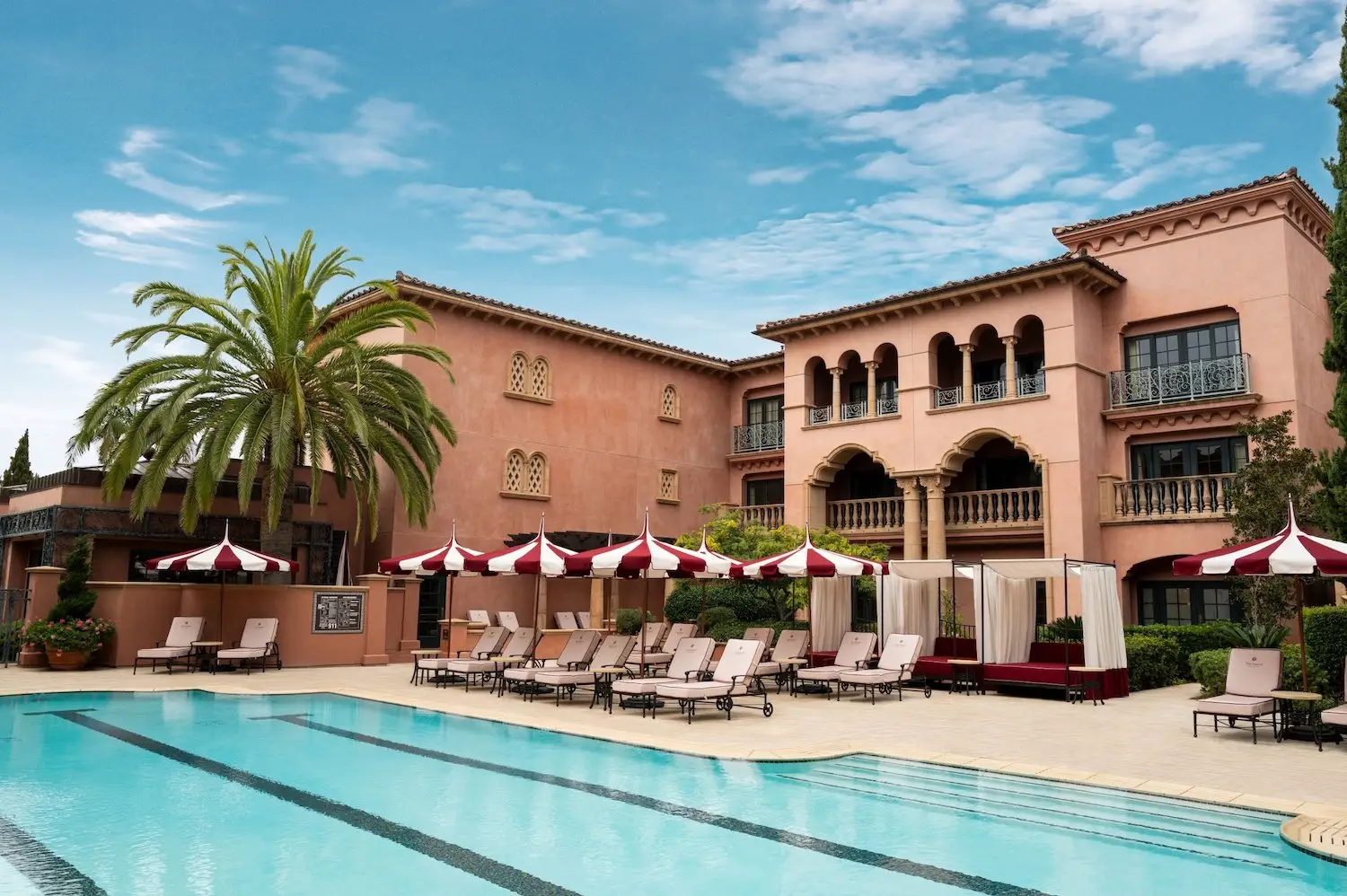
Under its new brand, the property leans in even more to its Mediterranean aesthetics which previously featured Addison Mizner–inspired takes on Spanish and Italian palazzos. Its updated look boasts pops of deep burgundy and gold accents paired with detailed rococo and neo-baroque furnishings. You could almost imagine you’re somewhere along the French Riviera.
Recently, I needed a quick weekend staycation, so I returned to the Grand, but this time, I brought over a decade of real-life experience in the luxury travel world and a masthead title showcasing a new milestone in my career.

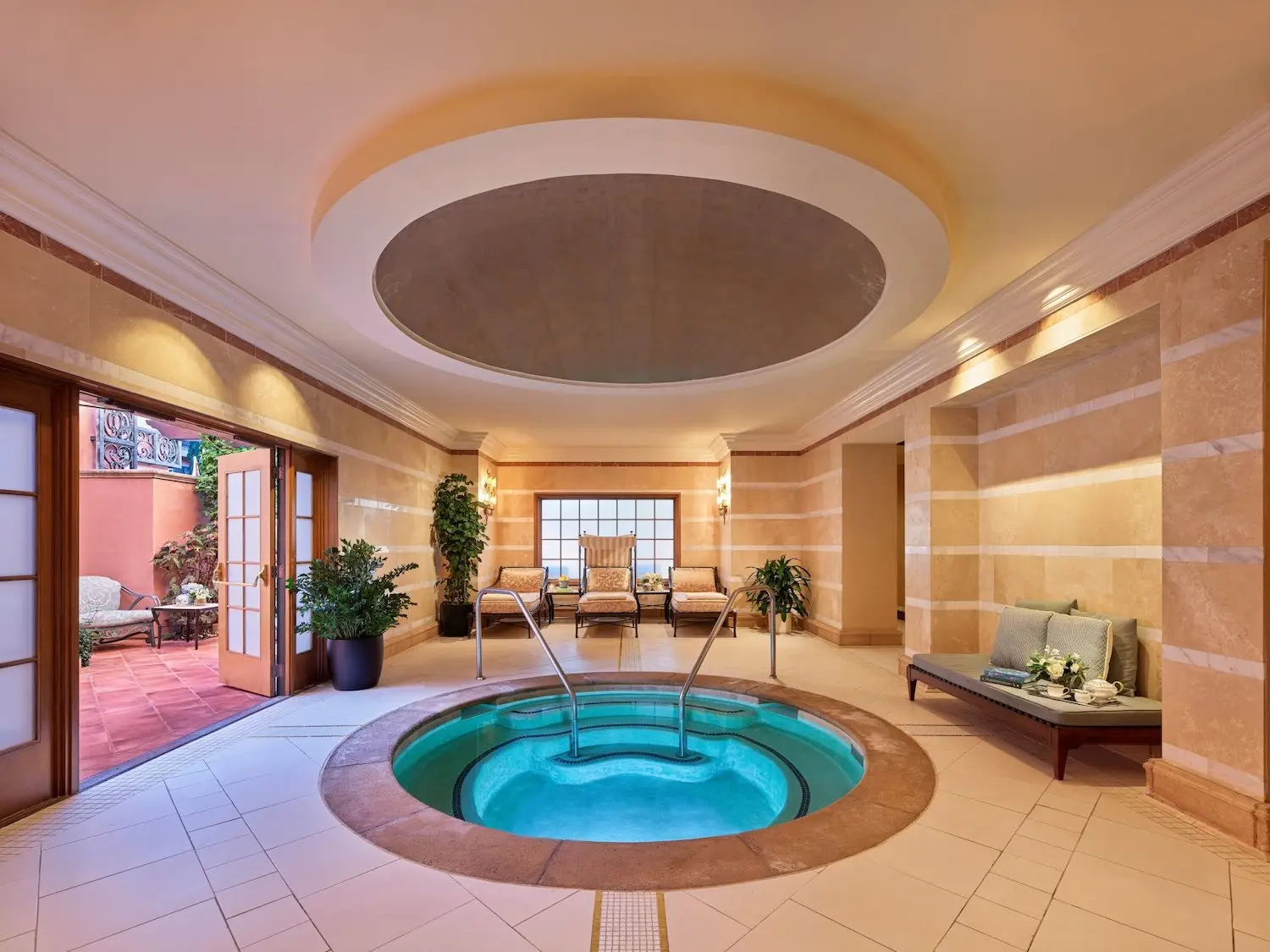
Last May, the hotel also underwent its own turning point: A multimillion revamp which included renovations to its pool areas and clubhouse. The spa got a redesign with improvements to its treatment rooms and relaxation areas.
The latter was the main reason for my stay—a wellness escape to unwind and reset before a few big events hit my calendar.

The 60-minute Contrast Therapy treatment utilizes alternating hot and cold water applications after a deep-tissue massage to help improve circulation and reduce inflammation. Wanting to try something new, I booked the experience. Inside the room, a massage table sat in a large, bathroom-like space with drains on the flooring and a vichy shower hanging above the table.
Instead of reclining on a heated massage table under blankets, guests lie flat on a plastic surface dressed with towels. Once the full-body massage is complete, your therapist places a single towel around your glutes before spraying warm water down across the length of your body. Quick bursts of cold water follow, and the therapist interchanges between heat and cool until the treatment is complete.
I left the treatment room wet and a little chilly, a reminder that I am very temperature-averse—for that reason, I’m not sure I’d try it again. But if your weekly workout routine includes a few cold plunges along the way, you should check it out, especially if you’re looking to reduce any muscle soreness.

Of course, spa treatments are just part of the wellness experience at the resort. Across its 400 acres, the Fairmont Grand Del Mar also features a Tom Fazio–designed championship golf course; four pools, including an adults-only area; an equestrian center; and five dining concepts, Addison among them. Whether playing 18 holes or enjoying farm-to-table dishes is your type of mind-body reset, there are plenty of ways to let yourself relax here.
As dinner time neared, I headed to Amaya. Executive chef Bryn McArthur arrived at the restaurant with 23 years of experience in 2017. He worked his way up the ranks to nab his current position in 2021. His menu features California cuisine highlighting local produce from the region’s farms, including J.R. Organics, Sage Hill Ranch Gardens, and Weiser Family Farms.

The must-get dish? The steak tartare starter—it’s served with creamy avocado, beef tallow dressing, and salsa macha; garnished with chive blossom and fresh chives; and dished up alongside country bread.
“Our inspiration for this dish was our sous chef, Rudy Diaz, and his salsa macha. The salsa macha is a kitchen favorite during family meals,” McArthur says. “When developing a classic French dish like steak tartare, we began experimenting with salsa macha as both a texture and flavor pop. The avocado balanced the dish and created a color contrast that we loved.”

The team masters this dish, possibly taking the top spot for the best I’ve had during my travels. Over a decade of checking out hotel restaurants, one thing you learn is that not all properties will put as much care into their dining concepts as they do their rooms and amenities. But here, the food is just as much of a consideration as any other part of the resort.
As the trip ended that weekend, I reflected on my time at the hotel and found that being at the Fairmont Grand Del Mar felt like home, a reminder of how far I’ve come since those early days as a fledgling journalist. We’ve evolved together—both new to the area back then and hoping that the city would embrace us as we found our path.
Nicolle Monico is an award-winning writer and the director of creative projects, digital editor for San Diego Magazine with more than 16 years of experience in media including Outside Run, JustLuxe and The San Francisco Chronicle.
The three-time Beard nominee for “Best Chef” steps away from the famed restaurant he opened in 2006
He started it, now they’ll carry it.
One of San Diego’s top chefs for the last 20-plus years is stepping out of the kitchen he made famous. Three-time James Beard semifinalist Carl Schroeder is selling his Michelin-recognized restaurant, Market Restaurant + Bar.
Schroeder is clear that the restaurant will not only carry on under new owners—longtime Market regulars and fans, Monica and Bernd Brust—but grow in ways he’d always wanted it to. And his tight-knit team—led by chef de cuisine John Thompson, who’s been with Schroeder from day one—will stay on to helm the next evolution.
“These guys deserve their own shot,” he says.

Schroeder chokes up a bit talking about the decision. Market has been the centerpiece of his life for nearly two decades. He and his team made it through the pandemic together. His wife Brandi ran the business; Thompson has been his rock for over 20 years, first at Arterra and then opening Market together in 2006.
“[People] say people you work with or that work for you shouldn’t be family,” he says. “I look at them as family.”
He also admits his family at home—Brandi and his kids Jake, Eric, and Ava—has borne the brunt of what it took to make Market a constant, never-flagging hit: “They’re probably the ones that paid the biggest price for my obsession.”
Today, the term “farm-to-table” is overused to the point of being meaningless. It’s a shame, because it used to truly describe the rare thing Schroeder and a handful of San Diego chefs were doing in the early 2000s—knowing farmers by name, cooking in season based on what came out of their dirt. It’s why they named it Market, a philosophy that won’t change as he moves on.

Schroeder completely connected to the farm-to-table ethos about 25 years ago, sitting at the bar at the (now closed) Lark Creek Inn in Larkspur, California. He’d been working in Bay Area restaurants like two Michelin-starred Aqua by Michael Mina and Domaine Chandon in Yountville. When chef Bradley Ogden came out to the bar and offered him a job, Schroeder said yes. (Maybe it was the drinks, or maybe it was because he was sitting between Academy Award–winner Robert Redford and rockstar Huey Lewis. Either way, he stayed for five years.)
At Lark Creek, Ogden and his team worked closely with local farms to create a menu that changed every night. That made sense to Schroeder right away. “I just couldn’t imagine doing a menu that was always the same and being excited about it,” he says.
And in the 19 years since he opened Market, he and his team have remained committed to that ethos (and the real meaning behind its name). Even in a new-new-new cult of restaurant media, the accolades never really waned—from the Beard nominations to the Michelin nod to this year’s pick for “Best Restaurant in Del Mar” from SDM food critic Troy Johnson. It’s no stretch to say Schroeder helped build San Diego’s now-acclaimed restaurant culture.

Market was his first restaurant as chef and owner, and he says it never crossed his mind that he might one day walk away. It’s been his first thought every morning and last thought every night for years upon years. Trusting its legacy to someone else, rather than simply closing the doors, was an option he hadn’t really considered. It had to be right.
For him, the Brusts are right. They promised Schroeder to keep it a family business focused on sourcing from local farms, and keep the core kitchen team not just intact, but invested in. On September 1, he handed the keys over.
“What Carl built with Market is extraordinary,” says Monica. “Bernd and I are so proud to carry on that legacy as a family-owned restaurant, and work with the same talented culinary team that helped him build it over all these years.”
For his part, Schroeder doesn’t have anything professional lined up (yet). He’ll take his sweet, slow time. “My parents are getting older, so I’d like to take a while to take care of them,” he says. “[I’ll] make it to my daughter’s track meet. I’ve never been to one. I feel good about where I’m at. I feel like anything I do from here, foodwise, is just a cherry on top.”
But that won’t be anytime soon. “For now I’m gonna float around the pool.”
Market Restaurant + Bar is open for dinner Tuesdays through Saturdays at 3702 Via De La Valle, Del Mar

Fonda del Barrio isn’t your typical Mexican restaurant offering tortas, tacos, and the other (beloved) basics. Created by Gerry Torres of City Tacos and Tour de Tapas, the brand-new Barrio Logan eatery is melding pre-Hispanic techniques and ingredients with European influences to create dishes like Cholula-style pollo en mole de ugayaba (a 27-ingredient guava mole), Sayulita-style octopus, Mexico City–style flan de elote, and much more. The menu spans across Mexican regions and cuisines—basically, it’s a map of Mexico in every bite. Fonda del Barrio is now open at 2234 Logan Avenue (the former Barrio Dogg space) for dinner every Tuesday through Sunday.

Listen Now: The Latest in San Diego’s Food and Drink Scene
Have breaking news, exciting scoops, or great stories about new San Diego restaurants or the city’s food scene? Send your pitches to [email protected].
Beth Demmon is an award-winning writer and podcaster whose work regularly appears in national outlets and San Diego Magazine. Her first book, The Beer Lover's Guide to Cider, is now available. Find out more on bethdemmon.com.
San Diego Magazine's 2026 Guide to Balboa Park.
Balboa Park is San Diego’s cultural heart.
The iconic 1,200-acre preserve’s history dates back more than 150 years, evolving from a scrub-filled plot atop a mesa overlooking what’s now Downtown to an urban oasis—the largest of its kind in the country—filled with an array of museums, attractions, gardens, trails, restaurants, and more. Balboa Park is an epic playground where San Diegans and visitors alike can experience the great outdoors just as easily as they can enjoy a world-class performance or explore groundbreaking discoveries.
Tucked away in the Spanish Colonial Revival-style architecture are 18 diverse museums that allow visitors to spend the day learning about, well, anything. A great place to start is the San Diego History Center. Located in the Casa del Balboa building, the museum tells the story of the city’s past, present, and future through photographs and art, clothing and textiles, and interviews with people who witnessed history-making events firsthand. The San Diego Natural History Museum takes visitors even farther back with interactive exhibitions that show what the region was like up to 75 million years ago.

Blast off on a simulated trip to space at the San Diego Air & Space Museum, then check out artifacts from aviation legends, including the Wright brothers, Amelia Earhart, and Buzz Aldrin. Discover new perspectives revolutionizing the science world, learn about an often overlooked but overutilized utility, and exercise your creativity at the Fleet Science Center.
Calling all theater-lovers, Balboa Park has something for you, too. The San Diego Junior Theatre will present their musical take on beloved children’s book A Bad Case of the Stripes from June 26 through July 12. And laugh, cry, and marvel in awe as the pros of The Old Globe perform Kim’s Convenience, the award-winning comedy that inspired the popular series, from May 15 to June 14.
There’s nowhere else in Balboa Park quite like WorldBeat Cultural Center. The institution celebrates African diaspora and indigenous cultures around the world using art, music, dance, and education. The building, a renovated water tower covered in colorful murals, houses a performing arts center, museum, gift shop, cafe, and outdoor classroom.
If you’d like a side of nature with your culture, Balboa Park has you covered there, too. Stroll through the gardens of the Japanese Friendship Garden & Museum, a monument to the relationship between San Diego and its sister city, Yokohama, Japan. Inspired by traditional Japanese design dating back centuries, the 10-acre respite features a living exhibition that showcases plants native to both cities.
If there seems like a lot going on in Balboa Park, it’s because there is. Let the Balboa Park Cultural Partnership be your guide. The organization is the umbrella for 24 of the park’s institutions and offers an Explorer Pass that allows visitors to access multiple museums for one affordable price. The hardest part is picking where to start.

Save on admission to San Diego’s top museums with the Balboa Park Explorer Pass. Explore 16 museums of art, science, history and culture across Balboa Park — all with one affordable pass. Choose the option that fits your pace: the Limited Pass (one day for up to four museums), the Parkwide Pass (seven consecutive days of access to all 16 museums) or the Annual Pass (365 days of unlimited exploring).
Looking for an experience-driven gift? Let the museum lover in your life enjoy their favorite museums all year with a Balboa Park Explorer Annual Pass gift voucher.
BuyMyExplorer.com | Phone: 619-232-7502, Press 2 for Explorer

Bigger experiments, brighter ideas, and boundless curiosity await at the newly reimagined Fleet Science Center. This summer, the Fleet debuts Element 8 Cafe, an expanded theater queuing and concessions space, two new gallery spaces, and, for the first time, a free entrance gallery exploring science in and around San Diego. The transformation marks a new chapter for the Fleet, keeping it a vital, innovative, and accessible science hub for the region. Visitors are invited to explore the experience this summer and connect with the power of science like never before.
Address: 1875 El Prado, San Diego, CA 92101
Website: FleetScience.org
Hours: 10 a.m. to 5 p.m. daily
Phone: 619-238-1233

An accredited cultural gem, the Japanese Friendship Garden & Museum brings traditional Japanese garden design to life with koi ponds, curving walkways and layers of greenery. Guests explore bonsai trees, streams and peaceful nooks while taking part in exhibits, educational programs and festivals that illuminate Japanese culture. Situated in the heart of Balboa Park, the garden doubles as a meditative retreat and a dynamic gathering place, welcoming visitors to slow their pace and connect more deeply.
Address: 2215 Pan American Road E, San Diego, CA 92101
Website: Niwa.org
Hours: 10 a.m. to 7 p.m. daily; last admission at 6 p.m.
Phone: 619-232-2721

A San Diego summer favorite, The Old Globe invites audiences to experience a beloved local tradition in its outdoor Lowell Davies Festival Theatre.
This summer, the 2026 Shakespeare Festival presents two thrilling tales of power, passion and romance. Measure for Measure, running June 14 through July 12, 2026, is a riveting story of justice and hypocrisy that asks who holds power, who is punished and what it truly means to be virtuous. Much Ado About Nothing, playing Aug. 2–30, 2026, is a classic rom-com packed with schemes, sparks and laughter as opposites attract. Audiences can enjoy both shows for $44.
Address: 1363 Old Globe Way, San Diego, CA 92101
Website: TheOldGlobe.org
Hours: Box office open Tuesday–Sunday, 1 p.m. to final curtain
Phone: Box office, 619-234-5623

Aviation and space exploration come to life at the San Diego Air & Space Museum. See an airworthy replica of the Spirit of St. Louis, a Gee Bee racer and historic aircraft from World War I, World War II and the Korean and Vietnam eras. Get up close to the Apollo 9 command module — one of only 11 of its kind in the world — along with Mercury and Gemini capsules, Mission Control and space shuttle simulators, and a selfie spot beside a lunar lander on the moon. Running through 2026, Ripley’s Believe It or Not! brings oddities from around the world to Balboa Park.
Address: 2001 Pan American Plaza, San Diego, CA 92101
Website: SanDiegoAirAndSpace.org
Hours: 10 a.m. to 5 p.m.
Phone: 619-234-8291

History belongs to everyone. At the San Diego History Center, two experiences bring that history to life this summer: America at 250 and the Center for Women’s History. America at 250 traces San Diego’s place in 250 years of U.S. history, while summer programs invite children to learn and explore. The Center for Women’s History amplifies the voices of women whose leadership and creativity have shaped our region.
By understanding our past, we build a more vibrant and inclusive community together. These vital educational experiences are only possible through generous community support. Discover your roots, spark meaningful dialogue, and help keep San Diego’s stories alive for future generations.
Address: 1649 El Prado, Suite 3, San Diego, CA 92101
Website: SanDiegoHistory.org
Hours: 10 a.m. to 5 p.m. Wednesday–Sunday
Phone: 619-232-6203

Junior Theatre is San Diego’s longest-running youth theatre program, empowering students ages 4 to 18 to explore storytelling, performance, and collaboration in a supportive environment. Through classes, camps, and productions, young artists build confidence, creativity, and lifelong skills onstage and off. Each season features a wide range of opportunities, from introductory experiences to advanced training in acting and musical theatre.
Looking for a summer adventure? Junior Theatre’s Summer Camps deliver dynamic programs for grades K–12, including musical theater intensives, acting academies and immersive JT Studio experiences. It’s a place where imagination truly takes center stage.
Address: 1650 El Prado, Suite 208, San Diego, CA 92101
Website: JuniorTheatre.com
Hours: 10 a.m. to 5 p.m.
Phone: 619-239-1311

This summer, The Nat is talking trash—literally. Their newest exhibition, Washed Ashore: Art to Save the Sea, features larger‑than‑life marine sculptures made of ocean debris collected from beaches. It invites visitors to explore the impact of plastic pollution and discover ways to take action.
But the experience doesn’t stop at the gallery doors. Friday nights, the exhibition transforms into an ocean-themed “dive bar” during Nat at Night. Select Sundays bring something brand new: a rooftop brunch with sweeping Balboa Park views. Add two new giant-screen films and five floors of nature to explore, and The Nat is shaping up to be one of the season’s must-visit destinations.
Address: 1788 El Prado, San Diego, CA 92101
Website: SDNat.org
Hours: 10 a.m. to 5 p.m. daily; 10 a.m. to 11 p.m. Fridays in summer
Phone: 619-232-3821

The WorldBeat Cultural Center is a nonprofit multidisciplinary cultural organization dedicated to promoting, presenting and preserving Indigenous cultures worldwide through music, art, dance, education, sustainability and community programs. WorldBeat elevates multicultural artists, expands opportunities for cultural enrichment and fosters deeper understanding across traditions. WorldBeat offers a holistic cultural experience that inspires pride, unity, connection and belonging for all ages.
Address: 2100 Park Blvd., San Diego, CA 92101
Website: WorldBeatCenter.org
Hours: Classes: Monday, Wednesday, Thursday, 6–9 p.m. Exhibits and café: Friday–Sunday, 11 a.m.–6 p.m.
Phone: 619-230-1190

Step into a world of the weird and wonderful at Ripley’s Believe It or Not! at the San Diego Air & Space Museum in Balboa Park. Explore hundreds of bizarre artifacts, interactive displays and unbelievable stories that celebrate the curious and the extraordinary.
San Diego Air & Space Museum | 2001 Pan American Plaza, San Diego, CA 92101

Presented in partnership with the San Diego Museum of African American Fine Arts, San Diego’s Lost Neighborhoods uses augmented reality, oral histories, and archival materials to explore communities and residents displaced by redlining, freeway construction, and other discriminatory policies.
San Diego History Center | 1649 El Prado, Suite 3, San Diego, CA 92101

Spend a summer night at The Old Globe. The Lowell Davies Festival Theatre stages Measure for Measure (June 14–July 12) and Much Ado About Nothing (Aug. 2–30), offering two unforgettable Shakespeare productions for just $44.
The Old Globe | 1363 Old Globe Way,
San Diego, CA 92101

Summer camps at Junior Theatre spark creativity for grades K–12 with hands-on training, musical theatre intensives, acting academies, and JT Studio experiences.
San Diego Junior Theatre | 1650 El Prado, Suite 208, San Diego, CA 92101

A museum visit turns into a Sunday Funday with the addition of rooftop brunch, featuring mimosas, bloody Marys, and brunch bites from Wolfish by Wolf in the Woods (June 14, August 9) and Hash House a Go Go (July 12).
San Diego Natural History Museum (The Nat)
1788 El Prado, San Diego, CA 92101

Celebrate Juneteenth weekend with guided birding, storytelling, soul food, native planting and an African peace drum circle.
WorldBeat Cultural Center | 2100 Park Blvd., San Diego, CA 92101

Nagashi at the Japanese Friendship Garden & Museum by floating a lantern to honor loved ones who have passed. Stroll merchant booths, enjoy cultural performances in the Inamori Pavilion, and sample food vendors plus a beer and sake garden in the lower garden.
Japanese Friendship Garden & Museum | 1649 El Prado, Suite 3, San Diego, CA 92101

Explore arts, science, history, and culture in the Balboa Park Cultural District with one convenient, affordable Pass. The Balboa Park Explorer Pass is your ticket to up to 16 museums and endless fun! Purchase your pass at BuyMyExplorer.com.