Featured articles
Food & Drink
Food & Drink
Food & Drink
Featured articles

Everything SD
Everything SD

Features
Featured articles

Things to Do

Things to Do
Everything SD
Featured articles
podcast-ep
podcast-ep
podcast-ep
Featured articles
Features

Features

Features
Featured articles
Things to Do
Things to Do
Charitable SD
Ready to know more about San Diego?
SubscribeReady to know more about San Diego?
Submit Your Nomination Today for the 2022 Celebrating Women Awards

Celebrating Women 2022, header
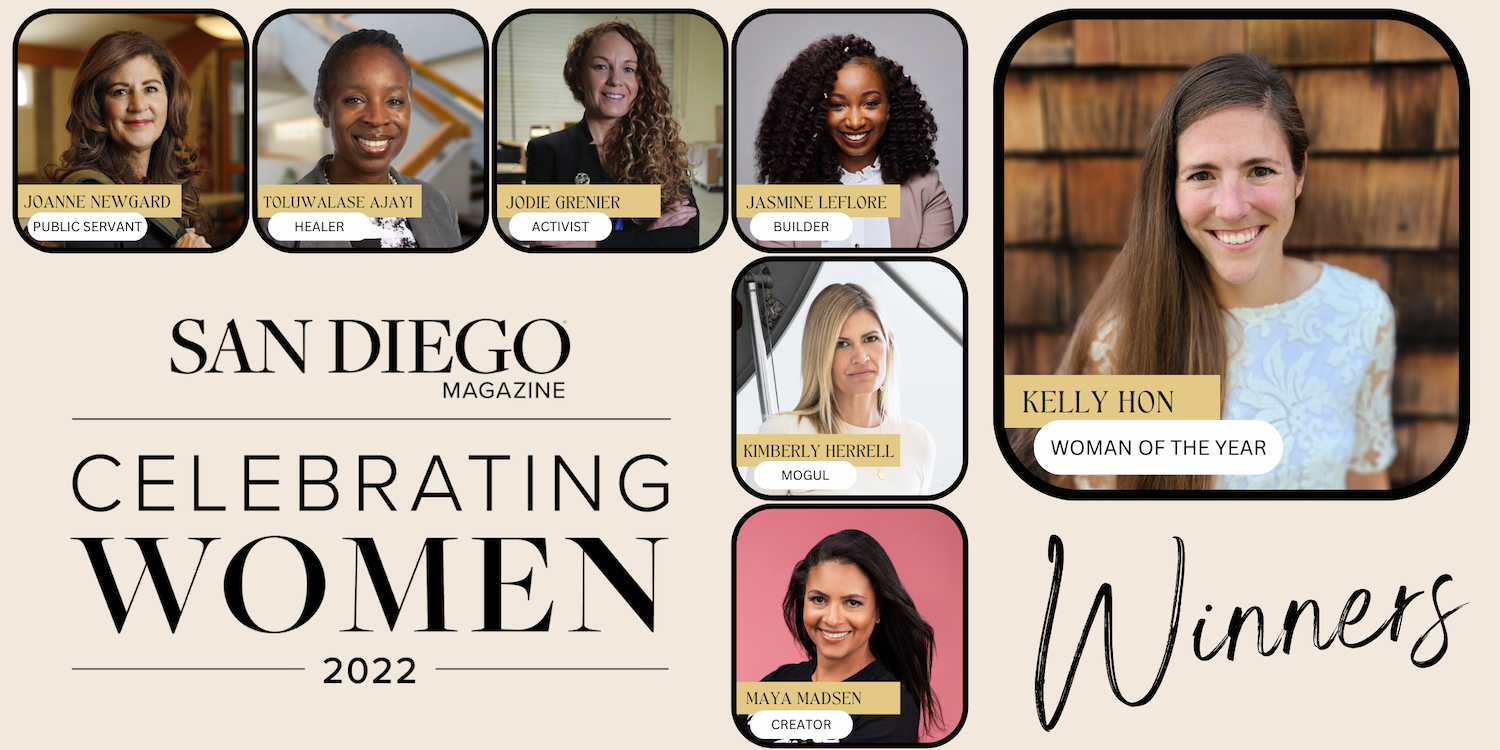
San Diego Magazine’s Annual Celebrating Women Awards are back! It’s time to celebrate San Diegans who are making waves and changing the game. Our awards honor standout women or those who identify as female in six (6) categories (Builders, Creators, Activists, Healers, Public Servants, and Moguls), along with San Diego Magazine’s selected Woman of the Year.
A panel of 5-6 unbiased female judges will select between 150 to 250 finalists to be invited to our award ceremony. They will then select one honoree in each category and one Woman of the Year to be presented with an award at the ceremony. In order to keep it a true surprise, each honoree will not be announced until our in-person Celebrating Women Event presented by Copia Wealth Management & Insurance Services at the Town & Country Hotel on November 17, 2022. We look forward to receiving your nomination(s) and wish your nominee(s) the best of luck!
Individuals may only be nominated in one category. All nominees will automatically be eligible to receive the Woman of the Year Award.
Nominees must be 21+
Incomplete forms, including those with unanswered questions will automatically be disqualified.
If an individual is nominated more than once, our judges will select the most thorough nomination form to move forward with.
Nominating an individual does NOT guarantee they will be covered in San Diego magazine.
All nominees and nominators will be notified if they were selected as a finalist. However, this does not guarantee them a seat at the award ceremony. Individual seats will cost $70 each.
Please read through the categories below in order to select the best one to nominate each individual for. Some industries are listed in multiple categories. Please select the one you feel your nominee fits best in. We encourage you to thoroughly answer each question on the nomination form, so our judges can gain a full scope of just how amazing your nominee is.
NOMINATIONS ARE NOW CLOSED
Ann Sim partnered with chef Travis Swikard to build a million-dollar baby—and now they’re doing it again
Ann Sim is telling me about her children. She says she has 50 of them, give or take, and her main job is protecting them and providing them everything they need to succeed.
It’s not uncommon to hear restaurant managers refer to their staff this way, but, unlike most of them, Sim has a necklace that I noticed when we sat down: a thin chain with “Callie” written in gold, like some people wear with the names of their actual kids. You get the sense Sim really means it.
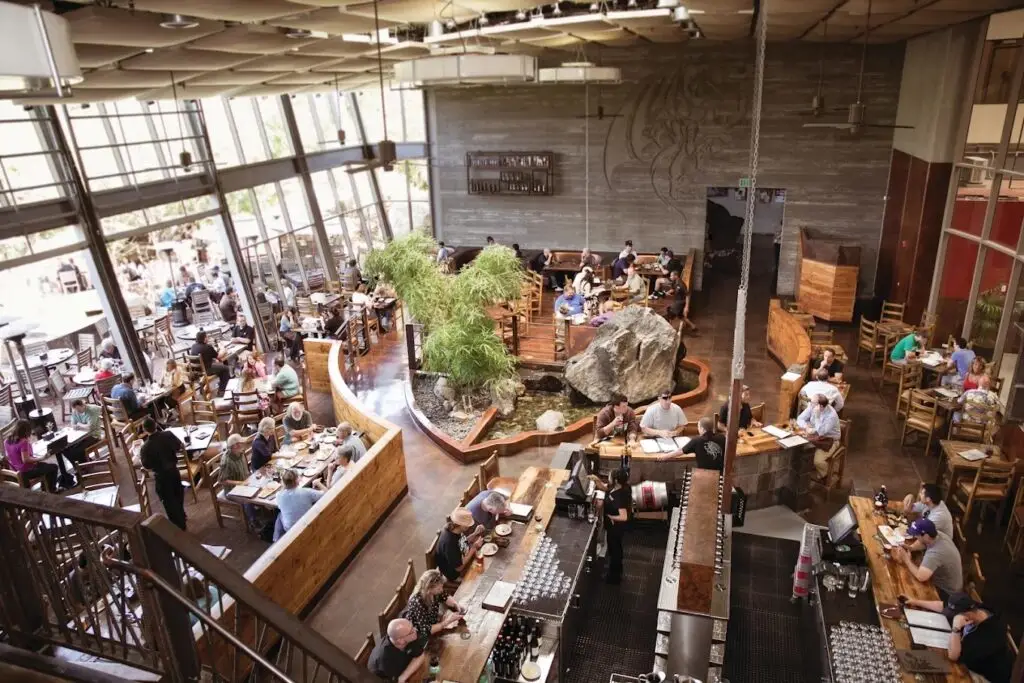
Sim is the general manager of Callie. She opened the East Village Mediterranean-style gem with chef Travis Swikard in the middle of 2021, and now they’re joining forces again for their second location, a to-be-named French restaurant in La Jolla Commons. Much has been made of Swikard’s experience, and rightfully so—more than a decade alongside Daniel Boulud in New York tends to draw eyes—but in terms of pure tonnage of resume fireworks, Sim might have him beat.

She’s worked at some of the most well-respected places in New York and Los Angeles, including a marquee stint as a captain at Eleven Madison Park, what was—at the time, by every metric available—the best restaurant in the world.
You wouldn’t know it to talk to her. The SoCal native is approachable with an easy laugh. But to watch her at the restaurant is to witness a pro at work. You see it in the way she adjusts a napkin or pushes in a chair, the way she glides between tables or opens a bottle of wine. But you also sense it in the warmth with which she greets guests, touches tables, and coaches her staff.
The front of house at Callie is, like the cuisine, a union of world-class refinement and California vibes. The synthesis of these apparent contradictions is a big part of why Callie is such a local treasure—and why it has earned it national and international recognition (as well as this magazine’s award for Best Restaurant two years in a row). It’s an impressive CV for a woman whose main professional goal throughout college was to get out of restaurants for good.
The daughter of Korean immigrants-turned-restaurateurs, Sim was born and raised in Orange County. As a kid, Sim was “free child labor,” she quips—she worked the counter, grilled chicken, waited tables, whatever her parents’ business needed that day. She stayed in restaurants through college, serving and bartending, and graduated from UC Irvine sans debt. The tradeoff: They were bad places with toxic cultures. She had different ideas of success.

After college in 2011, she took her meager savings and moved to New York, something she had wanted to do since she was a kid. Though she had planned to change industries, she needed a job, so a friend got her an interview at Daniel Boulud’s celebrated Mediterranean restaurant, Boulud Sud, as a host.
For all her experience, she was completely unprepared. “I didn’t know who Daniel Boulud was,” she says. “I didn’t know what fine dining even meant. I never heard the phrase.” What she did know, however, was how to work hard and learn. She absorbed everything she could, bouncing from the host stand to the events team to management.
It was there that she first met a young Swikard and other high-caliber restaurant pros, and it opened her eyes to what this life could be. “They were so good at what they did that I was like, ‘Oh, this is actually a career. This is a profession. This is actually something very respectable,’” she recalls.
Her next job was at Eleven Madison Park. The restaurant already had three Michelin stars, and, during her tenure, it earned an exuberant review from the New York Times, a James Beard Award for outstanding service, and the title of Best Restaurant in the World from the World’s 50 Best.

When Eleven Madison Park closed for renovations, Sim took the opportunity to come back to California. She arrived in LA at the end of 2017 to open the area’s NoMad Hotel, and did a stint as the GM of Maude in Beverly Hills. After the start of the pandemic, she got a random text from Swikard, her old Boulud Sud colleague, who was trying to open a restaurant in San Diego and had just lost his GM. Did she know anyone who might want the job?
Callie is theirs. It is her and Swikard’s united vision of hospitality and what a restaurant should be. She’s not courting the 50 Best awards—she’s too “old and jaded,” she says, and those things come at too high a human cost (she still can’t watch The Bear, for example). To her, success comes from working hard, taking care of her people, and connecting with the community. Nearly two and a half years after she and Swikard opened the restaurant’s doors, the reservation list at Callie is still full pretty much every night.
“I genuinely care about the business as well as every single one of my employees,” she says. “So I don’t care if anyone’s like, ‘Oh, you wear a necklace with the name of your job?’ I don’t think it’s weird, because for me, it’s like, ‘I also pushed this baby out.’”
And with her and Swikard’s second culinary progeny incoming, she may have to add another charm.
The woman-founded company unites parents, employers, agencies, and more than 200,000 providers in one interface
According to Tootris founder Alessandra Lezama, the fight for childcare is also one for women’s rights: Thanks to an ongoing national childcare crisis, more than two million women have left the workforce since the onset of Covid. That number will likely increase with the recent drop-off in federal funding previously allotted for childcare providers (92 percent of whom are women and 44 percent of whom are people of color).

Far from being a pandemic-specific issue, childcare has been a stressed industry for decades. San Diego Montessori-teacher-turned-technologist Lezama experienced this as a single parent trying to climb the corporate ladder while feeling increasingly anxious about securing care. Lezama, who helped grow four tech companies before turning her sights on childcare, was sure that her experience could help disrupt one of the most fraught industries in the country, which in turn would help keep women in the workforce.

From that hunch, Tootris took shape. Founded in San Diego in 2019 and now operational in all 50 states (and in many cases partnering with local governments), Lezama’s platform claims to be the only technology solution uniting all key childcare stakeholders—parents, employers, agencies, and more than 200,000 providers—in one interface.
This helps care become more accessible, affordable, and on-demand, and ensures that providers have the management tools to effectively run their businesses and retain employees. Previously, all of these entities had no streamlined way of interacting, which created significant gaps in the marketplace and further fueled the high turnover and low pay in the industry
Jackie is a long-time freelance journalist covering cannabis, food/restaurants, travel, labor, wine, spirits, arts & culture, design, and other topics. Her work has been selected twice for Best American Travel Writing, and she has won a variety of national and local awards for her writing and reporting.
Candy Pushers’ first queer owners rebranded the 27-year-old shop as safe place for teens in a bar-heavy gay scene
Shannon Dove, co-owner of Hillcrest candy store The Candy Pushers, isn’t a sweets person—but she assures me that digging sugar isn’t a requirement for running a candy shop. What you have to love, she says, is selling candy. “It’s the most amazing thing to see somebody come in and you can tell they’ve had a bad day, and by the time they get their bag of candy and come to the register, they have a smile on their face,” Shannon explains.
Shannon found her passion for vending treats at Hillcrest shop Candy Depot, where she was a sales associate for three years. She departed Candy Depot to launch a mobile candy business with her wife, Melissa Dove, slinging sweets at Pride events and music festivals—then the pandemic struck.
But as stores started to open back up, the Doves received a call from the owners of Candy
Depot, who told them that they’d decided to pivot their careers. “[They said,] ‘Would you be willing to take over a brick-and-mortar?’” Shannon recalls. “I turned to Melissa and I said, ‘Is it absolutely irrational and impulsive right now to just say yes?’”
“I said, ‘F- no,’” Melissa chimes in. “‘This is our dream knocking on the door.’”
The couple became the first LGBTQ owners of the 27-year-old Candy Depot in 2020, eventually renaming it The Candy Pushers and moving to a larger location on University Avenue.
Beyond treating sweet tooths, the couple aims to provide a sober, LGBTQ-friendly space in a bar-heavy gay scene. They host game nights, comedy shows, open mics. “Having something for [LGBTQ youth] to do in Hillcrest is so important,” Shannon says. “They can be around other gay people and see that it’s going to be okay, that there’s a community for them.”
Amelia Rodriguez is a writer and journalist and winner of the San Diego Press Club's 2023 Rising Star Award and 2024 Best of Show Award, she’s also covered music, food, arts and culture, fashion, and design for Rolling Stone, Palm Springs Life, and other national and regional publications. After work, you can find her hunting down San Diego’s best pastries and maintaining her five-year Duolingo streak.
This month, the 2026 San Diego Business Impact Awards recognized local businesses making an impact in clean energy, biotech, hospitality, and beyond
Renewable energy companies building hundreds of power plants. Biotech startups using artificial intelligence to create personalized medicine for children with rare diseases. Hospitality companies quietly powering thousands of local events. Consumer brands growing from beach-town startups into national businesses. These are the kinds of companies driving San Diego’s economy today, and the businesses recognized at this year’s San Diego Business Impact Awards offer a snapshot of where the region is headed.
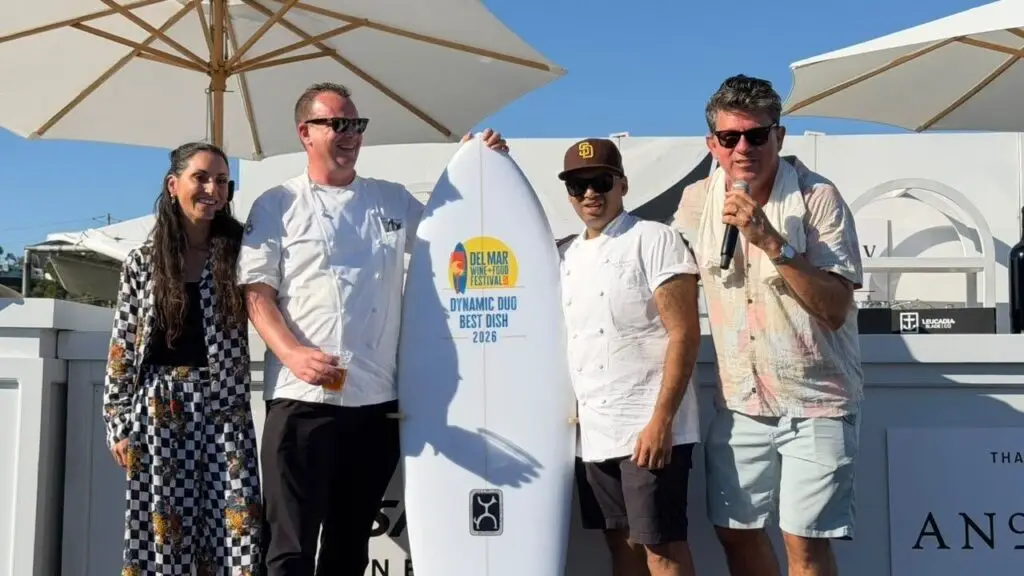
Hosted July 23 by San Diego Regional Economic Development Corporation (EDC) and JPMorganChase, the second annual awards event honored four local companies for innovation, growth, and economic impact. More than 100 nominations from San Diego’s middle-market businesses were reviewed by a 10-person judging committee, with winners selected across four categories: startup, early-stage innovator, rising star, and established heavyweight.
Two-time honoree Jimbo Someck, founder of Jimbo’s organic grocery stores, also joined the event for a fireside chat on buying local, supporting emerging brands, and giving back to the community.
“San Diego’s strength comes from its makers and builders—the resilient people who endure great risks and overcome obstacles to build and scale a company,” says Aaron Ryan, San Diego Region Manager and Middle Market Banking at JPMorganChase & Co. “These awards aren’t just recognition; they spotlight the talent, grit, and innovation shaping our region’s future. By celebrating those who create and build, we foster connections and fuel the growth that keeps San Diego thriving.”

Heavyweight honoree SOLV Energy has grown alongside the country’s rapid investment in renewable power. “It’s an exciting time for SOLV Energy as we are experiencing significant growth,” says CEO George Hershman. “The business has doubled over the last year and has almost double-digit growth since its inception.”
The Rancho Bernardo-based company designs, builds, operates, and maintains utility-scale solar and energy storage facilities. Since its founding in 2008, SOLV Energy has built more than 500 power plants.
Growth has translated directly into hiring. About 200 employees work from the company’s local headquarters, including roughly 20 interns. “Our intern program is a big part of the way that we grow our workforce,” Hershman says. “Last year, 43 percent of our interns became full-time employees. We believe San Diego is a great community to build and grow a high-tech infrastructure and technology company because of the incredible workforce—the ability to attract top talent and draw from world-class universities.”

Startup honoree La Jolla Labs is tackling one of medicine’s biggest challenges by developing personalized RNA therapeutics for patients with rare diseases—many of them children with neurological disorders like ALS. Using proprietary artificial intelligence and machine learning tools, the biotech company develops treatments tailored to each patient’s specific genetic mutation.
CEO Tamar Grossman says the recognition reflects how far the company has come despite limited resources. “We’re honored to be recognized for our ability to change and save patients’ lives and turn our lean startup into a clinical company with very minimal resources,” she says.
Grossman credits San Diego’s concentration of research institutions—including UC San Diego, the Salk Institute, and Scripps Research—with creating a pipeline of talent and collaboration. “San Diego is one of the world-leading centers for technology, genomics, and RNA therapeutics,” she says. “We have over 30 RNA therapeutics companies here, and we support each other and help with anything related to drug discovery.”
She says that collaborative spirit extends beyond formal partnerships. “You can walk around Torrey Pines, go into a café, and find colleagues from the industry and have an ad hoc conversation,” Grossman says. “That’s something very unique to San Diego.”

While Snake Oil Venue Company may not be a household name, chances are many San Diegans have attended one of its events. The early-stage innovator honoree has expanded from beverage catering and mixology consulting into venue management, operating Julep Venue in Mission Hills, Bramble Bay Venue in Imperial Beach, Vesper Venue, the Chapel at Liberty Station, and five outdoor venues throughout Liberty Station—more than 500,000 square feet of event space altogether.
“We do a lot of launch parties for corporations and new products,” says CEO Mike Esposito. “I really like working on the entrepreneur side of things, where new businesses are entering the San Diego market and looking to make a splash.”
Snake Oil has executed more than 16,000 events, employed more than 1,000 people, and partnered with more than 900 local vendors, including caterers, florists, photographers, entertainers, and other hospitality businesses. The company also works with many of San Diego’s nonprofits, museums, and cultural institutions. “We get to celebrate people’s most important moments,” Esposito says. “Whether that’s a wedding, celebration of life, or quinceañera, we’re fortunate to be involved in the community in so many different ways.”

Rising star honoree ALOHA Collection is proof that a simple idea can grow into a thriving company. Founded by two roommates who wanted a better way to carry wet swimsuits after a day at the beach, the lifestyle brand has grown into a business while maintaining strong year-over-year growth.
Now headquartered in Carlsbad, ALOHA Collection employs more than 100 people and operates its California flagship store in Encinitas, which is slated for a remodel. With roots in Hawaii, the company is known for its lightweight, splash-proof travel bags that have become a familiar sight on beaches in San Diego and beyond.
“‘Aloha’ is part of our name, but it’s also how we move through the world,” says CEO Lynna Barnard. “It’s how we show up for people, the way we travel, the way we give back.” Since day one, the company has maintained a 5 percent giveback to Hawaii conservation efforts, contributing millions of dollars over the years.
“I think what’s so inspiring about ALOHA Collection, and the founders in particular, is when you dream big, those dreams can come true when you work hard and trust in the universe,” Barnard says. “It’s inspiring to be a role model for other people wanting to start businesses from humble beginnings. Start small and watch it grow.”
Together, businesses like these form a cornerstone of San Diego’s economy—not only through the jobs and revenue they generate—but through the local workers they hire, vendors they support, and investments they make in the region. Their growth doesn’t happen in isolation; it ripples outward, strengthening the broader business community and the people who call San Diego home.

The founders of Dirt Don't Hurt have one whammy ingredient to thank for their success
Sativa Murray wasn’t feeling well. After months of struggling with brain fog and chronic fatigue, she was diagnosed with Lyme disease, but conventional treatments weren’t relieving her symptoms. “I started looking into my skincare, oral care, haircare,” she recalls. “I gutted everything.”
Aiming to avoid potentially harmful additives, Sativa began crafting her own personal care products—and started feeling better. She shared her creations with family and friends, making more and more stuff until “her house started feeling like a warehouse,” remembers her sister Martiza Murray.

Sativa tapped Maritza and their sister Kaya Murray-Banks to help transform the fruits of her personal health journey into a business, and the trio launched their company at Balboa Park’s EarthFair in 2017, calling themselves Dirt Don’t Hurt in a playful nod to their merchandise’s natural origins.
They focus almost solely on one whammy ingredient: activated charcoal. Their roster of charcoal-based goods includes a face mask, body soap, and tooth powder, a clay-and herb-boosted alternative to
traditional pastes.

Dirt Don’t Hurt products are available at local farmers markets, SD and NorCal Whole Foods stores, and boutiques around the country. They recently signed a massive deal with Hyatt to distribute their brand’s earth-friendly wooden toothbrushes in hotels throughout SoCal. And, as recent graduates of Dr. Bronner’s small business mentoring program, they’re poised to expand to more large retailers.
With seven children between them, the sisters hope to leave behind a thriving business for their little ones. “We often talk about them working for the company,” Maritza says. “We’re creating generational wealth.”
Amelia Rodriguez is a writer and journalist and winner of the San Diego Press Club's 2023 Rising Star Award and 2024 Best of Show Award, she’s also covered music, food, arts and culture, fashion, and design for Rolling Stone, Palm Springs Life, and other national and regional publications. After work, you can find her hunting down San Diego’s best pastries and maintaining her five-year Duolingo streak.
Starr Edwards started slinging the almond-based sauce at San Diego farmers markets—now it's a worldwide brand
Brand identities are often complicated. Companies want to be known as changemakers, earth-shakers, wunderkinds, something so much more than the sum of their products. But if you ask Bitchin’ Sauce founder Starr Edwards what her brand’s story is, she’ll tell you, “We are an iconic dip. We are the American Dip. We want to be around hundreds of years from now, like ketchup.”
Bitchin’ Sauce comes in more than 20 rotating flavors—from a spicy chipotle (Edwards’ favorite) to a Thai-inspired panang and sweet stuff like apple pie and salted caramel—but the same almond base forms the core of each. They’ve mastered the art of doing one thing really, really well. It’s a move that’s clearly paid off, considering that, according to Edwards, the company now hauls in about $50 million in annual revenue.

Of course, that’s not to say they don’t bring strong, health- and family-focused convictions to the table, values rooted in Edwards’ self-described “hippie” upbringing in Oregon. She invented the recipe that would become the original Bitchin’ Sauce as a teenager, blending together staple ingredients in her family’s raw, vegan household. She was tossing nutritional yeast into liquid aminos at a time when much of America was still fearful of Boca Burgers.
After Edwards and her husband, Luke, married and had the first of their five kids here in San Diego, she carted her childhood snack to local farmers markets, offering samples as a way to promote a fledgling personal chef business. “But I could see even from that first market that [selling the sauce] had so, so much potential. People loved this one product,” she recalls.
They expanded to more markets, calling in friends and family to help produce, package, and vend Bitchin’ Sauce all over San Diego. At their peak, they were slinging sauce at 26 markets. The couple decided to bring their products to stores in 2011. It’s now available at major shops nationwide, including Walmart, Target, and Costco. “I remember selling 30 tubs of sauce at the farmers market and being so shocked,” Edwards says. Today, she adds, the brand sells about 30 tubs a minute.

Every Bitchin’ Sauce flavor is vegan and gluten-and soy-free, and several varieties are 100 percent organic. Their SD headquarters offers employees paid time to volunteer with partner orgs and free, onsite childcare, saving the company’s team a combined total of more than $1.5 million in daycare costs.
The success of their company has allowed the couple to invest in other passions. They formed a record label, Bitchin’ Music Group, in 2020, inspired by Luke’s other career as a touring musician.
The company recently launched in Canada, Mexico, Korea, and Australia. Edwards is curious how the product will be received abroad. “These really are American ingredients. The US is the number-one producer of almonds. We have citrus, garlic, everything right down the road from our headquarters,” she muses. “I’m excited to see how it works on a global level. Is this something everyone’s gonna be excited about? Is this gonna be a world- domination situation?”
If so, they might have to change their identity to the International Dip.
Amelia Rodriguez is a writer and journalist and winner of the San Diego Press Club's 2023 Rising Star Award and 2024 Best of Show Award, she’s also covered music, food, arts and culture, fashion, and design for Rolling Stone, Palm Springs Life, and other national and regional publications. After work, you can find her hunting down San Diego’s best pastries and maintaining her five-year Duolingo streak.
President and CEO Jewish Community Foundation San Diego and Miriam and Jerome Katzin Presidential Chair
Marjory Kaplan
Marjory Kaplan
What is your background? I was in the corporate world in banking, both in human resources and investments. When I moved to San Diego from San Francisco, I spent some time in banking with Wells Fargo and also with Scripps Foundation. I joined the Jewish Community Foundation San Diego 20 years ago, and three years ago the chair was endowed by Miriam and Jerome Katzin.
Jewish Community Foundation San Diego is the largest grant maker in San Diego. Why is that? The Jewish community is very generous, although not all members are Jewish. People choose our foundation because we build trust through good service, and we manage their donor-advised funds well. In 2012 we gave away $98 million. Since its inception in 1967, the foundation has given $859 million, and we want to reach our billion-dollar goal within the next couple of years.
What is the advantage of a foundation? It is a convenient way and a community-minded way to give. There are some tax benefits. It is more focused giving and more strategic.
How many researchers do you have? Our total staff is 16. They are all very dedicated, hardworking and skilled in what they do. We have longevity with our staff. Sometimes I have to remind them when it is time to go home.
What drives you? This is such a great position for a person with my background to be able to serve the community. Corporate human resources and investments—one is knowing about people and management, and the other is knowing about the financial world.
What is your life away from work? Work is very life-giving, but everyone needs to get away. I go back to San Francisco. I love to read, so I frequent my favorite bookstores in San Francisco. I enjoy hiking. I have great friends and a wonderful husband. This is such a joyful position. I have been teaching Positive Board Cultures at the USD Governance Symposium for the past three years.
How do you mentor? There are a lot of ways to mentor. Look around your world. It is just being the person you are. It’s a generosity of spirit that we all need to show each other. We need to share the glory and give credit to others. I am interested in mentoring on the management side. We need more positive managers who will really encourage and develop people.
How do you support the community? I work with many organizations including the Grantmakers, Association of Fundraising Professionals, University of San Diego, and others.
What is your advice to others? The most important thing is to take care of yourself. Figure out what you need to do and then do it. You can be really good at what you do, but you have to show kindness and gratitude to make it work. People can excel through discipline, competence and gratitude.
Which of your accomplishments are you most proud of? Building an organization that has so much trust in the community and one that passes on to generations of families. One of my most gratifying roles is helping people plan their charitable legacies. It often feels like a sacred moment to be the one carrying out their wishes after a lifetime of involvement.
What would you be doing if you were not with the foundation? I would continue working in the community, teaching, mentoring. Our city is large enough to be interesting and small enough to be friendly.