Ready to know more about San Diego?

Subscribe
People SEPTEMBER 10, 2013

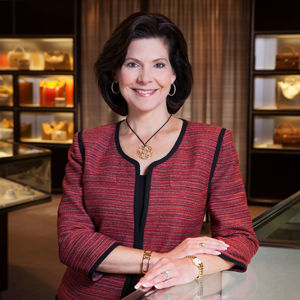
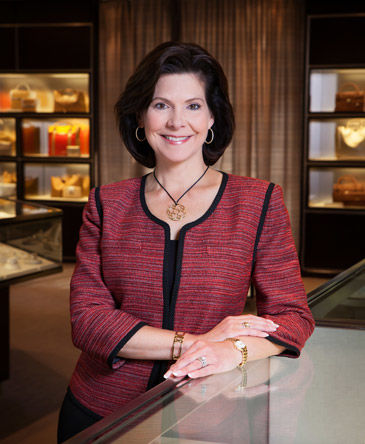
Spotlight on Women: Cathryn Rameriez

Tiffany & Co. Group Director

Spotlight on Women: Cathryn Rameriez

Cathryn Ramirez

Cathryn Ramirez

What is your background with Tiffany?

I started in 1988 at the South Coast Plaza store. When the first store opened in San Diego in 1992, I came here as a sales professional. I grew up in a family-owned jewelry business in Texas. My father encouraged me to go to work for a jeweler when I completed my Graduate Gemologist certification from GIA, and to work for the best. He suggested that I apply at Tiffany & Co.

What is your current position?

I am one of five group directors in this region. I have held many positions during my 25 years with Tiffany.

I understand that you will be inducted into the Tiffany & Co. “Twenty-Five Year Club.” What does it mean to be inducted into this club?

As I celebrate my 25 years of service, part of the recognition is being inducted into the club on September 20 at a luncheon at the St. Regis Hotel in New York. I will also be gifted with a commemorative piece of jewelry. I am one of two employees who has worked in branches outside our New York store for this long.

How have you managed your life as a wife and mother along with your career?

I have been committed to my career, and at the same time I have been an involved wife and parent. My family has always come first. At times I was forced to decide if I wanted to leave San Diego for a major city, and I knew I could not leave. The company has allowed me to make decisions that benefit my family life, and remain in this region.

How do you handle the business travel?

My husband, Dave, travels a lot, but he has a home-based office so when he is in town, he is able to be involved in our children’s activities. I am grateful for our partnership because neither of us could do it all.

How much down time do you have?

I take an annual trip with a group to Canyon Ranch. That is the only thing I do that is just for me. I spend that five days of time to refocus myself. The rest of my time away from the store I try to make quality time with family.

Do you own the jewelry you wear?

Absolutely. There are a few occasions where Tiffany is a sponsor of an event and we are showing jewelry, for which I wear company jewelry, but other than that it is all mine.

How much do you spend on jewelry?

I couldn’t tell you because my husband has no idea, and I have to keep it a secret.

How do you discipline yourself when it comes to buying?

My purchases for myself are the same as if I were buying for a client. I select items that complement my lifestyle and other pieces that I already own.

If you were not with Tiffany, where else might you be?

Certainly not in the jewelry business. After 25 years, I bleed Tiffany blue blood. I have such respect for the brand that I could not be anywhere else.

What do you consider your greatest accomplishment?

I make my greatest contribution by mentoring and developing people. If I help someone succeed in their career and I have a little piece of their success, that is my greatest accomplishment.

How does Tiffany give back?

By supporting as many organizations as we possibly can. In addition, the Tiffany Foundation supports organizations pertaining to environment and preserving parks. Personally, I work with my daughter in National Charity League and with my son in Teen Volunteers in Action.

Will you retire from Tiffany?

I hope to.

Subscribe to our newsletters

Select Options

By subscribing you confirm that you agree with our Terms and Conditions and Privacy Policy.

Everything SD NOVEMBER 15, 2023

Callie’s General Manager Has the Mother of All Resumes

Ann Sim partnered with chef Travis Swikard to build a million-dollar baby—and now they’re doing it again

Callie’s General Manager Has the Mother of All Resumes
Courtesy of Ann Sim

Ann Sim is telling me about her children. She says she has 50 of them, give or take, and her main job is protecting them and providing them everything they need to succeed. 

It’s not uncommon to hear restaurant managers refer to their staff this way, but, unlike most of them, Sim has a necklace that I noticed when we sat down: a thin chain with “Callie” written in gold, like some people wear with the names of their actual kids. You get the sense Sim really means it. 

Sim is the general manager of Callie. She opened the East Village Mediterranean-style gem with chef Travis Swikard in the middle of 2021, and now they’re joining forces again for their second location, a to-be-named French restaurant in La Jolla Commons. Much has been made of Swikard’s experience, and rightfully so—more than a decade alongside Daniel Boulud in New York tends to draw eyes—but in terms of pure tonnage of resume fireworks, Sim might have him beat.

GM of restaurant Callie, Ann Sim, arranges a table before a dinner service
Courtesy of Callie

She’s worked at some of the most well-respected places in New York and Los Angeles, including a marquee stint as a captain at Eleven Madison Park, what was—at the time, by every metric available—the best restaurant in the world.

You wouldn’t know it to talk to her. The SoCal native is approachable with an easy laugh. But to watch her at the restaurant is to witness a pro at work. You see it in the way she adjusts a napkin or pushes in a chair, the way she glides between tables or opens a bottle of wine. But you also sense it in the warmth with which she greets guests, touches tables, and coaches her staff. 

The front of house at Callie is, like the cuisine, a union of world-class refinement and California vibes. The synthesis of these apparent contradictions is a big part of why Callie is such a local treasure—and why it has earned it national and international recognition (as well as this magazine’s award for Best Restaurant two years in a row). It’s an impressive CV for a woman whose main professional goal throughout college was to get out of restaurants for good.

The daughter of Korean immigrants-turned-restaurateurs, Sim was born and raised in Orange County. As a kid, Sim was “free child labor,” she quips—she worked the counter, grilled chicken, waited tables, whatever her parents’ business needed that day. She stayed in restaurants through college, serving and bartending, and graduated from UC Irvine sans debt. The tradeoff: They were bad places with toxic cultures. She had different ideas of success.

Prawns al ajillo from San Diego Mediterranean restaurant Callie
Photo Credit: Luciana McIntosh
Prawns al ajillo from Callie

After college in 2011, she took her meager savings and moved to New York, something she had wanted to do since she was a kid. Though she had planned to change industries, she needed a job, so a friend got her an interview at Daniel Boulud’s celebrated Mediterranean restaurant, Boulud Sud, as a host.

For all her experience, she was completely unprepared. “I didn’t know who Daniel Boulud was,” she says. “I didn’t know what fine dining even meant. I never heard the phrase.” What she did know, however, was how to work hard and learn. She absorbed everything she could, bouncing from the host stand to the events team to management. 

It was there that she first met a young Swikard and other high-caliber restaurant pros, and it opened her eyes to what this life could be. “They were so good at what they did that I was like, ‘Oh, this is actually a career. This is a profession. This is actually something very respectable,’” she recalls.

Her next job was at Eleven Madison Park. The restaurant already had three Michelin stars, and, during her tenure, it earned an exuberant review from the New York Times, a James Beard Award for outstanding service, and the title of Best Restaurant in the World from the World’s 50 Best. 

Ann Sim general manager of San Diego restaurant Callie standing infront of a table
Courtesy of Ann Sim

When Eleven Madison Park closed for renovations, Sim took the opportunity to come back to California. She arrived in LA at the end of 2017 to open the area’s NoMad Hotel, and did a stint as the GM of Maude in Beverly Hills. After the start of the pandemic, she got a random text from Swikard, her old Boulud Sud colleague, who was trying to open a restaurant in San Diego and had just lost his GM. Did she know anyone who might want the job?

Callie is theirs. It is her and Swikard’s united vision of hospitality and what a restaurant should be. She’s not courting the 50 Best awards—she’s too “old and jaded,” she says, and those things come at too high a human cost (she still can’t watch The Bear, for example). To her, success comes from working hard, taking care of her people, and connecting with the community. Nearly two and a half years after she and Swikard opened the restaurant’s doors, the reservation list at Callie is still full pretty much every night.

“I genuinely care about the business as well as every single one of my employees,” she says. “So I don’t care if anyone’s like, ‘Oh, you wear a necklace with the name of your job?’ I don’t think it’s weird, because for me, it’s like, ‘I also pushed this baby out.’”

And with her and Swikard’s second culinary progeny incoming, she may have to add another charm.

Everything SD NOVEMBER 2, 2023

Tootris’ On-Demand Services Help Combat the Childcare Crisis

The woman-founded company unites parents, employers, agencies, and more than 200,000 providers in one interface

Tootris’ On-Demand Services Help Combat the Childcare Crisis
Courtesy of Tootris

According to Tootris founder Alessandra Lezama, the fight for childcare is also one for women’s rights: Thanks to an ongoing national childcare crisis, more than two million women have left the workforce since the onset of Covid. That number will likely increase with the recent drop-off in federal funding previously allotted for childcare providers (92 percent of whom are women and 44 percent of whom are people of color).

San Diego child care app Tootris featuring screens and screenshots of the service
Courtesy of Tootris

Far from being a pandemic-specific issue, childcare has been a stressed industry for decades. San Diego Montessori-teacher-turned-technologist Lezama experienced this as a single parent trying to climb the corporate ladder while feeling increasingly anxious about securing care. Lezama, who helped grow four tech companies before turning her sights on childcare, was sure that her experience could help disrupt one of the most fraught industries in the country, which in turn would help keep women in the workforce.

Tootris child care app screenshot for finding local programs
Courtesy of Tootris

From that hunch, Tootris took shape. Founded in San Diego in 2019 and now operational in all 50 states (and in many cases partnering with local governments), Lezama’s platform claims to be the only technology solution uniting all key childcare stakeholders—parents, employers, agencies, and more than 200,000 providers—in one interface.

This helps care become more accessible, affordable, and on-demand, and ensures that providers have the management tools to effectively run their businesses and retain employees. Previously, all of these entities had no streamlined way of interacting, which created significant gaps in the marketplace and further fueled the high turnover and low pay in the industry

Jackie is a long-time freelance journalist covering cannabis, food/restaurants, travel, labor, wine, spirits, arts & culture, design, and other topics. Her work has been selected twice for Best American Travel Writing, and she has won a variety of national and local awards for her writing and reporting.

Everything SD OCTOBER 27, 2023

The Sweetest Sober Sanctuary for LGBTQ Youth in Hillcrest

Candy Pushers’ first queer owners rebranded the 27-year-old shop as safe place for teens in a bar-heavy gay scene

The Sweetest Sober Sanctuary for LGBTQ Youth in Hillcrest
Photo Credit: Mateo Hoke

Shannon Dove, co-owner of Hillcrest candy store The Candy Pushers, isn’t a sweets person—but she assures me that digging sugar isn’t a requirement for running a candy shop. What you have to love, she says, is selling candy. “It’s the most amazing thing to see somebody come in and you can tell they’ve had a bad day, and by the time they get their bag of candy and come to the register, they have a smile on their face,” Shannon explains.

Shannon found her passion for vending treats at Hillcrest shop Candy Depot, where she was a sales associate for three years. She departed Candy Depot to launch a mobile candy business with her wife, Melissa Dove, slinging sweets at Pride events and music festivals—then the pandemic struck.

But as stores started to open back up, the Doves received a call from the owners of Candy
Depot, who told them that they’d decided to pivot their careers. “[They said,] ‘Would you be willing to take over a brick-and-mortar?’” Shannon recalls. “I turned to Melissa and I said, ‘Is it absolutely irrational and impulsive right now to just say yes?’”

“I said, ‘F- no,’” Melissa chimes in. “‘This is our dream knocking on the door.’”

The couple became the first LGBTQ owners of the 27-year-old Candy Depot in 2020, eventually renaming it The Candy Pushers and moving to a larger location on University Avenue.

Beyond treating sweet tooths, the couple aims to provide a sober, LGBTQ-friendly space in a bar-heavy gay scene. They host game nights, comedy shows, open mics. “Having something for [LGBTQ youth] to do in Hillcrest is so important,” Shannon says. “They can be around other gay people and see that it’s going to be okay, that there’s a community for them.”

Amelia Rodriguez is a writer and journalist and winner of the San Diego Press Club's 2023 Rising Star Award and 2024 Best of Show Award, she’s also covered music, food, arts and culture, fashion, and design for Rolling Stone, Palm Springs Life, and other national and regional publications. After work, you can find her hunting down San Diego’s best pastries and maintaining her five-year Duolingo streak.

Studio S FEBRUARY 26, 2026

Chef Aidan Owens Thinks Your Fish is Boring

The 29-year-old culinary director at Herb & Sea is making seafood sexy (and approachable) again

Implementing a farm-to-table model hardly deserves acknowledgement these days. It’s not a stretch. It’s not innovative. “It’s the bare f**king minimum,” says Herb & Sea‘s executive chef Aidan Owens.  

When I arrive at the Encinitas restaurant, I’m ready to talk sustainability, farm-to-table stuff, with Owens. “Did you see the chin on that?” he says of the extra big jiggly chin on the sheephead that just arrived with the day’s fresh catch. I did. It was Jay Leno adjacent.

I learn quickly that he somehow oozes both charm and stone-cold honesty. Maybe he could construct a new dish with chin goo, like he did when he had a bunch of tuna scraps and voila’d it into a smooth and crowd-pleasing ‘nduja. “I want to know what’s in there,” he says.    

Courtesy of Herb & Sea

The instinct to look closer, to dig into what others might discard, says a lot about the chef’s approach. I guide him back to our topic, but he has something else on his mind. “We’re overcomplicating food—what happened to just cooking good food and having fun with it?”

Owens grew up on a farm in Byron Bay, Australia, where sustainability wasn’t a concept you chat about so much as a way of life. Think dirt roads, backyard chickens, pulling vegetables straight from the ground, and a mother who believed that if you couldn’t pronounce the ingredients on a package, you shouldn’t eat what was inside.

Food wasn’t precious or performative. Making it was what you did because you were hungry and that’s still what inspires Owens today. “I like to cook good food because I like to eat good food,” he says.

His approach to sustainability at Herb & Sea began so naturally that it felt just like instinct. “I was just like, ‘Let’s order food from the people who live and work here,’” he says.

Courtesy of Herb & Sea

And why wouldn’t he when lives in San Diego? Cities all over the world vie for our goods. Our tuna is sent overseas. Our spiny lobsters hit dinner plates in China and Japan. Not to mention California’s producing a third of the country’s vegetables and three-quarters of its fruits and nuts. 

“Why would we outsource when it’s all here?” Owens asks.

Sustainability, in this context, is about cooking what exists in abundance, nearby, right now. “I love the local fish here. It’s f**king delicious and San Diego citrus, I mean, it is so f**ing good,” he says.

Instead of importing ingredients, Owens also looks for nearby alternatives. “You can find really cool things in the local waters,” he says, pointing out that stingray cheeks taste similar to scallops.

Courtesy of Herb & Sea

Whatever he finds in that sheephead chin might just be the next substitute for marrow. But to make this work, it means getting diners amped up about the slightly unfamiliar. 

Tasting menus, where diners are completely in his hands, become an opportunity to gently push boundaries. “I’ll serve mackerel, because people think they hate it,” Owens says, noting that the abundant local fish can have some fishiness. “But when it’s fresh, it’s arguably one of the best fish in the ocean.”

He also tweaks the language on the menu so people might feel more compelled to give dishes a try without preconceived notions. He might use “lengua” instead of “tongue.” “Whelk” instead of “snail.” When he puts “stingray throat” on the menu, he disarmingly calls it “skate.” 

To reduce waste, scraps aren’t always discarded but rather turned into something new. Sometimes they’re smoked, cured or fermented. Apples going bad turn into apple ponzu. Lemons turn to marmalade, which stretches their usefulness far beyond peak season. “And it’s super tasty on our pizza,” he says.

What makes the food even richer, is the relationships he’s built with farmers. Though it didn’t always feel natural, Owens sought personal connection first. He recalls approaching a fisherman at the Tuna Harbor Dockside Market. “I was awkward,” he says. “I went up to him and said, ‘I like your fish.’”

Owen’s is now so close to his suppliers—like fishermen Ryan Sebo and Joe Daly—that he gets texted pictures of fresh catches right as they flop on the boat. The messages always ask if he wants first dibs. “I say yes to a lot of fish,” Owens says, noting that Herb & Sea can go through 2,000 pounds of seafood a week.

Courtesy of Herb & Sea

The next evolution of sustainability, in his view, will be chefs working directly with producers such as his alliance with Sebo, cutting out middlemen and purveyors where possible. “It will put more money in the pockets of the people doing the work,” he says.

It will mean that chefs can’t just know their local farmers and producers, but they’ll choose to work with the ones who have the best practices. Dining and sustainability will become much less about the final plate. “It will be more about the impact that plate has on the Earth,” he says.  

Ultimately, he believes sustainability doesn’t need to be loud. It doesn’t need hashtags. It just needs to be honest.

“We aren’t saving lives. We’re feeding people good food,” he says.

And yet, in feeding people well—simply, thoughtfully, responsibly—something meaningful happens. Guests leave satisfied. Ingredients are respected. Local ecosystems are supported and food returns to what it has always been at its core: nourishment, pleasure, and a quiet reflection of the place it comes from.

No buzzwords required.

Everything SD OCTOBER 26, 2023

How Three Sisters Transformed a Medical Diagnosis Into a Skincare Brand

The founders of Dirt Don't Hurt have one whammy ingredient to thank for their success

How Three Sisters Transformed a Medical Diagnosis Into a Skincare Brand
Photo Credit: Chelsea Loren

Sativa Murray wasn’t feeling well. After months of struggling with brain fog and chronic fatigue, she was diagnosed with Lyme disease, but conventional treatments weren’t relieving her symptoms. “I started looking into my skincare, oral care, haircare,” she recalls. “I gutted everything.”

Aiming to avoid potentially harmful additives, Sativa began crafting her own personal care products—and started feeling better. She shared her creations with family and friends, making more and more stuff until “her house started feeling like a warehouse,” remembers her sister Martiza Murray.

Dirt Don’t Hurt founders Sativa, Maritza, and Kaya Murray
Photo Credit: Jenece Johnson-Hamby

Sativa tapped Maritza and their sister Kaya Murray-Banks to help transform the fruits of her personal health journey into a business, and the trio launched their company at Balboa Park’s EarthFair in 2017, calling themselves Dirt Don’t Hurt in a playful nod to their merchandise’s natural origins.

They focus almost solely on one whammy ingredient: activated charcoal. Their roster of charcoal-based goods includes a face mask, body soap, and tooth powder, a clay-and herb-boosted alternative to
traditional pastes.

Dirt Don't Hurt charcoal-based face and body oils in droppers
Courtesy of Dirt Don’t Hurt

Dirt Don’t Hurt products are available at local farmers markets, SD and NorCal Whole Foods stores, and boutiques around the country. They recently signed a massive deal with Hyatt to distribute their brand’s earth-friendly wooden toothbrushes in hotels throughout SoCal. And, as recent graduates of Dr. Bronner’s small business mentoring program, they’re poised to expand to more large retailers.

With seven children between them, the sisters hope to leave behind a thriving business for their little ones. “We often talk about them working for the company,” Maritza says. “We’re creating generational wealth.”

Amelia Rodriguez is a writer and journalist and winner of the San Diego Press Club's 2023 Rising Star Award and 2024 Best of Show Award, she’s also covered music, food, arts and culture, fashion, and design for Rolling Stone, Palm Springs Life, and other national and regional publications. After work, you can find her hunting down San Diego’s best pastries and maintaining her five-year Duolingo streak.

Everything SD OCTOBER 26, 2023

The Woman Behind Bitchin’ Sauce’s Dripping Success

Starr Edwards started slinging the almond-based sauce at San Diego farmers markets—now it's a worldwide brand

The Woman  Behind Bitchin’ Sauce’s Dripping Success
Photo Credit: Matt Furman

Brand identities are often complicated. Companies want to be known as changemakers, earth-shakers, wunderkinds, something so much more than the sum of their products. But if you ask Bitchin’ Sauce founder Starr Edwards what her brand’s story is, she’ll tell you, “We are an iconic dip. We are the American Dip. We want to be around hundreds of years from now, like ketchup.”

Bitchin’ Sauce comes in more than 20 rotating flavors—from a spicy chipotle (Edwards’ favorite) to a Thai-inspired panang and sweet stuff like apple pie and salted caramel—but the same almond base forms the core of each. They’ve mastered the art of doing one thing really, really well. It’s a move that’s clearly paid off, considering that, according to Edwards, the company now hauls in about $50 million in annual revenue.

An assortment of vegetables to dip in Bitchin Sauce's Hatch flavor
Courtesy of Bitchin’ Sauce

Of course, that’s not to say they don’t bring strong, health- and family-focused convictions to the table, values rooted in Edwards’ self-described “hippie” upbringing in Oregon. She invented the recipe that would become the original Bitchin’ Sauce as a teenager, blending together staple ingredients in her family’s raw, vegan household. She was tossing nutritional yeast into liquid aminos at a time when much of America was still fearful of Boca Burgers.

After Edwards and her husband, Luke, married and had the first of their five kids here in San Diego, she carted her childhood snack to local farmers markets, offering samples as a way to promote a fledgling personal chef business. “But I could see even from that first market that [selling the sauce] had so, so much potential. People loved this one product,” she recalls.

They expanded to more markets, calling in friends and family to help produce, package, and vend Bitchin’ Sauce all over San Diego. At their peak, they were slinging sauce at 26 markets. The couple decided to bring their products to stores in 2011. It’s now available at major shops nationwide, including Walmart, Target, and Costco. “I remember selling 30 tubs of sauce at the farmers market and being so shocked,” Edwards says. Today, she adds, the brand sells about 30 tubs a minute.

Bitchin' Sauce flavors original, chiptle and cilantro chili on a wood table
Courtesy of Bitchin’ Sauce

Every Bitchin’ Sauce flavor is vegan and gluten-and soy-free, and several varieties are 100 percent organic. Their SD headquarters offers employees paid time to volunteer with partner orgs and free, onsite childcare, saving the company’s team a combined total of more than $1.5 million in daycare costs.

The success of their company has allowed the couple to invest in other passions. They formed a record label, Bitchin’ Music Group, in 2020, inspired by Luke’s other career as a touring musician.

The company recently launched in Canada, Mexico, Korea, and Australia. Edwards is curious how the product will be received abroad. “These really are American ingredients. The US is the number-one producer of almonds. We have citrus, garlic, everything right down the road from our headquarters,” she muses. “I’m excited to see how it works on a global level. Is this something everyone’s gonna be excited about? Is this gonna be a world- domination situation?”

If so, they might have to change their identity to the International Dip.

Amelia Rodriguez is a writer and journalist and winner of the San Diego Press Club's 2023 Rising Star Award and 2024 Best of Show Award, she’s also covered music, food, arts and culture, fashion, and design for Rolling Stone, Palm Springs Life, and other national and regional publications. After work, you can find her hunting down San Diego’s best pastries and maintaining her five-year Duolingo streak.

Partner Content FEBRUARY 16, 2026

Torch Heroes: Why San Diego’s Most Trusted Businesses Win by Doing the Right Thing

In a world overflowing with shortcuts, marketing fluff, and “good enough,” there are still companies that choose a different answer. And in San Diego, there are plenty of them.

Torch Heroes: Why San Diego’s Most Trusted Businesses Win by Doing the Right Thing
2025-Torch-SD-09131839 (2)

In a world overflowing with shortcuts, marketing fluff, and “good enough,” there are still companies that choose a different answer.

Integrity guides how they show up every day. They make hard decisions, hold themselves accountable, and build trust the old-fashioned way, one action at a time. At the Better Business Bureau, we call these businesses Torch Heroes: leaders who demonstrate that ethical leadership strengthens businesses and drives long-term success.

And in San Diego, there are plenty of them.

Take House Collective Marketing Solutions, a Carlsbad-based digital agency that won the 2025 Torch Award for Ethics for its people-first approach to marketing. Instead of pushing flashy campaigns, the team often takes a step back to make sure clients’ foundations are strong before going big. Their philosophy? Truth over transaction builds partnerships that last.

Or look at Young Black & N’ Business, where integrity shows up through community action. When a local school lost art funding, founder Roosevelt Williams III and his team stepped in with workshops, mentorship, and hands-on support to help restore creative opportunity. That kind of engagement reflects ethical leadership rooted in real impact.

And in Vista, Lotus Sustainables carried its commitment to ethics all the way to the product line. After discovering defects in a shipment of eco-friendly products, the company issued full refunds and redesigned its offerings at its own expense, a choice that shaped its identity and reinforced to customers that ethics guide every decision.

In North County, Greenway Landscape Design & Build brings integrity into everyday service. When a client’s glass was damaged, likely not by their crew, owner Scott Lawn chose responsibility over blame and covered the repair personally. For Greenway, doing the right thing serves as a north star, guiding every interaction through transparent pricing, accountable partnerships, proactive communication, and follow-through long after the job is done.

Other honorees include At Your Home Familycare, whose leadership turned down a lucrative state contract during the pandemic to protect vulnerable clients and staff, and Bill Howe Family of Companies, where hiring practices, training, and service centers around shared values, every day, on every call.

What connects these diverse businesses, from marketing to nonprofit support to home services, isn’t size, industry, or revenue. It’s something deeper: a commitment to trust as a business strategy.

In San Diego’s competitive marketplace, that trust gives companies an edge. Clients invest in relationships. They refer friends. They stay loyal when others fade.

As one Torch Award winner puts it, integrity isn’t a section in the employee handbook. It’s the operating system of the company,  the invisible code that determines every choice, every day.

And that’s exactly the point of the BBB Torch Awards for Ethics: to spotlight companies that dispel the myth that ethics and success are at odds. These businesses show that when leaders choose honesty, fairness, and accountability, especially when it’s hard, they build brands that matter.

At BBB, we see nominations come in from clients, employees, and business partners who have witnessed ethical leadership up close. These submissions aren’t polished promotions. They’re stories of moments when a company chose people over profit, clarity over confusion, and trust over convenience.

The nomination window for the 2026 Torch Awards for Ethics is open through March 31, 2026, and there are more Torch Heroes waiting to be recognized.

Who comes to mind in San Diego’s business community?

  • A vendor who always delivers — and always explains why.
  • A competitor who chooses the high road even when shortcuts tempt.
  • A team within your own company whose day-in, day-out choices reflect deep character.

And yes, businesses can nominate themselves. We encourage it. If you’ve built your business on principles rather than buzzwords, we want to hear your story.

Because in a world full of noise, integrity still deserves the spotlight, and San Diego is full of stories worth telling. Nominate your hero now

Thousands of savvy locals already get it.

San Diego's best restaurants, experiences, and events—handpicked and delivered to your inbox weekly. You in?

Close the CTA

Contact Us

1230 Columbia Street, Suite 800,

San Diego, CA