Featured articles
Food & Drink
Food & Drink
Things to Do
Featured articles
Things to Do
Everything SD
Things to Do
Featured articles
Things to Do
Things to Do
Things to Do
Featured articles
podcast-ep
podcast-ep
podcast-ep
Featured articles
Features
Arts & Culture
Arts & Culture
Featured articles
Things to Do
Food & Drink
Everything SD
Ready to know more about San Diego?
SubscribeReady to know more about San Diego?
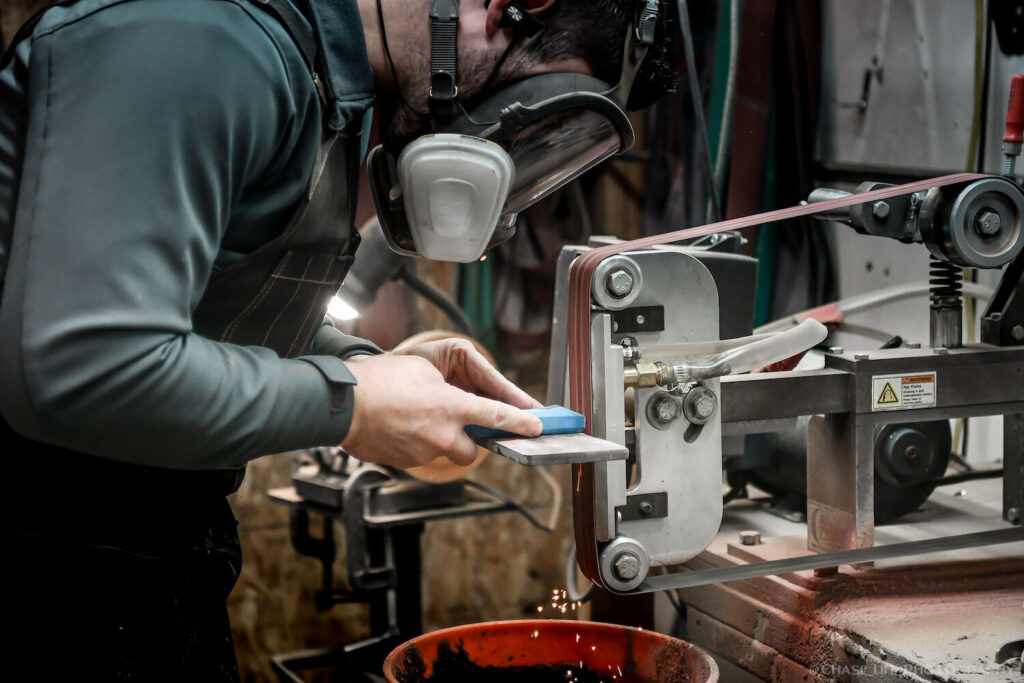
Though Brandon Hampton comes for a long line of restaurateurs, it's his knife-making skills that are slowly creating waves in the hospitality industry
Meglio Knives, hero
In Brandon Hampton’s dim office, a fan whirs and his pet snake—a black and white 7.5-foot-long Argentine Boa constrictor—lies coiled and unmoving in a huge glass case. “When we got her, she kept licking the heat lamp, so we named her Brick, because ‘Brick loves lamp,’” he explains, a nod to actor Steve Carell’s character in Anchorman.
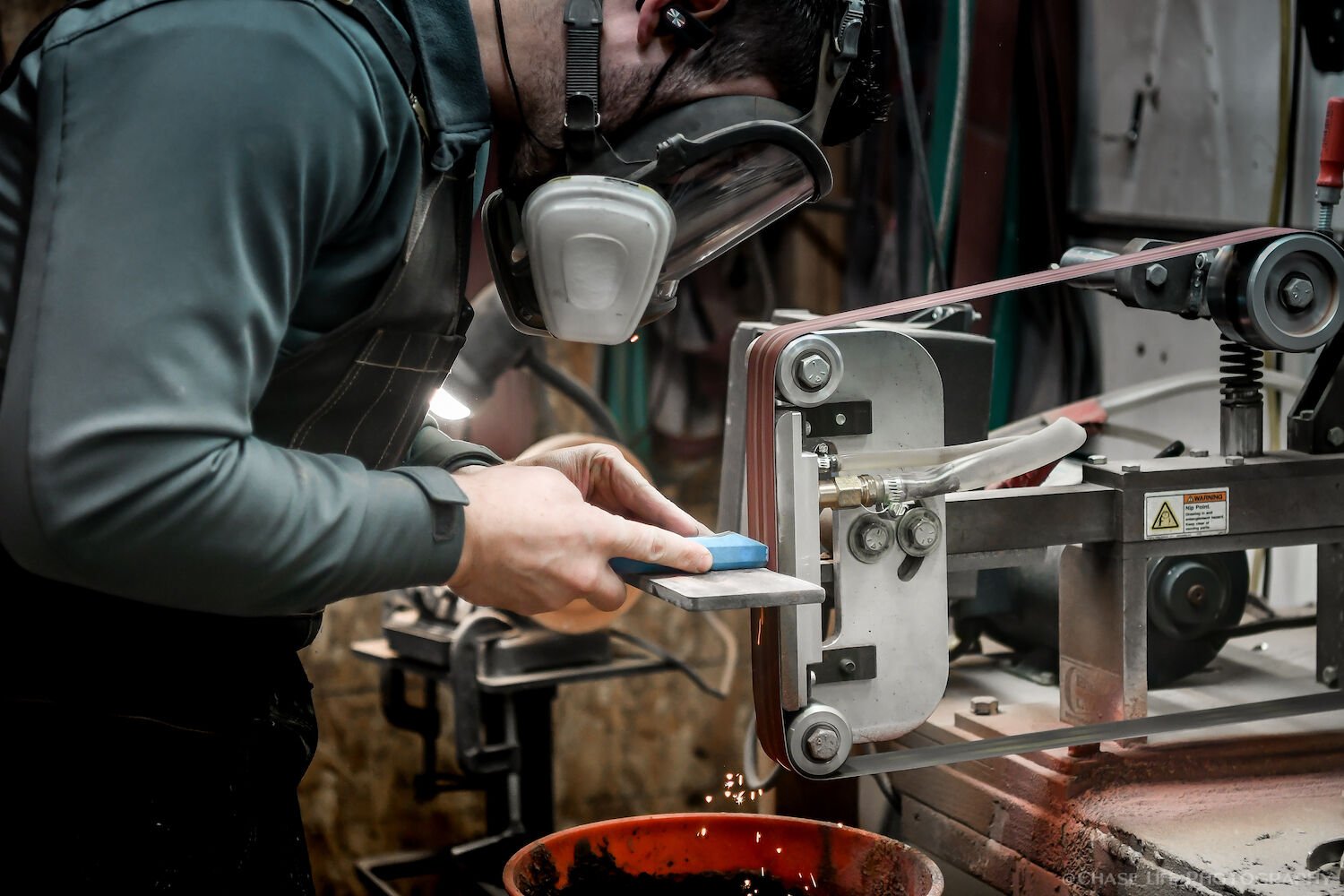
We’re at Hampton’s workshop in an industrial part of Escondido, home of Meglio Knives, where Hampton works as owner and lead knifemaker. Right now, he’s got a 100-person waitlist for his custom knives. In a different universe, though, he might have been a lawyer. “I graduated and went to law school and failed out because all my notes were drawings of knives,” the North County native says.
To fund his undergraduate history degree at CSU San Marcos, Hampton took up work at Strider Knives during the late 2000s. The company amassed superlative status among the armed forces and tactical knife communities in the 20+ years Strider was in business.
Hampton worked primarily under Duane Dwyer, business partner of owner Mick Strider. “He’s a material science guy. He taught me application-specific uses for different types of steel,” Hampton recalls of his mentor. They still hang out and drink whiskey together. Before that, in high school, he sold kitchen knives at a mall.
Growing up, he often helped out around his family’s Italian restaurant in Escondido. His great grandparents ran Laura Scardino’s on Escondido Boulevard and 10th Avenue. It’s a mariscos spot now, but back in the 1940s, great grandma Laura sold pasta and lasagna out of her house. “Servicemen would walk by and smell her cooking,” Hampton shares.
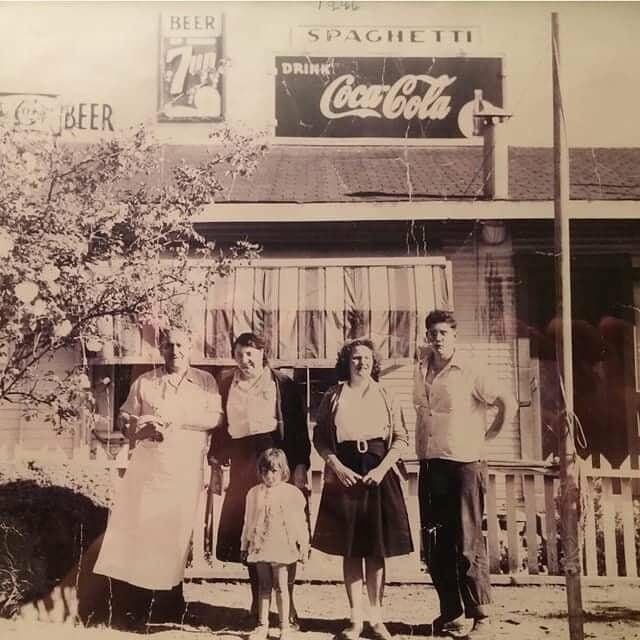
The former Scardino family restaurant
In the ‘70s, they tore down the house and built two buildings: Laura Scardino’s the restaurant— where Hampton would spend much of his youth wandering into the kitchen— and a smaller residential house.
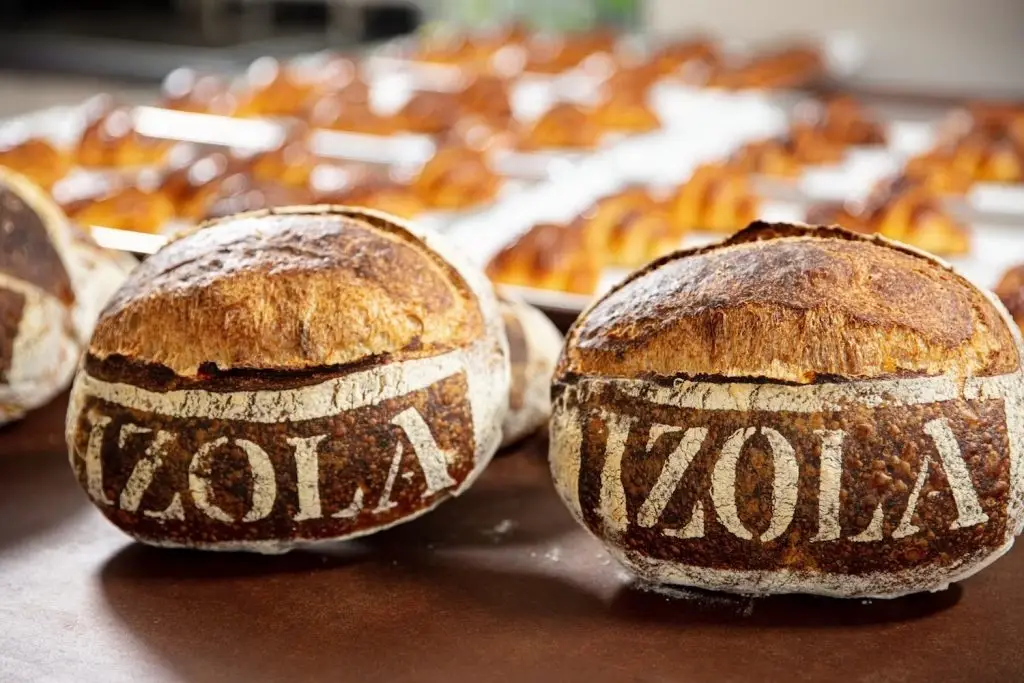
“I remember going back there and making garlic bread pizzas. I was not a thin child,” he admits. His Mexican-Italian mother and tias taught him to cook. When he’s not cooking or working these days, he’s roving the county for good eats, such as Lola55’s tacos and beans and Izola bakery’s Tahitian vanilla knots.
Hampton’s also got words for those who think of San Diego as anything less than a dynamic food hub. “I hear a lot of bougie chefs get really critical about the food scene in San Diego, and I’m like, ‘speak for yourself, man.’”
During Meglio’s infancy, Hampton cycled through a number of paying jobs. There were shifts at UPS, a 9-to-5 as an admissions counselor, and a stint at a medical device company. In between, he spent just as much time in his shop “grinding away til the wee hours.”
Back then, Hampton visited a lot of restaurants, pitching his wares one by one, asking for feedback and making some industry friends along the way. Though it took a while to get his knives into the chef community, his clientele now reads like a best of list, including Chef Tara Monsod of Animae and Chef Accursio Lota of Cori Pastificio in North Park, a 2020 Best Restaurant winner.
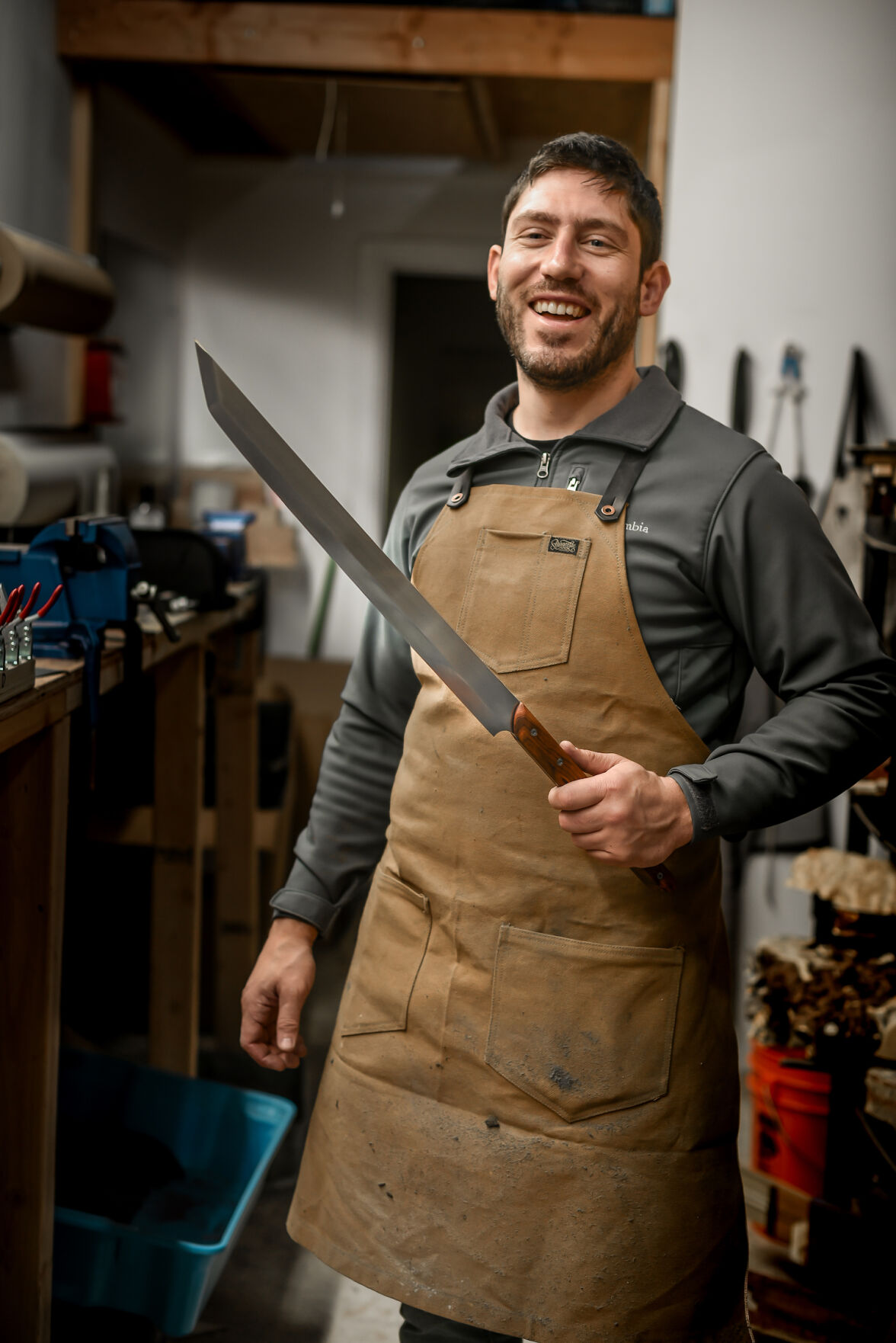
Meglio Knives Brandon Hampton

Meglio Knives, product
However, the admin required for custom orders can be overwhelming. So, once he gets through his waitlist, he’ll focus on his production line of chef’s and paring knives for everyone, not just professional chefs.
Unless of course, someone’s got a good challenge for him. Need a left-handed eel knife, for example? Hampton is in—as long as the knife actually gets used. “If you don’t use your knife, send it back,” he says. “I don’t want my knives in a safe.”
And although Hampton clocks in considerable elbow grease designing, grinding, and shaping metal, he doesn’t consider himself an artist, but a craftsman.
“I make a tool,” he says. Compared to art, which is meant for emotional evocation, he believes, “there’s definitely a wrong way to make a knife. If it doesn’t cut, I’ve failed in my task.” On the other hand, “Seeing [chef] Tara create what she creates and knowing that she’s got my 8-inch Gyuto in the back just tearing it up, and my offset fillet back there… ” Hampton trails off for a beat. That’s art.

Ligaya Malones grew up in Kaua’i, Hawai’i and is a San Diego-based writer covering the intersection of food, travel, and culture. Her work has appeared in publications including Food52, Condé Nast Traveler, Lonely Planet, and Salt & Wind Travel.
Talking farm to table, fraud-to-table, and the feasibility of the movement with the beloved restaurateur who saw it all
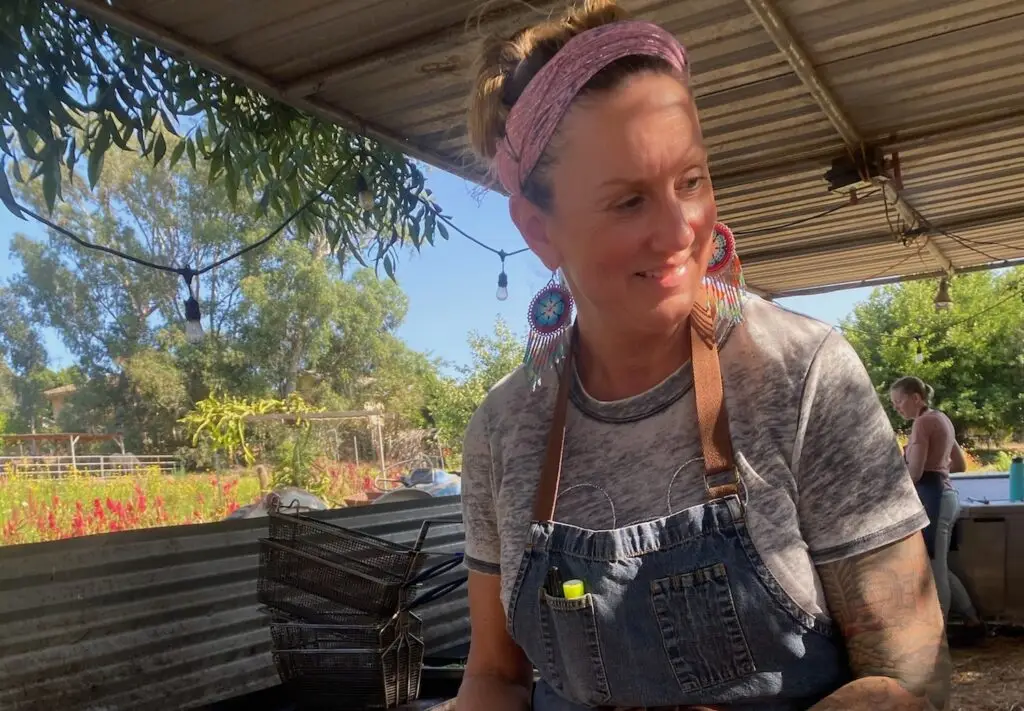
Garden Kitchen was special. During its seven-year run on a quiet street in Rolando, even the farmiest-to-table devotees were pointing to chef-owner Coral Strong and slow-clapping. When the restaurant’s lease was up without the option to renew, which forced her to close in 2022, Strong wasn’t sure what to do next.

Farm-to-table wasn’t new by any means—chef Alice Waters spawned the movement at her pioneering restaurant Chez Panisse in Berkeley in the early ‘70s, and many San Diego chefs did it right. But by the mid-2000s, the idea had been so co-opted by the mainstream that the meaning was almost completely lost.
“In the beginning, I used to get very honestly angry and upset when I would go to other restaurants that were claiming they were farm-to-table, but knowing some of the chefs or prep cooks inside [telling me] ‘Oh no, that comes from Restaurant Depot,’” she says.
Food critic Troy Johnson’s cover story in 2015 documented the fraud, titled “Farm to Fable.” At Garden Kitchen, Strong only used produce and meat sourced from local San Diego farms—an honorable, if not arduous endeavor.
Strong grew up in Cardiff before her parents moved the family to Costa Rica in 1989. They’d bounce between the two countries for months at a time, but when they lived in a motel by the beach while building their own house, she witnessed an incredibly tight-knit food culture. “As a Latin American country, everyone kind of cooks together,” she says. Everyone chopped, prepped, prepared, and served as a unit. “[That] definitely shaped my adolescence as to how I thought about food and the community of food.”

When her father, a commercial fisherman, brought the family back to San Diego, Strong leaned into an entrepreneurial streak, moving from coffee to accounting and eventually bartending to pay the bills. But food remained a passion, especially after she met her future husband, who introduced her to his Be Wise CSA and the wonderful world of truly fresh, farm-grown vegetables.
“We were just always disappointed with the vegetables out at restaurants and were like, ‘Why can’t they just make vegetables taste good?” she wondered. She realized that despite having more small farms than any other county in the country, most restaurants in San Diego simply weren’t using local ingredients.
So she decided to do it herself.
Strong opened Garden Kitchen without any formal culinary training—just a commitment to getting the freshest vegetables, meat, fruits, and other produce onto people’s plates. Her first chef quit within a month, telling her it was impossible. “So I got in the kitchen one day and said, ‘I can do this, let’s figure it out.’ I taught myself how to cook.”
She already had connections with farmers, fishermen, and ranchers, and designed a different menu almost daily based on what she could get. “My farmers sometimes delivered in the middle of dinner service,” she laughs.
Garden Kitchen lasted until after the pandemic, but before the current economy cut into already razor-thin margins. Could Garden Kitchen exist today? She’s not sure.
“The biggest thing right now is just looking at the finances and how expensive it is,” says Strong. “Obviously, the cost of food is up right now, gas is crazy right now… it just crushes you.” Despite that, she believes that committing to the true farm-to-table ethos is as easy as one decides to make it.
“If you think it’s hard to order directly from your farmer, if you don’t understand the absolute pleasure in doing that and you’d rather order from a computer, then that’s your own difficulty,” she says. “People say they’re into it, but are they willing to make the effort like I am, to drive an hour to go get my meat, or drive 35 minutes to go to my farm to go pick it up? I don’t know.”
Today, Strong works as a private chef, hosts pop-ups, and offers catering services, all still using seasonally available ingredients from San Diego. And while she has no intentions of opening another restaurant, she says we might see even more of her in the future.
“I have a large property [in Valley Center], and let’s say that there will be more of my food to come,” she promises.

Listen Now: The Latest in San Diego’s Food and Drink Scene
Have breaking news, exciting scoops, or great stories about new San Diego restaurants or the city’s food scene? Send your pitches to [email protected].
Beth Demmon is an award-winning writer and podcaster whose work regularly appears in national outlets and San Diego Magazine. Her first book, The Beer Lover's Guide to Cider, is now available. Find out more on bethdemmon.com.
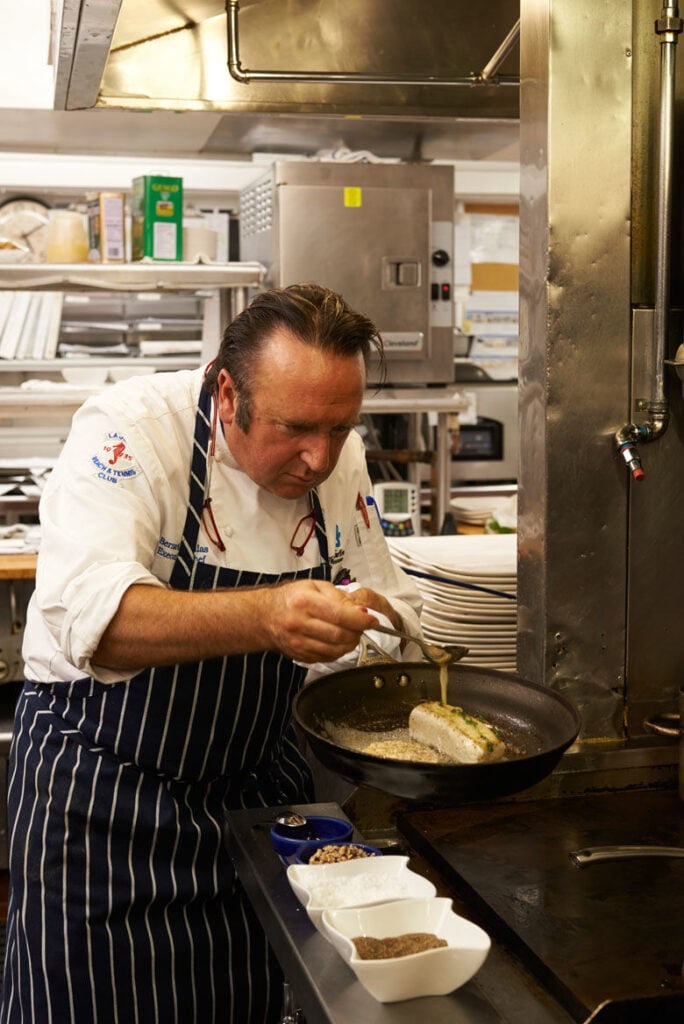
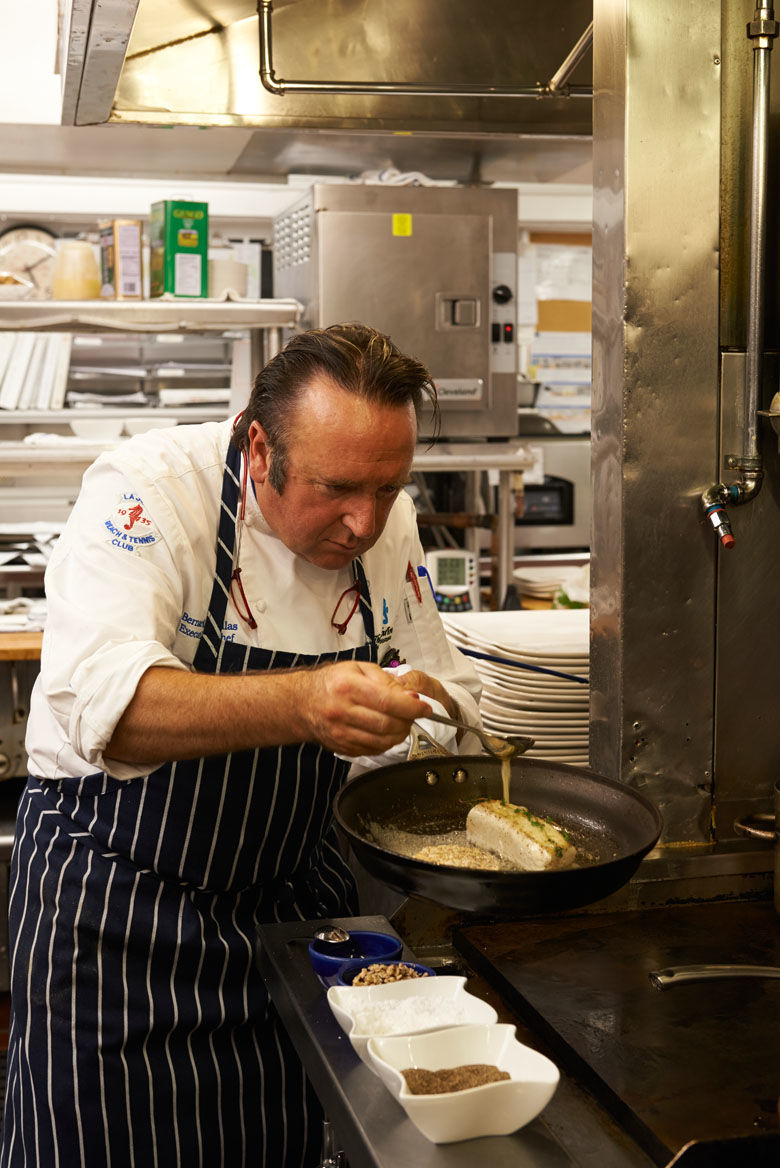
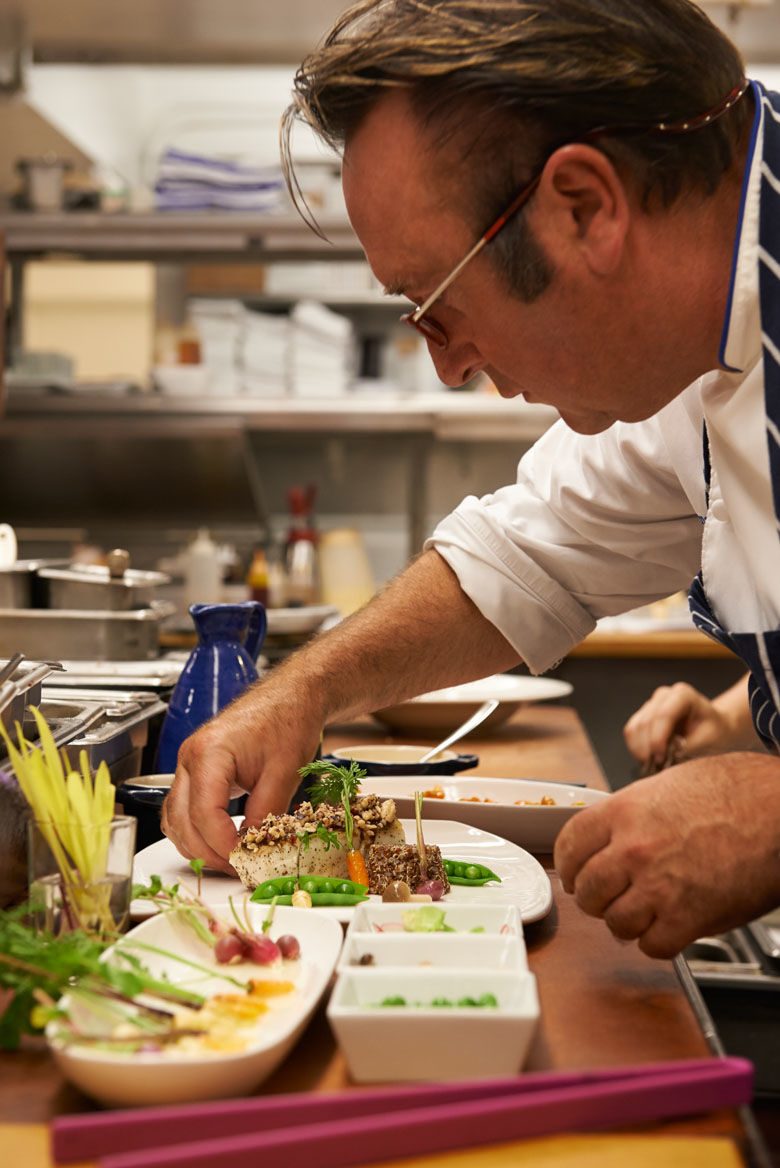
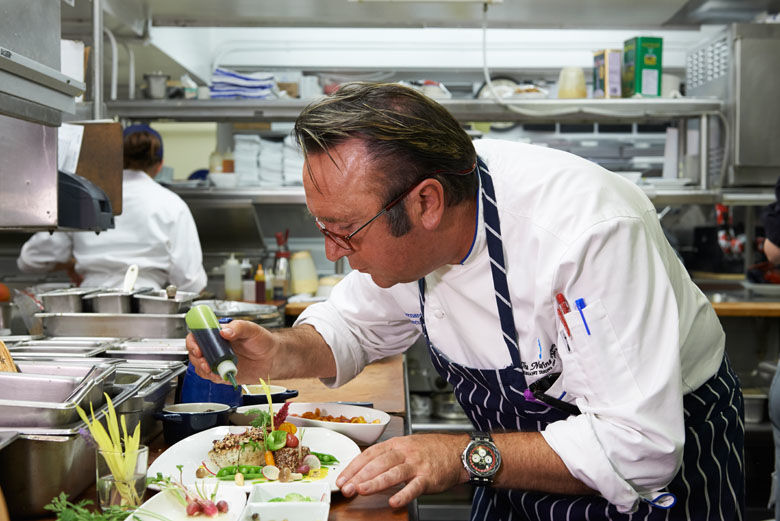
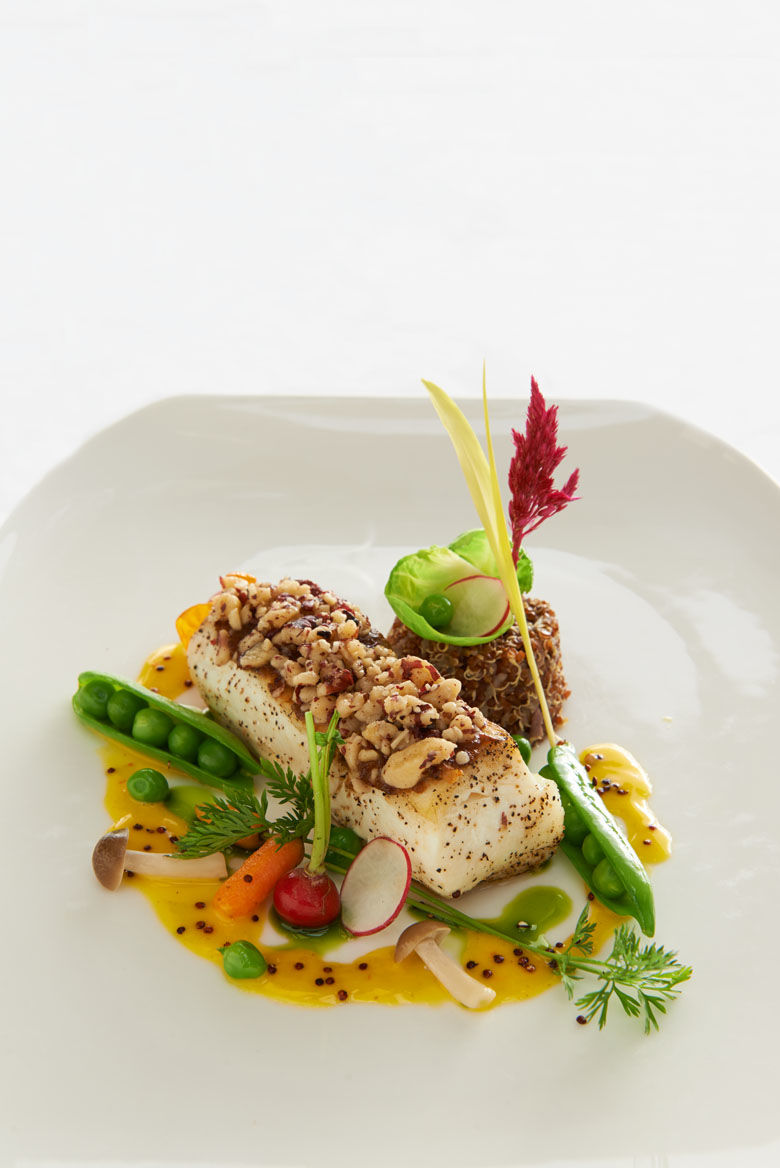
The art of presentation. The Marine Room's chef Bernard Guillas prepares Alaskan halibut with red walnuts, quinoa, cara cara orange, and an absinthe infusion
The Marine Room’s Chef Bernard Guillas
The Marine Room’s chef Bernard Guillas prepares Alaskan halibut with red walnuts, quinoa, cara cara orange, and an absinthe infusion
The Marine Room’s Chef Bernard Guillas
The Marine Room’s chef Bernard Guillas prepares Alaskan halibut with red walnuts, quinoa, cara cara orange, and an absinthe infusion
The Marine Room’s Chef Bernard Guillas
The Marine Room’s chef Bernard Guillas prepares Alaskan halibut with red walnuts, quinoa, cara cara orange, and an absinthe infusion
The Marine Room’s Chef Bernard Guillas
Alaskan halibut with red walnuts, quinoa, cara cara orange, and an absinthe infusion
The art of presentation. The Marine Room's chef Bernard Guillas prepares Alaskan halibut with red walnuts, quinoa, cara cara orange, and an absinthe infusion
The Marine Room’s Chef Bernard Guillas
The Marine Room’s chef Bernard Guillas prepares Alaskan halibut with red walnuts, quinoa, cara cara orange, and an absinthe infusion
The Marine Room’s Chef Bernard Guillas
The Marine Room’s chef Bernard Guillas prepares Alaskan halibut with red walnuts, quinoa, cara cara orange, and an absinthe infusion
The Marine Room’s Chef Bernard Guillas
The Marine Room’s chef Bernard Guillas prepares Alaskan halibut with red walnuts, quinoa, cara cara orange, and an absinthe infusion
The Marine Room’s Chef Bernard Guillas
Alaskan halibut with red walnuts, quinoa, cara cara orange, and an absinthe infusion
At Vi at La Jolla Village, residents don't have to choose between security and adventure, connection and independence. They get all of it.
Today’s seniors are more connected than ever, with a renewed focus on retirement as a time of discovery and enriching experiences. The ultimate reward for a retirement well-earned is the wisdom to appreciate it all, and what better place to enjoy that unique perspective than Vi at La Jolla Village, in the heart of San Diego.
All-access pass to good living.
As a Continuing Care Retirement Community (CCRC), Vi provides access to a connected and fulfilling community while making it easy to plan for future care, should the need ever arise. With a care plan in place, residents enjoy greater financial predictability and long-term value, freeing them to focus on making the most out of retirement.
Resort-style amenities at the epicenter of a cultural hub like San Diego offer a retirement experience unlike any other. Paired with exceptional dining, spacious accommodations and dedicated staff, the best of maintenance-free living is all around. And with the introduction of Vista 360 Well-Being, Vi’s panoramic approach to wellness, there are more ways than ever for residents to access it all.
The harmony of mind, body and community.

The key to longevity is striking the right balance in maintaining an active lifestyle with an active mind in a fulfilling community. With newly renovated community spaces and restaurants, Vista brings a variety of opportunities for residents to elevate their well-being through Vi-exclusive “Signature Experiences.”
Vista Enrich takes an evidence-based approach to brain vitality, keeping residents at the forefront of cognitive health through exergaming (exercising + gaming), nutritional plans and informative workshops. It is also home to The Brain Vitality Studio, an innovative facility dedicated to cognitive fitness that has garnered national recognition.
Vista Discover invites residents into stimulating educational experiences, from chef-led cooking demos and guided wine tastings to lectures at local universities and intimate lectures following cultural outings.
While Vista Enrich focuses on brain health and Vista Discover engages residents intellectually, Vista Explore cultivates a sense of adventure through curated travel and local excursions. But broadening one’s horizons doesn’t always require a plane ticket. One recent event brought a taste of the world right to the community: an onsite “jazz cruise” featuring live music and global cuisine served at a series of themed “ports” all within the community’s own ballroom.
“Location, location, location”

One of the biggest perks of life at Vi at La Jolla Village is its proximity to just about everything. With easy access to transportation and local attractions just steps away, residents can explore and engage with their community at their own pace.
“There are trolley and bus stops within a 5-minute walk that will get you to the beach, UCSD Campus, medical appointments, downtown La Jolla or San Diego, et cetera. We rarely use our car,” said resident Tom Yager.
With the best of San Diego just steps away, residents don’t just live in the city, they live within reach of everything that makes it special.
The best of all worlds.

At Vi at La Jolla Village, retirement isn’t a chapter to slow down; it’s an invitation to discover more. Tailored community experiences created by Vista, paired with the vibrant pulse of San Diego just outside the door, mean that residents don’t have to choose between security and adventure, connection and independence. They get all of it.
This is what an all-access pass to good living looks like: the comforts of an elevated lifestyle, a community built for growth and a city made for discovery – all in one place.
To learn more about Vi at La Jolla Village or for details on available floor plans, visit ViatLaJollaVillage.com/SDM.
Chantal Partolan’s growing food business blends her Filipino and Chinese heritage with a creative, memory-driven approach to cooking
As a child, Chantal Partolan never considered cooking as a viable job route. Rather, it was a passion she could turn to as a way to flex her creative muscle, from the time she was in school all the way into adulthood working in a corporate space.
“I never felt like [cooking] was a chore, like some other people feel,” she says. To feed that passion, she started hosting supper clubs in 2022, creating menus and full tablescapes to bring together friends and family. With each successful gathering, she wondered: Could she take this further?
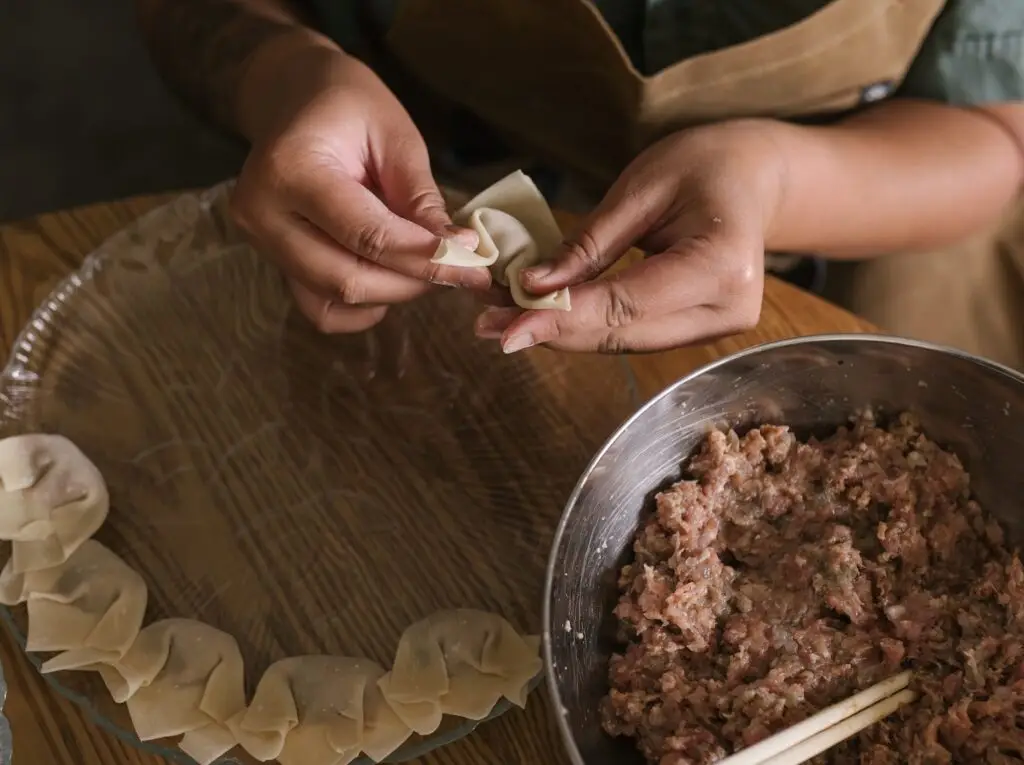
In 2024, she did. Officially launching as Bik-Lun, she began small, hosting baking pop-ups in Long Beach before moving back to her hometown of San Diego in 2025. Now, Partolan still mostly pops up at small local businesses like Moniker General and Joon Shoppe, but now also offers small batch catering and private chef services, all centered around her father’s Filipino and her mother’s Chinese heritages.

Bik-Lun (pronounced bik-LUHN, like “fun”) is named for her mother. “When she migrated to America when she was younger with all her siblings, they all got American names,” Partolan says. She doesn’t strictly adhere to rigid culinary rules—instead, she lets memories drive her creations.
“Now that my grandparents are no longer here, trying to revisit those memories and share them with others has been a really important part of this journey for me,” she explains. Ingredients like red bean and black sesame reflect her Chinese roots, while more savory items like sinigang (a sour and savory Filipino soup) pay homage to her father’s family.
Collaborating with other children of immigrants is another way she experiences flavors through a fresh lens. There are so many Filipino-run small businesses willing to share their own familial memories and inspiration, she says. “Hearing their experiences sometimes helps me recount my own.”

You can next catch Bik-Lun on September 27 at Home Ec + Best Bud with Magnaye (formerly One of One), October 3 at Patine’s new location in Bankers Hill, and October 10-11 at the Mingei Museum for Merkado Kultura, a makers market for Filipino producers. Partolan says since most customers are familiar with her sweet products, she’s planning to offer more savory items—like a breakfast sandwich—at the Home Ec event to give people a taste of her creative versatility.
Eventually, she hopes to add some permanent residencies to Bik-Lun’s schedule—a few are already in the works, so stay tuned—while also looking for ways to combine her food and photography expertise. (A cookbook? Maybe, she says.) But in the meantime, Partolan will remain curious about where she comes from—and how it can take her to where she’s going.

Listen Now: The Latest in San Diego’s Food and Drink Scene
Have breaking news, exciting scoops, or great stories about new San Diego restaurants or the city’s food scene? Send your pitches to [email protected].
Beth Demmon is an award-winning writer and podcaster whose work regularly appears in national outlets and San Diego Magazine. Her first book, The Beer Lover's Guide to Cider, is now available. Find out more on bethdemmon.com.
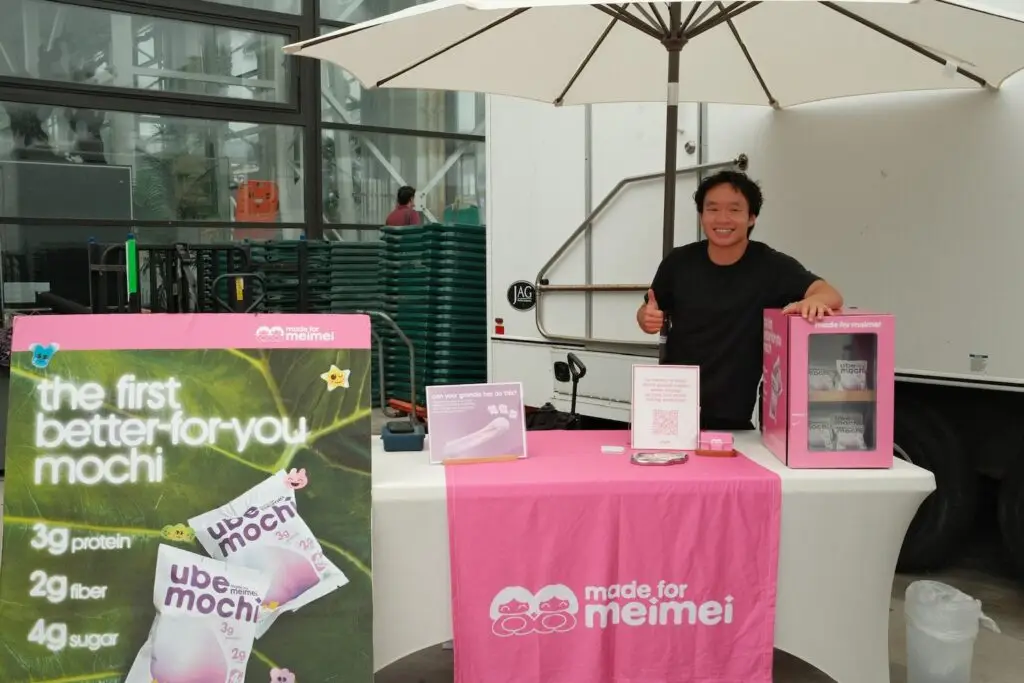
Jacob Chen’s Made for MeiMei adds protein and fiber to flavors like ube, black sesame, and PB&J
As a kid, Jacob Chen scrounged up whatever odd jobs he could—running lemonade stands, organizing garage sales, reselling appliances on Facebook Marketplace. But there was something about cooking that kept him coming back to the kitchen. “It started as a way for me to spend time with my mom,” he says. “In a way, I think it was inevitable that I would begin a food-based business.”
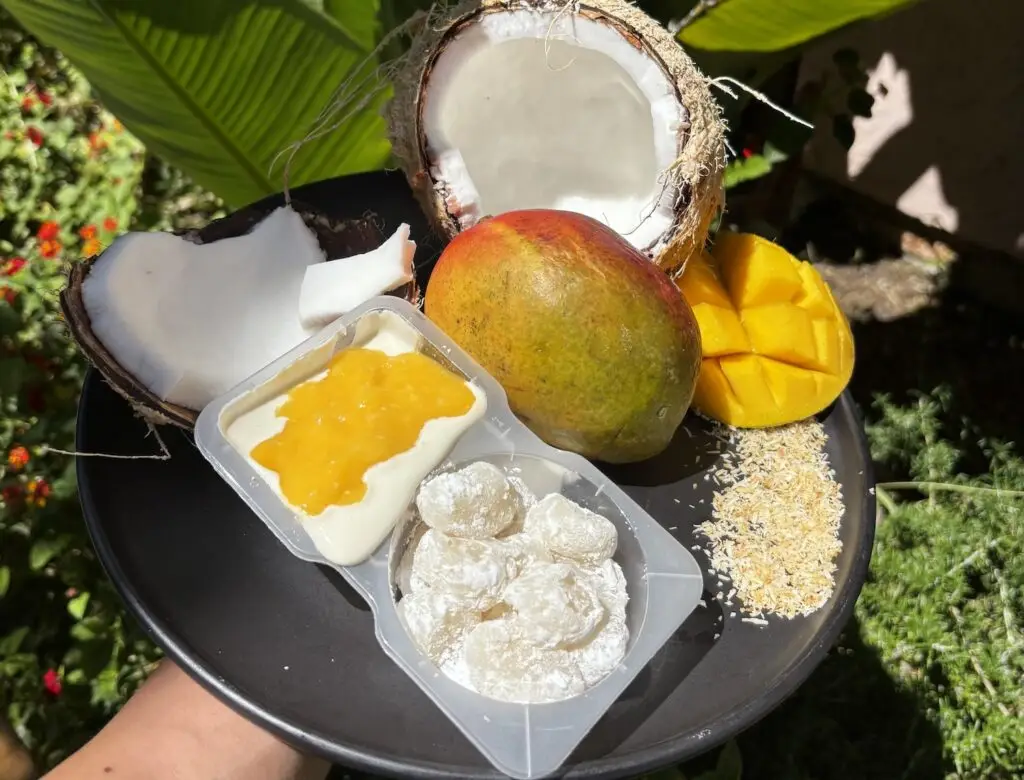
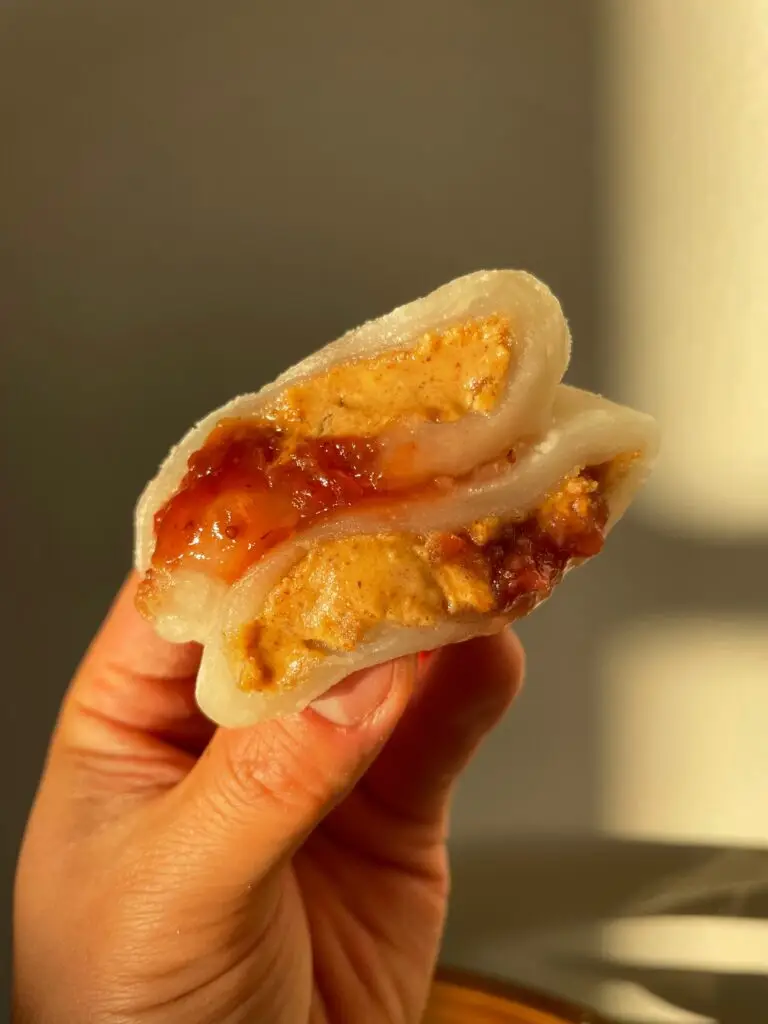
That business ended up being Made for MeiMei, a line of low-sugar, high protein and fiber mochi flavors like ube, matcha, red bean, black sesame, peanut butter and jelly, and chocolate hazelnut. “‘Mochi’ is derived from ‘mochigome,’ which is the special type of short grain rice that gives mochi its stretchy, chewy texture,” he explains. Traditionally served in Japan as a dessert to celebrate the new year (similar to bibingka in the Philippines and nian gao in China), American-style mochi tends to taste sweeter and often comes as mochi ice cream. However, Chen points out that wasn’t always the case.

“Before mochi was synonymous with ice cream and refined sugar, it was simply a rice based snack filled with whole food ingredients,” he says. “That’s the version of mochi we’re trying to bring back.”
Made for MeiMei’s primary ingredients are rice flour and coconut milk, plus the featured ingredient for each flavor. But rather than using refined sugar, Chen sweetens his mochi with monk fruit and uses organic pumpkin seed protein and chicory root fiber to create what he calls “the first better-for-you mochi.”
Recent collaborations include a mochi-wrapped gelato with An’s Dry Cleaning, strawberry daifuku cream puff with Mon Chourie, and a funfetti chantilly cream dip mochi with The Clovery, but Chen has his sights set on retail expansion. Currently, Made for MeiMei products are available online, locally at Easy Does It Cafe, Bodega Market, or at upcoming events like Embolden Beer Company’s Taste of Shogun on September 27 (admission is free!) and a pop-up with Organic Oren on October 5.

Besides being better for you nutritionally, Chen’s goal for the business is to also be better for the world. He’s worked in rehabilitation clinics and volunteered at San Quentin when he lived in Berkeley—experiences that transformed his worldview. “It really doesn’t take much to be on the other side of the fence,” he says. That’s why he donates portions of proceeds to organizations like Second Chance San Diego (which helps formerly incarcerated people find steady employment), Immigrant Defenders Law Center (a nonprofit deportation defense law firm), and Border Angels, an advocacy group working to reduce fatalities of people crossing the United States and Mexico border.
Chen has his sights aimed high, hoping to bring Made for MeiMei to more local grocery stores and cafes before hitting national retail shelves. Will he stop at mochi? Maybe not.
“There are so many childhood treats that could use an ingredient upgrade,” he says. “Mochi is just the beginning!”

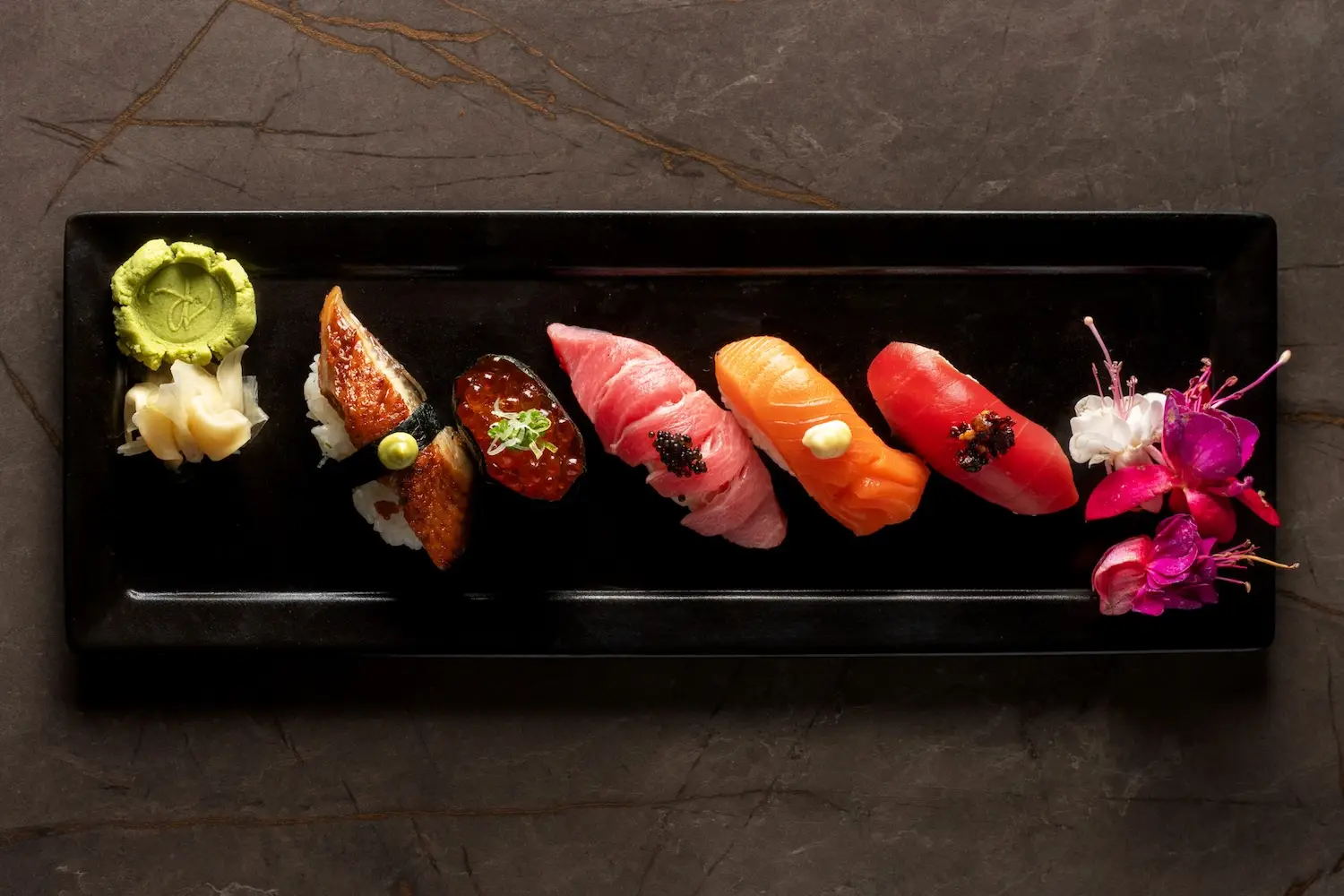
There’s no such thing as too much omakase, and we’re leaning in. On September 24, chef Davin Waite (The Plot, Wrench & Rodent) will join chef Mark Correa at Roppongi Restaurant & Lounge for a one-night-only, eight-course omakase experience with an optional (but personally recommended) beverage pairing curated by sommelier Humberto Ramirez. You definitely need to snap up a reservation for this one before they’re gone—and with a dream team like this, they will be gone.

Listen Now: The Latest in San Diego’s Food and Drink Scene
Have breaking news, exciting scoops, or great stories about new San Diego restaurants or the city’s food scene? Send your pitches to [email protected].
Beth Demmon is an award-winning writer and podcaster whose work regularly appears in national outlets and San Diego Magazine. Her first book, The Beer Lover's Guide to Cider, is now available. Find out more on bethdemmon.com.
San Diego Magazine's Private School Guide 2026
NewBridge School is San Diego’s only school dedicated to the education of students with dyslexia and related learning profiles. For 30 years we have successfully served students with dyslexia, dysgraphia, dyscalculia, receptive/expressive language disorders, ADHD, executive functioning and memory deficits. Students transition successfully into academically rigorous high schools and colleges across the country. Why NewBridge? Training, training, training (plus intensive individualization, and comprehensive program design). All teachers are trained and retrained biennially in Orton-Gillingham, the only approach proven to remediate dyslexia based on Science of Reading research, and complete a year-long training program. Every aspect of our program is designed around our students’ learning styles and needs. Every class is taught by a highly-trained expert, and our Speech/Language and Occupational Therapy teams embed throughout the day. Our multisensory, multi-tiered math program has been developed in conjunction with sister schools and experts across the country. Don’t wait—early intervention is magic!
Enrollment: 100
Grades: K – 8
Tuition: $30,000
Deadline: Rolling
Gender: All-inclusive
Details Nonsectarian
Open House Tours by appointment

12285 Oak Knoll Road • Poway, California 92064
858-679-5744 • [email protected] • thenewbridgeschool.com