Featured articles
Food & Drink
Food & Drink
Food & Drink
Featured articles
Everything SD
Everything SD
Things to Do
Featured articles
Things to Do
Things to Do
Guides
Featured articles
podcast-ep
podcast-ep
podcast-ep
Featured articles
Everything SD
Everything SD
Food & Drink
Featured articles
Everything SD
Everything SD
Food & Drink
Ready to know more about San Diego?
SubscribeReady to know more about San Diego?
The Red Door's Re-Source dinner sheds light on how much damn food we waste
The stats on food waste are staggering. Almost 40 percent of the food in the U.S. is never eaten. In 2010, America wasted 33.79 million tons of food. That’s enough to fill the Empire State Building not once, not twice, but 91 times. If the U.S. wasted just 5 percent less food, it would be enough to feed 4 million people.
When you consider one in six Americans face hunger on a daily basis, the stats seem especially grotesque, if not cruel.
There are many reasons: preparing too much food and not eating the leftovers; throwing out food past its “use by” or “best by” date; badly prepared food, etc. But one of the more vapid and ridiculous reasons are that supermarkets refuse to sell “ugly” fruits and vegetables.
“Ugly” food, and food waste overall, is the driving ideas behind the upcoming “Re-Source” dinner on April 6 at The Red Door restaurant in Mission Hills. The four-course dinner (with bonus bites) will use perfectly good food that would otherwise go to waste.
Red Door owner Trish Watlington explains:
What’s the idea?
It’s a dinner made completely from food that would be unwanted, discarded or thrown away. The purpose is to demonstrate that the 50 percent of food that’s thrown away in the world doesn’t have to be—especially in light of all our talk about how we need to feed billions of people. So it’s to bring awareness to the issue and raise money for the SD Food System Alliance.
What kind of unused food?
We’ll be using pastry scraps from Cardamom Café, and citrus and bananas from Whole Foods in Del Mar. We’re not really sure, because we’ll have to wait until the day before to know what food is slated to be wasted. We have a great relationship with the farmers markets. You’ d be amazed at what the farmers markets throw away at the end of the day because the fruit or vegetable is bruised or cracked or a little soft in one spot. That’s food that’s perfectly fine. You could cut around the bruise or put them into dessert or applesauce.
Who else is involved?
Kitchens for Good. They’re a catering company and culinary education program. Their catering menus are predominantly made using food “waste” that’s donated to them—like crates of oranges that have fallen from trees.
How can the average joe waste less food.
If people would buy from farmers markets, a lot more food wouldn’t get wasted. Standard size doesn’t apply at farmers markets. For fruits and veggies to go to the grocery store, they have to be a standard size, or they go into the trash. So that’s an opportunity.
Why’s it important to you?
Food waste is near and dear to my heart. My mom was raised in the Depression. She had the ethic of ‘you can’t waste anything, because we don’t have anything.’ In Europe, the ethic is that you only use what you have. We have gotten so far away from that as a society. Fortunately for me, our chef Miguel Valdez grew up the same way in a poor family, so he learned to make something out of nothing.
You can buy tickets to the “Re-Source” dinner by clicking here.
PARTNER CONTENT
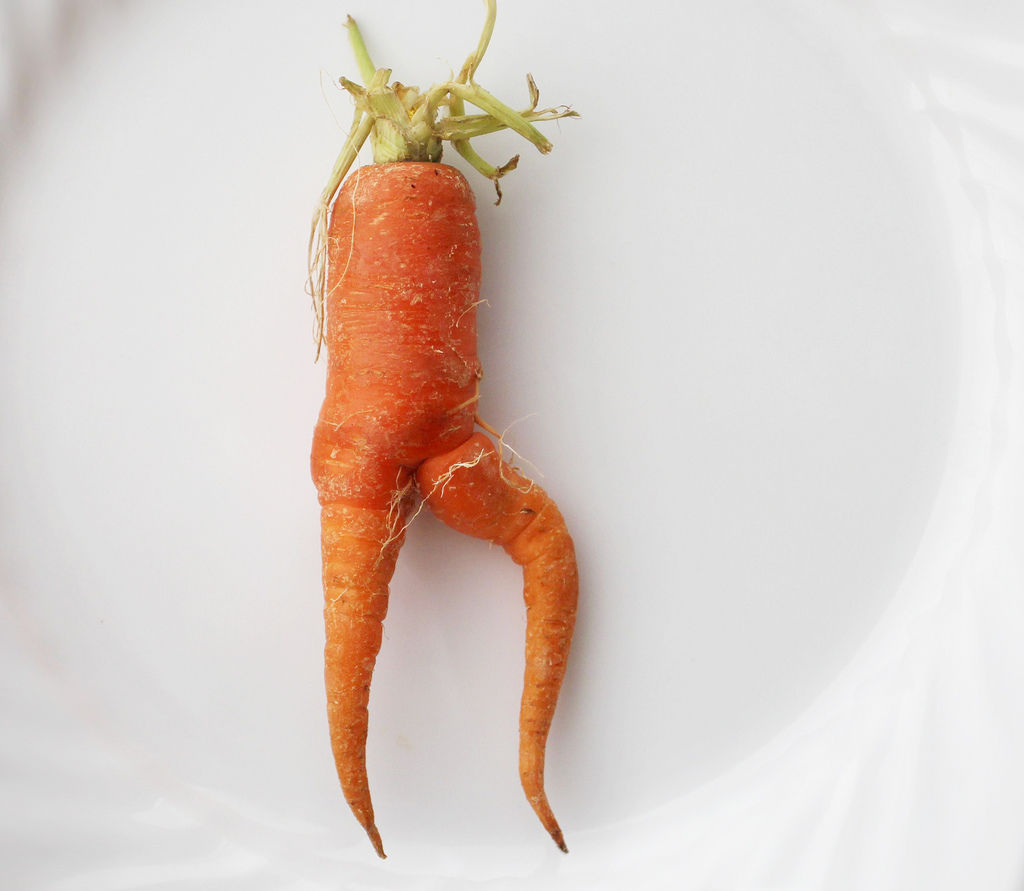
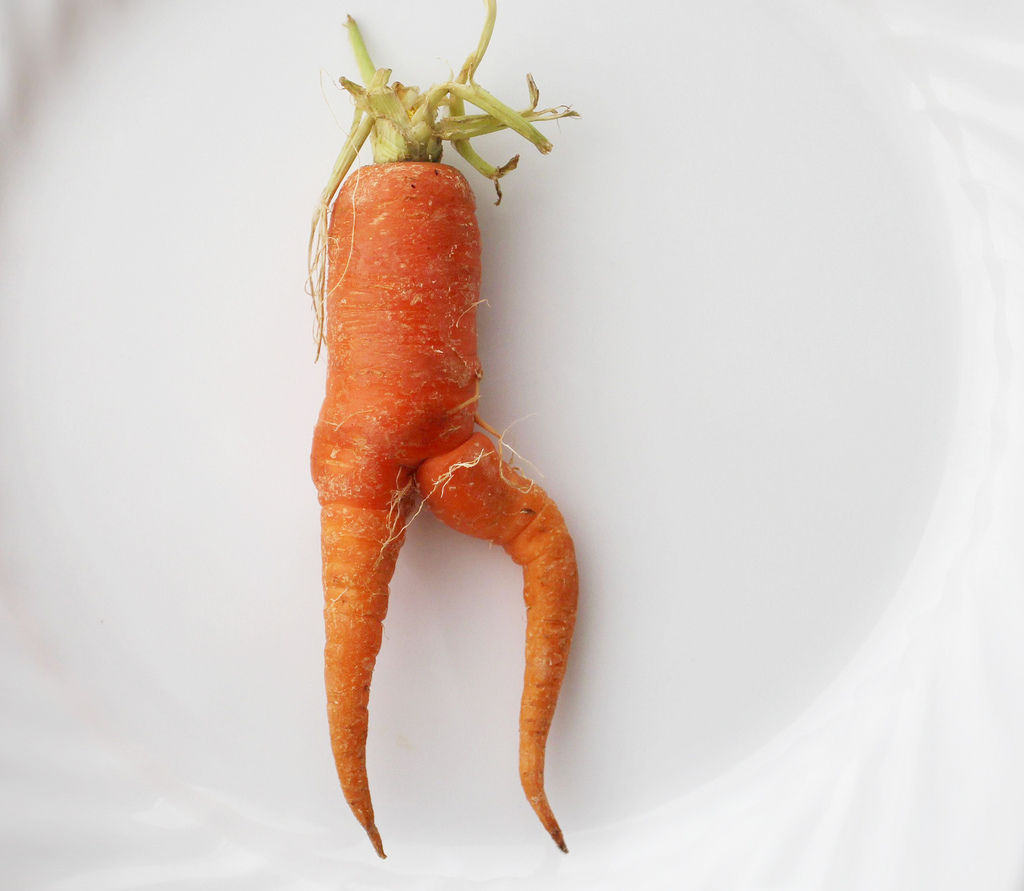
An ugly carrot, and a funny one.

The former BoujieMana executive chef lands at the Mission Hills restaurant to re-introduce himself to San Diego
For two-and-a-half years, one of California’s most promising culinary talents has remained surprisingly off-the-radar, working as executive chef in a uniquely named restaurant tucked inside a Serra Mesa office building. He hasn’t gone completely unnoticed though—food critic Troy Johnson calls BoujieMana a “hidden gem with an all-star team.” And that team? Led by said promising chef, Dante Cecchini.
A San Francisco transplant with a resume as long as a CVS receipt and as star-studded at the Andromeda Galaxy, first cut his teeth under chef Elizabeth Falkner at the Bay Area pastry shop Citizen Cake before moving to Big Night Restaurant Group, where he rose through the ranks to become chef de cuisine at places like Marlowe, Park Tavern, and The Cavalier under the tutelage of restaurateurs Anna Weinberg and chef Jennifer Puccio.
He also worked at Morris with chef Gavin Schmidt (from the three Michelin-starred Coi), cooked at the James Beard House twice, was named a Rising Star Chef by the San Francisco Chronicle, and one of Zagat’s “30 Under 30,” among his other accolades. So it’s surprising that he hasn’t had the chance to make a bigger impression in San Diego yet.
But he’s ready to do so as the new executive chef at Communion.
Opened in 2024, the Mission Hills restaurants offers a sky-high view from its top floor perch of The Sasan building at the corner of Washington and Goldfinch Streets. Guests enter through Paradis, the ground floor cafe on the way to the elevator, where a sanctuary-meets-sensuality vibe and strong cocktail program have gleaned generally positive reviews over the past year-and-a-half. But Cecchini wants to bring an infusion of new ideas to the kitchen.

Not too many all at once though, he says. To ensure loyal regulars will get the chance to get used to his approach to fine dining, he’s phasing out former chef Mike Moritz’s menu in stages, but says by the end of February the transition will be complete.
He’ll keep the tasting menu in some form or another, but at the very least expect twists on some of Communion’s signature dishes, like the za’atar-crusted lamb lollipops and the Spanish octopus. “[They’re] still going to be really approachable. It’s just going to be super flavorful, very colorful, but super seasonal,” he says.

Emphasizing seasonality much more will be a major part of Cecchini’s ethos at Communion. “You’ll never see strawberries on the menu in winter,” he promises. Tomatoes in February? Not on his watch. But there will more attention to plating presentation and dry-aging proteins like fish and duck. He’ll also incorporate some of his Italian heritage and training into the menu, like introducing Sardinian dumplings and using ingredients like bottarga, a salt-cured piece of roe that’s either grated or thinly sliced (like Parmesan) with an intense umami profile.
With Cecchini’s years of level experience, expectations are as high as Communion’s rooftop location. He has three words: bring it on.
“I want to invite everyone in for them to experience what’s different. I promise that everything that they come in and eat will be great,” he says. “I know that’s a big thing to say, but I’m feeling very confident.”
Communion is located at 901 W. Washington Street in Mission Hills.
Beth Demmon is an award-winning writer and podcaster whose work regularly appears in national outlets and San Diego Magazine. Her first book, The Beer Lover's Guide to Cider, is now available. Find out more on bethdemmon.com.
The local-friendly Mission Hills spot opens this weekend inside chef Brad Wise’s Italian chophouse
If Cardellino tells a story of fire and Italian bravado, Carlo is its soft, sensual counterpart. The cream to the cookie. Sophia Loren to Sylvester Stallone. According to owner and executive chef Brad Wise, it’s exactly the balance Cardellino needed.
Carlo’s story begins this weekend when it opens inside Cardellino. It’s not really a speakeasy. More a hidden cocktail bar within the restaurant, tucked behind a wine wall that wasn’t there a few months ago. The newly constructed, intimate space fits 32 guests at a time. Wise says the time was ripe for adding a new layer to the Cardellino experience. That particular part of the building never quite had the right feng shui.
“Where you walked in the front door previously, there was always a 750-square-foot, rectangular-shaped portion of the restaurant that I was just never in love with,” he explains. After seeing the huge success of sister restaurant Fort Oak’s “Snowed In” experiential holiday bar, he wondered if something similar would work.
“If you’re not figuring out how to create a different experience for people to come back multiple times over and over, the food and service these days is only going to do that so much,” he adds.
The idea is that guests can pop in for a drink before dinner at Cardellino or after they dine at Communion or Fort Oak. It’s designed to be a local’s spot and an arena for beverage director Jess Stewart and her team to flex their cocktail muscles in a smaller, more obsessive setting.
Carlo is reservation-only and specifically designed to be a bit more chic than Cardellino’s brick and bulbs. “It’s reds, mauve, purples—there’s a really beautiful flower installation hanging from the ceiling,” Stewart says. “Walk through a curtain, and we really want it to transport you.”

Stewart adds that it’s a traditional cocktail menu, so patrons can request a dealer’s choice. But she’s confident that the drinks she and lead bartender Marina Ferreira have concocted will blow your socks off. The menu has two themes: The Fates (whimsical house creations) and The Legends (elevated takes on classics). One example of a Fate cocktail is The Prophet, with bourbon, cognac, dates, palo santo, and bitters, while a Legend is Carlo’s spin on a negroni, starring a Schwarzwald dry gin with 47 different botanicals, Barolo chinato instead of sweet vermouth, Campari, and a pinch of salt to counter the bitterness.
Wise says his team is already working on another hidden bar that will open in the next two to three months (he wants to keep the details close to his chest), but now that he’s back in the bar world, it’s game on. Carlo may just be the start.
Reservations for Carlo are available on Resy. For more information, visit ciaocarlosd.com.

Chef Alex Carballo has helped launch ambitious concepts like Haven Farm + Table at Fox Point Farms in Encinitas, managed huge kitchens like Stone Brewing World Bistro & Gardens in Escondido, and made an appearance on San Diego Magazine’s 2025 cover featuring the biggest and brightest food stars in San Diego. The man’s a talent, gives a damn, and is a rock of the scene when it comes to launching new concepts that actually run. And come January, he’s opening Nómada in Carlsbad as the newest partner of Grand Restaurant Group (GRG).
Carballo’s menu will feature different regional cuisines from around Mexico. The group’s new beverage director, Sean Ward (Lumi, Huntress, Nolita Hall, Duck Dive), will focus on agave spirits from producers in Mexico and California. It may be the first time Carballo is at the helm as a partner, but considering he has over two decades of restaurant management, operations, and chef consulting under his belt, it sounds like GRG made an AJ Preller–level genius acquisition.

Listen Now: The Latest in San Diego’s Food and Drink Scene
Have breaking news, exciting scoops, or great stories about new San Diego restaurants or the city’s food scene? Send your pitches to [email protected].
Beth Demmon is an award-winning writer and podcaster whose work regularly appears in national outlets and San Diego Magazine. Her first book, The Beer Lover's Guide to Cider, is now available. Find out more on bethdemmon.com.
At this rosy rooftop restaurant atop The Sasan, the vistas are only part of the charm
The Perfect Order
Lamb Lollipops | Coconut Milk Poached Seabass | The Ritual
If pink’s belief in its own emotional power had waned, it has been fully restored by The Sasan. Mission Hills residents were pitchforkian-vocal about the paint job on the seven-story residential tower. Pepto-Bismol was trotted out yet again and co-slandered. Sure enough, The Sasan does look exactly like a stack of gigantic, bubble gum–colored Pez candies, the spaces between each dangling with deeply green plant life. It’s a flamingo among the architectural pigeons.
In other words, it’s lovely. As someone who grew up in suburbia, where every home seems to be the color of budget-hotel oatmeal, I envied the electric blue and banana-hued houses of Miami or Mexico or Cinque Terre or Buenos Aires. Not sure where we’re at with tariffs, but maybe lower them on paint.

The Sasan is home to the city’s newest rooftop dining spectacular, Communion. The entrance alone is worth the price of whatever you order. You walk into a large, ground-floor courtyard (home to the all-day sister concept, a bakery, coffee shop, and pintxo bar called Paradis), which glows pink. A singular host stands at a podium, ready to escort you into the elevators. Ride up and step out into Communion’s floor-to-ceiling glass overlooking the city. It’s a stunning bout of vertigo.
When it comes to views, give me the receded one. Vistas perched on top of the water are nice and all, but they lack perspective. From Communion’s large dining patio, you can see downtown, the point, and the bay where, in the mid-1800s, Captain Henry James Johnston first looked up from the docks at this hilltop and decided to buy 65 acres (the land used to be called Johnston Heights).
San Diego’s iconic plant lady Kate Sessions (she essentially single-handedly landscaped Balboa Park) lived and worked in Mission Hills and planted those palm trees and poinsettias, the bougainvillea and star jasmine. She started its oldest business, Mission Hills Nursery, in 1910.

Trolleys were everything back then, and getting a stop near your business meant your kids were well-fed, so Sessions sealed Mission Hills’ future when she convinced John D. Spreckels to bring the trolley to her nursery. I can’t help but think of her seeing those plants cascading out the sides of The Sasan’s balconies.
Communion is the project of another name well-known to San Diego. Jacquee Renna-Downing and her late husband Kipp Downing owned North County’s seafood icon Pacifica Del Mar (they sold it years back). The family launched two successful restaurants in the Coachella Valley (Pacifica Seafood and La Quinta Cliffhouse), and this is their return to San Diego (Jacquee’s daughter, Hailey Renna, is running it).
The lineup of talent in the kitchen and bar is A-list: executive chef Mike Moritz, formerly of Mister A’s and Mille Fleurs; Aly Lyng, longtime pastry chef of Georges at the Cove; and lead bartender Eliza Woodman (Camino Riviera).
I think it’s time to stop expecting less from view restaurants. For decades, they could serve us gussied-up slop and well drinks with expensive names, and we’d gladly be their sucker just to sit in their sky box. But, with food literacy at an all-time high, being front and center to the grandeur of the gods isn’t enough. Communion’s “coastal from across the globe” menu isn’t perfect, but it’s off to a hell of a strong start.
For drinks, the star is Yama’s Reign. You didn’t know you needed droplets of sesame oil floating in your cocktail with that unmistakable flavor bomb of furikake (Japanese spice blend) until you try this thing. With a tiny clothespin, the bar team straps a sheet of wakame (dried seaweed) to the glass. I’d get rid of the weed—its scent is so strong that it smells a bit like low tide—but the drink is phenomenal.
For apps, start with the Wagyu beef carpaccio. Moritz’s take is a bit soupy, embracing the trend of treating the classic like loaded nachos. Some people would say that you don’t thin-slice Wagyu beef and then air-drop a Vegas buffet on it—that’s like paying for Tyler the Creator to headline your concert and then having the opening acts stand in front of him all night singing their own songs.

But Moritz’s buffet is delicious and changes frequently (at the time I’m writing this, it’s a lime-heavy Vietnamese riff, bò tái chanh). The hamachi crudo has a beautifully elegant lemon oil and thin sticks of Granny Smith apples. Ignore the grapefruit (it waterboards the delicate fish with bitter citrus).
Three dishes will justify any meal you have here. First, the lamb lollipops. If my organs ever revolt and doctors demand I go plant-based, I’d settle for “vegetarian plus lollipops.” My personal kryptonite, the handheld carnivore snack is judged by the sear and season of the crust and the sauce.
Moritz’s has a thick crust punch-drunk with za’atar (the almighty Middle Eastern spice blend of dried herbs, toasted sesame seeds, salt, and sumac). The sauce is yogurt infused with vadouvan (India’s spice blend of cumin, fenugreek, mustard seed, garlic, and many other things), a great leave of absence from the usual chimichurri.
Second, the risotto. It is a $49 risotto. That’s a hefty price to pay for sticky rice. But Communion’s is undeniably fantastic and so rich the table can share it. It’s hand-stirred with shaved black truffles, wild and tame mushrooms, and 24-month-aged Grana Padano.

Third, and the star of the show, is the seabass. Everything is right here—a thick, almost prehistoric chunk of bass (Communion is not cheating anyone with portion sizes) is poached in coconut milk for a pretty incredible, thoroughly moist, luscious cook on the fish. Then, it’s laid in one of Thailand’s greatest gifts: tom yum broth. It comes with a spoon and bowls so you can ladle out some of that life-restoring tincture.
If Communion has an Achilles’ heel, it’s drowning a good idea in another otherwise good idea. The chaat masala potatoes come swimming in chutney and Greek yogurt. That’s a special flavor combo, but, while eating it, you can’t help but think of all the times you’ve dropped a chip into an onion dip and it gets really lodged there, so much so that, despite your best efforts, it merely goes deeper, until you’re just desperately trying to extract the thing before it gums up the whole dipping experience. And the duck—dry-aged seven days in-house—got too much of the sweet, sweet sauce. Duck likes sweet, but this is nearly dessert.

Speaking of, pastry chef Aly Lyng is a talent. Try her vanilla bean Basque cheesecake (crustless and baked at a high temp for a charred top and a lighter and custardy middle) with salted caramel and whipped crème fraîche. Or “The Ritual,” a warm flourless chocolate tart crowned with condensed milk ice, hazelnut praline, and ice cream infused with espresso from Ritual Coffee (one of the only San Diego places to serve the cult-loved San Francisco roaster).
Perfection is a fool’s errand. Small missteps aside, I’m hard-pressed to name a better dining experience than ordering some lollipops and that tom yum bass as you stare at the sunset over those storied old San Diego hills and gaze down at the bay, trying not to think of the nuclear submarines below the surface.
An early contender for new restaurant of the year.
Troy Johnson is the magazine’s award-winning food writer and humorist, and a long-standing expert on Food Network. His work has been featured on NatGeo, Travel Channel, NPR, and in Food Matters, a textbook of the best American food writing.
Stake Chophouse & Bar brings contemporary classics and old-school service to the heart of Coronado
Stake Chophouse & Bar isn’t your average steakhouse. Blue Bridge Hospitality’s Coronado outpost is a modern interpretation of a big-city steakhouse nestled in the heart of the small coastal community. The team at Stake has reimagined the whole steakhouse experience. By prioritizing a seasonal farm-to-table sourcing philosophy, a personalized guest experience, and unique service touches, like a formal steak presentation and a bespoke knife selection process, Stake distinguishes itself in a sea of steakhouses.
Exceptional steaks, including Wagyu from Japan, Australia, and the U.S., and fresh seafood flown in daily form the core of Stake’s culinary identity. The menu features a five-course omakase-style steak experience highlighting house favorites, plus an array of cuts, and classic steakhouse staples—think a wedge salad, baked potato, or pasta carbonara—refined for a contemporary palate without losing their traditional appeal. Stake focuses on seasonal sourcing from the region’s best family farms and specialty purveyors, and incorporates intentionally unexpected touches to create something truly unique.
“I challenge our chefs and myself to take it a step further in sourcing,” says Chef Ronnie Schwandt. “It’s important to us to highlight different farms, unique one-off farms—whether it’s cattle, strawberries, a local fisherman or from anywhere in the United States, we’re always trying to find that niche.”
Beyond the menu, Stake emphasizes outstanding service, says Vinny Spatafore, Director of Hospitality Operations. Staff maintains detailed notes, allowing them to remember guests by name, recall previous orders such as a favorite martini (also memorable for the customer since it’s served in an extra tall, distinctly-shaped glass), and celebrate special occasions like birthdays and anniversaries.
“When you have those points of topic that you remember about a guest, they appreciate that,” he says. “Our servers are really good with that—we have a couple servers who have been here since the beginning and they’ll remember somebody from years ago, their name, their kids’ names, where they live. I’m really thankful to have a great front of house staff.”
Award-winning wines, rare whiskeys, special events, and a complementary black car service that provides transportation for guests throughout Coronado add to Stake’s appeal.
Schwandt stresses that Stake offers more than a meal; they aim to give patrons something unforgettable.
“It starts when you walk up the stairs and are greeted by the hostess—that sets the tone for the night. Then you’re greeted by a server, who may know you by name, and can guide you through the menu and curate as they get to know you,” says Schwandt. “Most people leave kind of blown away; they leave feeling like they just had an experience. That’s the goal, right? Whether you’re serving smash burgers or high-end steak, you want somebody to leave thinking, Wow, that was awesome.”
Family behind SD classic Pacifica Del Mar launches a new rooftop stunner with vets of Mister A's and George's at the Cove
It’s two-for-one at The Sasan, Mission Hills’ newest eye-catching addition at 901 West Washington Street, on the corner of Washington and Goldfinch Street. The 54-unit residential building, draped in ferns and soft, undulating curves, is home to two new restaurants: Paradis on the ground floor (which opened early this month) and Communion on the rooftop.
Restaurant owner Jacquee Renna Downing has been a familiar name in Southern California dining for years as owner of La Quinta Cliffhouse and Pacifica Seafood in the Coachella Valley. She also previously owned Pacifica Del Mar with her late husband, Kipp Downing. Downing is a Carlsbad native and says she and her husband strived to return to San Diego before he passed away.

“We wanted to bring our roots back to San Diego,” she adds, noting that, while she loved her time in the desert, there’s just no place like home. Plus, her daughter may want the keys to the kingdom one day—or so Downing hopes. “We needed to get ourselves a foothold before she’s ready to take over the restaurants,” she laughs. “We just believe that it’s the place for us.”
The team she assembled for both concepts brings decades of experience: Executive chef Mike Moritz (Mille Fleurs, Mister A’s) helms Communion and chef Jon Hawkins (Common Theory, George’s at the Cove) leads Paradis. There’s overlap between the two as well, with Aly Lyng (George’s at the Cove) assuming the pastry chef position alongside lead bartender Eliza Woodman (Camino Riviera) and bar consultant Marina Ferreira (Botanica).

Paradis is the building’s daytime café, offering coffee, pastries, and small bites through the afternoon, when it transforms into a European-style pintxo bar. Pintxo (pronounced pin-cho) is a type of small snack popular in the Basque region of Spain, meant to be casually enjoyed in a group. The indoor and outdoor space, designed by local group Design Perspectives, covers 1,500 square feet with seating for 50 guests.
Downing says she hopes to create a European sidewalk café vibe, where people can work, relax, or meet up with friends. At night, she adds, “we’re going to bring in some DJs that are really good to spin vinyl, so the vibe will change in the evening time.”

Breakfast and brunch items at Paradis include stracciatella toast with persimmon spread and mixed nut chutney over walnut raisin sourdough; egg bites with Calabrian chili, Gruyere cheese, and chorizo; and Lyng’s baked goods, like a tangerine croissant; plus plenty of drinks from the coffee bar, such as a corn milk and blueberry matcha latte. The afternoon menu leans small and shareable, with items like ricotta and caviar with Asian pear and pistachios or chorizo-fried portabella hush puppies with confit garlic butter and pickled shimeji mushrooms. All menus will include vegetarian and vegan options, as well.

Above Paradis sits Communion. Downing says she hopes people feel as though they’re up in the clouds—relaxed and happy, yet awed. The building’s corner location allows for a nearly 360-degree panorama of San Diego, which pushed her and the design team to keep the interior décor slightly more subtle to not take away from the vistas. “Yes, it is gorgeous inside, but it’s the view… The view is stunning,” Downing adds.
The 2,500-square-foot space seats 120 and is anchored by an Impressionist-inspired mural by local artists Katya Beatty and David Gil. A fabric installation along the ceiling creates a sense of movement, Downing says. A preserved butterfly installation adds a final touch. Cathedral-shaped shelving cutouts and other décor choices reflect the “communion” name.

Communion’s menu features many fish-heavy dishes, like a local bluefin toro with ají amarillo leche de tigre, finger lime, radish, and jalapeño pepper; ahi poke on a crispy rice cake with ponzu sauce, serrano peppers, and caviar; a roasted fish bone marrow made from the discarded ahi bones and served with garlic herb butter and fresh sourdough; and a locally caught yellowtail crudo with confit garlic, crispy leeks, cherry tomato, and basil. One vegan highlight is a beet “filet,” a braised and grilled beet with a vegan bordelaise sauce, harissa carrots, and cauliflower.
Downing calls the cocktail program a “super key element” to the Communion experience—it’s specifically designed to pair with chef Moritz’s menu. “One bite creates the desire for a sip, but one sip creates a desire for a bite,” she says.
She tapped her wide network of wine contacts to build a globally sourced list that that will change depending on seasonality. The main criteria? “What tastes good,” Downing says. “I’ve personally walked in a lot of these vineyards across the world, and we’re bringing in those things where hopefully our servers can tell the story to the guest of why this food is important to us, why the wine is chosen for the wine list, and why this cocktail is going to go perfectly with what they chose to eat.”
Paradis is now open. Communion will open on November 21. Hours of operation at Communion will be 4 to 10 p.m. daily. Paradis is open 6:30 a.m. to 2 p.m. for brunch and 2 to 8 p.m. for pintxos.
Beth Demmon is an award-winning writer and podcaster whose work regularly appears in national outlets and San Diego Magazine. Her first book, The Beer Lover's Guide to Cider, is now available. Find out more on bethdemmon.com.
The city's gooiest, sweetest, chocolatey-est treat might come from a grocery store
The right chocolate chip cookie can change the trajectory of a day. Feeling shrunken? Pessimistic? Morose? Try a chocolate chip cookie. Nothing flips the switch from morning ennui to afternoon ecstasy like a CCC. Butter, flour, sugar, chocolate chips—this is Cialis for the soul.
Chocolate chip cookies date back to the Old Testament. It was around 2 p.m. one day in the Garden of Eden, and Eve was like, “I could use a little treat right now. Not fruit.” And Adam was like, “No, yeah, no, for sure.” And so God said, “LET THERE BE COOKIES. SWEET BUT NOT TOO SWEET,” then baked up the first batch of choco chippies the world had ever seen. Truly, they are a creation from on high. A gift from the divine.
You know when you taste it—there is sorcery to a proper CCC. A feeling that moves in your marrow like a song from your ancestors, whispering more.

So, I’ve been on the hunt for the most extraordinary, transcendent, life-affirming CCC snuggled in San Diego’s pastry cases, and I believe I’ve found it—in a grocery store of all places, for the bargain price of $3.75. This is THE COOKIE at Lazy Acres.
Belgian chocolate, walnuts, sea salt. Perfection. The texture: creamy, crunchy, chewy. Everything you want in a little sweet treat. Grab napkins; it’s a gooey chocolate mess. Part of the allure here is that THE COOKIE is served warm. I never even make it to my car before I start eating. You can find me standing just inside the entrance of the store with a happy gleam in my eye, smiling like a baby, face and fingers covered in chocolate. There is really no dignified way to eat this cookie. It breaks all rules of royal etiquette. And it’s worth it.
Now, purists may argue that nuts don’t belong in a CCC, but they are wrong. When done well, nuts in CCCs are like truffles on pasta: a luscious addition.
So, next time you find yourself hungry for a little treat in Mission Hills or Encinitas, find your way to the Lazy Acres bakery. But fair warning: If I see a THE COOKIE sleeve on the front seat of your car, I’m breaking the window to get it. I want that cookie. It’s the best in town (so far).

These are the kind of cookies you plan your day around. The Hillcrest Shop’s classic CCC is as close to grandma’s as you can get, but the Golden Oatie chocolate chip is next level. A-plus texture.

Looking for a sweet little gluten-free treat? The choco chip from The Kitchen Sink is delivery-only and not cheap ($5), but you’re worth it. Crispy and viscous, these are some of the best cookies in town (regardless of your tolerance for wheat).
Mateo Hoke is a journalist and author. His books include Six by Ten: Stories from Solitary, and Palestine Speaks: Narratives of Life Under Occupation.
Scripps study shows that some patients may be able to taper their dose and maintain results
While glucagon-like peptide-1 (GLP-1) receptor agents have been used to treat Type 2 diabetes for more than 20 years, their recent emergence as weight-loss wonder drugs marked a new frontier in medicine. But their effectiveness has left some patients wondering what to do once they’ve reached their goal. Stopping the medication could mean regaining some, if not all, of the weight. A Scripps Clinic internal medicine physician recently conducted a small study of whether GLP-1 patients who had reached their goal weight could maintain that weight by taking their regularly prescribed injection every other week instead of weekly. Spoiler alert: 30 of 34 patients did. Read more about the study here and what that may mean as pharmaceutical companies roll out oral GLP-1s.
For more nutrition, wellness, and healthy living tips, sign up for the San Diego Health newsletter here.