Featured articles
Food News
Food News
Food & Drink
Featured articles
Things to Do
Things to Do
Everything SD
Featured articles
Things to Do
Things to Do
Everything SD
Featured articles
podcast-ep
podcast-ep
podcast-ep
Featured articles
Food & Drink
Everything SD
Everything SD
Featured articles

Food News
Things to Do
Things to Do
Ready to know more about San Diego?
SubscribeReady to know more about San Diego?
Find information from tickets to parking, celeb appearances, and more in this guide to San Diego’s premier foodie fest
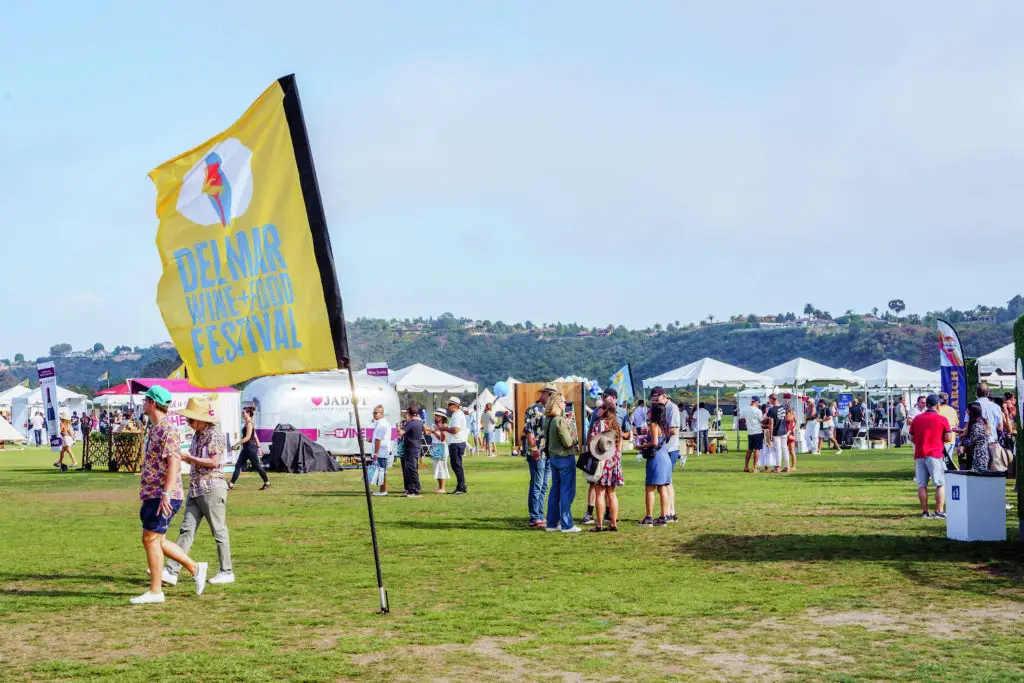
For its third year, the Del Mar Wine + Food festival is back and is bringing eats and sips from some of the most sought-out SoCal restaurants and California wineries. Experience flavors from festival favorites and up-and-coming stars while enjoying the San Diego sunshine on the grandest lawn in the county. For all the information on this foodie affair, check out our guide below:
This year’s Del Mar Wine + Food Festival takes place September 10-14, with its main event, the Grand Tasting, happening Saturday and Sunday. VIP ticket holders can enter at 11:30, early entry tickets are invited in at noon, and general admission begins at 1 p.m.
The festival is being held at Surf Sports Park at 14989 Via de la Valle, Del Mar, 92014.
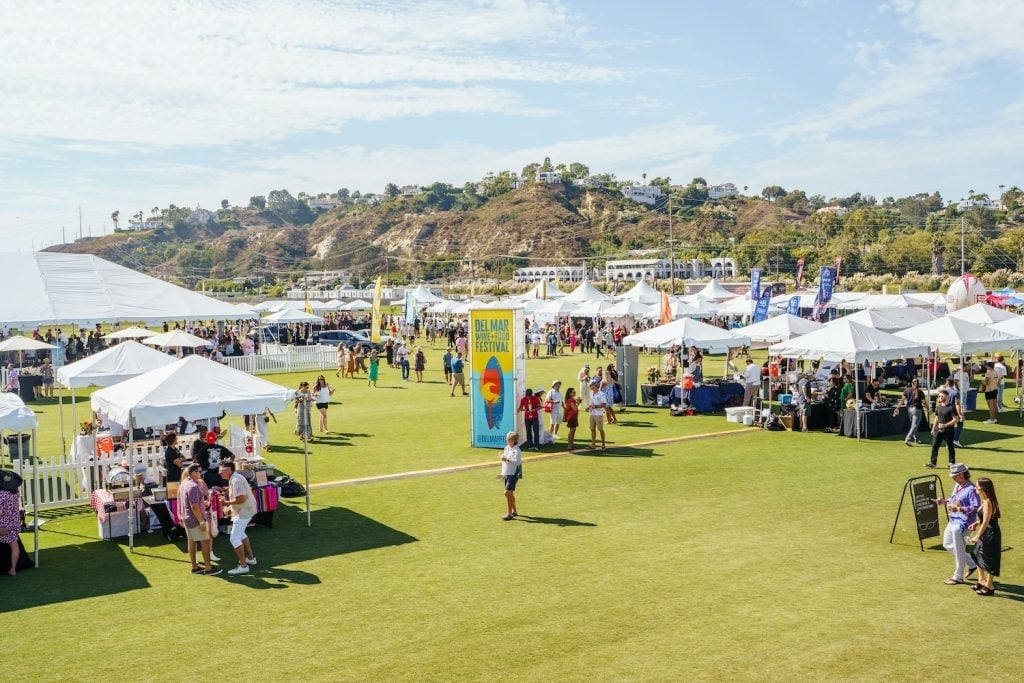
For each of the three different ticket options (General Admission, Early Entry and VIP), you can opt for a one-day or two-day pass.
General Admission is $205 for a one-day pass; however, if you’re thinking about going with friends, consider the “More the Merrier” bundle for GA Single-Day tickets to get $100 off four tickets or $400 off for eight. The two-day pass is $305. All general admission tickets will give you access to unlimited drinks and eats from more than 100 exhibitors.
For $265 for a one-day pass and $415 for a two-day pass, you can get all the perks that general admission has, but with access to them an hour earlier. Get your bearings and explore the festival without having to navigate crowds to find your favorite vendors.
For $465 for a one-day ticket and $815 for a two-day ticket, you can get access to all of this, as well as VIP exclusive sips and bites from renowned chefs, kicked off with a VIP reception that gets you into the park 30 minutes before early entry. For more information on the VIP experience and vendors, click here.
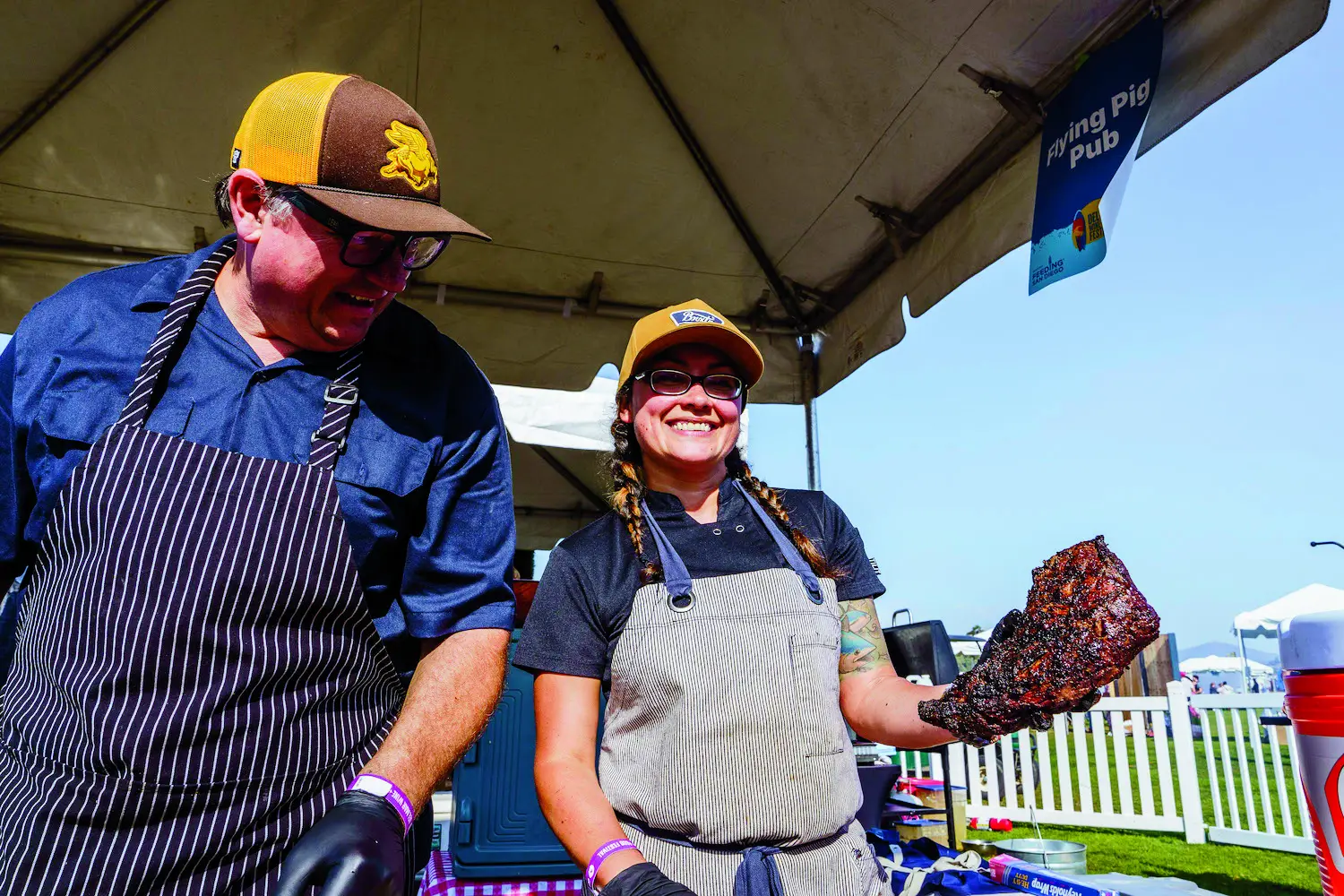
Now, what everyone is here for: The top restaurants and local favorites from all over SoCal will be at this event, with names like Herb and Wood, Jake’s Del Mar, Marisi, Amalfi Cucina Italiana, The Crack Shack, Coasterra, Lana, Puesto, Tajima, and Wolf in the Woods, to name a few. See the complete list here.
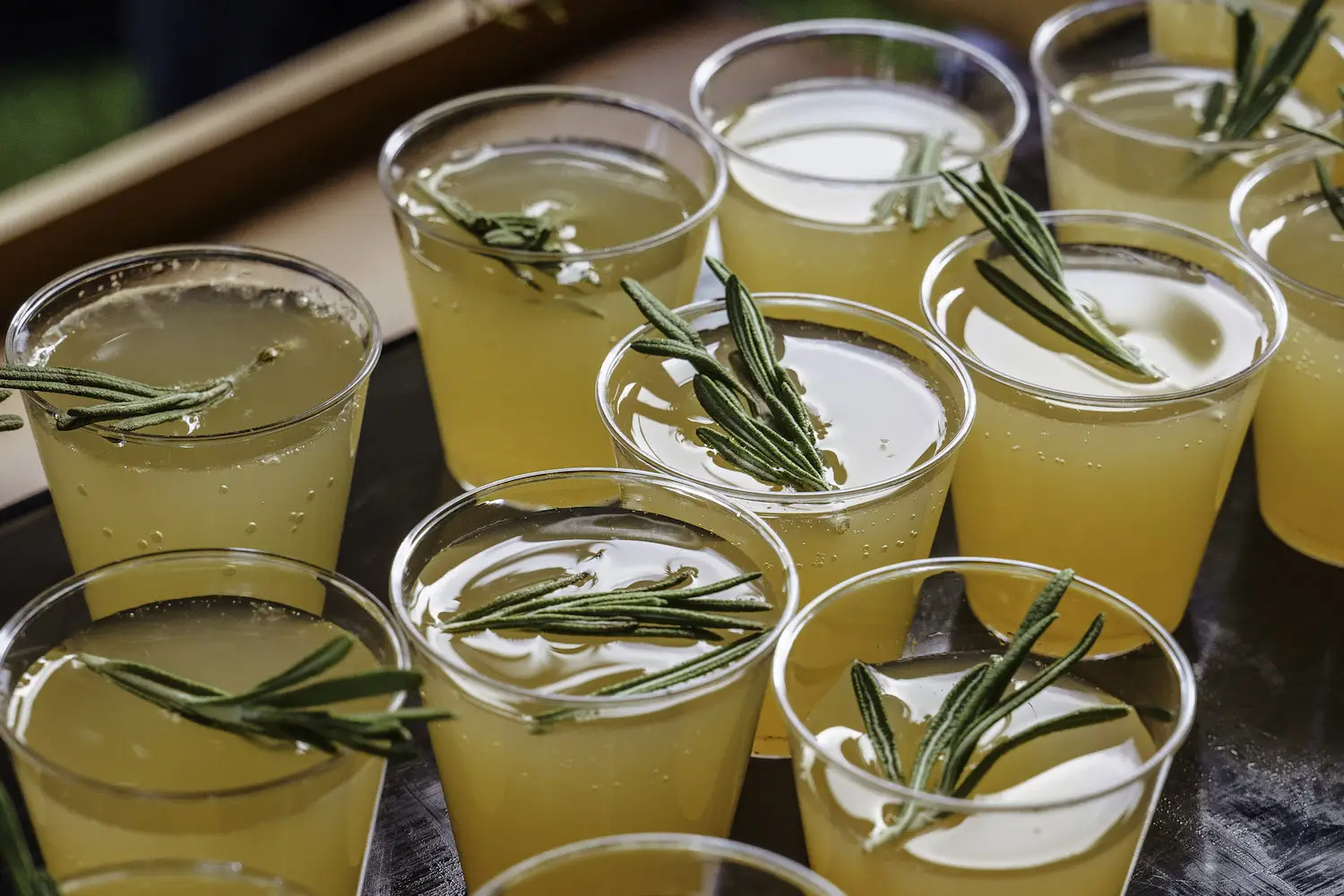
Walking around a grass field, consuming some of the city’s finest cuisine, is bound to produce thirsty people, but don’t fret, DMWFF has you covered. The festival features bevs from a plethora of wineries and breweries all over the city, including Above Board, Donna’s Pickle Beer, Tequila Ocho, Library Collection Wine, Callaway Vineyard & Winery, Bianchi, Four Walls Whiskey, Cary Q Wines, and Mission Craft Cocktails. And if this isn’t enough, see the complete list here.
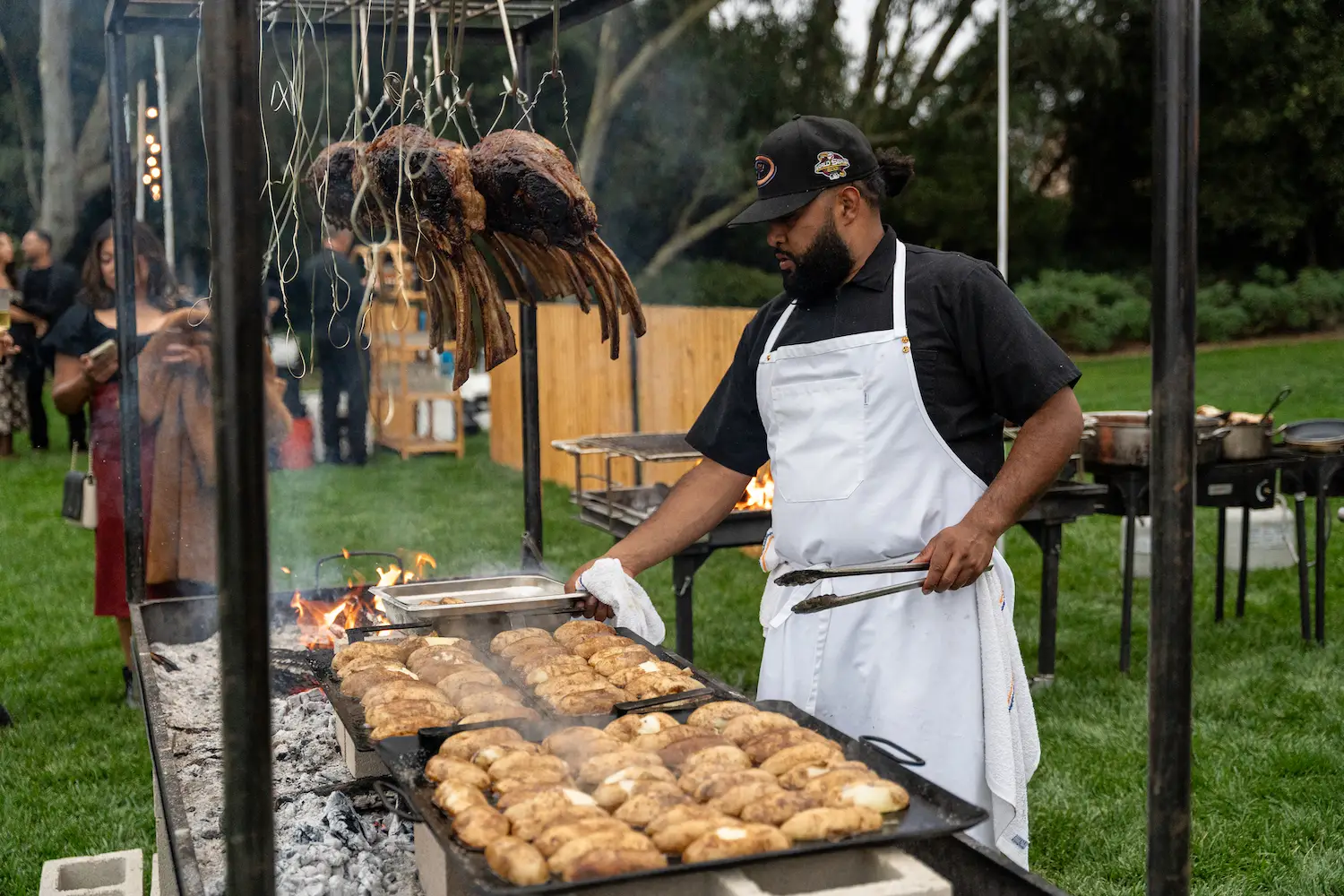
Throughout the week leading up to the Grand Tasting, attendees can purchase tickets to exclusive events going on throughout the county featuring celebrity chefs and high-profile names all gathering together for intimate dinners and experiences. Prices range from $135- $600. See the lineup below:
No, some food and wine vendors are attending both days, but several are only attending on certain days. DMWFF recommends you check their events page for the full itinerary or follow along on their newsletters and Instagram.
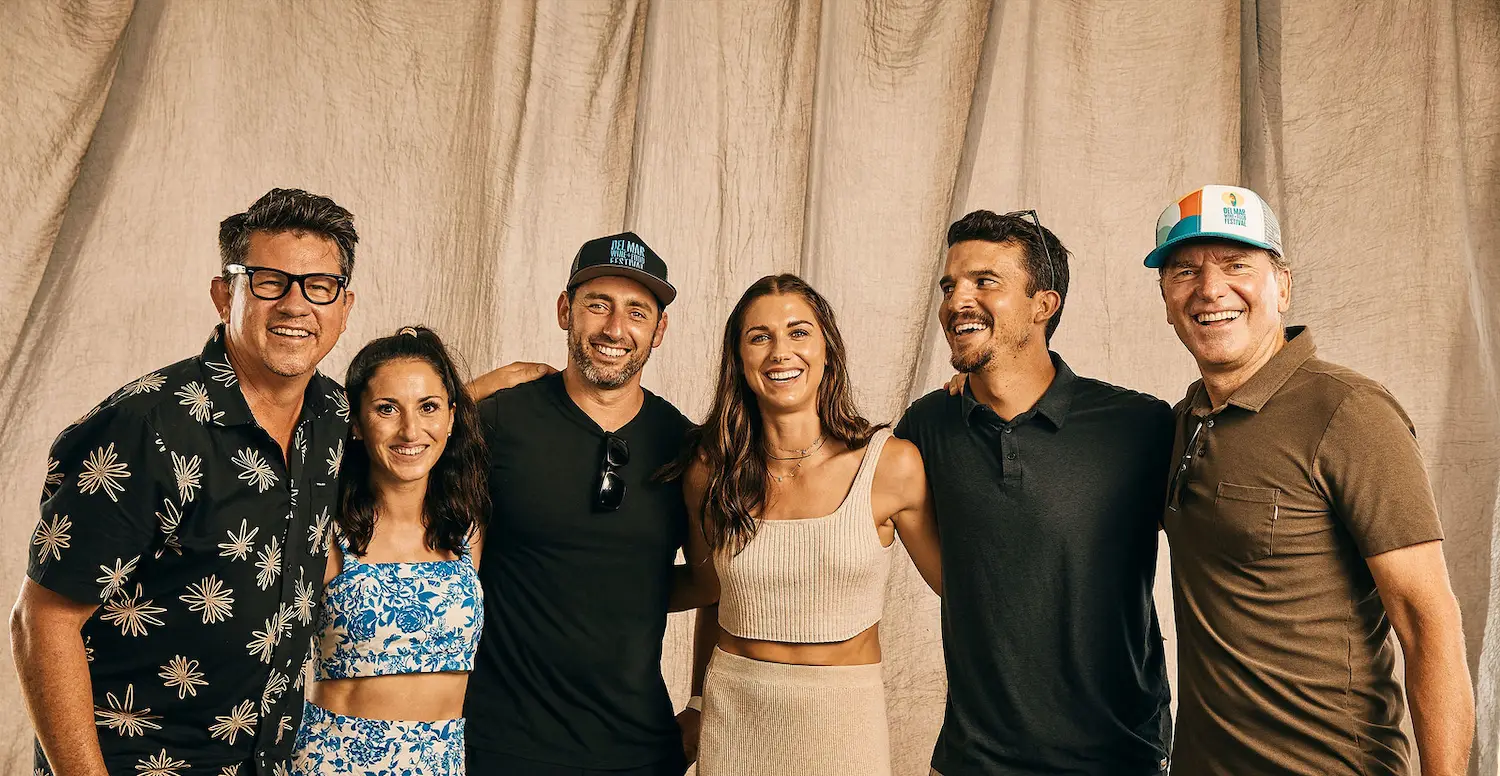
Yes! Celebrity chefs like Michael Voltaggio, Benito Molina, Beau MacMillan, Marc Murphy, Mawa McQueen, Drew Deckman, Catherine McCord and Jet Tila, to name a few, will be cooking and greeting guests. Athletes like Alex Morgan and Drew Brees, to pro-surfer Rob Machado, will be there, as well as Food Network’s Troy Johnson (Diners, Drive-ins, and Dives; Guy’s Grocery Games) as host. See more here.
Given that children and wine don’t mix, no one under the age of 21 is allowed in the event, and furry friends are only permitted if they are service animals.
Drinking wine and eating delicious food is all the more enjoyable in a fun outfit, so while there is no solidified dress code for the festival, it’s a great opportunity to show up and show out with stylish digs. However, no need to worry about your stiletto heels sticking into the grass field, as semi-casual wear is welcome too.
Surf Sports Park (where the event is held) has ample parking at $20/day. However, if you plan on drinking, it’s strongly recommended to use a rideshare service, take public transportation, or choose a designated driver from your group with whom you’ll shower with UberEats credits afterwards.
Bus route 308 stops at Via De La Valle and Camino Porta Delgada, which is less than a five-minute walk to the park’s entrance. If this bus route isn’t convenient, consider taking the Coaster Commuter train and stopping at the Solana Beach Coaster station, where you can catch the 308 or take a rideshare to the festival.
For those looking to turn the festival into an overnight event, there are several hotels in the area to choose from, like the Hilton San Diego/Del Mar, the San Diego Marriott del Mar, and the Holiday Inn Solana Beach. Several hotels have even partnered with the Del Mar Wine and Food Festival to give guests exclusive deals. You can see that list here.
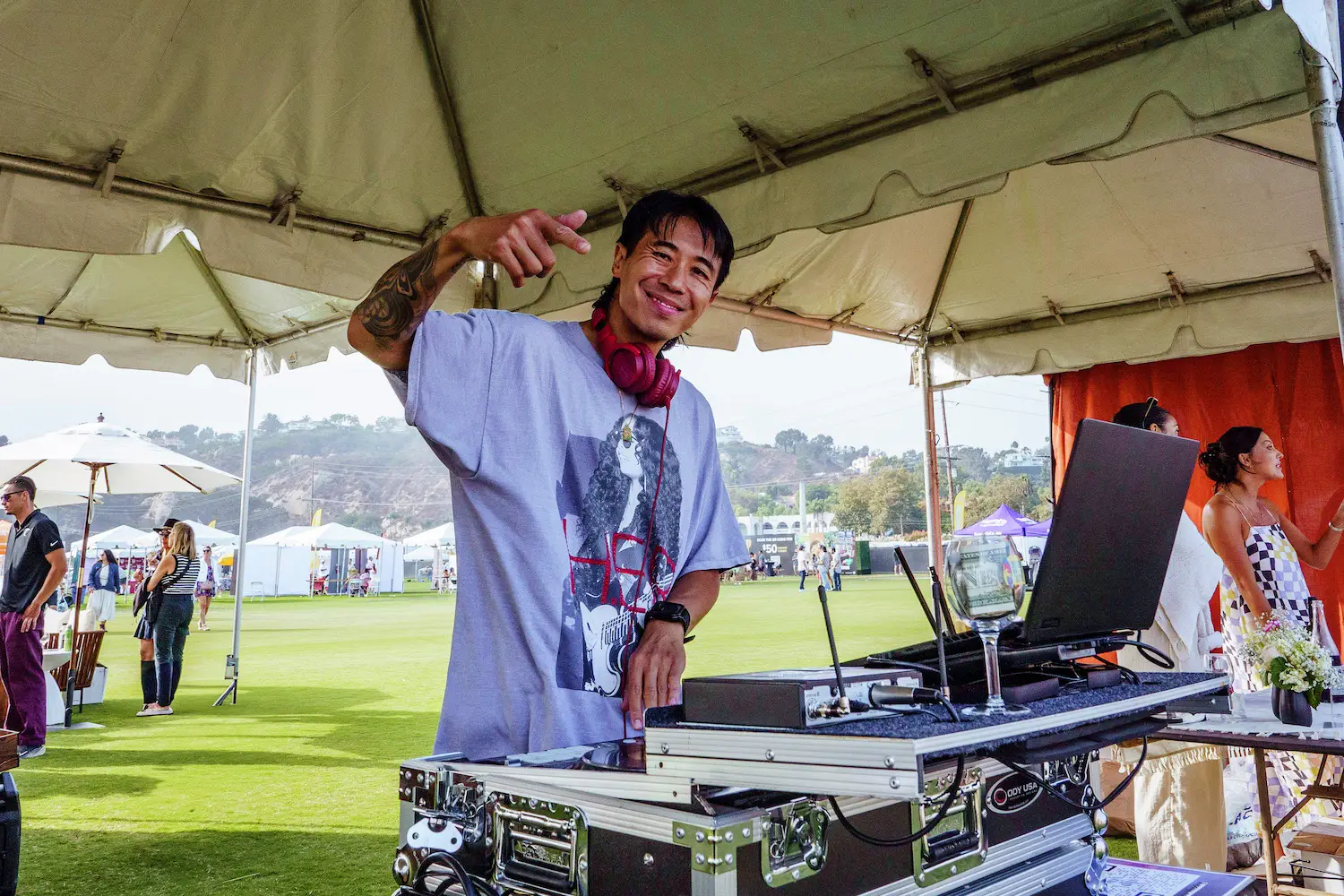
Of course! For more information on which bands/DJs will be playing, visit the festival’s website and socials.
The festival has chosen to partner with Feeding San Diego, a hunger relief organization that focuses on food distribution efforts in the community. A portion of the proceeds from the Del Mar Wine and Food Festival will be donated to their cause.
Tickets are sold on the day of the festival but are subject to availability, so it’s recommended to buy them as soon as possible to ensure they don’t sell out!
For general inquiries about the Del Mar Wine + Food festival, contact [email protected]. For media inquiries, contact [email protected].

Sloane Moriarty is a rising Junior at the University of California, Berkeley where she studies English and Education and writes for the Daily Californian newspaper. When she is not at a coffee shop doing work, you will find her in front of a bowl of pasta and a good book.
One of One combines creative seasonal drinks, ethical sourcing, and Filipino-American roots to stand out in San Diego's crowded cafe scene
In a city overflowing with cortados, ceremonial-grade matcha, and ambitious coffee startups, standing out isn’t easy. It’s even harder when your business doesn’t have a fixed address. That’s the challenge (and increasingly, the appeal) of One of One.
The Filipino-American coffee and matcha pop-up concept is the work of Kristin Cleavinger, a San Diego native who spent nearly a decade helping grow Alfred Coffee in Los Angeles before returning home to build a concept of her own. The business takes its name from Cleavinger’s grandfather Gregorio, who immigrated from the Philippines to the United States in the 1970s with almost nothing, but managed to build a life for him as well as his descendants.
It’s that sense of grit, perseverance, and identity that Cleavinger says fueled her to build One of One. “Throughout my time in specialty coffee, I was really curious about Filipino representation, because that wasn’t something that I saw,” she explains. She began to research coffee from the Philippines, but considering the island nation only produces about 0.25 percent of the world’s largest producer, Brazil, there wasn’t much to find.
Instead, she turned inward, drawing from her family’s history and her own Filipina-American identity to build something personal.
For her drinks, Cleavinger never uses refined sugars, and syrups are made in-house from organic and regenerative ingredients. The Summer Peach latte, the current seasonal special, layers Ceylon cinnamon, unrefined cane sugar, Maldon sea salt, and ripe yellow peaches for a riff on one of summer’s most glorious treats: peach cobbler. Another new drink is Mint Chip, inspired by Thrifty ice cream with a fresh mint syrup, dark cocoa powder, and chocolate chunks with a base of either espresso or hojicha (roasted Japanese green tea with a mild, sweet, earthy flavor and lower caffeine content than other green teas).
Other crowd pleasers include the signature Neapolitan latte, which is inspired by childhood memories of her family using Neapolitan ice cream to create pan de sal ice cream sandwiches. She layers housemade organic strawberry syrup, Madagascar vanilla bean-infused oat milk, and dark cocoa-swirled espresso for a tricolored beverage experience that she recommends sipping before stirring to taste each layer on its own merit.
Past specials have ventured deeper into Filipino flavors, like a turon-inspired latte using jackfruit and banana; another was a coconut pandan matcha made with organic coconut water and topped with a pandan matcha cream.
The sourcing decisions behind these drinks are equally deliberate. Coffee comes from Boondocks, a Filipino-owned LA roaster whose founder is originally from National City. Its current offering, the Galleon blend, combines beans from southern Luzon in the Philippines with Chiapas, Mexico—a nod to the communities woven into San Diego’s own cross-border identity. Matcha is sourced through Este, a local San Diego company that works directly with producers in Mie Prefecture, Japan.
Every supplier is chosen for value alignment as much as quality—Boondocks’ current blend, for example, directly supports women-owned farms. “Each person has the power to choose where they want to put their dollar,” Cleavinger says.
You can catch her at regularly scheduled pop-ups at places like Olivewood Gardens in National City (every third Saturday), Ayi in South Park’s Summer Series (every Saturday morning in June), and on regular rotation at Home Ec and Best Bud Floral in Kensington. (More dates are listed on Instagram as well.) Cleavinger says she does have plans to launch a brick-and-mortar shop in the future, ideally with an expanded beverage menu, space for art shows, and a community gathering place for local and Filipino-owned makers.
In a crowded field of coffee concepts, One of One shows that a memorable drink can do more than wake you up. It can tell you something about the person behind the idea—who they are, where they’re from, and where they’re going next.
Beth Demmon is an award-winning writer and podcaster whose work regularly appears in national outlets and San Diego Magazine. Her first book, The Beer Lover's Guide to Cider, is now available. Find out more on bethdemmon.com.
A complete guide to the festival, the parade, the lineup, and all the good stuff in between
There are two types of San Diegans in July: those who have their Pride Festival tickets, and those who wish they’d bought them sooner. Summer in San Diego already feels like a fever dream of sunshine and saltwater, and with Balboa Park turning it up to a level best described as joyfully unhinged, we wouldn’t have it any other way.
That’s right: San Diego Pride 2026 is bigger, louder, and more necessary than ever. From July 18–19, expect a full, unapologetic, flags-everywhere kind of weekend where the city opens its arms and means it. Here’s everything you need to know about San Diego Pride 2026.
The San Diego Pride Festival takes over Marston Point in Balboa Park (6th Ave. & Laurel St.) on Saturday, July 18 (12 p.m. to 10 p.m.) and Sunday, July 19 (12 p.m. to 9 p.m.).
Buy tickets early because prices go up closer to the weekend. Regular GA is priced at $45 for a single day or $75 for the full weekend. Once Pride Weekend pricing kicks in, that bumps to $48 for one day and $85 for two days. VIP Weekend starts at $269, and if you want a Meet & Greet with Hailie Sahar on July 18 at 2 p.m., tickets are $106.
Seniors 65 years and older can grab a ticket at the box office for $15, and high schoolers and younger get in free, though they still need to stop by the box office for a ticket before entering. Regular pricing is available through July 17, so don’t wait until the last minute.
The San Diego Pride Festival isn’t just a typical party. Expect Balboa Park at maximum capacity and maximum heart with five stages, hundreds of vendors, and more joy per square foot than anywhere else in the city that weekend.
At the heart of it all is the Stonewall Stage, the main event where legends and newcomers alike make their San Diego Pride debut. The Mundo Latino Stage brings Rock en Español, DJs, drag shows, and multicultural performers to the mix. The Movement Stage offers a full celebration of Black LGBTQIA+ arts, music, and culture through hip hop, urban contemporary, and local DJs, plus a Queer Locals Marketplace full of LGBTQ-owned small businesses selling handmade art, wellness goods, literature, community resources, and more.
For the people who came to actually dance, the Euphoria Stage delivers electronic music and groundbreaking talent. Prism For All is where art, libraries, and history collide, with workshops, performances, and a makerspace hosted by Art of Pride, the San Diego Public Library, and Lambda Archives. And the Youth Zone gives LGBTQIA+ young people their own dedicated area to meet, get creative, play, and find support.
The lineup includes:
Saturday, July 18
Sunday, July 19

The San Diego Pride Festival 2026 runs on the energy of over 2,000 volunteers every year. With more than 30 departments to choose from, whether you’re a people person, a behind-the-scenes organizer, or just someone who wants to do something good in a great outfit, there’s a spot with your name on it. Head to the San Diego Pride website to sign up.
San Diego’s Pride Parade calls the parade “the region’s largest single-day civic event,” drawing more than 250,000 attendees annually. This year it takes place on Saturday, July 18 from 10 a.m. to 3 p.m. and starts at University Avenue and Normal Street. Then it travels west on University Avenue, south on Sixth Avenue, and ends near Balboa Park/Quince Drive.
The Pride 5K Run & Walk is one of the highlights of Pride Week, drawing as many as 1,700 runners and walkers from around the world and raising approximately $40,000 for charity partners San Diego Pride and The LGBT Center’s Youth Housing Project. This year it also takes place on July 18, just a bit earlier at 8 a.m., at the corner of Centre and University Ave in Hillcrest.
Of course, buying a ticket is a guaranteed good time, but it’s also funding something real. San Diego Pride is a registered 501(c)(3) nonprofit, and proceeds go toward supporting organizations that host community events, programs, and fundraisers advancing pride, equality, and respect for LGBTQ+ communities locally, nationally, and globally.
That includes virtual youth programming like Pride’s Youth Leadership Academy, which reaches more than 4,000 LGBTQ children and young adults, as well as coalitions like the QAPIMEDA Coalition, Black LGBTQ Coalition, and Latinx Coalition, and more than 30 LGBTQ programs and events throughout the year.
The prohibited items list is lengthy (no balloons, no selfie sticks, no bubble-making devices, trust us they’ll make up for it elsewhere), but the big ones to keep in mind: clear bags only (max 12″x6″x12″), no outside food, no alcoholic beverages, no glass, no large umbrellas, and no knives or weapons of any kind. Leave the drone at home too. For the full list, head to sdpride.org/entry-policies.
Check out San Diego Pride’s frequently asked questions page for more details.
Isabella Dallas is a freelance writer for San Diego Magazine and the Arts and Culture Editor at The Daily Aztec in her final year at San Diego State University. She previously worked as an editorial intern for SDM, but when she’s not writing, you can find her trying the best coffee spots in SD, devouring the latest rom-coms, and indulging in anything and everything pop culture.
CoCo Ichibanya's wildly popular katsu curry has become a ballpark favorite—and now the chain is opening a second San Diego location
I’m a creature of habit. When I go to Petco Park for a Padres game, I order two things without fail: a Swingin’ Friar ale from Ballast Point and a Friar Frank (extra mustard, no ketchup). I might supplement with tri-tip nachos from Seaside Market, or splurge on fancy fish tacos from Deckman’s at the Draft, but there’s no way I’m going to a ballgame without enjoying the classic combo of a beer and hot dog.
But this season, I’m faced with a conundrum. CoCo Ichibanya, the world-famous Japanese curry chain with locations in Convoy District, Los Angeles, Orange County, and Texas, debuted this March at the Mercado near Section 104. I recently attended a game against the New York Mets when I noticed a woman sitting in the row in front of me with a giant helping of chicken katsu curry. I hadn’t seen CoCo’s curry in the wild at the ballpark yet, but the aroma of the crispy fried chicken bathed in savory curry wafting over her shoulder absolutely intoxicated me (and ended up being a nice distraction to the 7-3 loss). Hopefully, she didn’t notice me leering with envy, but I’m 92 percent sure I got some drool on the guy next to me.
The world’s largest Japanese curry chain isn’t done popping up in San Diego quite yet. This July, CoCo Ichibanya will open its second standalone store in San Diego on the ground floor of the Denizen building in Hillcrest.
First launched in Nagoya, Japan in 1978, CoCo Ichibanya specializes in Japanese-style curry dishes, a comfort food signature. Unlike fiery Thai and Indian curry, Japanese curries are often more like gravy, served over rice and alongside katsu pork, chicken, or beef, or as curry omurice (omelet rice). The chain expanded to the United States 15 years ago, and owner Teruyoshi Ono says they’d been eyeing more opportunities in San Diego for some time.

The location in Hillcrest spans 2,585-square-feet with seating for around 49 guests. Menu favorites like the chicken cutlet curry with vegetables, the pork cutlet omelet, and Thai tea will be available, but Ono said Hillcrest will be the first location in the US to offer one major crowd-pleaser: alcohol. And keeping with local baseball fandom, “We will also have Padres x CoCo Ichi limited merchandise at our Hillcrest location,” he promises.
Ono also revealed that CoCo’s future expansion plans include looking for more locations across Southern California and possibly more in San Diego. While the Japanese yen remains at a historic low against the dollar (making it an absolutely unbeatable time to visit the Land of the Rising Sun), why fly overseas when you can get a taste of Japan in your own backyard—or ballpark?
CoCo Ichibanya Hillcrest is slated to open at 3833 5th Avenue in July.
Listen Now: The Latest in San Diego’s Food and Drink Scene
Have breaking news, exciting scoops, or great stories about new San Diego restaurants or the city’s food scene? Send your pitches to [email protected].
Beth Demmon is an award-winning writer and podcaster whose work regularly appears in national outlets and San Diego Magazine. Her first book, The Beer Lover's Guide to Cider, is now available. Find out more on bethdemmon.com.
The 29-year-old culinary director at Herb & Sea is making seafood sexy (and approachable) again
Implementing a farm-to-table model hardly deserves acknowledgement these days. It’s not a stretch. It’s not innovative. “It’s the bare f**king minimum,” says Herb & Sea‘s executive chef Aidan Owens.
When I arrive at the Encinitas restaurant, I’m ready to talk sustainability, farm-to-table stuff, with Owens. “Did you see the chin on that?” he says of the extra big jiggly chin on the sheephead that just arrived with the day’s fresh catch. I did. It was Jay Leno adjacent.
I learn quickly that he somehow oozes both charm and stone-cold honesty. Maybe he could construct a new dish with chin goo, like he did when he had a bunch of tuna scraps and voila’d it into a smooth and crowd-pleasing ‘nduja. “I want to know what’s in there,” he says.

The instinct to look closer, to dig into what others might discard, says a lot about the chef’s approach. I guide him back to our topic, but he has something else on his mind. “We’re overcomplicating food—what happened to just cooking good food and having fun with it?”
Owens grew up on a farm in Byron Bay, Australia, where sustainability wasn’t a concept you chat about so much as a way of life. Think dirt roads, backyard chickens, pulling vegetables straight from the ground, and a mother who believed that if you couldn’t pronounce the ingredients on a package, you shouldn’t eat what was inside.
Food wasn’t precious or performative. Making it was what you did because you were hungry and that’s still what inspires Owens today. “I like to cook good food because I like to eat good food,” he says.
His approach to sustainability at Herb & Sea began so naturally that it felt just like instinct. “I was just like, ‘Let’s order food from the people who live and work here,’” he says.

And why wouldn’t he when lives in San Diego? Cities all over the world vie for our goods. Our tuna is sent overseas. Our spiny lobsters hit dinner plates in China and Japan. Not to mention California’s producing a third of the country’s vegetables and three-quarters of its fruits and nuts.
“Why would we outsource when it’s all here?” Owens asks.
Sustainability, in this context, is about cooking what exists in abundance, nearby, right now. “I love the local fish here. It’s f**king delicious and San Diego citrus, I mean, it is so f**ing good,” he says.
Instead of importing ingredients, Owens also looks for nearby alternatives. “You can find really cool things in the local waters,” he says, pointing out that stingray cheeks taste similar to scallops.

Whatever he finds in that sheephead chin might just be the next substitute for marrow. But to make this work, it means getting diners amped up about the slightly unfamiliar.
Tasting menus, where diners are completely in his hands, become an opportunity to gently push boundaries. “I’ll serve mackerel, because people think they hate it,” Owens says, noting that the abundant local fish can have some fishiness. “But when it’s fresh, it’s arguably one of the best fish in the ocean.”
He also tweaks the language on the menu so people might feel more compelled to give dishes a try without preconceived notions. He might use “lengua” instead of “tongue.” “Whelk” instead of “snail.” When he puts “stingray throat” on the menu, he disarmingly calls it “skate.”
To reduce waste, scraps aren’t always discarded but rather turned into something new. Sometimes they’re smoked, cured or fermented. Apples going bad turn into apple ponzu. Lemons turn to marmalade, which stretches their usefulness far beyond peak season. “And it’s super tasty on our pizza,” he says.
What makes the food even richer, is the relationships he’s built with farmers. Though it didn’t always feel natural, Owens sought personal connection first. He recalls approaching a fisherman at the Tuna Harbor Dockside Market. “I was awkward,” he says. “I went up to him and said, ‘I like your fish.’”
Owen’s is now so close to his suppliers—like fishermen Ryan Sebo and Joe Daly—that he gets texted pictures of fresh catches right as they flop on the boat. The messages always ask if he wants first dibs. “I say yes to a lot of fish,” Owens says, noting that Herb & Sea can go through 2,000 pounds of seafood a week.

The next evolution of sustainability, in his view, will be chefs working directly with producers such as his alliance with Sebo, cutting out middlemen and purveyors where possible. “It will put more money in the pockets of the people doing the work,” he says.
It will mean that chefs can’t just know their local farmers and producers, but they’ll choose to work with the ones who have the best practices. Dining and sustainability will become much less about the final plate. “It will be more about the impact that plate has on the Earth,” he says.
Ultimately, he believes sustainability doesn’t need to be loud. It doesn’t need hashtags. It just needs to be honest.
“We aren’t saving lives. We’re feeding people good food,” he says.
And yet, in feeding people well—simply, thoughtfully, responsibly—something meaningful happens. Guests leave satisfied. Ingredients are respected. Local ecosystems are supported and food returns to what it has always been at its core: nourishment, pleasure, and a quiet reflection of the place it comes from.
No buzzwords required.
We ask the city's best food photographers to choose their favorite pics and share their secrets to capturing a drool-worthy pic
Food is a notorious diva to photograph. The wrong lighting can make José Andrés’ paella look like a jaundiced grain bowl. You could be staring at the best sandwich of your life, but shoot it from above and—hey, congrats on that abandoned piece of lettuce bread. A cottage meme industry has been built around the hilariously bad photos on review sites that make Michelin-star food look like Michelin tires.
Especially in a visual modern media world, food culture depends on great photographers capturing the painstaking work in equally deserving ways. We asked four of San Diego’s top food photographers for their favorite shot from another year of documenting what we eat.

Getting this kind of shot takes a bit of yoga. Asana yourself into the corner, hold your breath, pray that a chef on the move doesn’t back into your light stand.
“You’re stepping into someone’s workspace during their busiest moments, so it’s a balance of being present to get the shot and being invisible to not slow anything down,” Kimberly Motos says.
The subject here is the Birdman sandwich from Chick & Hawk—hot fried chicken thigh, tangy slaw, kimchi comeback sauce, sweet and spicy pickles, potato brioche bun—getting a hearty dousing of its difference-maker seasoning. Motos captures the parts of the process that diners don’t usually see: the chaos behind something that looks so simple.

“I love this image because it feels like a moment you want to step into,” says Lucianna McIntosh. A warm, sunny day at The Fishery in PB with oysters, caviar, and martinis. Yes, please.
The little details—the glass sweating a little, the direct afternoon light creating stark shadows, the oyster glistening on the tray—are the main characters. Instead of trying to overly control the setup, McIntosh “followed the light and lines that draw you in more,” she says. “This was one of those moments where everything lined up on its own for a second. I love it when the shadows end up being just as important as the food itself.”

La Jolla native Eric Wolfinger—who won a James Beard Award for Tartine Bread, one of the most stunning bread books of all time—says he doesn’t have a signature style. His style is a conduit.
“I see my job is to translate the chef’s point of view into something you can feel,” he says.
For this shot, Fleurette chef Travis Swikard had one directive: cuisine du soleil (“cuisine of the sun”). With a spread of leeks vinaigrette, herb-roasted golden chicken, and beets, Wolfinger wanted to create a scene that felt straight out of the French Riviera, relaying the light, bright style of Swikard’s new spot.
Some bonus additions here: Extra lights—to add lots of warmth—and a clipping from an olive tree.

Timing and light are everything in food photography. In Lucien—La Jolla’s tasting-menu-only restaurant with moody ambiance—a single strobe flash creates the ideal spotlight.
Dee Sandoval says she uses the “natural, just-plated energy” of the dish to “create a portrait of moment and craft.” That’s why this Mostra Ghost Bear espresso ice cream—with San José dark chocolate mousse, soy-miso caramel, and koji shoyu chocolate sauce—looks like it might dissolve halfway to your mouth.
Emma Veidt is an editor at San Diego Magazine. She earned her bachelor's and master's degrees from the Missouri School of Journalism. She loves running, hiking, and rock climbing, but really, she mostly loves encounters with the street cats around North Park.
Spruce up your home bar setup with product recommendations from local cocktail aficionado and Collins & Coupe owner Gary McIntire
I peel myself off my couch, crack my back, and force myself to the bar (23 years old, by the way). It’s a Friday night, and my smart watch is already informing me my body battery is critically low.
Nevertheless, party we must.
Because, to be fair, one of the best things about going out—dive bar, velvet-clad cocktail lounge, or anywhere in between—is the performance of it all. Watching a bartender shake and stir like it’s choreography, finishing the drink with a sprig or petal placed just so, feeling like your collection of mixers and spirits is worth pouring into the Holy Grail.
One of the worst things about going out, though? Being out.
So I thank God for the home bar.
No lines, no cover, no shouting your order over someone named Kyle who just discovered the AMF. No $19 cocktails that taste suspiciously like juice. Just me, my apartment (where I can play whatever music I want), and the quiet confidence of knowing I can make something decent without putting on real pants.
A home bar, I’ve learned, doesn’t have to be impressive. It just has to be intentional—a few bottles you actually like, some tried-and-true tools, and at least one drink you can make without Googling. That’s it. That’s the barrier to entry.
To create the ultimate home bar collection, we tapped the folks at San Diego cocktail supply shop Collins & Coupe to give us some of their recommendations. Pick and choose what you need, and start cocktailing.

You won’t get very far in your cocktail-making-journey without shaker tins. Boston shakers (two pieces, tin-on-tin) and cobbler shakers (three pieces with a strainer and cap) are the most classic styles, but if you want to avoid the tins getting stuck (or creating a mess on the floor), Boston shakers are the way to go.
“Koriko Tins by Cocktail Kingdom are the gold standard for every bar worth their salt. Every new bar we help outfit with tools insists on this brand and model,” says Collins & Coupe co-owner Gary McIntire.
“These are handmade, 100 percent solid copper and will last a lifetime,” McIntire says. “Because they are solid, there is no plated finish to wear off, and they will only look more beautiful with age.”
According to the pros, don’t even bother getting bar spoons shorter than 12 inches. One foot long is the magic length to get the best stirring results: “Rule of thumb is at least 50 percent of the spoon should be out of the glass,” says McIntire.
Sugar Skull Bar Spoon
Cocktail Kingdom Enamel Lucky Cat Bar Spoon
Pulp in your orange juice? We’ll allow it. But in your cocktail? Smooth and strained is optimal. You have two choices here: Hawthorne strainers have a spring that attaches snugly to shaking tins; julep strainers have no tabs or springs (originally created to drink mint juleps before straws became commercially available).
Bull in China Julep Strainer, Brushed Stainless Steel
Barfly Two-prong Heavy Duty Hawthorne Strainer
We’ve all seen those seasoned bartenders with the arm tats and haughty demeanors who can assemble perfect drinks with their eyes shut. The rest of us, however, need training wheels. Jiggers—those hourglass-shaped measuring tools—make consistent cocktail-making easy, although cheap versions tend to be inaccurate. Don’t skimp out on these.

“Heavy-duty and made of one piece,” McIntire says. “We use [this jigger] in our classes and at home. It comes in a bell-shaped version and a Japanese version, which is tall and narrow.”
“Glassware is always essential to the cocktail experience,” says McIntire. The martini glass is an avatar for American hair-loosening for a reason: sleek, viciously “V,” and highly spillable (danger always looks good). To start, look for a coupe glass (the fancy cat bowl-looking thing), a highball (glassware with posture), and a rocks glass (the blue collar hero).
Milo Crystal Rocks Glass by Viski
Savage Coupe by Nude Glassware
Meridian Highball with Gold Rim by Viski
You know how Caesar dressing tastes way better when you don’t think about the fact that there are anchovies in it? The same goes for cocktails and raw egg whites. Some of your favorites rely on the frothy ingredient to shine (whiskey sours, gin fizzes, etc.). Mesh strainers help make that magic happen. According to McIntire, always get the conical version; the round, bowl style could cause spills.
Lili Kim is a content coordinator and writer for San Diego Magazine, with experience highlighting local businesses and communities. When not writing or shooting film, she is likely brewing her seventh cup of tea of the day or strolling along Sunset Cliffs.
The 53rd Annual National Philanthropy Day Takes Place on November 21. Join us from 11:00 a.m. – 1:30 p.m. at the new Gaylord Pacific Resort & Convention Center!
Once yearly, AFP San Diego joins with others worldwide to celebrate National Philanthropy Day (NPD), a special day set aside to recognize the great contributions of donors and nonprofits that enrich of our community and the world. San Diego’s NPD is one of the largest and most successful in the U.S., attracting nearly 900 participants, including philanthropists, nonprofit leaders, CEOs, board members, development professionals, and business, community, and civic leaders.
Sponsorship proceeds from National Philanthropy Day are reinvested in education, training, scholarships, career development, and the advancement of fundraising professionals throughout San Diego. These resources and training provide fundraising professionals with the tools necessary to support our region’s diverse array of nonprofit organizations, which rely on charitable giving for close to half of their annual revenues.
The National Philanthropy Day Honorees are selected by the NPD Honorary Committee, a group of highly respected, diverse nonprofit and business leaders. Our 2025 Honorees include:
National Philanthropy Day San Diego provides an opportunity to reflect on the meaning of giving and to celebrate the selfless contributions of individuals and organizations across the region. We look forward to celebrating with you!
Sponsorship opportunities and individual tickets are available. Please visit www.afpsd.org for more information.