
Featured articles
Featured articles
Featured articles
What's next
Featured articles
Featured articles
Featured articles
Ready to know more about San Diego?
SubscribeReady to know more about San Diego?

San Diego's Lux Art Institute chosen to make ornaments for the National Christmas Tree in Washington
Presidential Treatment
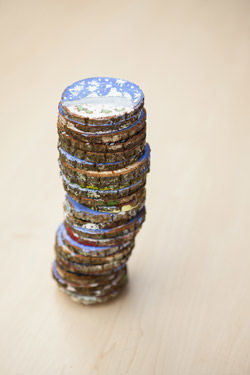
The holiday season is upon us, and Lux Art Institurte is doing its part to spread a little cheer—all the way to Washington, D.C. The Encinitas-based art space and educational center was selected by the National Park Foundation to represent the state of California by making ornaments for the National Christmas Tree, which will be on display in President’s Park near the White House.
Decorating and lighting the National Christmas Tree is an annual tradition that began in 1923 with President Calvin Coolidge. Today a series of 56 smaller trees called “the Pathway of Peace” surround the stately 40-foot Colorado blue spruce and represent the country’s 50 states, five territories, and the District of Columbia.
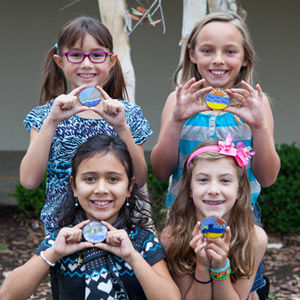
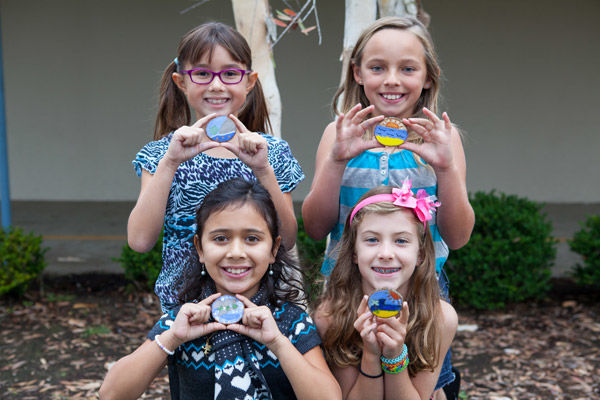
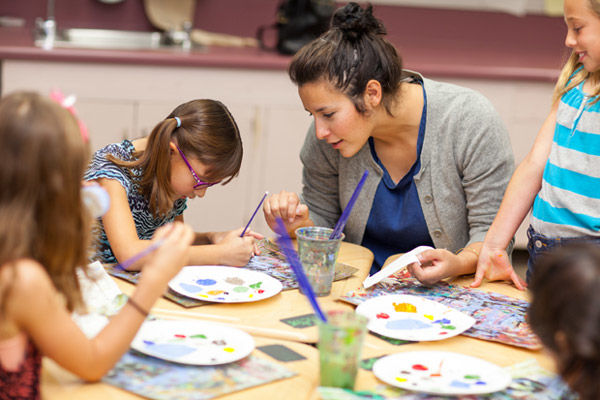
Locally, Lux Art Institute worked with the third-graders at Ocean Knoll Elementary School in Encinitas to design and create the ornaments. The youngsters were asked to paint winter scenes from places they had visited on small log slices, a project based on the work of former Lux resident artist Alison Moritsugu, whose paintings include traditional snow-covered landscapes.
Presidential Treatment
“It’s very special for our class to do the ornaments representing California that are going to be on the National Tree,” says third-grader Sofia Lopez. “It’s something I will remember forever.”
Congrats to Lux and the students at Ocean Knoll!
This year’s National Christmas Tree lighting will take place on Friday, December 6 at 5 p.m. EST. Check your local listings.
Presidential Treatment
Explore restaurants, activities, and shops within this affluent North County community
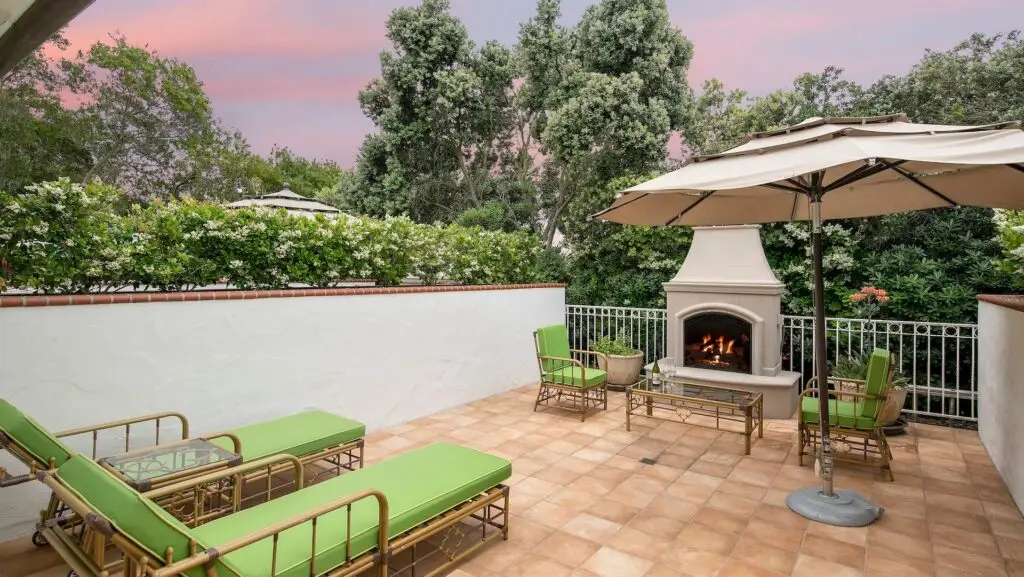
The inland North County community of Rancho Santa Fe is often associated with wealth. It’s one of San Diego’s most expensive residential markets and is consistently ranked one of the highest-income zip codes in California and the U.S. Rancho Santa Fe is known for its large equestrian community including riding facilities and horse trails, as well as its country club lifestyle and associated golf courses.
At the center of this luxury master-planned community is a small, walkable downtown area referred to as the “village,” with The Inn at Rancho Santa Fe acting as both a landmark and social hub. Much of the community, including the historic Inn, was designed by acclaimed architect Lilian Rice, one of California’s earliest female architects. The Spanish Colonial-style architecture she brought to the village is still one of its defining characteristics today.
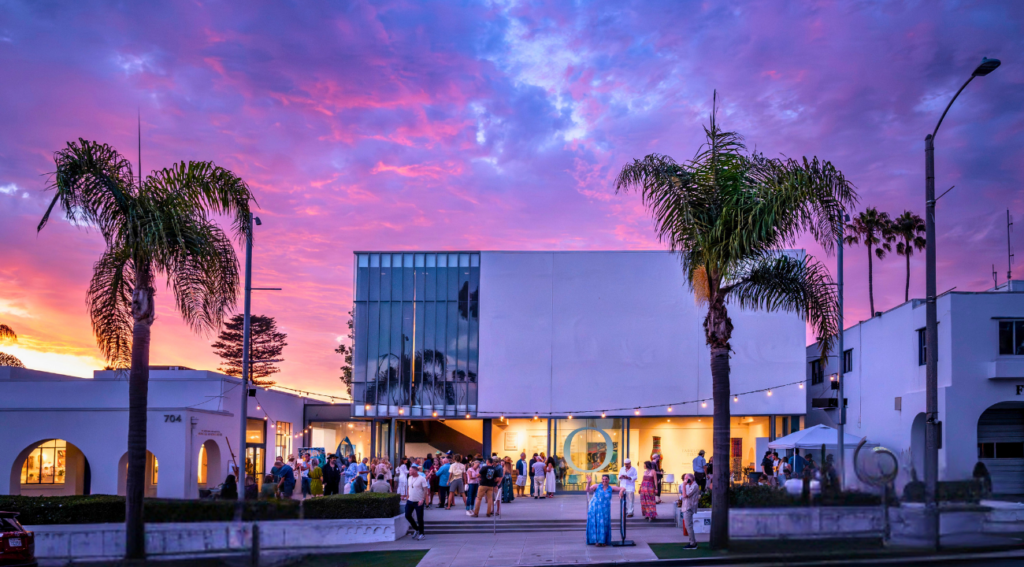
Whether you’re coming to Rancho Santa Fe for golf, horseback riding, or pampering at a resort spa, be sure to start with a short walk around the village to take in the neighborhood’s charm. Plan your next visit here with our neighborhood guide to the area’s best restaurants, things to do, and shopping.
Jump To: Restaurants | Things to Do | Shopping
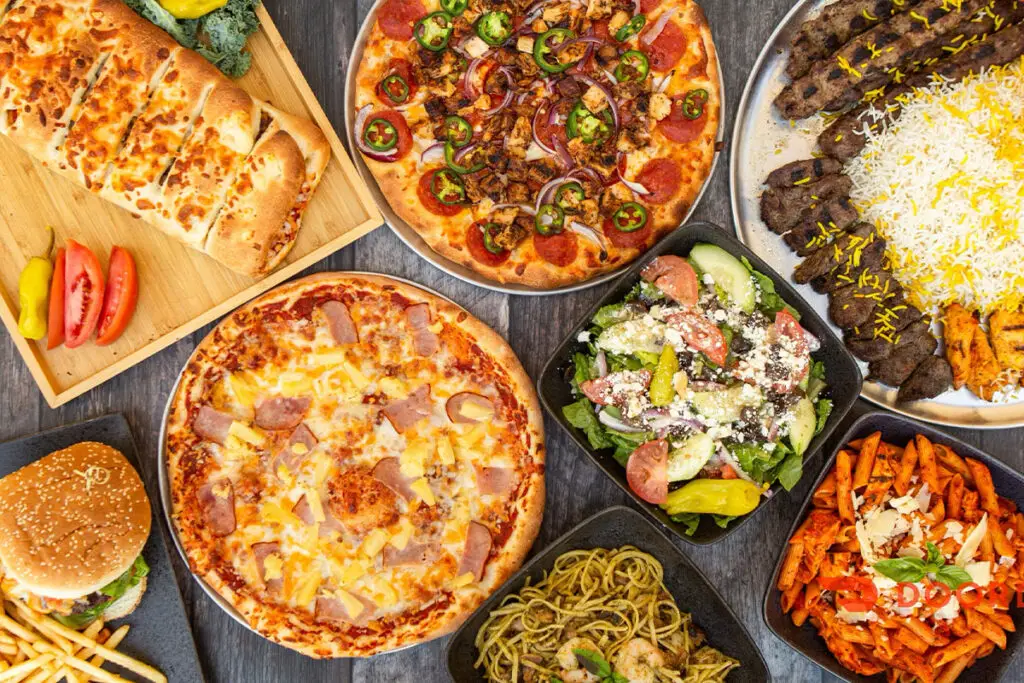
Families congregate at The Pony Room for elevated California ranch-style cuisine. Lamb lollipops, carne asada tacos, burgers, and weekly dinner specials are offered here, alongside an extensive collection of wine and spirits (especially tequila) and sizeable kids menus. As the signature restaurant of Rancho Valencia Resort & Spa, this all-day eatery is a lively centerpiece of the local social scene.
5921 Valencia Circle
The piano bar at Mille Fleurs is the buzziest spot to be on Friday and Saturday nights in Rancho Santa Fe. French classics like escargot, lobster bisque, duck confit, and steak frites are the main dinner attractions at this local institution that has been around for more than 40 years. Spring for the four-course prix fixe menu before nabbing a coveted bar seat near the piano entertainer.
6009 Paseo Delicias
Nick & G’s is one of the most prominent restaurants in the village, with an outdoor patio that overlooks the main thoroughfare. Enjoy modern Italian food, steaks, and seafood dishes here, including homemade pasta, pizza, wagyu beef, and oysters. Be sure to check their live music schedule and events calendar for the latest happenings.
6106 Paseo Delicias
Named after renowned architect and planner Lilian Rice, Lilian’s is The Inn at Rancho Santa Fe’s flagship restaurant. Their upscale menus feature sustainable seafood, grass-fed meats, local produce, and even sushi rolls during dinner. Outdoor seating provides a bird’s-eye view of the village and an elegant backdrop for weekend brunch. Stop by Bing’s Bar (a nod to Bing Crosby) for craft cocktails, beer, wine, and light bites in a refined setting.
5951 Linea Del Cielo
Quaint cafe and bakery Thyme in the Ranch serves a small selection of breakfast and lunch items (don’t miss the tarragon chicken salad), but is perhaps best known for its pastries and baked goods. Cakes, pies, muffins, scones, and cookies fly off the shelves here, where locals come for special occasions, parties, and group catering orders.
16905 Avenida De Acacias
Located inside a historic building once home to Rancho Santa Fe’s original schoolhouse, Paseo RSF is one of the village’s newest dining options. The charming American bistro has pasta, salads, burgers, meat and seafood entrees, plus a thoughtfully selected California wine list and new sushi and omakase program. Kids and dogs are both welcome here.
6024 Paseo Delicias, Suite C
Grab a quick coffee to go from this walk-up window in the same shopping center as the post office. Cinnamon roll lattes, cold brew, spiced chai, smoothies, protein bowls, and more can be found at Rancho Roasters, where they brew beans from Dark Horse Coffee.
16950 Via De Santa Fe
Casual pizzeria and martini bar Goli is a popular spot for catching the latest sports games. Order one of their unique specialty pizzas like the Casbah with hummus and veggies, build your own pizza or burger, or go with one of their hearty wraps that’s made with an extra thin version of pizza dough.
18021 Calle Ambiente, Suite 403
Find generous portions of Mexican food at Cocina del Rancho, run by the same owners as Carlsbad’s Cicciotti’s Trattoria Italiana and Village Kabob. Get classic dishes like burritos, tacos, and enchiladas, plus their specialty items including pulpo, carne asada, and fajitas with lobster tail. Don’t skip the margaritas.
16089 San Dieguito Road

Kai Oliver-Kurtin is a San Diego-based writer who covers travel, dining, events, and culture. Her writing has been published in USA Today, Condé Nast Traveler, Fodor's Travel, Marie Claire, and HuffPost, among others.
Discover eateries, outings, and shops within this inland North County community
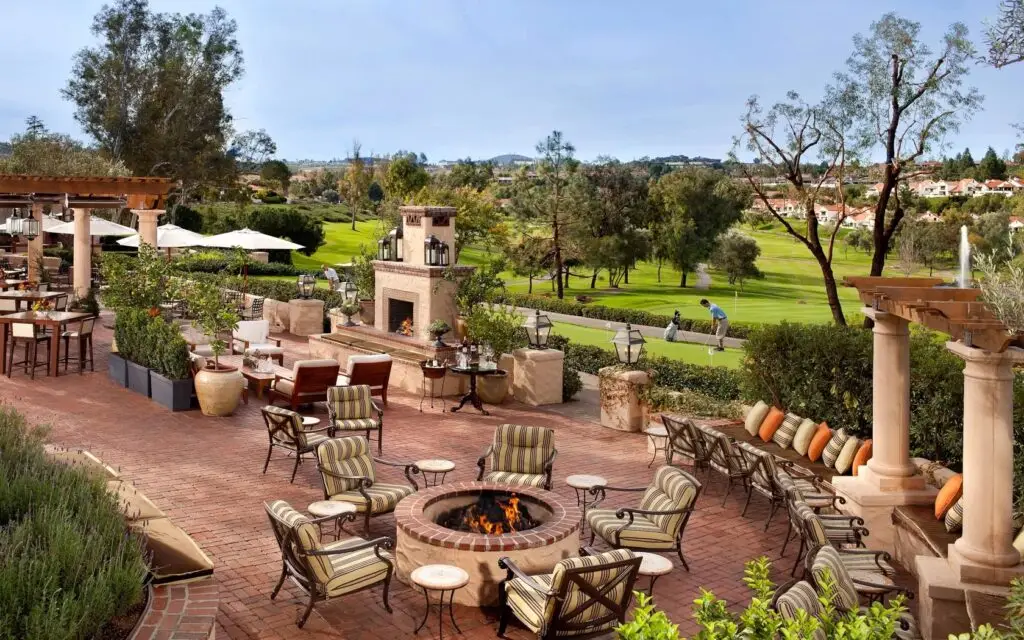
Just south of Lake Hodges near 4S Ranch and Poway, Rancho Bernardo is a suburban community that blends residential neighborhoods with industrial pockets, elevated by a decidedly diverse food scene.
Over 60 years ago, this North County neighborhood was once part of a family ranch. Since that time, big tech companies have taken up residence here, including Amazon, Sony Electronics, Oura Ring, HP, Teradata, and ASML. Rancho Bernardo Inn serves as a community hub, with locals frequently meeting at the hotel’s restaurants, golf course, and spa.
Whether it’s work or a round of golf that brings you to Rancho Bernardo, we’ve taken care of the agenda planning with our guide to the area’s best restaurants, activities, and shops.
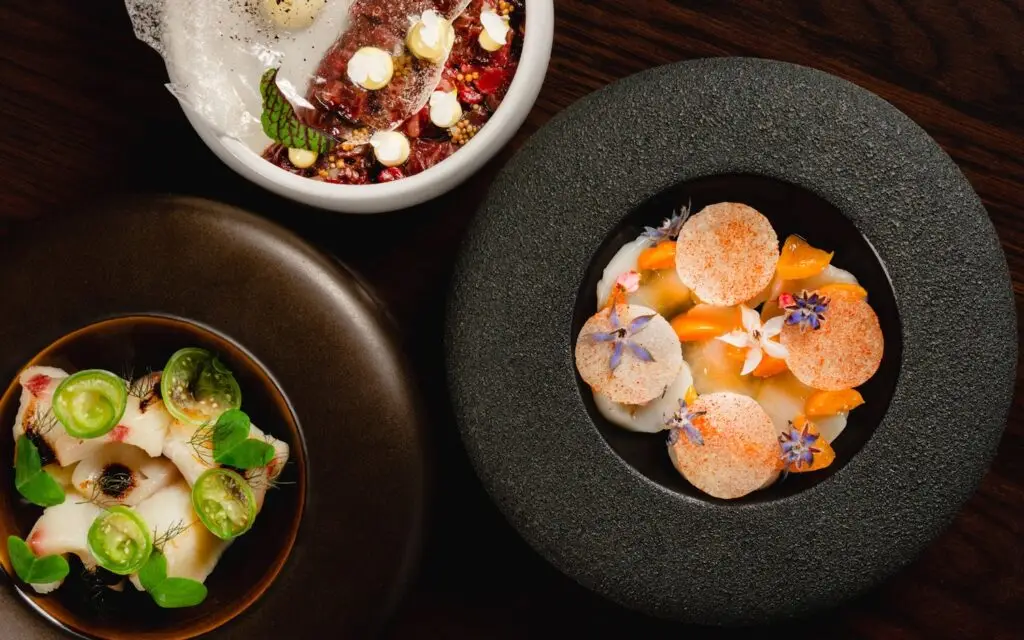
Sample ingredients plucked straight from Rancho Bernardo Inn’s onsite garden and served at their signature restaurant Avant. One of the neighborhood’s most upscale dining options, they serve a French-inspired menu with nods to California, including many seafood options. Don’t miss their more casual sister restaurant Veranda for al fresco dining.
17550 Bernardo Oaks Drive
Wood-fired pizzas and handmade pastas are standouts at The Kitchen, Bernardo Winery’s counter-service restaurant specializing in Sicilian flavors. Charcuterie boards and bruschetta make for great starters or snacks while wine tasting.
13330 Paseo Del Verano Norte
Fast-casual and family-owned eatery Bushfire Kitchen recently opened a location in Rancho Bernardo, serving sandwiches, bowls, salads, burgers, protein plates, and housemade empanadas. Bushfire prepares comfort food with healthy ingredients, and offers plenty of vegetarian and vegan options.
11962 Bernardo Plaza Drive, Suite 110
Some might call The Cork & Craft an overachiever. This gastropub has an in-house craft brewery and winery: Abnormal Beer and Wine. The more, the merrier. Their sushi menu is definitely worth exploring, but don’t miss other specialties like garlic noodles, chicken wings, and pork belly.
16990 Via Tazon
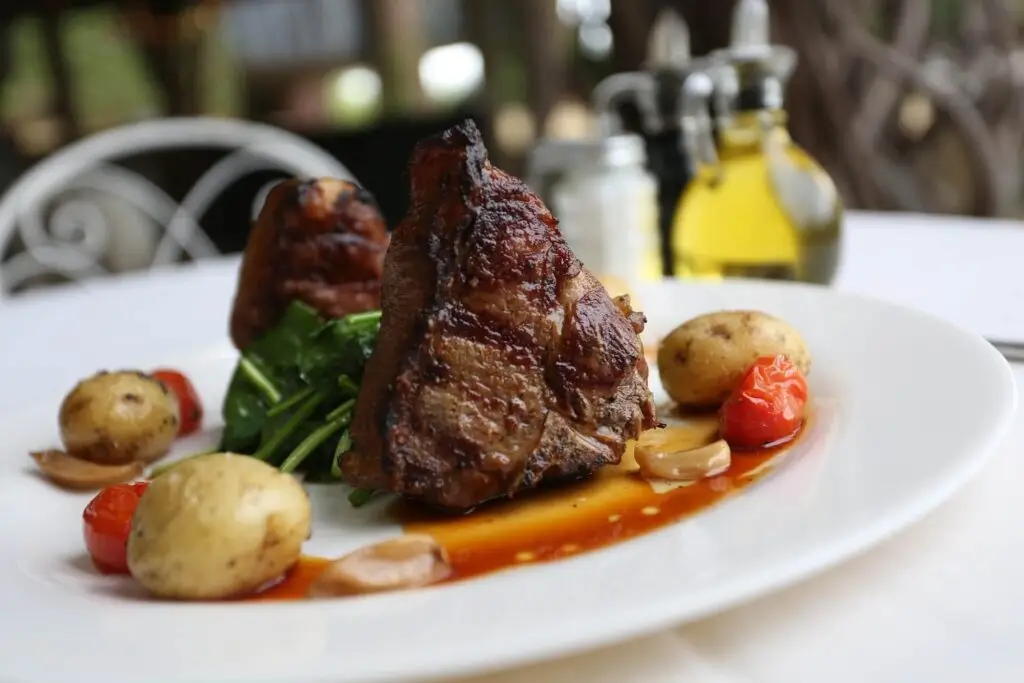
You don’t have to leave Rancho Bernardo to get a white tablecloth steakhouse experience. Carvers Steaks & Chops has prime rib (their best seller), filet, ribeye, porterhouse, New York strip, and other cuts, served alongside crab-stuffed mushrooms, wedge salad, French onion soup, potato skins, and other steakhouse specialties.
1940 Bernardo Plaza Drive
This no-frills Burmese restaurant is known for its traditional tea leaf salad that’s topped with sesame and sunflower seeds, garlic chips, peanuts, tomatoes, jalapeños, fried yellow beans, and fermented green tea leaf dressing. Tucked into a nondescript strip mall, Burma Place is a great takeout option when you want to eat garlic noodles, fried rice, chicken curry, and samosas from the comfort of your couch.
16719 Bernardo Center Drive, Suite A
Find authentic Vietnamese cuisine at Phở Ca Dao, including favorites like phở noodle soup, vermicelli noodles, broken rice dishes, and spring rolls. One of eight locations throughout San Diego, this family-owned chain uses robot servers for food delivery.
11808 Rancho Bernardo Road, Suite 100
It’s all about the sauce at fast-casual Mediterranean restaurant The Kebab Shop. Smothering your chicken shawarma, gyro, or falafels in garlic yogurt, cilantro jalapeno, fire chili, and dill yogurt sauce is practically a rite of passage. The hardest part is deciding whether to order a wrap, bowl, or salad.
11980 Bernardo Plaza Drive
Get a taste of South Asian flavors at Casa Lahori, a Pakistani restaurant noted for its grilled meat kabobs. Other best-selling dishes include beef nihari, chicken biryani, and shahi paneer— best enjoyed with naan bread.
11975 Bernardo Plaza Drive
Grill your own meat on the tabletop at Kangnam Korean BBQ, an interactive, all-you-can-eat experience that’s well-suited for large groups. Marinated beef bulgogi, grilled galbi short ribs, and spicy pork are served alongside traditional banchan dishes like kimchi, japchae glass noodles, and flavorful stews. Weekday lunch specials provide a nice discount on these filling meals.
11828 Rancho Bernardo Road, Suite 117–119
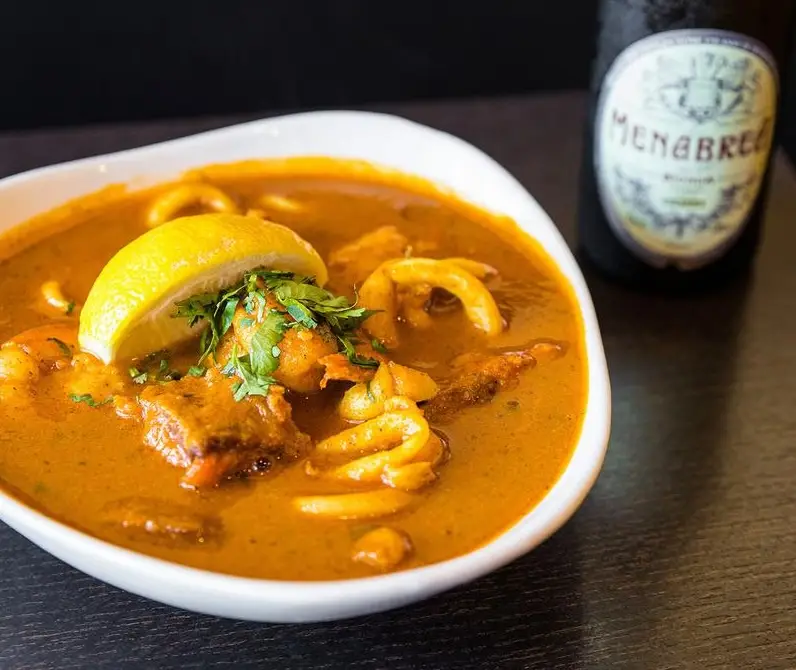
Dig in to your favorite curries and kebabs at Curry & More Indian Bistro. Most entrees are served with a choice of two side dishes, including basmati rice, potatoes with cumin, daal, naan, or mixed greens. Help offset the spice with one of their sweet mango or strawberry lassi drinks.
11808 Rancho Bernardo Road, Suite 123
Kai Oliver-Kurtin is a San Diego-based writer who covers travel, dining, events, and culture. Her writing has been published in USA Today, Condé Nast Traveler, Fodor's Travel, Marie Claire, and HuffPost, among others.
Enjoy the holiday with the city’s best restaurants offering seasonal brunch buffets, prix-fixe menus, and à la carte specials
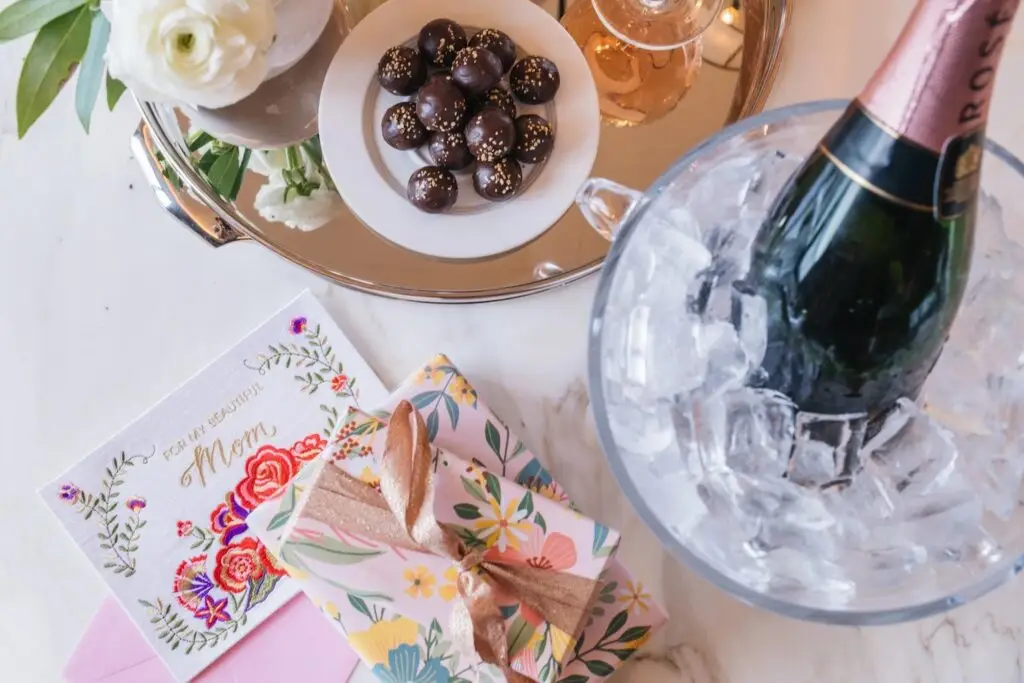
Consider this your annual reminder that Mother’s Day is not the time to improvise. What’s in: roses, peonies, and a card attempting to summarize a year’s worth of gratitude in three paragraphs or less. What’s out: pretending you “didn’t know it was this weekend.” In a city currently operating at full brunch capacity, San Diego responds as it always does—oceanfront tables, excessive buffet spreads, and sparkling wine refills. Whether it’s waffle stacks, chilled seafood displays, or carving stations doing the most, these San Diego restaurants have you covered.
Brunch Buffets | Mother’s Day Specials & Prix Fixe Menus | À La Carte Brunch
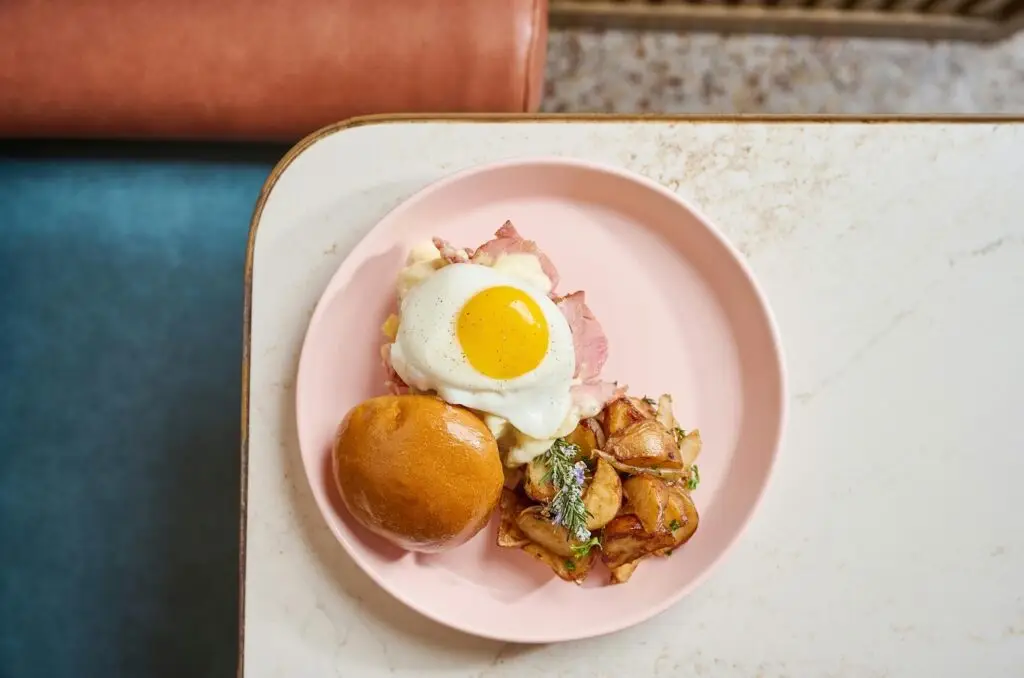
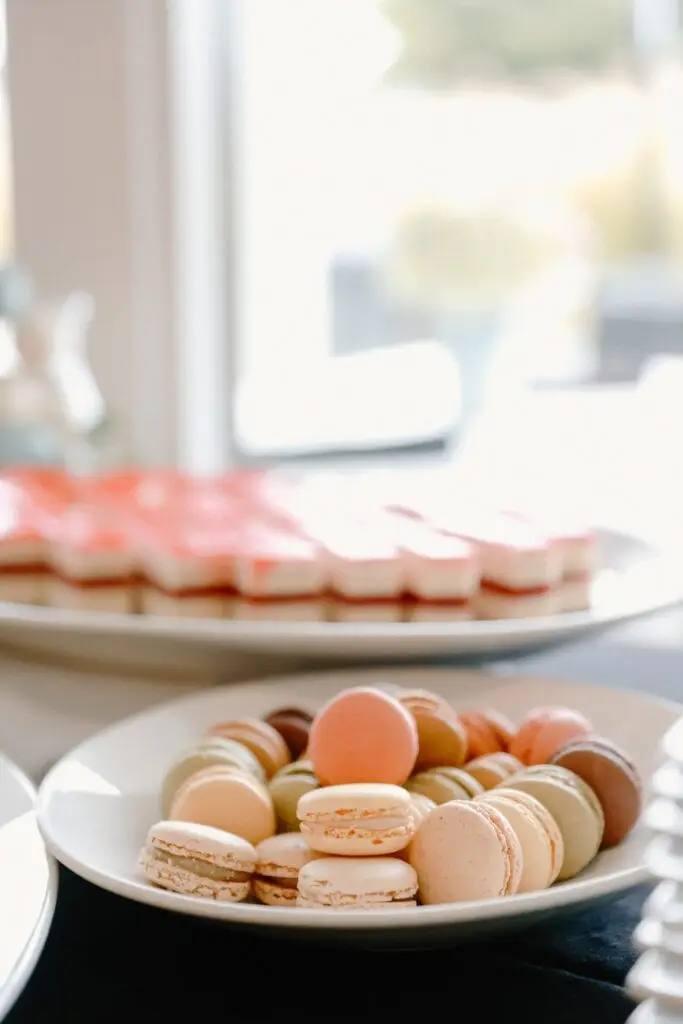
All moms deserve elegance on Mother’s Day. Celebrate a beachfront with a beautifully timeless and tasteful brunch at the Crown Room in Hotel del Coronado. Indulge in options like lemon vanilla pancakes with berry compote paired with crispy bacon, made-to-order omelets or your very own egg benedict station, shucked oysters, whole in-house smoked brisket, Peach Melba Verrine, and more. Guests over 21 can enjoy a complimentary glass of Champagne.
Price: $235 per adult | $125 per child (6 – 10) | Ages 5 and under are free
Hours: 10 a.m. – 3 p.m.
Address: 1500 Orange Ave, Coronado
Reservations: Hotel del Coronado
Mimosas, marina views, and a Mother’s Day where the only thing on the agenda is enjoying it? We’ll cheers to that. Located at the Catamaran Resort, this Mother’s Day brunch literally has it all, from sushi rolls and nigiri to a charcuterie spread stacked with salumi, prosciutto, cornichons, pepperoncini, cherry peppers, and grainy mustard, plus waffle and omelet stations, cedar-planked salmon, and panko and herb-crusted mac and cheese. Kids can also create a bouquet for Mom that’s just chaotic enough to be adorable.
Price: $120+ per adult | $60+ per child (5 – 12) | Ages 4 and under are free
Hours: 10 a.m. – 4 p.m. (last seating at 2 p.m.)
Address: 3999 Mission Boulevard, San Diego
Reservations: Oceana Coastal Kitchen
Mother’s Day at Arlo transforms into an enchanted garden that’s equal parts lush and indulgent: a raw bar, fresh salads, delicate pastries, 12-hour braised short ribs, roasted prime rib, and Szechuan pepper–crusted swordfish from the Santa Maria grill. Spoil moms, grandmas, aunts, and every beloved mother figure with live music, a roaming mimosa cart, floral bouquets, and of course, a little retail therapy courtesy of the Kendra Scott trunk show—necklaces, bracelets, earrings, or, let’s be real, all of the above.
Price: $99 per adult | $40 per child (5 – 12) | Ages 4 and under are free
Hours: 9 a.m. – 3 p.m.
Address: 500 Hotel Circle N, San Diego
Reservations: OpenTable
Forget the CVS roses (respectfully). Rumorosa’s Mother’s Day brunch is back for its third year, pairing complimentary flowers with sun-drenched marina views. It’s coastal-modern meets Baja soul, where the food is bright and very much not an afterthought. Last year’s spread leans into Carrot Cake Waffles, a made-to-order omelet station, Café de la Olla French Toast, Roasted Lamb Tostadas, and other “yes, I’ll have everything” moments.
Price: $90 per adult | $40 per child (5 – 12)
Hours: 9 a.m. – 2 p.m.
Address: 1380 Harbor Island Drive, San Diego
Reservations: OpenTable
A boozy brunch overlooking Mission Bay with Mom? Say less. Celebrated at Tidal with a lavish spread of cheeses and charcuterie, a seafood bar stacked with oysters, shrimp, crab legs, and ahi specialties, and chef-attended carving stations with slow-roasted prime rib. Made-to-order omelets and pancakes, maple-glazed pork belly, roasted Baja grouper, vibrant seasonal salads, and brunch classics round it out, finishing with an abundant mini dessert selection.
Price: $125 per adult | $50 per child (5–12) | Ages 5 and under are free
Hours: 11 a.m. – 3 p.m.
Address: 1404 West Vacation Road, San Diego
Reservations: OpenTable
Mother’s Day at Animae is anything but expected. Tucked into the Marina District, this world-class steakhouse leans West Coast with a playful Asian twist. This year, treat Mom to a dim sum–style experience: a slightly more elevated, endlessly flowing take on the buffet, where indulgent small plates arrive tableside, perfectly complementing the Art Deco interiors and designed to be picked at, shared, and fully obsessed over. It’s less set menu, more choose-your-own flavor adventure.
Price: $104 per person
Hours: 10 a.m. – 2 p.m.
Address: 969 Pacific Hwy, San Diego
Reservations: OpenTable

Isabella Dallas is a freelance writer for San Diego Magazine and the Arts and Culture Editor at The Daily Aztec in her final year at San Diego State University. She previously worked as an editorial intern for SDM, but when she’s not writing, you can find her trying the best coffee spots in SD, devouring the latest rom-coms, and indulging in anything and everything pop culture.
The 29-year-old culinary director at Herb & Sea is making seafood sexy (and approachable) again
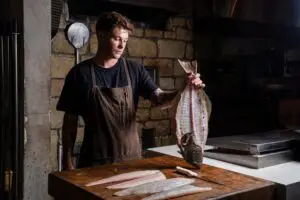
Implementing a farm-to-table model hardly deserves acknowledgement these days. It’s not a stretch. It’s not innovative. “It’s the bare f**king minimum,” says Herb & Sea‘s executive chef Aidan Owens.
When I arrive at the Encinitas restaurant, I’m ready to talk sustainability, farm-to-table stuff, with Owens. “Did you see the chin on that?” he says of the extra big jiggly chin on the sheephead that just arrived with the day’s fresh catch. I did. It was Jay Leno adjacent.
I learn quickly that he somehow oozes both charm and stone-cold honesty. Maybe he could construct a new dish with chin goo, like he did when he had a bunch of tuna scraps and voila’d it into a smooth and crowd-pleasing ‘nduja. “I want to know what’s in there,” he says.
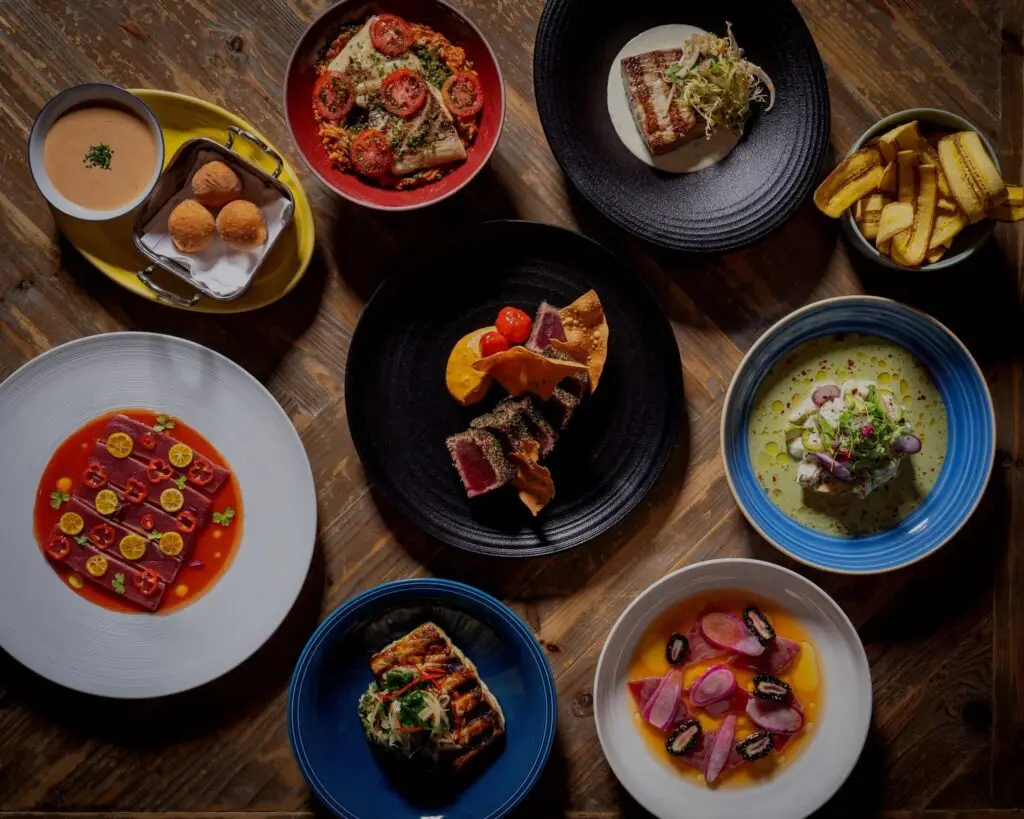
The instinct to look closer, to dig into what others might discard, says a lot about the chef’s approach. I guide him back to our topic, but he has something else on his mind. “We’re overcomplicating food—what happened to just cooking good food and having fun with it?”
Owens grew up on a farm in Byron Bay, Australia, where sustainability wasn’t a concept you chat about so much as a way of life. Think dirt roads, backyard chickens, pulling vegetables straight from the ground, and a mother who believed that if you couldn’t pronounce the ingredients on a package, you shouldn’t eat what was inside.
Food wasn’t precious or performative. Making it was what you did because you were hungry and that’s still what inspires Owens today. “I like to cook good food because I like to eat good food,” he says.
His approach to sustainability at Herb & Sea began so naturally that it felt just like instinct. “I was just like, ‘Let’s order food from the people who live and work here,’” he says.
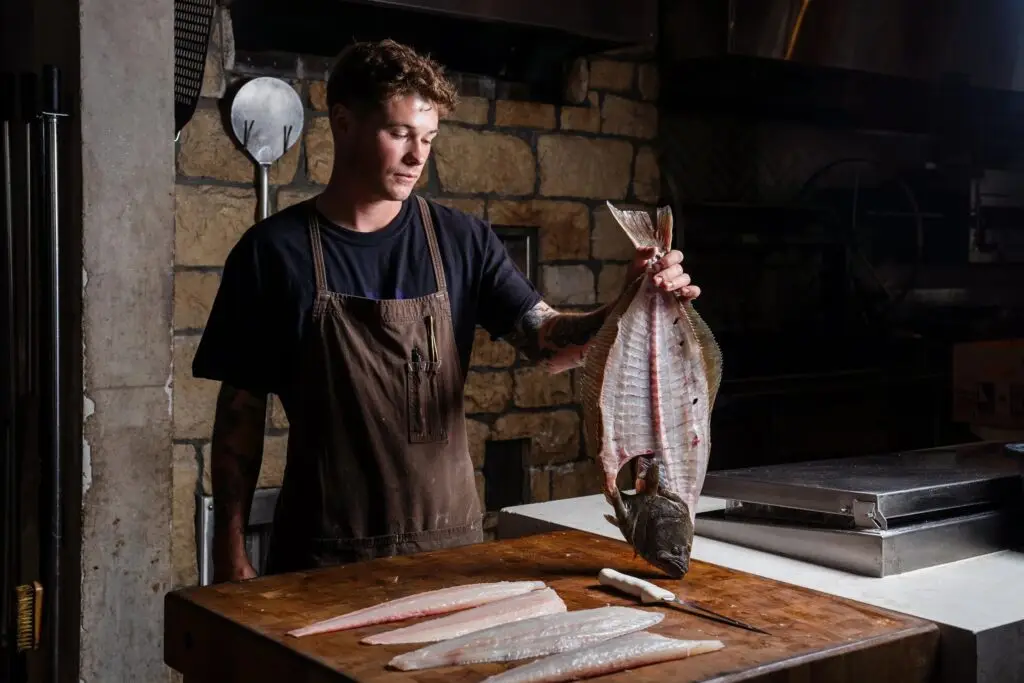
And why wouldn’t he when lives in San Diego? Cities all over the world vie for our goods. Our tuna is sent overseas. Our spiny lobsters hit dinner plates in China and Japan. Not to mention California’s producing a third of the country’s vegetables and three-quarters of its fruits and nuts.
“Why would we outsource when it’s all here?” Owens asks.
Sustainability, in this context, is about cooking what exists in abundance, nearby, right now. “I love the local fish here. It’s f**king delicious and San Diego citrus, I mean, it is so f**ing good,” he says.
Instead of importing ingredients, Owens also looks for nearby alternatives. “You can find really cool things in the local waters,” he says, pointing out that stingray cheeks taste similar to scallops.
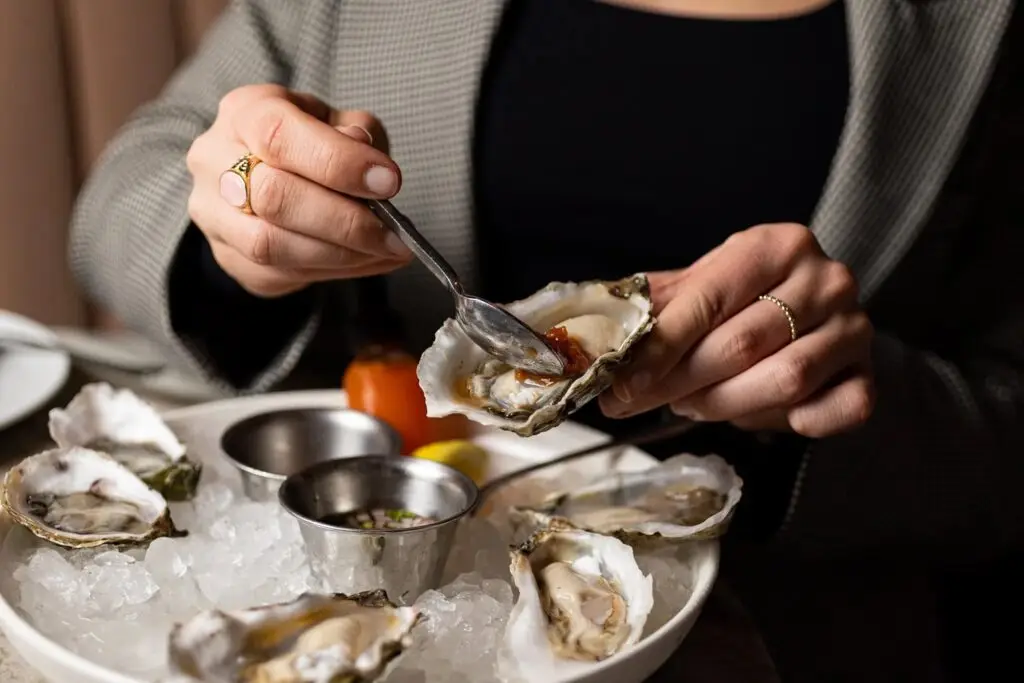
Whatever he finds in that sheephead chin might just be the next substitute for marrow. But to make this work, it means getting diners amped up about the slightly unfamiliar.
Tasting menus, where diners are completely in his hands, become an opportunity to gently push boundaries. “I’ll serve mackerel, because people think they hate it,” Owens says, noting that the abundant local fish can have some fishiness. “But when it’s fresh, it’s arguably one of the best fish in the ocean.”
He also tweaks the language on the menu so people might feel more compelled to give dishes a try without preconceived notions. He might use “lengua” instead of “tongue.” “Whelk” instead of “snail.” When he puts “stingray throat” on the menu, he disarmingly calls it “skate.”
To reduce waste, scraps aren’t always discarded but rather turned into something new. Sometimes they’re smoked, cured or fermented. Apples going bad turn into apple ponzu. Lemons turn to marmalade, which stretches their usefulness far beyond peak season. “And it’s super tasty on our pizza,” he says.
What makes the food even richer, is the relationships he’s built with farmers. Though it didn’t always feel natural, Owens sought personal connection first. He recalls approaching a fisherman at the Tuna Harbor Dockside Market. “I was awkward,” he says. “I went up to him and said, ‘I like your fish.’”
Owen’s is now so close to his suppliers—like fishermen Ryan Sebo and Joe Daly—that he gets texted pictures of fresh catches right as they flop on the boat. The messages always ask if he wants first dibs. “I say yes to a lot of fish,” Owens says, noting that Herb & Sea can go through 2,000 pounds of seafood a week.
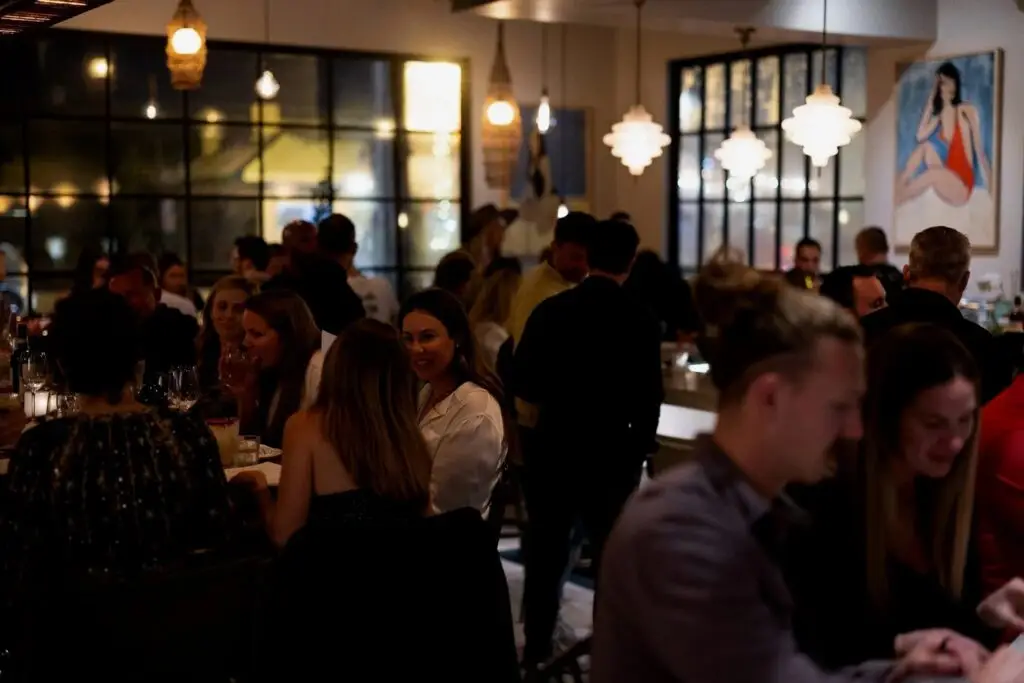
The next evolution of sustainability, in his view, will be chefs working directly with producers such as his alliance with Sebo, cutting out middlemen and purveyors where possible. “It will put more money in the pockets of the people doing the work,” he says.
It will mean that chefs can’t just know their local farmers and producers, but they’ll choose to work with the ones who have the best practices. Dining and sustainability will become much less about the final plate. “It will be more about the impact that plate has on the Earth,” he says.
Ultimately, he believes sustainability doesn’t need to be loud. It doesn’t need hashtags. It just needs to be honest.
“We aren’t saving lives. We’re feeding people good food,” he says.
And yet, in feeding people well—simply, thoughtfully, responsibly—something meaningful happens. Guests leave satisfied. Ingredients are respected. Local ecosystems are supported and food returns to what it has always been at its core: nourishment, pleasure, and a quiet reflection of the place it comes from.
No buzzwords required.
Our guide to San Diego’s taco scene, plus what the city's top chefs order when they’re off the clock
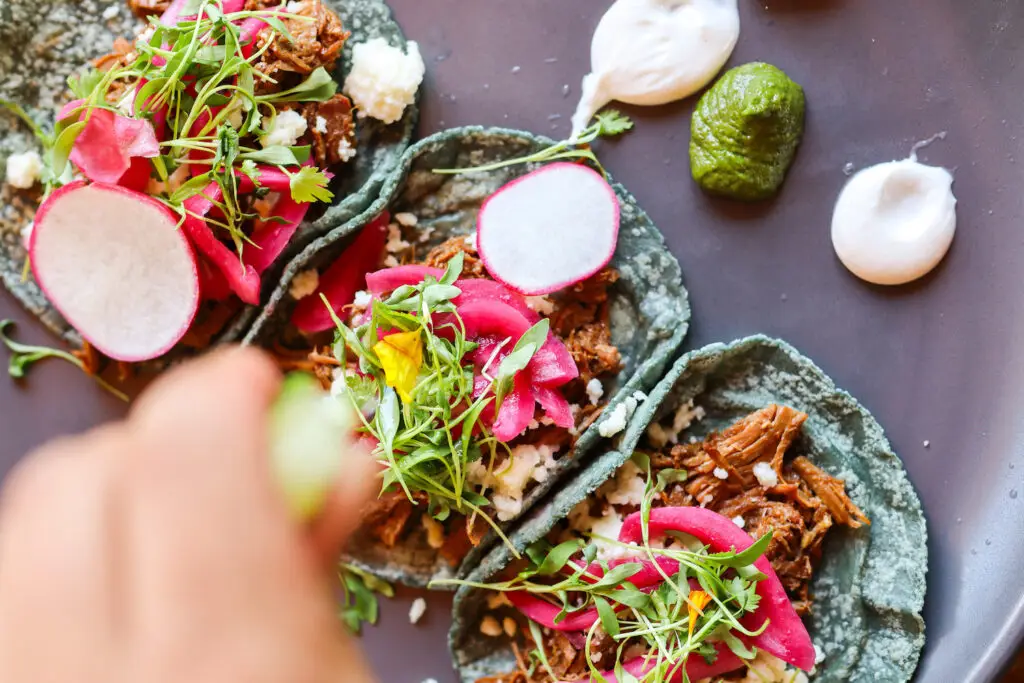
Tacos are San Diego’s lingua franca. The invention of food wrapped in corn tortillas is ballparked at 1000 to 500 BC. The word probably comes from the Nahuatl “tlahco”—meaning “half” or “in the middle”—a food meant to be folded and carried. Portable foods always have a way of sticking around.
San Diego was part of Mexico until the Treaty of Guadalupe Hidalgo in 1848, so tacos didn’t arrive; they remained. After the treaty, they receded into the kitchens of families who stayed behind.
By the early 1900s, US tacos had reached a sad state—mostly ground beef, cheddar cheese, and iceberg lettuce, because Mexican staples like cotija, cilantro, chiles, and freshly pressed tortillas weren’t in grocery stores. In San Diego, that started to change around 1930 in the abode of Petra and Natividad Estudillo, who lived on Logan Avenue in Barrio Logan, the heart of San Diego’s Chicano culture (it’s where many refugees from the Mexican Revolution settled). There, the couple created a teeny tienda, slinging homemade tortillas.
Behind the Estudillos’ counter, reportedly, you could see their living room, lined with furniture and tubs of fresh tortillas. You could tell sales (and tacos) were on the rise, because their décor got increasingly nicer. The couple opened Las Cuatro Milpas next door in 1933. It was the first Mexican restaurant in the city, a taco chapel for over 90 years. Around the same era, Ralph Pesquiera Sr. started pressing tortillas with his parents on India and Grape streets, later serving smaller, corn tortilla versions of flautas for defense workers during WWII. Credited with coining the term “taquito,” he opened El Indio in 1940.
The Bracero Program (1942–64) greatly contributed to taco culture, bringing over four million Mexican men to the US as guest workers, many in San Diego. The kitchens at bracero camps were filled with beans, tortillas, and chiles. The art of making fresh masa started to proliferate, and local grocery stores stocked dried chiles, salsas, and masa harina for their new client base.
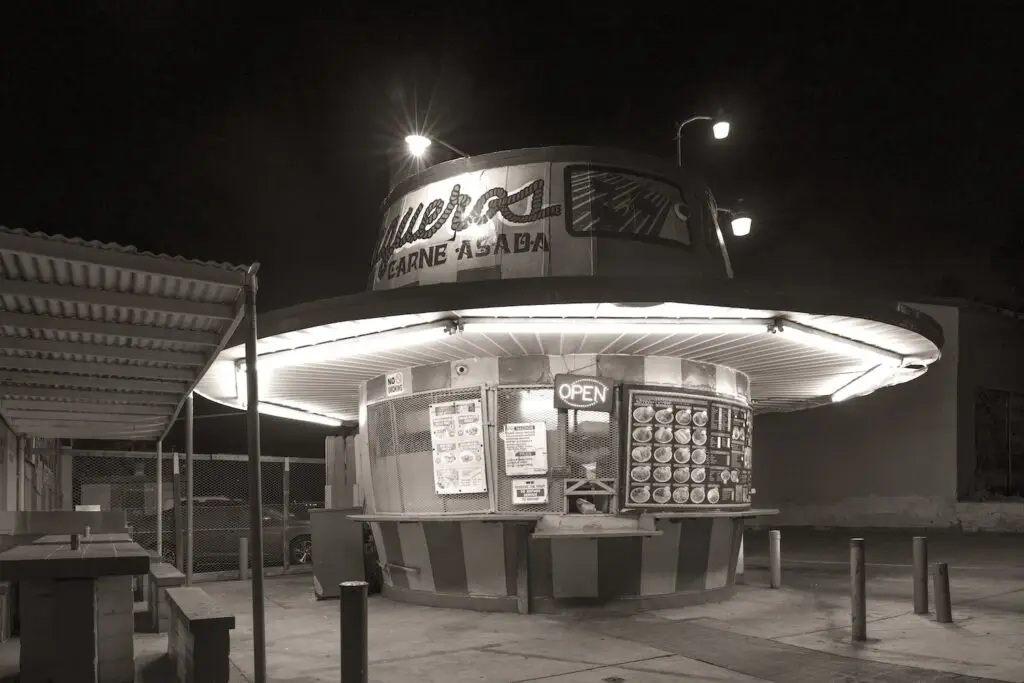
San Diego’s taco culture quantum-leapt in 1964, when Roberto and Dolores Robledo, who’d previously owned a Golden Hill restaurant called La Lomita, opened a tortilla factory in San Ysidro. They quickly added a walk-up and drive-through window and called it Roberto’s—the city’s first “modern” taco shop and eventual legend. Two years earlier, up the road in Downey, Glen Bell had launched Taco Bell; by the time he sold it to PepsiCo in 1978, every American grocery store was selling “taco kits” with pre-fried shells, seasoning packets, and jars of salsa. Taco night became a middle-class ritual.
Surfers also deserve a taco nod. In 1983, SDSU student Ralph Rubio finally made good on the recipe gifted to him by a taquero on a San Felipe beach; he opened Rubio’s on Mission Bay Drive, launching the Baja fish taco into the national imagination (Rubio’s IPO hit NASDAQ in 1999).
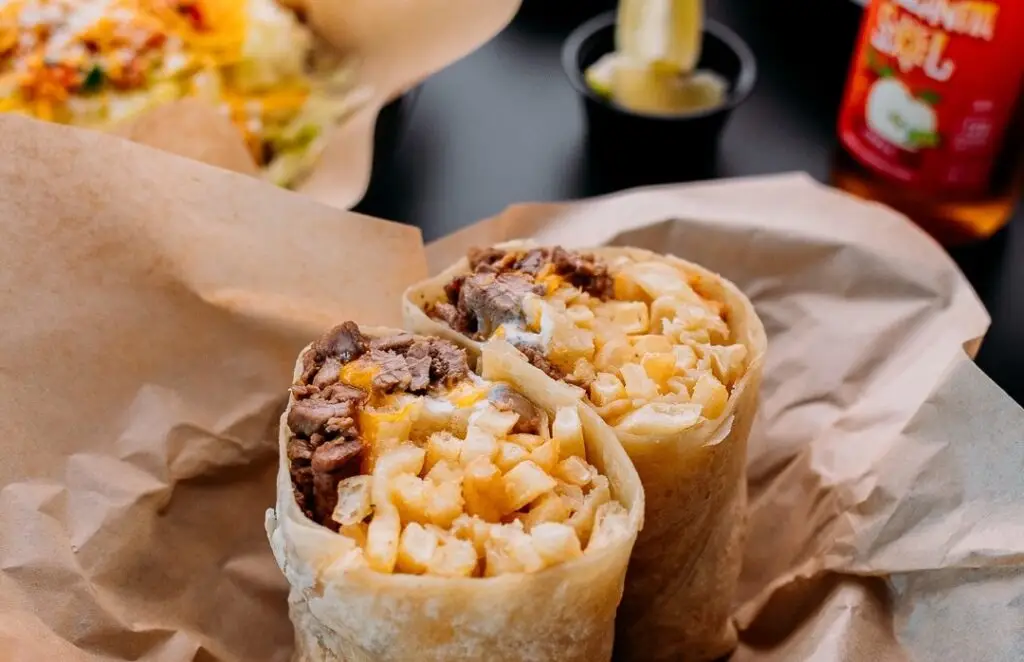
Two government policies also helped further taco enlightenment. In 1986, the Immigration Reform and Control Act (IRCA) legalized about 2.7 million immigrants, many in SoCal. Green cards and work permits meant access to leases, loans, and licenses. With that stability came confidence—and a wave of Mexican-owned small businesses. The late 1980s and ’90s saw the rise of family-run icons like Lolita’s, Rigoberto’s, and Cotixan. It’s no coincidence that two of San Diego’s proudest food inventions—the California burrito and carne asada fries (often credited to Lolita’s circa the late ’90s)—came onto the scene during this period.
This last point is an unsubstantiated connecting of dots. But Mexico’s a large country full of endless regional taco ideas (Oaxacan cheese, Sinaloan seafood, Texcoco barbacoa). And the North American Free Trade Agreement (NAFTA), signed in 1992, was probably what sprung that deep well of taco ideas. Corporations opened massive operations in border cities like Tijuana, drawing thousands of workers and tacos from every nook.
Which brings us to now. There are 1,700-ish taco shops across the county, and here’s the list of our favorites.
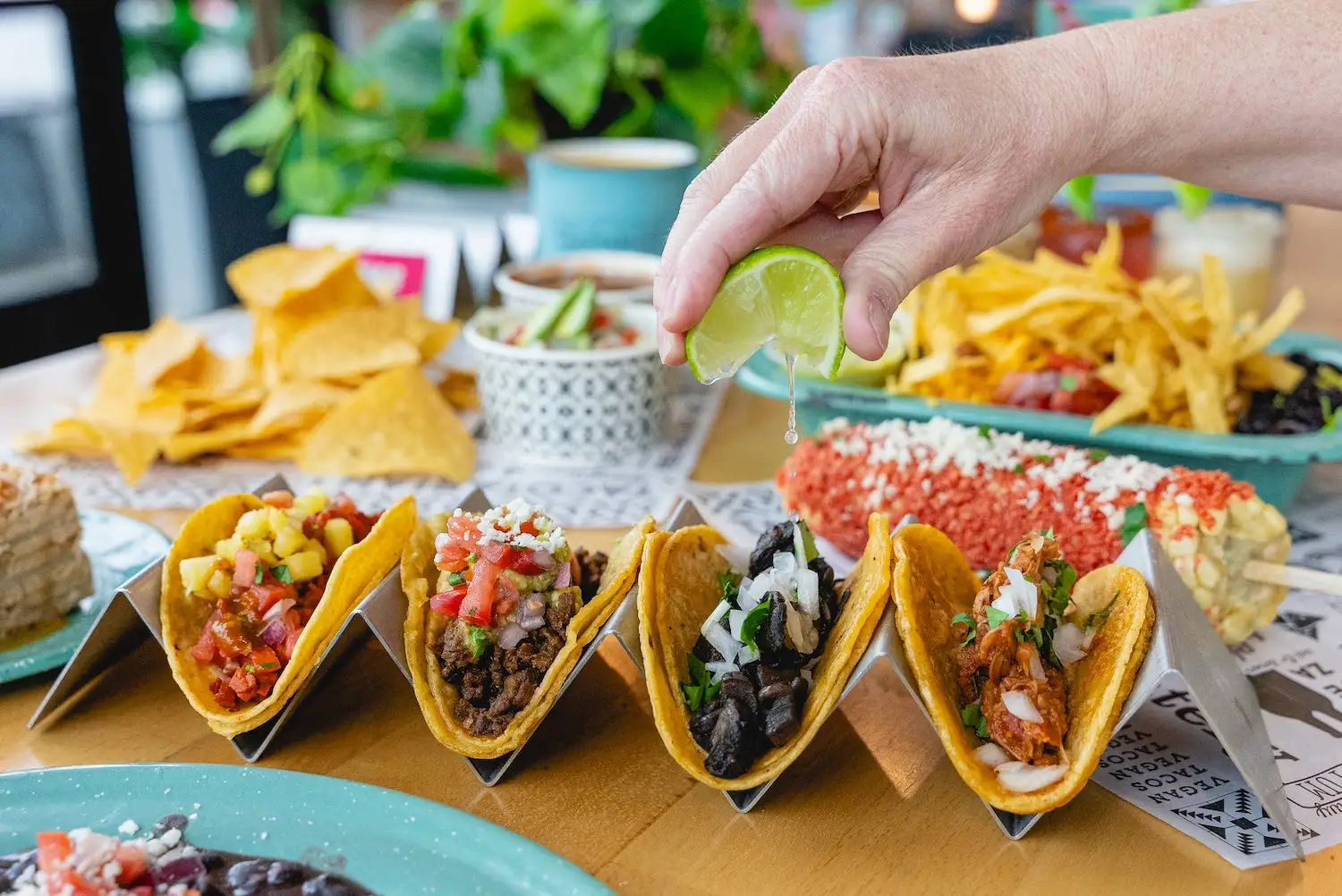
Located in the massive parking lot by an event center and a cannabis dispensary, Mi Gusto Es may just set the bar for the best gobernador (a Sinaloan-style shrimp taco with melted cheese and a flour tortilla—a wonderful thing). Loaded with sautéed peppers, it costs three bucks. Get the spicy shrimp. Always spicy.
Troy Johnson is the magazine’s award-winning food writer and humorist, and a long-standing expert on Food Network. His work has been featured on NatGeo, Travel Channel, NPR, and in Food Matters, a textbook of the best American food writing.
What to eat, see, and do in the coastal North County neighborhood known for its dreamy beaches and laidback vibe
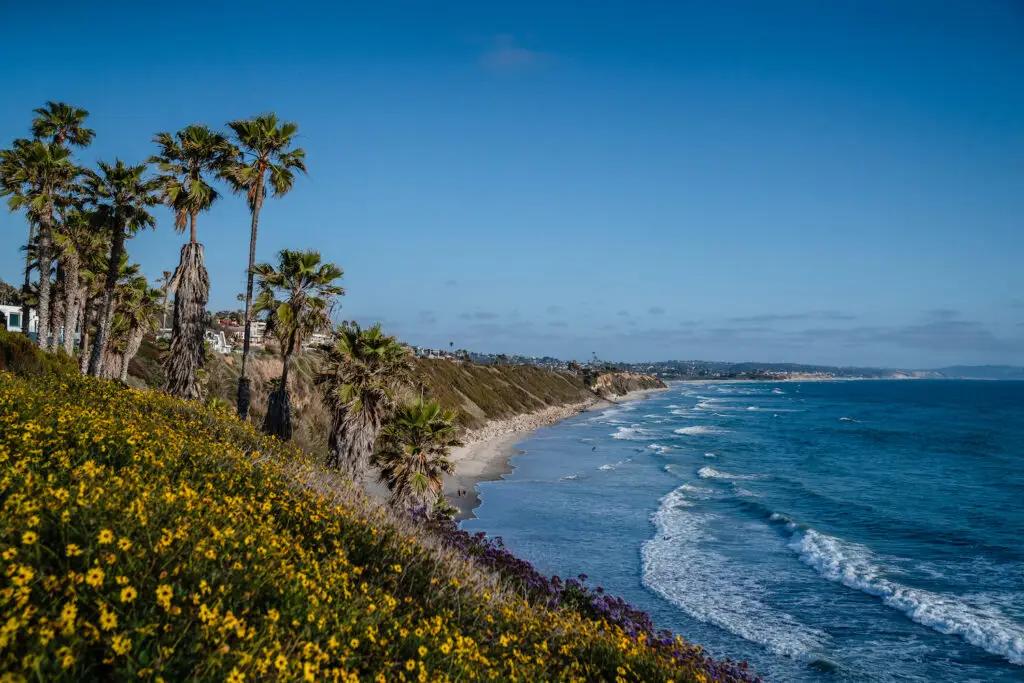
Encinitas is practically shorthand for iconic beaches. Swami’s, Moonlight, and Stonesteps all offer postcard-worthy views and the kind of waves that launch surf careers. But it’s not all saltwater and sand up here. This laidback coastal city was formerly the global capital of poinsettias, thanks to Ecke Ranch, which bloomed from the 1920s through the 2010s and once put the area in competition with Holland for “Flower Capital of the World.”
Stretching from sleepy Leucadia to surfy Cardiff and inland to the rural charm of Olivenhain, Encinitas is anchored by its walkable downtown along historic Highway 101, a family-friendly area studded with funky shops; taco joints; and Instagramable, bluff-perched cafés.
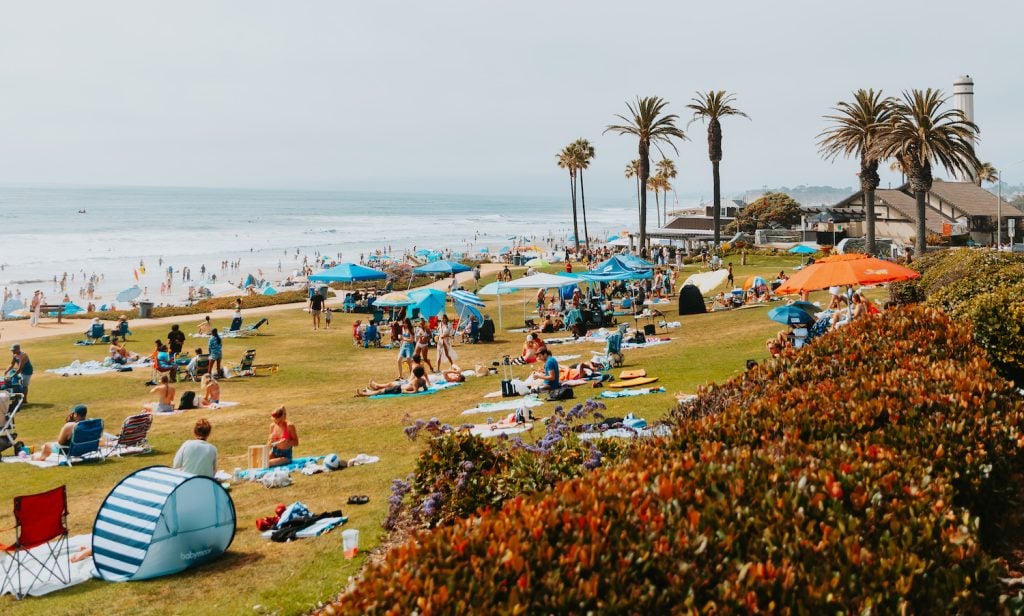
And while the city has seen tons of recent new additions, its history runs deep. The Santa Fe Railroad pulled in back in 1881, and Pannikin Coffee still serves its goods inside the old Victorian train depot. La Paloma Theatre has been screening films and hosting legends since 1928. And the white-domed towers of the Self-Realization Fellowship have crowned the coast since 1920, a beacon for both yogis and surfers alike.
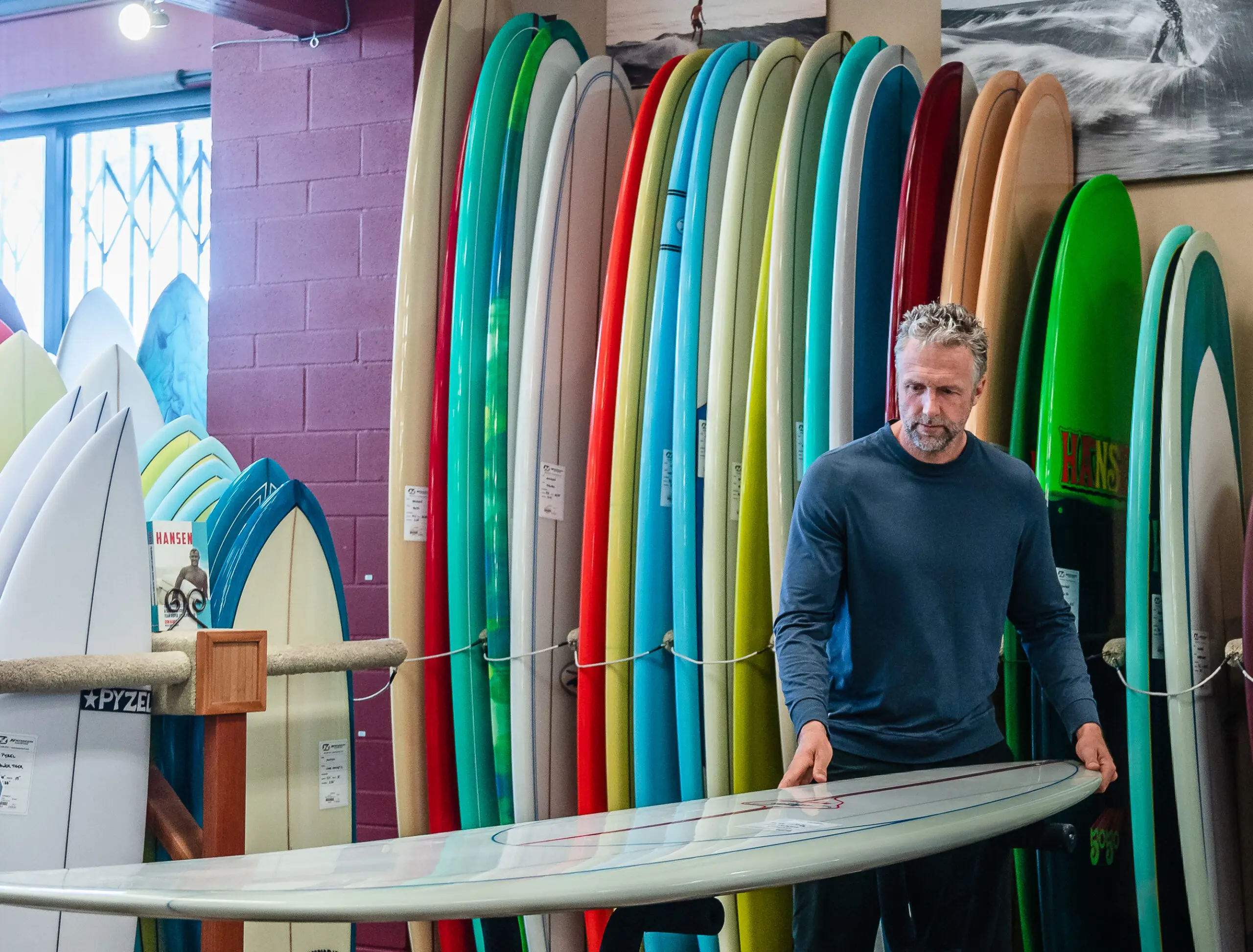
Don Hansen opened his namesake shop in 1961; today, his son Josh keeps the stoke alive at Hansen Surfboards. The new wave of ocean-lovers brings a green mindset, blending surf culture with sustainability, wellness, and creativity. Artists, musicians, and makers thrive here, with local galleries, public murals, and arts festivals adding color to the already quietly vibrant streetscape.
Uphill from the beach, the seeds of Encinitas flowery days still flourish. The San Diego Botanic Garden, Coastal Roots Farm, and Fox Point Farms keep things blooming, alongside nurseries that specialize in everything from cymbidiums to drought-friendly succulents.
It’s this eclectic—surfboards and sun hats, yoga and espresso, public art and farmers markets—that gives Encinitas its beloved quirkiness.
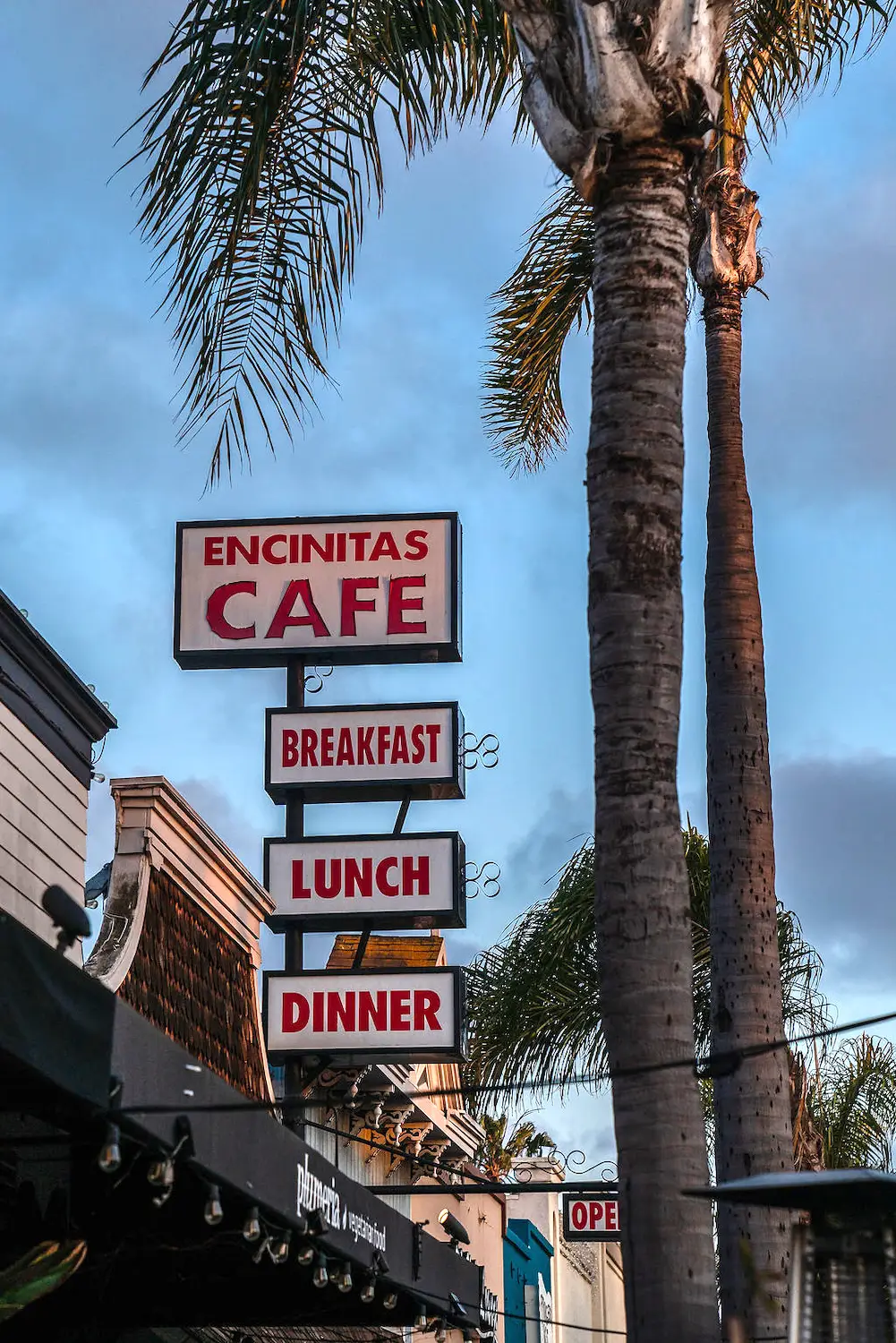
A day in Encinitas for Josh Hansen starts with surfing—“always [at] Swami’s,” he says. If he goes out for breakfast, it’s at Swami’s Cafe, where he reliably orders the chilaquiles. Goodonya Organic Eatery is another go-to, a few minutes’ walk from his surf spot, for the bone broth and fried egg plate. For cozy, beach-cottage-y local comfort food, he goes to Besta Wan Pizza House in Cardiff—since 1965, it’s served North County dwellers a classic menu of salads, pizzas, and beers on tap. Get the Besta Wan special: ground beef, pepperoni, sausage, green peppers, onions, mushrooms, and (stay with us here) anchovies.
When Hansen’s daughter is in town, they head to Birdseye Kitchen for fresh organic Thai, Lao, and Vietnamese. Then, it’s time for a Tito’s and soda at Union Kitchen & Tap across from Hansen Surfboards. Hansen appreciates the laidback vibe and local ownership at all these stops.
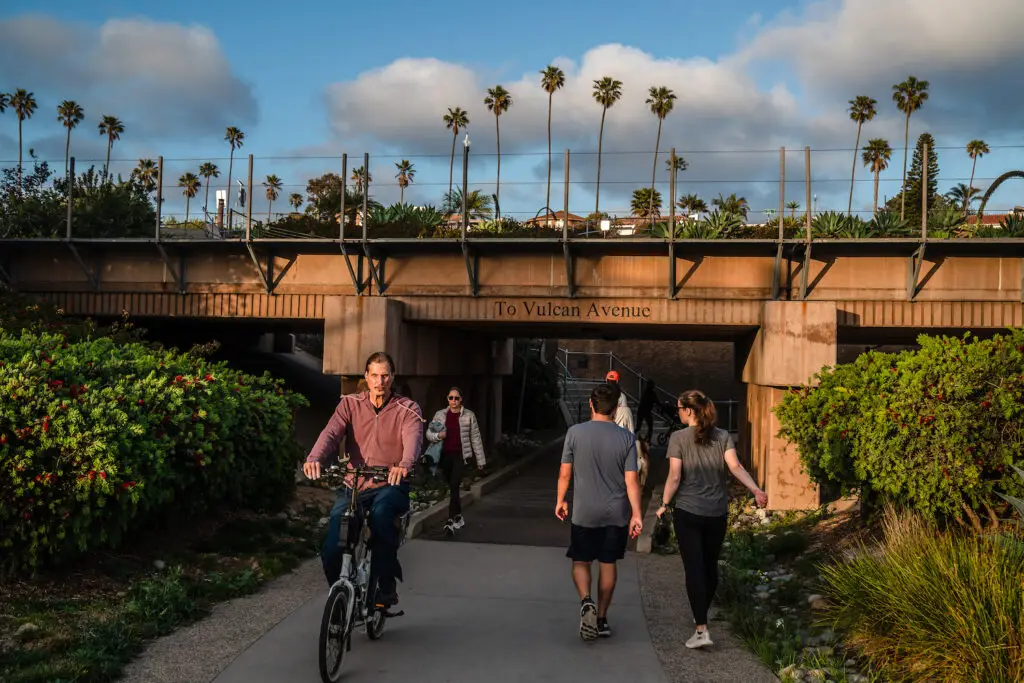
As one of the boosters of the Visit Encinitas initiative, Hansen knows one of the best things about Encinitas is its walkability. You can get errands checked off the list with a scenic stroll between Encinitas Ranch Town Center and the Carlsbad Forum Shops, or enjoy million-dollar coastal views on the Swami’s Pedestrian Under-passageway route.
Hansen also loves that Encinitas has activities for a range of age groups. Moonlight Beach hosts free Sunday afternoon concerts in July and August—BYO chairs, blankets, and snacks. There are oodles of summer camps and year-round rec classes at Pacific View Arts Center and Encinitas Community Center, as well as a children’s area at San Diego Botanical Garden and ride-along farm tours and animal encounters at Fox Point Farms. “It’s a family-oriented surf town. That mix of community and beach lifestyle is what makes it so special,” Hansen says.
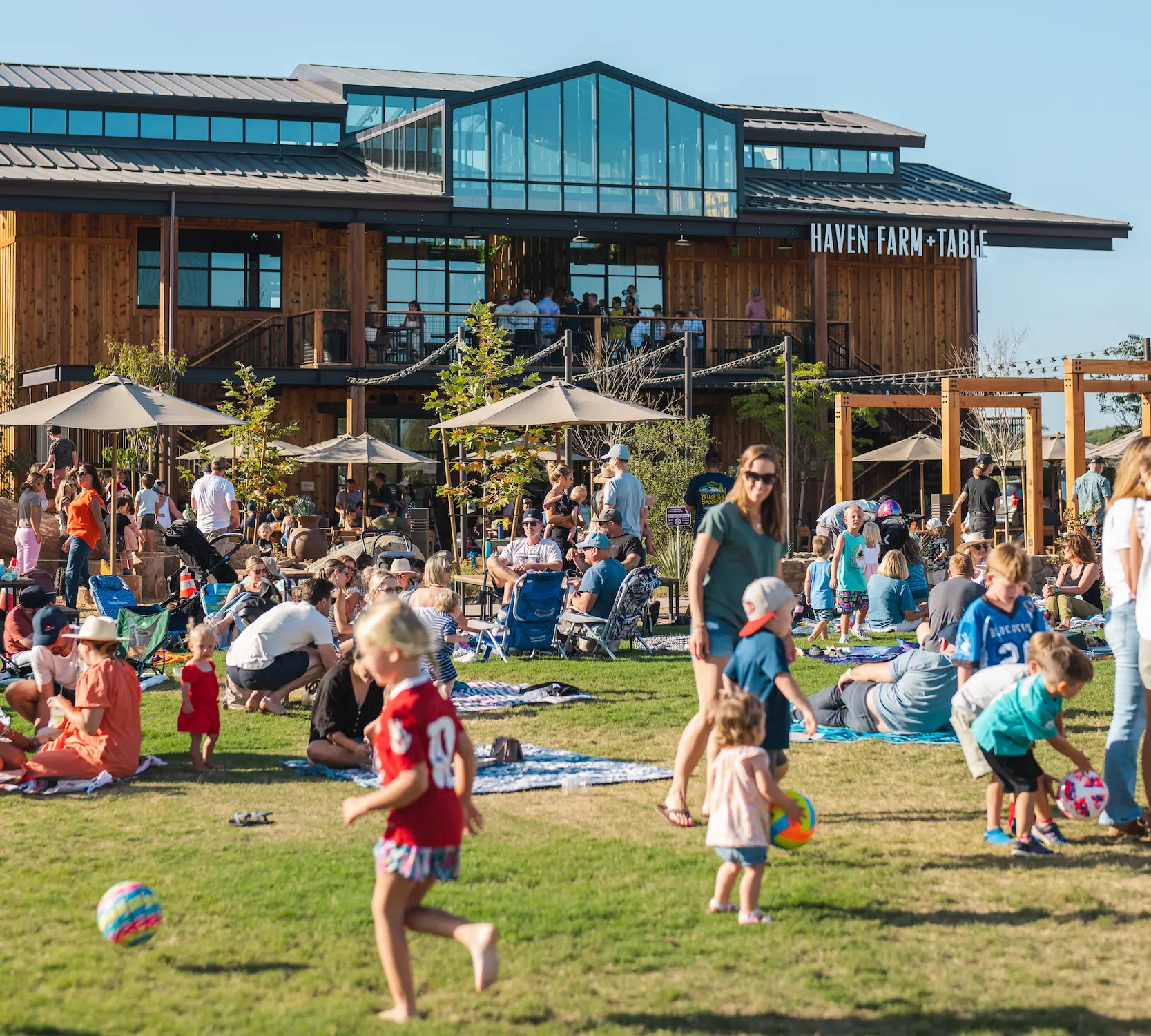
Similar to much of San Diego County, Encinitas faces mounting pressure to build more housing. But, like many affluent enclaves in California, it’s putting up a fight. Even as cranes and construction crews shape three new developments along Quail Gardens Drive, resistance is brewing. Newly elected mayor Bruce Ehlers is spearheading a statewide ballot initiative aimed at challenging California’s housing mandates. Will this move stall the momentum, or just add more fuel to the fire? The battle between growth and preservation is playing out in real time, and Encinitas is right at the heart of it.
Nevertheless, restaurant openings are definitely not slowing down: Ernie’s Craft Deli & Wine Bar is coming to Encinitas Marketplace; Claudette Zepeda just launched Leu Leu in Leucadia; Tony Hawk and chef Andrew Bachelier recently unveiled Chick & Hawk; and pro surfer Benji Weatherly is bringing a bit of his Hawaiian home to Breakers Cafe Bar & Grill on Santa Fe Drive. The Dumpling Bar opened in late 2024 in Encinitas Village. Craft Coast Brewery & Taco Stand is planning a location on Highway 101 at West D Street.
“Over the past 10 years, there’s been a noticeable increase in bars, restaurants, and new shops,” Hansen says. “The vibe’s still good, but there’s definitely more happening around town.”
The former site of Cap’n Keno’s, an Encinitas landmark that closed in 2024 after more than 50 years on Coast Highway, is under development with the working title “Moonlight Mixed-Use Property.” Purportedly, the plans include a tribute to the beloved institution (maybe a new bar with an old name?), along with condos, storefronts, and affordable housing.
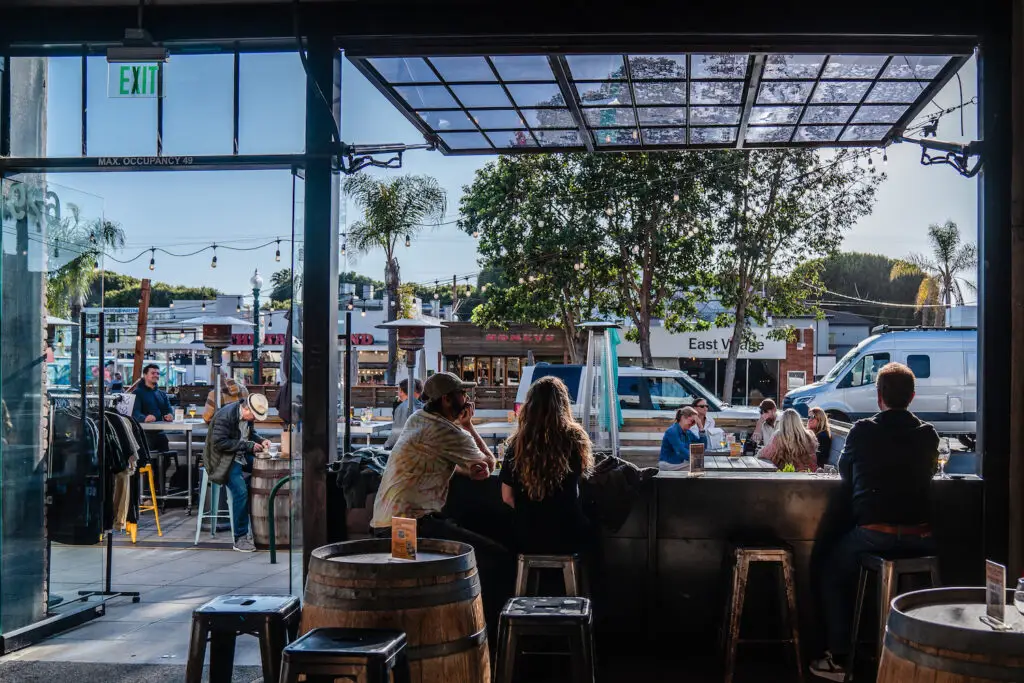

Leorah Gavidor won her first essay contest at age 5. She writes features, news, and non-fiction in San Diego.
In a world overflowing with shortcuts, marketing fluff, and “good enough,” there are still companies that choose a different answer. And in San Diego, there are plenty of them.
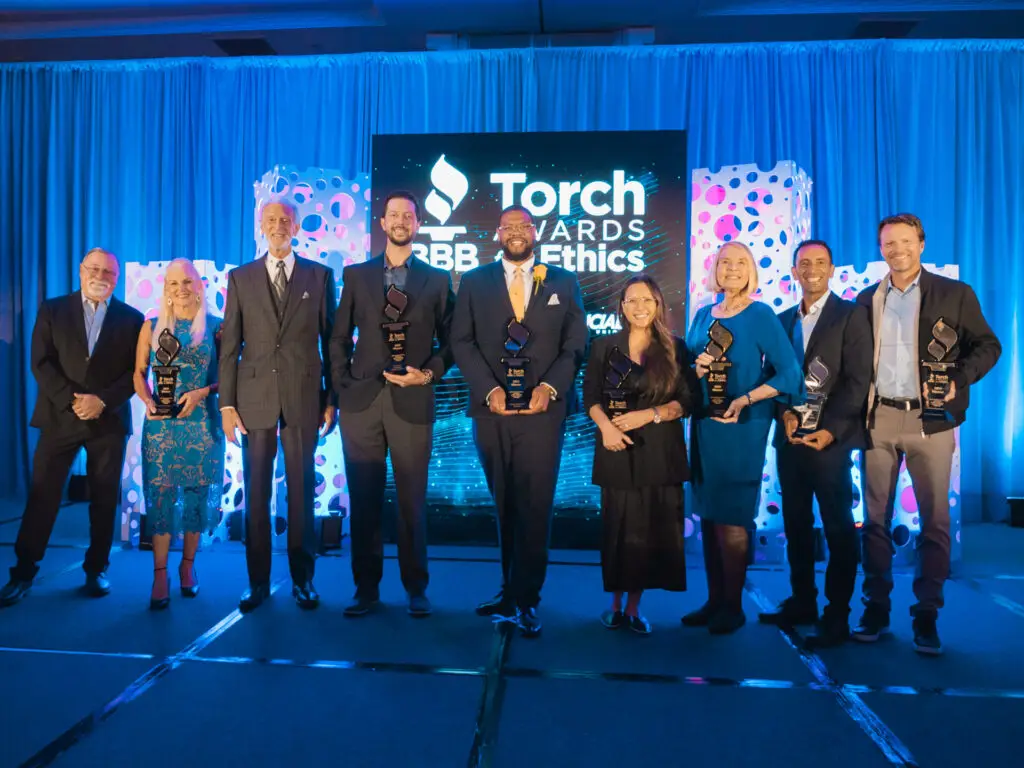
In a world overflowing with shortcuts, marketing fluff, and “good enough,” there are still companies that choose a different answer.
Integrity guides how they show up every day. They make hard decisions, hold themselves accountable, and build trust the old-fashioned way, one action at a time. At the Better Business Bureau, we call these businesses Torch Heroes: leaders who demonstrate that ethical leadership strengthens businesses and drives long-term success.
And in San Diego, there are plenty of them.
Take House Collective Marketing Solutions, a Carlsbad-based digital agency that won the 2025 Torch Award for Ethics for its people-first approach to marketing. Instead of pushing flashy campaigns, the team often takes a step back to make sure clients’ foundations are strong before going big. Their philosophy? Truth over transaction builds partnerships that last.
Or look at Young Black & N’ Business, where integrity shows up through community action. When a local school lost art funding, founder Roosevelt Williams III and his team stepped in with workshops, mentorship, and hands-on support to help restore creative opportunity. That kind of engagement reflects ethical leadership rooted in real impact.
And in Vista, Lotus Sustainables carried its commitment to ethics all the way to the product line. After discovering defects in a shipment of eco-friendly products, the company issued full refunds and redesigned its offerings at its own expense, a choice that shaped its identity and reinforced to customers that ethics guide every decision.
In North County, Greenway Landscape Design & Build brings integrity into everyday service. When a client’s glass was damaged, likely not by their crew, owner Scott Lawn chose responsibility over blame and covered the repair personally. For Greenway, doing the right thing serves as a north star, guiding every interaction through transparent pricing, accountable partnerships, proactive communication, and follow-through long after the job is done.
Other honorees include At Your Home Familycare, whose leadership turned down a lucrative state contract during the pandemic to protect vulnerable clients and staff, and Bill Howe Family of Companies, where hiring practices, training, and service centers around shared values, every day, on every call.
What connects these diverse businesses, from marketing to nonprofit support to home services, isn’t size, industry, or revenue. It’s something deeper: a commitment to trust as a business strategy.
In San Diego’s competitive marketplace, that trust gives companies an edge. Clients invest in relationships. They refer friends. They stay loyal when others fade.
As one Torch Award winner puts it, integrity isn’t a section in the employee handbook. It’s the operating system of the company, the invisible code that determines every choice, every day.
And that’s exactly the point of the BBB Torch Awards for Ethics: to spotlight companies that dispel the myth that ethics and success are at odds. These businesses show that when leaders choose honesty, fairness, and accountability, especially when it’s hard, they build brands that matter.
At BBB, we see nominations come in from clients, employees, and business partners who have witnessed ethical leadership up close. These submissions aren’t polished promotions. They’re stories of moments when a company chose people over profit, clarity over confusion, and trust over convenience.
The nomination window for the 2026 Torch Awards for Ethics is open through March 31, 2026, and there are more Torch Heroes waiting to be recognized.
Who comes to mind in San Diego’s business community?
And yes, businesses can nominate themselves. We encourage it. If you’ve built your business on principles rather than buzzwords, we want to hear your story.
Because in a world full of noise, integrity still deserves the spotlight, and San Diego is full of stories worth telling. Nominate your hero now.