Featured articles
Food & Drink
Features
Food & Drink
Featured articles
Features
Things to Do
What's next
Featured articles
Featured articles
Food & Drink
Features
Guides
Featured articles
Food & Drink
Partner content
Features
Ready to know more about San Diego?
SubscribeReady to know more about San Diego?
From toasted banh mi to savory pho, here's what to order in San Diego's Little Saigon
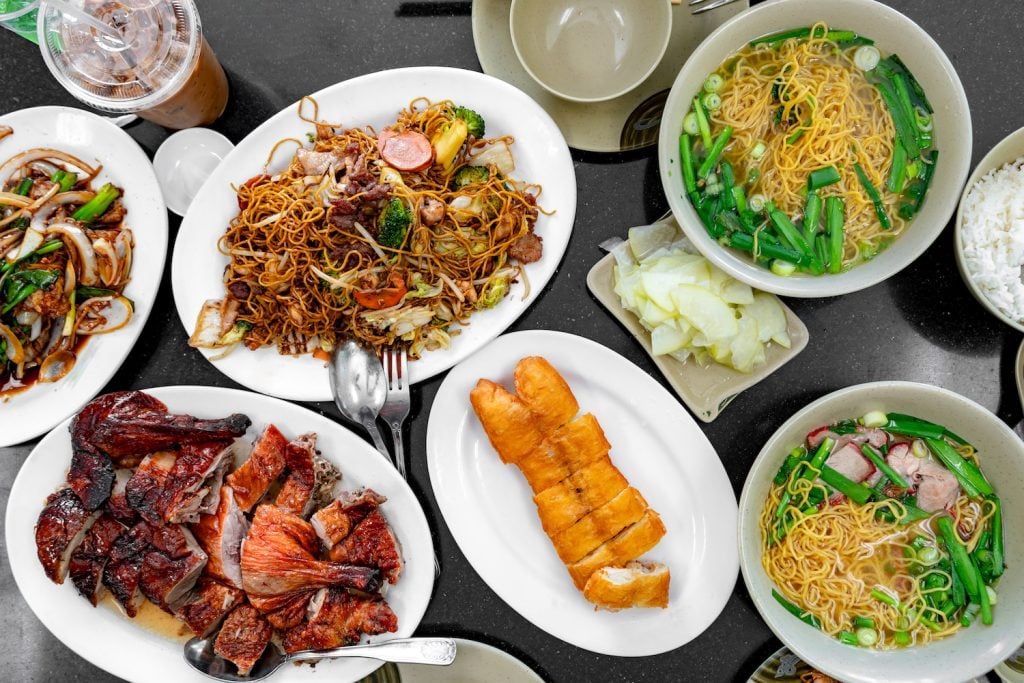
Americans love Vietnamese food— in fact, it’s one of the most popular cuisines in the country, along with dishes from Mexico, China, and Italy. But, in the past, the United States’ relationship with Vietnam has been… complicated.
When Saigon, now Ho Chi Minh City, surrendered to North Vietnamese forces on April 30, 1975, it signaled the end of a bloody conflict that lasted nearly 20 years and left millions dead and displaced. Many who emigrated from the country found themselves congregating in what’s now City Heights, where Vietnamese refugees began to buy homes, launch businesses, and put down roots over generations. Those roots helped shape a unique cultural district along El Cajon Boulevard between Euclid and Highland Avenues, which the city officially designated “Little Saigon” in 2013.
San Diego–based Vietnamese-American photographer James Tran says the official designation provides critical validation and visibility to the community. “It finally gave recognition to something that’s historically been there,” he points out. Without that acknowledgement, he worries rising property prices could trigger displacement, gentrification, and loss of diversity. But he hopes renewed interest will help people tap into the culture, especially through food. “People are excited, but they just don’t know where to go,” he adds. Here’s a start—head to the Heights to try these five dishes (and don’t let sometimes-difficult parking stand in your way).
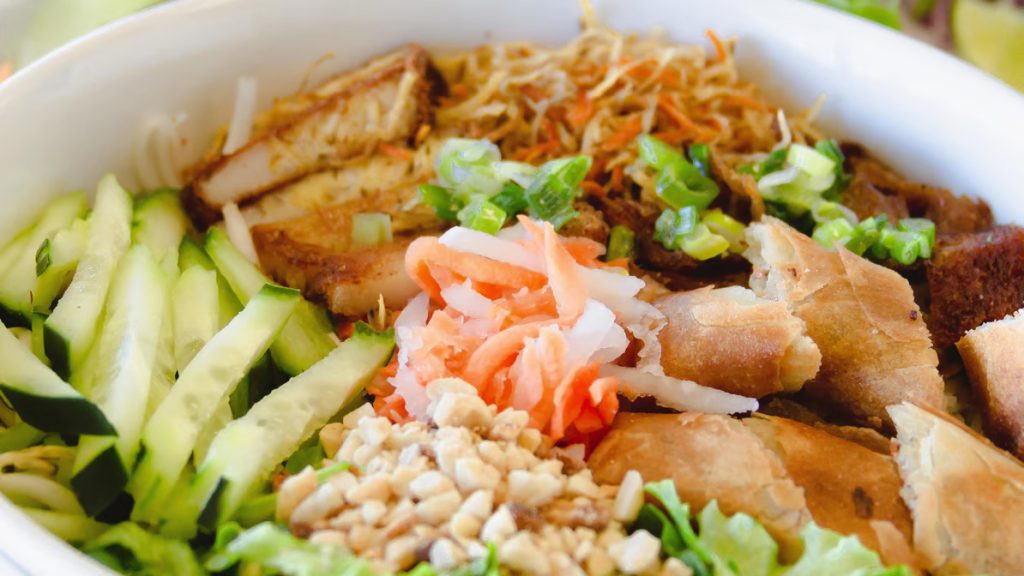
Regardless of whether you’re vegan or not, this plant-based eatery is worth repeat visits. The utterly gigantic menu offers noodles, soup, bánh mì sandwiches, stir fry, and beyond. Even the water is infused with herbs and organic fruits for a surprising flavor explosion. The heaping thanh toan noodle bowl comes with “pork” belly, cucumbers, peanuts, and more atop vermicelli noodles. It’s served with a sweet drizzle to apply as desired.
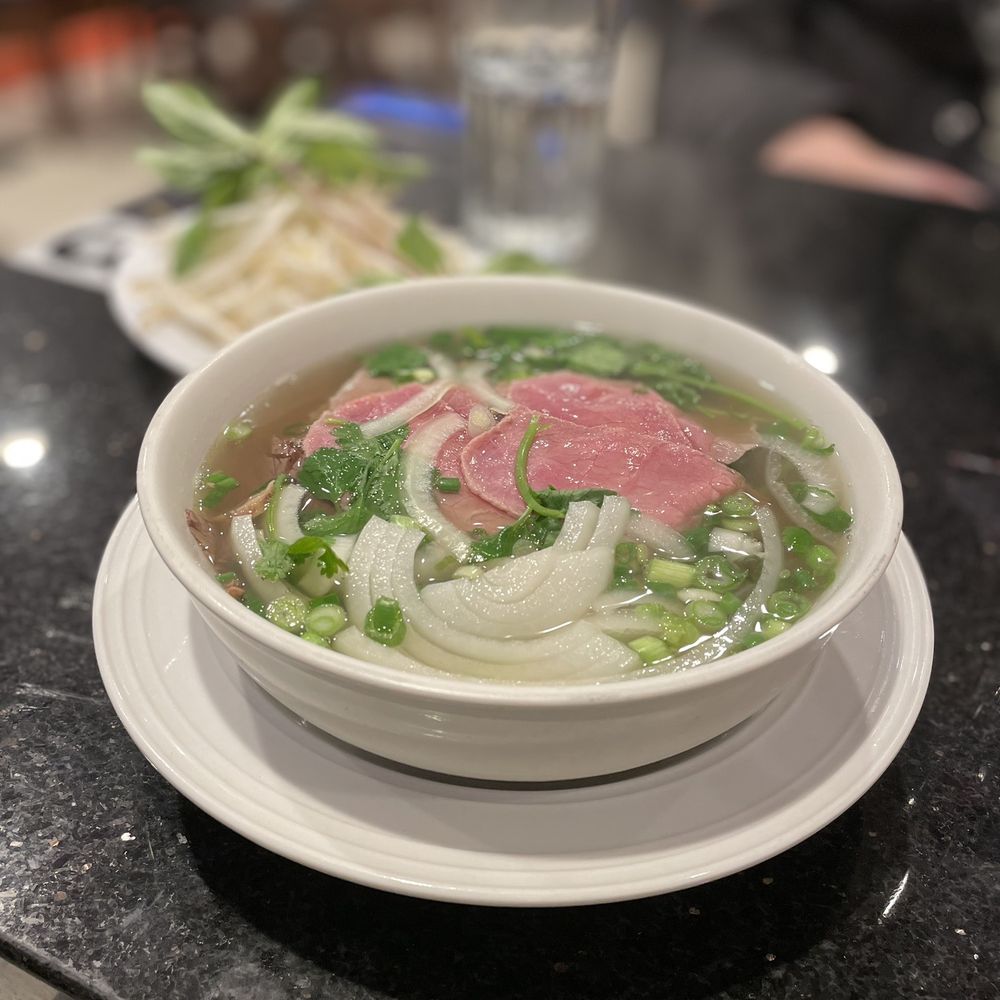
Along with fervent opinions about the city’s best taco shop, San Diegans also have their ride-or-die phở joints. Anything from Phở Hòa is guaranteed to be slurpable, but their phở tái gầu mixes thin layers of rare steak with the substantial heartiness of well-done brisket. The meat arrives simmering in a glorious bowl overflowing with comforting umami flavor and slippery noodles. I’m liberal with the sriracha and Thai basil, but add whatever accouterments you wish.
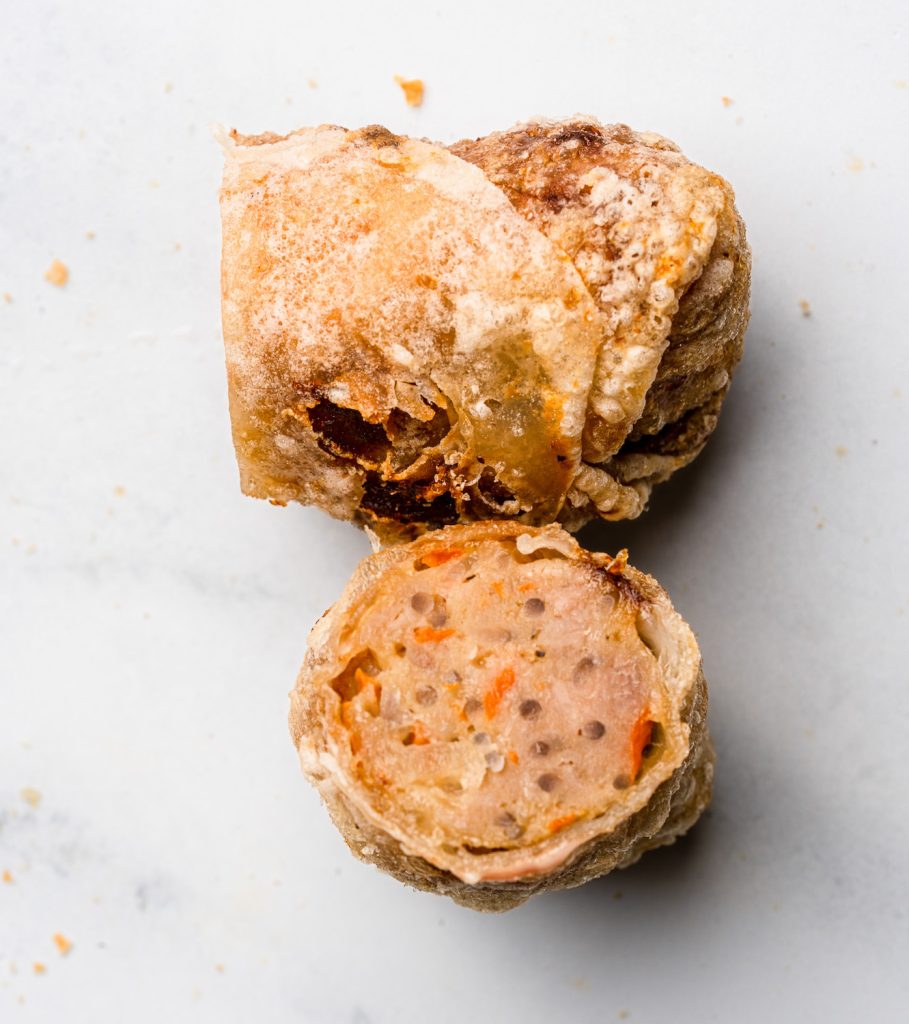
“It’s amazing how many people don’t know about [A Chau] yet,” Tran says. The restaurant’s Vietnamese egg rolls are thicker, heartier, and rougher on the outside than thinner Chinese-style egg rolls , and they come packed with savory pork and a satisfying crunch. A Chau’s other signature dish is bánh mì sandwiches, and while the sweet- and-savory sugarcane shrimp sandwich was a last-minute addition to my order, it ended up being my favorite. When you stop in, make sure to hit the ATM first—this old-school spot is cash-only.
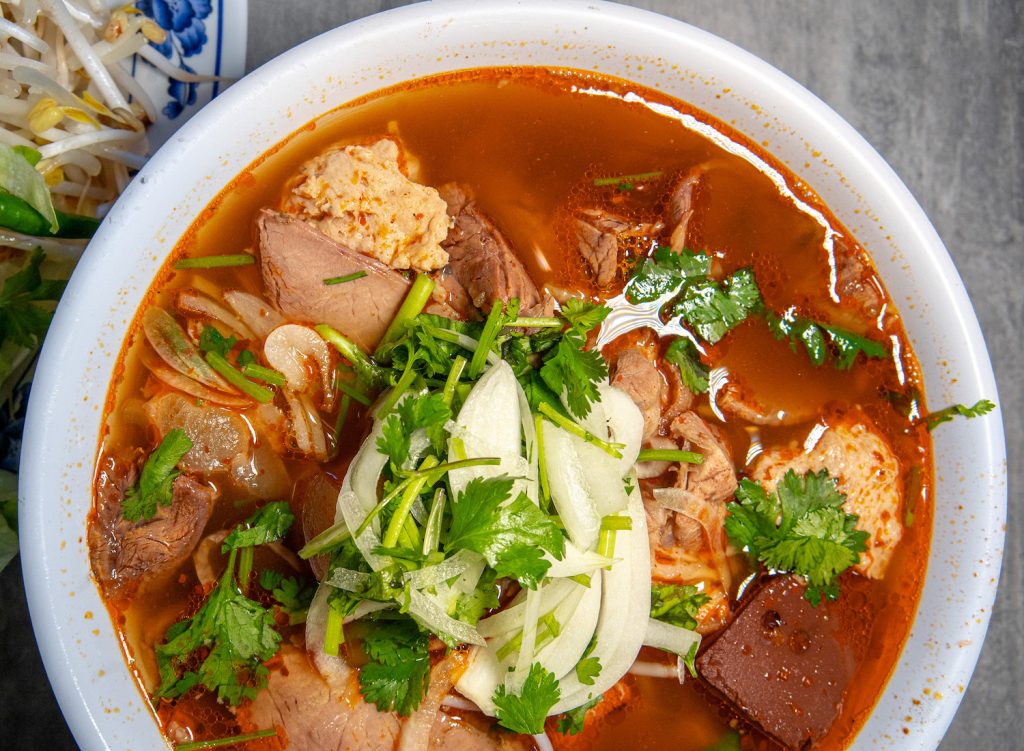
Phở may be the country’s most famous soup, but the Central Vietnamese bún bò huế provides a richer, spicier, meatier bowl filled with thicker vermicelli noodles. Tran says many American diners have yet to catch on to the dish inspired by Vietnam’s former imperial capital, while even Anthony Bourdain favored the style over phở. Hoài Huế offers plenty of variations, but their classic #3C contains beef slices, pork meatballs, and shrimp balls (thịt, chả, and tôm cu) for what’s arguably the best surf-and-turf soup anywhere in town.
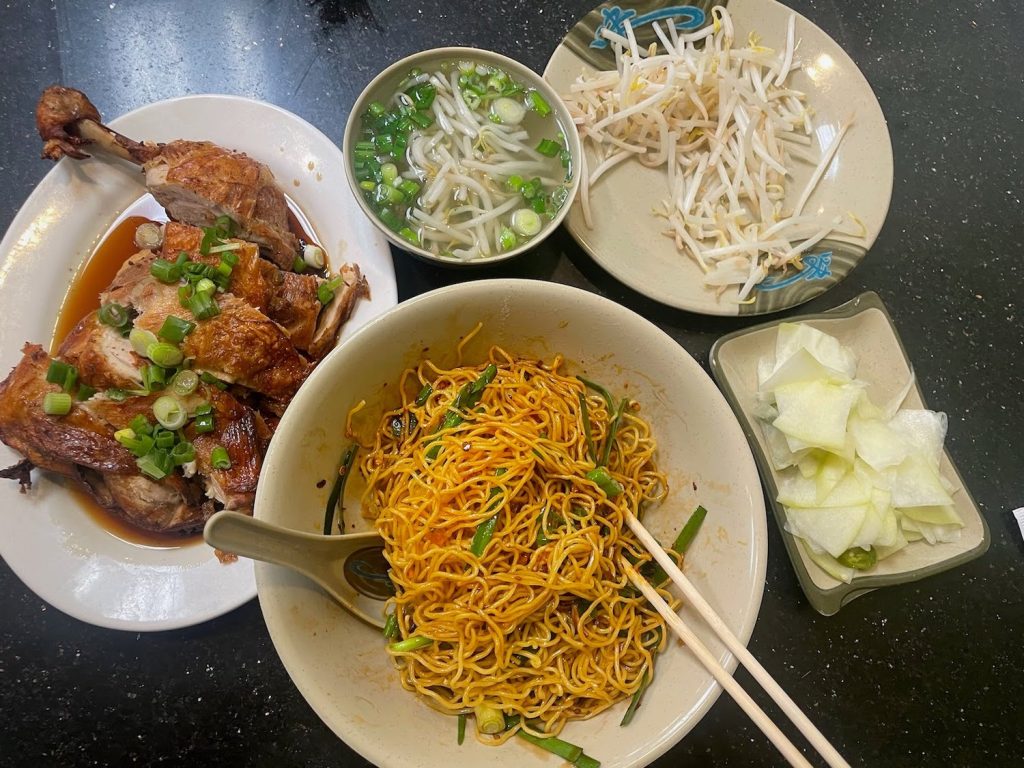
Despite recent new ownership, Minh Ky kept its longtime menu of Chinese- Vietnamese fusion dishes, a concept Tran says is more common than some people realize. “I think it’s probably the best representation of Chinese-Vietnamese food in the city, and, honestly, some of the best food,” he promises. Minh Ky’s rice, noodles, and soups are especially beloved, but insiders know their roast duck noodle soup is what really pops. Pro tip: Ask for it “khô,” or with dry noodles.

Beth Demmon is an award-winning writer and podcaster whose work regularly appears in national outlets and San Diego Magazine. Her first book, The Beer Lover's Guide to Cider, is now available. Find out more on bethdemmon.com.
Dance to the American Rhythm, shop after-hours at the Summer Sera, and catch the Big Bay Boom fireworks show
Before, during, and after the Fourth of July, San Diegans can commemorate America’s 250th anniversary with an abundance of stars, stripes and local celebrations. America The Beautiful: 250 at The Rady Shell and Lamb’s Players Theatre’s revival of American Rhythm will look back at the many songs which define our country. Liberty Station’s Anchored in Freedom celebration and the Independence Day Carnival offer community-centered fun and loads of family-friendly activities. And who can possibly forget the Big Bay Boom, which will resume its reign over San Diego Bay as the state’s biggest fireworks show. Outside of the holiday festivities, this week brings the yearly return of Little Italy’s Summer Sera and the Athenaeum Summer Festival, as well as a slate of championship matches for All Elite Wrestling.
Food & Drink | Concerts & Festivals | Theater & Art Exhibits | More Fun Things to Do

Sip on refreshing beverages and savor a panoramic rooftop view this Friday from 6-8 p.m. during the 21-plus Sunset & Spritz at Margaritaville Hotel San Diego Gaslamp Quarter’s 5 O’Clock Somewhere Bar. There will be a live DJ (until 9 p.m.), appetizers, pool and cabana access, a photo booth, and a cash bar (until 11 p.m.). To accentuate the summer theme, guests are invited to dress in white, pink, and orange attire. Tickets are $29 and come with a welcome aperol spritz.
616 J Street, Gaslamp
Bring a patriotic palette to the Fairmont Grand Del Mar for The 250 Grand Tasting Menu at Amaya this Friday and Saturday from 5-8:30 p.m. Patrons will be treated to a five-course tasting menu, curated to exhibit a selection of standout regional flavors and culinary concepts that have shaped our country’s distinct food heritage. The meal will also include beverage pairings with each course, such as wine, cocktails, and artisanal drinks. Reservations are $330 per person (with tax and 20% gratuity) on OpenTable.
5300 Grand Del Mar Court, Del Mar
Don Toliver thrives at being the life of the party (and the “After Party”). His fifth album Octane, released in February, is indicative of his thrill-seeking nature. As with his earlier releases, Octane sees Toliver operating in the space between hip-hop and R&B, with warbling vocals and blaring beats that are best heard at a high volume. This Tuesday at 7:30 p.m., Toliver will play at Pechanga Arena, with rappers SoFaygo, Chase B and SahBabii—who had a guest verse on Octane standout “K9”—as special guests. Tickets start at $156 for this concert.
3500 Sports Arena Boulevard, Midway
What makes musicals like Wicked, Cats, Chicago, and Jersey Boys so timeless is the legion of excellent songs that makes fans out of those who’ve never even watched the show. This Friday at 7:30 p.m. during Blockbuster Broadway! at The Rady Shell, conductor Evan Roider, the San Diego Symphony Orchestra, and veteran vocalists Alex Getlin, Jessica Hendy, Scott Coulter, and John Boswell (also on piano) will perform an all-star theater soundtrack. In addition to the shows named above, audiences can expect songs from A Chorus Line, The Phantom of the Opera, Annie, and more. Tickets range from $57 to $129 for this concert.
222 Marina Park Way, Embarcadero
One night after recognizing the brilliance of Broadway, The Rady Shell will ring in the United States’ landmark anniversary with America The Beautiful: 250 this Saturday at 7:30 p.m. Conductor Byron Stripling, joined by a five-performer ensemble and the San Diego Symphony Orchestra, will lead a night of ballads that best resemble the red, white, and blue, including songs sourced from the Great American Songbook. After the show, concertgoers are invited to watch the nearby Big Bay Boom from their seats. Tickets range from $71 to $139 for this concert.
222 Marina Park Way, Embarcadero
Ryan Hardison is a freelance arts and entertainment writer and recent graduate of San Diego State. When he's not staring at his laptop, he's likely eating an adobada burrito or getting sunburnt at the beach.
Eighteen seconds, one unforgettable mistake, and a Fourth of July story that somehow gets better with age
There’s a famous video.
“This is insane!” the guy filming it seems to proclaim. “It’s the best fireworks show ever!” a companion confirms, inspiring a debate lasting over a decade.
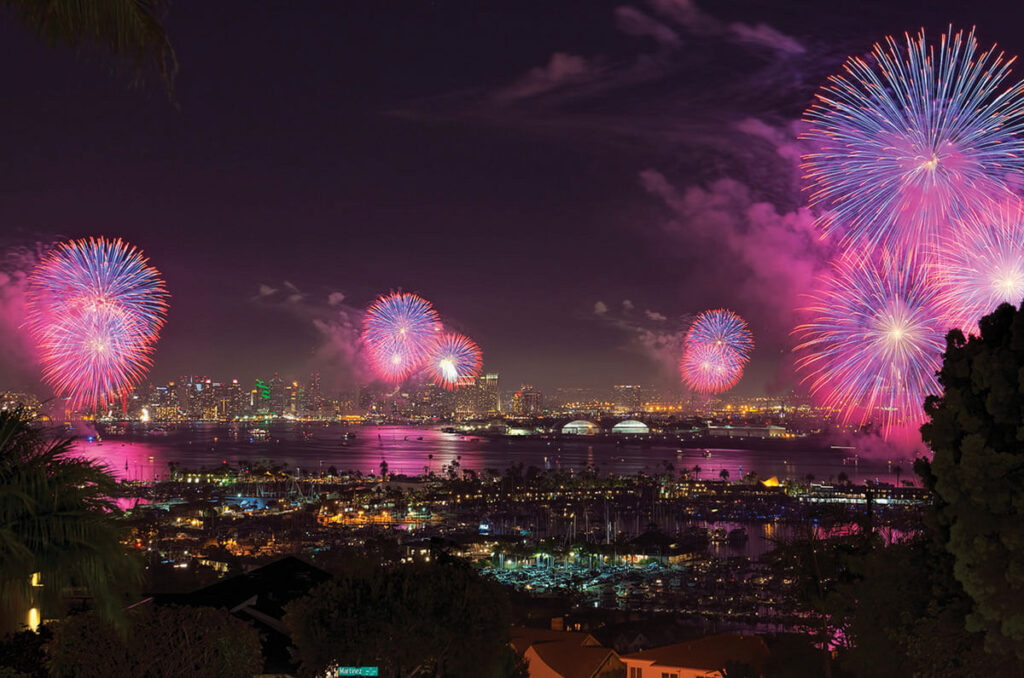
All told, 7,000 fireworks exploded in the span of 25 seconds over San Diego Bay on July 4, 2012. A Michael Bay amount of unison. $125,000 worth of shells, cakes, Roman candles, and skyrockets had been placed on a barge—enough for 17 minutes of decorative sky flares—and…
Boom.
The sky looked like someone had set a giant Rorschach test on fire. Or as if whatever we all see in our Rorschachs—butterflies, clowns, tongue kissing, dads—was being electrocuted and lifted heavenward, amen. It was shocking how bright it was, how much it sizzled the local cosmos. Could’ve been one of those sci-fi films where a hole is ripped open between warring universes. But angstier, more metal—the work of some methy creator in a sleeveless concert tee.
The sound?
Lou Reed once released an entire album that contained 64 minutes of mindflaying guitar screeches and machine noises. No regular songs, just a fascinating amount of ear distress. His record label reps no doubt heard the melodic outro of their careers, but everyone else was in pain and stumped. That album still sounded better than the bay did that night. The bay sounded like a god who struggled with emotional regulation had blown his speakers and was working through the anger stage of AV grief.
In the left frame of the video, a middle-aged woman is attempting to drag her husband off by the hand. In no way does he want to go, possibly because he had missed the time Roseanne Barr sung the national anthem at a Padres game, simultaneously disemboweling and amusing America through the power of song. He would not willingly abandon an equally worthy San Diego trainwreck.
Another woman in the video appears to have just filled her beer, rushing to sit down for the show. She pauses mid-sit and returns to the full and upright position to properly bear witness. What was supposed to be prolonged entertainment has been so radically shortened that she will have to find another reason to drink. Lucky for her, drinking will be the only way to adequately process.
Locals remember the conspiracy theories. People wondered if the fuses had been tripped by a saboteur who was sympathetic to dogs, fish, or the growing suspicion that late-stage capitalism is a gorgeously branded but impossible dream sustained by remarkably efficient top-tier wealth retention and the soft compliance of fireworks-watchers who can no longer afford a house, a beer, or the personal impacts of human reproduction.
Speaking of being terrified of babies, babies were terrified. The children who witnessed it probably still can’t go near a candle store. But those kids will be tougher, perfectly scarred kids. They’ll write better songs.
That night helped us absolutely dominate the national news cycle. For a hot minute, we became America’s water-skiing squirrel. Now, years later, when you Google “fireworks gone wrong,” San Diego is always a top contender, along with that poor Nebraska family who nearly wiped out a couple generations in their front yard, their minivan somehow turning into a howitzer of recreational TNT.
There is still debate as to whether Big Bay Boom 2012 is the worst or greatest fireworks show of all time. But the advanced parts of civilization arrived at the truth as quickly as the women in the video did. It was undeniably amazing.
First of all, the point of Fourth of July fireworks isn’t “the intricate choreography of sky fire over a guaranteed amount of show time.” It’s about creating a vivid memory shared with some people you like, love, or would like to love.
BBB2012 used large-scale chemical fire to create the ultimate memory.
Sure, some people who iron their jeans subjected their family to a sermon about how San Diego managed to botch America’s birthday like a Disney princess-for-hire who smelled of quite a few Sauvignons.
The rest of us saw how perfectly it nailed the actual feeling of being an American. Because only a miniscule percentage of us bake postcard apple pies where every inch of crust is perfectly laminated like the wood in an Irish bar. Very few of us can paint on par with Picasso. The rest of us—despite truly believing in our America-activated abilities to achieve greatness in almost any field of our choosing—burn pies. We try to paint only to realize it looks like our fine motor skills have entered active death.
That’s why BBB2012 was the most perfectly American fireworks show ever: A wildly ambitious idea galvanized thousands upon thousands of people to both work on it and come to hold a beer and gawk at it, only to have it fail in the most glorious TMZ-level spectacle.
America isn’t about immaculate, storyless wins. It’s about how the framework of a country is solid enough that we can accidentally detonate our entire lives—a few times—and still probably be OK.
No one has America’d quite like San Diego did on that day. It was performance art. Lou Reed’s heart slow-clapped. Any brief municipal embarrassment quickly became a pride of our people. I can only hope the same for the Nebraskan yard family whose Dodge Aerostar became a hyperactive Death Star.
P.S. Local writer Maya Kroth compiled a quite great oral history of that night for Thrillist. The bottom lines for me were—it took nine months to prepare, no one was hurt, and even though the pyrotechnics company tried to zero out the bill, Big Bay Boom founder H. P. “Sandy” Purdon refused and paid them in full. This year will mark the 25th Anniversary of the yearly Big Bay Boom.
Troy Johnson is the magazine’s award-winning food writer and humorist, and a long-standing expert on Food Network. His work has been featured on NatGeo, Travel Channel, NPR, and in Food Matters, a textbook of the best American food writing.
Drink 182 will pair pop-punk nostalgia with New England-style pizza starting this summer
If you’ve ever squeezed yourself into a pair of black skinny jeans with a studded belt, sported a track jacket under a band t-shirt, or swept your Manic Panic-hued hair so far to the side that your part got caught in your cartilage earring, I have good news: Ocean Beach will get a shot of emo and pop-punk nostalgia when Drink 182 opens this July.
The pop-punk bar and pizza spot comes with bonafide scene points. Co-founder Jay Nightride runs the music production studio Nightride Visuals, has worked with artists like Steve Aoki, Lil Jon, and Fall Out Boy, and also plays in Death Cab for Karaoke, a live karaoke band that performs every month at Soda Bar (among other venues). His partner Tony Jaw is easier to spot—he’s the guy with the sky-high mohawk manning the karaoke booth at Redwing Bar & Grill who’s been in the local bar and hospitality business for over a decade.
Nightride says he’s had the idea for an emo enclave for years, but it wasn’t until after Covid that he partnered with Jaw and got the funding to move forward. “What I was looking to build was a place that I would want to be, where would I want to go to remember these nostalgic songs,” he says.
Pending permits and final inspections, Drink 182 is slated to open the second half of July. The vibe will be dive bar meets emo night, with memorabilia from different bands who have supported the project splashed across the walls, plus a few arcade games, TVs, and (I assume) a decent sound system. The hours are still undetermined, but Nightride says they tentatively plan to be open until 2 a.m. on weekends and Wednesdays for the OB Farmers Market. In the mornings, they’ll serve fresh pastries and coffee from the similarly music-aligned James Coffee Company (whose co-owner David Kennedy is a member of Angels & Airwaves with blink-182’s Tom DeLonge).
But it’ll be the pizza that really stands out—or at least, they hope. “We’re doing New England beach pizza… a really niche pizza that not a lot of people would know about, unless you’re from North Shore, Massachusetts,” says Nightride, a former Bostonian. “It’s a thin crust, very sweet sauce, very simple, fast, go-to-the-beach kind of thing.”
“Beach pizza” is characterized by its rectangular shape, very thin crust, sweet tomato sauce, and slices of Provolone cheese with minimal toppings. Drink 182’s version will feature homemade dough and sauce, as well as freshly sliced Boar’s Head Provolone. And yes, they are aware there are already a lot of pizza options in the area. It won’t be the same, Nightride promises.
“Everybody’s first reaction when they hear ‘pizza’ is like, ‘Oh great, another pizza place in OB,’” he laughs. “But we’re trying to do something different, just enough to differentiate it and give people another option.” If you’re not keen on the style, try one of their “drunkables,” another nostalgic riff they hope the pop-punk and emo crowd will appreciate. And if you still need a reason to give Drink 182 a try, I have more good news—you don’t actually have to break out your old skinny jeans. (In fact, please don’t.)
Drink 182 opens July 2026 at 5049 Newport Avenue in Ocean Beach.

Listen Now: The Latest in San Diego’s Food and Drink Scene
Have breaking news, exciting scoops, or great stories about new San Diego restaurants or the city’s food scene? Send your pitches to [email protected].
Beth Demmon is an award-winning writer and podcaster whose work regularly appears in national outlets and San Diego Magazine. Her first book, The Beer Lover's Guide to Cider, is now available. Find out more on bethdemmon.com.
The 29-year-old culinary director at Herb & Sea is making seafood sexy (and approachable) again
Implementing a farm-to-table model hardly deserves acknowledgement these days. It’s not a stretch. It’s not innovative. “It’s the bare f**king minimum,” says Herb & Sea‘s executive chef Aidan Owens.
When I arrive at the Encinitas restaurant, I’m ready to talk sustainability, farm-to-table stuff, with Owens. “Did you see the chin on that?” he says of the extra big jiggly chin on the sheephead that just arrived with the day’s fresh catch. I did. It was Jay Leno adjacent.
I learn quickly that he somehow oozes both charm and stone-cold honesty. Maybe he could construct a new dish with chin goo, like he did when he had a bunch of tuna scraps and voila’d it into a smooth and crowd-pleasing ‘nduja. “I want to know what’s in there,” he says.

The instinct to look closer, to dig into what others might discard, says a lot about the chef’s approach. I guide him back to our topic, but he has something else on his mind. “We’re overcomplicating food—what happened to just cooking good food and having fun with it?”
Owens grew up on a farm in Byron Bay, Australia, where sustainability wasn’t a concept you chat about so much as a way of life. Think dirt roads, backyard chickens, pulling vegetables straight from the ground, and a mother who believed that if you couldn’t pronounce the ingredients on a package, you shouldn’t eat what was inside.
Food wasn’t precious or performative. Making it was what you did because you were hungry and that’s still what inspires Owens today. “I like to cook good food because I like to eat good food,” he says.
His approach to sustainability at Herb & Sea began so naturally that it felt just like instinct. “I was just like, ‘Let’s order food from the people who live and work here,’” he says.

And why wouldn’t he when lives in San Diego? Cities all over the world vie for our goods. Our tuna is sent overseas. Our spiny lobsters hit dinner plates in China and Japan. Not to mention California’s producing a third of the country’s vegetables and three-quarters of its fruits and nuts.
“Why would we outsource when it’s all here?” Owens asks.
Sustainability, in this context, is about cooking what exists in abundance, nearby, right now. “I love the local fish here. It’s f**king delicious and San Diego citrus, I mean, it is so f**ing good,” he says.
Instead of importing ingredients, Owens also looks for nearby alternatives. “You can find really cool things in the local waters,” he says, pointing out that stingray cheeks taste similar to scallops.

Whatever he finds in that sheephead chin might just be the next substitute for marrow. But to make this work, it means getting diners amped up about the slightly unfamiliar.
Tasting menus, where diners are completely in his hands, become an opportunity to gently push boundaries. “I’ll serve mackerel, because people think they hate it,” Owens says, noting that the abundant local fish can have some fishiness. “But when it’s fresh, it’s arguably one of the best fish in the ocean.”
He also tweaks the language on the menu so people might feel more compelled to give dishes a try without preconceived notions. He might use “lengua” instead of “tongue.” “Whelk” instead of “snail.” When he puts “stingray throat” on the menu, he disarmingly calls it “skate.”
To reduce waste, scraps aren’t always discarded but rather turned into something new. Sometimes they’re smoked, cured or fermented. Apples going bad turn into apple ponzu. Lemons turn to marmalade, which stretches their usefulness far beyond peak season. “And it’s super tasty on our pizza,” he says.
What makes the food even richer, is the relationships he’s built with farmers. Though it didn’t always feel natural, Owens sought personal connection first. He recalls approaching a fisherman at the Tuna Harbor Dockside Market. “I was awkward,” he says. “I went up to him and said, ‘I like your fish.’”
Owen’s is now so close to his suppliers—like fishermen Ryan Sebo and Joe Daly—that he gets texted pictures of fresh catches right as they flop on the boat. The messages always ask if he wants first dibs. “I say yes to a lot of fish,” Owens says, noting that Herb & Sea can go through 2,000 pounds of seafood a week.

The next evolution of sustainability, in his view, will be chefs working directly with producers such as his alliance with Sebo, cutting out middlemen and purveyors where possible. “It will put more money in the pockets of the people doing the work,” he says.
It will mean that chefs can’t just know their local farmers and producers, but they’ll choose to work with the ones who have the best practices. Dining and sustainability will become much less about the final plate. “It will be more about the impact that plate has on the Earth,” he says.
Ultimately, he believes sustainability doesn’t need to be loud. It doesn’t need hashtags. It just needs to be honest.
“We aren’t saving lives. We’re feeding people good food,” he says.
And yet, in feeding people well—simply, thoughtfully, responsibly—something meaningful happens. Guests leave satisfied. Ingredients are respected. Local ecosystems are supported and food returns to what it has always been at its core: nourishment, pleasure, and a quiet reflection of the place it comes from.
No buzzwords required.
From surprise revivals to changing dining habits, these are the shifts redefining the local culinary landscape
If absence makes hearts (and stomachs) grow fonder, then shuttered restaurants quickly become the hottest tickets in town—something a number of iconic institutions found out after taking very public hiatuses after historically long runs. For instance, following a lengthy (and extremely flip-floppy) closing process after 92 years in business, Las Cuatro Milpas reopened two blocks away in Mercado del Barrio. Similarly, Carlsbad butcher shop Tip Top Meats reopened in the same location (albeit a smaller space) after the death of founder Joachim “Big John” Haedrich in 2023. Finally, after a whopping decade out of business, Sami Ladeki and chef Alfie Szeprethy brought back Roppongi to its original Prospect Street space, where it was the talk of the town in the late ’90s. All came back under the same proprietors, so they weren’t third-party nostalgia-licensing deals. The algorithm may have ravaged our attention spans away from all but the newest and shiniest, but this proves there’s still hope for our collective prefrontal cortex.
Other local eateries honored their pasts by bringing in new perspectives. The Lion’s Share in Embarcadero, Milton’s Deli in Del Mar, Dudley’s Bakery in Santa Ysabel, and J-K’s Greek Cafe in La Mesa handed over the keys to new owners willing to take on a big task: maintain the soul of icons through particularly rough economic circumstances for restaurants, navigate big feelings from longtime regulars (who often don’t take kindly to change), and make some necessary changes to keep going for another few decades. Taking over a project in process can be a lot harder than starting from scratch. But building that feel-good nostalgia doesn’t happen overnight, so it sure helps to have a well-established playbook of success passed down from those who came before.

It wasn’t just restaurant groups from Los Angeles that decided to put down roots en masse, although San Diego saw plenty of LA transplants recently (Sugarfish, Mr. Charlie’s, For the Win, Katsuya Ko, Bacari). Global brands like Chef Fei, Zuma, and Pepper Lunch have locations of their own on the way, and upscale Canadian eatery Joey joined to the inescapable gravitational pull of Westfield UTC’s culinary cosmos for its first spot in America’s Finest City. Good to see the rest of the world is catching up with what we’ve been seeing the last few years—San Diego is a dining destination already on the rise.
Between the never-ending news cycle of doom and perimenopause brain fog, I’m at the stage in life where I’m more than happy to let someone else make a decision for me, especially when it comes to what’s for dinner. And based on the way a lot of menus look right now, I’m not alone. It seems like half the places I visit offer some version of a prix fixe, omakase, or tasting menu. Restaurants are embracing the curated experience to solve the problem of affordability (a fixed menu reduces food and labor costs, guarantees an acceptable check average, etc.) and critical thinking in one fell swoop. Omakase (meaning “I leave it up to you”) is far from a new concept in high-end Japanese sushi culture, but now that it’s popping up everywhere from coffee experiences to grab-and-go sushi and sandwiches, it’s gone from somewhat niche to nearly omnipresent.

The world got an up-close look at San Diego’s coffee industry when we hosted the premier specialty coffee expo World of Coffee for the first time this April. San Diego’s long and rich coffee history stretches back to the late 19th century. Things percolated fairly quietly for around a century before really picking up steam. Today, there are nearly 200 specialty roasters and cafes across the county, with many earning national accolades like the Good Food Award (Steady State Roasting, 2020; Bird Rock Coffee Roasters, 2023, 2021, 2019, 2017, 2016), Roaster of the Year by Roast Magazine (Mostra Coffee, 2020; Bird Rock Coffee Roasters, 2012), and the Specialty Coffee Association Coffee Design Award for packaging (Rikka Fika, 2026). Now that we’ve moved past the comically insufferable coffee snob era of the early 2000s, even java newbies can feel comfortable walking into pretty much any coffee shop in San Diego, asking questions, trying a few things, and feeling confident they’re going to get great service and a great beverage.
Beth Demmon is an award-winning writer and podcaster whose work regularly appears in national outlets and San Diego Magazine. Her first book, The Beer Lover's Guide to Cider, is now available. Find out more on bethdemmon.com.
See Rosalía in concert, stroll through Little Italy for Summer Sera, and dress up for Comic-Con
Summer has officially kicked off, and San Diego is celebrating the sunny season with a myriad of fun events. From San Diego Pride week and a fairytale performance at Civic Theatre to a Santigold concert and Comic-Con, there are dozens of opportunities to make memories worth adding to your scrapbook. Here are all the best things to do in San Diego this July:
Concerts & Festivals | Theater & Art Exhibits | More Fun Things to Do
Divine inspirations, operatic ballads, and symphonic pop production elevate Rosalía’s Lux to heavenly levels. Hear angelic vocals ascend—in up to 13 languages—during her performance at Pechanga Arena.
Enjoy a night of feel-good indie rock and sing-along anthems at the Cal Coast Credit Union Open Air Theatre courtesy of Young the Giant and special guest Cold War Kids.
Santigold collects genres like gold stars: musical accouterments that brighten her uniquely alternative sound. See her live in concert with dancehall producer Troy Baker Sound at Humphreys Concerts by the Bay.

Be the Civic Theatre’s guest for “Beauty and the Beast” and discover that a fairytale love sometimes lies beneath the surface.
Two male government workers pursue a secret romance amid the Lavender Scare in the San Diego Opera’s production of “Fellow Travelers” at the Balboa Theatre.
The deep blue sea is home to countless ecological treasures, including the remarkable marine organisms documented by Oriana Poindexter. Study her educational and experimental imagery at The Photographer’s Eye via Field Notes.
Audrey Hepburn. Marlon Brando. Salvador Dalí. What do these icons have in common? Each was the enigmatic focus of a Cecil Beaton portrait. Step inside Cecil Beaton’s Fashionable World, an alluring showcase of 20th-century style at San Diego Museum of Art.

The Little Italy Mercato will trade morning rays for golden-hour glow through its free Summer Sera, an expansion of the neighborhood’s farmers market with live music, artisanal finds, and a fetching amount of pet activities.
San Diego Pride week starts with a Dyke March and ends with the two-day “Pride Shines On” festival. The days in between? Run a 5K, march in the parade, visit the rainbow-lit St. Paul’s Episcopal Cathedral, and more.
Dress up for a Mediterranean-themed tea time at the Estancia La Jolla, a laid-back yet refined afternoon planned for the resort’s monthly Tea in the Garden series.
Nerd culture’s biggest gathering returns to the Convention Center. San Diego Comic-Con welcomes fans of everything from comic book cinema to ultra-rare collectibles for panels, exhibits, sneak peeks, and much more.
Ryan Hardison is a freelance arts and entertainment writer and recent graduate of San Diego State. When he's not staring at his laptop, he's likely eating an adobada burrito or getting sunburnt at the beach.
Discover San Diego’s Top Lawyers — the region’s most trusted legal professionals across diverse practice areas.
Daniel A. Kaplan is a founding partner of Panakos LLP with more than three decades of civil litigation experience in both state and federal courts. Mr. Kaplan pursues and defends legal claims on behalf of companies, entrepreneurs, and business owners in high-stakes disputes. He focuses on business disputes including breach of contract, unfair competition, trade secret theft, securities disputes, fraud/misrepresentations, and employment matters.
“The best advocacy combines preparation, perspective, and a client relationship built on trust and candor.” — Daniel A. Kaplan
His clients include real estate investors, private and public corporations, and individuals seeking sophisticated legal counsel. Known for practical judgment and strategic advocacy, he works closely with an experienced and diverse legal team to protect, enforce, and defend his clients’ interests.
555 W. Beech Street, Ste. 500, San Diego, California 92101
619-8000-LAW
Panakos.law