Sightsee, savor and catch a wide range of live entertainment this weekend in San Diego. Take advantage of the La Jolla Half Marathon and the La Jolla Historical Society’s Secret Garden Tour, each offering a scenic trip through the coastal community. Wine and dine with bottomless portions at the Cheese & Libation Expo, the 35th annual Mama’s Day and the return of the Over the Line Craft BeerFest. Plus, whether your heart lies in the theater (Purpose, Kim’s Convenience), the concert crowd (P!nk, MGK) or the unpredictable stage of the San Diego International Fringe Festival, there are numerous ways to be wowed.
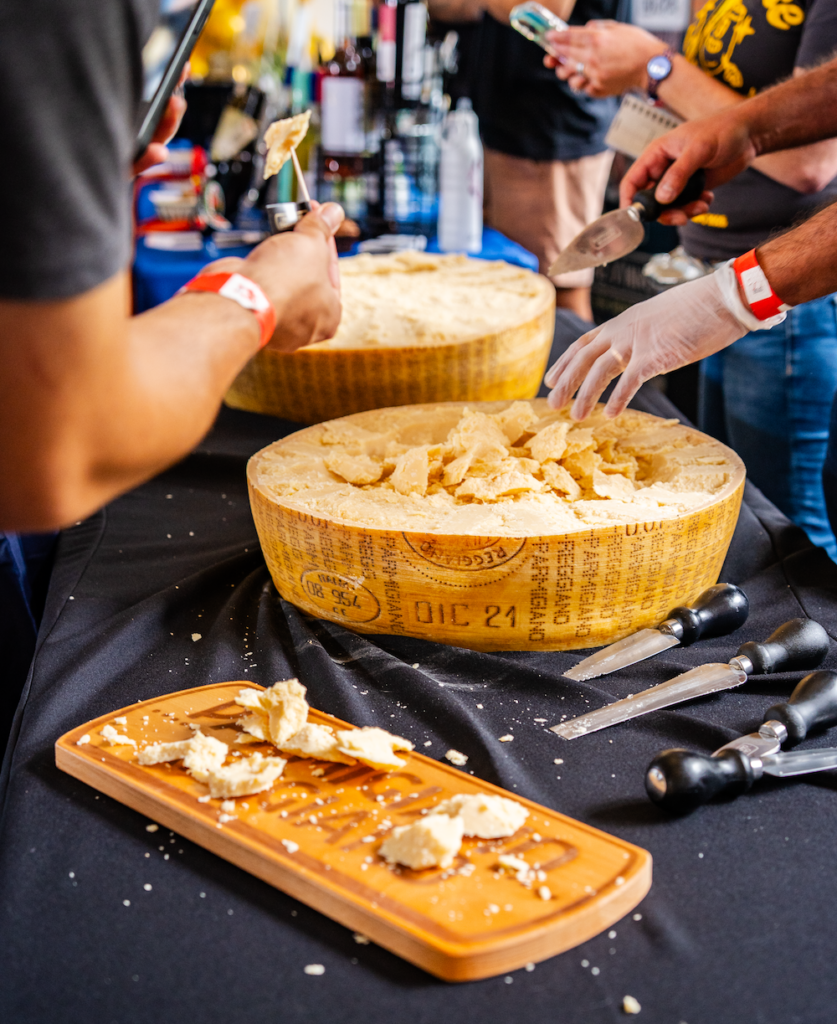
Treat yourself to a curated assortment of cheese, trinkets and bubbly beverages throughout the three-day Cheese & Libation Expo at BRICK Liberty Station. The expo will kick off Friday from 5-8 p.m. with an industry preview night and continue Saturday from 1-5 p.m. and Sunday from 11 a.m. to 3 p.m. with boutique shopping, an all-you-can-eat (and drink) menu and goodie bags for attendees. Ticket options include individual session tickets ($82-$109), single-day kid’s tickets ($13) weekend passes ($162) and preview night entry ($135).
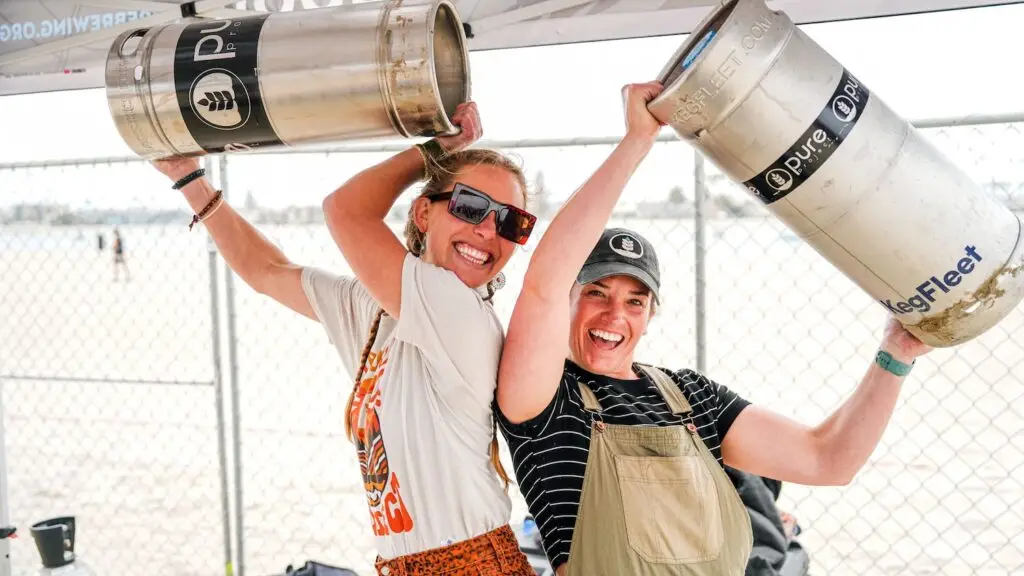
Spend your Saturday on the beach with a local beer in hand during Old Mission Beach Athletic Club’s yearly Over the Line Craft BeerFest & OTL Tournament. Newbies, regulars and seasoned aficionados will go to bat this Saturday from 7 a.m. to 6 p.m. at Mariner’s Point Park, with the BeerFest featuring live music, food trucks and unlimited pours from twenty craft breweries from 11 a.m. to 3 p.m. Ticket options include all-ages general admission ($6), 21+ BeerFest admission ($45) and tournament entry ($162), which comes with three festival wristbands.
1215 Mariners Way, Mission Bay
Mama’s Day
May 16
Mama’s Kitchen knows the importance of home cooking, which is why the nonprofit’s signature event serves a dual purpose: celebrating the city’s gastronomy and ensuring San Diegans experiencing chronic illness continue to receive home-delivered meals. This Saturday from 5:30-9:30 p.m., Mama’s Kitchen will hold its 35th annual Mama’s Day, a 21+ fundraiser with live entertainment, opportunity drawings and unlimited tastings from local chefs and eateries at Hilton San Diego Bayfront. Ticket options include general admission ($200) and VIP admission ($300), which includes entry to an exclusive drinks and hors d’oeuvres reception from 5:30-6:30 p.m.
1 Park Boulevard, Embarcadero
Courtesy of Curebound
Concerts & Festivals in San Diego This Weekend
Curebound Concert for Cures: P!nk at Petco Park
May 15
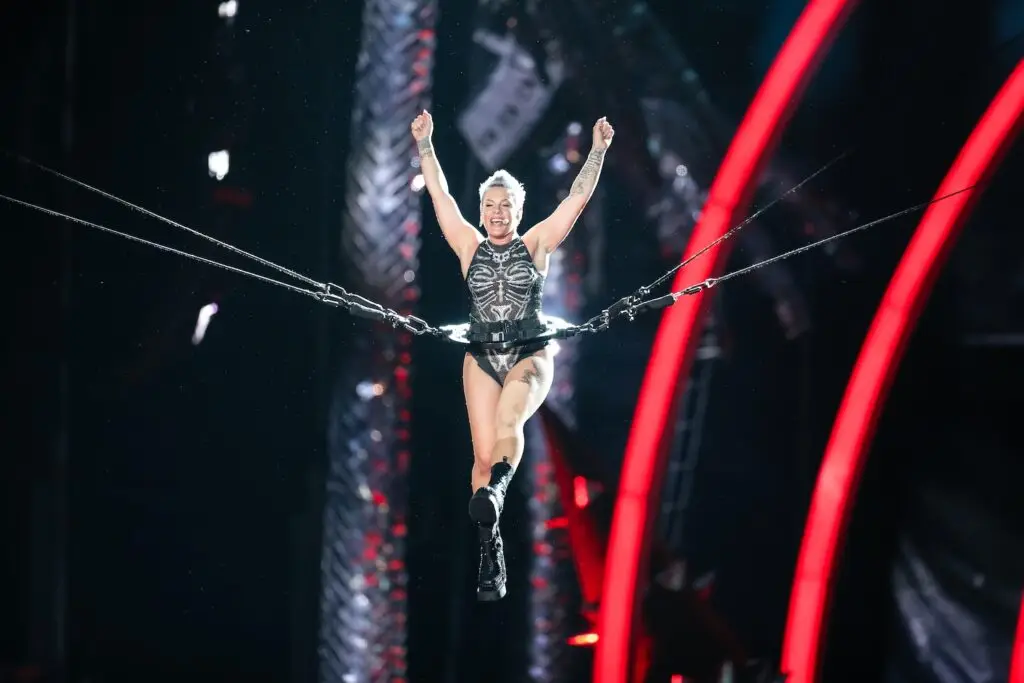
“Raise a Glass” to cutting-edge adult and pediatric cancer research this Friday (8 p.m.) during Curebound’s annual Concert for Cures. After Sir Elton John rocked Petco Park last May, this year’s headlining superstar will be P!nk, whose shows combine powerful vocals, nostalgic crowd pleasers and Cirque du Soleil-style theatrics for a scintillating experience. Tickets start at $56 for this concert; proceeds from this performance will go towards Curebound.
See a plethora of live music across a trio of free festivals this weekend. This Saturday from 11 a.m. to 5 p.m., Goldenpalooza returns to Golden Hill Recreation Center with live dance and musical performances, local food vendors and an array of free and paid activities; paid activity tickets ($5-$20) are available online. Then, several community bands will hit the Old Poway Park stage for the Community Band Festival this Saturday and Sunday from 10 a.m. to 7 p.m. Finally, on Sunday from noon to midnight, see student-run performances ranging from acoustic sets to after-hours DJ sets during The Arcades at UC San Diego’s Conrad Prebys Music Center.
The Arcades: 9410 Russell Lane, La Jolla | Goldenpalooza: 2600 Golf Course Drive, Golden Hill | Community Band Festival: 14132 Midland Road, Poway
MGK at North Island Credit Union Amphitheatre
May 17
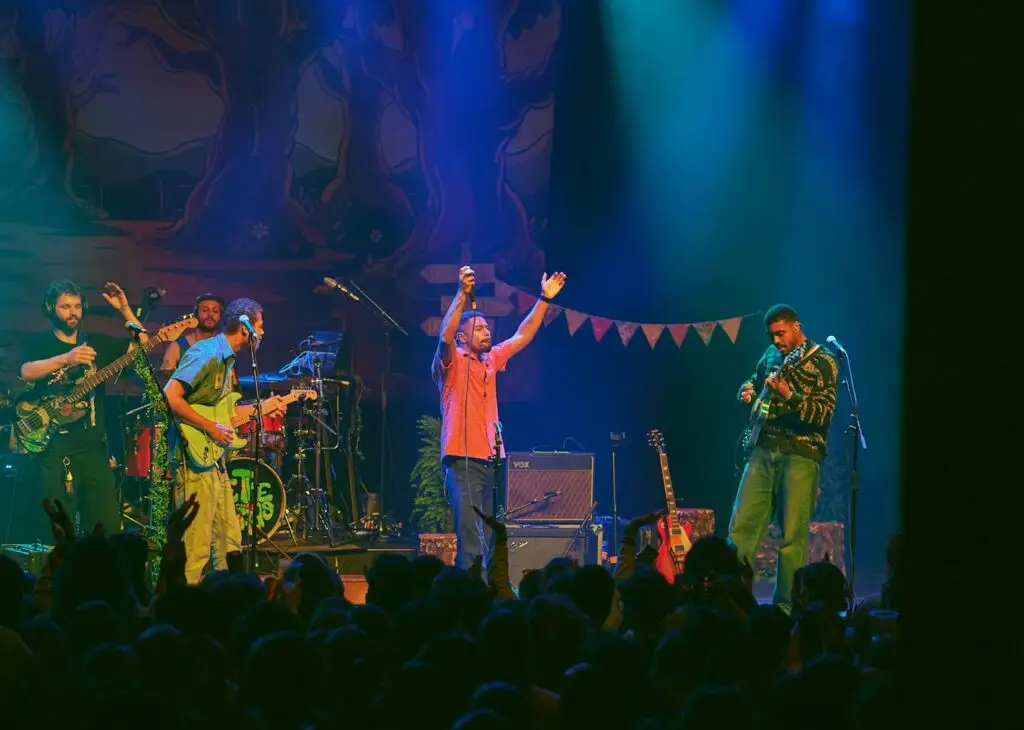
Despite the two-middle-fingers-up approach that powers his bad boy persona, the artist MGK, formerly known as Machine Gun Kelly, longs for understanding. His decade-plus journey from hip-hop phenom to punk convert to revelatory pop rocker has led to Lost Americana, the latest chapter in MGK’s rebellious undertaking and a search for the freedom he’s always desired. This Sunday at 7 p.m., MGK will perform at the North Island Credit Union Amphitheatre with special guests Wiz Khalifa and Beauty School Dropout. Tickets start at $35 for this concert.
2050 Entertainment Circle, Chula Vista
Courtesy of San Diego International Fringe Festival
Theater & Art Exhibits in San Diego This Weekend
San Diego International Fringe Festival
May 12-24
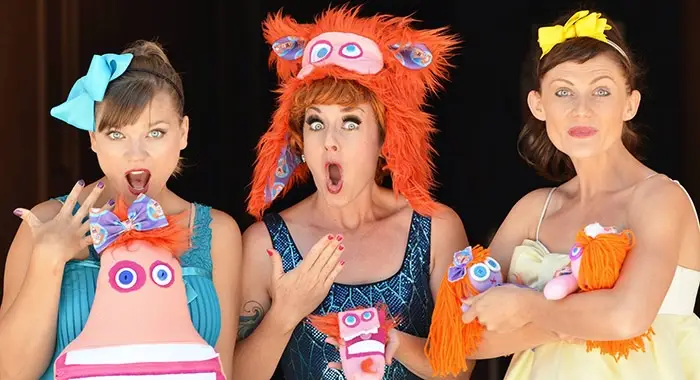
Home to the weird, the wonderful, and the extravagantly odd, the San Diego International Fringe Festival returns for year 14 with a lineup of 63 new shows to explore. Cabarets, magic shows, interactive adventures and much more can be found across 17 San Diego venues, beginning with free sneak previews this Tuesday (7 p.m.) at the Marie Hitchcock Puppet Theater. In addition to hosting this year’s World Fringe Congress, the festival will venture to 3 international sites as part of its new Baja California Pilot Program. Fringe tags ($7), which can be purchased online or at any participating venue, are required for all ticketed shows. All ticket sales will go to the artists.
Citywide
Purpose at La Jolla Playhouse
May 12 – June 7
Just one year after making his Broadway debut with a revival of his 2014 Off-Broadway play Appropriate, Branden Jacobs-Jenkins returned to the pinnacle of American theater with Purpose. Winner of the Tony Award for Best Play and Pulitzer Prize for Drama in 2025, Purpose focuses on the Jaspers—stewards of a Black political dynasty in Chicago—and the family tensions that begin to crack their seemingly perfect façade. West Coast theatergoers will get to see Purpose for the first time during its upcoming production at La Jolla Playhouse. Tickets range from $30 to $79 for preview performances this Tuesday-Friday at 7 p.m. and Saturday at 2 and 8 p.m.
Occupy Thirdspace III: The Park at San Diego Central Library
May 12 – July 25
What once was a binational gathering space nowadays reflects the deteriorated relationship between the U.S. and Mexico. Though American access to Friendship Park has been restricted since 2020, Occupy Thirdspace III: The Park posits that the landmark’s unifying spirit can survive. Thus, Friends of International Friendship Park, Las Comadres and Art Made Between Opposite Sides (AMBOS) have visually illustrated the site’s importance and enduring legacy. Occupy Thirdspace III: The Park will have an opening reception this Tuesday from 6-8 p.m. at San Diego Central Library with bites and a live vinyl set by DJ Betty Bangs.
330 Park Boulevard, Downtown
The Cost of Silence at Shift Gallery
May 15
The validity and visibility of our innermost feelings is the centerpiece of Isabelle Atkinson’s one-night-only installation at Shift Gallery. Tying in with Mental Health Awareness Month, The Cost of Silence underlines the importance of the hidden battles being fought and draws from Atkinson’s own challenging moments. The evening will feature an emotive range of music and activities, to go along with a photography installation, poetry readings and a short film screening. Admission is $45 for the general public and $34 for artists, creatives and entrepreneurs.
4847 Newport Avenue, Ocean Beach
Kim’s Convenience at The Old Globe
May 15 – June 14
Though many Americans fell in love with Kim’s Convenience via its successful sitcom adaptation, the story originated in 2011 as a stage play. Written by Ins Choi, who portrays the Kims’ stubborn but endearing patriarch Appa, Kim’s Convenience follows a Korean-Canadian family who live in Toronto and own a neighborhood convenience store. The Kims are easy to root for, and they represent the complexity of immigrant families balancing assimilation and maintaining their heritage. Tickets start at $40 for the production’s local premiere at The Old Globe, with performances this Friday at 7 p.m., Saturday at 8 p.m. and Sunday at 2 and 7 p.m.
1363 Old Globe Way, Balboa Park
Courtesy of La Jolla Historical Society
More Fun Things to Do in San Diego This Weekend
Soccer Weekend Doubleheader at Snapdragon Stadium
May 15 & 16
San Diego’s soccer die-hards can support their hometown and receive festive giveaways this weekend at Snapdragon Stadium. On Friday (7 p.m.), the San Diego Wave will face Trinity Rodman and the Washington Spirit and celebrate AANHPI Night with performances and a Wave-themed aloha shirt giveaway while supplies last; tickets start at $27 for this match. The following night at 6:30 p.m., the first 20K fans through the gates for San Diego FC vs. FC Cincinnati will receive an “El Paletero” bobblehead depicting forward Anders Dreyer, an elite distributor of goals and assists. Tickets start at $30 for this match.
2101 Stadium Way, Mission Valley
La Jolla Half Marathon
May 16
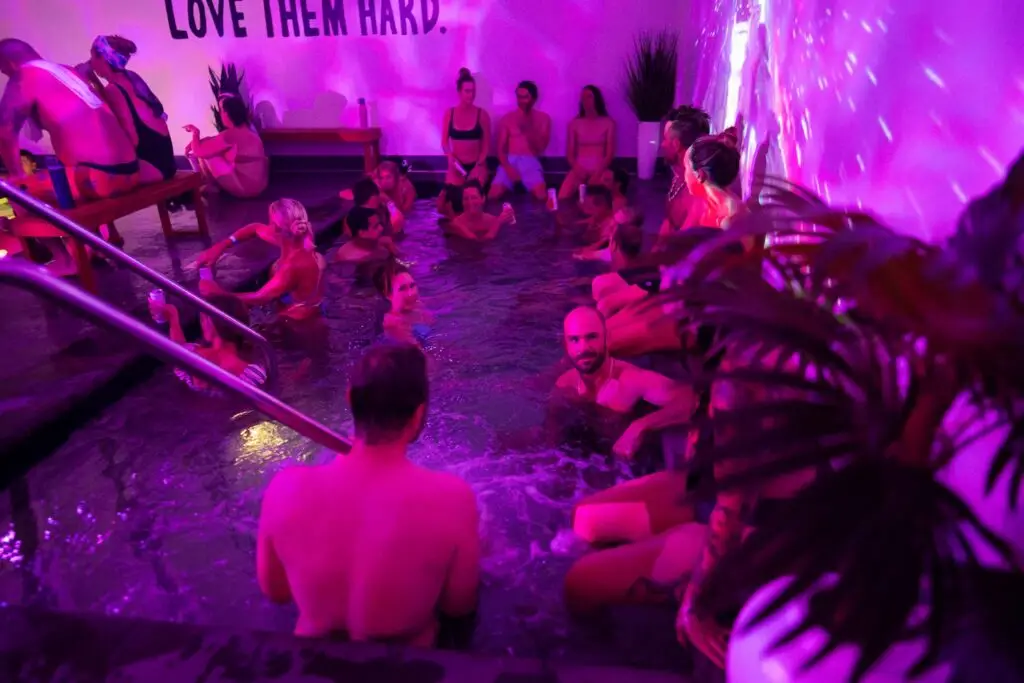
Run point-to-point beside the Pacific Ocean this Saturday during the La Jolla Half Marathon. Racers can choose from the La Jolla Shores 5K, a speedy 10K starting at Torrey Pines Mesa or a hilly 13.1 miles from Del Mar Fairgrounds to La Jolla Cove, all of which offer a morning of majestic coastal exercise. All races will start at 6:30 a.m. and finish with a festival featuring recovery activities like cold plunges, massage chairs, and red light therapy, plus a complimentary beer for 21+ racers at Ellen Browning Scripps Park. Registration is $85 for the 5K, $131 for the 10K and $191 for the half marathon; all finishers will receive a medal and a dry tech T-shirt.
5K: La Jolla Shores Drive and Horizon Way, La Jolla; 10K: North Torrey Pines Road & National University System Driveway, La Jolla; Half Marathon: 2260 Jimmy Durante Boulevard, Del Mar
La Jolla Secret Garden Tour
May 16
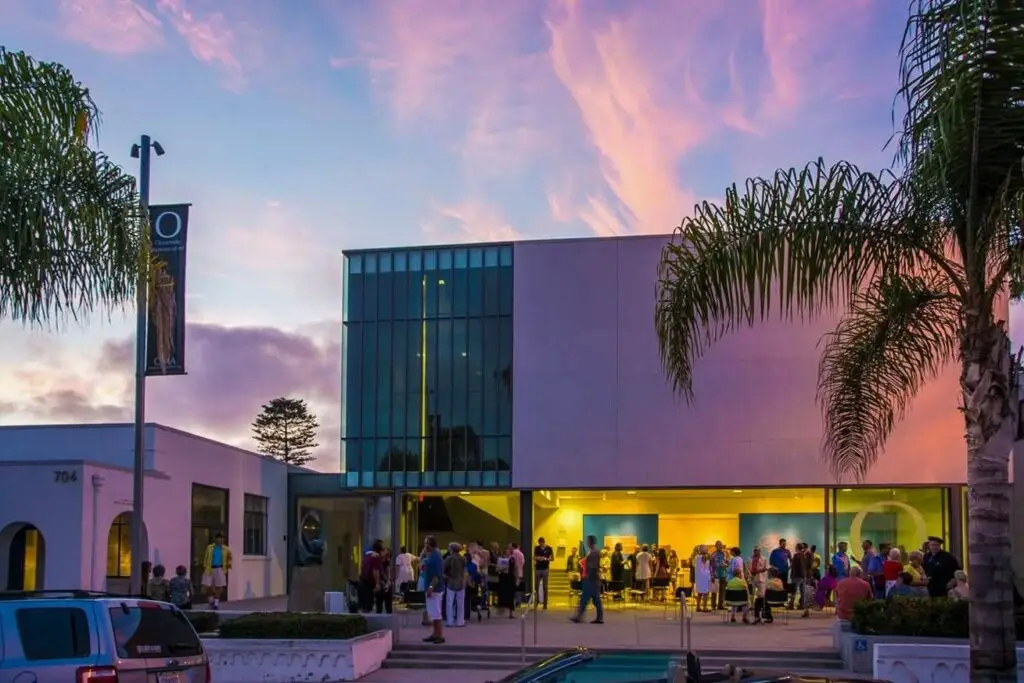
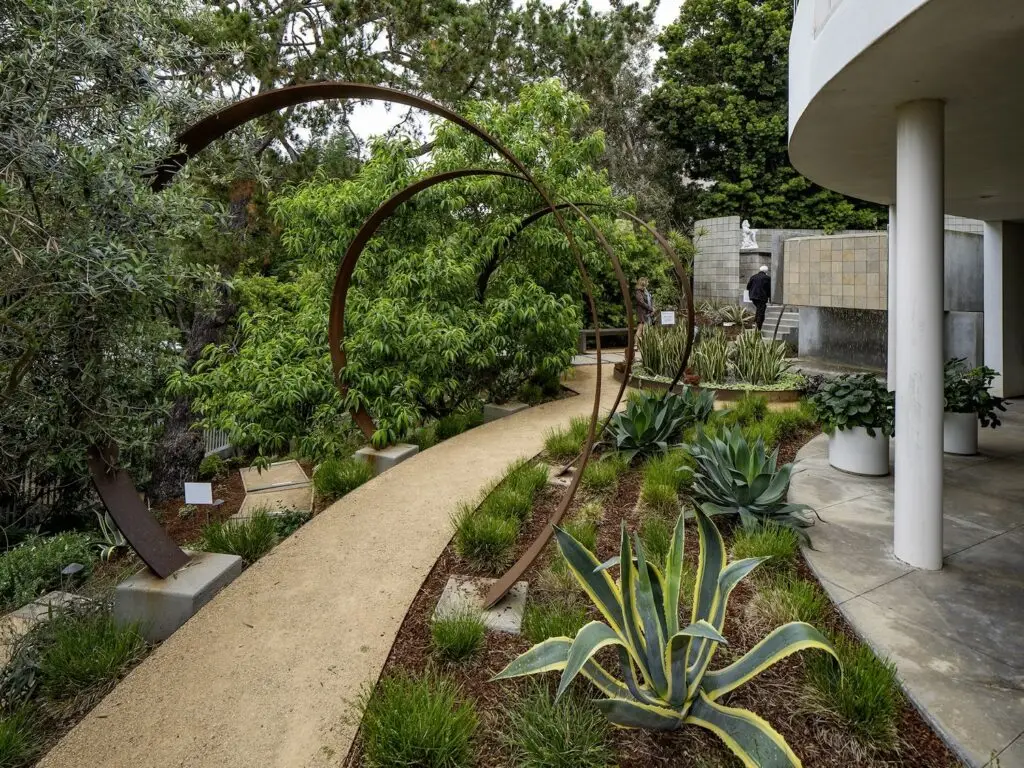
Admire the greenery behind the gates of 6 private homes during the La Jolla Historical Society’s Secret Garden Tour fundraiser this Saturday. For one day a year, several residents open up their yards for visitors, with docents, musicians and plein air artists on hand to accentuate the tranquil spaces. Plus, the public can shop the free Secret Garden Tour Boutique at Wisteria Cottage, where ticketholders will receive the secret list of tour locations. Registration for the self-driving tour (10 a.m. to 4 p.m.) is $55 for LJHS members and $65 for non-members.
780 Prospect Street, La Jolla
Ocean Beach Kite Festival
May 16
Kids can create their own kites and learn how to fly them this Saturday from 10 a.m. to 3 p.m. at one of the city’s oldest community traditions. During Ocean Beach Kiwanis’ 79th annual Kite Festival at Robb Field, young kitemakers will receive free materials and tips from experts before getting to test their kite-flying skills at a handful of aerial games. This free, family-friendly event will also include prizes for the best kites, carnival rides, food trucks and a craft vendor fair.
2525 Bacon Street, Ocean Beach
Asian Pacific Cultural Festival of San Diego
May 16
Asian Culture & Media Alliance and the House of Pacific Relations invite all to the free 13th annual Asian Pacific Cultural Festival of San Diego this Saturday from 11 a.m. to 5 p.m. at Balboa Park’s International Cottages. Attendees can check out food and merchandise vendors, plus live performances from local performing arts troupes and musical acts, including San Diego Taiko, Anandha Nritya and Imahen Taotao Tano, intended to highlight the cultural traditions of Asia and the Pacific Islands.
Ryan Hardison is a freelance arts and entertainment writer and recent graduate of San Diego State. When he's not staring at his laptop, he's likely eating an adobada burrito or getting sunburnt at the beach.
Imagine being the song continuously getting skipped on the playlist. Not because no one wants to hear you, but because you never quite fit the moment. For years, San Diego has been that song on the touring circuit. Artists who have outgrown intimate clubs but aren’t yet filling arenas and stadiums have often passed us by, heading north to venues better suited to the size of their show. San Diego wasn’t missing the audience, it was missing the room.
That’s all about to change.
On August 17, Live Nation Entertainment announced plans to transform the historic Wonder Bread Building, which it purchased in June for $16.8 million, into a 4,000-capacity indoor venue slated to open in fall 2028. The new space will host music acts as well as private, corporate, and community events.
Currently, San Diego’s concert landscape jumps quickly from intimate clubs like the Casbah, Winston’s, and Belly Up to larger theaters, amphitheaters, arenas, and stadiums. What’s largely missing—particularly downtown—is a modern indoor room built specifically for roughly 4,000 concertgoers. This leaves a gap in mid-size venues for touring acts that land stages like the Hollywood Palladium or Boston’s MGM Music Hall at Fenway.
“We are filling a void in the market,” says John Schalk, Live Nation’s Vice President, San Diego Market. “There are other venues in town, but this […] building is just something that doesn’t currently exist.” Although SDSU’s Cal Coast Credit Union Amphitheater serves the 4,000-capacity range, its outdoor, fixed-seating arrangement isn’t as versatile as the proposed Live Nation project.
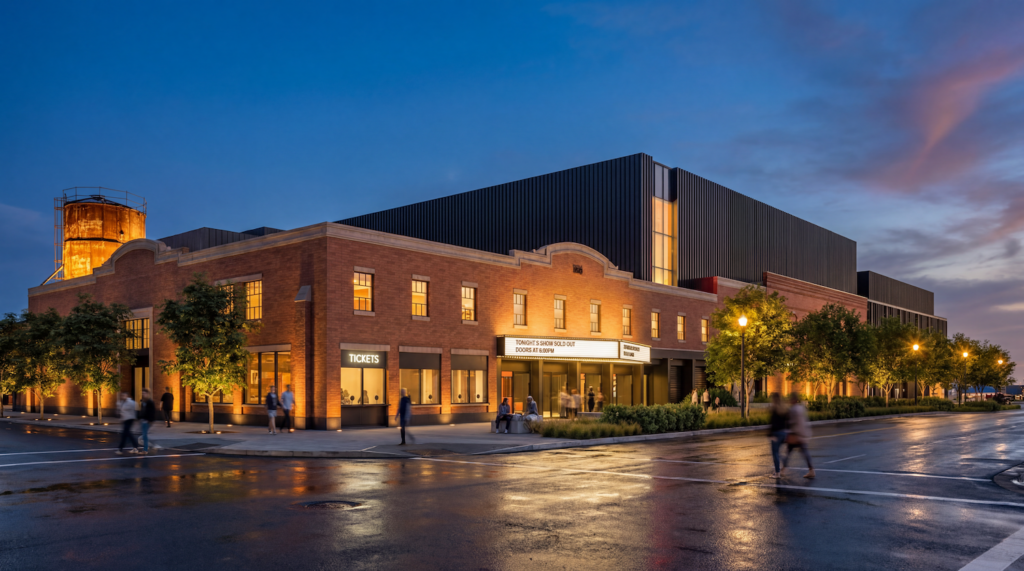
Located at 171 14th Street, just a six-minute walk from Petco Park, the building carries a century of history. Architect Eugene Hoffman designed it in 1924, a year after completing the Barcelona Apartment Hotel in Bankers Hill. The landmark brick building served as a bakery and warehouse for the Southern California Baking Company before Continental Baking Company, producers of Wonder Bread, took over in the 1950s and operated there through 1988 continued at the site until 2007.
In the early 2000s, Bob and Gay Sinclair, the couple behind a portfolio of East Village properties, purchased the building. After Bob—the founder of Pannikin Coffee & Tea—died in 2011, Gay sold much of their real estate portfolio but held onto the Wonder Bread Building. Mission Brewing eventually took over the space, where it operated for more than a decade before announcing its 2026 departure.
Now, the building is preparing for another reinvention. Live Nation plans to preserve the historic bakery’s four exterior walls, red brick façade, grain silo, barrel-vaulted trusses, and skylights as part of its next chapter.
Live Nation isn’t looking to erase its history but to celebrate it, allowing the building’s past to give the new venue some soul. “It’s really important for us that we maintain the integrity and the history of that building,” Schalk says. “There will be new construction and design elements as we go through the process to create the concert venue, but we’re working really hard to preserve it.”
Blueprint Studio, Live Nation’s in-house design and development group, and Gensler, the architecture firm behind San Diego International Airport Terminal 1 and Snapdragon Stadium, will be heading the project. The plan is to design the ground-floor space as an open, general-admission area with a premium level above with 600-plus fixed seats, in addition to box and suite sections. There will also be an additional structure built on top of the historical portion of the building (the four original walls that house the lobby) called the Vinyl Room—a Japanese-inspired hi-fi listening VIP lounge serving elevated food options.
One of the most reassuring aspects of the project is the focus on the concertgoer’s experience—specifically the “pet peeves” we all know too well: long bathroom lines, cramped exits, obstructed views. According to Schalk, one of the best things about building upon the existing structure is having the ability to consider potential obstacles and tackle them before construction begins. “I’d say we are ‘purpose building’ the entirety of the project for a music venue,” says Gensler lead project architect Garrett van Leeuwen. “As part of our design process, we do an in-depth sightline analysis to make sure that sightlines are optimized from every point and seat within the venue.”
Circulation design is also being implemented to ease traffic flow, alongside acoustic optimization and a transformative outdoor beautification effort. According to van Leeuwen, this “public realm space” will grow the existing 14-foot sidewalk to a 32-foot sidewalk complete with plazas and landscaping.
“This venue is for the fans. For the music lovers,” Schalk explains. The vision is intimate: “I want a fan to walk up to that building, see that red brick facade, grab their ticket from the box office, go into the lobby and see some of the history that will present itself… and feel like you entered a home.” Schalk also expressed a “keen interest in making sure that we work with the local artists, the local bands, the local musicians in town.” It’s a project that recognizes San Diego as a growing market that is hungry and ready to see a vibrant arts and culture community thrive.
According to an analysis by Oxford Economics analysis shared by Live Nation, the venue is projected to deliver a significant boost to the local economy, generating approximately $97 million in annual economic impact and supporting 660 jobs. This also includes welcoming 316,000 fans each year—with 126,000 traveling from outside the San Diego metro area—and driving $53 million in local spending at nearby restaurants, hotels, and retail establishments.
Considering its proximity to other major event spaces and overall busy urban areas, traffic and parking may be a concern, especially on nights of overlapping events. But in those cases, Schalk said they would work together on communication efforts; parking availability; and staggering start, end, and loading times; as well as providing easy access to designated rideshare areas. With transit stations nearby (the closest one being a 4-minute walk at 12th & Imperial), public transportation is another great option for enjoying your night out.
There are still two years of design, construction, and plenty of logistics between now and opening night. But the bigger promise of the Wonder Bread Building is simple: San Diego finally gets a venue built for the artists who have historically passed it by. After years of getting skipped on the touring playlist, the city may finally be getting its turn on repeat.
Camila Ibarra Gallego is a CaliBaja native pursuing a master's degree in culinary journalism at the Basque Culinary Center. Shaped by the culturally rich, bicultural megaregion, she's passionate about sniffing out stories that connect people, territory and culture through food. When she's not tumbling down internet rabbit holes, you can find her pretending to be a wine connoisseur at a local wine bar or nose-deep in a good book.
On February 28, 1926, the Fine Arts Gallery of San Diego (now called the San Diego Museum of Art) opened its Plateresque doors to 3,000 guests for opening day. Over the next century, the museum changed with the times—even once functioning as a naval hospital after Pearl Harbor. This year, the museum is celebrating its 100th birthday with an exhibit (open through January 24, 2027) featuring photographs, ephemera, and film footage spanning the museum’s history.
Courtesy of Tim Novara
Free Concerts at Spreckels Organ Pavilion
Every Sunday from 2 to 3 p.m., stop by the historic Spreckels Organ Pavilion for a free concert presented by the City of San Diego on the largest outdoor organ in the world (more than 5,000 pipes). The pavilion seats 2,400 for performances by the civic organist or guest artists.
Some think natural history museums are just cemeteries for dioramas that haven’t received an update since the Reagan administration. When it comes to The Nat, which just finished a $7.5 million rejuvenation, they’re totally wrong. The museum debuted a new rooftop that replaces its 25-year-old atrium. The old roof created a greenhouse effect that steamed up some exhibits, so the new one—which includes 200 solar panels and better temperature control—will help preserve the artifacts inside. Each Friday in the summer, The Nat also becomes one of the season’s vibiest hotspots during Nat at Night, with food from places like Wolf in the Woods and The Craft Taco, bars and signature cocktails on several floors, and a rooftop DJ.
Fleet Science Theater Remodel
The Fleet Science Center just received its most significant update since the 1990s. It expanded its exhibit space by 20 percent and introduced a newly designed entrance gallery (formerly the IMAX theater lobby) that includes free exhibits for visitors who want a taste of the science without paying an admission fee. The former ticketing area now houses the Mindbender Mansion exhibit, and there’s a new café, Element 8, that will, of course, sell the center’s famous soft serve.
September is San Diego’s unofficial second summer—the crowds thin, the weather stays warm, and the city’s calendar somehow gets even busier. This month brings stadium-sized rock shows, Broadway’s buzziest comedy, a new anime convention, world-premiere theater, gallery openings, food festivals, and the first signs of spooky season. Whether you’re ready to lean into fall or determined to keep summer going, here are the best things to do in San Diego this September.
As Guns N’ Roses storm into decade five, their appetite for destruction persists. During their Snapdragon Stadium concert, hear the hard rock anthems, new material and a set from The Black Crowes.
9/23
Kehlani is proof that the romance and earnest sensuality of old-school R&B will never go out of style. Hear her take it back to the aughts at Viejas Arena.
From the silver screen to The Old Globe stage, John Carney will Begin Again (again) with a world premiere musical adaptation featuring new songs—courtesy of Train—and a story overflowing with hope.
9/12-10/17
The concept of work is a guiding principle for San Diego native and multidisciplinary creative noé olivas. Observe his community-informed approach via Tierra y Cielo (Earth and Sky) at Best Practice Gallery.
9/18-10/25
Two workers grapple with the weight of their roles at a temporary migrant shelter in Mario Vega’s world premiere play Our Lady of the San Diego Convention Center, set for citywide performances.
9/26-2/28/2027
Luminous visions of peace and the Punjabi-American roots of Rupinder Kaloti inform The Gathering, a wondrous unification of family foretold via paintings at Oceanside Museum of Art.
9/29-10/4
It’s Mary Todd Lincoln’s world and we’re just living in it. See the presidential paramour barrel to her way to stardom at the Civic Theatre during Oh, Mary!, Cole Escola’s political spoof.
Courtesy of SeaWorld
More Fun Things to Do in San Diego This Month
9/5 & 9/6
Pros and Con(vention)s: Anime San Diego will debut at the San Diego Convention Center with cosplayers, panels and more than 400 vendors well-versed in Japanese animation.
9/11-10/31
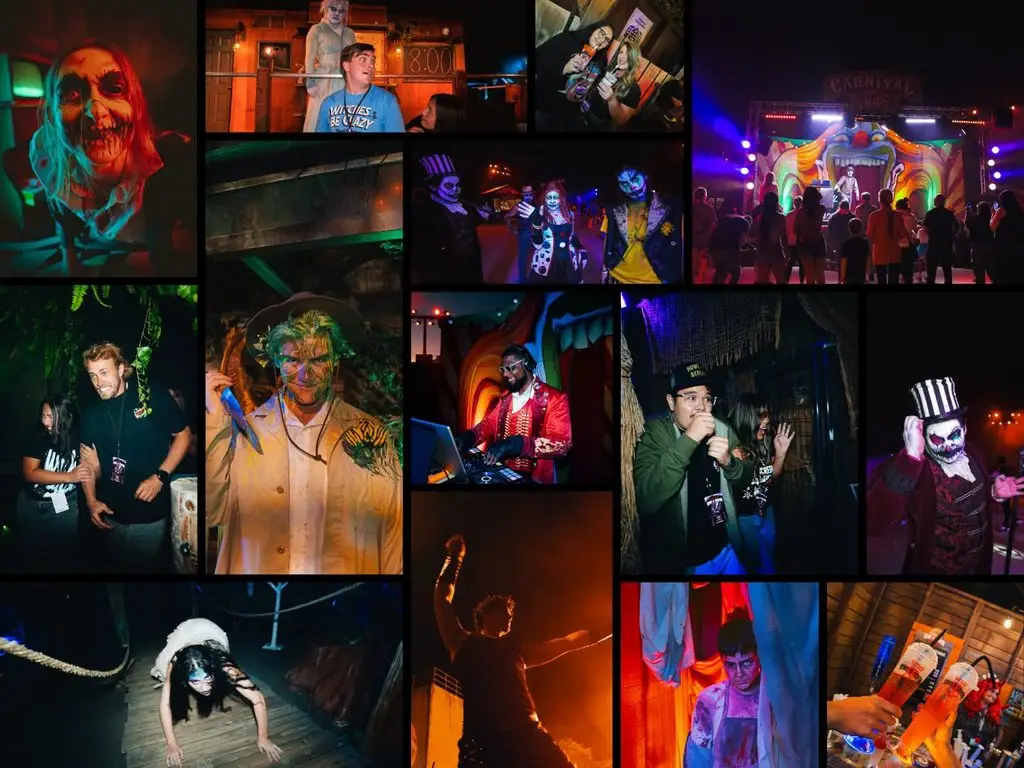
Scaredy cats beware: SeaWorld San Diego’s Howl-O-Scream embraces frights forged in darkness. Enjoy an ominous lineup of live shows, scare zones and bloody bars ahead of Halloween.
9/12
The best parts of Artivál and the Alley Cat Art Walk have united for the free Alley Cat Art Fest, an all-day outing for live music and immersive artwork in Downtown El Cajon.
9/12 & 9/13
Take a Grecian vacation for a fraction of the price during the annual Cardiff Greek Festival, two days of immersive cuisine and culture—with plenty of dancing—on the Encinitas coast.
9/13-9/20
Step away from the stove! The California Restaurant Association has eight days of eating experiences with your name on it. During San Diego Restaurant Week, explore by meal, neighborhood or cuisine for your personal dining plan.
9/16
Nourish yourself with an all-inclusive spread of Pacific Beach eats and locally-crafted artwork during the HeArt of PB Restaurant Walk on Garnet Avenue.
9/19
When it comes to stand-up comedy, Chelsea Handler is always ready to roast. See Handler tell anecdotes and skewer an assemblage of victims during her Balboa Theatre performance.
Ryan Hardison is a freelance arts and entertainment writer and recent graduate of San Diego State. When he's not staring at his laptop, he's likely eating an adobada burrito or getting sunburnt at the beach.
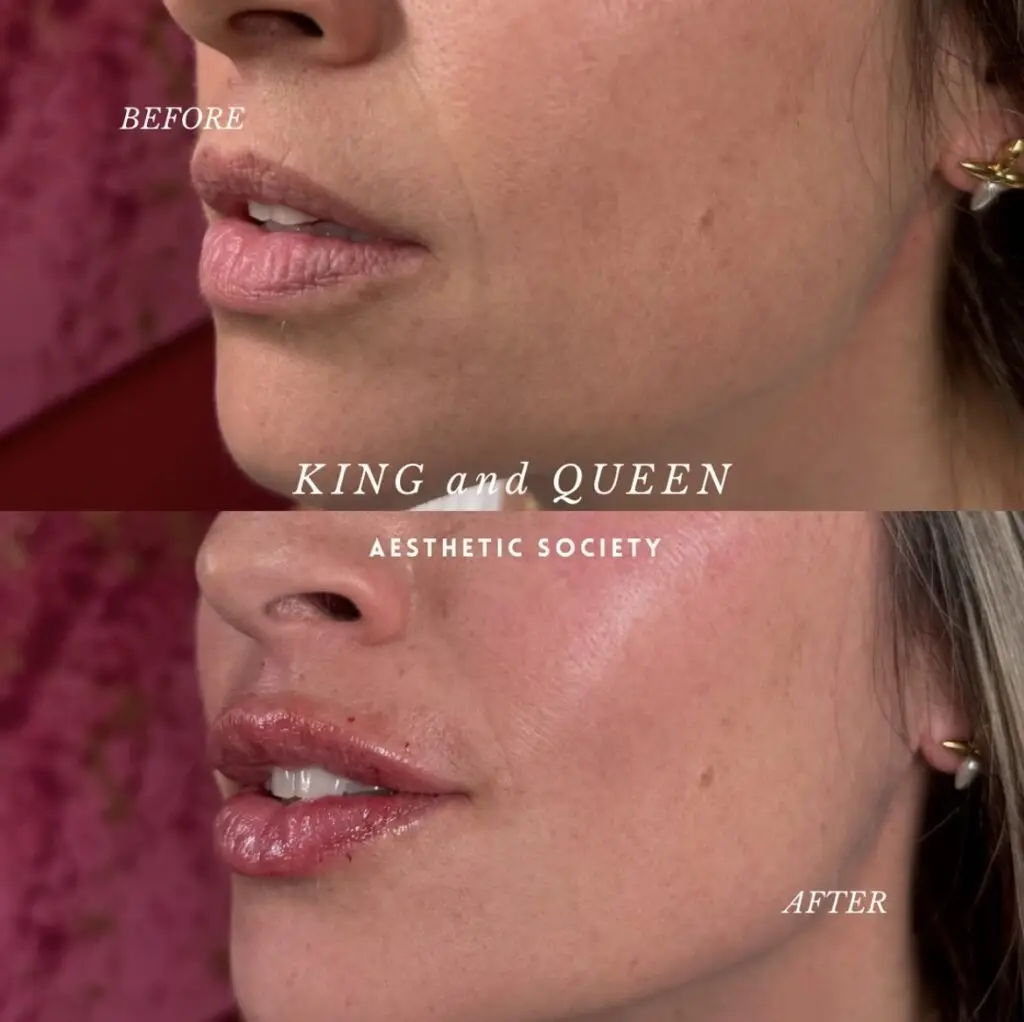
Kelly H. Harfouche, founder of KQ Aesthetic Society, knows firsthand that cosmetic treatments like fillers, neurotoxins, and microneedling, can not only enhance a person’s appearance and restore confidence, they have the power to truly change a person’s life. An expert injector has the ability to tailor treatments to each individual patient’s anatomy and goals for personalized results. Harfouche, a board-certified nurse practitioner, has spent nearly a decade perfecting her craft as an aesthetic injector and integrating her multifaceted artistic skills with precision patient care. Her commitment to continual education and training, plus a passion for helping people look—and feel—their best, set KQ Aesthetic Society apart in a sea of local medspas.
For many people considering nonsurgical treatments, the intent is to look refreshed and refined. KQ Aesthetic Society’s philosophy eschews a cookie cutter approach that bases treatments around units, instead working to understand each person’s unique goals, then curating a treatment plan to fit that vision. Harfouche focuses on “inclusive luxury,” the belief that everyone deserves access to aesthetic treatments, respective of budget restrictions. She develops long-standing trusted relationships with her patients, and works with each one to achieve their aesthetic objectives and address the underlying causes of their concerns.
“For me, forming an honest and open relationship with every patient who walks through the door is essential. This means understanding them on a deeper level and meeting them where they are to define and achieve their individual goals,” she says.
Drawing on her artistic background, which inspired her transition into medical aesthetics, Harfouche sees each client as a “unique canvas.” Rather than relying on standardized procedures, the practitioner’s distinctive approach combines her profound understanding of the physiological and anatomical changes associated with aging with an unwavering commitment to ongoing education about the newest products and their mechanisms of action. Her goal is to make each patient feel beautiful in their own skin and to embrace their individuality.
She has also pioneered a way to combine her talent for aesthetic artistry with her philanthropic nature. Harfouche is one of only a handful of providers using dermal fillers to treat patients with lip asymmetry and scarring resulting from cleft lip surgery. Patients travel from around the country for this transformative treatment, noting increased confidence and a restored identity. She hopes to eventually launch a training program to help fill the void in this space.
“My passion has always been connecting with people and giving back in any capacity that I can,” she says. In the rapidly advancing landscape of aesthetic medicine, you can place your confidence in Harfouche and KQ Aesthetic Society to deliver exceptional care. To learn more or book a consultation, please visit kqaestheticsociety.com.
Boredom's not an option. These are a few of the top events in the city each year, including a rodeo, free summertime music festival, and a chili cook-off
Meet some rodeo queens (or be crowned as one yourself) in R-Town’s annual celebration of the Wild West. Three days of mutton bustin’, tie-down roping, and barrel racing are all doing the community some good: Proceeds from the event funnel into local organizations like Ramona Town Hall and the Guy B. Woodward Museum. This month marks the 45th annual Ramona Rodeo, which takes place in the Fred Grand Arena and draws more than 12,000 attendees each year.
For nearly half a century, OB has hosted a chili cooking competition that has drawn thousands of hungry locals. (Buzz Cannabis presented this year’s event, so taste testers could have been under the influence of munchies-enhancing drugs.) Non-chili-related street fair festivities include beachfront live music, Fun Zone family-friendly play areas, and a Dirty Birds wing-eating contest.
Photo Credit: Cole Novak
Chicano Park Day
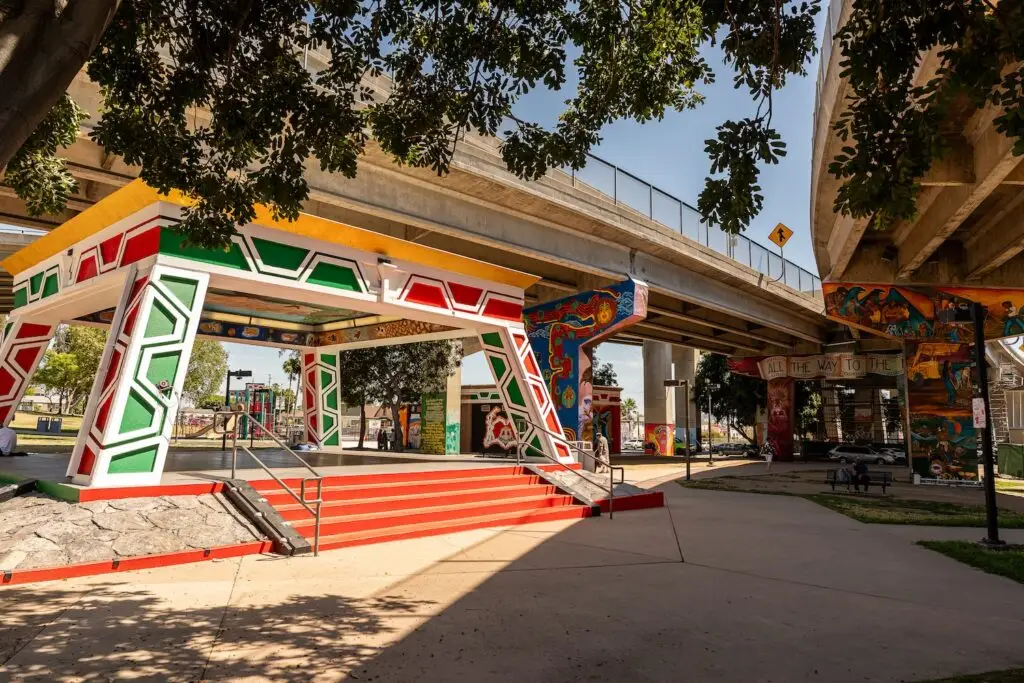
In 1970, Chicano Park was set to become a California Highway Patrol station. The problem: The city had promised a community park in that area. After decades of development fractured Barrio Logan and displaced thousands of families, Chicano locals were tapped out. So, for 12 days, locals occupied the area under the Coronado Bridge, blocking bulldozers and planting cacti. It worked. Construction stopped, and that area is now Chicano Park. Each year, locals celebrate the successful preservation of Chicano Park and the resilience of the Chicano Movement.
Solana Beach gathers at Fletcher Cove Park at the start of each summer for two days of live music ranging from country to pop to Chicano rock, plus an arts and crafts fair, an international food court, a beer and wine garden, and the Solana Beach Firefighters Association’s pancake breakfast. The event is free, but if you want an elevated experience, grab Seaside Pavilion ($75) or VIP Deck ($160) tickets for reserved seating, private cash bars, exclusive restrooms, and discounted swag.
Courtesy of North Park Music Fest
North Park Music Fest
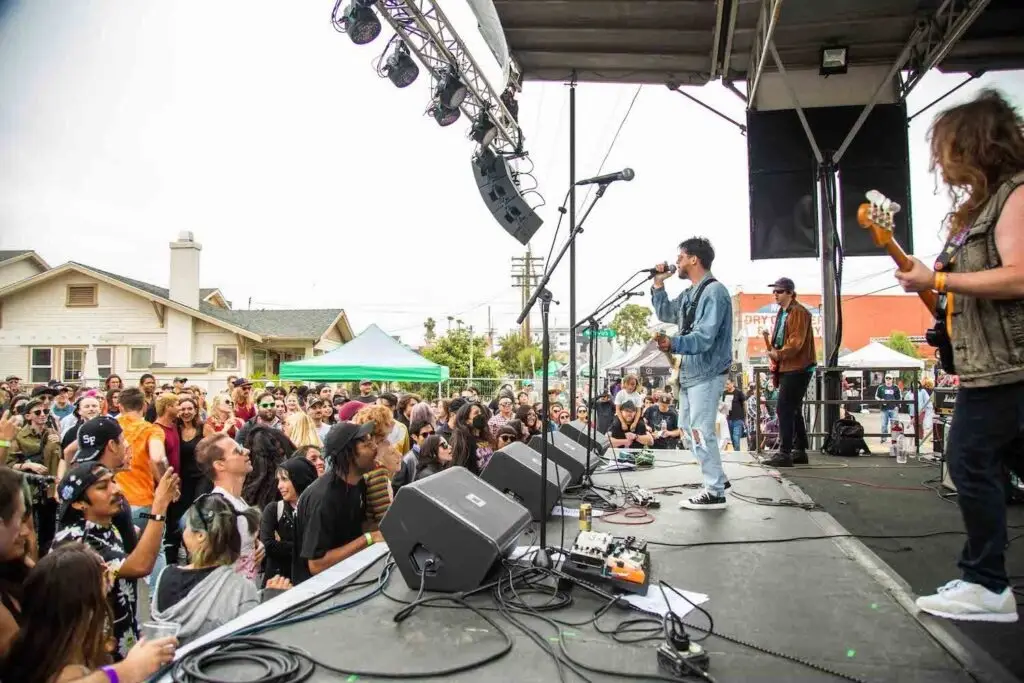
The entire North Park neighborhood hosts an annual music festival, meaning a dozen venues—from Queen Bee’s to Bacari to North Park Community Park—become live music spaces each June. Some locations are open to the public, but if you’d prefer lounge access at Granada House and line-skipping privileges, check out the $65 VIP passes. General admission otherwise starts at $25.
Lemon Festival
It’s weird if you don’t wear a lemon-themed outfit at Chula Vista’s annual Lemon Festival. For one day each August, Third Avenue pays tribute to the city’s former “Lemon Capital of the World” status with live music, citrus-themed photo ops, arts and crafts vendors, a lemon cook-off competition, and plenty of other food that doesn’t include the famed hesperidium. But who would want that at Lemon Fest?
It was the summer of 1999. MTV, The Matrix, and first-generation PlayStation glowed on tube TV sets all over America. What a time to be alive. Smartphones weren’t yet stealing people from the moment. Cultural was a shared reality. During the last few minutes of the monoculture, Tony Hawk executed the first-ever 900 at X Games V in San Francisco. That’s two and a half aerial rotations with a side of the dizzies.
The time had run out on the Vert Best Trick competition long before the 11th attempt when he pulled off the fateful feat. Nobody cared. Not the judges, not the competition, and certainly not the crowd. “Let that bird fly,” they said. Once the trick was landed, they partied like it was 1999 … because it was.
That was the tipping point when the skateboarding world exploded, going from counterculture to a national phenomenon. Shortly after that, “Tony Hawk’s Pro Skater” video game came out, introducing millions of kids to what skate culture looked like. Oh, the game had a killer punk soundtrack, too.
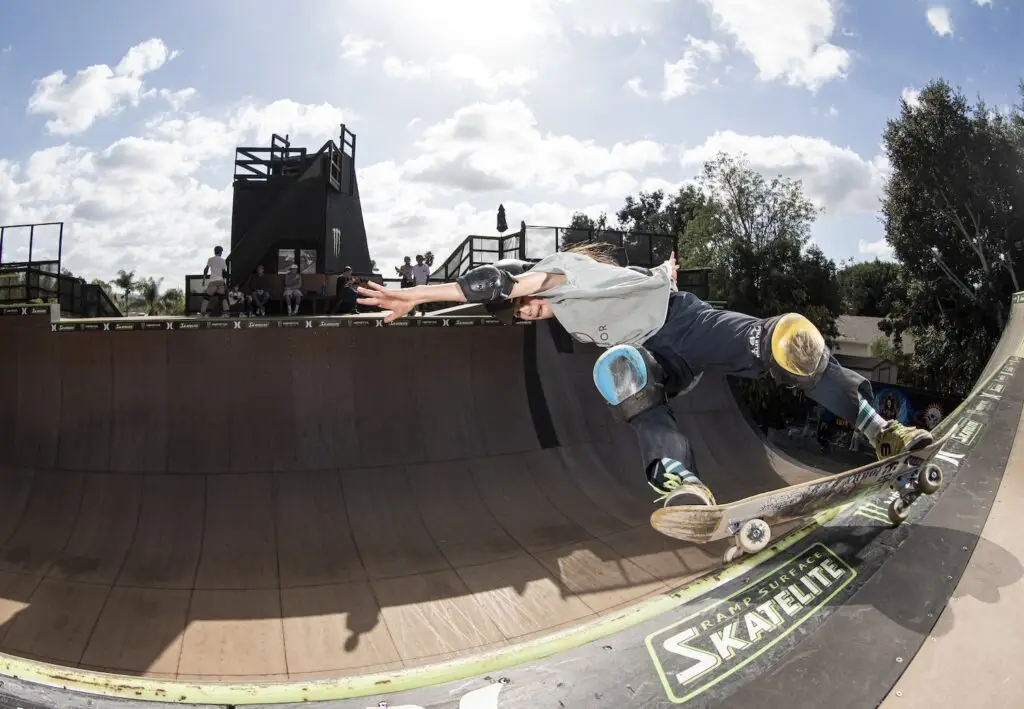
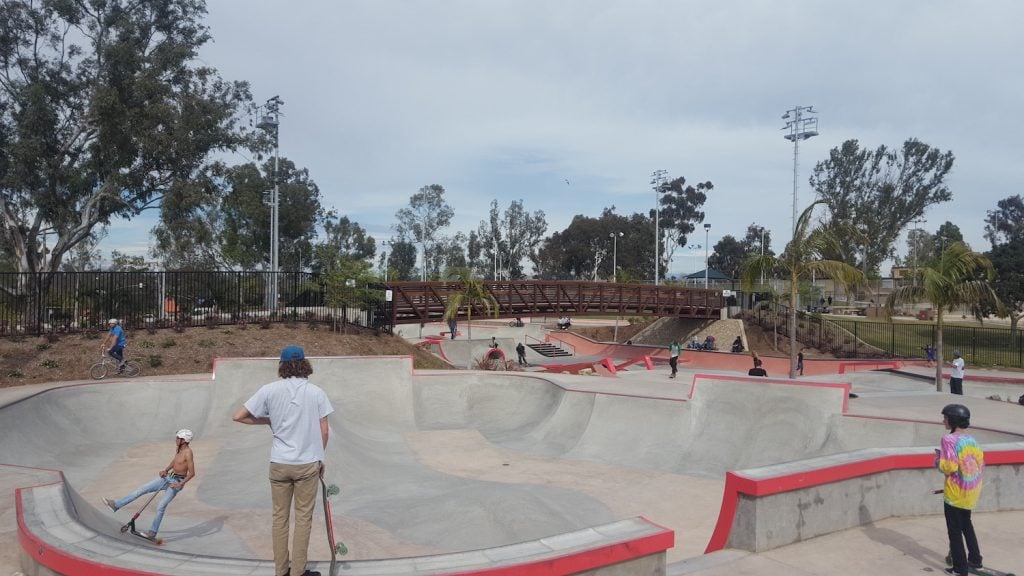
We can all thank Hawk for the globalization of skateboarding. But we can also recognize his local influence and how San Diego County continues to be a hub for skateboarders young and old, for competitors and street skaters. To see it all, go to Park De La Cruz in City Heights—or, heck, any other skatepark in the county—which, at 19,000 square feet, is about twice the size of the average skatepark and has signature features like an M-shaped transition ramp. The amount of talent that continues to evolve in this county is a testament to deep-rooted skate culture and world-class athletes supporting the next generation.
Photo Credit: Casiel Sanchez
The Skatepark
I’m a little early for a skate lesson with pro skater Mike Owen when I get to Linda Vista Skatepark. In the 2010s, Owen ranked as one of the world’s top bowl riders. He’s the founder of San Diego Skateboarding and has “helped thousands of kids, teens, and adults learn to skate safely, confidently, and with style,” the company’s site says. And now it’s my turn. We start the lesson on the nearby tennis courts, getting my basic foot mechanics down. Safety before style.
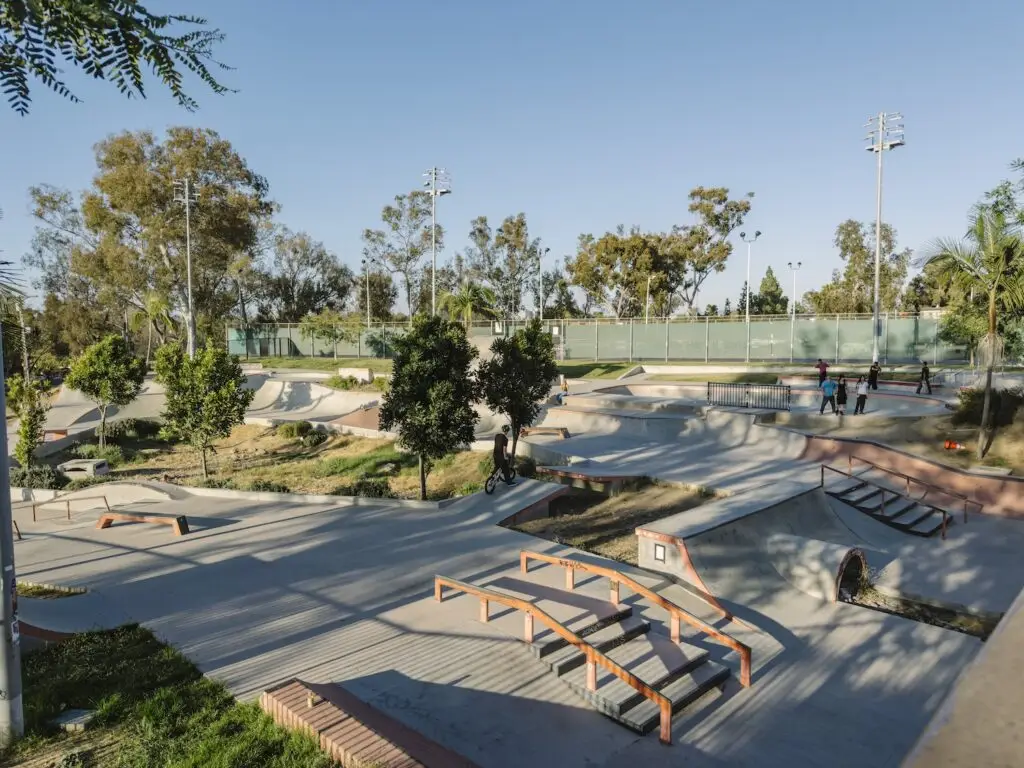
In terms of street plaza features, the massive Linda Vista Skatepark is loaded with rails, stairs, manuals, and ledges. There are more bowls than you can get from Cava: a flow bowl, backyard-style pool, and vert bowl. The main feature is a full pipe for advanced line riders. It’s a hell of a park, even if somebody just wants to watch the action from the 100-foot-long pedestrian skybridge overhead.
Right now, San Diego has over 50 public skateparks scattered throughout the county. “There are now more [skateparks], more resources for them, and more terrain,” Owen tells me. “Now, they’re offering different competitive style skateparks that help for competitions. The best parks have a variety of different terrain where you have things for beginners and bigger transitions. Not every town has that.”
San Diego, luckily, does. But despite the bounty, Owen believes there should still be more—public skateparks are safe spaces for all to learn and develop on-board skills. Without them, a huge portion of San Diego’s culture withers. Encinitas could be the next city to add a skatepark to the county’s roster: In early July, the Encinitas City Council appointed 12 local skaters and community members for the newly established Skate Feature Committee. In partnership with two councilmembers, the committee’s purpose is to design a working skatepark or feature for the city.
But like any big project, Owen says, it’s a long process to add another skatepark to the community.
“I wish it were easier,” he says. “When there are different contractors for different things, [there’s only] a certain amount of time to build. It gets tricky.”
Then there’s the matter of funding the actual construction and development of the skatepark. That usually comes from grants, fundraisers, and donations. For reference, Linda Vista Skatepark was built on a $4.46 million grant from the California Department of Housing and Community Development in 2014. With an additional $40,000 donated by the Tony Hawk Foundation, the park opened in 2018 and is the largest in San Diego’s Parks and Recreation system. The best way to get a skatepark in your neighborhood, Owen says, is to start a petition and reach out to your city.
Photo Credit: Blair Alley
The Street Skaters
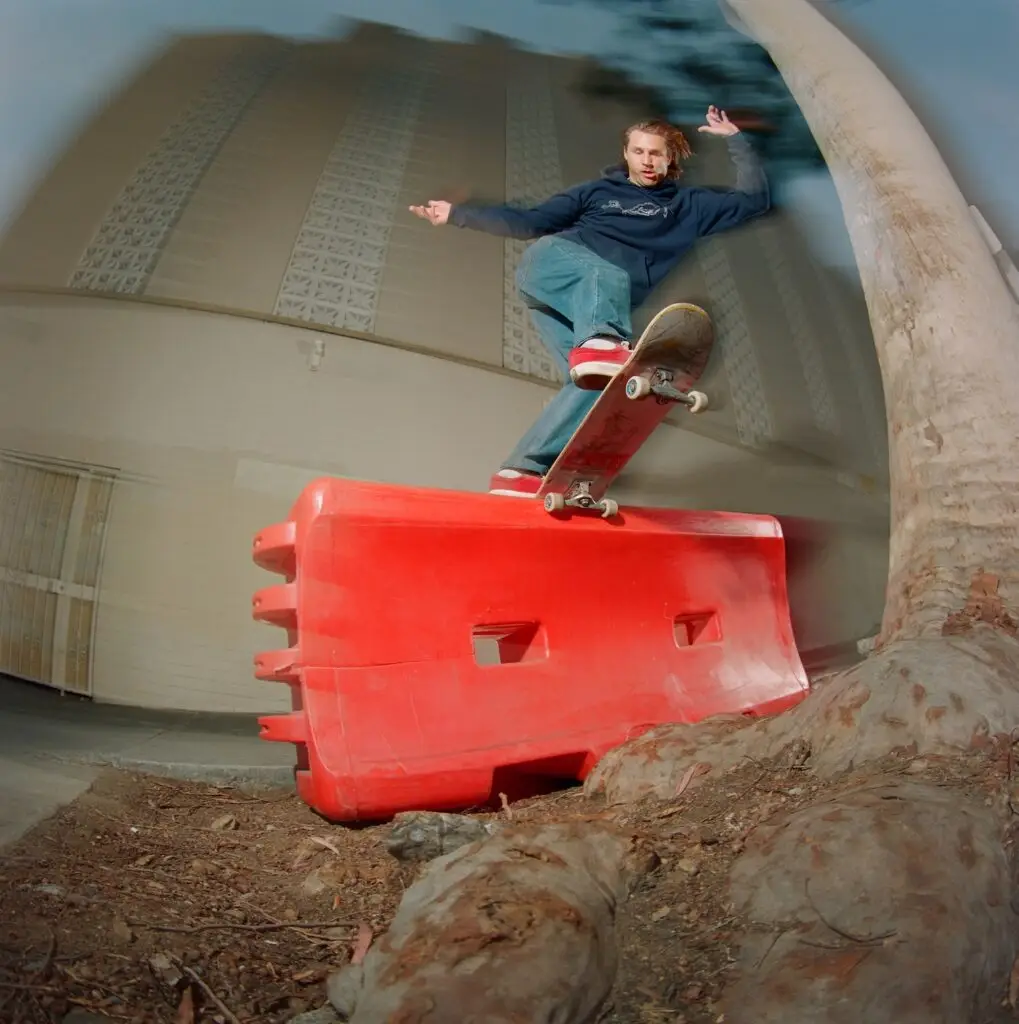
Jordan Thrower’s first street skate sesh at San Diego City College in 2003 ended with a police chase. The campus was swarming with skaters riding rails, jumping stairs, and grinding tricks on benches, curbs, and ledges. When the cops got on their loudspeaker telling them not to run, everyone obviously ran. Back then, cops would give tickets and confiscate boards. The vibe has loosened since. “Now, the police don’t really care,” Thrower says. “They just make you leave. It’s not anything crazy.”
Street skating is when riders use real-world urban obstacles, rather than pristinely designed bowls or ramps—such as in college campuses, downtown areas, corporate buildings, and malls. Abandoned mini-golf courses and construction sites do the trick, too.
Thrower says the street skating hub here isn’t as huge as it once was. Thanks to modern technology and social media, skaters aren’t tied to any certain place to create skate videos. You know, those videos that could have been taken this year but have the low-fi vibe of 2004, where skaters carve down stairwells into parking lots, over mailboxes, or across park benches. The silver lining: Even though there are fewer street skaters than there once was, those who stayed in San Diego are still tight.
“Everyone skates with each other and knows each other here,” Thrower says. “In LA, it’s not really like that. It’s small there, but not everybody knows each other, and they don’t really skate with each other too much. They just have a lot of little crews.”
Back in 2015, Thrower started his own street team and brand that sells boards and shirts called Tantrum. The Tantrum team is split between San Diego and San Francisco. It doesn’t take much to be a part of a skate team. You just have to be a good hang.
“The way I pick people [for the team] is if I can get along with them,” he says. “It doesn’t even really matter if they’re that good. If you’re likable and funny, you can pretty much be on the team.”
Photo Credit: Marc Wierenega
The Future
Running it up to North County, a Vista-based nonprofit organization called Exposure Skate has been shaping up the youth since 2012. Its mission is to give more opportunities to otherwise underrepresented women, girls, and non-binary individuals by offering classes and camps. This, to build up confidence and community. We could all use a little bit of that, eh?
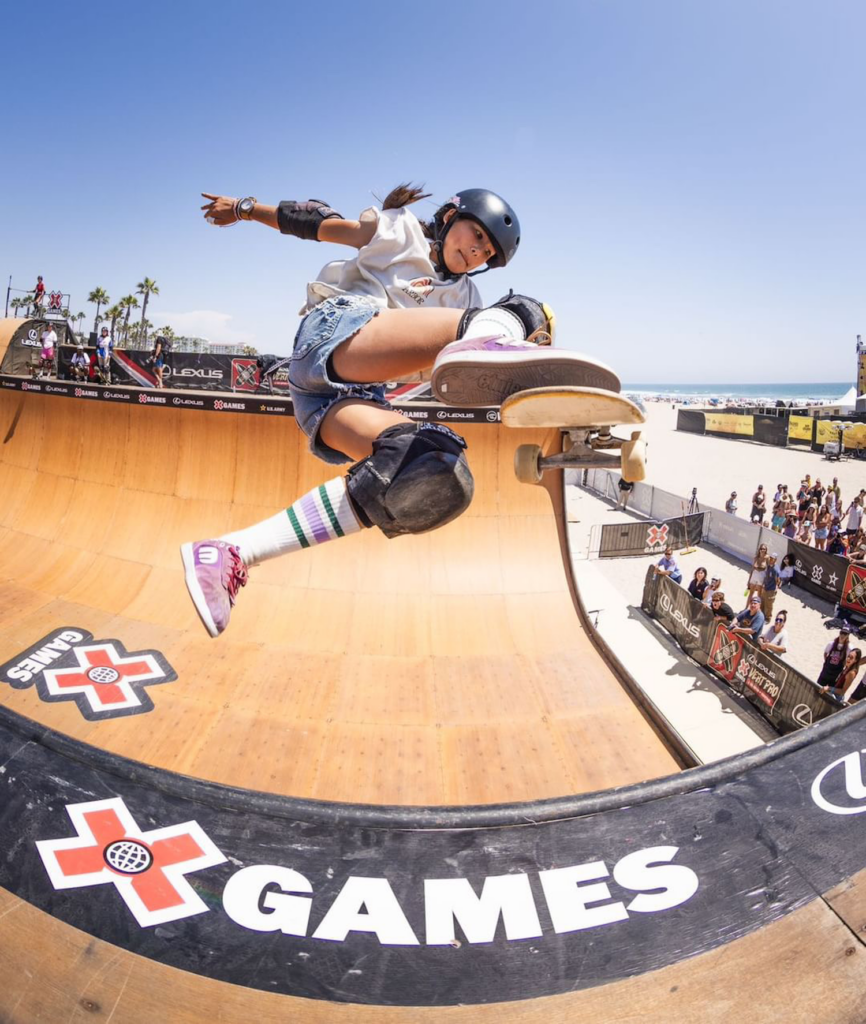
Thanks to Exposure Skate, 13-year-old Joey Yarbrough has found herself competing in the LA Olympic trials. (Her first time on a skateboard came at just 18 months old at an Exposure Skate Rising event.)
While competing for Team USA in Rome in June of this year, she finished 13th at the first Olympic qualifier for LA28. Currently ranked 21st in the world and 5th among American women, the young prodigy is blooming. And she’s in good company and mentorship from her biggest influence, Bryce Wettstein.
“She taught me at the first Exposure Skate Rising when I was little,” Yarbrough recalls. “I compete and skate with her all the time now, and it’s super fun. [At Exposure,] it feels so good to have someone there to help me whenever I need it. They’re like my family, always encouraging me and always there for me.”
Yarbrough will be just 15 years old when the Olympics go down in LA. She’s following the Olympic torch carried by other locals such as Wettstein, Ruby Lilley, Jordyn Barratt, and Exposure Skate’s Amelia Brodka.
“I’m working my hardest to get there,” she says. “I’ll also work my hardest to go higher in the Olympics, maybe on podium. That’s just my dream. So, hopefully it’ll come true.”
Jake Peterson is a San Diego-based journalist and culture writer. His work explores the city’s music scene, sports, local characters, and the offbeat corners of San Diego’s subcultures.
SeaWorld dazzles with a drone show, big-name entertainers, new animal adventures and more
By Partner Content
Nights are heating up at SeaWorld San Diego. The quintessential summertime staple on Mission Bay is transforming into a destination for unforgettable day-to-night adventures, bringing back some of its most popular Summer Nights programming and introducing exciting new experiences sure to delight both kids and adults alike.
The 2026 Summer Day to Night at SeaWorld San Diego is the park’s most ambitious season yet. SeaWorld has planned a highly anticipated entertainment lineup that features nine weeks of throwback concerts featuring R&B and hip‑hop favorites from the ‘90s and early 2000s, including Jordin Sparks, Too $hort and Warren G, Ashanti, and an array of boy band heartthrobs performing together as part of the Pop 2000 Tour.
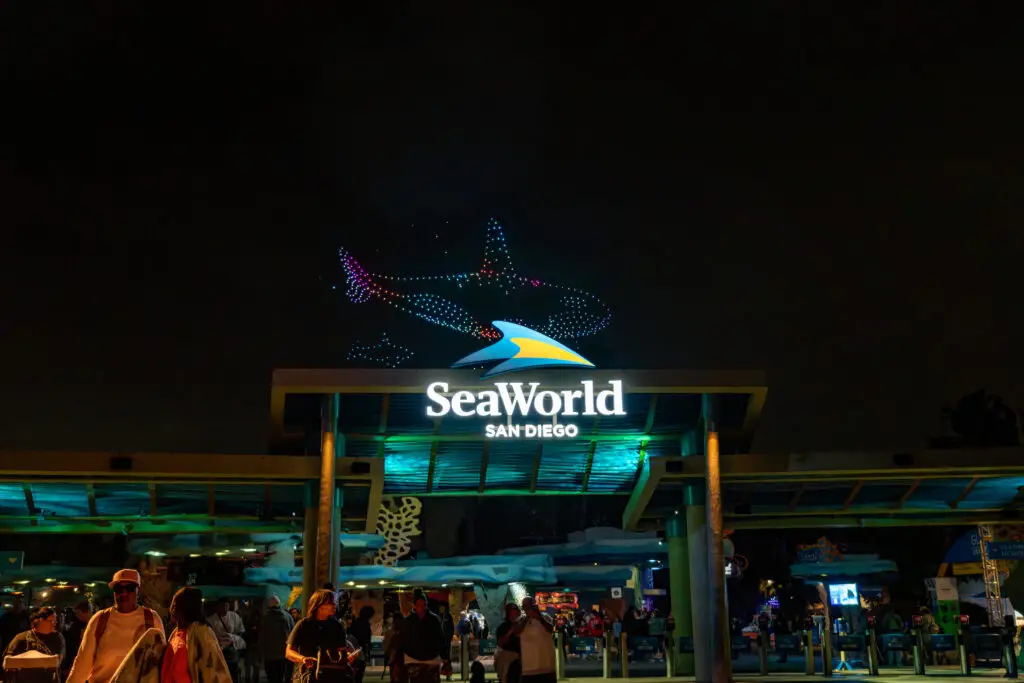
New this season is perhaps the park’s most visible update: a nightly drone show, Ocean of Dreams, which illuminates the sky with hundreds of synchronized sparklers. Drones form sea otters, sharks, dolphins, and a majestic orca that tell a breathtaking 12-minute story of marine life and underwater ecosystems. The show culminates with a spectacular electric neon finale celebrating hope, wonder, and ocean stewardship.
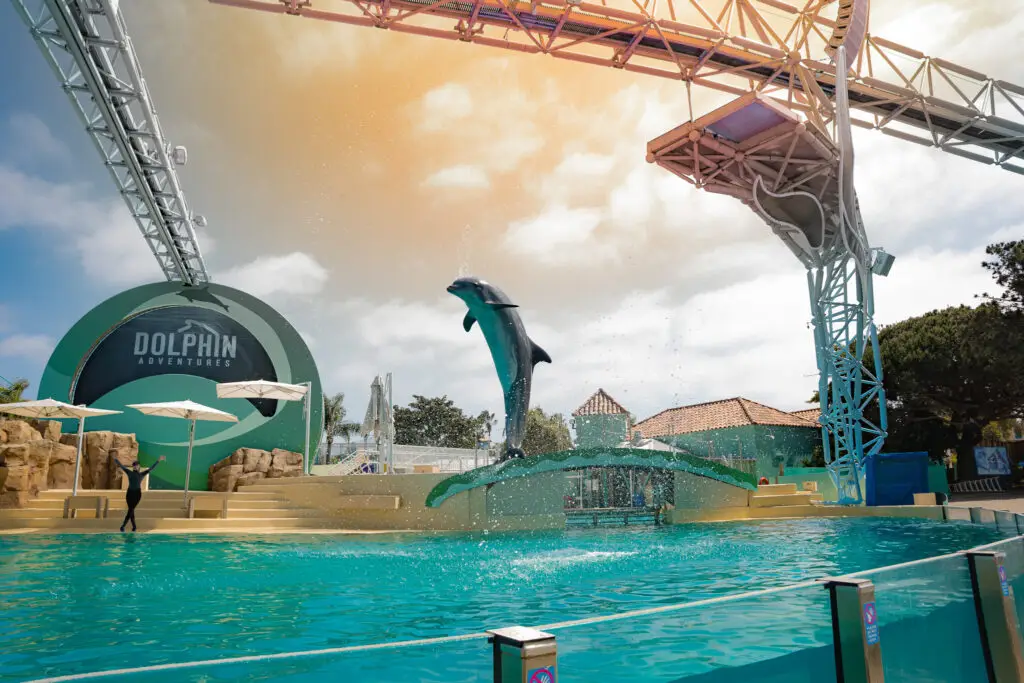
Nighttime visitors are also in store for animal adventures that fuse education with high-energy fun and the dreamy ambiance of nighttime. The park has launched two all-new animal presentations: Shamu’s Celebration:Light Up the Night and Dolphins: Touch the Sky. Shamu’s Celebration:Light Up the Night features vibrant lighting, music, and dynamic choreography that celebrates the power and beauty of killer whales. Dolphins: Touch the Sky showcases playful bottlenose dolphins and the special connection between humans and the natural world. And back by popular demand is fan-favorite Sea Lions Tonite. See the charming pinnipeds splash, play, and parody pop culture in this refreshed crowd-pleaser.
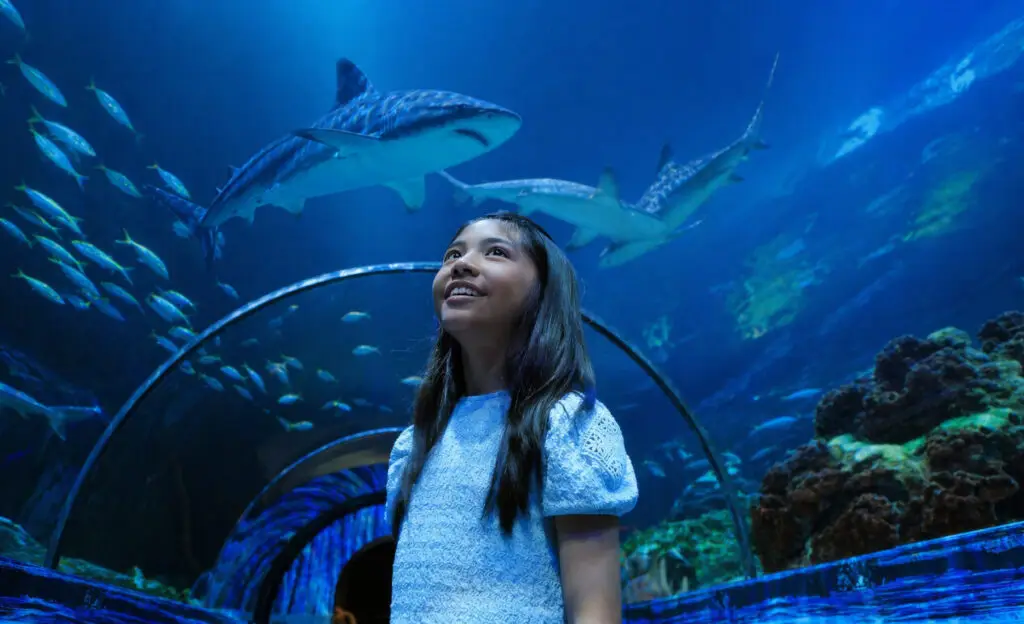
More must-sees: a newly reimagined Shark Encounter, one of the country’s more immersive exhibits highlighting 11 different species up close, SeaWorld’s beloved BMX Blast! stunt show, and high-seas escapade, Pirates Ahoy! The Battle for Mermaid Cove. And don’t miss the park’s all-new Deep Sea Disco, which encourages guests to dance the night away under the glow of the SkyTower, and vibrant closing time laser light display Laser Reef Summer Spectacular.
Amp up the nighttime vibe with local craft beers, curated cocktails, and nostalgic theme park treats with $1 beer all summer long. SeaWorld is the place for day to night summer fun. When the sun goes down, SeaWorld lights up, and inspires guests of all ages to embrace their inner whimsy and see why generations of San Diegans head to SeaWorld to make memories they’ll never forget.