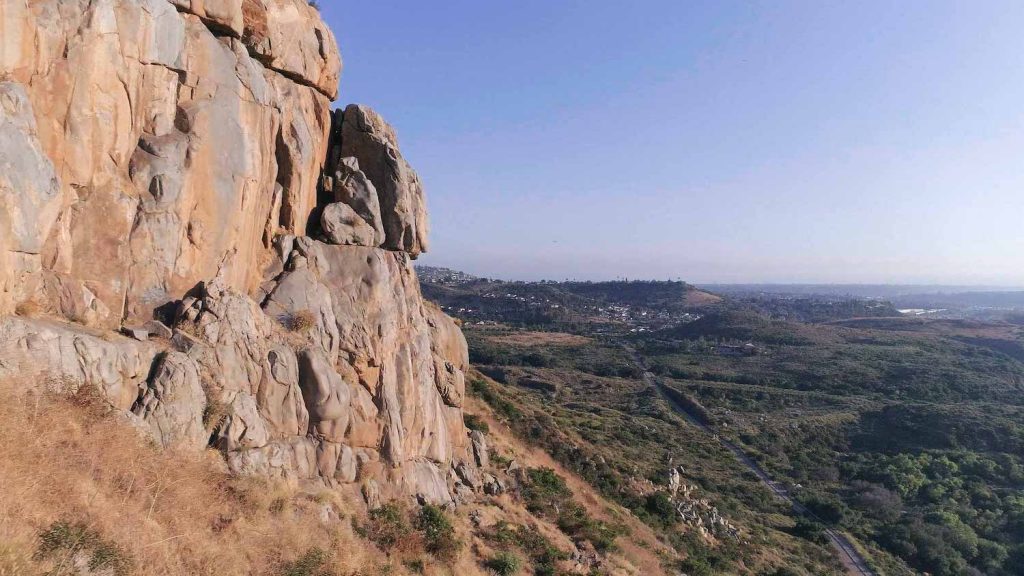
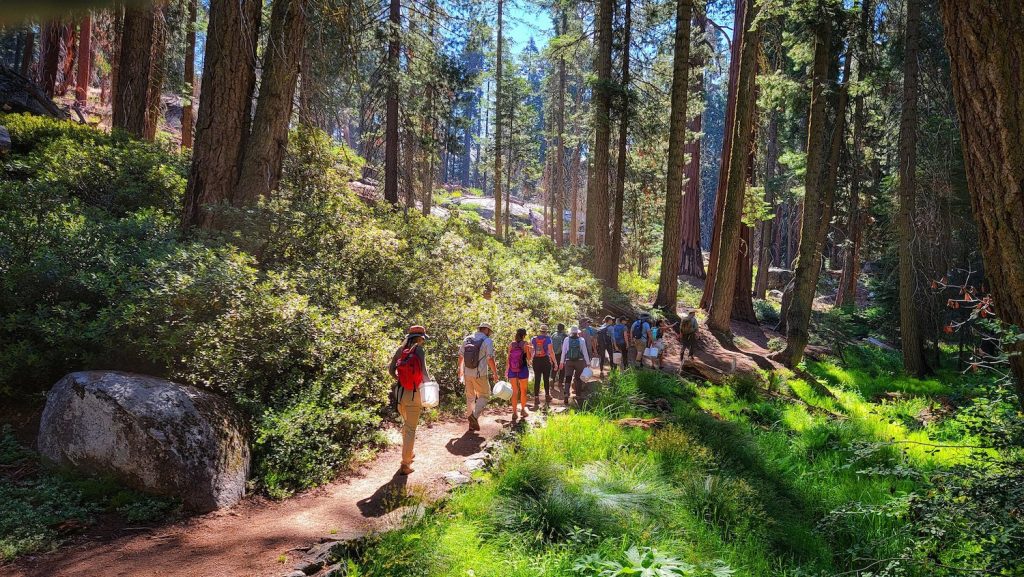
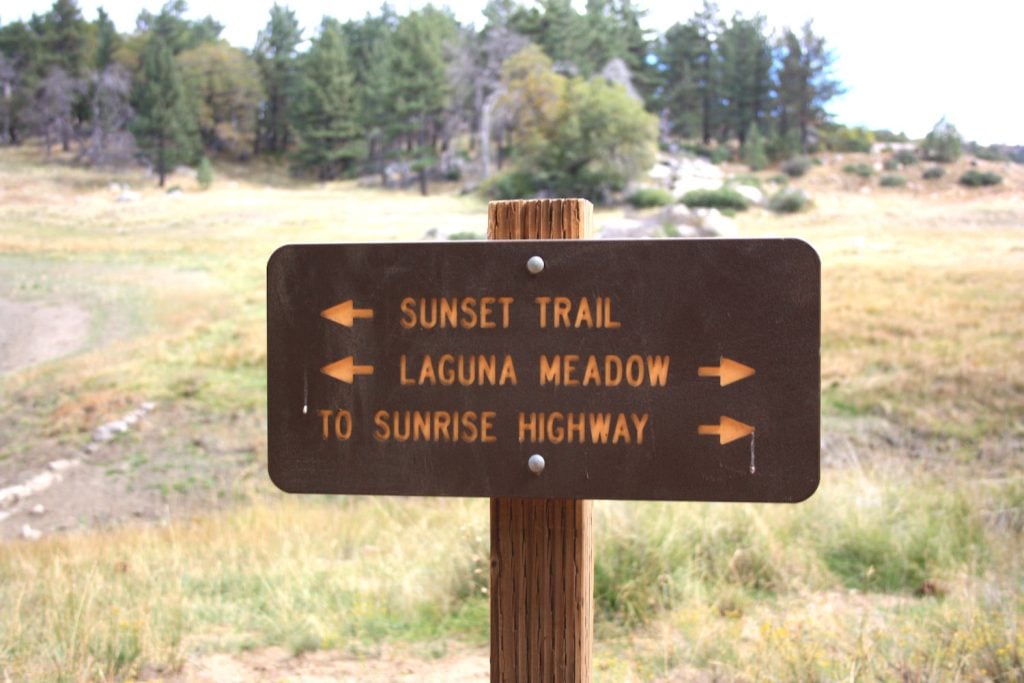
We all know that San Diego is blessed with nearly perfect weather all year long, but there are parts of the region that get too hot to hike in the summer and early fall.
San Diego County’s tallest peak, El Cajon Mountain, is actually closed in August because of extreme summer heat, and even shorter hikes such as Cowles Mountain and Mission Trails can be too challenging, especially for pets and young kids in 80+ degree weather.
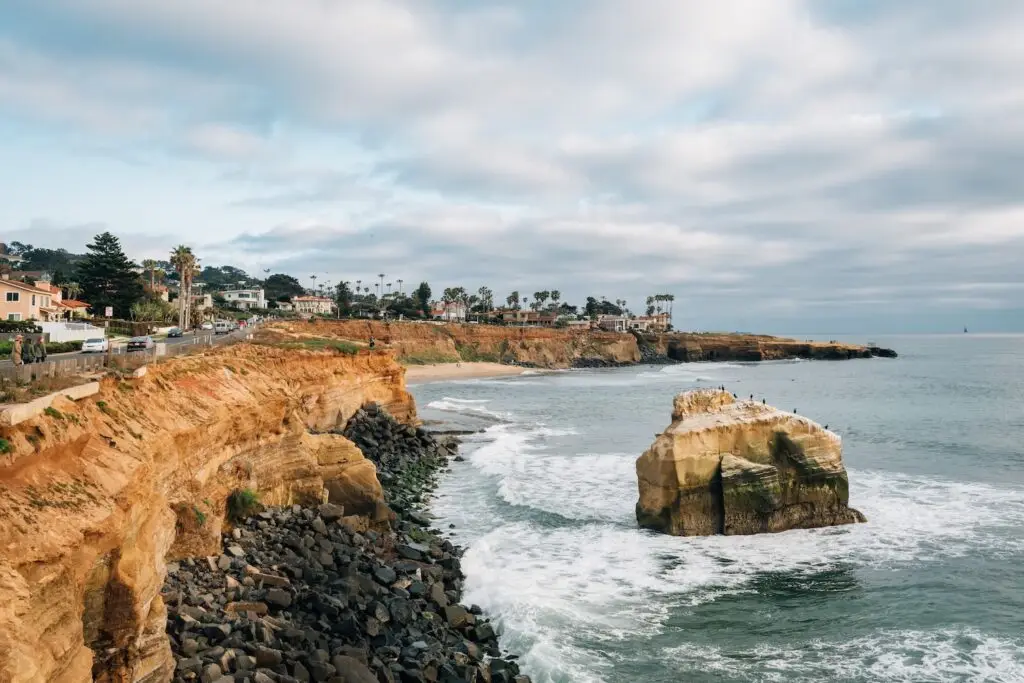
Luckily, there are plenty of coastal hikes and running trails to hit when the temperatures rise. And, as a bonus, they come with great coastal views.
Torrey Pines
Sure, this place is obvious, but it’s also so beautiful and has so many cool coastal breezes that we can’t help but mention it. Plus, if you check the tides and go when the water is low, you can do a fun loop along the beach.
Start at the Torrey Pines Beach parking, head up the big hill to either the Beach or North Fork trailheads, and then head to Flat Rock, where you can descend to the beach. Walk along the sand back to the parking lot.
Distance: 2.3 miles
Difficulty: Moderate
Refuel Spot: The Grill at Torrey Pines for upscale breakfast, sandwiches and salads, or dinner with a view | 11480 N Torrey Pines Rd, La Jolla, CA 92037
San Dieguito Lagoon
For a less crowded (and less pricey parking) option than Torrey Pines, explore the trails in the San Dieguito Lagoon. You don’t get the same sweeping ocean views, but it’s still so picturesque.
Start at the ranger station on Via de la Valle, and follow the Coast to Crest trail to the lookout over the lagoon. Then, if you still have energy, explore other paths such as the Riverpath or Dust Devil Nature Trail.
Distance: 2.4 miles
Difficulty: Easy
Refuel Spot: Viewpoint Brewing for craft beers, tacos and salads, plus views of the lagoon | 2201 San Dieguito Dr Suite D, Del Mar, CA 92014
Aviara Lagoon Trail
Another great kid- and dog-friendly hike with cool breezes is the Lagoon Trail in Carlsbad along the Batiquitos Lagoon. Park on Gabbiano Lane and follow the trail past the nature center.
You can take it all the way to the end, and then loop back to follow the Eucalyptus Trail to add more distance. Along the way, there are scenic views and chances to see a range of birds, from herons to egrets and raptors.
Distance: 3 miles
Difficulty: Easy
Refuel Spot: Beach Plum Kitchen for lemon ricotta pancakes, a breakfast biscuit sandwich, or the pork belly hash | 6971 El Camino Real, Carlsbad
Tijuana Slough National Wildlife Refuge
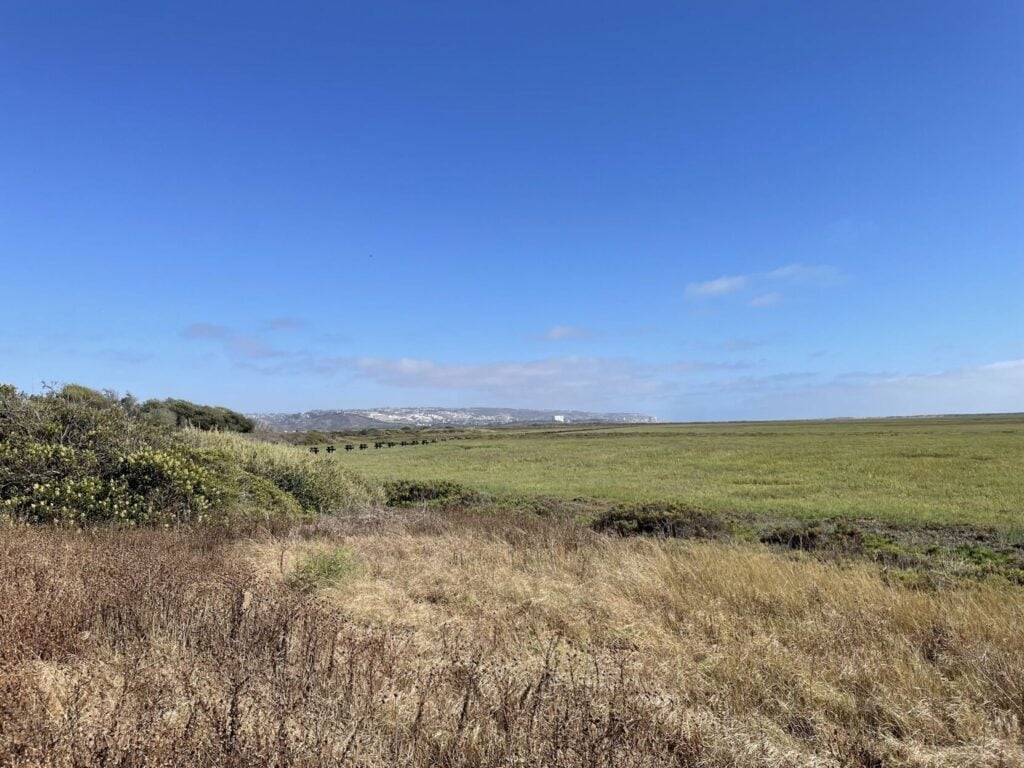
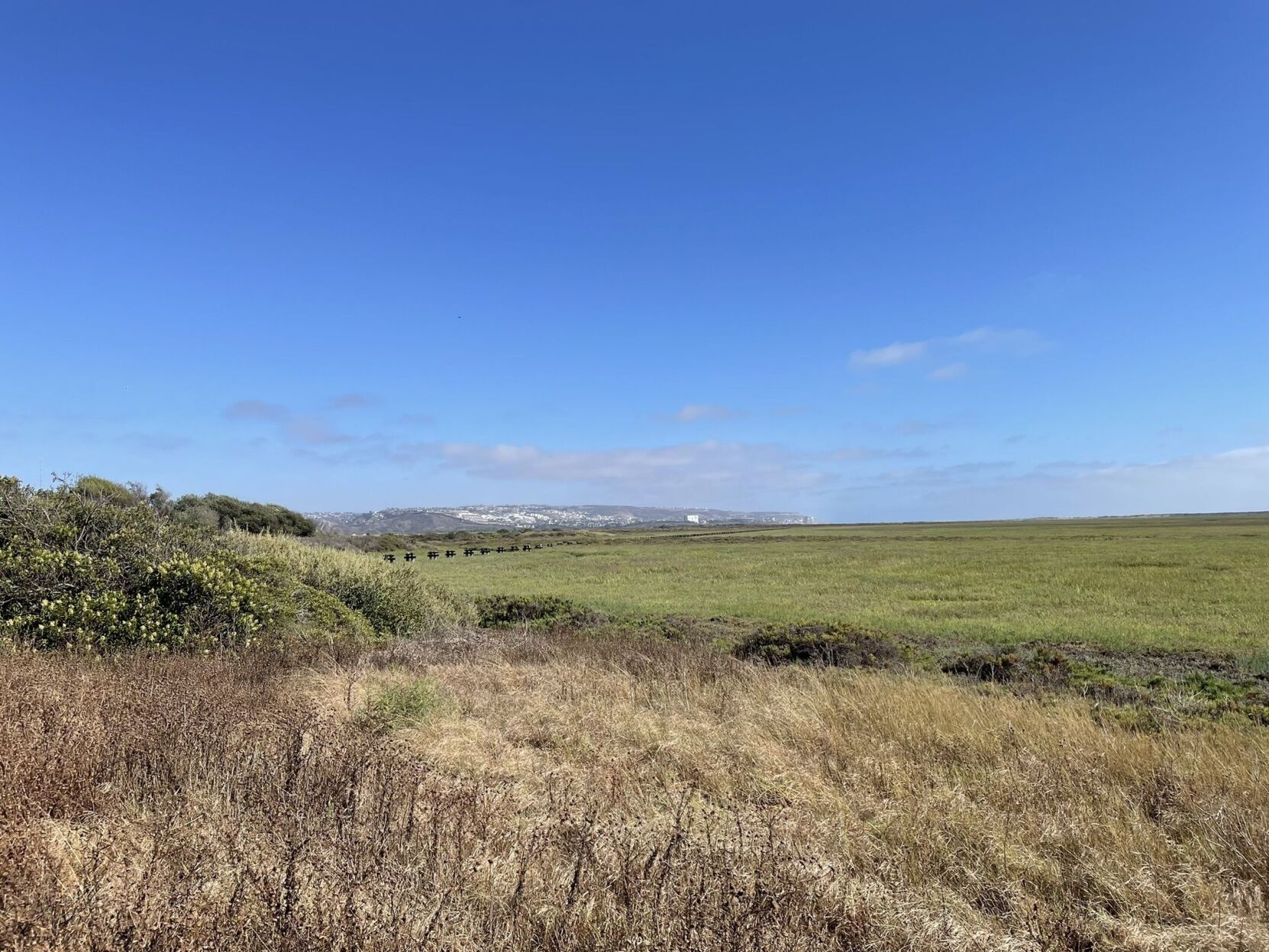
A South Bay option that is right on the ocean and plenty cool has a network of flat, wide dirt trails weaving through beach scrub and over sand dunes. The trails take you through peaceful protected spaces with views of the ocean and Mexico in the distance.
Start at Iris Avenue and Tower Road in Imperial Beach. Follow the River Mouth Trail to the beach overlook, then extend your route on the out-and-back South McCoy Trail.
Distance: 2.5 miles
Difficulty: Easy
Refuel Spot: SEA180 for a seafood brunch, with smoked salmon frittata or shrimp and grits | 800 Seacoast Dr., Imperial Beach
UCSD Run
These paths aren’t right on the ocean, but close enough to the coast to not get too toasty in the summer. There’s a network of relatively new bike paths and pedestrian bridges around the UC San Diego campus, including several protected bike paths fully off the road. Make sure to stop and take an instagram worthy shot of the two-toned blue pedestrian bridge on campus.
Start at the UTC mall and head north on Genessee Ave to the bike path. After you cross I-5, you’ll join up with a bike path that you can follow south until you hit Voigt Dr on the UCSD campus. Take the path through campus and over the pedestrian bridge to join Miramar St and then back to your start.
Distance: 4 miles
Difficulty: Easy
Refuel Spot: True Food Kitchen, Queenstown Bistro, or Great Maple UTC, all in the UTC mall, have plenty of drinks, brunch and lunch options | Various Locations
Silver Strand Bike Path
There’s nowhere closer to the ocean than the Silver Strand path, with beautiful views of the ocean and marshes that stretches as long as you are willing to go. There are spots to stop along the way and take a water break or stand on a dock hanging over the water, so you can enjoy the ocean breeze and take in the sights.
Start near the Coronado Yacht Club and hop on the bike path, which you can follow for a full 24 mile loop, or turn back at any time.
Distance: 24 miles
Difficulty: Hard
Refuel Spot: Get drinks on the patio of the Hotel Del, or for something lower key, get coffee and pastries at The Henry | 1031 Orange Ave, Coronado, CA 92118
Chula Vista Bayfront Sweetwater Bike Path
This bike path in Chula Vista lets you take advantage of cool ocean breezes and skirts the San Diego Bay National Wildlife Refuge while connecting Chula Vista’s Bayside Park with the Living Coast Discovery Center. Check out the pedestrian bridge, plus spots to stop and take in the San Diego Bay.
Start at Bayside Park and go north on the path, then run or ride just the new path, or use it as part of a longer ride along the bay.
Distance: 1.5 miles
Difficulty: Easy
Refuel Spot: Get cold brew, avocado toast, or a drink called “Peanut Butter Cup” at Grindhouse Coffee | 260 1/2 Third Ave, Chula Vista, CA 91910
Marion Bear Park
This wooded path lets you through fields of flowers, and can connect you to the Rose Canyon Open Space Park, a canyon with beautiful views of cliffs and the train tracks below.
Park on Genesee Avenue near Governor Drive and follow the trail either east or west, or do a full loop. If you want more distance, follow the roads through UTC to join up with the Rose Canyon trail.
Distance: 6 miles
Difficulty: Hard
Refuel Spot: Get pizza, salads and sandwiches at Urban Plates | 8707 Villa La Jolla Dr, La Jolla, CA 92037
Claire Trageser has been writing for San Diego Magazine for 10 years. She also is a reporter at KPBS and writes for The New York Times, National Geographic, Marie Claire, Elle and Runner's World.
San Diego Day Hikers is one of the region’s most popular hiking groups on the social gathering website Meetup.com. But it has a pretty interesting past.
“The group started in the 1980s as a monthly hike, usually on the last Saturday, led by a professor from SDSU, and loosely affiliated with the Libertarian Party of San Diego,” says Philip Erdelsky, the group’s current leader. “Announcements were printed in the Libertarian Party newsletter, and also emailed to those who had email.”
Subscribers were mostly students and staff at SDSU, but Erdelsky took over the group in 1993. “I used email for the hike announcements, and in the late 1990s started posting the announcements on the Caltech Alumni server, which appeared on the then-new World Wide Web,” he says.
Fast forward to 2012, and Erdelsky decided to add the group to Meetup.com, calling it San Diego Day Hikers. Today, the group has nearly 22,000 members who join up for multiple hikes across the county every month.
Typically around five to 25 people show up for hikes which are free to join. Erdelsky guides many of the hikes himself, using resources such as Schad’s Afoot & Afield in San Diego county.
Joining a local hiking group is a great way to get to know other people who share similar interests and can even help with finding new routes. Thankfully, there are plenty of hiking groups like San Diego Day Hikers to check out—most of which don’t require any membership or fees.
If you’re looking for a new crew to join, here are more San Diego hiking groups to check out:
Courtesy of Meetup.com
San Diego Day Hikers
This group gathers for hikes throughout the San Diego region with easy to moderate routes. The group usually hikes on the last Saturday of each month, but also has weekday evening excursions occasionally. Recent hikes include a Mission Bay five-mile walk, an urban four-mile hike through Marian Bear Park, and the five-mile Engelmann Oak Loop at Daley Ranch in Escondido.
This group for the UCSD community has a discord channel where users plan hikes and other outings. To join, you must be a member of UCSD, either a student or staff. The group has around 2,850 members, and usually about 20 people turn out for hikes.
Recent hikes include the Santa Margarita River trail, Cowles Mountain, San Clemente Trail and the Potato Chip rock.
Courtesy of San Diego Happy Feet
San Diego Happy Feet
This group on Facebook has around 2,000 members and plans monthly hikes, including big challenges such as El Cajon Mountain. Organizers say the group is very active with regular events. They mostly focus on hiking, but also organize backpacking, camping, snowboarding, skiing, running, cycling, kayaking, paddle boarding, and road trips events. Members can also create their own events and post them to the group.
Recent hikes include El Cajon Mountain, Mt McGinty, and Black Mountain via Nighthawk Trail. Hikes are usually organized on Saturdays and Sundays early morning at 6 a.m., but also weekday shorter evening hikes at 6 pm.
“San Diego Sloth Hiking Team at Mt. Baldy. Started [the] hike at 3:30 a.m. and finished at 3 p.m.! Long day of hiking, laughs, a few curse words and a ton of beautiful views,” one user wrote on TikTok. Other hikes include Kitchen Creek Falls, Cedar Creek Falls in Ramona and Devils Backbone.
Courtesy of the San Diego Natural History Museum
Canyoneer Hikes
For a guided experience, the San Diego Natural History Museum offers free guided hikes throughout the county led by volunteers. Hikes are organized every weekend, but are capped in size, so you need to sign up in advance. Priority registration is given to museum members, but if there’s still space then anyone can sign up.
People often join to explore the canyons near their homes that they’ve always been curious about but were hesitant to explore on their own, according to organizers. They also take treks into the desert to explore in groups.
“I sought the Canyoneers out because I was looking to do more desert hiking, but I didn’t feel comfortable going alone,” said Daniel, one of the Canyoneer leaders, on the group’s website. “It’s easy to get lost, there’s spotty cell phone coverage, I’d think ‘what if I got a flat tire?’ The Canyoneers offered the opportunity to explore new trails that I wouldn’t hike on my own.”
Skills training includes selecting clothing, gear, and equipment; how to use a map and compass; physical conditioning; first aid and safety; food selection and preparation and water filtration; animal encounters; and sanitation. During the overnight outings, participants will have to supply their own equipment.
The course is offered each year from January to May with lectures at 7 p.m. on Tuesday nights in Escondido at San Pasqual High School and in San Diego at the First United Methodist Church – Linder Hall in Mission Valley.
This post contains affiliate links to products and services. We may receive compensation when you click on links.
Claire Trageser has been writing for San Diego Magazine for 10 years. She also is a reporter at KPBS and writes for The New York Times, National Geographic, Marie Claire, Elle and Runner's World.
Ashley Lee had pretty much sworn off dating when a guy she was sort of interested in asked her to go on a hike. “Strictly as friends—because dating is a miserable, awful thing,” she recalls. “I was down because I had not hiked in ages; was more of a yoga girl back then. [I figured I’d] try something new.”
They decided to hike Cowles Mountain in the middle of the day, and, for some reason, Ashley elected not to wear sunscreen. “Long story short, I darn near died on the way up, because yoga shape is not hiking shape,” she says. “He busted out almond Champagne at the top, which was delicious, but I also [almost] died on the way down. I’m a lightweight and dehydration kicked in… I got an epic sunburn… He still gives me a hard time about [it].”
Ashley’s hiking partner, Seung, can still rib her about her sunburn because, well, he’s now her husband. They have three kids together, and Ashley says that, despite the near-death experience, hiking made for a great first date.
“You skip all that formality of sitting at a table interviewing each other and sifting through who this person really is versus what they want you to think,” she reflects. “He seemed like a vaguely responsible and spontaneous guy who was very bright and motivated and spoke his mind.”
She says relationships and marriage are hard, and hiking gives you a better glimpse into how someone handles challenges. “You can kick the tires at the coffee shop and think it’s all great, but you are better served on a hike, where the rubber meets the road,” she emphasizes.
I may be biased, given my love for hiking, running, and generally being outside, but if I were dating now, I’d make all my first dates outdoor treks. I said yes to a first date run back when I lived in Berkeley (I thought I was a good runner, but I still got completely winded when my date took me on a jog up the Fire Trail), and I went on hikes and runs early in my relationship with my now-husband.
They really are good ways to get to know people—and can push you to ramble farther than you would otherwise.
Data from the running app Strava seems to support this notion. Its 2022 Year In Sport report found athletes in pairs went longer in both time and distance than when they were solo.
The company also analyzed all the running and hiking done on Valentine’s Day and found that a good chunk of people celebrated the holiday by exercising as a duo. A fifth of winter activities (skiing, snowboarding, ice skating, and snowshoeing) were done in pairs on February 14 over the last four years, while 14% of walks and hikes and 13% of bike rides were two-person trips.
Courtesy of Outdoor Project
According to Strava, these are the most popular hiking routes for pairs in San Diego County:
If you want something with romantic views, try Sunset Cliffs, Torrey Pines, or Kwaay Paay in Mission Trails (which, bonus, is rarely crowded). Meanwhile, local James Hauser says that when he was dating as a student at UCSD, he had a go-to third date: the La Jolla trail.
“[For] the initial first date, you go somewhere on campus. [The] second date might be sushi or somewhere near campus,” he says. “Then I would do this hike around sunset time where you get to see the beautiful ocean. If I did get the opportunity of having a third date, it’s a good way to get to know someone a little bit more than [I would at] a casual dinner.”
Plus, hiking takes a little longer than a typical dinner and can introduce more physical contact, he adds. “‘I need you to hold my hand, I need you to hold on to me,’” he jokes. “And it’s also just very beautiful. I think it’s one of the prettiest places in San Diego overlooking the cliffs. You have the gliders there going back and forth, and then you end up on the beach, and then you can walk back to campus.”
Hauser would tell his dates to wear comfortable shoes, and says he never had bad experiences. “I would be very encouraging [and say] that the hike wasn’t too difficult and any able-bodied person could do it,” he shares.
But one of these third-date hikes became his last—that’s because Hauser took the stroll with a woman who eventually became his wife.
“Maybe two percent of the reason why we’re married is because of the success of that third date,” he says. “She was skeptical at first. She was an L.A. girl who wasn’t into hiking, and I think I sold her on the fact that it was very pretty and I was bringing her somewhere that she hasn’t been before. It’s a little bit sketchy at times when you have to kind of hold on to someone or hold their hand, and so I got to [give] that additional reassurance—’I’m going to be here for you and support you’—and it went very well.”
Claire Trageser has been writing for San Diego Magazine for 10 years. She also is a reporter at KPBS and writes for The New York Times, National Geographic, Marie Claire, Elle and Runner's World.
It’s February, which means people have probably already made and broken their new year’s resolutions. I promised to myself that I would meditate four times a week and…yeah that hasn’t happened.
But hiking and running are already a staple of my life, and hopefully something that will never go away. And for hikers, either veterans who go out every weekend, or those who are brand new, there’s a pretty easy resolution that you can make and keep this year.
Try a new trail. That’s it.
Instead of going to your usual routes that you’ve already done so many times, or going to the routes that come up highest on Google searches for San Diego hikes, try something literally off the beaten path.
The rewards will be great, I promise. You’ll challenge yourself in a new way—possibly physically—if you try a new trail that’s longer or steeper than your usual routes. And likely mentally, as you navigate a new course that’s unfamiliar to you. And those challenges pay off with fresh soreness in your muscles and fresh perspectives as you take in new sights.
Look, I’ll even make it easy for you. I have suggestions for three new trails that you very likely have not done before.
Courtesy of San Diego Canyonlands
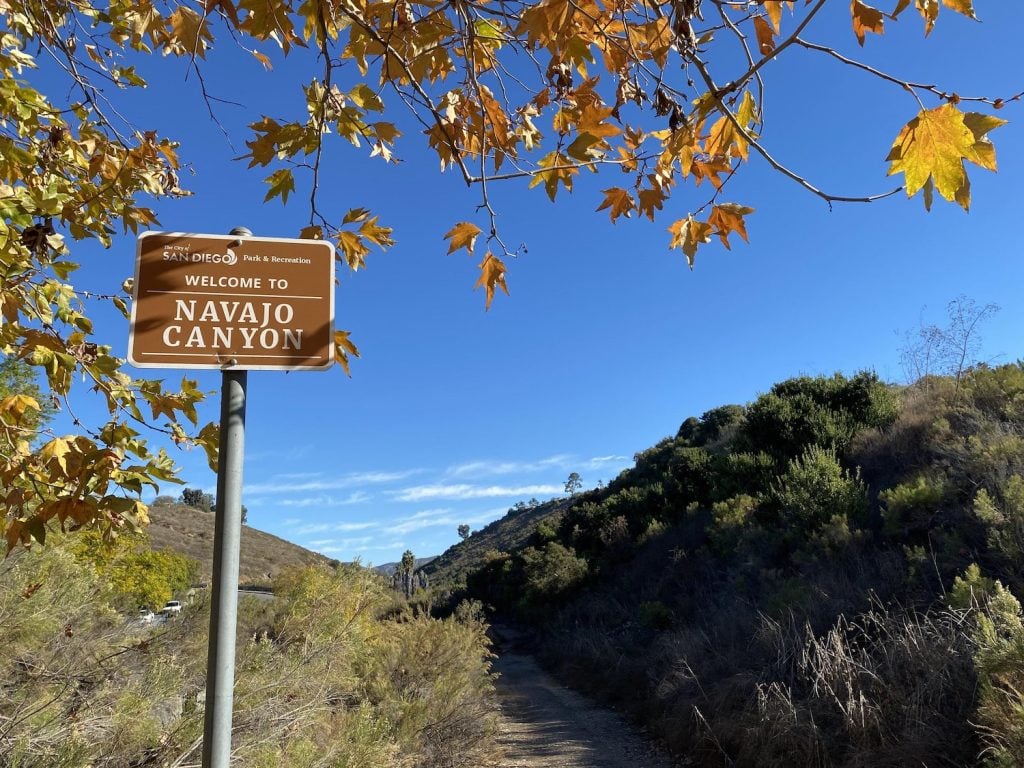
Navajo Canyon Open Space
2 Miles
This little trail tucked into the canyons in the Allied Gardens neighborhood is really a hidden gem. You will feel like you’re miles into the wilderness, even though you’re basically walking through a neighborhood. It’s two miles out-and-back, and you can start it across the street from a playground. Park on Adobe Falls Road and take the trail up to the top.
Courtesy of AllTrails
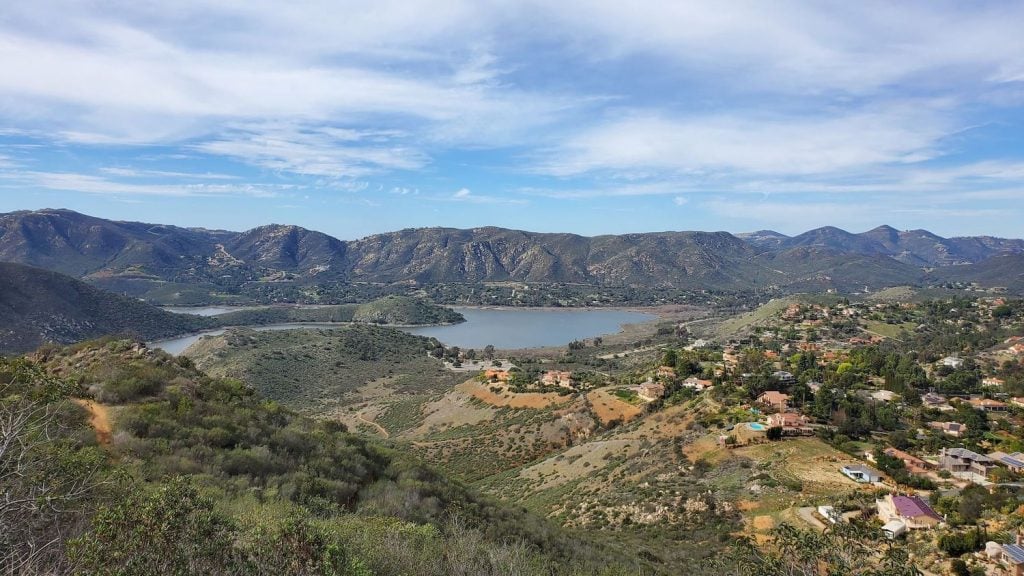
Bernardo Mountain Summit Trail
7 Miles
This is a challenging hike in Escondido that is different from the usual Cowles Mountain/Iron Mountain/Mount Woodson routine. It’s a little more than seven miles out-and-back, with about 900 feet in elevation gain. The difference is the views, since it’s in North County, you don’t get the typical San Diego skylines you see on Cowles. The trail passes under Interstate 15, and takes you past Lake Hodges. It’s part of the Coast to Crest trail system, so you can make your hike even longer if you’re up for it.
Courtesy of Friends of Tecolote Canyon
Tecolote Canyon Trail
6 Miles
A lot of people like to hike Marian Bear Park in the UTC area, and this trail gives a different option. You can make it six miles out-and-back, with only a few short hills—though those hills are pretty steep. It’s a great way to get into trail running, too, for the first time without having to drive way outside the city.
Start at the Tecolote Nature Center at 5180 Tecolote Road off Morena Boulevard. Follow the trail and go left when you reach a junction by the golf course. Keep bearing left to hug the golf course and then follow the trail as it curves right. Stay to the right as you reach a crossing trail at 2.3 miles and continue until you reach Genesee Avenue. There, you can turn around and go back the way you came.
Claire Trageser has been writing for San Diego Magazine for 10 years. She also is a reporter at KPBS and writes for The New York Times, National Geographic, Marie Claire, Elle and Runner's World.
Today’s seniors are more connected than ever, with a renewed focus on retirement as a time of discovery and enriching experiences. The ultimate reward for a retirement well-earned is the wisdom to appreciate it all, and what better place to enjoy that unique perspective than Vi at La Jolla Village, in the heart of San Diego.
All-access pass to good living.
As a Continuing Care Retirement Community (CCRC), Vi provides access to a connected and fulfilling community while making it easy to plan for future care, should the need ever arise. With a care plan in place, residents enjoy greater financial predictability and long-term value, freeing them to focus on making the most out of retirement.
Resort-style amenities at the epicenter of a cultural hub like San Diego offer a retirement experience unlike any other. Paired with exceptional dining, spacious accommodations and dedicated staff, the best of maintenance-free living is all around. And with the introduction of Vista 360 Well-Being, Vi’s panoramic approach to wellness, there are more ways than ever for residents to access it all.
The harmony of mind, body and community.
Courtesy of Vi at La Jolla Village
The key to longevity is striking the right balance in maintaining an active lifestyle with an active mind in a fulfilling community. With newly renovated community spaces and restaurants, Vista brings a variety of opportunities for residents to elevate their well-being through Vi-exclusive “Signature Experiences.”
Vista Enrich takes an evidence-based approach to brain vitality, keeping residents at the forefront of cognitive health through exergaming (exercising + gaming), nutritional plans and informative workshops. It is also home to The Brain Vitality Studio, an innovative facility dedicated to cognitive fitness that has garnered national recognition.
Vista Discover invites residents into stimulating educational experiences, from chef-led cooking demos and guided wine tastings to lectures at local universities and intimate lectures following cultural outings.
While Vista Enrich focuses on brain health and Vista Discover engages residents intellectually, Vista Explore cultivates a sense of adventure through curated travel and local excursions. But broadening one’s horizons doesn’t always require a plane ticket. One recent event brought a taste of the world right to the community: an onsite “jazz cruise” featuring live music and global cuisine served at a series of themed “ports” all within the community’s own ballroom.
“Location, location, location”
Courtesy of Vi at La Jolla Village
One of the biggest perks of life at Vi at La Jolla Village is its proximity to just about everything. With easy access to transportation and local attractions just steps away, residents can explore and engage with their community at their own pace.
“There are trolley and bus stops within a 5-minute walk that will get you to the beach, UCSD Campus, medical appointments, downtown La Jolla or San Diego, et cetera. We rarely use our car,” said resident Tom Yager.
With the best of San Diego just steps away, residents don’t just live in the city, they live within reach of everything that makes it special.
The best of all worlds.
Courtesy of Vi at La Jolla Village
At Vi at La Jolla Village, retirement isn’t a chapter to slow down; it’s an invitation to discover more. Tailored community experiences created by Vista, paired with the vibrant pulse of San Diego just outside the door, mean that residents don’t have to choose between security and adventure, connection and independence. They get all of it.
This is what an all-access pass to good living looks like: the comforts of an elevated lifestyle, a community built for growth and a city made for discovery – all in one place.
To learn more about Vi at La Jolla Village or for details on available floor plans, visit ViatLaJollaVillage.com/SDM.
Most inspirational hiking stories don’t begin with failure, but for local author Sydney Williams, that’s exactly what happened. She was hiking across Catalina Island in 2016, and says “the Trans Catalina trail had it out for me.” In fact, she didn’t finish.
“I didn’t finish it because I was probably close to 60 or 80 pounds heavier than I am today,” says Williams. “It was the hardest thing I’ve ever done in my life physically. And that’s coming from somebody that was a D1 athlete in college and a competitive skydiver for four years.”
After not completing it, she found that she was starting to hate her own body and needed to change her relationship with it. “I just [wanted] to do more […] and not have my body be the thing that got in the way,” Williams says. “When we got back to cell service on the island […] I sent a DM to the Catalina Island Conservancy and said, ‘I’ve had two life changing experiences on this trail. How can I help protect and promote it?’”
The adventure caused her to completely change her relationship with her body which led to authoring a book and writing about her experience. In 2019, Williams launched her debut book: Hiking My Feelings: Stepping Into the Healing Power of Nature. Her story and book now serve as the foundation for the programs offered through her organization Hiking My Feelings which offers 12-week learning seminars, hiking retreats, a private social network, and live shows.
Courtesy of Hiking Your Feelings
On March 9, she’ll launch her second book: Hiking Your Feelings: Blazing a Trail to Self-Love at SXSW before making her way back to SD for a week of bookstore appearances. To celebrate the launch, Williams will head out to Mission Trails Regional Park on Saturday, March 16 for a group hike and stewardship project.
We caught up with Williams to learn how hiking can be used as a tool to help you deal with big and small emotions. Here’s what she had to say:
Courtesy of Hiking Your Feelings
Reframe Your Mindset
When a hike is physically taxing, Williams says it can become a focal point for your mind. “That first hike was so deeply physical that it was all I could think about,” she says. “All I could focus on was the deep physical pain, like the blister that I got a quarter mile into a 38.5 miles trail in a six-day journey.”
During a very hard hike, Williams says to honor your body and inner athlete instead of talking to yourself “like a jerk.”
“I was like, well, this is hard, but so was running stairs in stadiums, so was training for nationals when I was a skydiver. Those things are hard. This is hard. I can do hard things,” says Williams.
She says to ask yourself a question when you begin to doubt yourself: “What’s available to me if I’m not focused exclusively on what my body is or isn’t capable of?” The idea is to reframe your view of yourself and realize that you have completed hard tasks in the past and you can do it again. Trust in your own power.
Courtesy of Hiking Your Feelings
Lean Into Your Feelings
It may seem simple enough, but hiking can be a good way to process your feelings without any distractions around. “[That Catalina hike] was the first time that I actually had time to process the loss of friends and that negative internal soundtrack that we have in our head,” she says.
Williams says we all carry invisible backpacks on our hikes full of trauma, insecurities, and the weight of the highs and lows that we’ve carried throughout our lives. “It’s that thing your gymnastics coach told you about your body when you were in third grade, whatever. Like, those things that stick. They’re all in this backpack,” she says.
Williams suggests using your time on the mountain to feel all the things you’ve been pushing down, allowing yourself to be uncomfortable. Working through your emotions can take time, but being intentional about doing so on the trail can be very beneficial.
Courtesy of Mission Trails Regional Park
Shake It Off, Literally
The actual mechanics behind hiking your feelings starts with simply getting outside. When you start walking and negative things come up, remember that your mind is a powerful muscle. When negative thoughts arise, Williams suggests finding a way to get out that energy physically.
“Instead of [allowing] those thoughts […] and not having anything to do with that energy except shut it down, I [may] rage stomp for 100 meters or something, just up that ridgeline and just expel that anxious energy out through my feet and into the ground.”
It may seem silly at the time, but Williams suggests it can help free your mind and help you move onto the next challenge.
Courtesy of Hiking Your Feelings
Create a Safe Space for Others
“If you need to initiate a difficult conversation, going for a hike and walking single file is really nice. Sometimes eye contact is hard to maintain,” says Williams. “Sometimes you just want to get up and run from whatever table you’re sitting at.”
Hiking can be a safe place for people to connect and have a hard discussion. Being in nature can also invite a more peaceful mindset, so Williams suggests allowing it to be a place where you’re in motion for these types of convos.
“It gives us a way to stay grounded in the things and the topics and the challenges of the human experience in a way that I personally haven’t experienced in any other way, shape or form,” says Williams.
This post contains affiliate links to products and services. We may receive compensation when you click on links.
Claire Trageser has been writing for San Diego Magazine for 10 years. She also is a reporter at KPBS and writes for The New York Times, National Geographic, Marie Claire, Elle and Runner's World.
The San Diego region has some challenging hikes, and one of the toughest is the 11-mile out-and-back trek to climb almost 3,600 feet to reach the top of El Cajon Mountain. The views all along the way are sensational, and the challenge of reaching the top is extremely rewarding. But it’s not a hike you should attempt without a fair amount of preparation.
I could go on. For all of these fantastic but challenging hikes, they require some training and a solid fitness base.
To help those looking to do some of these more challenging treks, we asked expert Gordon Janow, director of programs and founder of Alpine Ascents about the best workouts to get your body ready for these hikes.
“We guide technical peaks, mountaineering around the world, help people climb the highest mountain on each continent and run schools and summit climbs in the Cascades, Mount Baker, Mount Shuksan and Mount Rainier,” says Janow. “My background is as a Himalayan historian and logistics expert. I run the company and also work with people in terms of getting fit or training for mountaineering expeditions.”
None of the day trip 10-mile expeditions listed here compare to climbing Mount Rainier, but Janow says they do still take training. He laid out his best advice. Here are his fitness tips on the best workouts to help you get ready for hikes over 10 miles.
Courtesy of the U.S. Forest Service
Mimic the Climb
The guiding principle to training for hikes is sports-specific training, or doing something that’s as close to the sport as you can to get ready for it as one of the elements, Janow says. He recommends three days in the gym of using a treadmill or step mill (like an escalator that helps you continuously climb stairs, not a stair climbing machine) and then a hike on the weekend to build up endurance.
Gym sessions should be around 45 minutes with an emphasis on increasing your speed. “One misconception people have is like, ‘Oh, I’m slow but I can go all day.’ But if you’re hiking for 11 hours, your body is still working for 11 hours. So you want to achieve a certain pace,” Janow says.
You don’t want what would normally be a six-hour hike to take 12 hours, because that’s too much wear on your body, he says. So before you go out, you can work on boosting your speed with interval training on the treadmill.
Interval Training on the Treadmill
The goal for hiking at a good pace is usually 1,000-vertical feet per hour, Janow says. His training plans ask you to vary your incline from 5 percent to 15 percent, and then he says you can do intervals to build your speed. This could mean walking two minutes at a slower pace, then one-minute at 3 mph, and repeat. That way, you can build your speed over time.
Train on a Step Mill
You can also use the same method to pick up your pace on a step mill, going faster for one minute and slower for two minutes until you build up speed.
“There’s benchmarks, like being able to ascend 1,000-vertical feet per hour with a certain pack weight,” Janow says. “Each trip has a different pack weight. So you would prepare differently depending on the trip that you’re going on.”
Try to climb at your anaerobic threshold, Janow says. “An easy way to determine [this threshold] is that if you can be next to somebody and kind of yell out a few words, but you can’t hold a conversation,” he says, then you’ll know you’re in the right spot. “But you also shouldn’t be entirely out of breath.”
“What we’re trying to do is to increase this anaerobic threshold. It’s not about going as hard as you can for certain periods of time,” he says. “I want your anaerobic threshold to be something that’s pretty close to an all-day pace where you’re walking and I can talk to you.”
Strength Training
In addition to cardio, one fitness tip to remember is weight lifting to build up your strength, says Janow. That includes squats and lunges to strengthen your legs and glutes, but don’t forget about your back and shoulders so that you can carry supplies.
“You’re going to be like, ‘My God, the backpack on my shoulders is killing me.’ Or, ‘My hips really hurt.’ Or, ‘My calves, my thighs…’” he says. “If it’s your thighs that are hurting, let’s say, then you start working weights there doing squats or box steps or things like that.”
Weekend Hikes
There’s no substitution for actual time on the trails, so Janow says whenever possible, get out and do some shorter hikes to build up your mileage. Do shorter climbs with the pack you’d carry on the longer trek and get used to the weight and pace.
Claire Trageser has been writing for San Diego Magazine for 10 years. She also is a reporter at KPBS and writes for The New York Times, National Geographic, Marie Claire, Elle and Runner's World.
NewBridge School is San Diego’s only school dedicated to the education of students with dyslexia and related learning profiles. For 30 years we have successfully served students with dyslexia, dysgraphia, dyscalculia, receptive/expressive language disorders, ADHD, executive functioning and memory deficits. Students transition successfully into academically rigorous high schools and colleges across the country. Why NewBridge? Training, training, training (plus intensive individualization, and comprehensive program design). All teachers are trained and retrained biennially in Orton-Gillingham, the only approach proven to remediate dyslexia based on Science of Reading research, and complete a year-long training program. Every aspect of our program is designed around our students’ learning styles and needs. Every class is taught by a highly-trained expert, and our Speech/Language and Occupational Therapy teams embed throughout the day. Our multisensory, multi-tiered math program has been developed in conjunction with sister schools and experts across the country. Don’t wait—early intervention is magic!