Downtown San Diego is at a crossroads. “The city has a golden opportunity to answer a really important question, which really is the question that every major city in America is wrestling
with: What is a downtown for in this post-Covid, remote work era?” says Grant Oliphant, CEO of The Conrad Prebys Foundation. “Downtowns are hugely important to how entire regions are perceived. And because of their role as a hub for a cultural life, they can be a real center of creativity and dynamism.”
That golden opportunity took root in 2022, when Mayor Todd Gloria proposed the Civic Center Revitalization effort. The idea was to lease or sell the downtown Civic Center’s city-owned buildings to a developer and use the money to fund a new City Hall, while adding housing and potentially businesses and public space to the area.
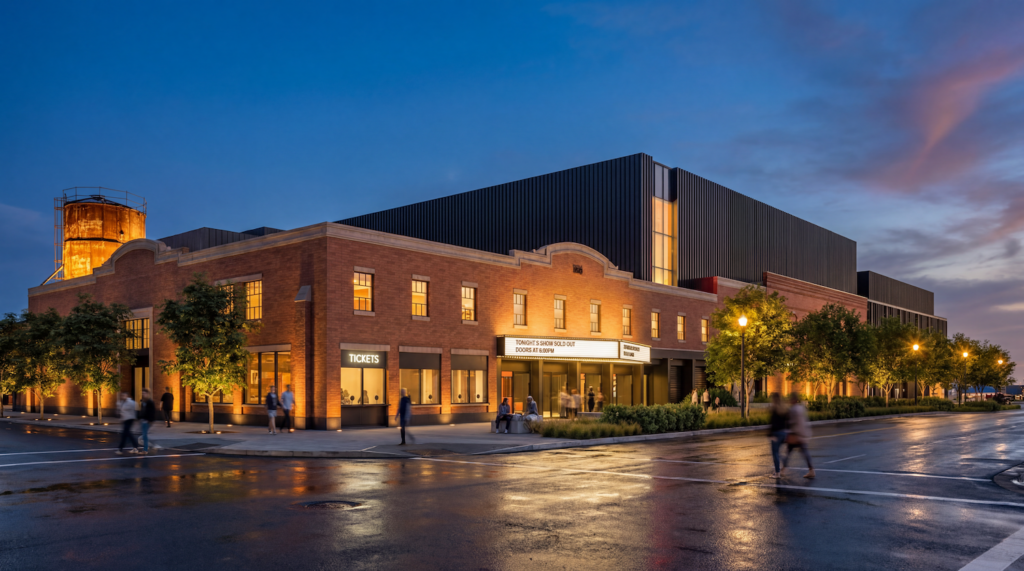
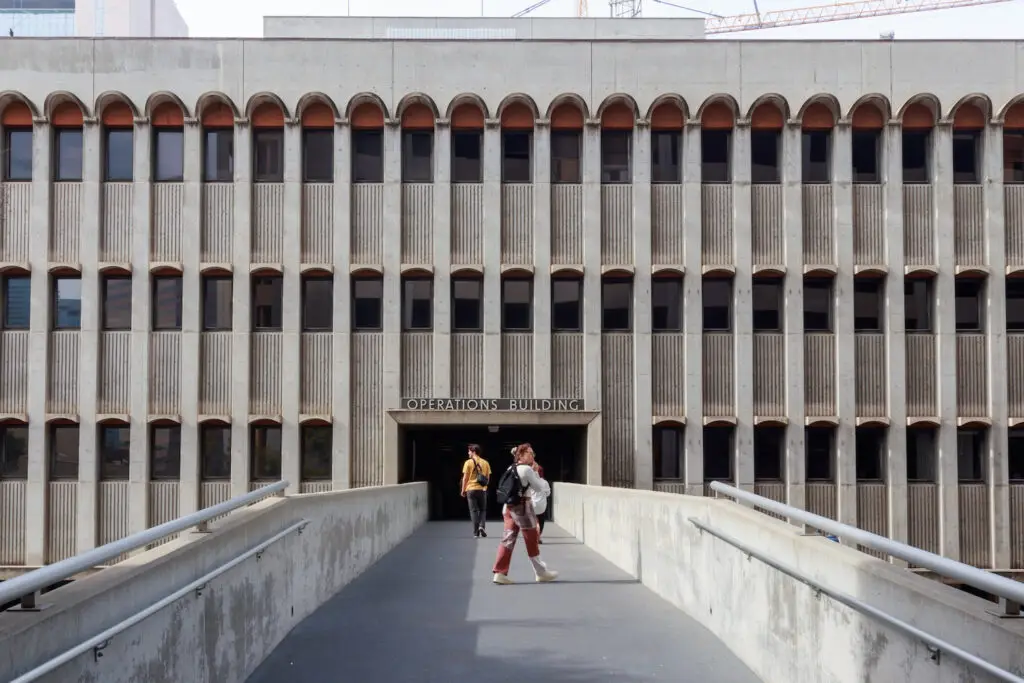
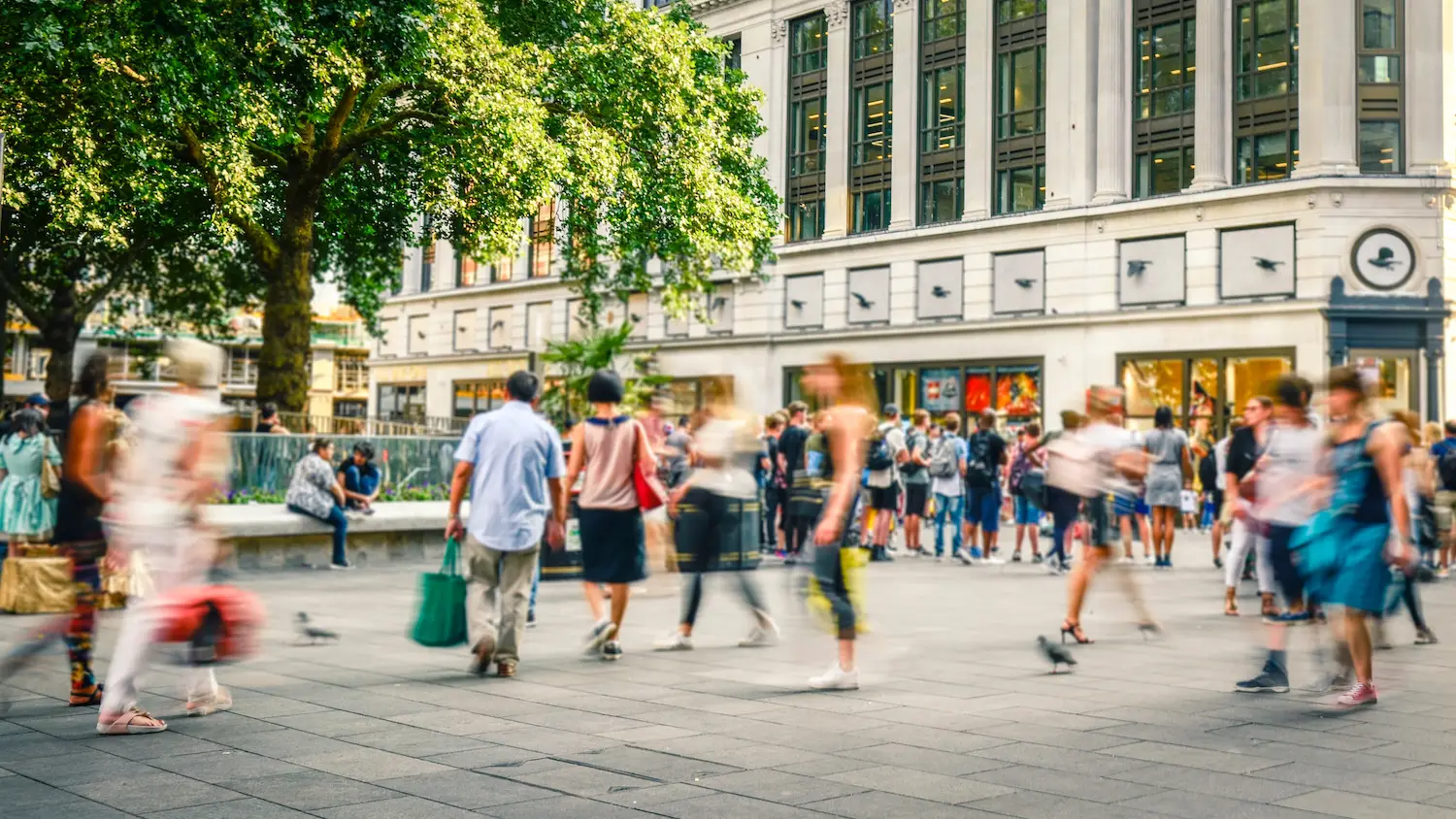
Photo Credit: Alexander Pai The Civic Center Revitalization effort could make downtown more vibrant, walkable, and livable—or it could create “dead” blocks full of traffic, not pedestrians.
No developers were interested. So, a few big players— the Downtown San Diego Partnership and the urban planning firm U3 Advisors—got together to draw up a blueprint for what the space could become. Oliphant’s charitable organization, the Prebys Foundation, is contributing $300,000 to the visioning work. The nonprofit got involved to preserve the San Diego Civic Theatre and “explore how the city could integrate culture in a reimagining of downtown,” Oliphant says.
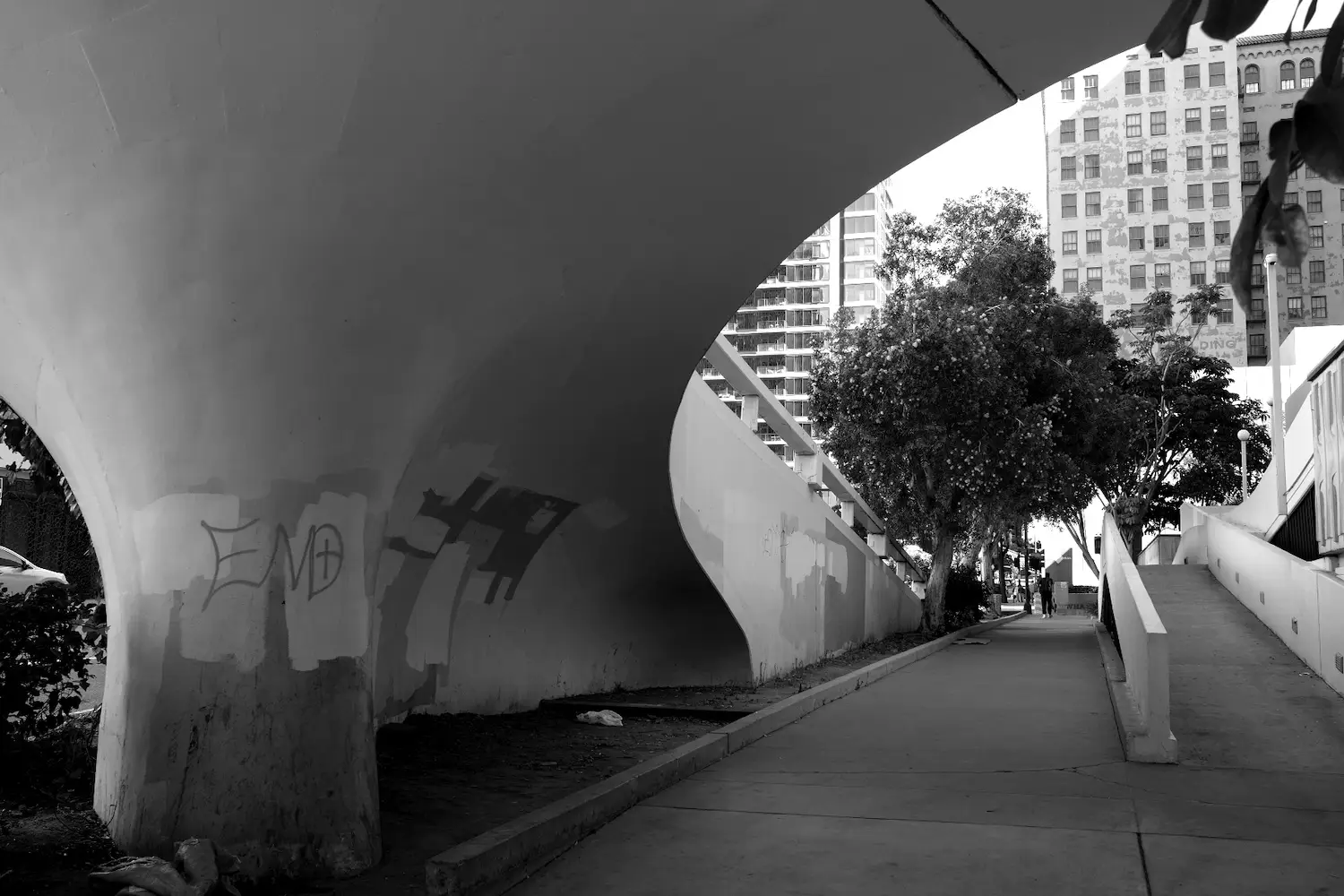
For Oliphant, that starts with a Civic Center that doesn’t stop you in your tracks—because in its current iteration, the center is a physical blockade in downtown, completely separating the east and west sides. “It’s an extraordinarily bad experience,” Oliphant says. “And it, in many ways, communicates all the wrong messages about what an incredible place San Diego is.”
Photo Credit: Alexander Pai
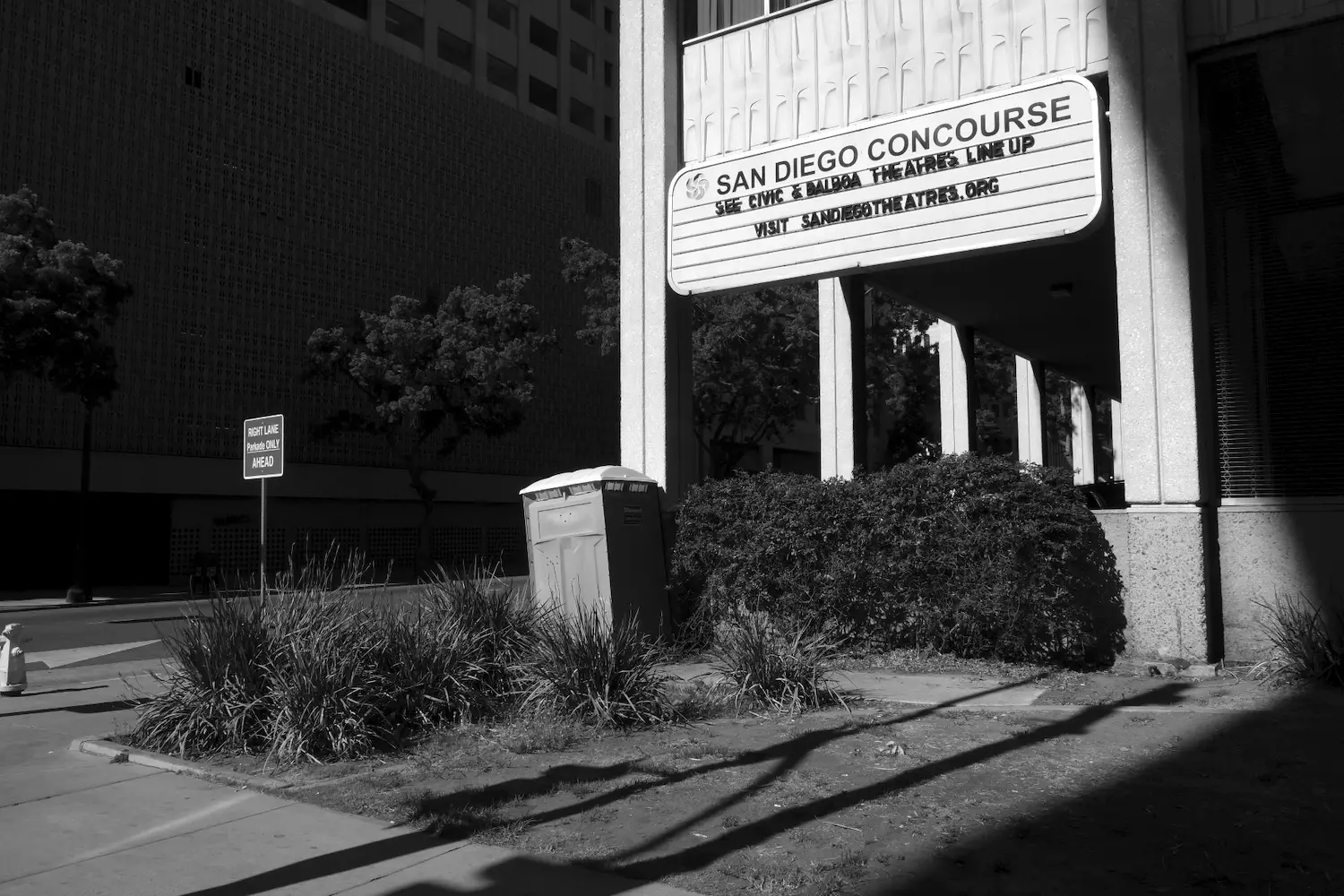
The Civic Center covers four blocks between A Street and C Street and First Avenue and Third Avenue, including buildings such as City Hall, an office tower, Golden Hall, and the Civic Theatre. The layout and many of the buildings were designed in the 1960s—a time when cars were king, prioritized above everything, including pedestrians, says Megan Groth, an urbanist, architect, and author of the local guidebook Places We Love: San Diego Tijuana.
The center’s layout reflects this vehicle-centric mindset. “One of the most architecturally striking buildings at the Civic Center is the parking garage, designed by Hal Sadler,” Groth explains. “And the original design had B Street running through the site,” though it was later closed off.
Now, almost everyone agrees Civic Center needs a makeover—yet opinions differ on what it should look like.
And it’s possible the area won’t get a facelift anytime soon. After Measure E, which would have increased sales taxes in San Diego, failed in November 2024, Gloria announced that the revitalization of Civic Center is on hold—despite the fact that the city is contributing very little in funding.
Mixed-Use Spaces
The major players leading the Civic Center Revitalization effort say they aren’t yet ready to share the grand concept that could shape the future of downtown. They have a wishlist, though.
An original visioning document for the Civic Center Redevelopment, authored by a panel of community leaders and architects in 2022, calls for a mixed-use area that “serve[s] the needs of residents, workers, and visitors to ensure the area is active and vibrant. The space should be holistic and cohesive with streets, landscaping, amenities, office space, and residential mixed into a pleasing multi-purpose urban core.”
Groth believes that initial vision “is a thoughtful, well-informed, and achievable overview of what our Civic Center can and should be in the future. The key now is for the city to design the process to achieve these goals,” she says. It is absolutely within reach, and there are countless examples from other cities that we can draw on—not to mention people within our city who can help get this done in the equitable and collaborative way that this visioning document demands.”
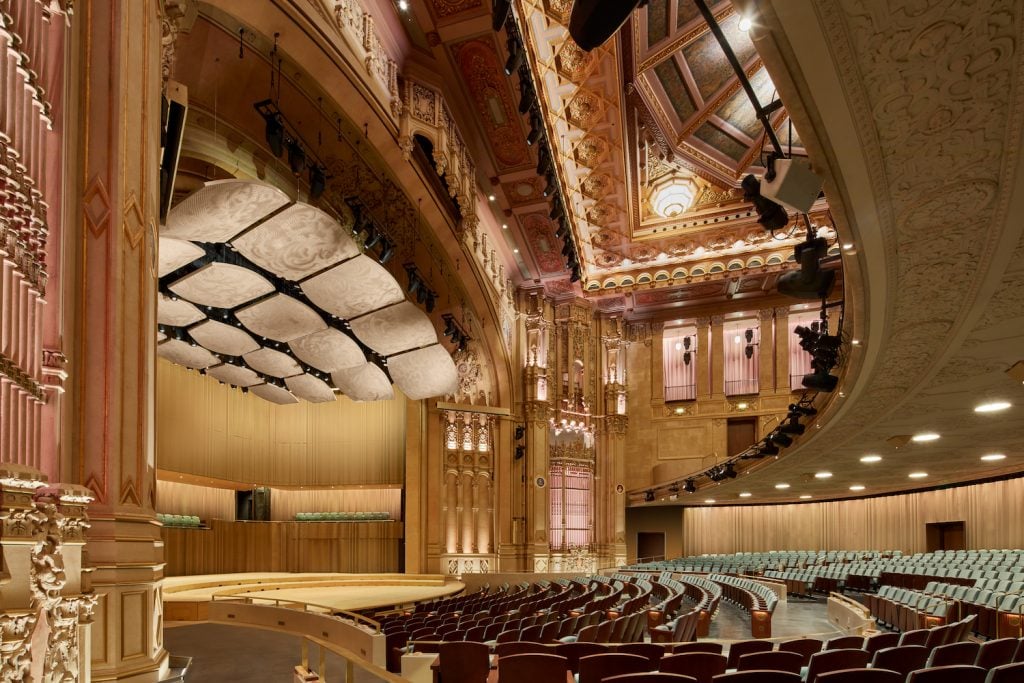
With the Civic Theatre onsite and the newly rehabilitated venue for the San Diego Symphony nearby, the area already has anchors for arts and culture, and Nathan Bishop, senior director of economic development at the Downtown San Diego Partnership, wants to add housing, retail, and an outdoor space that would be inviting to the public.
“I think that we will continue to see … more of a tilt toward experiential activities [that encourage tourism],” he says.
A Greener Downtown
Some of those “experiential” spaces should be parks and outdoor activities, Bishop continues. “We have this amazing weather,” he adds. “We should have more activated rooftops than anywhere else in the country. We should have great park spaces, a lot of places … to [enjoy] that indoor-outdoor nature that really sets us apart.”
Rob Quigley, a 40-year downtown resident and longtime San Diego architect who designed the Central Library, isn’t involved with the Civic Center Revitalization project, but his dreams for downtown also include more nature. He is working with the group San Diego Commons on “Green the Gap,” an initiative that would better connect Balboa Park with the urban center to give downtown “a huge and contiguous green space,” he says.
Beyond that, he argues, there should be parks and other greenery sprinkled throughout downtown. He recently visited London, and as he strolled through the city, he was struck by the way its layout prioritizes green space.
“It just makes living there delightful, even though it’s this massive, dense city,” he says. “If I was a dictator for downtown, I would mandate that every two blocks, there has to be some green space.”
More Infrastructure and Offices
And, given his way, Quigley would ensure that there were plenty of office workers around to enjoy all those parks.
“You’ve got to have places to work downtown, or else downtown becomes a bedroom community for people that work elsewhere,” he says. “That’s the opposite of what a vibrant downtown is. It’s an issue and a problem that’s going to grow in magnitude.” As of August 2024, downtown’s office vacancy rate was at a historic high of just over 25 percent, according to a report from CoStar.
Those who do live in the area need more public infrastructure, like parks, schools, and transportation to connect downtown with other parts of the city, Groth adds. “We focus so much on units of housing that we have neglected the quality of the public realm and all the other things that support housing,” she says.
Say No to Superblocks
Quigley also believes that a successful downtown requires a diverse array of small businesses, creating a pedestrian experience like those tourists eagerly flock to in Little Italy and the Gaslamp. However, “what’s happening all over downtown is that developers consolidate all those small lots into a full city block and develop one mega project called a superblock,” he says. “So, instead of having the fine grain of multiple buildings on a block, like in the Gaslamp, you end up with these giant block-by-block projects.”
He would like the city to institute a zoning rule that requires at least four development entities on any city block.
Because of the city’s effort to enlist one developer to conceptualize the entire space, Quigley worries that the Civic Center redesign set off on the wrong foot. “You want to hire professionals that understand civic architecture and public planning and not developers,” he says. “Developers don’t get that and are not interested in maximizing the public good—they’re interested in maximizing profit.”
Instead, he advocates for a public process. When he was working on plans for the Central Library, for example, he hosted a series of workshops to gather input.
“Developers don’t work like that,” he says. “It’s not in their DNA.”
However, because the effort to sell to a developer failed, Oliphant says it’s now “wide open” how the space could be divided. “You could imagine a single developer taking it on, but more likely, it would be a series of developers interested in various aspects,” he adds.
And Bishop asserts that the U3 consultants running the visioning process are well-versed in public-private partnerships. They know how to bring the two sectors together and “make them thrive,” he says.
Photo Credit: Peter Contreras
A Better Vision
Creating a successful Civic Center—and, beyond that, a downtown that people want to spend time in—doesn’t just happen by accident, Groth says. She points out almost every other major city has a design commission of some kind that helps intentionally plan and envision urban spaces that are functional and appealing.
Groth believes San Diego needs such a commission, one that would review projects not just on the design of the building, but “actually how it fits within the streetscape and how it would relate to other buildings and the whole urban environment. Right now, our development approach to housing is to make it as easy for developers as possible, which on one hand produces housing, but doesn’t necessarily produce the housing we want or need,” she says. “We are outsourcing the design of our city to private entities, basically. And we can do something about that. We are just choosing, as a city, not to.”
Meanwhile, the Civic Center Revitalization is currently on ice, waiting for the city’s budget to recover.
“Once the city is back in a position where it can get moving again and feels comfortable focusing on this again, we would then get into the process of really designing actual projects and re-engaging the public around that,” Oliphant says.
Groth hopes that eventual progress is in service to the community as a whole. “Our city government prefers handing over large amounts of land to one master developer without any public value strings attached,” she adds. “It is a faster, cleaner transaction and doesn’t require the city to have any in-house development experts to manage the project. But this is an opportunity to do something different, if we are able to think differently.”
Claire Trageser has been writing for San Diego Magazine for 10 years. She also is a reporter at KPBS and writes for The New York Times, National Geographic, Marie Claire, Elle and Runner's World.
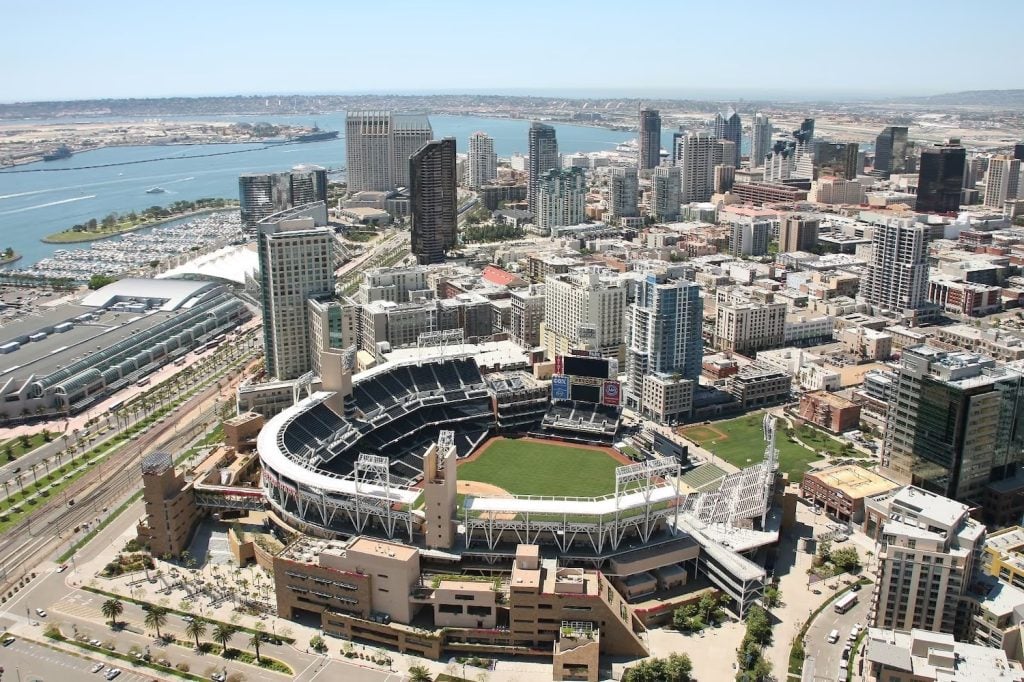
Sandwiched between Petco Park and Balboa Park, East Village is the largest downtown neighborhood in San Diego at a staggering 130 blocks. This once-ignored warehouse district is now home to boundless urban attractions, locally owned shops, and dynamic eats.
Here is everything to check out while exploring this cultural hub:
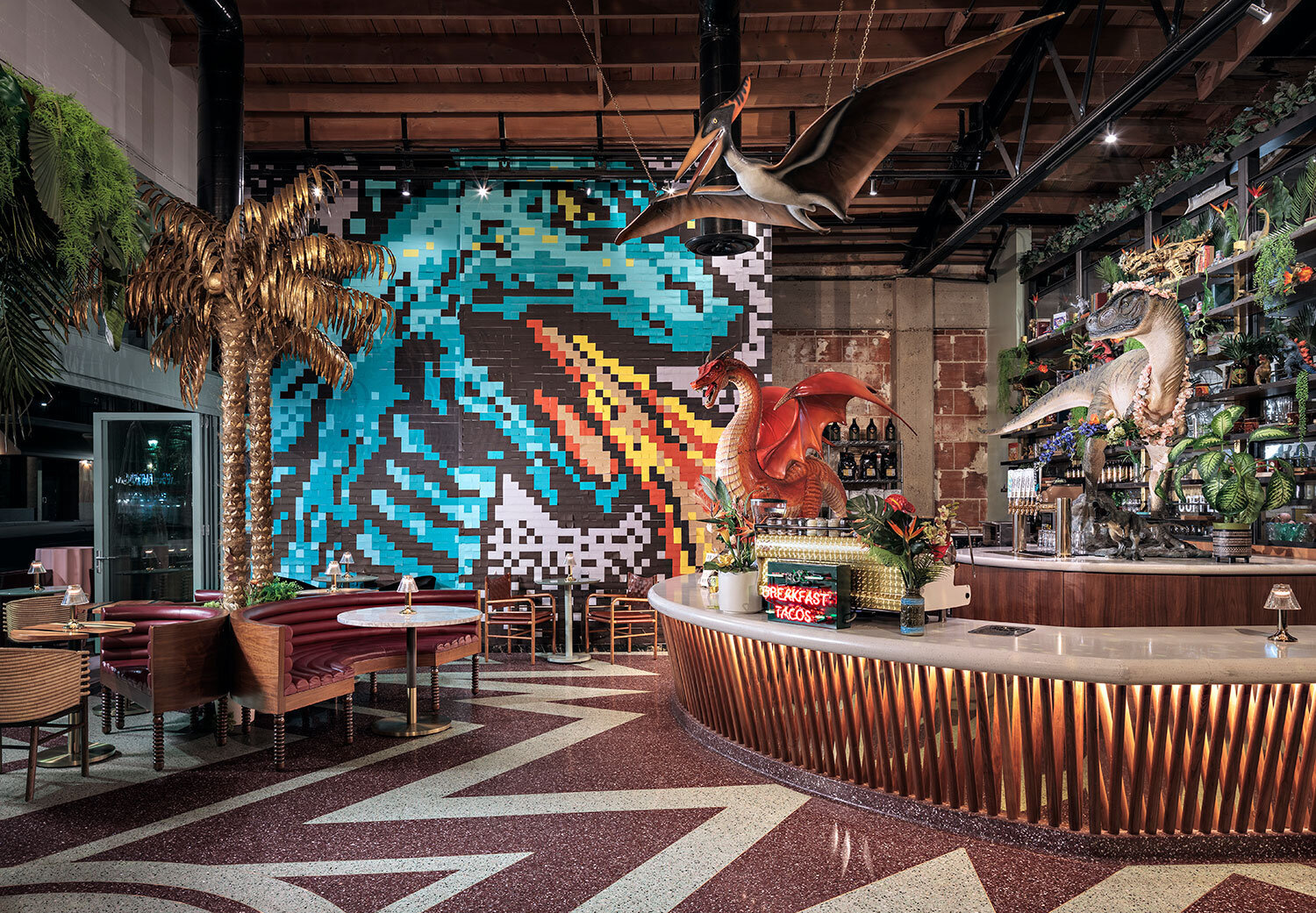
Sip, devour, or savor next to the most unexpected collab of the century: Ronald Mcdonald and a fire-breathing dragon holding a sign declaring, “No breakfast tacos.” Don’t be frightened by the jarring décor featuring a golden disco ball, beachy vintage touches, and lots of dinosaurs—the menu of coffee, cocktails, and brunch bites will make you grateful you stepped foot into a mini Jurassic World.
631 9th Avenue
Bay City Brewing
Downtown offers a seemingly endless lineup of rooftop bars and restaurants all competing for who is the best. Bay City Brewing throws its hat in the ring with crazy happy hour specials: 50 percent off drinks Monday through Thursday from 3 to 5 p.m. and 50 percent off your entire tab Friday from 3 to 5 p.m. Why choose between pulled pork sliders, baked wings, or poblano mac n’ cheese when you could order all three without breaking the bank?
627 8th Avenue
Cowboy Star
Ready to question every vegetarian’s life choices? Head to Cowboy Star, where the open kitchen allows patrons to peek in on the chefs as they slice filet mignon, wood-fire elk, sear scallops, and drizzle on classic steakhouse sauces like bernaise and creamy horseradish.
640 10th Avenue
Lola 55
Dine at Lola 55 for a more casual Mexican vibe and cheap eats with loads of flavor. Tacos are the star of the show here, from crispy fried fish and mole chicken to pork belly al pastor and tender carnitas.
1290 F Street
The Mission
The Mission ramps up its simple and hearty bistro dishes with artful plating. Head in for breakfast or lunch plates like lemon curd pancakes, sweet corn tamales, and tortilla soup, plus entire menus dedicated to vegan and gluten-free eaters.
1250 J Street
Monzù Fresh Pasta
Dreaming of traveling to Italy to eat fresh pasta for breakfast, lunch, dinner, and dessert? If a European escape isn’t in the cards in the near future, jet to Monzù instead, where husband-wife team Aldo de Dominicis Rotondi and Serena Romano bring Italy to the East Village with time-tested recipes for handmade pasta.
455 10th Avenue
Sovereign Modern Thai Cuisine
Landing a spot on the Michelin Guide three years running, as well as a visit from Food Network’s Diners, Drive-ins & Dives, Sovereign is serving up some of the best Thai food in San Diego. The restaurant incorporates techniques from Laos and Cambodia to create dishes like spicy fermented pork sausage, coconut curry noodles, and crispy duck confit.
1460 J Street
Cafe de L’Opera
Legend says you can smell this French bakery’s baked goods throughout the East Village. Set your alarm and roll up at opening time (7 a.m.) to get your hands on croissants and pastries fresh from the oven. The cafe also serves breakfast and lunch staples like sandwiches and quiche.
910 J Street
Storyhouse Spirits
Storyhouse Spirits and I have one thing in common: the love of gabbing with friends, preferably with a delicious, fruity cocktail in hand. You’ll find small-batch spirits distilled in-house here, which enliven mixes like the Murder on the Dancefloor, made with beet-infused gin and pineapple run. Storyhouse offers food for humans and pets, too.
1220 J Street
Basic Bar & Pizza
Housed in a converted 1912 warehouse, Basic Bar & Pizza holds court as one of the only late-night eateries in downtown. By day, this restaurant serves pizza for visitors of all ages. As soon as the sun sets, it oversees a booming nightlife scene with art shows, private events, and some of San Diego’s hottest DJs.
410 10th Avenue
Things to Do in East Village San Diego
Petco Park
The arrival of Petco Park in 2004 revolutionized the East Village, drawing the Padres, their fans, and many of the businesses that now serve them to the area. The venue (which also hosts concerts and other events) has one of the best stadium food situations in the country, with Puesto, Din Tai Fung, Grand Ole BBQ, and Hodad’s all slinging snacks here.
100 Park Boulevard
Quartyard
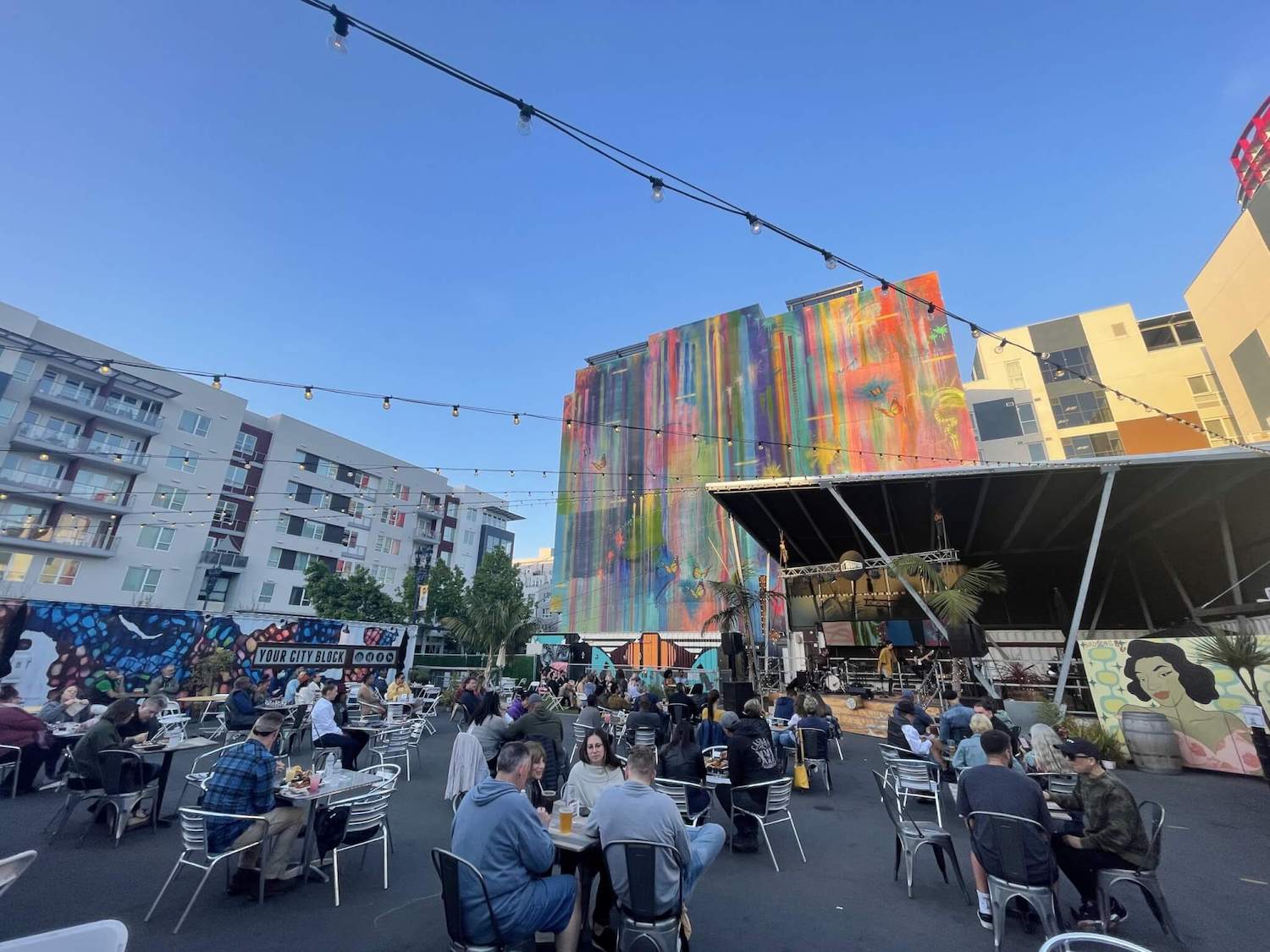
The people behind Quartyard decided to counter downtown’s dearth of backyards by building one for all of San Diego. This event venue and urban park constructed from repurposed shipping containers holds cultural events, outdoor concerts, street markets, and community activities.
1301 Market Street
East Village Tavern + Bowl
Since the dawn of time, families, friends, lovers, and enemies have been brought together (or torn apart) by rolling a ball to try and knock over various objects—a sport otherwise known as bowling. This modernized 12-lane alley is a hot spot where San Diegans come to bowl, eat, drink, and watch sports any day of the week.
930 Market Street
Pinch
Get up close and personal with some wet clay to create a unique earthen cup that is sure to get visitors asking “Where did you get this?” the second you serve them a drink in it. Pinch’s intimate ceramics classes, taught by one of four instructors, are designed to allow you to move at your own pace.
937 E Street
Fault Line Park
This fun-sized park in the East Village features a kids’ playground and a few rounded sculptures that look like the love children of the spheres outside Target and The Bean in Chicago’s Millennium Park. Relax in the succulent garden here or walk along the paths that follow the curve of the Rose Canyon Fault system.
1433 Island Avenue
San Diego Central Library
The San Diego Central Library houses a 2.6-million-piece collection of books, films, magazines, baseball cards, and other items over nine stories. The massive, domed building that serves as the main branch of the San Diego public library system is perfect for studying, browsing, and quietly hanging out.
Tucked inside the San Diego Central Library, this boutique shopping hub vends trinkets, doohickeys, and gifts galore. The best part of it all? You won’t feel an ounce of guilt for balling out on candles, pins, stickers, soaps, and, of course, books, because every penny goes right back towards the San Diego Library Foundation.
330 Park Boulevard
Wotown Vintage
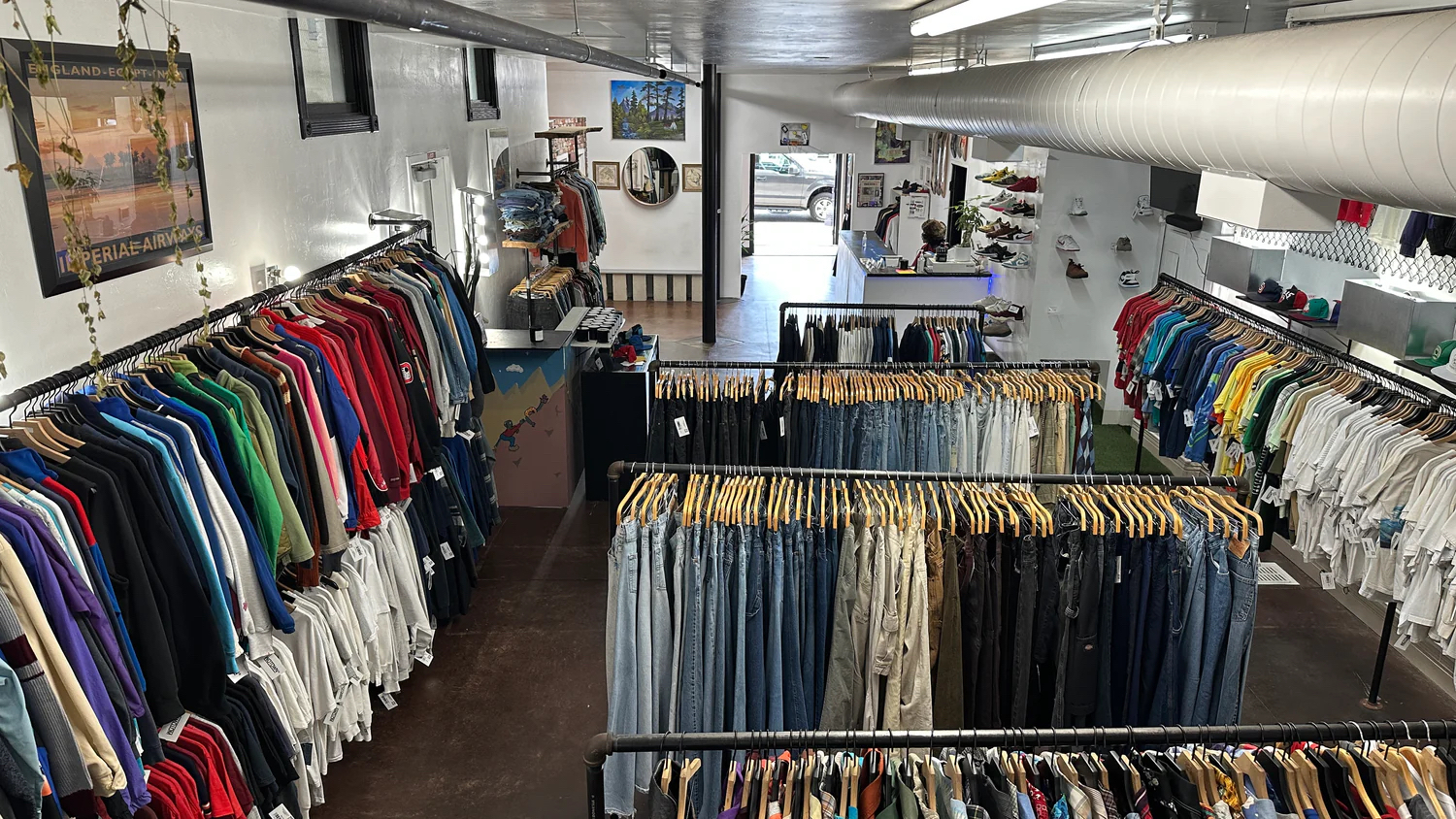
Skater boys and street-style lovers, this place is for you. Casual, masculine vintage clothes fill the walls at this small shop, making it the perfect place for those looking for edgier and oversized pieces to enhance any wardrobe.
730 Market Street
Wild Dove Boutique
Adjacent to Wotown sits a more modern and feminine clothing store, specializing in day-to-night pieces you can rock at your 9-to-5 or out on the town. Stop here to shop floaty dresses, cozy sweaters, office-ready blazers, and laidback jeans at mid-range prices.
740 Market Street
Normal Records
This hole-in-the-wall record shop has jam-packed thousands of records into a closet-sized space, making each visit a treasure hunt for vinyl in a wide range of genres, including hip-hop, rock, electronic, metal, country, soul, and blues.
Maren Hawkins is a freelance writer in her last year at San Diego State University. When she is not writing, she spends her time playing beach volleyball, thrifting for the cutest clothes, and traveling whenever possible.
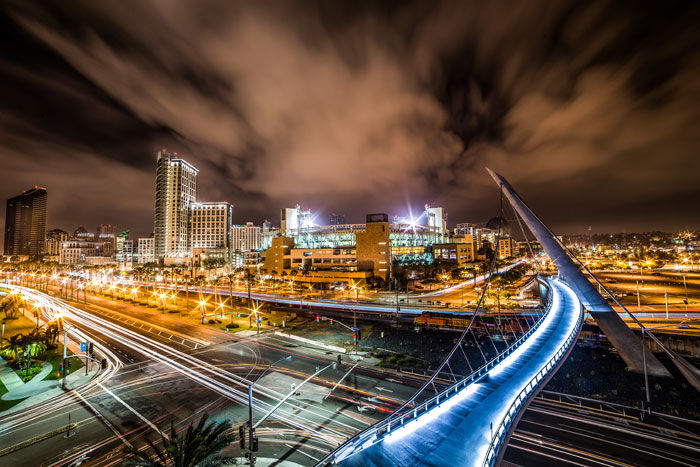
Location: Downtown looking north at Petco Park from the Harbor Drive Pedestrian Bridge
Camera: Nikon D600, shot at focal length 14 with a 14mm wide-angle lens
Evgeny Yorobe, a healthcare IT professional and fine art/wedding photographer from Tierrasanta, was drawn to the movement, lines, and lights of this downtown scene. “I knew I wanted the bridge and Petco Park in a photograph, and all the movement and activity around the bridge made me decide on a nighttime long-exposure shot,” says Yorobe, a devoted Padres fan. The time of the day mandated a tripod, but he realized that a wall blocked the composition. In a pinch, Yorobe shortened the length of one tripod leg to lean it and the camera to the very edge. The result was a view of the city’s after-hours buzz—traffic, twinkling lamps, and light trails from the planes, trains, and automobiles.
Looking north at Petco Park from the Harbor Drive Pedestrian Bridge
The Best Gym in San Diego Isn’t Really a Gym Anymore
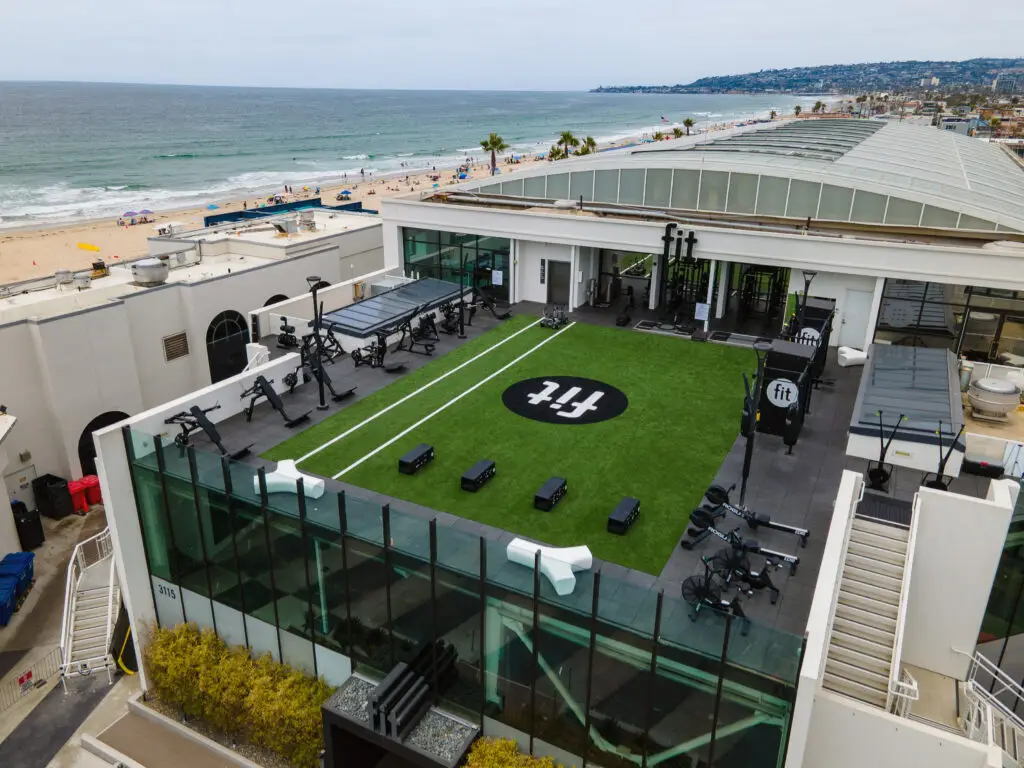
Earlier this year, Fit quietly dropped "athletic" from its brand, from Fit Athletic Clubs to simply Fit, and started calling itself something new: a social wellness club.
There’s a version of San Diego that lives in two extremes. On one side, the 5 a.m. crowd: biohackers, marathoners, people who’ve already logged a cold plunge before your alarm goes off. On the other, the after-dark crowd, the ones chasing sunset happy hours and late dinners with friends. Everyone seems to be either optimizing or unwinding, and most of us feel like we’re failing at both.
Fit, San Diego’s reigning Best Gym for the third year running, has built its entire identity around erasing that divide.
Walk into one of Fit’s three San Diego locations on a Tuesday afternoon and the lines blur fast. Someone’s mid-set on the squat rack. Someone else has a laptop open at a café table a few feet away, half-working, half-people-watching. A group is trading plans for the weekend’s event by the recovery lounge. Nobody’s in a rush to leave.
“We’re not competing for the same people,” says Emily Waybright, Public Relations Manager at Fit, addressing the arrival of a national luxury gym chain in San Diego this year. “We don’t really feel like we’re in the gym category. It’s this unique thing.”
That unique thing has a name now. Earlier this year, Fit quietly dropped “athletic” from its brand, from Fit Athletic Clubs to simply Fit, and started calling itself something new: a social wellness club.
It’s a small wording change with a bigger idea behind it. Fit was never built around escaping the workday. It was built around the people who genuinely like what they do, and who want workouts, work, and friendships to happen in the same place instead of three separate ones. Because sometimes red light therapy with a stranger turns into weekend plans.
Fit’s philosophy traces back to its founder, who started the brand nearly two decades ago after failing to find a gym he actually wanted to belong to. He looked instead to the old-school country club, where people came for a shared interest and stayed for the community. His version was made for a younger generation, minus the golf, plus the loud music.
Which makes it a little ironic that the very award putting Fit back in the spotlight this year is Best Gym.
What does the best traditional gym look like when the definition of a gym is becoming less traditional? It’s a fair question, and Fit’s answer is that the fitness industry itself is shifting. The 45-minutes-in, 45-minutes-out model is giving way to something closer to a genuine third space, the kind of role the office and the bar used to play before remote work and changing nightlife habits rearranged how people spend their time
For Fit, community isn’t a marketing add-on to fitness. It’s the through-line. Members aren’t just paying for a treadmill; they’re paying for an entire day of social wellness that’s built on performance, recovery, connection, and a plan for the next event on the calendar. That’s a much harder membership to walk away from.
Ambition and ease aren’t opposites here, they exist side by side, where passion and play share the same morning. On September 12, Fit is hosting Sol, a full day wellness festival at Fit Social. The morning focuses on wellness classes and vendors and then the evening is a full party with multiple DJ sets and an open bar. Think of it as a kick-off to locals’ summer in San Diego.
Ready to see what a social wellness club actually looks like? Visit fitclubs.com, or follow along at @thefitclubs on Instagram.
Location: Downtown looking north at Petco Park from the Harbor Drive Pedestrian Bridge
Camera: Nikon D600, shot at focal length 14 with a 14mm wide-angle lens
Evgeny Yorobe, a healthcare IT professional and fine art/wedding photographer from Tierrasanta, was drawn to the movement, lines, and lights of this downtown scene. “I knew I wanted the bridge and Petco Park in a photograph, and all the movement and activity around the bridge made me decide on a nighttime long-exposure shot,” says Yorobe, a devoted Padres fan. The time of the day mandated a tripod, but he realized that a wall blocked the composition. In a pinch, Yorobe shortened the length of one tripod leg to lean it and the camera to the very edge. The result was a view of the city’s after-hours buzz—traffic, twinkling lamps, and light trails from the planes, trains, and automobiles.
Looking north at Petco Park from the Harbor Drive Pedestrian Bridge
That was the question on loop in my head as I sat, nearly catatonic, watching my chickens scratch and crap, from a chair on my patio. It was the first Monday after dropping my one and only at college on the other side of the country. I was tired to the bone and in shock. Eighteen-plus years of permission slips, math homework, Barbie play (ugh), carpooling—my God, the carpooling—and a teenager who, for four years and counting, communicated almost exclusively through side-eye and not-so-under-the-breath clapbacks. Parenting is insanity, and when it stops, it feels so good and so bad all at once.
Photo Credit: Aaryn Belfer
I won’t linger on my personal recovery here, except to say: Part of moving on is dealing with that empty room. What do we parents do with the utensil vortex, and more importantly, when do we do it?
My daughter’s room sat for two years like a forgotten museum exhibit, preserved—not because I was sentimental, but because my husband was. While he didn’t want her to feel erased when she came home, I wanted to expunge her Totoro-meets-Pepto-Bismol gray-and-pink aesthetic, the sports jerseys, the inspirational stick-on decals from Etsy, the bazillion discarded beauty products that didn’t make it into the blue duffel bags.
My metamorphosis took a while, but I built a new, brilliantly free, empty-nest life. No more driving hundreds of miles a week, no more bleachers, no more ref whistles reverberating in my dreams. I reclaimed myself, then I hired a professional to help me reclaim my kid’s bedroom.
EBSCO’s Research Starters series says that “empty nest syndrome” is a real, if not clinical, diagnosis—no chart line, no billing code. Just a recognized experience of grief, loneliness, and diminished purpose that can take up to a year to resolve.
Creating a Sanctuary
Courtesy of Treci Smith
I turned to Treci Smith of Treci Smith Designs because I loved what she did with her son’s bedroom. (Full disclosure: She’s a friend.) After several interrupted attempts at reimagining the room, she designed a den for her husband, Amir. The couple, married 32 years, raised four kids in their four-bedroom ranch home in Bonita, and over the years, the kids switched rooms and pairings countless times.
The house Tetris continued as each child went off to college. But when their youngest left, his bedroom atrophied. It became a haphazard office and, for one stubborn stretch, nothing at all. A purgatory.
“We wanted to utilize every room in our house,” Smith says, “not letting it be a room that just sits empty.” She finally made a plan to evict purgatory, but the pandemic hit, and all four kids moved back home. It took a while longer before the room was finally hers to play with.
Courtesy of Treci Smith
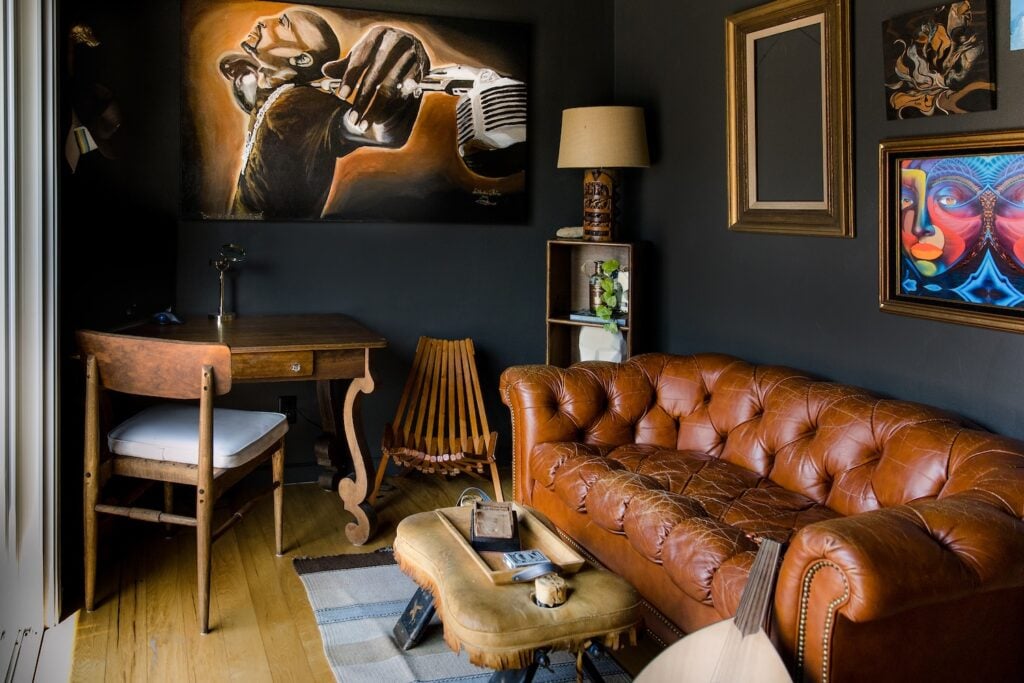
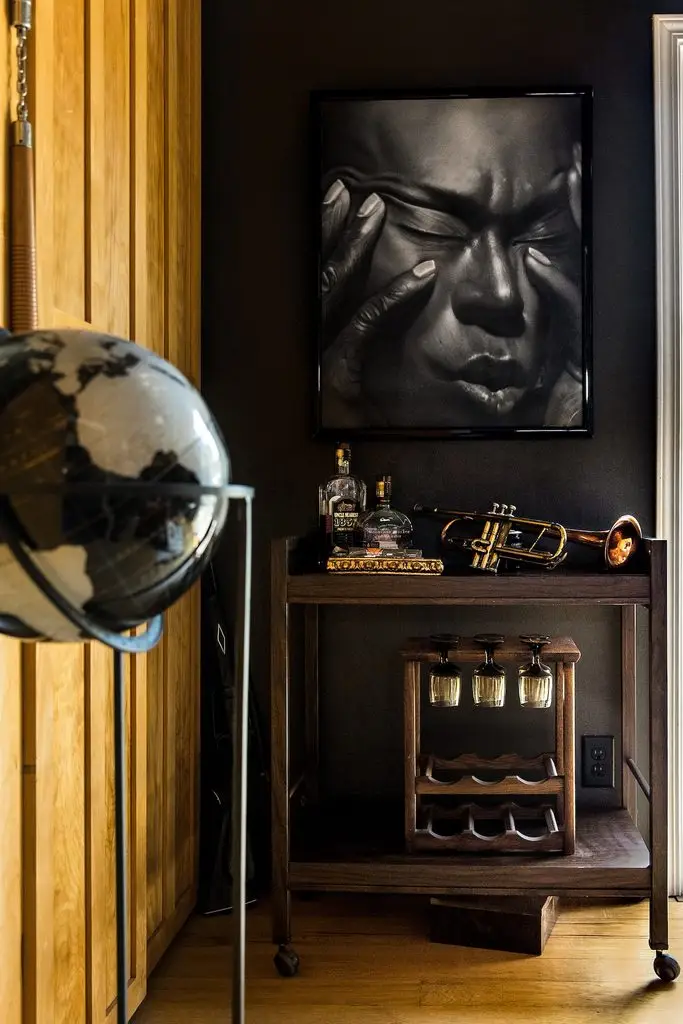
What Smith created in its place is magic. It feels like a speakeasy. Dark, moody, and deliberately masculine, the den looks like how sandalwood and musk would smell if they took physical form. It’s got a bar cart, Amir’s cigars, a speaker, a desk for his real estate research, and French doors that open to a courtyard and pool.
“When we think of meditation, we think of light and airy,” Smith says, rejecting that there’s only one way to create calm. “It’s a sanctuary. It’s a place where the rest of the world doesn’t really feel like it exists.”
Smith doesn’t talk about trends. “I think everything has to have a purpose, and not just to be magazine-ready,” she says. “So I ask clients, ‘How do you want to feel in this space?’”
For my project, Smith isn’t interested in erasing the past so much as spotlighting it. As she guides me in reimagining my kid’s former room, she’s pushing back on my urge to wipe the kid out of it entirely. “I don’t want her to feel like she’s been pushed out of the house, essentially,” she says. “The room is now functioning for other purposes, but it’s still hers.”
She pulls a painting of my daughter off the wall in another part of the house for use in the new space. She also caught sight of a planed section of a pantry door from our last house, which has my daughter’s height marks in my handwriting, climbing as she grew. “Grab that,” she tells me. “It has to go in.”
That’s not just decoration. It’s continuity.
From Playroom to Paycheck
For years, the biggest room in Melissa Gaviria’s Rancho Peñasquitos house was a shared bedroom and playroom for her two kids—absorbing blocks, toys, and balls that, with impressive consistency, never made it into the ball pit. As the kids grew, the room saw less use, then emptied out entirely: Her older child moved out, her younger one moved upstairs.
Gaviria tried turning it into an office, but “that was just one little corner of a whole big room,” she says. When a coworker converted part of a house into an Airbnb-ready ADU, Gaviria was inspired.
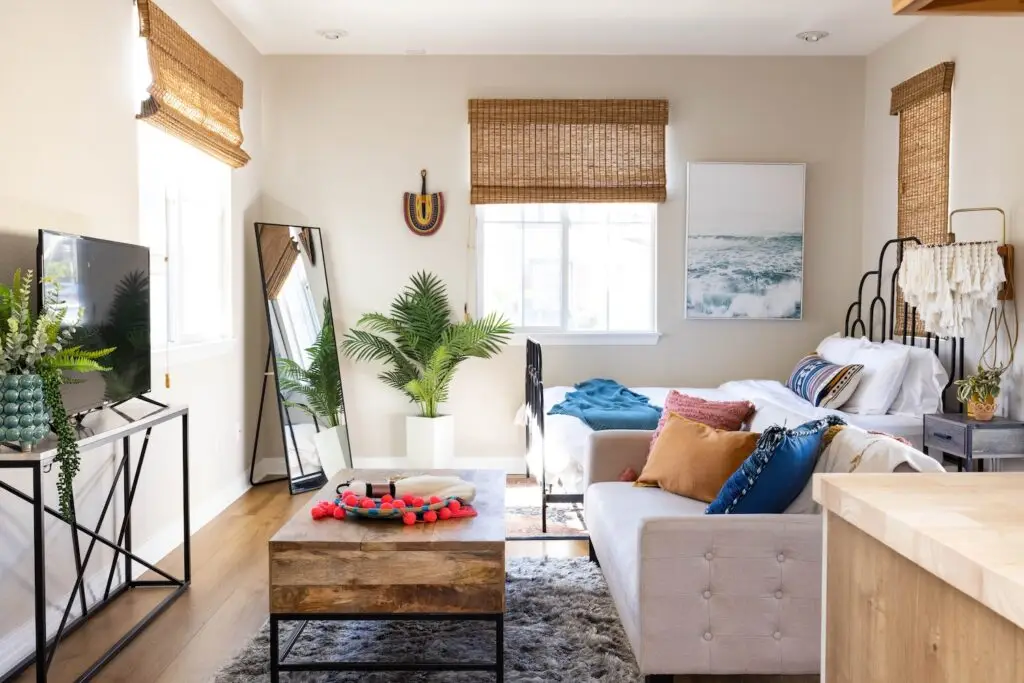
She hired award-winning designer Jen Guerin of JG Color Studios to create a junior ADU. It’s technically attached to the house but is functionally its own unit, with a French-door entrance on the side so guests never have to walk through the home’s main living space.
Gaviria didn’t wait until both kids were gone to build her nest egg (the unit pays her mortgage, and she rents the whole house in the summer and travels). The kids were 14 and 10 when construction started, and she gave them markers and crayons for one last pass at the walls. I ask whether she left any of their artwork as an homage. She laughs, “I can’t rent with a Godzilla on the wall.”
I beg to differ there.
Photo Credit: Hali Makanah
Guerin pulled from Gaviria’s Colombian background, incorporating blues and a deep burnt orange as nods to home.
Guerin, who’s designed dozens of these transitions over 20 years, says most parents pivot more slowly than Gaviria. “It always starts with paint,” she says, “then flooring and slowly a replacement of all items.” But the instinct, fast or slow, is the same: “This chapter isn’t about erasing the family story. It’s about making room for the next one.”
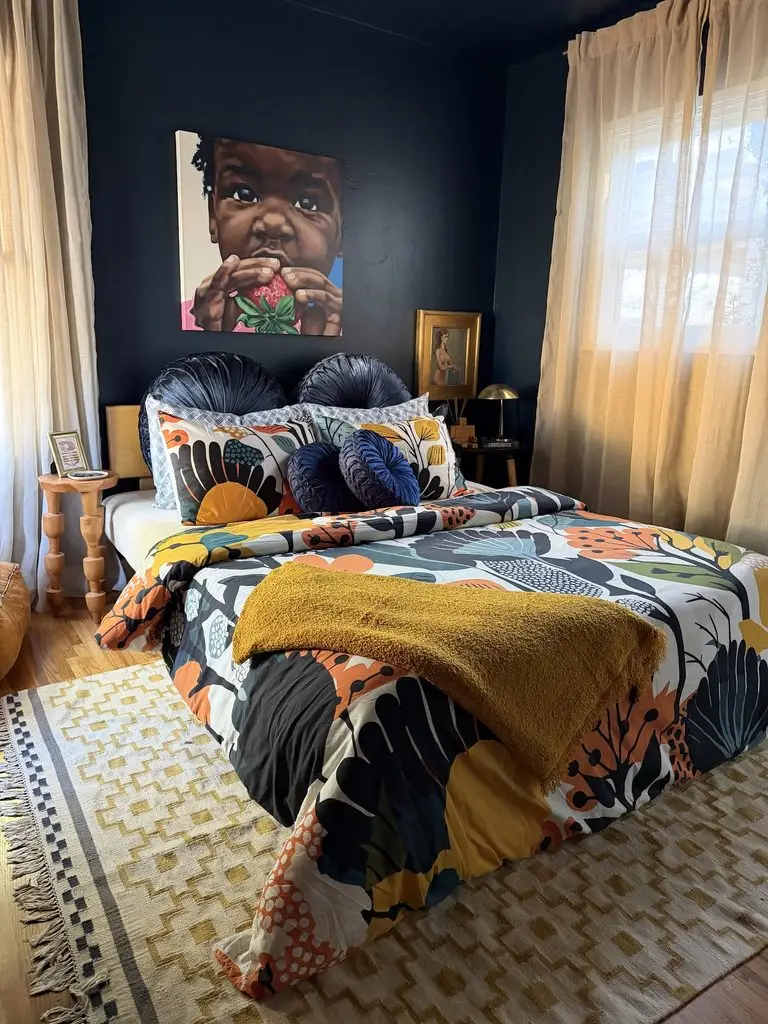
Enveloped. Safe. At ease, creative, and a little bit sexy. I wanted an understated drama that didn’t match our minimalist, midcentury design elsewhere in the house, but that matched the inside of my soul. I wanted dark and light, color and whimsy. I wanted to never want to get out of bed, and for guests to feel that too.
Another parameter: I had a tight budget. I mean, let’s be real about the economy, right? Smith guided me toward a dark paint my husband and I put on ourselves, then sourced used and vintage pieces to go with the bed and other accoutrements we already had, and mixed in a few new pieces from Ikea—like the two-tone green speaker lamp. She nudged me not to erase my kid entirely, so I dug through boxes of ephemera in the garage, framed some old artwork, and tucked a few other mementos away for discovery, should someone look closely.
Most guests won’t notice. They’ll just sink into the bed and not want to leave, which is the whole point. But if you know where to look, my ladybaby is still in there—she’s just not running the place.
Aaryn Belfer is a writer and editor specializing in nonfiction across art, architecture, and culture. Once upon a time, she wrote a provocative column for San Diego CityBeat (RIP). She was a runner up in the 2025 Matchbook Stories contest at the San Diego Central Library and is irrationally happy about it. Currently in her Soft Girl Era, Aaryn has expensive taste in (mostly flat) shoes and will choose a great art exhibit or live jazz concert over almost anything else. Except, possibly, Javier Bardem.
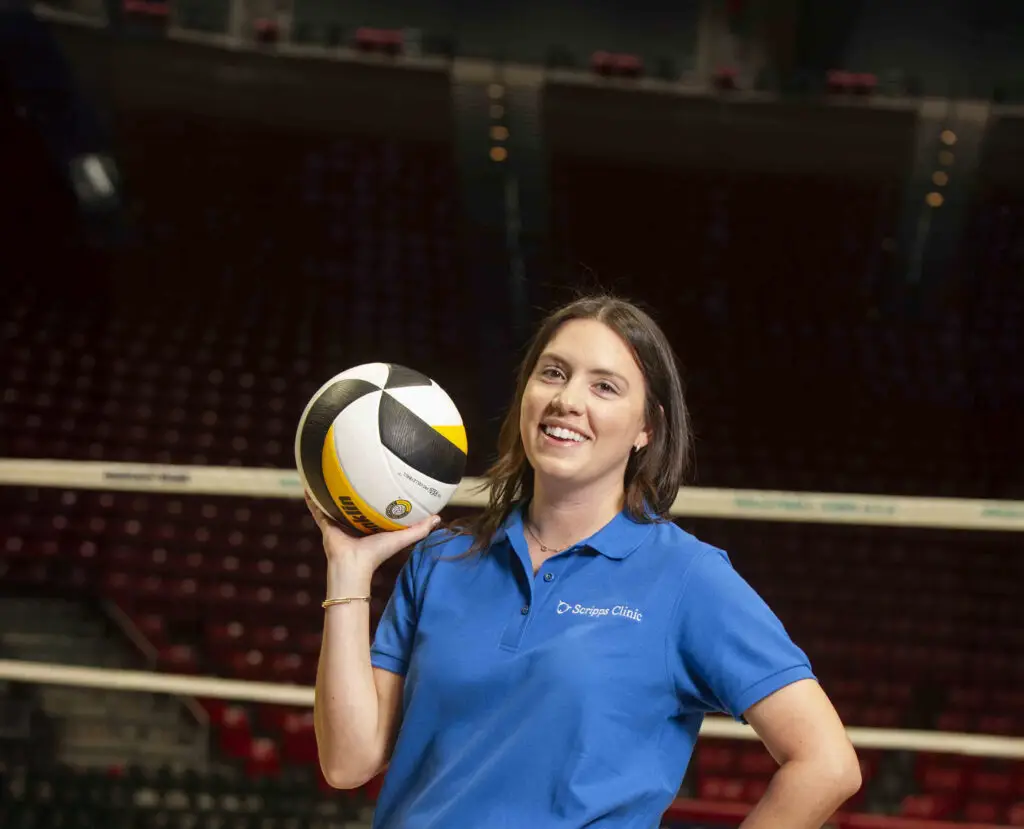
Growing up, Laika Nur, MD, Scripps Clinic sports medicine specialist, loved watching beach volleyball when the Association of Volleyball Professionals tour came to her hometown of Chicago. A talented volleyball player herself, she remembers sitting in the stands all day, and once, even got a couple autographs. Years later, Dr. Nur was attending a professional event focused on women’s sports, and the discussion turned to a new professional women’s volleyball league. The general manager and coaching staff for San Diego’s team, the Mojo, happened to be in attendance, and Dr. Nur took the opportunity to ask them if they needed a team doctor. Flash forward to the Mojo’s inaugural 2024 season, when Dr. Nur officially became the team physician. Click here to read more about Dr. Nur and how she incorporates lessons she learned on the court into her practice.
For more nutrition, wellness, and healthy living tips, sign up for the San Diego Health newsletter here.