Featured articles
Food & Drink
Food & Drink
Food & Drink
Featured articles

Everything SD

Everything SD
Things to Do
Featured articles
Things to Do
Things to Do

Guides
Featured articles
podcast-ep
podcast-ep

podcast-ep
Featured articles

Everything SD
Everything SD
Food & Drink
Featured articles
Everything SD
Everything SD
Food & Drink
Ready to know more about San Diego?
SubscribeReady to know more about San Diego?
What better time to indulge in tacos, tequila, music, and Mexican culture?
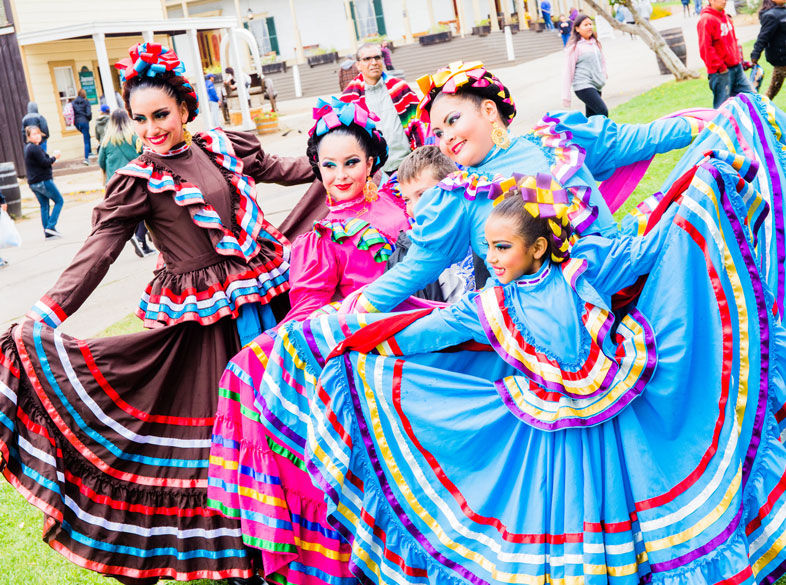
What better time than Cinco de Mayo to indulge in tacos, tequila, music and Mexican culture? From a traditional fiesta in Old Town to family runs at Lake Poway, there is no shortage of ways to spend the day—or the entire weekend. Join in on the most colorful, most delicious, and most memorable ways to celebrate Mexican heritage.
Where: Old Town
When: May 4-6
Every year, thousands of visitors flock to Old Town for the biggest Cinco de Mayo celebration in San Diego. Bring your friends and family to this free weekend-long fiesta featuring live music, lucha libre wrestling, and lowrider car shows. Keep an eye out for food and drink specials at local restaurants. Danz Arts will provide Mexican and Spanish dance performances. Enjoy the sounds of traditional mariachi, salsa, and flamenco music as you sip margaritas and indulge in endless bites.
Where: Lake Poway Trail
When: May 4
Looking to earn those tacos and burritos? Look no further than the 5K and 10K Cinco de Mayo Trail Run on the Lake Poway Trail. Compete or bring the whole family just to enjoy a beautiful morning in nature. Additionally, The Kathy Crafts Young Memorial Kids Race is a great fit for kids ages 7 and under who want to burn off some excess energy. Ticket prices range from $10-$40. Registration opens at 6:30 a.m. All participants will receive a race shirt and virtual swag.
Where: Grape Street Pier
When: May 5
Party aboard the Hornblower Inspiration yacht’s three levels of music from hip-hop to Latin hits. DJ Esco will spin the tunes, so grab your pals and head over to the harbor. Ticket prices range from $45-$70. Event is from 4-8 p.m.
Where: Coronado Community Center
When: May 5
Support this local nonprofit organization while you dine, dance and participate in silent and live auctions. FOCUS Cinco de Mayo Fiesta takes place at the Coronado Community Center from 5 p.m. to 10 p.m. and include appetizers and a buffet dinner as well as dancing. Proceeds go toward Friends of Children United Society (FOCUS), a nonprofit that supports battered, abused homeless, disadvantaged, and foster children in San Diego County. Tickets are $100 per person.
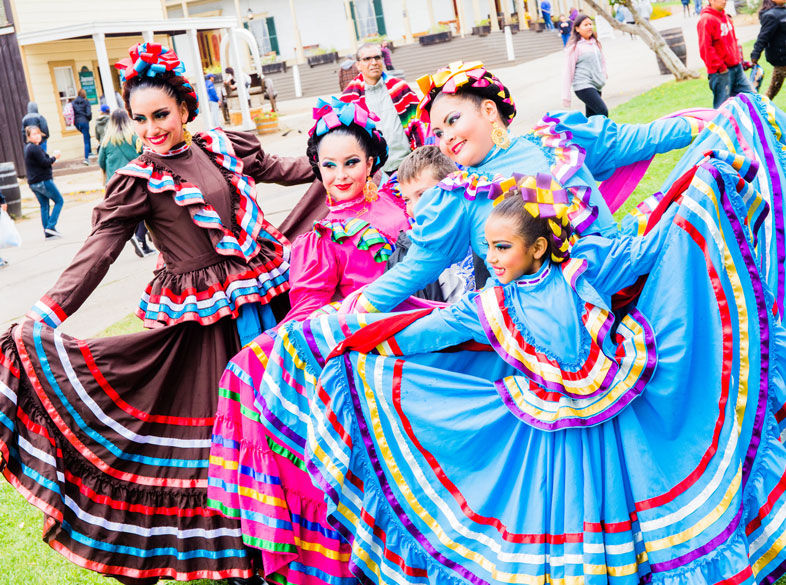
Where to Celebrate Cinco de Mayo 2019 in San Diego
PARTNER CONTENT
Photo: Fiesta Old Town
Our guide to San Diego’s taco scene, plus what the city's top chefs order when they’re off the clock
Tacos are San Diego’s lingua franca. The invention of food wrapped in corn tortillas is ballparked at 1000 to 500 BC. The word probably comes from the Nahuatl “tlahco”—meaning “half” or “in the middle”—a food meant to be folded and carried. Portable foods always have a way of sticking around.
San Diego was part of Mexico until the Treaty of Guadalupe Hidalgo in 1848, so tacos didn’t arrive; they remained. After the treaty, they receded into the kitchens of families who stayed behind.
By the early 1900s, US tacos had reached a sad state—mostly ground beef, cheddar cheese, and iceberg lettuce, because Mexican staples like cotija, cilantro, chiles, and freshly pressed tortillas weren’t in grocery stores. In San Diego, that started to change around 1930 in the abode of Petra and Natividad Estudillo, who lived on Logan Avenue in Barrio Logan, the heart of San Diego’s Chicano culture (it’s where many refugees from the Mexican Revolution settled). There, the couple created a teeny tienda, slinging homemade tortillas.
Behind the Estudillos’ counter, reportedly, you could see their living room, lined with furniture and tubs of fresh tortillas. You could tell sales (and tacos) were on the rise, because their décor got increasingly nicer. The couple opened Las Cuatro Milpas next door in 1933. It was the first Mexican restaurant in the city, a taco chapel for over 90 years. Around the same era, Ralph Pesquiera Sr. started pressing tortillas with his parents on India and Grape streets, later serving smaller, corn tortilla versions of flautas for defense workers during WWII. Credited with coining the term “taquito,” he opened El Indio in 1940.
The Bracero Program (1942–64) greatly contributed to taco culture, bringing over four million Mexican men to the US as guest workers, many in San Diego. The kitchens at bracero camps were filled with beans, tortillas, and chiles. The art of making fresh masa started to proliferate, and local grocery stores stocked dried chiles, salsas, and masa harina for their new client base.
San Diego’s taco culture quantum-leapt in 1964, when Roberto and Dolores Robledo, who’d previously owned a Golden Hill restaurant called La Lomita, opened a tortilla factory in San Ysidro. They quickly added a walk-up and drive-through window and called it Roberto’s—the city’s first “modern” taco shop and eventual legend. Two years earlier, up the road in Downey, Glen Bell had launched Taco Bell; by the time he sold it to PepsiCo in 1978, every American grocery store was selling “taco kits” with pre-fried shells, seasoning packets, and jars of salsa. Taco night became a middle-class ritual.
Surfers also deserve a taco nod. In 1983, SDSU student Ralph Rubio finally made good on the recipe gifted to him by a taquero on a San Felipe beach; he opened Rubio’s on Mission Bay Drive, launching the Baja fish taco into the national imagination (Rubio’s IPO hit NASDAQ in 1999).
Two government policies also helped further taco enlightenment. In 1986, the Immigration Reform and Control Act (IRCA) legalized about 2.7 million immigrants, many in SoCal. Green cards and work permits meant access to leases, loans, and licenses. With that stability came confidence—and a wave of Mexican-owned small businesses. The late 1980s and ’90s saw the rise of family-run icons like Lolita’s, Rigoberto’s, and Cotixan. It’s no coincidence that two of San Diego’s proudest food inventions—the California burrito and carne asada fries (often credited to Lolita’s circa the late ’90s)—came onto the scene during this period.
This last point is an unsubstantiated connecting of dots. But Mexico’s a large country full of endless regional taco ideas (Oaxacan cheese, Sinaloan seafood, Texcoco barbacoa). And the North American Free Trade Agreement (NAFTA), signed in 1992, was probably what sprung that deep well of taco ideas. Corporations opened massive operations in border cities like Tijuana, drawing thousands of workers and tacos from every nook.
Which brings us to now. There are 1,700-ish taco shops across the county, and here’s the list of our favorites.

Located in the massive parking lot by an event center and a cannabis dispensary, Mi Gusto Es may just set the bar for the best gobernador (a Sinaloan-style shrimp taco with melted cheese and a flour tortilla—a wonderful thing). Loaded with sautéed peppers, it costs three bucks. Get the spicy shrimp. Always spicy.
Troy Johnson is the magazine’s award-winning food writer and humorist, and a long-standing expert on Food Network. His work has been featured on NatGeo, Travel Channel, NPR, and in Food Matters, a textbook of the best American food writing.
The neighborhood blends historic charm with festive flavors and local culture—here’s what to eat, see, and do on your next visit
Tucked into a gentle slope beneath Presidio Hill and overlooking the former mouth of the San Diego River, Old Town is where the city began. Here, some of San Diego’s oldest streets wind through a state park and spill into blocks brimming with festive shops, tucked-away courtyards, and local-favorite restaurants.
Yes, there are museums, margaritas, and plenty of Mexican food, including a pozole from Casa de Freds that will “warm your soul,” says Old Town San Diego Chamber of Commerce Executive Director Alex Ward. But, while those alone are all worth the trip, Old Town is more than a place to begrudgingly rub elbows with tourists. It’s a layered, living neighborhood where history hums through weathered walls and discovery waits around many corners.

“There’s plenty of reasons for locals to visit,” says Nest Tattoo owner Melissa Anglin—including a convenient trolley stop and free parking.
Old Town really is old: The Kumeyaay people lived along the San Diego River for at least 10,000 years before the Spanish arrived in 1769, setting up camp near the village of Kosa’aay. Prominent Californios built adobes at the base of Presidio Hill in the late 1700s; the center of San Diego was there until development at “New Town” in the late 1860s moved downtown to its current location.
The state park system preserved those dusty old adobes in 1968 as “the birthplace of California.” In the 1970s, the “mother of Old Town,” Diane Powers, opened Bazaar Del Mundo, and with it came the colorful, folksy vibe that, like it or not, still defines San Diego for visitors from around the world.


In 2018, Melissa Anglin and her husband Taylor brought The Nest Tattoo to life inside a cozy 1920s bungalow on Congress Street, adding a creative spark to Old Town’s historic soul. A few years later, they moved into an apartment just up the hill on San Diego Avenue.
Anglin’s favorite reset is a run to the top of Heritage Park, where the city unfurls below in a patchwork of history and bay views. After, she’ll visit her business neighbors at Encuentro Cafe for “really tasty” breakfast, she says—do not miss La de Mano (a sweet corn pancake filled with Venezuelan cheese) or the grilled arepas (kind of like a giant English muffin made of corn and stuffed with goodies such as eggs and chorizo). The best quick lunch (between inks) is a hot dog or a torta at Que Sazón on Harney Street. “It’s the only place in Old Town I would get agua fresca,” Anglin advises.
Locals have options for dinner or date night. “Jack & Giulio’s is the place for red tablecloths and excellent service, where they treat you so nice,” Anglin says, suggesting that diners order any of the housemade pastas. Home & Away is a sports bar with a great burger, and it’s open for a late-night bite—rare in Old Town. Bring your dog and sit out on the patio when it’s warm.

If you’re into spirits (both the imbibable and the paranormal), get a reservation at Oculto 477—a private mixology experience for two, within haunting distance of El Campo Santo Cemetery. Anglin recommends Rose’s Tasting Room as another place where locals can feel brand new in their own town. A casual setting where guests can learn about local wines, it’s “a lovely, personal, magical experience with a cozy vibe,” she says.
Prolong those good vibes with crystal shopping at the “friendly and approachable” South American Imports, Anglin adds. The showroom with an extensive collection of geological gifts has been in Old Town for 40 years—even longer than its stalwart neighbor Cafe Coyote.
Every summer, Anglin sips a cup of raspberry drinking chocolate at small-batch candy maker Nibble, inside Fiesta de Reyes.

Old Town is getting some new (yet old) accommodations: Rumor has it the Hacienda Hotel’s buyers are planning a renovation. And, soon, you’ll be able to secure a night’s stay in some of Heritage Park’s charming (but possibly haunted) Victorians. “I’m sure they’ll be booked solid by ghost hunters,” Ward says.
However, some institutions are saying goodbye. Cygnet Theater Company is ending its residency at Old Town Theater, heading for new digs at Liberty Station. While the state-owned theater goes dark and figures out its next big thing, which could take up to two years, Ward says, keep an eye out for potential happenings in that space.
Post-pandemic, Ward is excited to see more locally focused businesses moving into the neighborhood alongside tourist-centric establishments. “Lower- than-average rents,” he explains, are part of the draw, along with reliable foot traffic and transit proximity. Nest Tattoo is one example; so is Garden Coffee—where you can buy plants, sip lattes, and study or chat at a cozy table.
On the edge of Old Town, a major change is coming: NAVWAR—the WWII military airplane assembly plant on Pacific Highway that later housed Naval Warfare Systems Command—could soon be developed into hotels, housing, shops, parks, and restaurants, plus a trolley stop. Local activists are hoping to prevent Old Town’s views of Point Loma and the harbor from becoming a shiny glass skyline.

El Agave Restaurant & Tequileria
Leorah Gavidor won her first essay contest at age 5. She writes features, news, and non-fiction in San Diego.
Pacific bluefin once dominated San Diego, but in our modern food system, wild fish come from cages
Swimming above a thousand bluefin tuna in the deep waters of the Pacific, one feels a dizzying calm. Below, the fish move in endless, unhurried loops, slowly growing plump in their monotony. Weighing around 170 pounds each, the fish in this net-pen are considerable. Heavy as a man and as wide as a surfboard, they move like hydrodynamic refrigerators, pewter backs reflecting water-filtered light like suncatchers.
Not long ago, these fish were in the open ocean, gunning 18 miles an hour through cold currents, possibly detecting our planet’s magnetic field using mineral deposits in their snouts, and tracing ancient migration patterns through the largest ocean on Earth. But here, with a gringo in a wetsuit bobbing above them, the fish merely draw lazy loops inside a giant aquaculture cage tethered far offshore, awaiting their fate as some of the most sought-after and expensive cuts of protein on the planet.
This is Baja Aqua Farms (BAF). Located in Mexican waters southwest from San Diego, BAF is, at any given time, home to tens of thousands of tuna worth tens of millions of dollars, making it one of the largest tuna ranching operations in the world and a major player in a modern global fish farming industry that now supplies more than half of the world’s seafood.

If one were to, say, fly a helicopter over this operation, the view through the omnipresent cloud of gulls would prove impressive. Thirty Olympic pool–sized net-pens float in an open-water grid, each filled with a single school of a thousand or more bluefin. Some are huge, weighing more than 400 pounds, and some are smaller, around 45 pounds (still a lot of fish). And anchored in the middle of it all is a sizable, computerized central feeding vessel where specialists sit on aging rolling chairs inside an air-conditioned cabin, monitoring each school’s food consumption and their pen’s water quality on screens 24/7. A ship that thousands of pounds of feeder fish visit briefly each day after being offloaded from sardine boats and before being pumped into the bellies of tuna.
I ventured here on an educational mission. As a lover of both the ocean and tuna, I wanted to find out how bluefin—an animal fished nearly to extinction within my lifetime—makes its way into the tartares and chirashi bowls of today. My search led me here, face down in the water, listening to the sound of my breath through a snorkel and contemplating the vast machinations that keep these incredible fish churning through the global food system.
Silent as they are, these tuna tell a story about the future of fish and the future of how we interact with the ocean.
All of which we’ll get to. But first, let’s eat.

By the time the bluefin arrives on my plate as glistening, fatty slices of pink otoro at Ophelia restaurant in Ensenada, it has already crossed oceans, boundaries, and moral terrain.
This fish was part of a school of tuna born in the open Pacific from eggs laid off the coast of Japan, captured as juveniles in Mexican waters by BAF boats in vast purse seine nets, towed for months to the BAF ranch, and fattened for many more months with feeder fish harvested from our coastal ecosystem by the BAF sardine fleet, then efficiently and bloodily killed, refrigerated, and brought to shore here in Ensenada to be packaged and driven over the border to LAX, where they either get exported—mostly to Japan— or eaten in high-end omakase and strip-mall sushi joints throughout San Diego, once the world’s tuna fishing capital.
Bluefin tuna, recent developments have shown, is both a symbol of past overfishing and a surprising conservation success. And its future now lies in operations like Baja Aqua Farms, which represent the next phase of human seafood consumption.
With me at the table, talking tuna, is Rodrigo Armada Tapia, the head of sustainability at BAF. Having grown up in Ensenada, Tapia speaks with pride about the region’s food culture—where tuna is often a star ingredient. Before taking me to the farm the next day, he wanted me to try the product, which BAF packages under the name Bluefiná.

“You can’t understand the fish until you taste it,” he tells me.
Ophelia is Michelin-recognized. It sources bluefin from BAF, as do some notable restaurants in San Diego.
Mateo Hoke is a journalist and author. His books include Six by Ten: Stories from Solitary, and Palestine Speaks: Narratives of Life Under Occupation.
Stake Chophouse & Bar brings contemporary classics and old-school service to the heart of Coronado
Stake Chophouse & Bar isn’t your average steakhouse. Blue Bridge Hospitality’s Coronado outpost is a modern interpretation of a big-city steakhouse nestled in the heart of the small coastal community. The team at Stake has reimagined the whole steakhouse experience. By prioritizing a seasonal farm-to-table sourcing philosophy, a personalized guest experience, and unique service touches, like a formal steak presentation and a bespoke knife selection process, Stake distinguishes itself in a sea of steakhouses.
Exceptional steaks, including Wagyu from Japan, Australia, and the U.S., and fresh seafood flown in daily form the core of Stake’s culinary identity. The menu features a five-course omakase-style steak experience highlighting house favorites, plus an array of cuts, and classic steakhouse staples—think a wedge salad, baked potato, or pasta carbonara—refined for a contemporary palate without losing their traditional appeal. Stake focuses on seasonal sourcing from the region’s best family farms and specialty purveyors, and incorporates intentionally unexpected touches to create something truly unique.
“I challenge our chefs and myself to take it a step further in sourcing,” says Chef Ronnie Schwandt. “It’s important to us to highlight different farms, unique one-off farms—whether it’s cattle, strawberries, a local fisherman or from anywhere in the United States, we’re always trying to find that niche.”
Beyond the menu, Stake emphasizes outstanding service, says Vinny Spatafore, Director of Hospitality Operations. Staff maintains detailed notes, allowing them to remember guests by name, recall previous orders such as a favorite martini (also memorable for the customer since it’s served in an extra tall, distinctly-shaped glass), and celebrate special occasions like birthdays and anniversaries.
“When you have those points of topic that you remember about a guest, they appreciate that,” he says. “Our servers are really good with that—we have a couple servers who have been here since the beginning and they’ll remember somebody from years ago, their name, their kids’ names, where they live. I’m really thankful to have a great front of house staff.”
Award-winning wines, rare whiskeys, special events, and a complementary black car service that provides transportation for guests throughout Coronado add to Stake’s appeal.
Schwandt stresses that Stake offers more than a meal; they aim to give patrons something unforgettable.
“It starts when you walk up the stairs and are greeted by the hostess—that sets the tone for the night. Then you’re greeted by a server, who may know you by name, and can guide you through the menu and curate as they get to know you,” says Schwandt. “Most people leave kind of blown away; they leave feeling like they just had an experience. That’s the goal, right? Whether you’re serving smash burgers or high-end steak, you want somebody to leave thinking, Wow, that was awesome.”
Peruse local history, sample classic coastal Mexican bites, and spend time in nature in this quieter part of Mexico
Before 1973, visitors to Mulegé, Mexico arrived by tiny prop plane on the dirt runway next to Hotel Serenidad. The airstrip was built in the 1950s, when the transpeninsular highway that runs north to south along the Baja peninsula was still just a dream in some civic engineer’s mind. The hotel’s longest-running owner, Don Johnson, was an early transplant to Baja California Sur, and he bought Hotel Serenidad in 1968 and turned it into the famed vacation spot it became during that era.
On the mushroom-shaped bar stools, cemented just below the water line at the swim-up bar, sat many a famous traveler. With the palm trees swaying languorously in the breeze, it’s easy to imagine the hotel freshly painted and sparkling, hosting the great Fred Astaire, Charles Lindbergh, and John Wayne.
Mulegé, like most of the towns of northern Baja Sur, is an oasis, a place where a natural freshwater spring made it possible for the evangelizing Spanish missionaries to settle. Up on a hill above town, its mission church is a stocky, stone building with bright white balustrades lining its rooftop and a statue of the Virgin Mary gazing down on the town below. Climb the handful of stone stairs to the lookout point beside the church, and you can watch the sunrise paint the tips of hundreds of palm trees, slowly bathing the entire valley in soft light each morning.

Decidedly sleepy, Mulegé is the place that you come to amble down to California Birrería for birria chilaquiles in the morning, then take a stroll along the riverside, stop for lunch at Histórico Las Casitas (don’t leave without trying the flan), and finish off the day with a beer and some live music out at Mulegé Brewing’s highway bar.
One of the town’s most fascinating historic curiosities is the “prison without doors,” now converted into a museum on its hillside perch, the stark white façade contrasting the coral blue skies. One of the museum’s two docents will explain how prisoners were sentenced here but had day privileges to make their living in town. They were expected to return to the jail to sleep when the evening bell rang. There was little fear that they would escape, with a vast, empty desert behind them and the Gulf of California in front. Using Mulegé as a base to discover Baja Sur, you can explore the local desert, hidden beaches, and incredible wildlife during the day, returning to the town’s laidback bohemian vibes each evening.

Much of the culture and language of the peninsula’s original nomadic peoples was destroyed, first by Spanish colonization and later by subsequent populations of settlers. Some of the most awe-inspiring examples that remain are their ancient cave paintings, preserved by the peninsula’s dry climate and the caves’ isolated locations.
An hour from Mulegé is the San Borjitas cave, with some of the finest specimens of this ancient artwork decorating the 16-foot high ceilings of a long, oval-shaped cave that peers out over a dry riverbed below. Dozens of figures in red, black, and white seemingly reach for the stars on the rock face, their significance and meaning remaining a mystery to archaeologists even 73 years after they were discovered.
From December to April, all along Baja Sur’s coasts, gray, blue, and humpback whales come to breed, give birth, and feed in the mellow waters of the peninsula’s lagoons and the Gulf of California. Located south from Mulegé along the coast, Loreto, Baja Sur’s largest town, is a popular place to whale-watch, eat lunch, and explore the local history museum.

Pleasure cruises leave from the nearby Puerto Escondido Marina, where $1,000+ private charters will take you sport fishing or cruising around the eight islands of the vibrant Loreto Bay National Park that buttresses the coastline. Pods of black dolphins surf in the wake of the boats, and Isla del Carmen is covered with fossilized mollusks that were trapped there when waters receded thousands of years ago, most likely because of tectonic shifts. In the tiny bays tucked into the islands’ edges, you can snorkel to see bright blue and yellow angelfish and the long, skinny Pacific barracuda flitting among the crevices of the shoreline.
Afternoons are a good time to find yourself a seat at El Zopilote Brewing Co. on the town’s main plaza. Or pop next door for a coffee at La Route. After dark, wander into Asadero Super Burro with the locals for the burrito of a lifetime or Santo Cielo for the rosemary-roasted bone marrow or a half a lobster drizzled with salty butter. The next morning, head to Taquitos del Valle for phenomenal fish tacos or over to Café Olé for sweet cafe de olla and eggs with machaca (dried beef jerky).

Heading north from Mulegé, stop in Santa Rosalía, a mining town with a dark history of exploitation, but also incredible architecture—a throwback to the days of the wild, wild west. The French mining company that dominated this town for 69 years left behind French Caribbean–style homes and buildings with symmetrical designs, wraparound porches, and peaked roofs. Their presence alongside the local church designed by Gustavo Effiel gives the sensation that you’re walking through a movie set and not a 140-year-old town.
For lunch, Tacos y Mariscos Calle 6 offers the epitome of Baja-style tacos—the fried scallops are like nothing you will find anywhere else. The town’s bakery, El Boleo, is famous for its “French” bread that isn’t much different from what you will find in bakeries across Mexico, but the locale’s charm and antiquated architecture are enough to merit a visit. Don’t miss Padre Santo Brewing on the marine side of the coastal road that passes through town; it has an excellent red ale hazy IPA called Pecosa, meaning “sinner.”

Don’t let the intense heat of the desert persuade you not to stop at Trés Vírgenes, an eco-lodge just an hour north of Santa Rosalía by car. Afternoons here should be spent sipping a cool drink in the shade, but once the sun starts to set, you’ll experience the spectacular celestial show that is the lodge’s star attraction. Caretakers from the local community host stargazers, hunters, and real-world escapists at this collection of humble cabins.
The area is a special Conservation Management Unit (UMA), which means the community is committed to maintaining the habitat and wildlife of the area. It auctions off two or three bighorn sheep hunting licenses a year to big game enthusiasts, helping to sustainably cull the population and raising thousands of dollars to support the eco-lodge and other community projects. Guides can take you through the desert that surrounds the Trés Vírgenes (three dormant volcanoes sitting in a line from the eco-lodge to the ocean) and out to see 30-foot-high cardon cactus.
These locations are just a small snapshot of what can be explored in Baja California Sur, but, starting here, you are sure to be captivated by the area and find your way back in no time.
Lydia Carey is a travel and food writer based in Mexico City, who has spent the last 20 years traveling the Americas and sampling its bounty. She has been published widely online and in print and is the founder of the Mexico City Streets tour company.
After 85 years, Rancho La Puerta remains true to its roots with daily fitness activities, group lectures and guests speakers, and health-focused fare
The story starts when she is 17.
World War II is raging, and Deborah Szekely is newly married to a Jewish health guru known as the Professor. “My husband was a prominent writer, a Hungarian with a Romanian passport,” she recalls. “When his visa expired in the United States in 1940, we tried to get it renewed, but we were unsuccessful.”

So, they go to Tecate, Mexico, where they rent a hay shack at the foot of the sacred Mt. Kuchumaa for $50 a year. It’s the furthest thing from fancy, but that doesn’t stop the people from coming—health-conscious devotees drawn by the Professor’s work. For $17.50 a week and some chores, they can hear him speak and follow his diet and exercise recommendations, sleeping in tents they bring themselves. They don’t know it yet, but they’re the first guests of one of the first wellness retreats in the world. Eventually encompassing 4,000 acres just south of the US-Mexico border, it would come to be known as Rancho La Puerta.
Now, in RLP’s 85th year, guests have traded tents for Mexican-tiled casitas equipped with wood-burning fireplaces. But an adult summer camp sensibility endures.

A typical day at the Ranch, as guests and staff affectionately call it, starts around 6 a.m. “I would say 90 percent of our guests do some kind of hike or walk before breakfast,” says Director of Guest Experience Barry Shingle. After you eat, it’s off to your pick of RLP’s 40-or-so daily 45-minute classes—meditation, water workouts, Pilates, yoga, breathwork, art, sound healing, stretching, pickleball clinics, dance, tai chi—from 9 a.m. to about 4 p.m., with a midday break for a buffet lunch and, if one is so inclined, a spa treatment or a few hours by the pool. Dinner is four pescatarian courses, usually shared with strangers. After that, it’s time for a movie or lecture before an early bedtime, so you can do it all again the next day.

Some travelers (the must-sightsee-everything or don’t-talk-to-me-until-I’ve-had-my-breakfast-margarita types) will find this concept akin to paying $5,150 or more to spend a week in a Daedalean labyrinth of small talk and abdominal soreness. For a certain kind of person, it’s heaven.
More than 60 percent of guests return after their first visit, with plenty booking dozens of eight-day stays over the years. (A handful have made their way there more than 100 times.) And while many publications have sung RLP’s praises (“I first read about this place in Teen magazine when I was 13 and I thought, ‘I have to go there,’” now-retired, first-time guest Gloria Rathbun tells me), most people find themselves here on the recommendation of friends. The Ranch tends to create evangelists.

Many credit Szekely’s warm influence. Turning 103 this month, she is vibrant, still sharp, a living advertisement for the RLP brand of wellness. “I think some people make wellness too complicated and can get obsessive,” she says. “For me, regular exercise, eating well, and communing in nature helps me feel well.”
Indeed, you won’t encounter blood tests or calorie counts or supplements or body scans at the Ranch. Instead, you move. You eat produce grown on the property’s five-acre organic garden. And, with a maximum of 150 guests a week and all those group classes and structured mealtimes, you spend most of your waking hours immersed in one of wellness’s most underrated tenets: community.

While the Ranch, now run by the Szekelys’ daughter, always has something new in the works—they are currently building onsite residences, and a treatment plant that will process wastewater from 5,000 local families—its guiding lights remain the same.
“After we’d been in business for about 10 years, a reporter from the San Diego Union Tribune came to the Ranch to give us a review and called us ‘a cult to end all cults,’” Szekely remembers. “But today, many of the things the Professor taught and we’ve practiced at the Ranch since the beginning … are all considered common sense. Wellness is like buoyancy; you float in happiness, and you can do things that you wouldn’t be able to do if you were tired.”
Amelia Rodriguez is a writer and journalist and winner of the San Diego Press Club's 2023 Rising Star Award and 2024 Best of Show Award, she’s also covered music, food, arts and culture, fashion, and design for Rolling Stone, Palm Springs Life, and other national and regional publications. After work, you can find her hunting down San Diego’s best pastries and maintaining her five-year Duolingo streak.
Scripps study shows that some patients may be able to taper their dose and maintain results
While glucagon-like peptide-1 (GLP-1) receptor agents have been used to treat Type 2 diabetes for more than 20 years, their recent emergence as weight-loss wonder drugs marked a new frontier in medicine. But their effectiveness has left some patients wondering what to do once they’ve reached their goal. Stopping the medication could mean regaining some, if not all, of the weight. A Scripps Clinic internal medicine physician recently conducted a small study of whether GLP-1 patients who had reached their goal weight could maintain that weight by taking their regularly prescribed injection every other week instead of weekly. Spoiler alert: 30 of 34 patients did. Read more about the study here and what that may mean as pharmaceutical companies roll out oral GLP-1s.
For more nutrition, wellness, and healthy living tips, sign up for the San Diego Health newsletter here.