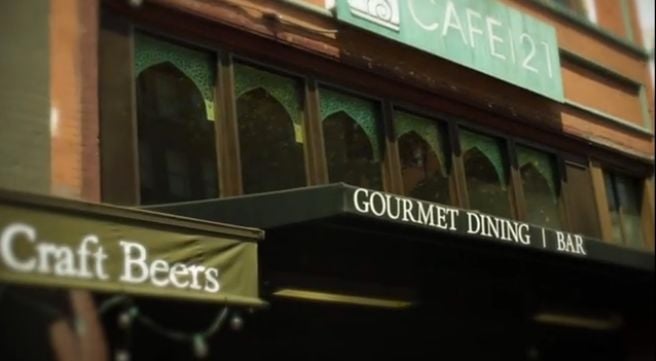
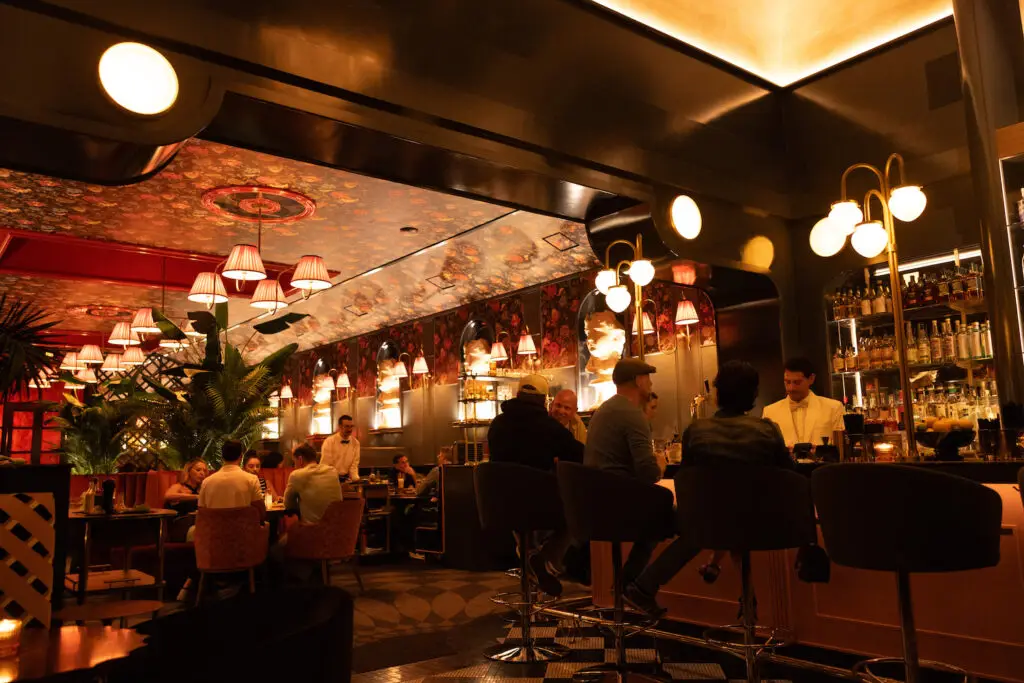
The blood transfusion of Downtown’s food scene continues. To close 2013, iconic restaurant Croce’s moved out of its space after nearly 30 years. And now it’s filled. University Heights’ Balkan/American/global cuisine standout Café 21 will be taking the space at 750 5th Ave. Owner Alex Javadov confirmed the lease is signed. He and his wife Leyla are inheriting the liquor and cabaret licenses, which means they’ll continue to do live music at the space like Croce’s had for years—not just for dinner, but for brunch, too.
Why the Gaslamp, when many restaurants seem to be leaving for more affordable neighborhoods?
“That’s a good question,” says Alex. “We constantly have lines on Saturday and Sundays at our current location. I didn’t like making people wait. Plus, I want to bring a neighborhood feel to Downtown, like Little Italy has.”
The couple will be able to fit 200 people in the 4,000 square-foot space (their original restaurant is only 2,500). The design will be handled by local firm Point of Departure (North Park Brewery, Table 926), with tentative plans to open by late April. The only real difference between the two Café 21 locations will be the bar—where the Jovadovs plan to instill a seasonal, fresh-muddled, farmers market-style cocktail program.
Leyla is Cafe 21’s chef, and her dishes lean a little healthier than most. Should be a nice change in the Gaslamp and its deep-fried chicken wingness. “Locals mostly don’t want to go there because of the parking and there aren’t any restaurants built for locals,” says Alex. “I want to build a neighborhood space my wife and I would like to go to. “
Well, damn. Vulture and Dreamboat are calling it a day.
Partners Kory Stetina and CH Projects have announced what feels like a too-soon curtain call for their plant-based odyssey in University Heights. Dreamboat, arguably the best name of a restaurant in decades, is the tiny, white, ’50s-style diner up front, and through a hallway and a velvet curtain is Vulture—a moody, stately continental restaurant with gothic-O’Keeffe wallpaper and giant plaster busts of indeterminate renaissance heroes.
The team is inviting guests in to fête the last three weeks of service, and the restaurants will shutter February 8.
“Right now, what matters most is taking care of our people and closing this chapter with integrity,” Stetina says. “These final weeks are important to us, and we want the final chapter of Vulture and Dreamboat to feel really celebratory. We are intensely proud of what was built here and deeply grateful to the teams and community who brought these spaces to life, especially our extraordinary crew.”
Vulture was Stetina and CH’s biggest plant-based swing yet. The ambition was driven at least partially by the success of their previous two collaborations: Kindred (SDM’s “Best Vegetarian” many years running) and the alien cantina Mothership (named one of Esquire’s “Best Bars in America”).
Photo Credit: Arlene Ibarra
It was the first high-end, fully plant-based restaurant in the city. Both were nominated for an Orchid design award by the San Diego Architectural Foundation, and Vulture was nominated by VegNews as the best new vegan restaurant in the country (Dreamboat got the nomination for the best vegan diner). Vulture’s potato pave was incredible; so were the martinis and the French onion soup. It had the group’s trademark magic and felt like a Cowboy Star or Albie’s Beef Inn for the cellulose crowd.
By most restaurant operators’ metrics, the crowds both spots were drawing would have been considered a major success. But most operators don’t build restaurants like Stetina and CH do; they obsess over design, turning blank buildings into art projects. That costs quite a bit more, demanding more martinis and tableside Ceasar salads be sold.
“We had very strong support and real momentum,” Stetina says. “High opening and operating costs, combined with the economic realities of today, ultimately made it unsustainable.”
The dream also took too long to manifest: They took ownership of the building (and its accompanying bills) before the pandemic. In the long stretch from there to opening last spring (five years), the industry shifted in massive structural ways. Food costs are up. Labor costs are up. Mortgage costs are up. Drinking is down (the bar has historically floated most ambitious restaurants—and a less boozy generation and Ozempic are really sinking bar tabs).
Even plant-based food, which has been rising for decades and still is (it’s currently worth around $8 billion in the US and projected to be $19 to $30 billion by 2030) has ceded a bit of the moment to the animal-protein mania and “eat like a predator” diet-sabre rattling.
“The project took years to bring to life, and during that time the climate of our industry changed underneath our feet,” Stetina says. “Decisions that felt ambitious but workable when we committed to them ultimately revealed themselves to be far more leveraged and risky than we had counted on.”
Dreamboat | Photo Credit: James Tran
Stetina’s one of the more respected, likable operators who gives a damn about his people. With each project, he’s emphasized the party of plant-based culture and avoided the polemic of it. It’s not a small loss for him. This one hurts—for him and his team. But he has the healthy and incredibly hard perspective needed when a big dream doesn’t quite get there.
“I called friends of mine who own multiple restaurants and they said, ‘Welcome to the club–the first one hurts.’ But this is part of it,” he says. “Kindred will be celebrating its 10th year throughout 2026, and we have a lot planned there for the year ahead. Some of what we loved most about the Vulture and Dreamboat magic will also likely carry forward into Kindred in ways that feel thoughtful and true to its spirit.”
He urges everyone to come in for the last few weeks of Vulture and Dreamboat, party it up, and use any gift cards (needless to say, they can’t be redeemed after close).
Troy Johnson is the magazine’s award-winning food writer and humorist, and a long-standing expert on Food Network. His work has been featured on NatGeo, Travel Channel, NPR, and in Food Matters, a textbook of the best American food writing.
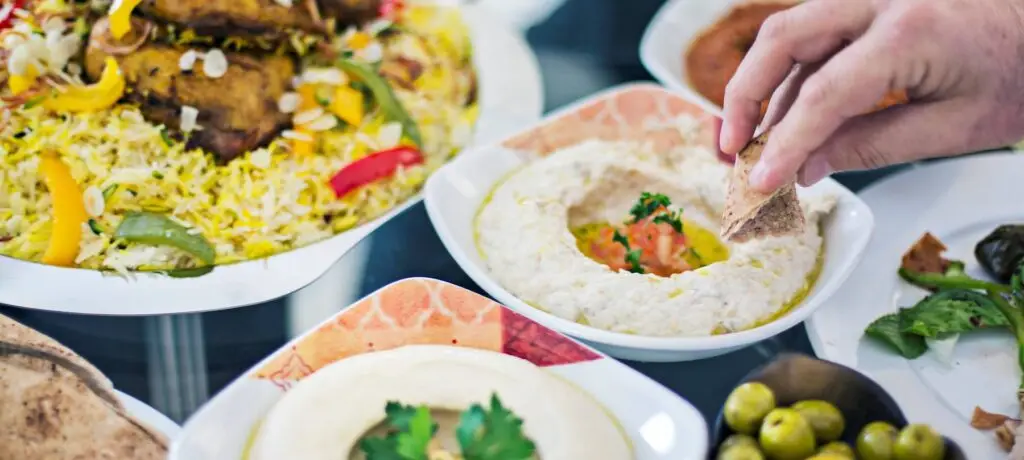
This November, Little Italy is adding one more destination to my lodging-and-libations list when Orexi, a Mediterranean-California fusion restaurant, opens inside the Courtyard by Marriott San Diego Downtown Little Italy (formerly The Little Italy Hotel). The name comes from the Greek word for “appetite” or “desire” (I like that the two seem synonymous, but I digress), and the menu will blend coastal ingredients from both California and the Mediterranean via from-scratch seasonal plates and shareables.
Orexi will be open for breakfast and dinner, the former featuring the usual suspects—omelettes, pastries, and so on—but also shakshuk and an egg bowl that comes with a tahini vinaigrette. Dinner starts with dips like whipped feta and garlic hummus; small plates like beef kofte sliders with cumin spiced meatballs, tomato sauce, and feta; and burrata Mediterránea with heirloom cherry tomatoes, marinated artichoke hearts, Kalamata olives and roasted red peppers. Entrees run the gamut from fairly light (seared Pacific salmon) to hearty (grilled butcher’s steak), and I’ve really got my eye on the desserts. Olive oil and chocolate chip cookies or sweet honey donuts? Yes, please.
On the drinks side, expect local beer from breweries like Societe Brewing Co., AleSmith Brewing Co., and Harland Brewing Co., plus wine, mocktails, and cocktails like the Hotel California with Patron Silver tequila, Illegal mezcal, chile-infused Aperol, lime, pineapple, and Fever Tree club soda. Design-wise, Orexi leans fully toward San Diego’s sandy beaches and greenery. Premier Design + Build Group used neutral tones and natural textures inspired by both coasts and added lots of hanging plants, and the space seats 89 guests at a time.
Food and beverage director James Yata comes from both a hotel and local restaurant background as the former F&B manager at Rancho Valencia Resort & Spa and general manager for Trust Restaurant Group, and it runs in the family. “My dad was a chef, so I grew up knowing that nothing brings people together like a good meal,” he says. “That’s what got me into this industry… Little Italy has such an incredible food scene, and I feel really lucky to be joining it with a fresh concept that mixes Mediterranean flavors with coastal ingredients.”
Orexi opens at the Courtyard by Marriott San Diego Downtown Little Italy (1646 Front Street) late November. Daily hours run 6:30 a.m. to 10:30 a.m. for breakfast, and happy hour and dinner from 4 p.m. to 10 p.m.
Juniper & Ivy Hosts Cayuse Vineyards For a Rare Wine Dinner
Cayuse Vineyards’ head winemaker Christophe Baron made a name for himself by planting vineyards in a weird, stony plot of land in a little town called Walla Walla, Washington nearly 30 years ago. Today, it’s one of the United States’ top wine regions (largely thanks to Baron’s gamble) and now wine collectors can’t always get their hands on bottles of Cayuse Vineyards coveted wines. But you can for one night—Thursday, November 13, at Juniper & Ivy, during a four-course wine pairing guided by J&I’s sommelier Daniel Cools. Grab a ticket before they’re gone.
Beth’s Bites
Earning a Michelin star is just one of the distinguished culinary accolades a restaurant can get. Another is a Knife, bestowed by the aptly named Best Chef Awards, an international competition recognizing the best food people around the world. Only chefs at nine restaurants in the U.S. were named in the 2025 awards, but among them were chefs Eric Bost (who earned One Knife) and William Bradley (who earned Three Knives, the highest honor). Between them, they helm Michelin-starred restaurants like Lilo, Jeune et Jolie, and three-star Addison by William Bradley. Congrats to both chefs and congrats to all of San Diego, who get to experience the pleasures of their talents!
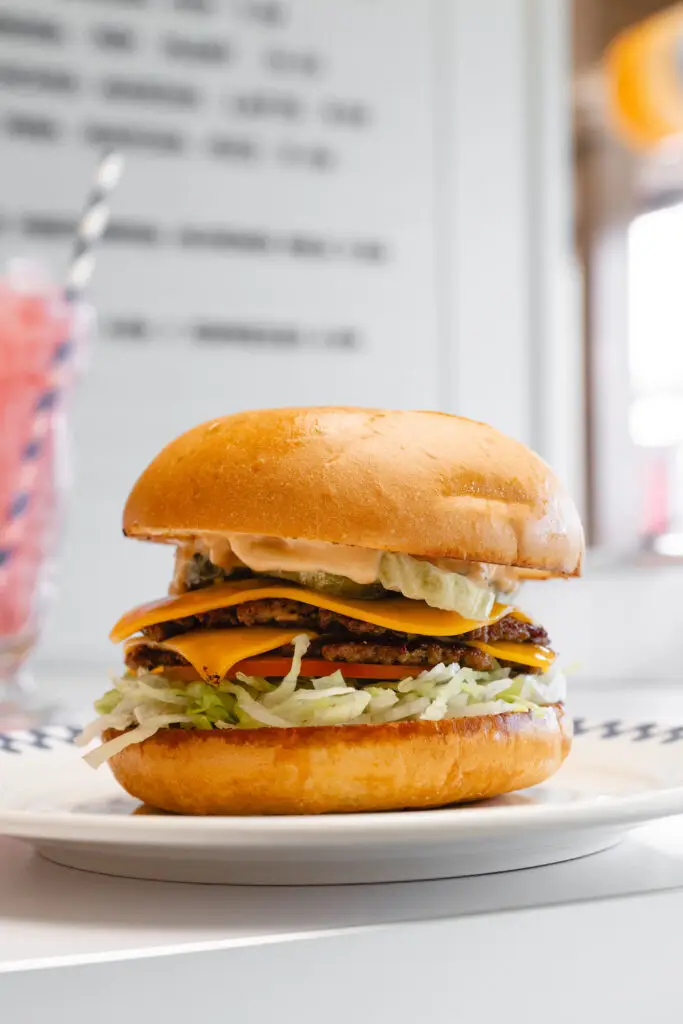
There’s a new food truck in town—in South Bay, at least. La Burguesa by chef Nate Horton (formerly Izakaya Maize) is slinging Wagyu burgers with a Mexican twist (think birria burgers and tater tots tossed in secret sauce with pickled red onions and chopped chiles). Location is on the DL (you gotta DM for details).
It’s prime fall season in Julian, and Patchwork Market is getting in on the apple action. On Friday, October 17, they’re throwing the first annual Julian Apple Days apple tasting with local orchardists and cider makers on hand to talk everything apples. Best of all, it’s totally free. Learn a thing or two about the amazing pome fruit, and maybe stop for a slice of pie on the way home. (I know I will.)
Listen Now: The Latest in San Diego’s Food and Drink Scene
Have breaking news, exciting scoops, or great stories about new San Diego restaurants or the city’s food scene? Send your pitches to [email protected].
Beth Demmon is an award-winning writer and podcaster whose work regularly appears in national outlets and San Diego Magazine. Her first book, The Beer Lover's Guide to Cider, is now available. Find out more on bethdemmon.com.
What started with a humble pie shop in University Heights has come a long way. Over the past nine years, San Diego’s Sweet & Savory Collective—parent company to Stella Jean’s and Pop Pie Co.—have built a small empire in San Diego and Orange County, focusing on almost universally adored treats: ice cream and tiny lil’ pies. (I mean, who doesn’t love pie?!)
But at the same time, co-founder Steven Torres has quietly been honing its coffee program, working with local partners like Provecho Coffee Company in San Diego and Necessity Coffee in Encinitas to source and roast beans.
After years of observation and practice, they’re ready to fully take it on. Little While, the company’s first dedicated coffee and pastry shop, will open in the former Hawthorn Coffee space later this year (3019 Adams Ave., next to Et Voila! French Bistro). Torres estimates Little While will open mid-October.
Courtesy of Little While
“At its heart, it’s inspired by the idea that life is made up of many ‘little whiles,’ fleeting moments that spark connection, joy, and reflection,” he explains. Its aim is to be a place to slow down, get comfortable, and enjoy the present. Shared treats help, especially treats created by the all-star team they’ve assembled.
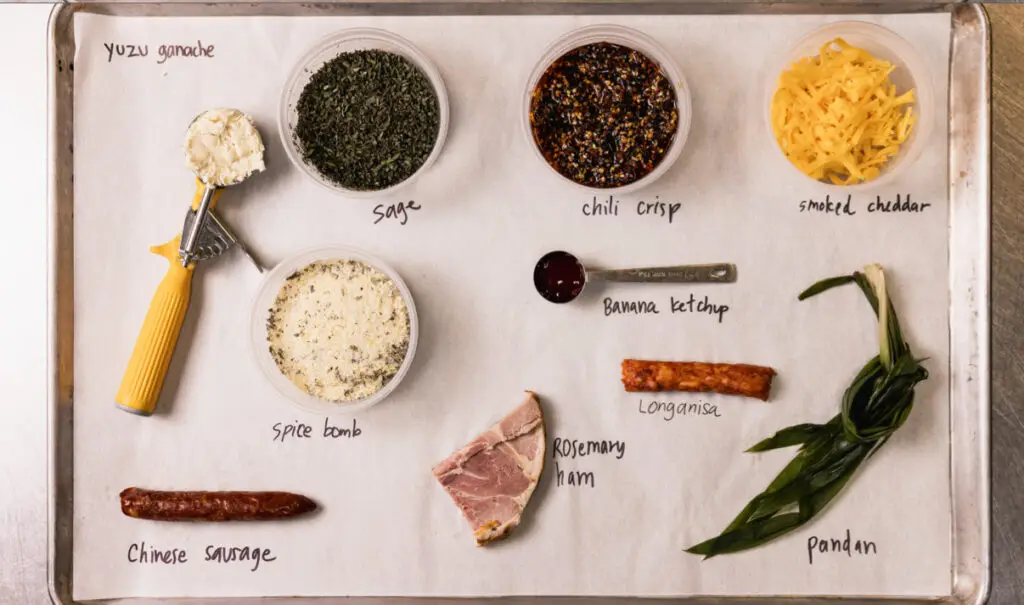
Aly Lyng (Communion, Paradis, George’s at the Cove) will spearhead the baking program alongside Justin Gaspar (Hommage Bakehouse) with a mix of globally-inspired pastries alongside traditional favorites. Torres promises the pastry case will “stop you in your tracks,” utilizing ingredients like guava jam, chile crisp, banana ketchup, Chinese sausage, and more. Chef and co-founder Gan Suebsarakham will oversee the menu, with Madyson Hodge of Sweet & Savory Collective as culinary operations manager.
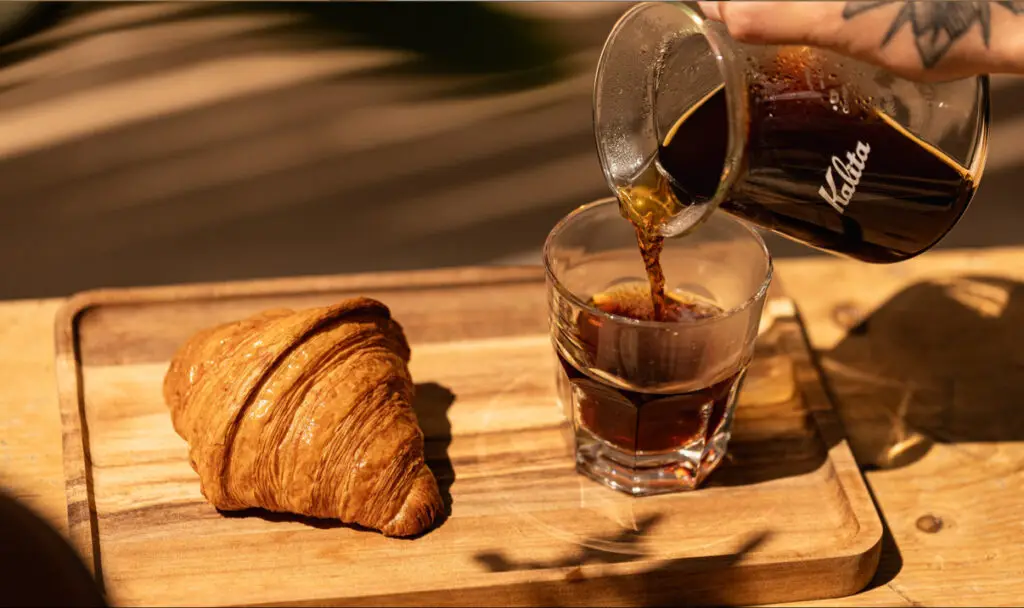
Torres and Nayton Rosales are co-leading the coffee and roasting side of things, and he hopes to launch their own roastery soon. They’ll have a full espresso bar with pourovers, seasonal drinks, and some more global touches like kadak chai, matcha, and traditional Thai tea.
Courtesy of Little While
They want to honor ingredients in their purest forms—for instance, they’ve sourced their matcha from the same purveyor as long as they’ve been in business (nearly 10 years). Their approach will be less outrageous foamy matcha sugar bombs—not that there’s anything wrong with that, he stresses. Little While’s will simply be more of a spotlight on the technique and history behind each product.
For the vibe, expect more chill and less bright color than Stella Jean’s technicolor pink. “This is going to be more cozy, warm wood, that kind of energy,” says Torres, pointing to Little While’s architecture firm (Tecscape) and design (Solstice Interiors).
The restaurant will open early, probably 6:30 or 7 a.m. daily, closing around 4 p.m. on weekdays with later hours on weekends. “Little While… [is] the kind of café we’ve always looked for in other cities,” he says. “We’re excited—and a little nervous—to bring it to life at home in San Diego.”
Little While opens mid-October at 3019 Adams Avenue.
San Diego Restaurant News & Food Events
CTZN Brings Tastes of Spain to Solana Beach
Willy Wu Jye and Karine Beers—the sibling duo behind standout French cafe, La Clochette—recently opened its latest venture in Solana Beach. CTZN (pronounced “citizen”) is a “celebration of life, a celebration of the Basque culture, California creativity, and the universal joy of coming together around food and drink,” says Wu Jye, fusing their interest in Basque cuisine with California coastal dining.
The pintxo-style menu features plenty of wood-fired items and sharable plates, like classic Spanish paella, lots of seafood, and of course, Basque cheesecake, and the indoor/outdoor restaurant is already soft open (with a grand opening planned for September 3). Wu Jye says they chose the name as an homage to a restaurant they frequented as kids in Madagascar, also named Citizen. “That memory became the seed for the name,” he explains. “CTZN is both a tribute to such a rich culinary and cultural heritage and a humble gift to the beautiful community of Solana Beach.”
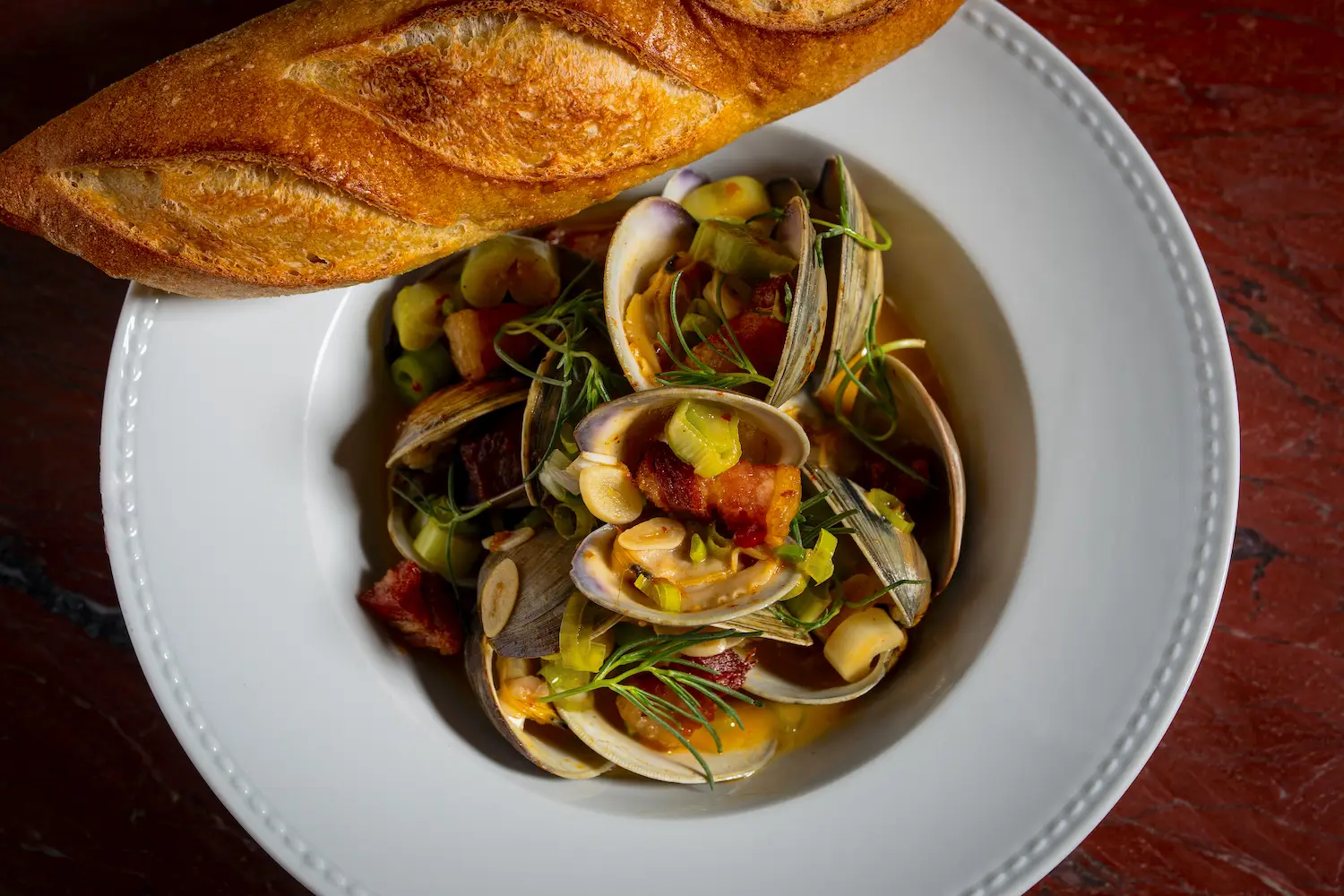
Photo Credit: Kimberly Motos Clams and pork belly with Tokyo negi
Beth’s Bites
Local author and San Diego Magazine contributor Mara Altman has dived into the world of body hair and nuclear boob reactors—now, she’s ready to talk to toddlers about what’s food (and what’s not). Her newest book, That’s Not Food!, comes out on October 13 and is available for pre-order now. (It’s not too early to start thinking of the perfect food-related gift idea for the new parents in your life!)
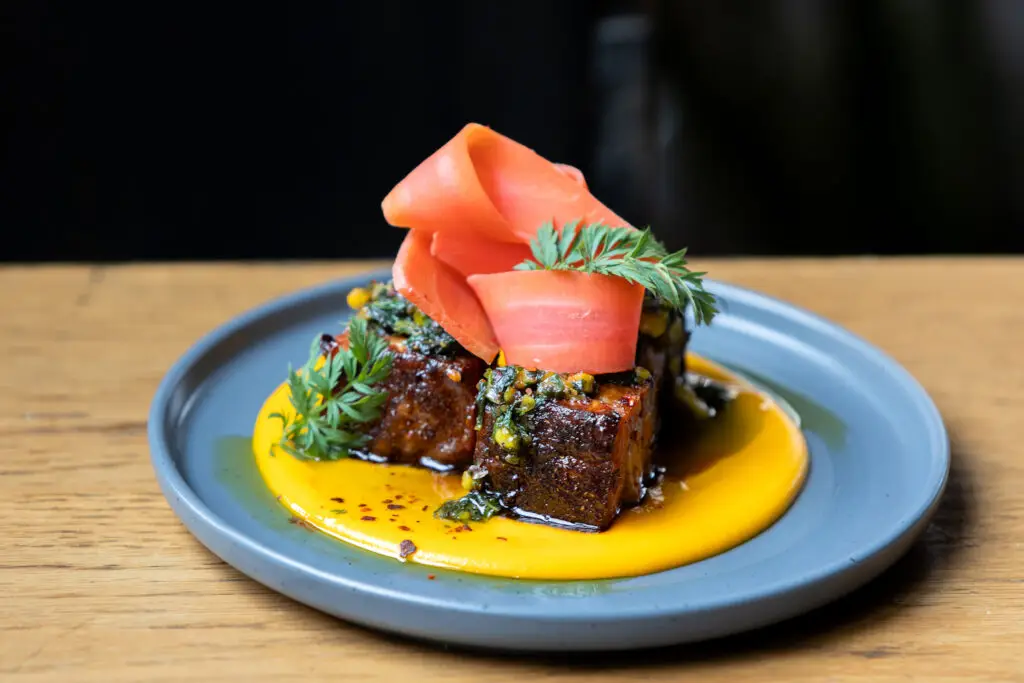
It’s safe to say that Tara Monsod is on one hell of a run in the San Diego culinary scene. She’s been kicking ass as the executive chef at Animae since 2020, now pulling double duty at Le Coq in La Jolla, she’s been up for Best Chef in California at the James Beard Awards (twice), and now, she’s infusing more Filipino touches to Le Coq, which originally launched as a Parisian-esque steakhouse. It’s an idea that feels right. Her new menu will showcase Asian-inspired ingredients and dishes, like bluefin tuna katsu with porcini, yu choy, capers, brown butter and soy bordelaise; clams and pork belly with Tokyo negi, green garlic, Pernod and yuzu kosho; and rosé snapper with spring peas and calamansi beurre blanc.
It’s time to go bananas! Yes, the Savannah Bananas are coming to Petco Park, and if you’re one of the lucky lottery winners heading to the games on September 5 and 6, you’re in for a guaranteed wack-a-doodle time. But nearby restaurants and bars are getting into the Banana Ball fun, offering drink specials to honor the ridiculous game in all its glory. Lionfish Modern Coastal Cuisine will have “The Peelin’ Good” with bourbon, Aperol, banana, lemon, and demerara; Havana 1920 will offer a “Havana Banana,” a twist on a banana daiquiri; and El Chingon will serve banana margaritas (to name just a few). Keep an eye out for more banana-related shenanigans, as I’m guessing there will be plenty.
Listen Now: The Latest in San Diego’s Food and Drink Scene
Have breaking news, exciting scoops, or great stories about new San Diego restaurants or the city’s food scene? Send your pitches to [email protected].
Beth Demmon is an award-winning writer and podcaster whose work regularly appears in national outlets and San Diego Magazine. Her first book, The Beer Lover's Guide to Cider, is now available. Find out more on bethdemmon.com.
Today’s seniors are more connected than ever, with a renewed focus on retirement as a time of discovery and enriching experiences. The ultimate reward for a retirement well-earned is the wisdom to appreciate it all, and what better place to enjoy that unique perspective than Vi at La Jolla Village, in the heart of San Diego.
All-access pass to good living.
As a Continuing Care Retirement Community (CCRC), Vi provides access to a connected and fulfilling community while making it easy to plan for future care, should the need ever arise. With a care plan in place, residents enjoy greater financial predictability and long-term value, freeing them to focus on making the most out of retirement.
Resort-style amenities at the epicenter of a cultural hub like San Diego offer a retirement experience unlike any other. Paired with exceptional dining, spacious accommodations and dedicated staff, the best of maintenance-free living is all around. And with the introduction of Vista 360 Well-Being, Vi’s panoramic approach to wellness, there are more ways than ever for residents to access it all.
The harmony of mind, body and community.
Courtesy of Vi at La Jolla Village
The key to longevity is striking the right balance in maintaining an active lifestyle with an active mind in a fulfilling community. With newly renovated community spaces and restaurants, Vista brings a variety of opportunities for residents to elevate their well-being through Vi-exclusive “Signature Experiences.”
Vista Enrich takes an evidence-based approach to brain vitality, keeping residents at the forefront of cognitive health through exergaming (exercising + gaming), nutritional plans and informative workshops. It is also home to The Brain Vitality Studio, an innovative facility dedicated to cognitive fitness that has garnered national recognition.
Vista Discover invites residents into stimulating educational experiences, from chef-led cooking demos and guided wine tastings to lectures at local universities and intimate lectures following cultural outings.
While Vista Enrich focuses on brain health and Vista Discover engages residents intellectually, Vista Explore cultivates a sense of adventure through curated travel and local excursions. But broadening one’s horizons doesn’t always require a plane ticket. One recent event brought a taste of the world right to the community: an onsite “jazz cruise” featuring live music and global cuisine served at a series of themed “ports” all within the community’s own ballroom.
“Location, location, location”
Courtesy of Vi at La Jolla Village
One of the biggest perks of life at Vi at La Jolla Village is its proximity to just about everything. With easy access to transportation and local attractions just steps away, residents can explore and engage with their community at their own pace.
“There are trolley and bus stops within a 5-minute walk that will get you to the beach, UCSD Campus, medical appointments, downtown La Jolla or San Diego, et cetera. We rarely use our car,” said resident Tom Yager.
With the best of San Diego just steps away, residents don’t just live in the city, they live within reach of everything that makes it special.
The best of all worlds.
Courtesy of Vi at La Jolla Village
At Vi at La Jolla Village, retirement isn’t a chapter to slow down; it’s an invitation to discover more. Tailored community experiences created by Vista, paired with the vibrant pulse of San Diego just outside the door, mean that residents don’t have to choose between security and adventure, connection and independence. They get all of it.
This is what an all-access pass to good living looks like: the comforts of an elevated lifestyle, a community built for growth and a city made for discovery – all in one place.
To learn more about Vi at La Jolla Village or for details on available floor plans, visit ViatLaJollaVillage.com/SDM.
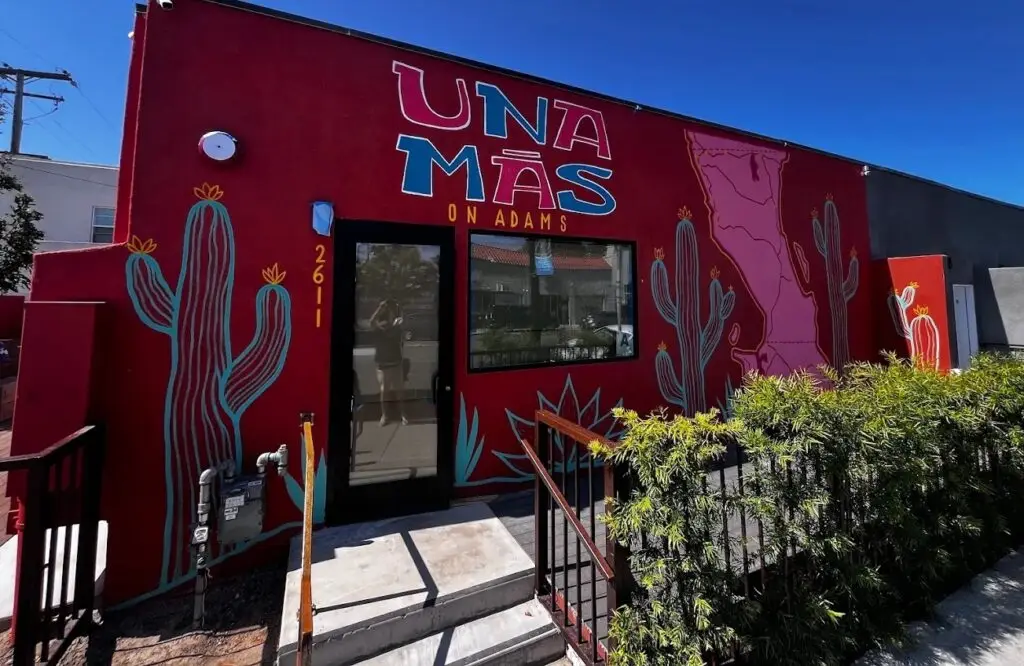
Una Más isn’t even open yet, and already the Baja-Southern California fusion concept has lived several lives. First, the University Heights space was slated to become a German biergarten (it didn’t.) Then, Collin Corrigan hoped he could open it as a cross-border brewpub earlier this spring (he couldn’t). But at long last, Una Más will open on Friday, August 1.
Corrigan founded Ensenada’s Cervecería Transpeninsular in 2016, and was a former partner in El Cruce+241 in Chula Vista before Brewjeria Company took over the concept. To get Una Más over the finish line, he enlisted some high-profile names in the local food and drink scene. He tapped Danny Romero (one of the new owners of The Lion’s Share) and Ian Ward (Ponyboy, Addison) of Service Animals to consult on menu development with executive chef Real Coronado. Coronado has worked in restaurants in Tijuana (Casa de Coronados, Savage) and San Diego, including with Romero at his pop-ups Tortoise, Two Ducks, as well as Wormwood and Ponyboy.
Along with Geoff Hill (co-founder of Baja Bound Insurance) and creative consultants Jeff Lozano and Danny Goycoolea (OverPour Media), Una Más’s team is a hodgepodge of top-tier San Diego and Baja California talent. That’s precisely what’s going to make it stand out, says Lozano.
“These particular players, at this particular time, in this particular neighborhood, with this particular idea, are really what sets it apart from any other spot in North Park,” he says.
Una Más’ menu features Ensenada-style cuisine, specifically emphasizing a lot of fresh seafood. Romero wanted to take it one step further. “[Service Animals] had been simmering on a concept that was a play off of Taco Bell—like an elevated Taco Bell,” Lozano explains. They took familiar favorites, like Taco Bell’s signature nachos, and kicked them up a notch using premium ingredients and preparation techniques. Other items include an escabeche pickle dip, coconut and tomatillo aguachile, and various vegan/vegetarian and gluten-free items.
Despite the playful twist, Corrigan emphasizes the menu will be a serious representation of the best of Baja. “It’s still very, very much Ensenada-style food, with a couple dishes that have a fun spin,” he promises. There are also 20 taps featuring San Diego craft beers and Baja breweries, plus NA beers, ciders, kombucha, agua frescas, and wines from Valle de Guadalupe. A coffee counter will be open daily starting at 7 a.m. as well. Once open, Una Más will offer lunch and dinner service, and will launch a brunch program on Saturdays and Sundays a few weeks after opening.
“The full intention of this business is to provide a family-friendly, community-driven, hyper-local establishment where people can gather, enjoy food and libation sustainably, and have your family and your pets there and enjoy what we know down south of Mexico and what we all know in San Diego,” says Corrigan.
Una Más opens at 2611 Adams Avenue on Friday, August 1. Hours will be Monday through Thursday, 11 a.m. to 9 p.m.; Friday and Saturday, 11 a.m. to 10 p.m.; Sunday, 11 a.m. to 8 p.m. The coffee counter will open starting at 7 a.m. every day.
Photo Credit: Kimberly Motos
San Diego Restaurant News & Food Events
Dockside Night Market Returns For One Night Only
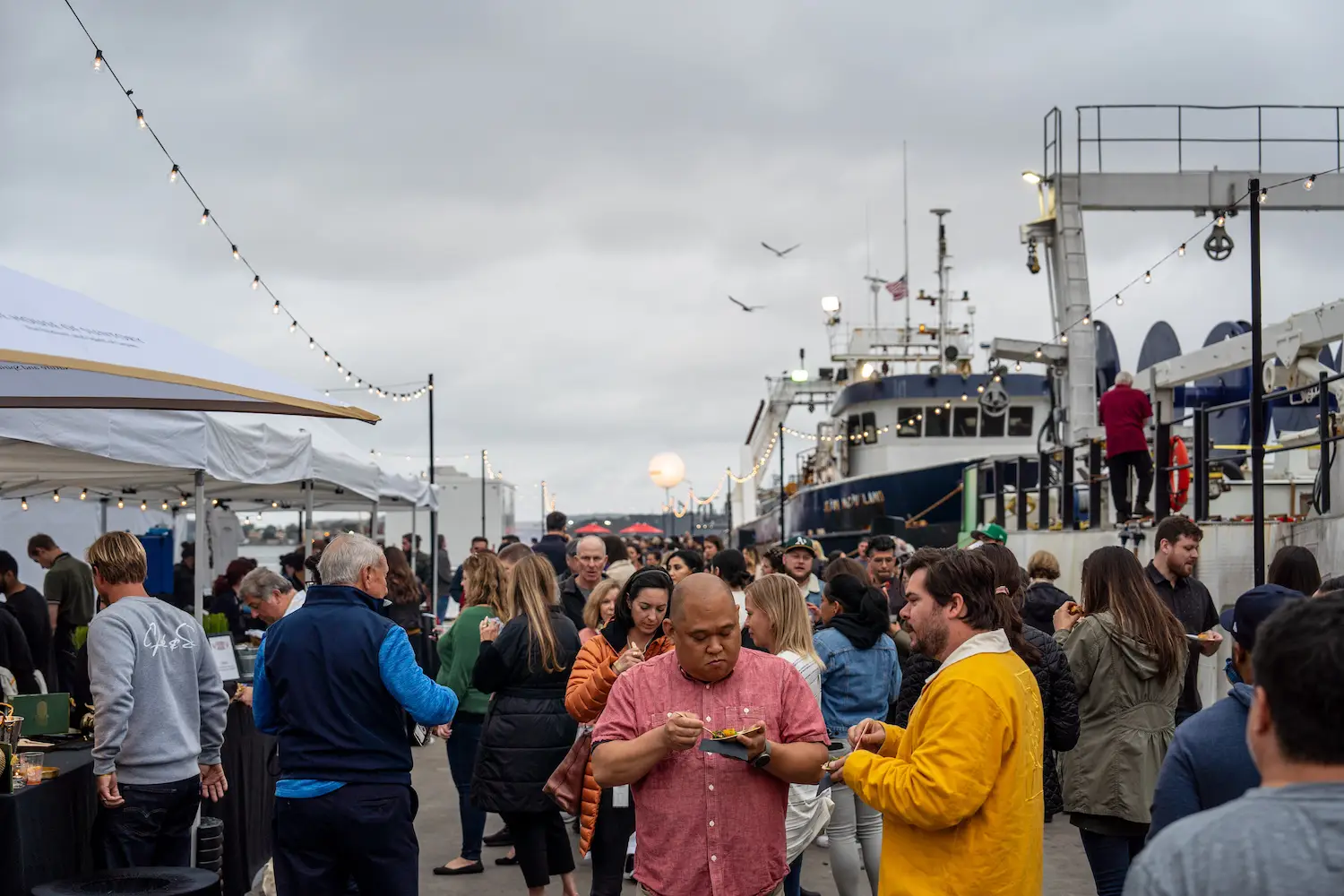
In novels, the concept of a Night Market swirls around mystery, intrigue, and a bit of danger. It’s a place where magical folks come to buy, sell, and trade all manner of enchanted items. San Diego doesn’t have one of those (that I, a non-magical person, am aware of, at least), but what we do have is much more delicious. On Thursday, August 7 from 6 p.m. to 10 p.m., Dockside Night Market returns to Tuna Harbor Pier for a one-night culinary gathering centered around our abundance of locally caught seafood. Expect cocktails, live music, and of course, plenty of fresh seafood prepared by local chefs from restaurants like Bica, Campfire, Ponyboy, Herb & Sea, Mabel’s Gone Fishing, Ironside, and more. Leave the kiddies at home for this 21+ event (it’s past their bedtime anyway).
Beth Demmon is an award-winning writer and podcaster whose work regularly appears in national outlets and San Diego Magazine. Her first book, The Beer Lover's Guide to Cider, is now available. Find out more on bethdemmon.com.
Over 18 years of eating through the city as a food writer—a profession that feels like it needs an “ahem” attached to it—I’ve kept a list of the dishes and drinks and places that floored me. The ones I yammer on about to strangers, or share with people I love who don’t owe me money. For Comic-Con, I picked through that list to share 50 of my favorites within striking distance of the comic core: Gaslamp, Barrio Logan, Little Italy, Mission Hills, Coronado (one simple ferry ride away), Golden Hill, and a wild place in North Park. Remember, even if you just ate and you’re a little full, the week is about role playing. Role play still being hungry.
Here are the best restaurants, and what to order, near downtown San Diego.
Photo Credit: James Tran
Callie
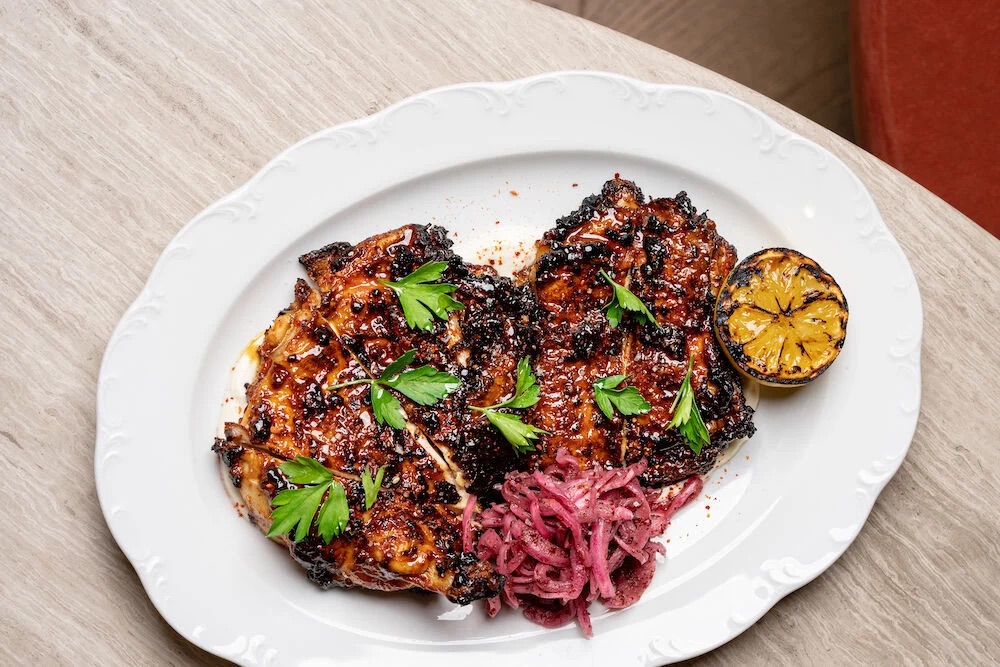
What to Order: Aleppo Chicken
Callie will bring home San Diego’s next Michelin star, or I will lose all faith in the system. The fermented and pickled carrots with dukkah. The Aleppo chicken. The everything. Chef Travis Swikard is on another level.
This place is so charming it hurts. If an alpaca were a restaurant. Like you’re dining in an ADU built for someone who is loved. Wolf in the Woods is a passion project for Johnny Rivera (Hash House A Go Go) and chef Carmine Lopez, and you can feel that passion. It snuggles you with Spanish wine. The sweet corn and piñon soup might be the best bowl of hot liquid in the city.
1920 Fort Stockton Dr Suite C, Mission Hills
Photo Credit: Kimberly Motos
Kingfisher
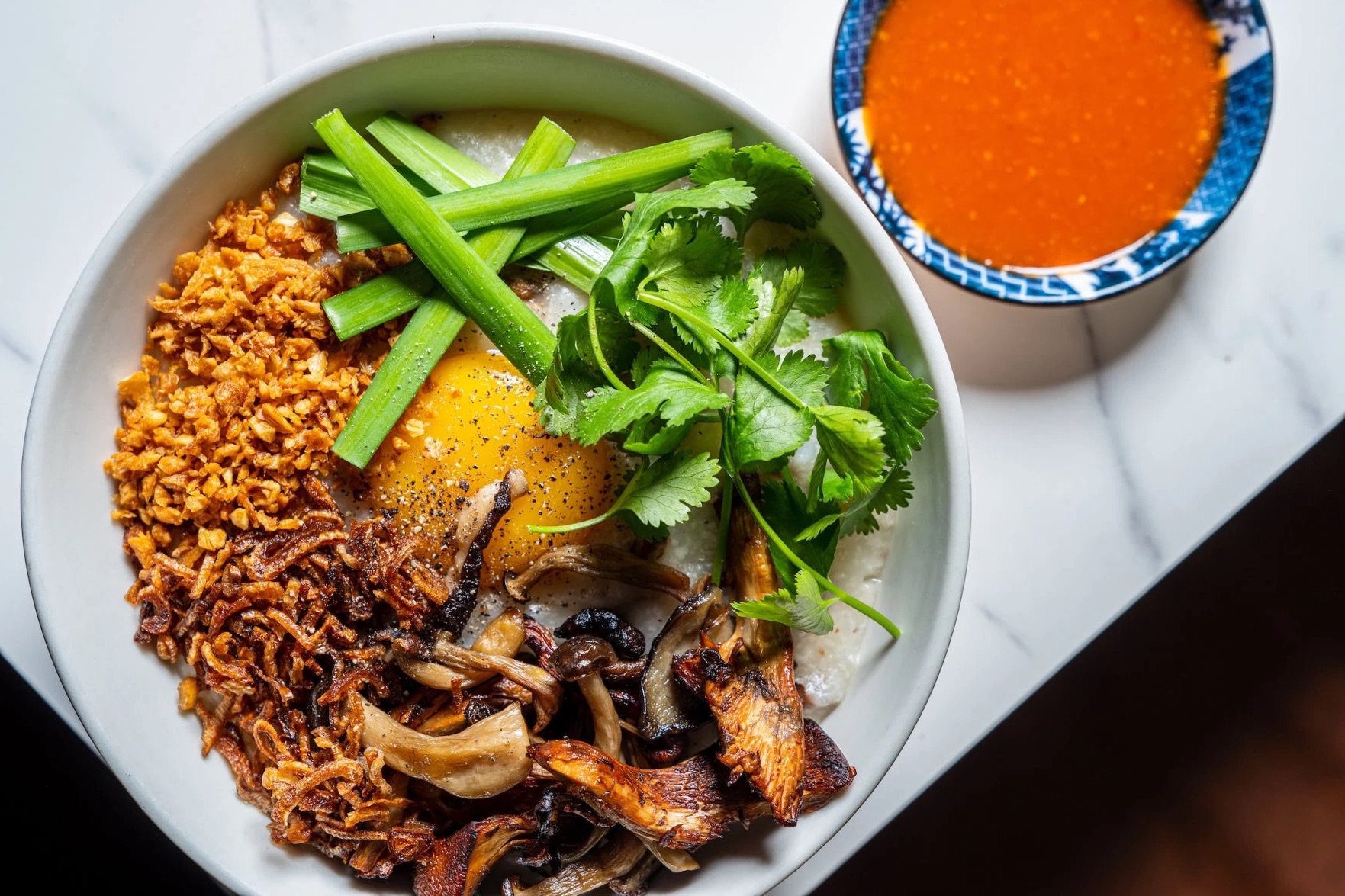
What to Order: Wild Mushrooms and Chino Farms Corn Congee
This is where you want to go for a Vietnamese-centric but pan-Asian exploration of fish sauce. Get the beef tartare, the whole fried rockfish in ginger sweet-and-sour sauce, and the congee with wild mushrooms.
2469 Broadway, Golden Hill
Top of the Hyatt
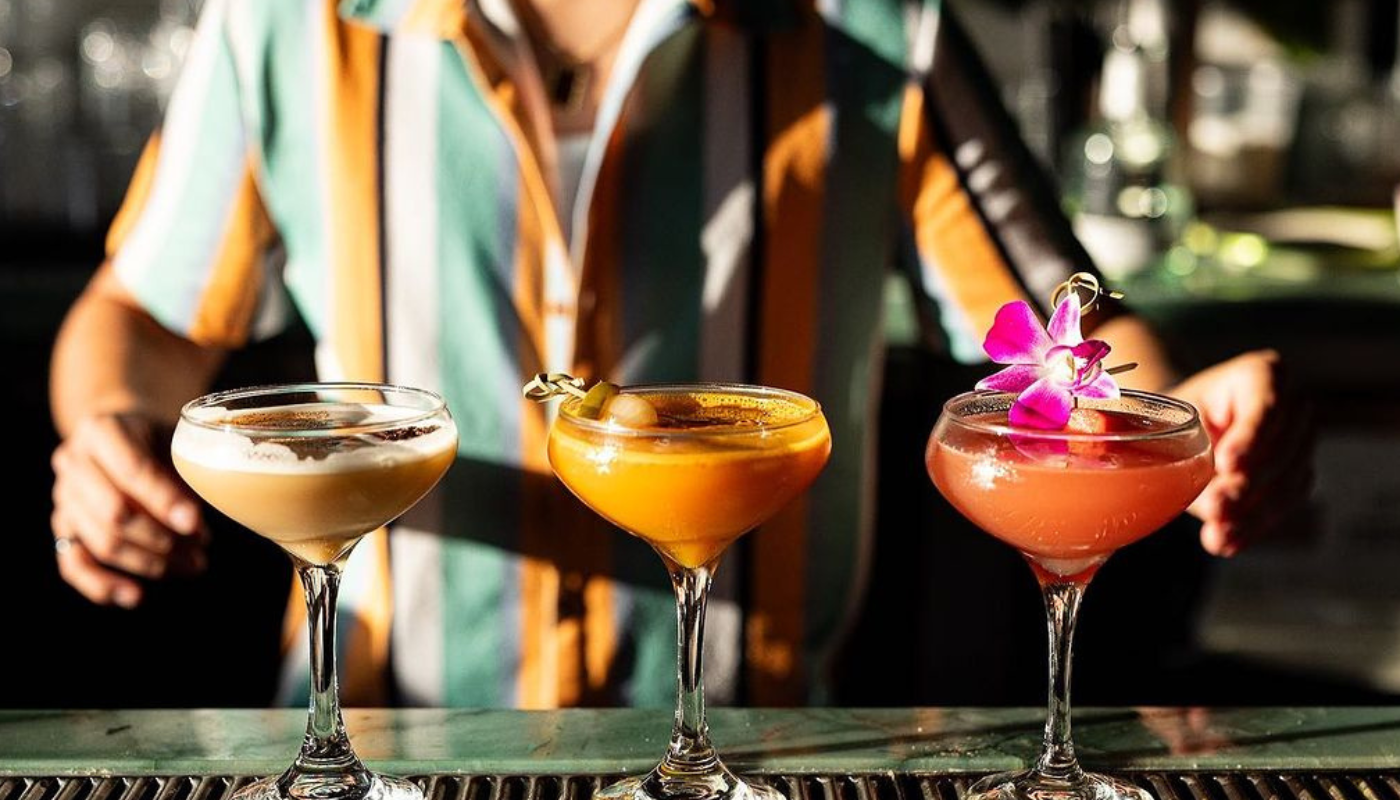
What to Order: Cocktails
It’s the view from the top and edge of our world—a glass box of emotion, 40 floors up, looking down on all that water and sunset. Pick a cocktail, any cocktail.
1 Market Pl, Embarcadero
Courtesy of Mister A’s Restaurant
Mister A’s
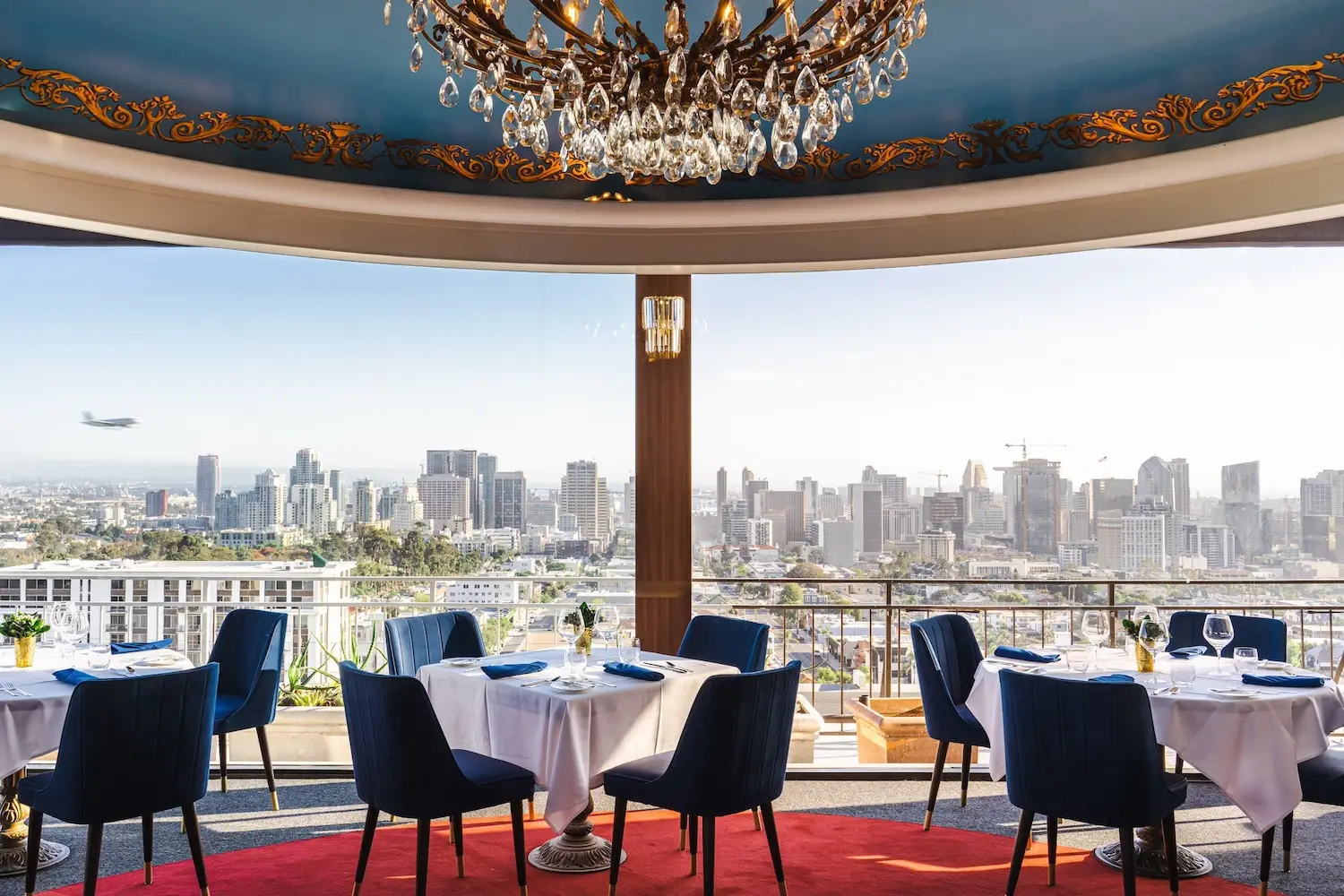
What to Order: Maple Leaf Farm Duck Breast
Mister A’s started as a Scorsese-type place where people enjoyed the fruits of some gray-area capitalism with a holy **** view of the entire urban core. Wave at planes as they land at eye-level and the sun sets over the watery cliff in the distance. Two years ago, longtime owner Bertrand Hug handed the reins to longtime GM (and damn good human) Ryan Thorsen. He’s breathed new life into the place with some key renovations. It’s a bucket worthy of the list. The duck with huckleberry gastrique is chef Stephane Voitzwinkler’s specialty.
An F.-Scott-Fitzgerald-meets-Busta-Rhymes steakhouse from the weirdos of CH Projects. A magic room that feels both alive and haunted. Bone marrow’s a pretty fantastic fat, but it needs flavor. B&R serves it with Burgundy escargot on toasted bread, and the garlic is fantastic.
1909 India St, Little Italy
Courtesy of Old Town San Diego
El Sueño
What to Order: Elote & Cocktails
A hell of a patio in Old Town, run by Pietro Busalacchi, one of the better drinks people in San Diego. The elote is fantastic—half a corn cob grilled; soaked in veggie broth; and seasoned with mayo, melted butter, chili powder, cumin, smoked paprika, a touch of sugar, garlic and onion powder, Cotija cheese, and chives. Every drink here is good.
2836 Juan St, Old Town
Cowboy Star
What to Order: A5 Japanese Omi Gyu
There are three main names when it comes to the best Japanese Wagyu. Most people who love the melting beef know two of them (Kobe and Matsusaka). The third type is omi gyu, the original Wagyu that was served to shoguns 400-plus years ago. Compared to the other two, it’s still got that high fat content that makes the Wagyu magic, but it’s lighter, more delicate, cleaner tasting. And Cowboy Star—the beloved local steakhouse run by chef/partner Victor Jimenez—is the only place I know of in San Diego that serves it. You’re not coming to Comic-Con looking for small experiences.
640 Tenth Ave, East Village
Courtesy of Wikipedia Commons
Las Cuatros Milpas
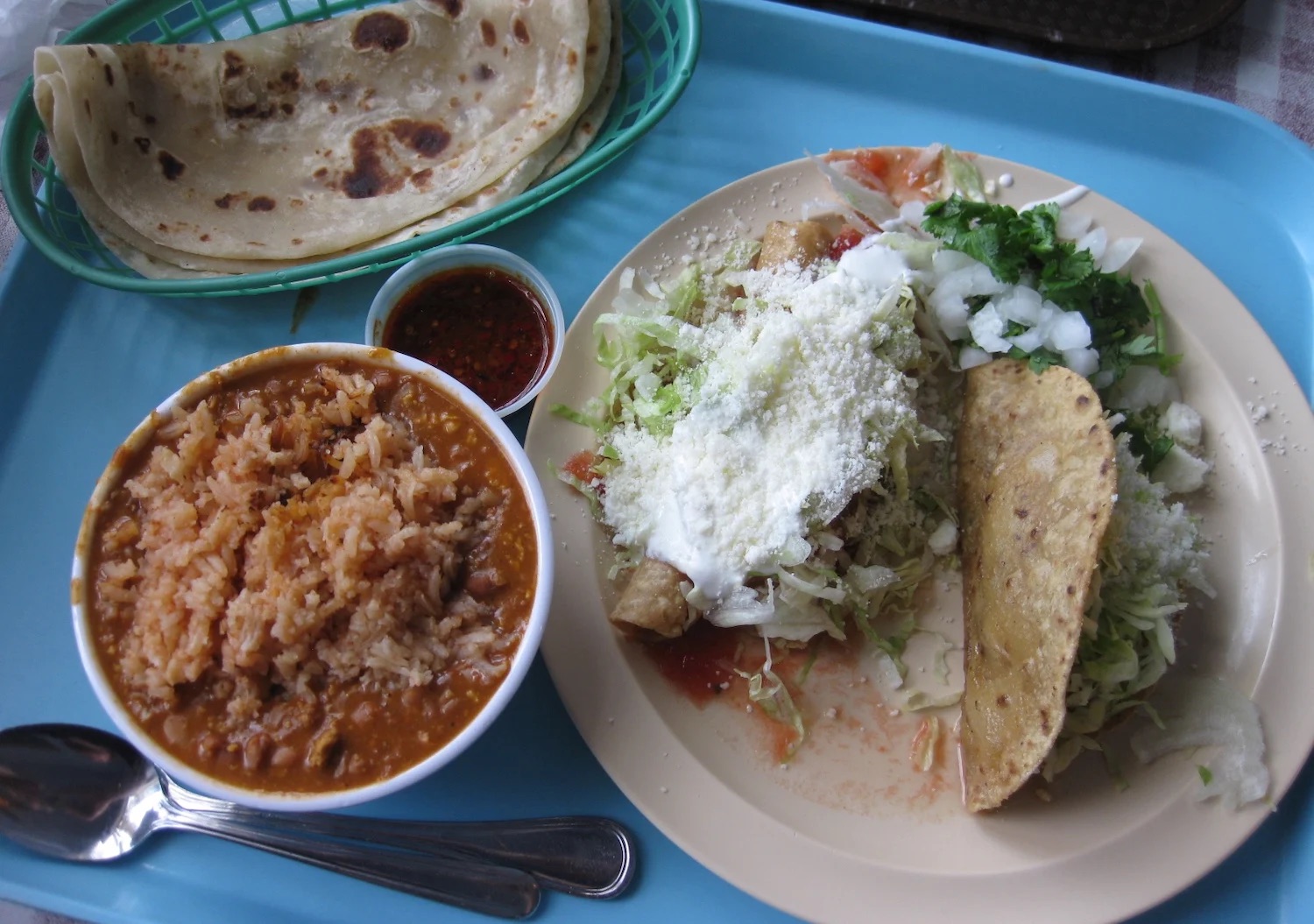
What to Order: Tacos
Yes, there are designer-ier tacos. But this family’s been serving homemade tacos with fried-before-your-eyes tortillas since the dawn of time. Cash only.
1857 Logan Ave, Barrio Logan
J & Tony’s Discount Cured Meats and Negroni Warehouse
Troy Johnson is the magazine’s award-winning food writer and humorist, and a long-standing expert on Food Network. His work has been featured on NatGeo, Travel Channel, NPR, and in Food Matters, a textbook of the best American food writing.
Atrial fibrillation (AFib) is the most common cardiac dysrhythmia, affecting more than 10 million people in the U.S. The condition, characterized by an irregular and often rapid heartbeat, raises the risk of stroke, heart failure and death. Advances in electrophysiology, a subspecialty of cardiology focused on the heart’s electrical system, are transforming how AFib and other dysrhythmias are diagnosed and treated. Scripps electrophysiologists use state-of-the-art therapies—some of which they helped develop. They were instrumental in the pre-FDA approval research for an effective new treatment, pulsed field ablation, and are on the forefront of other innovative treatments. Click here to learn more.
For more nutrition, wellness, and healthy living tips, sign up for the San Diego Health newsletter here.