And just like that, another year of dining out in San Diego is done.
Of all my nine-or-so years covering the scene, I think 2023 has been one of the most exciting. Michelin continues to shower our city with well-deserved praise, confirming what us locals knew all along: Our dining scene is better than it’s gotten credit for, something we’ve been banging the drums about at SDM for years (no big deal, it’s cool being first. But we’re glad everyone else has finally caught up).
In addition to seeing a glut of top-notch openings, we’re also still emerging from the antisocial, more locked-down days of years past. Pop-ups are taking advantage of real estate openings, neighborhood bistro menus at places like Juan Jasper and Wolf in the Woods are luring diners with comforting dishes, and people are wanting to just get out there—to eat, yes, but also see and be seen. To have an experience.
That means San Diegans aren’t just sticking to the tried-and-true spots. They’re also looking for what’s new, including Mission Valley, if you can believe it, and Barrio Logan, a neighborhood with a dining scene that’s been on the edge of exploding for years. I think the end of 2023 may have pushed it over the edge: It’s a bonafide destination now, and it’s popping off.
Here’s what else went down in San Diego’s food world in 2023 and what you can expect to see in ’24.
Photo Credit: Jared Cross
Local Restaurants Embrace Maximalism
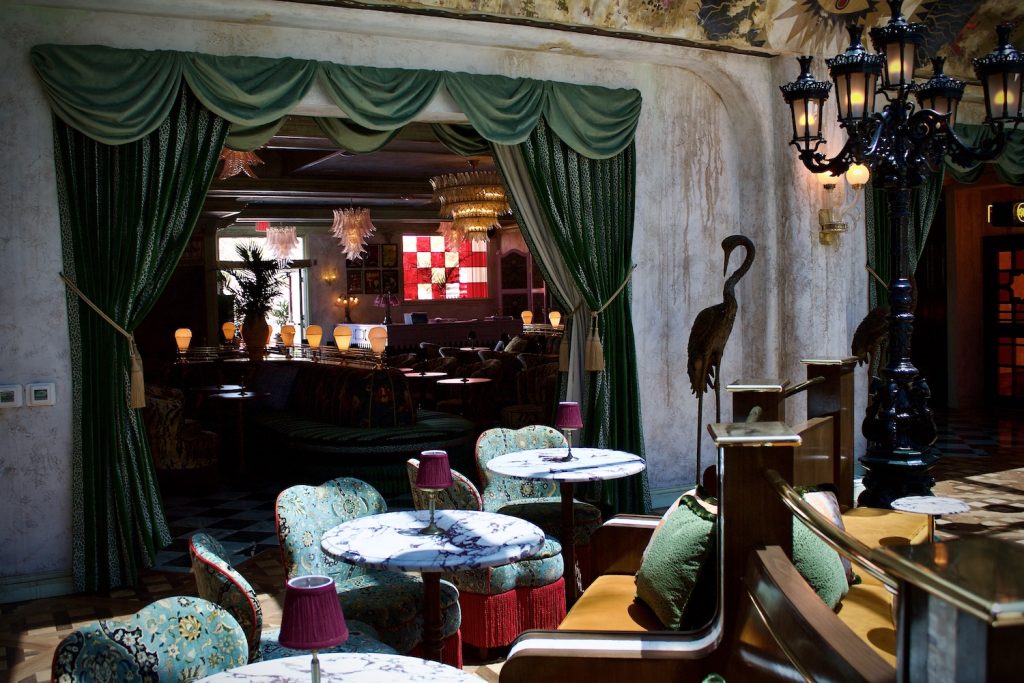
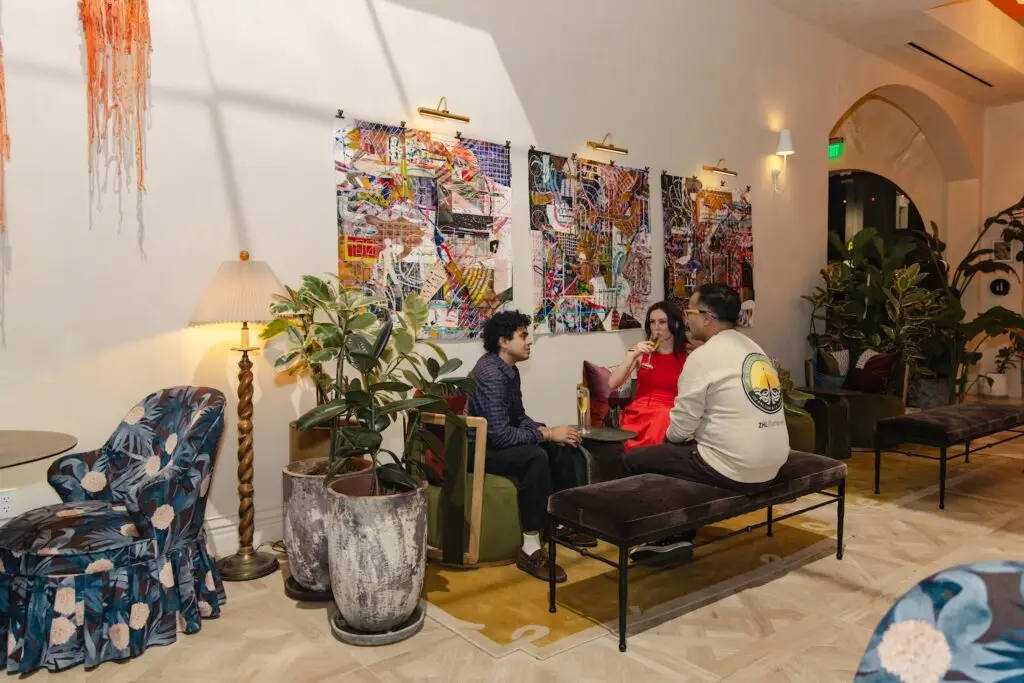
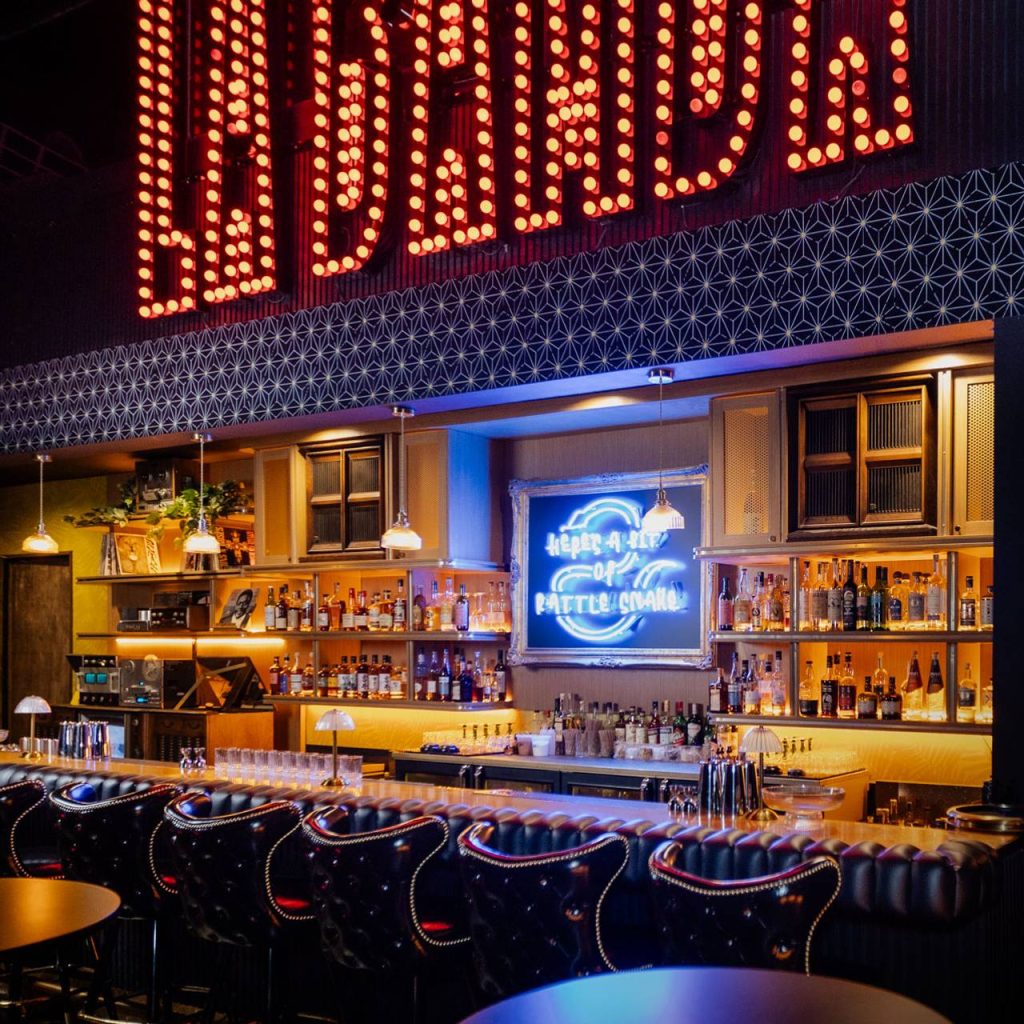
Look around at San Diego’s new restaurant builds, and you’ll notice a few things many have in common: prints, plants, and plush fabrics galore. Gone is the era of beige-on-gray-on-beige color palettes, of Scandi-neutral everything. The world is on fire, and whether or not the pandemic is actually behind us, people have emerged, and they want to feel things. If the Medici family dropped acid and embarked on an upscale redesign of the Rainforest Cafe, the results would look a lot like newer SD spots such as Paradisaea, Wolfie’s Carousel Bar, Kingfisher, the revamped Mister A’s (especially the blue-velvet private dining room), Mothership, Marisi, Seventh House, and every dining concept at the LaFayette Hotel.
Earlier restaurants like Animae, Morning Glory (and all CH Projects’ eateries), Herb & Wood, Kindred, Realm of the 52 Remedies, and Seneca Trattoria helped usher in this trend, opting for glitz and glamour over anything sleek, like, say, the dining room at Callie, which is beautiful but austere. These were opened piecemeal over time. Now we’re seeing the maximalist approach at restaurants all over the county, and, as a result, it’s never been more fun to dine out (or stare at the walls).
Courtesy of Craft House
Mission Valley Becomes Cool (We Swear!)
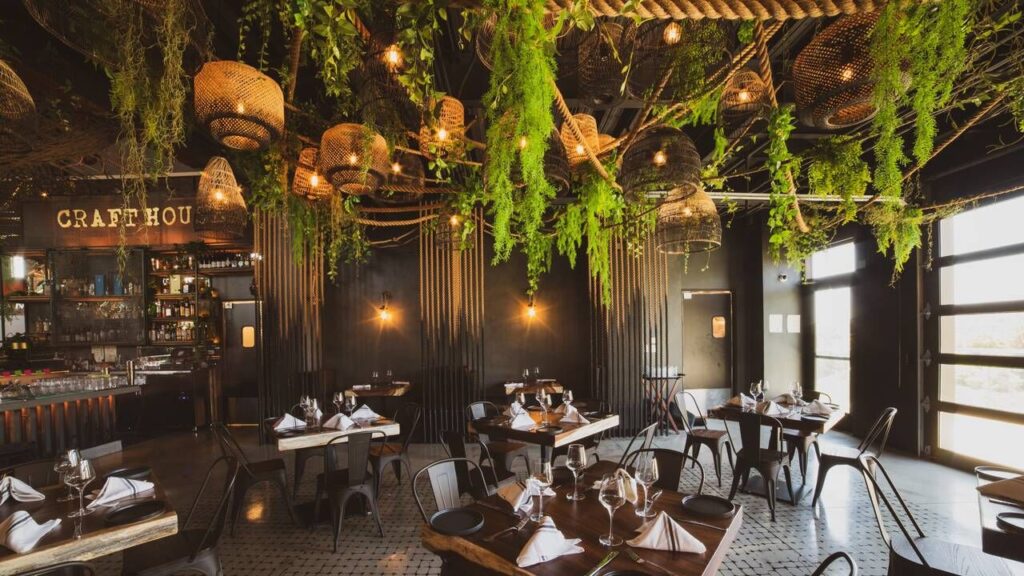
Believe it or not, San Diego’s next dining hot spot might be Mission Valley. In 2023, many car dealerships and other long-held businesses in the area began selling off land. Restaurants—brick-and-mortars with razor-thin margins always looking for a deal—are taking their places. Novo Brazil Brewing is opening a giant, screen-filled, multi-sensorial food-kombucha-and-beer wonderland targeted at sports fans. Gravity Heights is also launching a new concept. Plus, Fashion Valley is revamping its food and beverage offerings with spots like Craft House, following in the footsteps of other major shopping centers like UTC. Mission Valley: It’s no longer just Target and the mall.
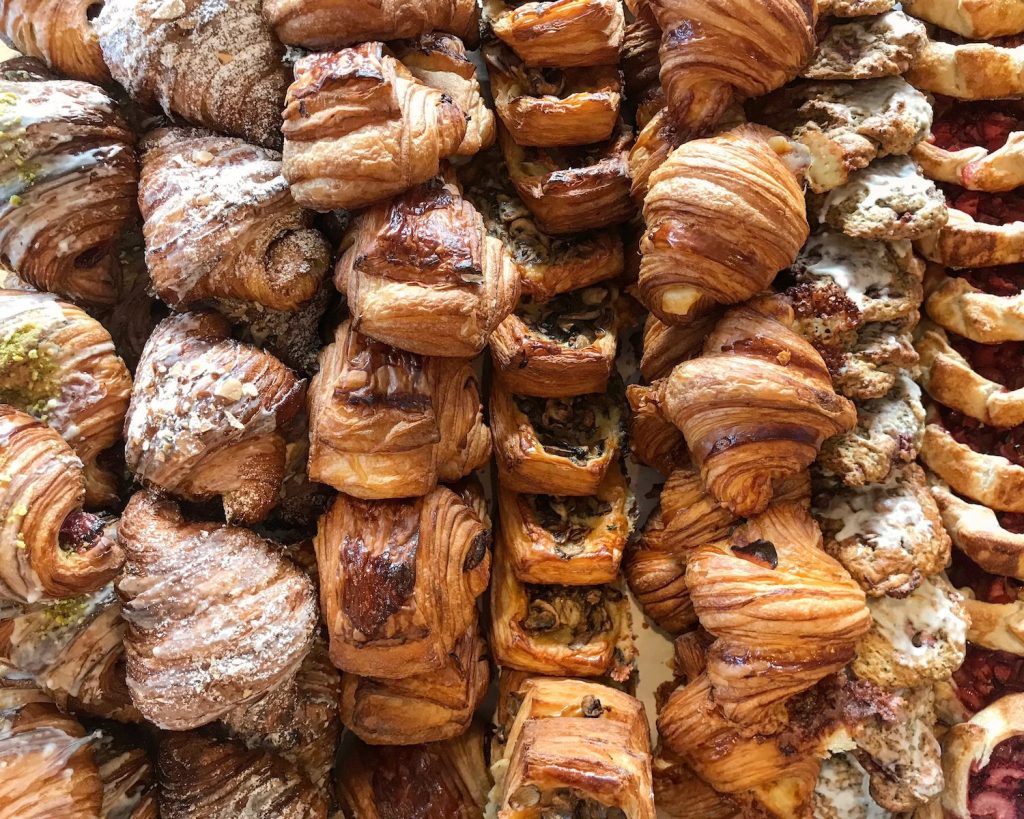
Arguably, we are living in the golden era of San Diego bakeries. Part of this is, undoubtedly, the result of all kinds of Covid-era kitchen tinkering. Pop-ups transitioned into permanent businesses as lots of properties suddenly became available. While there have always been great bakeries throughout the region, lately it seems as if a new and excellent option appears every week.
Wayfarer led the way in 2018 as a big-name bakery worthy of the buzz, but since then, many others have burst onto the scene, especially in the last year or two. Izola delighted the masses with its enormous, buttery croissants; South Park’s sourdough temple Secret Sister revolutionized the donut; PB’s Wildflour also paid strong tribute to sourdough everything with creative loaves; Rikka Fikka brought Japanese bakery treats and artisan coffee front and center (and founded a semi-permanent pop-up in the East Village); and Relic Bageri melded Danish creativity and precision with global flavors (you can find them at a semi-permanent space in Miramar and pop-ups throughout the county).
Convoy and Mira Mesa have also seen an influx of bakeries, specifically of the east Asian variety: Taiwanese blockbuster Sunmerry Bakery opened in December, as did Flour Atelier in Kearny Mesa.
There’s more to come, too. Next year, downtown welcomes Adrian Mendoza’s Knead, which will be run in partnership with The University Club on the ground level of Symphony Towers.
Photo Credit: Luciana McIntosh
Inflation Impacts Restaurant Prices
’Tis the season of the $100 egg. Not every dining-out trend of the year is one we hope carries over into 2024, but we’d be remiss if we didn’t mention inflation’s widespread impact on San Diego’s dining scene. Inflation doesn’t just hit our wallets—it starts at the very beginning of the food chain, somewhere in the fields or the abattoir. Those high prices get passed down the supply chain, finally ending up on that little silver tray presented to us after we’ve stuffed our gullets with truffled this and hasselbacked that. The federal government has said inflation is slowly easing, and lowering interest rates confirm that, but it’s likely to be a while before diners feel relief. In the coming months, you can expect to still pay a lot for a little bit less in return.
Courtesy of Civico 1845
The So-Called Fringe Gets Less Fringey
Not so long ago, diet modifications in a restaurant were a punchline. Anthony Bourdain, with his affectionate mocking of vegans, certainly didn’t help things. But times have changed, and diet mods are no longer the sole realm of crunchy PETA donors. Instead, plant-based (and otherwise dietary restriction–friendly) meals are considered a normal, compassionate, and inclusive option on many menus. The Italian crew in San Diego made vegan practically de rigueur: Civico 1845, Cesarina, and Ambrogio15 all boast standalone plant-based menus alongside their dairy-and-other-animal-product offerings. It’s almost considered a crime not to have gluten-free options, including in many bakeries.
Next up? I’d like to see more low-glycemic offerings, or at least some acknowledgment of sugar content, owing to the prevalence of diabetes in our society. When I had gestational diabetes, I was shocked by how difficult it was to interpret menus, and I stopped dining out almost entirely as a result. Ensuring everyone has a seat at the table is essential, and it’s the job of any good host—including chefs and restaurant owners—to ensure their guests are taken care of.
Courtesy of La Bamba
Barrio Logan Comes into its Own
Barrio Logan, historically known for its strong Chicano roots, is blossoming once again, particularly from a gustatory perspective. Bread + Salt is welcoming a new bakery, Fish Guts is churning out some of the best fish tacos in town, Hasekura is opening an omakase-only spot right above it, Lia’s Lumpia is doing drool-worthy Filipino spring rolls, La Bamba opened its doors, and Hayes Burger continues to reign supreme with one of San Diego’s favorite burgers. As if the neighborhood needed any more outside kudos, Michelin granted Italian restaurant Ciccia Osteria recognition, too, designating it one of San Diego’s seven Bib Gourmand selections.
Jackie is a long-time freelance journalist covering cannabis, food/restaurants, travel, labor, wine, spirits, arts & culture, design, and other topics. Her work has been selected twice for Best American Travel Writing, and she has won a variety of national and local awards for her writing and reporting.
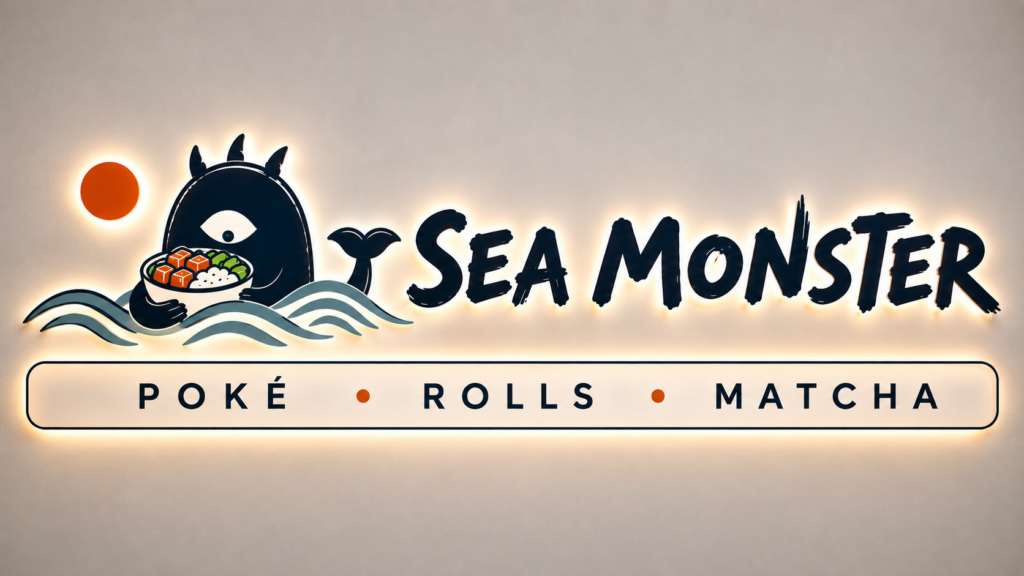
Not all monsters have to be scary. In fact, entrepreneur Pinyada “Ada” Primpray’s is delightful. Sea Monster, a small cafe that will serve poke bowls, fresh spring rolls, and matcha, will open in Mission Valley by the end of the year.
“The concept is a Hawaiian- and Japanese-style cafe,” Primpray explains. She calls it Sea Monster in homage to her friend’s popular restaurant Big Monster Sushi & Thai in Hawaii, but “the idea really started to take shape after I came back from a solo trip to Italy,” she says. The experience inspired her to start her own concept that mixed her culture, experience, and passion for food.
Sea Monster will be her first restaurant as an owner, but Primpray has worked in restaurants for 15 years in places like Kauai, Chicago, New York, and San Diego. She realized a similar health-conscious, seafood-forward, quick-service restaurant could work here, especially in that corner of Mission Valley where pizza and burgers reign. Plus, she points to the massive development plans for the area—between Riverwalk bringing thousands of new homes to the area and even more coming from San Diego State University, there are lots of new locals looming on the horizon.
She brought on Head Chef Wasu Gibb Palipote from Sushisamba in Los Angeles to develop the menu and signature sauces, like ink wasabi and a larb sauce. “Every couple of months, we plan to introduce a new signature sauce created exclusively for Sea Monster by [Chef Palipote],” she says. All the sauces will be homemade, including a basil creamy sauce and sesame vinegar.
Courtesy of Pinyada “Ada” Primpray
Sea Monster’s menu centers around fresh poke bowls—mostly locally-caught bluefin tuna and hamachi as well as salmon, served California-style rather than Hawaiian-style (the sauces are added to order rather than marinating on the fish, which can overpower its flavor). Toppings will range from the usual, like edamame and green onion, to upscale, like uni (sea urchin). She’ll also serve fresh salad rolls, a popular light snack in Vietnam and her native Thailand, with vegetables and seafood like salmon, shrimp, and imitation crab. Everything will be served to-go, although there will be very limited seating for people who want to dive in right away.
The matcha program will start small, with six iterations planned for opening and potentially more in the future. “I really want to have mango sticky rice,” she adds. Beyond adding items to the menu, Primpray says she hopes Sea Monster will be more than a restaurant. “I want it to grow into a lifestyle brand with its own little world,” she says, pointing to the restaurant’s mascot, Smoo. A monster with aspirations of growing bigger and bigger until it takes over? Yeah, sounds about right.
Sea Monsterwill open daily for lunch and dinner in late 2026 at 6110 Friars Road in Mission Valley.
Oktoberfest season is closing in fast, and one of the first dirndl-laced events of the year kicks off at AleSmith Brewing Company this weekend. AleSchmidt Oktoberfest runs every Saturday from September 12 through 26, and the family-friendly event is chock-a-block with German food vendors, live oom-pah bands, stein holding, and a whole lot more. The free event starts at 11 a.m. each Saturday, and from personal experience, I recommend posting up on the early side to snag a seat.
Japanese fine dining restaurant Shio soft opened in August, bringing elegant plates and sunset views to La Jolla. (The area was hardly hurting for either, but I think we could always use some more sushi in our lives.) Has anyone checked it out yet? Let me know what I should order by dropping me a line at [email protected].
Restaurateur brothers Danny and Dante Romero have been on a tear the past few years, consulting at places like Una Mas and taking over The Lion’s Share last summer. It’s understandable to see they recently decided to pause their recurring pop-up concept Two Ducks to recalibrate and figure out its future in a permanent location, but it’s still a bit bittersweet. If it’s “see you later” and not “goodbye,” I can live with that (for now).
Listen Now: The Latest in San Diego’s Food and Drink Scene
Have breaking news, exciting scoops, or great stories about new San Diego restaurants or the city’s food scene? Send your pitches to [email protected].
Beth Demmon is an award-winning writer and podcaster whose work regularly appears in national outlets and San Diego Magazine. Her first book, The Beer Lover's Guide to Cider, is now available. Find out more on bethdemmon.com.
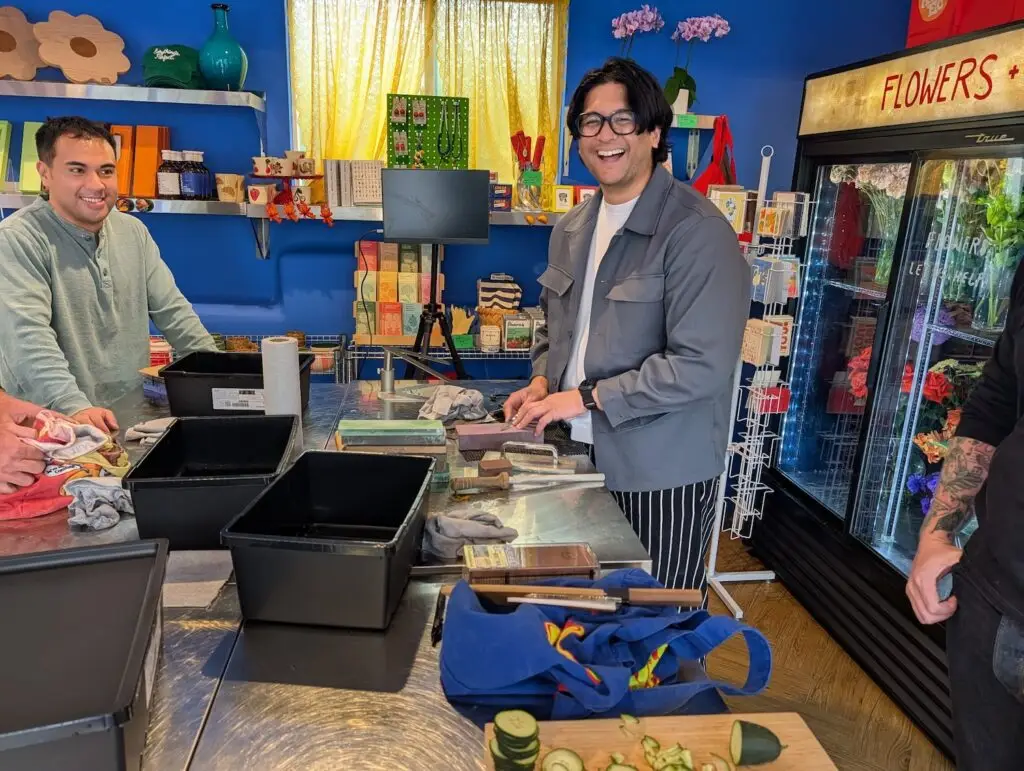
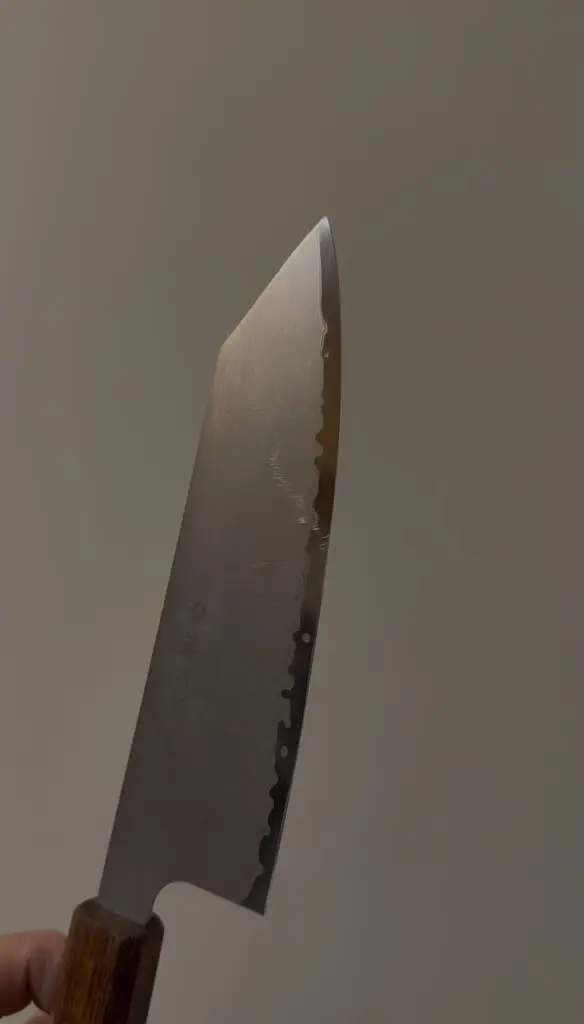
“A sharp knife is a safe knife,” says Joshua “Jhun” de Andres, owner of Kuya Sharpens. It only takes a light touch to guide a properly-sharpened knife, while dull knives require much more force to cut through an object, increasing the likelihood and severity of an injury. “If you slip, that’s a lot of force that is now going into your finger, your hand, and that’s where it becomes extremely dangerous.”
De Andres started sharpening knives as a meditative practice during a time of personal grief, a way to zone in on a task with a useful and satisfying outcome. “[It was a] reminder to myself that you can fix something that’s broken and give it purpose again.” Once he ran through his own collection of knives, he started asking friends and family if he could sharpen theirs. When he’d sharpened everyone’s knives he could think of, he started posting videos on TikTok, where his first professional chef customer found him: Chef Tanner Stanich, chef de cuisine at Michelin-recognized Bib Gourmand Mabel’s Gone Fishing.
Courtesy of Kuya Sharpens
“That’s when things really started to take off,” he laughs. He uses whetstones rather than motorized belt sanders to sharpen, which gives him the ability to make microadjustments during the process for a more customized and controlled result. Whetstones also preserve steel more efficiently than other mechanical processes, which are faster, but take off more of the knife’s edge in exchange, reducing the lifespan of the knife.
Learning how to master whetstones takes a lot of time and practice, and while de Andres specializes in sharpening Japanese knives, he’ll sharpen a knife from anywhere. “Every knife deserves to be sharp,” he says.
Japanese kitchen knives are designed for extremely specific purposes: there’s a knife to break down a fish (deba), cut through boneless raw fish for sushi and sashimi (yanagiba), slice vegetables (nakiri), carve meat (sujihiki), debone poultry (honesuki), and even knives only the executive chef can use (kiritsuke). Few other culinary cultures utilize such ultra-specialized tools, and Japanese steel is prized for its extreme hardness and ability to maintain a razor-thin edge for decades when properly cared for.
De Andres is still figuring out different ways to expand his business: hosting workshops at Home Ec on Adams Avenue, creating knife restoration tutorials, and launching private lessons, all while continuing to sharpen knives people bring to him or even send from across the country. And he knows that for both home cooks and professional chefs, sharpening a knife that may have cost hundreds of dollars on a whetstone can feel overwhelming. Will I ruin it? Will I break it?
“You’re most likely not going to break it,” he promises. “But you are going to make it yours, and you have to kind of be okay with that.” Knives age and change just like humans do. Sharpening is an essential part of maintenance, and shaving away the dull edges to restore a shine takes care. And de Andres cares a lot.
“It’s just been really life-giving to me,” he says. “I know it seems really silly that taking a knife and putting it on a whetstone can change your perspective on how you view the world, but for me, it came to me at a time when I needed it most.”
Photo Credit: Lauren di Matteo
San Diego Restaurant News & Food Events
Beth’s Bites
Mesa Agricola, a tiny taqueria in Escondido, made this year’s New York Times50 best restaurants in the US list. If you’ve had the privilege of eating the guisado delicacies from chef Juan González and Megan Strom, you’ll understand why. Congrats on the recognition—and happy first birthday!
Ranchito Milkyway, a farmstand in Bonita, also has plenty of events to pencil into your calendar, starting with an Indian cuisine-inspired farm-to-table dinner on September 19 with chef Kanta from Sattvik to an Italian cooking class on October 17 with chef Elisa from Balsamico Italian Kitchen. If you’re chock-full of things to do over the next few weeks, there’s always the option to snag one of their CSA boxes for an abundance of winter greens, vegetables, and herbs for home cooking.
Listen Now: The Latest in San Diego’s Food and Drink Scene
Have breaking news, exciting scoops, or great stories about new San Diego restaurants or the city’s food scene? Send your pitches to [email protected].
Beth Demmon is an award-winning writer and podcaster whose work regularly appears in national outlets and San Diego Magazine. Her first book, The Beer Lover's Guide to Cider, is now available. Find out more on bethdemmon.com.
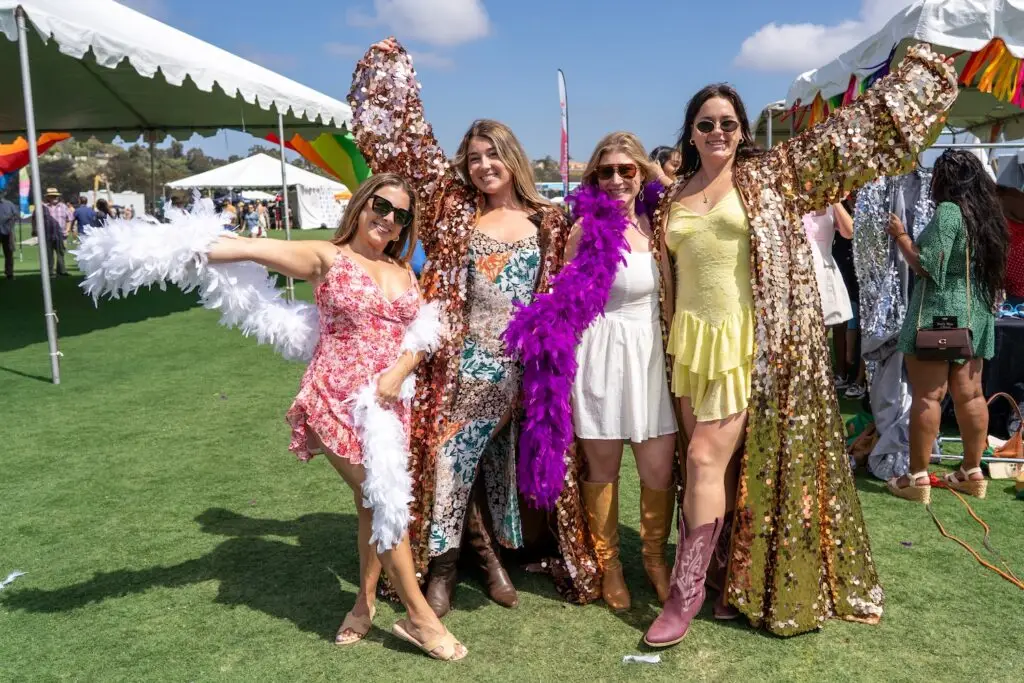
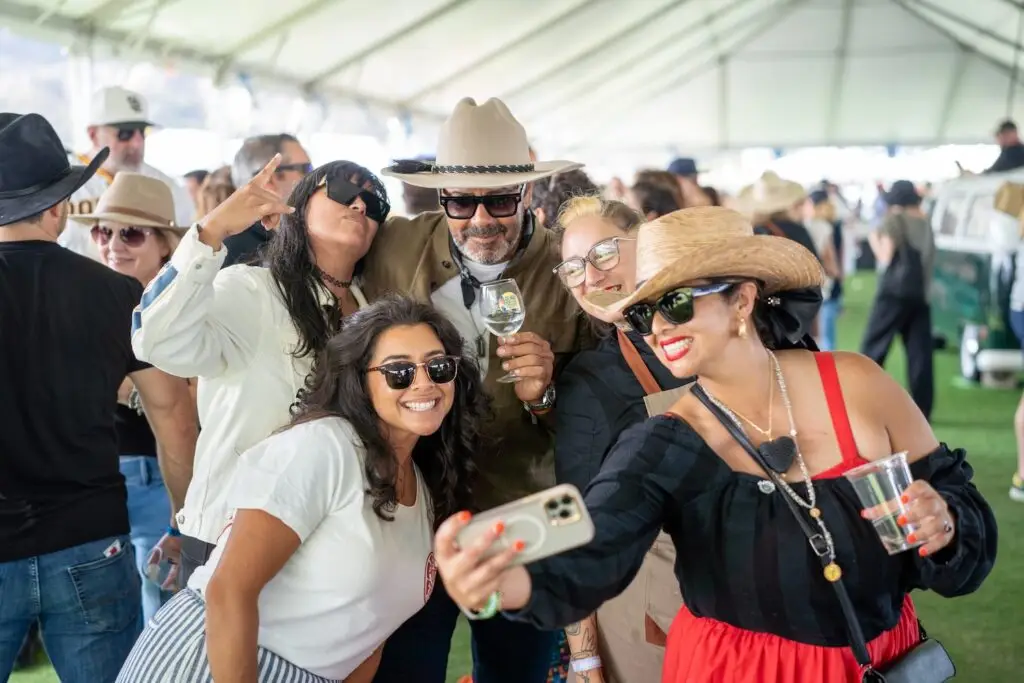
Tickets to the Del Mar Wine & Food Festival get you in the door. The real fun is figuring out who you’ll run into once you’re there. This year’s weeklong schedule of exclusive events, running September 30–October 4, includes dinners, tastings, and loosely-supervised chaos where celebrity chefs and local icons finally let their hair down.
The festival has a track record of the unexpected: Bryan Cranston and Aaron Paul once toasted their mezcal brand Dos Hombres with an intimate dinner at the Lodge at Torrey Pines (and then, evidently unsatisfied, kept drinking it on the cliffs above Blacks Beach with a rotating cast of San Diego and Food Network chefs. Alex Morgan showed up for a dinner under the lights honoring the country’s most badass women chefs). Drew Brees ran a celebrity pickleball tournament where the guy from It’s Always Sunny in Philadelphia got absolutely humbled by locals.
If you scored a ticket to last year’s Grand Tasting, you might’ve caught Guy Fieri doing exactly what Guy Fieri does: strolling the grass, signing t-shirts and foreheads, and hanging off the DJ surf van like it was built for him. Meanwhile, local chef Ethan Yang of Glass Box walked off with the Chef Competition surfboard.
So whether your plan for 2026 is to corner legendary San Diego chefs like Victor Jimenez of Cowboy Star and Jon Sloan of Juniper & Ivy in person, or just aim for a spontaneous golf cart ride with a Food Network star—here’s your cheat sheet for where to run into a celebrity chef, TV personality, award-winning winemaker, or pro athlete at this year’s Del Mar Wine & Food Festival.
Courtesy of Del Mar Wine & Food Festival
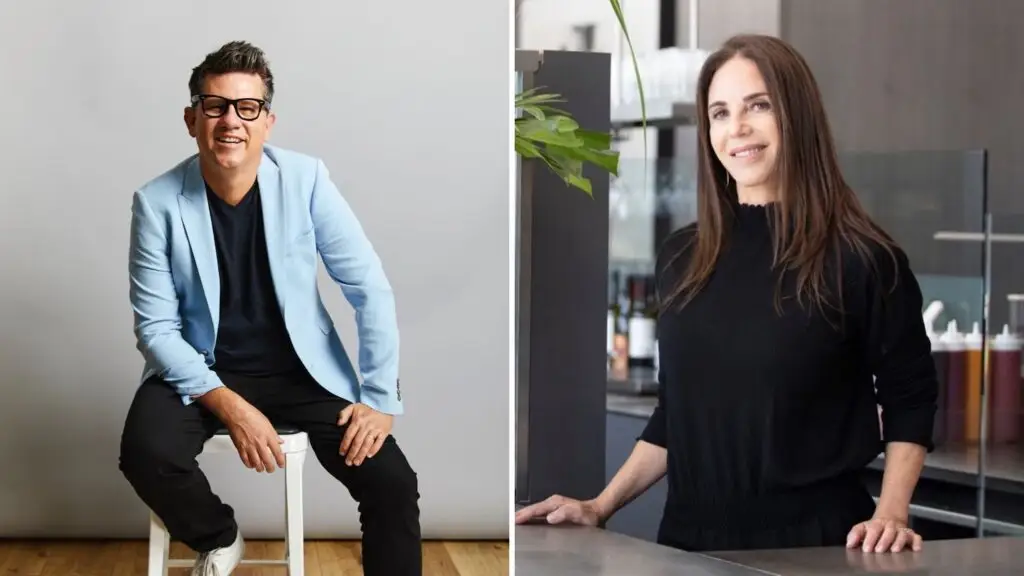
Troy Johnson, Karen Krasne
Signature San Diego Opening Night Party
September 30 | 6 – 9 p.m. | Monarch Ocean Pub
Consider this your soft landing into festival week—the walk-around tasting that eases you in before things get chaotic later on. Monarch Ocean Pub hands its patio over to the flavors that define San Diego eating: Baja seafood done right, coastal bites, Mexican flavors with some heat behind them, all the staples locals will fight you over.
The celebrity sightings here lean more “bump into” than “spot from across the room.” Troy Johnson—Food Network judge, San Diego Magazine chief content officer and co-owner, Emmy-winning host, a man who has eaten his way across the entire country professionally—is the type to materialize at whichever station has the longest line, because he already knows it’s worth the wait. Ask him what he’s had so far. He’ll have opinions.
Then there’s celebrity pastry chef Karen Krasne, owner and executive pastry chef of Extraordinary Desserts, James Beard House alum, and a woman Forbes once ranked among the top 10 pastry chefs in the country—which tracks, because you might find her holding court next to a tray of her roasted pecan shortbread dipped in white chocolate, explaining exactly why this is the flavor combination. You will listen to every word, too, because you’ll want to try that cookie.
This is an opening night party where the person next to you in line might just be the one who baked the thing you’re about to eat.
Courtesy of Del Mar Wine & Food Festival
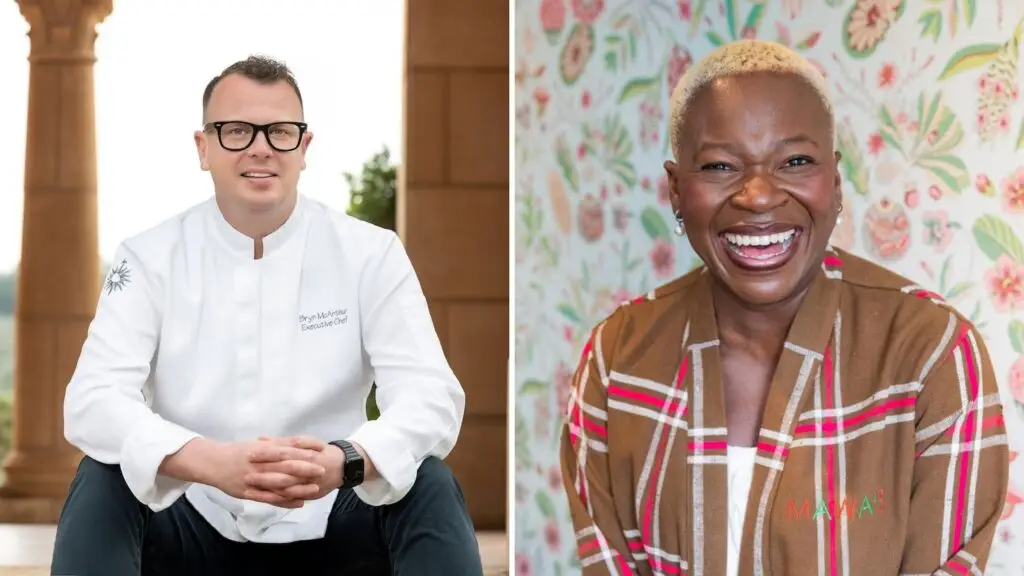
Bryn McArthur, Mawa McQueen
Chateau Montelena’s 50th Anniversary Celebration
October 1 | 6 – 9 p.m. | Fairmont Grand Del Mar
Fifty years ago, a Napa Chardonnay beat France at its own game and rewrote what the world thought it knew about wine. This dinner is that legacy, poured by the family who built it, course by course.
Under the arches at Fairmont Grand Del Mar, Ernie Hahn and the Hahn family, who partnered with the Barretts to revive Chateau Montelena into the Napa powerhouse it is today, host an evening built entirely around the winery’s most iconic pours. Every course gets its own pairing straight from the Montelena portfolio, so you’re not just hearing about the Judgment of Paris, you’re tasting the wine that started it.
Chef Mawa McQueen, a former James Beard Best of the West winner out of Aspen, brings globally inspired cuisine and serious technique to the table. Alongside her, Fairmont Grand Del Mar’s executive chef Bryn McArthur leans into farm-to-table sensibility shaped by a career of global kitchens. Together they’re building a menu meant to hold its own against wine that already changed history once.
This is the rare dinner where the wine isn’t just accompanying the meal, it’s the reason the meal exists. Fifty years after Paris, the rematch is happening right here in Del Mar.
Isabella Dallas is a freelance writer for San Diego Magazine and the Arts and Culture Editor at The Daily Aztec in her final year at San Diego State University. She previously worked as an editorial intern for SDM, but when she’s not writing, you can find her trying the best coffee spots in SD, devouring the latest rom-coms, and indulging in anything and everything pop culture.
Kelly H. Harfouche, founder of KQ Aesthetic Society, knows firsthand that cosmetic treatments like fillers, neurotoxins, and microneedling, can not only enhance a person’s appearance and restore confidence, they have the power to truly change a person’s life. An expert injector has the ability to tailor treatments to each individual patient’s anatomy and goals for personalized results. Harfouche, a board-certified nurse practitioner, has spent nearly a decade perfecting her craft as an aesthetic injector and integrating her multifaceted artistic skills with precision patient care. Her commitment to continual education and training, plus a passion for helping people look—and feel—their best, set KQ Aesthetic Society apart in a sea of local medspas.
For many people considering nonsurgical treatments, the intent is to look refreshed and refined. KQ Aesthetic Society’s philosophy eschews a cookie cutter approach that bases treatments around units, instead working to understand each person’s unique goals, then curating a treatment plan to fit that vision. Harfouche focuses on “inclusive luxury,” the belief that everyone deserves access to aesthetic treatments, respective of budget restrictions. She develops long-standing trusted relationships with her patients, and works with each one to achieve their aesthetic objectives and address the underlying causes of their concerns.
“For me, forming an honest and open relationship with every patient who walks through the door is essential. This means understanding them on a deeper level and meeting them where they are to define and achieve their individual goals,” she says.
Drawing on her artistic background, which inspired her transition into medical aesthetics, Harfouche sees each client as a “unique canvas.” Rather than relying on standardized procedures, the practitioner’s distinctive approach combines her profound understanding of the physiological and anatomical changes associated with aging with an unwavering commitment to ongoing education about the newest products and their mechanisms of action. Her goal is to make each patient feel beautiful in their own skin and to embrace their individuality.
She has also pioneered a way to combine her talent for aesthetic artistry with her philanthropic nature. Harfouche is one of only a handful of providers using dermal fillers to treat patients with lip asymmetry and scarring resulting from cleft lip surgery. Patients travel from around the country for this transformative treatment, noting increased confidence and a restored identity. She hopes to eventually launch a training program to help fill the void in this space.
“My passion has always been connecting with people and giving back in any capacity that I can,” she says. In the rapidly advancing landscape of aesthetic medicine, you can place your confidence in Harfouche and KQ Aesthetic Society to deliver exceptional care. To learn more or book a consultation, please visit kqaestheticsociety.com.
What Will It Take to Make San Diego a Global Arts City?
Jonathon Glus on the Art + Design District, investing in the creative economy, keeping artists in the city, and what we can learn from places like London and Chicago
Jonathon Glus is the Prebys Foundation senior fellow leading the development of the Art + Design District at the Downtown San Diego Partnership. He has been asked what an arts and design district is many times. In our conversation, I asked him instead to describe what it isn’t. His answer opened up a broader discussion about what San Diego has and hasn’t invested in, what it has the capacity to become, and what other cities have done that we haven’t. Glus speaks about global art fairs and architecture biennials in Chicago and long tables at dinner parties all with the same fluency. He also discusses who gets to live in the neighborhoods where creative work happens, and what it means when they can’t afford to stay.
Claire Johnson: You have been asked what an arts and design district is many times. Can you tell me what it isn’t?
Jonathon Glus: It is not a place designed intentionally and specifically for tourists. Of course there will be opportunities for tourists to come, but the district is really focused on creatives, on creative education, and on the creative workforce—as well as our major performing arts organizations. That is the emphasis.
What does the district need to do in the next five years for you to consider it a success?
[It needs to] develop greater connectivity between the anchor institutions—the symphony, Broadway San Diego, the opera, all the wonderful things happening in Balboa [Park]—and the creative workforce that will be living and working in that neighborhood 24/7.
What does San Diego not have that you wish it did?
We have not been intentionally investing in the contemporary art product that other major cities have been building. A contemporary art fair. A biennial that reflects the ethos of this region. Chicago developed an architecture biennial about eight years ago. London has a design biennial. Desert X, right here in Southern California, invests in and elevates contemporary artists inside a city. We have not really been playing in the global art market in a way that we have the capacity to.
What capacity do we have?
We have a wonderful foundation. Two theater companies that produce work that goes to Broadway more than many regional theaters in the country, major museums, artists teaching at UC San Diego and University of San Diego. What a city does when it wants to take itself to the next level is intentionally create the product. Miami went after the Art Basel fair; they did not passively receive it. You have to have the intention and the will, and you have to go after it. We haven’t done that in the way that other cities have.
Look at what we did with the tech sector; we’re now a major tech center. That was intentional. Leadership organized around it. We have to do the same thing around the arts. We have a lot of contemporary art collectors here. We have a lot of galleries. But the ecosystem of the business of contemporary art is not as organized or as visible as it should be.
Which city is your North Star?
It’s bits and pieces of different cities. Dubai has invested very quickly and very intentionally in contemporary art—art fairs, design fairs, higher education, artist residencies from all over the world. London has centered artists and creatives in the contemporary zeitgeist in a way that was not true 40 years ago. They built biennials. They ensured British artists had affordable housing and workspace. They made sure the media paid attention to what they were doing.
If you don’t have an artist at your dinner table, it’s not a dinner party. That sounds elitist, but it’s true. It shows the value that artists have in a community. Our relationship culturally with Tijuana is really significant here because artists in Baja seem to be at the table.
We’ve talked before about how food, fashion, design, and art aren’t siloed anymore.
They aren’t. When super creative people are in a community doing extraordinary work, that draws other super creative people doing extraordinary work. That’s why other arts and design districts around the world end up populated with some of the most interesting restaurants and young fashion designers. Creatives want to be around other creatives.
Which leads to the economic argument…
Our creative economy already employs about 170,000 people and generates more than $11 billion in economic activity. It’s large and robust. But we must center all of this in accessibility and affordability. Williamsburg used to be affordable. Artists can’t afford to live there anymore. Wicker Park and Bucktown in Chicago—artist central, now unaffordable. If we’re going to invest in this district, we have to be really intentional about housing and workspace, so creatives have a place in the future of this district.
I see all these new supper clubs and creative collectives popping up. What is the lesson there for San Diego in terms of the commercialization of cultural and creative groups?
I think the lesson is that nothing changes. What do people love? Long tables. Why? Because you’re with a lot of people—some you may have known your entire life, but most you don’t. And if it’s driven by a creative process, all the better. We know one of the best ways to do that is around food, but also music.
For the Art + Design District, part of why we’re leaning into the process is because, culturally, we’re bringing down the barriers between film, fashion, multimedia, tech, and architecture. It’s an experiential mashup in the best possible way.
And it’s not just about art and design, but community writ large. Creative expression is something we all desire. Whether it’s at a long table, at the opera, or in your studio, we gravitate toward creative expression as a way of building community and communicating with the people around us.
Is there a question I should have asked you but haven’t?
I hope you are writing about this in seven years when the district is fully mature. But this is just the beginning for all of this. I think that’s what’s most exciting to me. We don’t know what this is going to be like, but we know it’s going to be creatively centered, and that’s super exciting to me.
After 15 years married, my husband and I tend to agree on most things. But there’s one argument we both refuse to bend on—I prefer okonomiyaki Osaka-style, and he’s a die-hard Hiroshima-style devotee. (To be fair, we both adore both styles, but at this point, it’s just fun to have a low-stakes disagreement.)
Okonomiyaki is one of Japan’s greatest comfort foods, a savory pancake that’s about the size of a DVD, if you aren’t too young to know what that is. It’s not terribly hard to make—it’s flour, eggs, dashi stock or water, and a whole heap of shredded cabbage, plus optional fillings like green onions, pork belly, or bonito flakes, all cooked fresh on a flat top griddle. Drizzle some kewpie mayo and okonomiyaki sauce on top, and you’re hot to go.
However, it’s not easy to make well, and as you now know, people have capital-O Opinions about Osaka-versus-Hiroshima. Hiroshima-style layers the ingredients one by one rather than mixing them together, adding a layer of soba or udon noodles and topping it all off with a fried egg. For Osaka-style, all the ingredients are mixed together and then cooked on the griddle, so every bite includes every ingredient in a hodgepodge of deliciousness. (One Osaka variation called modan-yaki does include soba noodles mixed in the batter, but they’re not traditionally used in that regional version.)
Despite a childhood spent in Osaka, Japan, Kumi Alexander specializes in making Hiroshima-style okonomiyaki. “Okonomiyaki has been part of my life for as long as I can remember,” she explains. “My parents ran their own business when I was growing up, so Saturdays were often busy, and okonomiyaki was one of my mother’s go-to lunches because it was simple and easy to make.”
Alexander came to San Diego seven years ago with a desire to bring a part of her culture with her—not just a product, but a feeling. “When I thought about what could do that, the answer was almost obvious: okonomiyaki,” she says.
She originally launched Surf’n Slaw as a mobile pop-up food stand in August 2025, offering what Alexander calls Japanese-meets-California okonomiyaki. “Our full Surf’n Slaw includes cabbage, noodles, umami dough, beef, shrimp, and vegetables,” she explains. The menu also has a “Green Wave Slaw,” an Osaka-style version that can be made vegan and gluten-free, as well as matcha drinks.
Currently, Surf’n Slaw pops up at farmers markets in North Park, Scripps Ranch, Hillcrest, La Jolla, and La Mesa, as well as other local markets and community events. Eventually, she may expand to a permanent location, but that’s a future goal. And while Alexander hopes that one day okonomiyaki will be as well-known to American audiences as ramen or sushi, for now, she’s just happy to share a bit of home with San Diego.
Izola Bakery announced big plans for a second location and bakery HQ (checks notes) over three years ago and it’s kind of been crickets since then. But there may be movement in the expansion plan—the East Village bakery recently put out a hiring call for “the people we need to help us build what’s next.” Here’s hoping things get cooking (or baking, as the case may be) soon.
As a California-born, East Coast-raised foodie, I can confidently say the East Coast has the deli game on lock. So whenever anyone announces they’re bringing an East Coast-style sandwich to the West Coast, I remain cautiously optimistic until proven otherwise. (Big Jim’s in Pacific Beach is a phenomenal example of a transplant done exceptionally well.) Los Angeles-based Ggiata Delicatessen recently announced plans to open a location in Encinitas, promising authentic Italian staples like meatball parmesan subs, cheesesteaks, and Italian cold cuts. Don’t let me down, guys!
Unfortunately, it’s not all openings and expansions. Nola on 5th in Hillcrest permanently ceased operations without warning or explanation. We can probably pick from one (or more) squares on Restaurant Closure Bingo for the reason (increased costs for ingredients, labor, equipment, etc.), but for the jambalaya enthusiast, it doesn’t really matter why. It’s simply adieu to a slice of The Big Easy in San Diego.
Listen Now: The Latest in San Diego’s Food and Drink Scene
Have breaking news, exciting scoops, or great stories about new San Diego restaurants or the city’s food scene? Send your pitches to [email protected].
Beth Demmon is an award-winning writer and podcaster whose work regularly appears in national outlets and San Diego Magazine. Her first book, The Beer Lover's Guide to Cider, is now available. Find out more on bethdemmon.com.
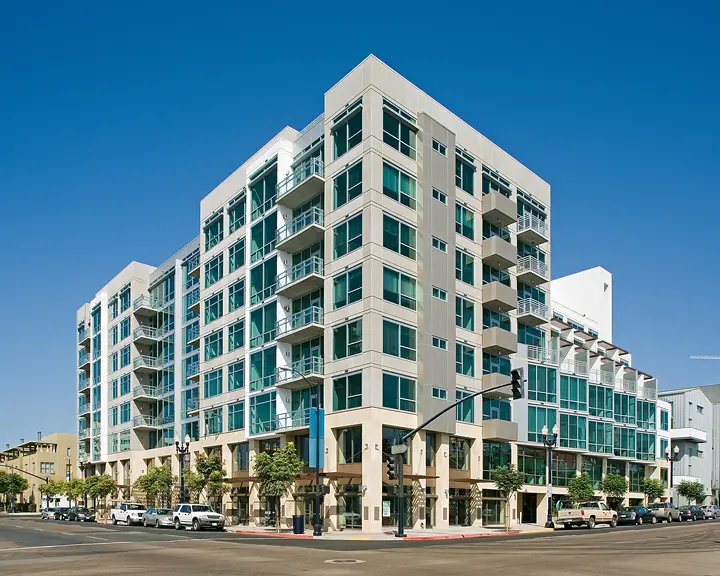
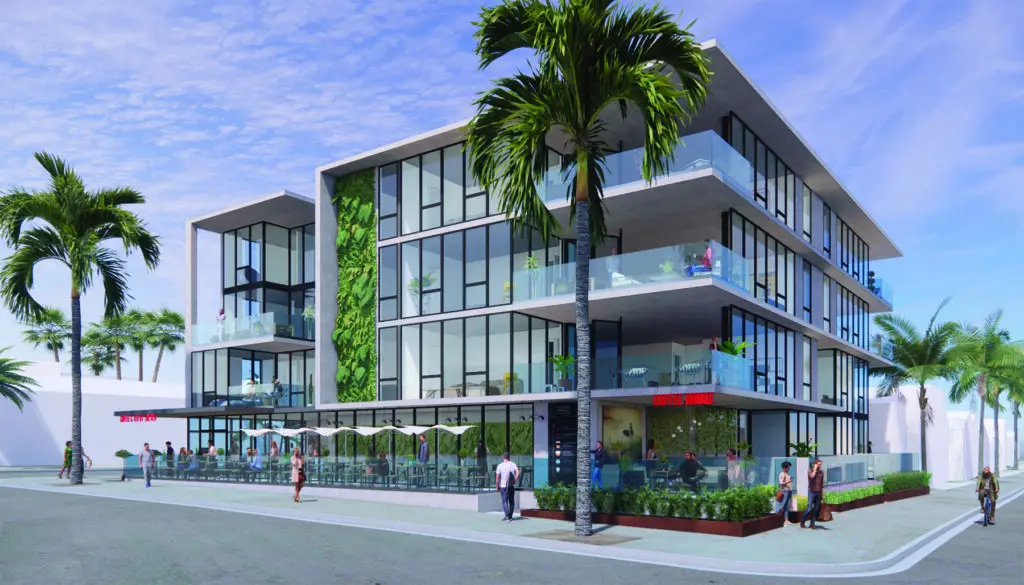
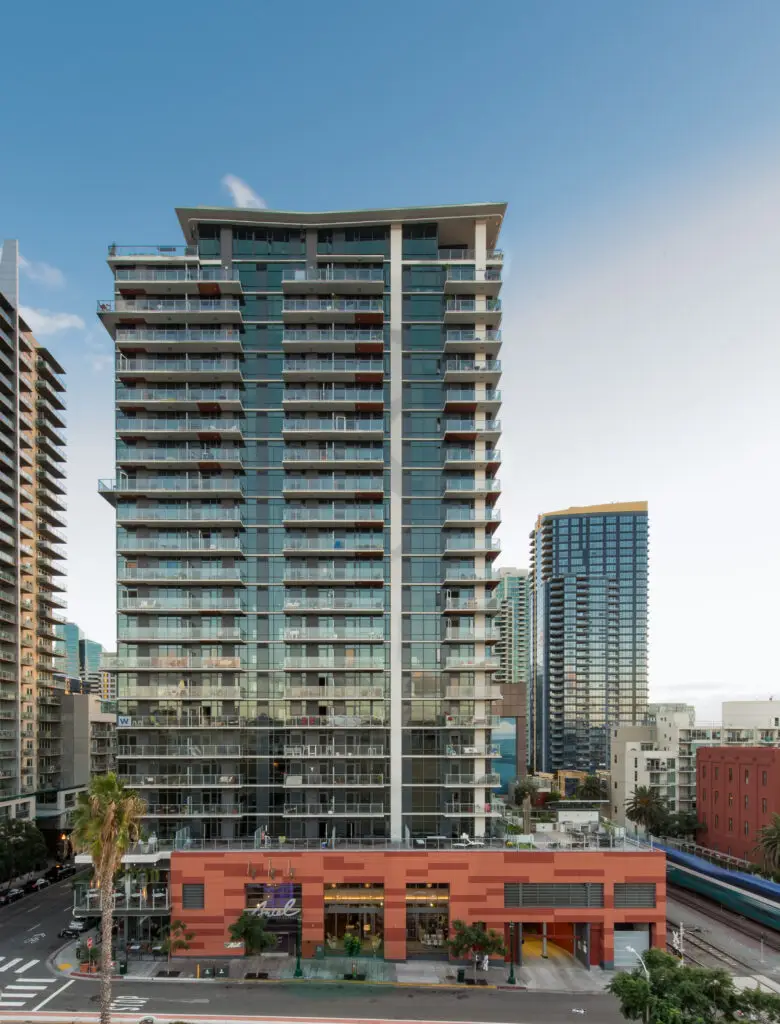
AVRP Studios’ tradition for Design Excellence and Innovation began in 1976 with Doug Austin, FAIA, in Solana Beach, California. The firm has since grown to complete major projects throughout the United States and Canada. We think of ourselves as a family and we care deeply about people. We want to inspire, help make their lives richer and more complete through our efforts. We believe that architecture is one of the most important art forms because of the impact it can have on the lives of those it touches. We’re delighted to have been recognized with over 150 awards for design excellence.
703 16th Street, Suite 200, San Diego, California 92101 | 619-704-2700 | avrpstudios.com