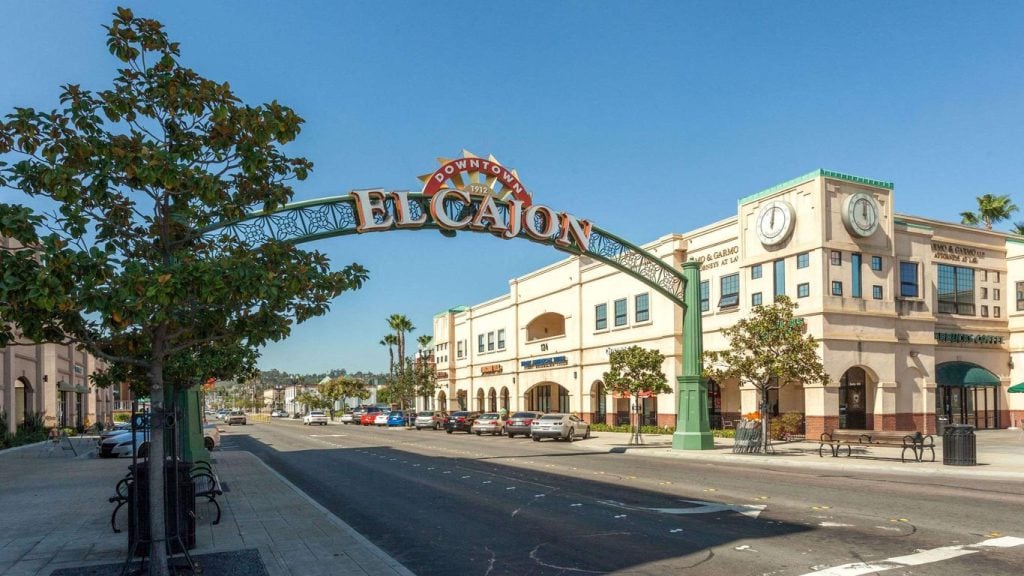
El Cajon (Spanish for “the box,” so named because it is “boxed in” by foothills on all sides) served as fertile ranchland for decades before being incorporated in 1912. Once a sleepy farming town, the city is now the largest in East County, housing more than 100,000 residents and an unrecognized wealth of eateries (especially of the Mediterranean and Middle Eastern variety), shops, and visitor-friendly farms and gardens.
Here’s where to explore next time you’re in El Cajon:
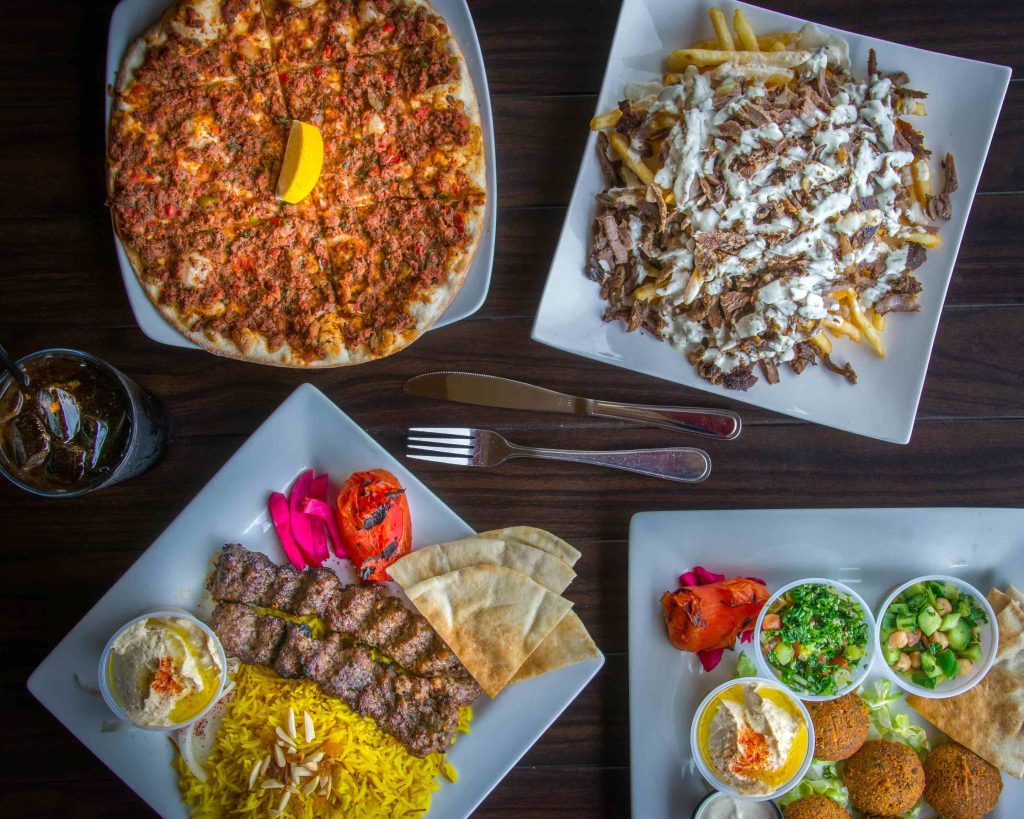
Courtesy of Sahara: Taste of the Middle East
El Cajon Restaurants & Bars
Ali Baba Family Restaurant
This Mediterranean spot known for its big portions offers excellent bang for your buck. Try Ali Baba’s chicken tekka, pompano fish with rice, and tannour bread. Feeding a crowd? Order a feast for up to ten people with kabab skewers, shawarma, cream chop, salad, rice, burghul, and hummus.
At this haven for Middle Eastern bites, start with hummus, tabbouleh, and cucumber salad and follow with kabobs, chicken tikka, or falafel. Drench it all with unlimited sauces from the Sahara‘s self-serve bar.
2990 Jamacha Road, Unit 116
The Breakfast House
Stepping inside this quaint breakfast spot feels like traveling back to a 1950s diner. The extensive menu at The Breakfast House offers nearly every classic American breakfast dish imaginable, as well as lunch choices like salads and sandwiches.
1464 Graves Avenue
Royal Sweets
Royal Sweets offers not only royally good Middle Eastern desserts, but also a variety of other pastries and cakes. Stop by for baklava, tiramisu, or gelato, or order a custom birthday cake that is sure to impress.
110 South Mollison Avenue
Grand Ole BBQ Flinn Springs
Inspired by the BBQ he ate in his youth, Andy Harris bought a smoker and set out to bring the flavors of Central Texas to San Diego County. Make sure to arrive early at Grand Ole BBQ to beat the long lines and get your share of some of the best pork, brisket, ribs, and sides the city has to offer.
15505 Olde Highway 80
Funky Fries and Burgers
Funky Fries and Burgers lives up to its name with creative combos like a bacon mac n’ cheese burger and a Philly cheesesteak burger, but the true stars of the show are the extravagant milkshakes. Piled precariously high, each “Funky Freak Shake” is topped with enough candy and treats to feed a first-grade birthday party.
101 West Washington Avenue
Hacienda Casa Blanca
Happy hour and Mexican food go together like peanut butter and jelly, especially at Hacienda Casa Blanca, which offers sweet deals Monday through Saturday from 3 to 6 p.m. and all day on Sunday. They also serve brunch on Sunday mornings, laying down chilaquiles and huevos rancheros.
700 North Johnson Avenue, Suite A
Antonelli’s Deli
The Antonelli family brought their classic, East Coast–style deli to California in 1984. Tucked away between motor shops in El Cajon, the old-school locale has almost 50 unique sandwich options, including capocollo subs, liverwurst sandos, and a French dip.
1354 North Magnolia Ave
Burning Beard Brewing Company
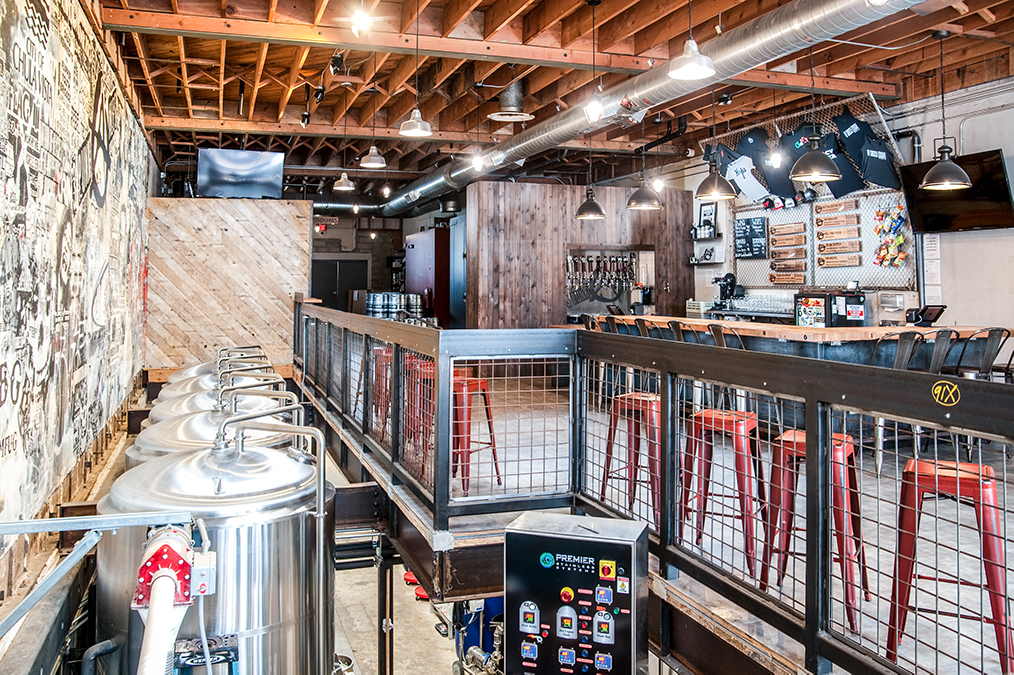
Head to Burning Beard for punk rock vibes and good brews, from hoppy IPAs and lagers to seltzers. Pair your drink of choice with bites like smashburgers, truffle and garlic fries, and chicken tenders.
785 Vernon Way
The Yogurt Mill
The Yogurt Mill vends a rotating menu of classic fro-yos such as vanilla and strawberry, plus more off-the-wall flavors: toasted marshmallow, Irish mint kiss, banana cream pie. Keep an eye on their Instagram page to get the inside scoop on the flavors of the day.
935 Broadway
Al Azayem
If you find yourself craving stuffed chicken, breakfast lentil soup, or baba ganoush, head to Al Azayem. The Middle Eastern dishes at this counter-serve joint come with a small price tag and a big flavor profile.
550 East Main Street
Mal Al Sham
In addition to popular Mediterranean eats like falafel, pitas, and meat kabobs, Mal Al Sham serves the hard-to-find quzi—a roasted lamb and rice platter that’s one of Iraq’s national dishes—on weekends and holidays.
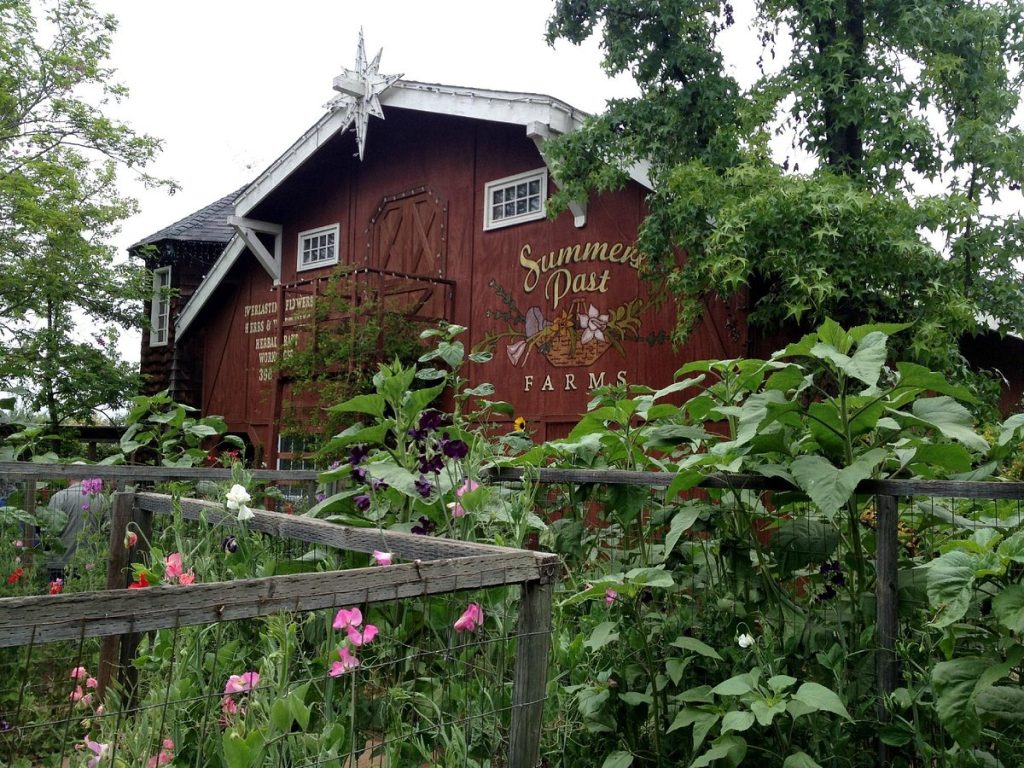
Stop by Summers Past Farms to see what the farmers are planting, harvesting, and crafting. There are shops, gardens, and wildlife to explore here, and the farm can serve as a background to any photo shoot, as it changes each season depending on what plants are growing.
Self-taught artist Olaf Wieghorst, born Denmark in 1988, drew upon the aesthetics of the American West in his paintings of landscapes, humble abodes, cowboys, and lonely travels. This museum honors Wieghorst and fellow Western genre painters with exhibitions, workshops, and tours.
131 Rea Avenue
Sycuan Casino
El Cajon is home to Sycuan, a resort and casino to rival those in Sin City. Get gaming, attend a concert, or relax at Sycuan’s full-service spa and lazy river pool. You’ll also find a wealth of dining choices, including pizza, Mexican food, and steak.
5469 Casino Way
A Simpler Time Alpaca Farm and Mill
Alpacas never make the list of oft-spotted wildlife in San Diego, but this family farm on the outskirts of El Cajon provides private tours that give you the chance to get up close and personal with the critters. Don’t forget to browse the store, where you can purchase yarn, clothes, accessories, toys, and dryer balls spun from alpaca wool.
1802 Alta Place
Parkway Bowl
Reserve at this family-owned El Cajon bowling alley and entertainment center for an evening of all-ages fun. Not a fan of bowling? Hit the arcade, play a round or two of billiards, or grab a meal and drink at the in-house restaurant and bar.
1280 Fletcher Parkway
Courtesy of Parkway Plaza
El Cajon Shopping & Boutiques
Off the Shelf Games
Board game store and tabletop lounge Off the Shelf offers table reservations and a retail shop with a unique library of more than 1,500 games. Join the shop’s membership program to enjoy three-day board game rentals for $20 a month and $6 a game.
173 Fletcher Parkway
El Cajon Guitars and Music
Owned and operated by musicians Maria Hart and Frank Cogliana, El Cajon Guitars and Music is a friendly, community-driven spot for both guitar newbies and seasoned shredders. In addition to vending instruments and accessories, the store provides instrument repairs and guitar classes.
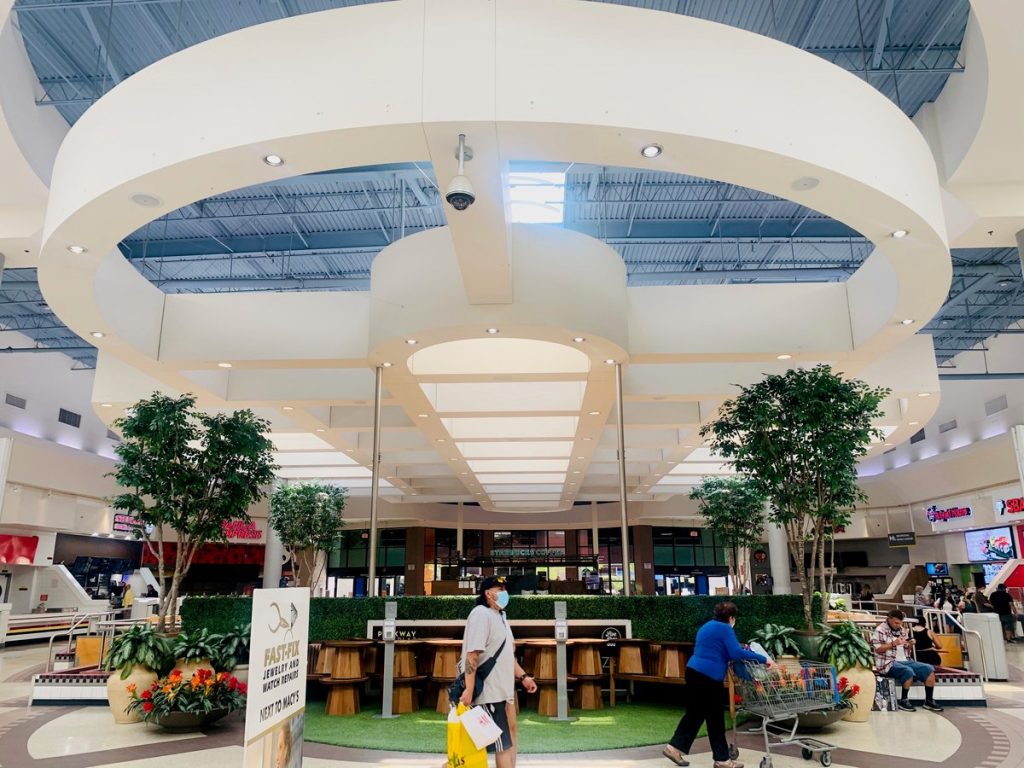
A rare enclosed mall in SD County (good for rainy days!), Parkway Plaza is home to more than 130 stores, from major chains like Best Buy, Ulta, and H&M to small local businesses such as 619 Underground Clothing.
Maren Hawkins is a freelance writer in her last year at San Diego State University. When she is not writing, she spends her time playing beach volleyball, thrifting for the cutest clothes, and traveling whenever possible.
The inland North County community of Rancho Santa Fe is often associated with wealth. It’s one of San Diego’s most expensive residential markets and is consistently ranked one of the highest-income zip codes in California and the U.S. Rancho Santa Fe is known for its large equestrian community including riding facilities and horse trails, as well as its country club lifestyle and associated golf courses.
At the center of this luxury master-planned community is a small, walkable downtown area referred to as the “village,” with The Inn at Rancho Santa Fe acting as both a landmark and social hub. Much of the community, including the historic Inn, was designed by acclaimed architect Lilian Rice, one of California’s earliest female architects. The Spanish Colonial-style architecture she brought to the village is still one of its defining characteristics today.
Whether you’re coming to Rancho Santa Fe for golf, horseback riding, or pampering at a resort spa, be sure to start with a short walk around the village to take in the neighborhood’s charm. Plan your next visit here with our neighborhood guide to the area’s best restaurants, things to do, and shopping.
Rancho Santa Fe Restaurants, Bars, and Coffee Shops
The Pony Room
Families congregate at The Pony Room for elevated California ranch-style cuisine. Lamb lollipops, carne asada tacos, burgers, and weekly dinner specials are offered here, alongside an extensive collection of wine and spirits (especially tequila) and sizeable kids menus. As the signature restaurant of Rancho Valencia Resort & Spa, this all-day eatery is a lively centerpiece of the local social scene.
5921 Valencia Circle
Mille Fleurs
The piano bar at Mille Fleurs is the buzziest spot to be on Friday and Saturday nights in Rancho Santa Fe. French classics like escargot, lobster bisque, duck confit, and steak frites are the main dinner attractions at this local institution that has been around for more than 40 years. Spring for the four-course prix fixe menu before nabbing a coveted bar seat near the piano entertainer.
6009 Paseo Delicias
Nick & G’s Restaurant
Nick & G’s is one of the most prominent restaurants in the village, with an outdoor patio that overlooks the main thoroughfare. Enjoy modern Italian food, steaks, and seafood dishes here, including homemade pasta, pizza, wagyu beef, and oysters. Be sure to check their live music schedule and events calendar for the latest happenings.
6106 Paseo Delicias
Lilian’s
Named after renowned architect and planner Lilian Rice, Lilian’s is The Inn at Rancho Santa Fe’s flagship restaurant. Their upscale menus feature sustainable seafood, grass-fed meats, local produce, and even sushi rolls during dinner. Outdoor seating provides a bird’s-eye view of the village and an elegant backdrop for weekend brunch. Stop by Bing’s Bar (a nod to Bing Crosby) for craft cocktails, beer, wine, and light bites in a refined setting.
5951 Linea Del Cielo
Thyme in the Ranch
Quaint cafe and bakery Thyme in the Ranch serves a small selection of breakfast and lunch items (don’t miss the tarragon chicken salad), but is perhaps best known for its pastries and baked goods. Cakes, pies, muffins, scones, and cookies fly off the shelves here, where locals come for special occasions, parties, and group catering orders.
16905 Avenida De Acacias
Paseo RSF
Located inside a historic building once home to Rancho Santa Fe’s original schoolhouse, Paseo RSF is one of the village’s newest dining options. The charming American bistro has pasta, salads, burgers, meat and seafood entrees, plus a thoughtfully selected California wine list and new sushi and omakase program. Kids and dogs are both welcome here.
6024 Paseo Delicias, Suite C
Rancho Roasters
Grab a quick coffee to go from this walk-up window in the same shopping center as the post office. Cinnamon roll lattes, cold brew, spiced chai, smoothies, protein bowls, and more can be found at Rancho Roasters, where they brew beans from Dark Horse Coffee.
16950 Via De Santa Fe
Goli Pizza
Casual pizzeria and martini bar Goli is a popular spot for catching the latest sports games. Order one of their unique specialty pizzas like the Casbah with hummus and veggies, build your own pizza or burger, or go with one of their hearty wraps that’s made with an extra thin version of pizza dough.
18021 Calle Ambiente, Suite 403
Cocina del Rancho
Find generous portions of Mexican food at Cocina del Rancho, run by the same owners as Carlsbad’s Cicciotti’s Trattoria Italiana and Village Kabob. Get classic dishes like burritos, tacos, and enchiladas, plus their specialty items including pulpo, carne asada, and fajitas with lobster tail. Don’t skip the margaritas.
Kai Oliver-Kurtin is a San Diego-based writer who covers travel, dining, events, and culture. Her writing has been published in USA Today, Condé Nast Traveler, Fodor's Travel, Marie Claire, and HuffPost, among others.
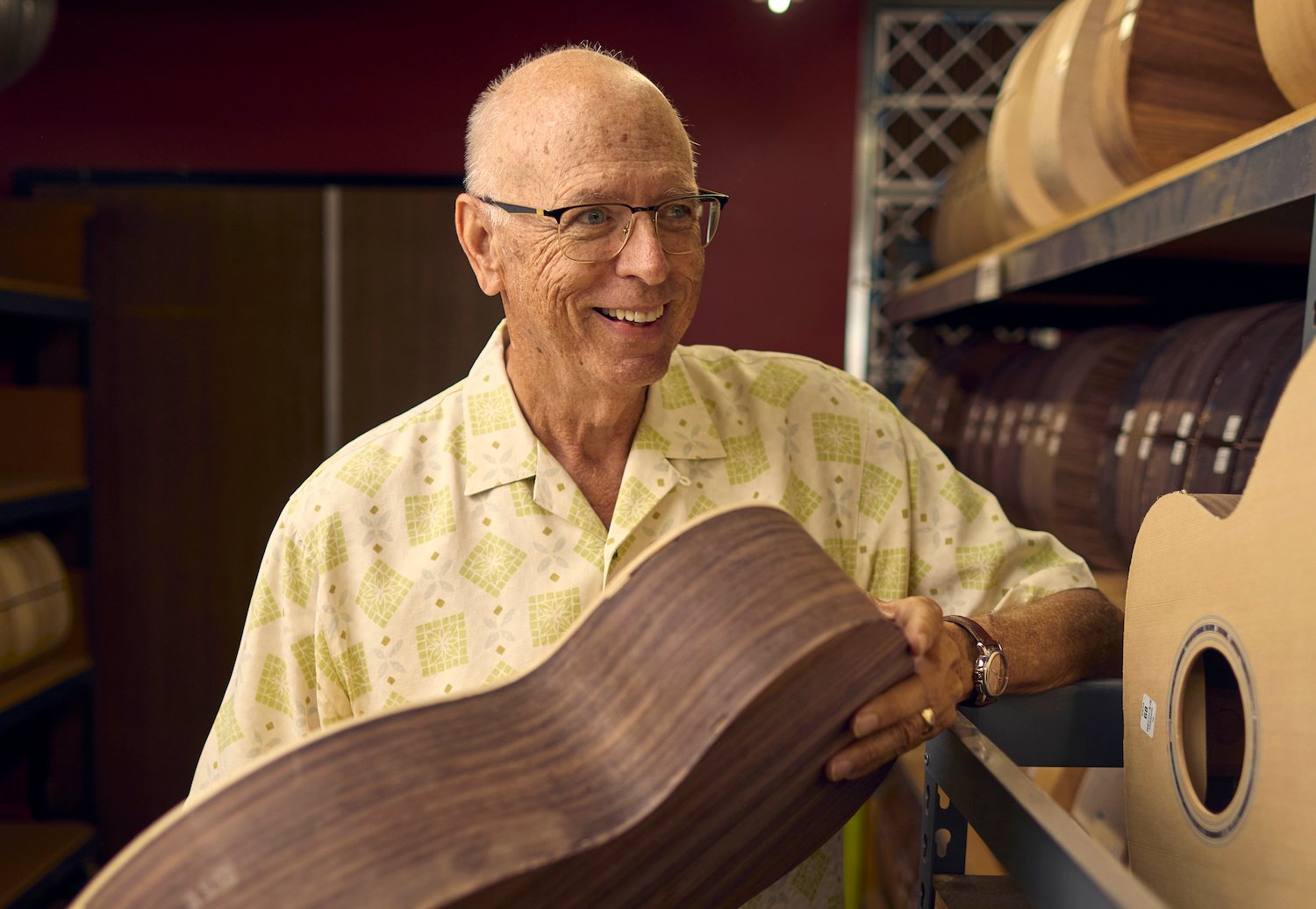
“Our sound is clean; it’s clear. It cuts through,” Taylor says. But when asked how long it took to engineer that classic Taylor sound, he laughs. “Oh, I did not [engineer it]. It was just like, ‘Oh, you really like it? Oh, okay, yeah, I meant to do that.’ We made a guitar that was very innocent, half an accident, but it helped change the music industry.”
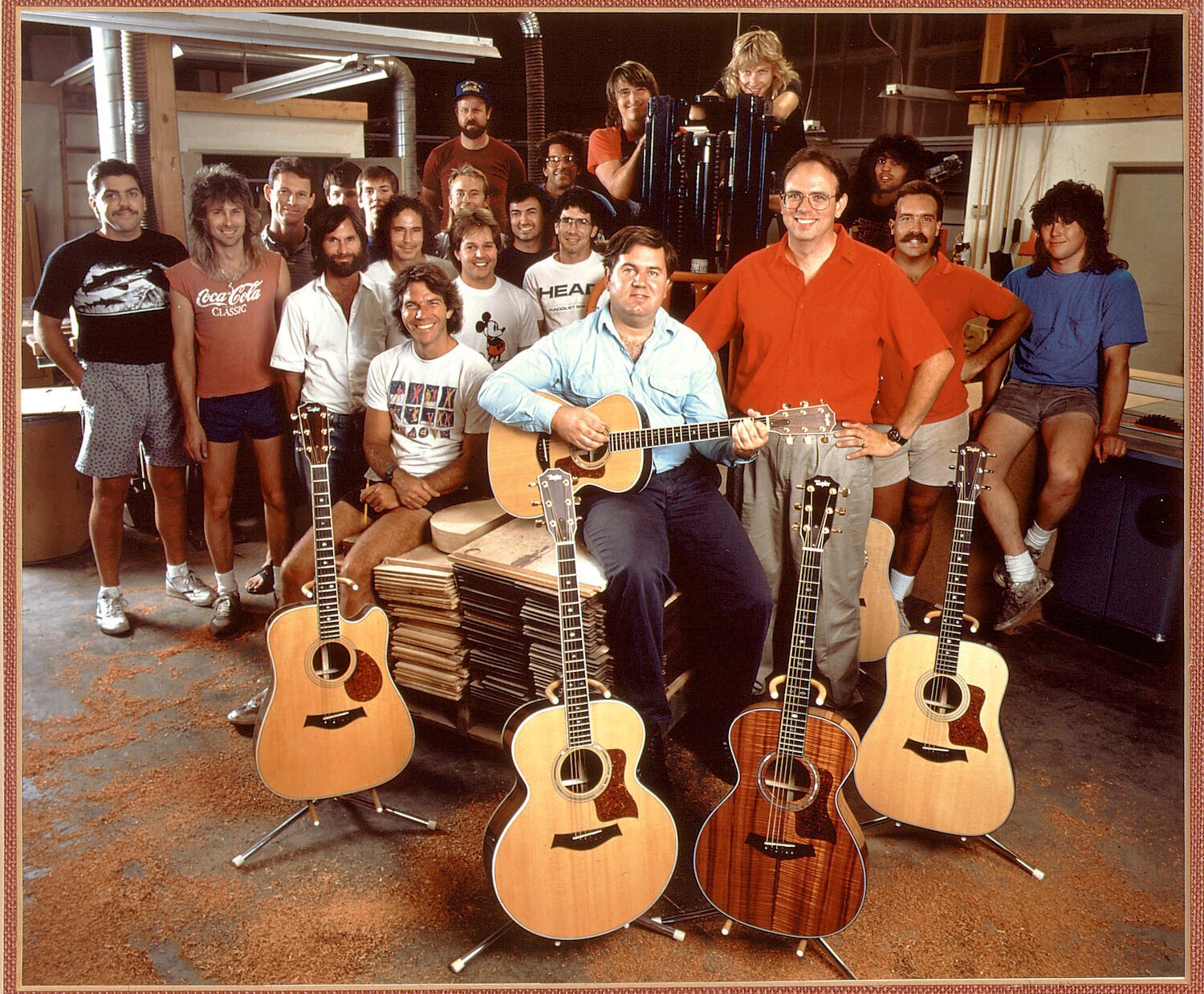
Taylor, who started making guitars at 16, only knew one thing when he began: He’d turn his passion into a career. Three years later, he partnered with Kurt Listug, who was 21 at the time. The pair purchased a small guitar shop in Lemon Grove and began building.
On October 15, 1974, they founded Westland Music Company, which became Taylor Guitars in 1976. This year, the company celebrates its 50th anniversary. Having grown sales worldwide to $125M, Taylor counts among its fans some of the music industry’s biggest artists: John Fogerty, Jewel, Zac Brown, Jason Mraz, Katy Perry, and Taylor Swift, to name a few.
But it took more than three decades before Taylor Guitars was a household name. In the ’80s, music was all about heavy metal, synth, and glam—acoustic guitars weren’t exactly flying off the shelves.
Photo Credit: Matt Furman
“We started selling in Los Angeles during the Laurel Canyon days. And, you know, music was changing a lot then,” Taylor says. “Acoustic guitars were always hard to play. The necks were too big, the strings were too high; it took a death grip to play them.”
But Taylor and Listug had faith in their product. They packed up their axes and headed to the 1985 National Association of Music Merchants (NAMM) show, an annual trade event that is the largest of its kind today.
There, they showcased a new line of guitars called the Artist Series, limited-edition models finished in colored stain. One of Taylor Guitars’ distributors challenged them to make a 12-string purple guitar for Prince, who had just released “Purple Rain,” garnering him global stardom.
Prince played his new 655 Artist Series guitar in a Live Aid video that year, though he requested no branding be shown at the time. Luckily, the industry found out who was behind the artist’s new instrument. The calls from musicians trickled in. The shift had begun.
Photo Credit: Matt Furman
Acoustic guitars began reclaiming their popularity. In 1989, MTV Unplugged started showcasing musicians playing acoustic versions of their songs. Riding this wave of renewed interest, Taylor Guitars ramped up production in the ’90s and early aughts. Taylor refined his guitar-making process and, in 1992, found the business a new home in El Cajon, where they remain today, occupying eight buildings.
Around that time, a young Taylor Swift purchased a Baby Taylor, which she used to write songs in the backseat of her car. Swift’s dad dropped off a cassette tape to Taylor’s office while the now-billionaire Swift was still flying under the radar, Taylor recalls.
“I know that every dad thinks his daughter’s special, but mine really is. Would you listen to that cassette?” Swift’s father said to Taylor. In 2008, Swift held her Fearless album release party at the factory.
Photo By Matt Furman
Two years later, the company hired Andy Powers—an Oceanside native who began crafting guitars at the age of 7 and previously ran an instrument-building business of his own—as Taylor’s design successor. Powers re-engineered the brand’s entire lineup of guitars, created new body styles, offered a more diverse range of musical sounds, and developed new guitar voicing architectures. Taylor Guitars sealed its name as one of the best in the industry.
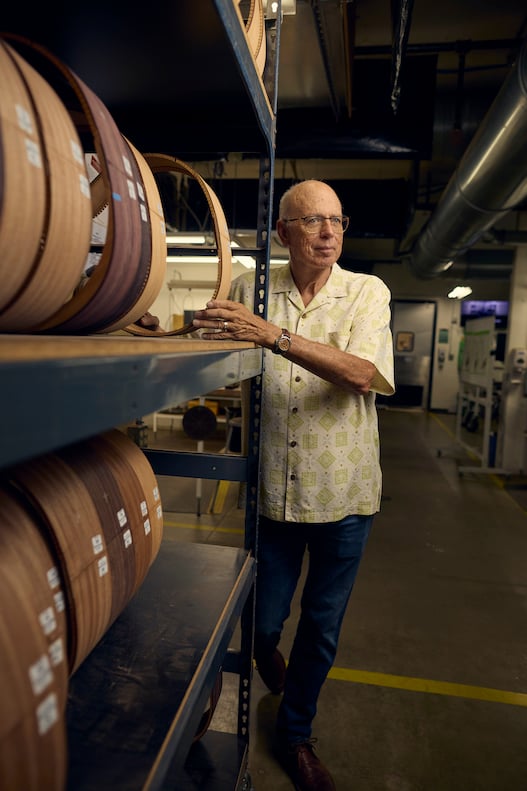
But today, as we tour the facilities, Taylor’s stories are less about the many musicians he’s worked with and more about the families his company—which became fully employee-owned in 2021—has been able to help along the way.
“[Wuhan] came to us from Cambodia,” says Taylor, who gave her a job shortly after she arrived in the states. “She worked for six months and got a raise. She was like, ‘I never thought that life could be like this.’”
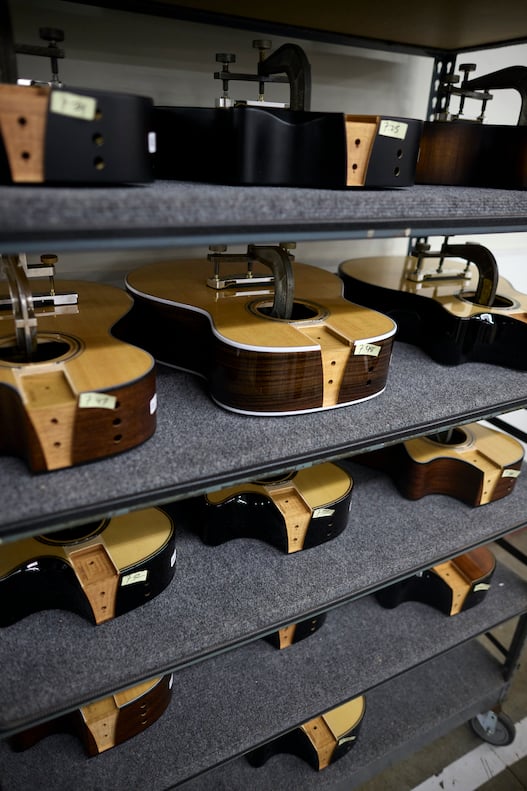
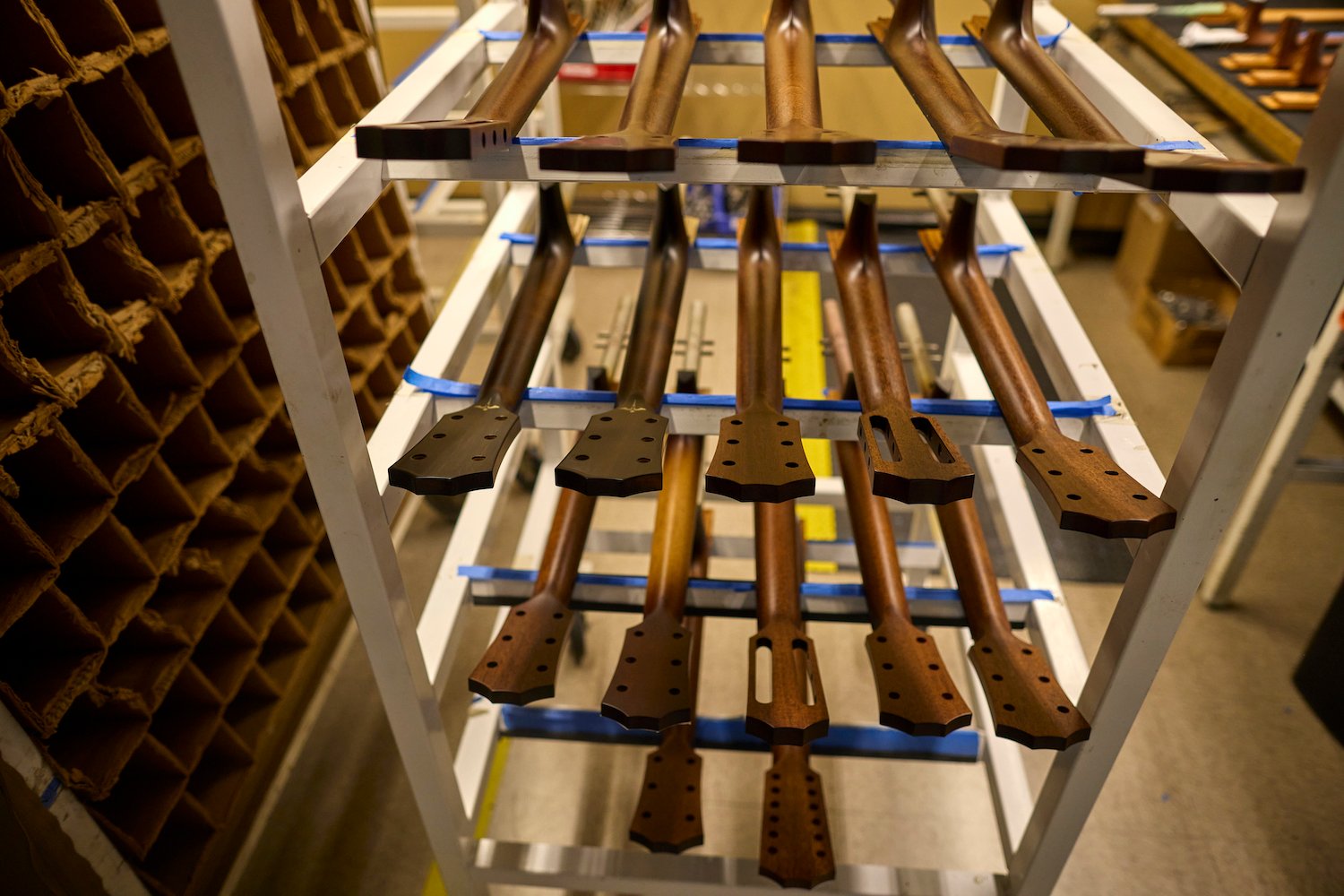
Walking along the factory floor, we’re surrounded by half-finished guitar bodies, tiny lasers, larger-than life robots buffing wood, and workers installing fretboards, applying back bracing, and cutting sound holes. Wherever we go, Taylor takes the time to say hello to his countless employees by name.
I ask him what he’s most proud of after half a century of crafting instruments. Even with his focus on his team, I still half-expect him to gesture toward a wall of various celebs playing his guitars. But his reply is swift: “That we were able to make this career out of guitar-making for all these people. That’s what I’m most pleased with.”
Nicolle Monico is an award-winning writer and the director of creative projects, digital editor for San Diego Magazine with more than 19 years of experience in media including Outside Run, JustLuxe and The San Francisco Chronicle.
Nestled between Lemon Grove, Valencia Park, Skyline, and the 94 freeway is the hilly, residential neighborhood of Encanto. Drive around, and you might feel transported to a small town. The chaparral-covered slopes are full of single-family homes and quiet, dead-end streets where locals raise chickens and goats in their backyards. Despite Encanto’s rural charm, the hilltop views of downtown remind you that you’re only 15 minutes away from the city center.
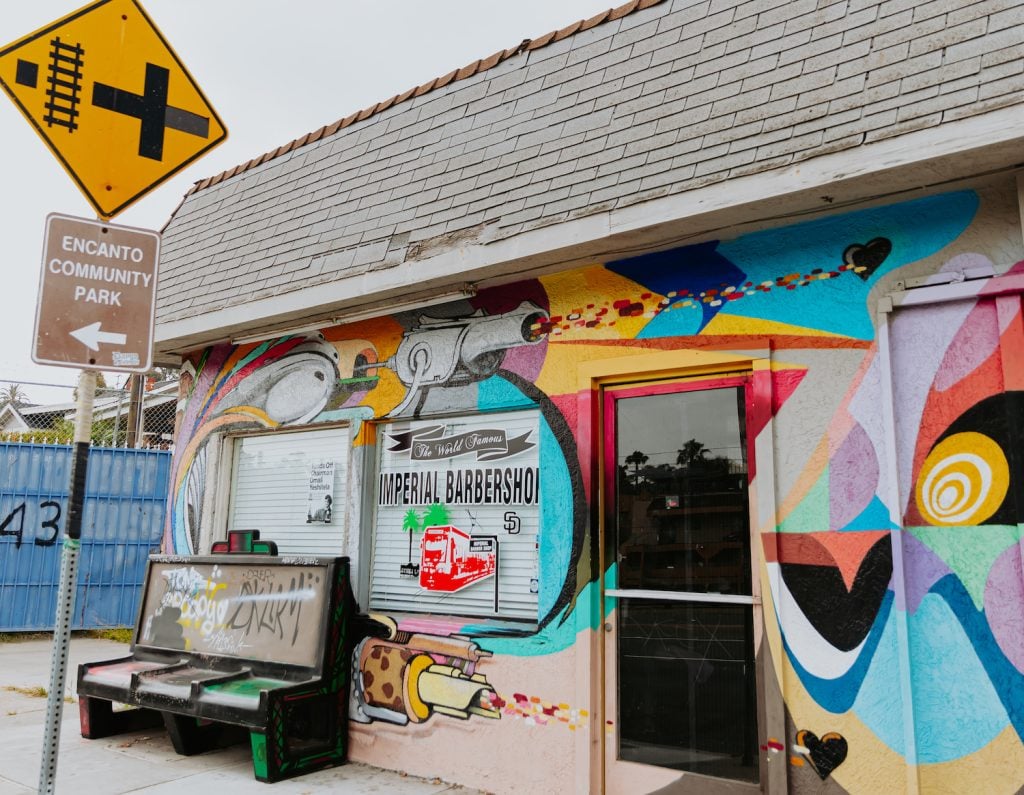
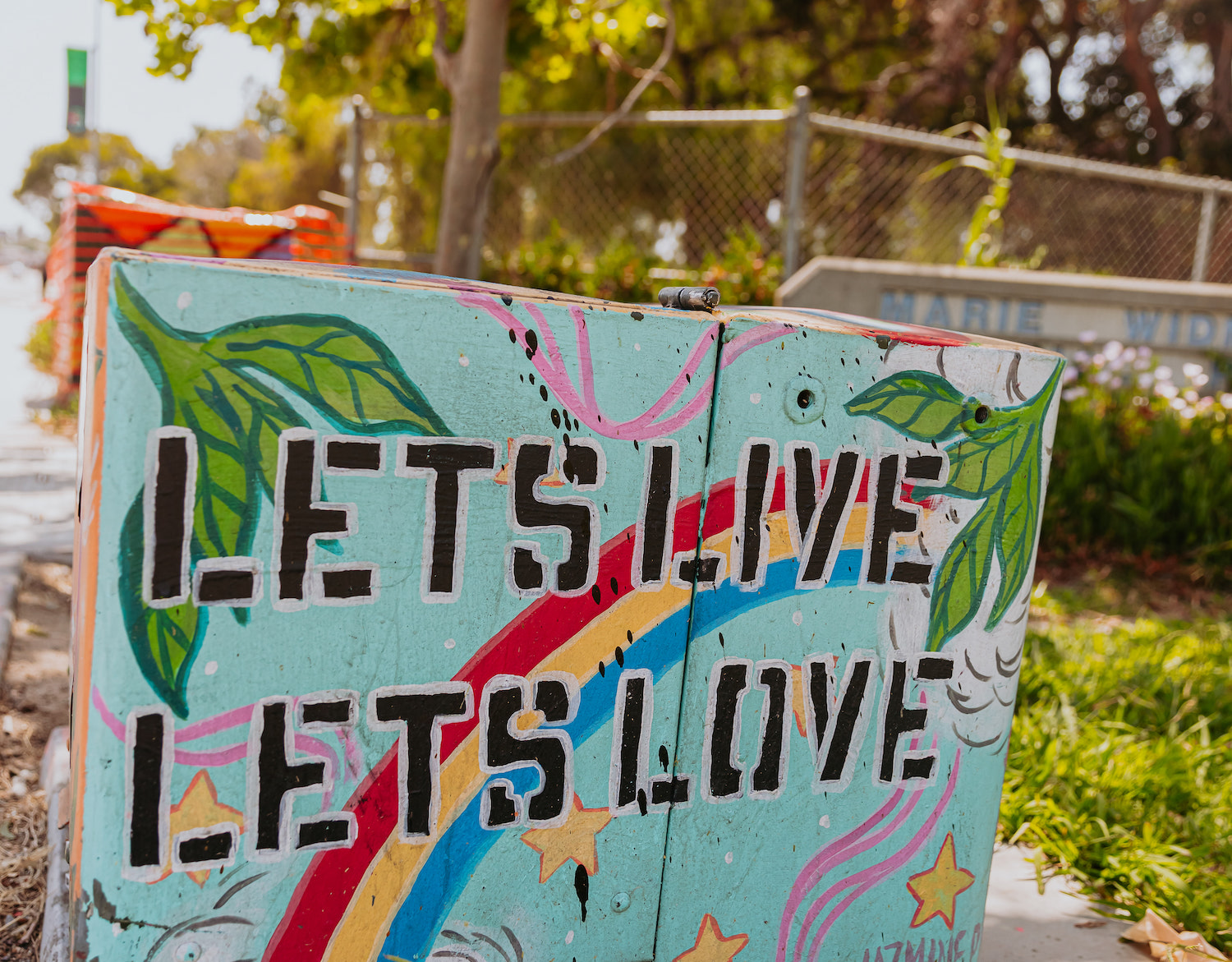
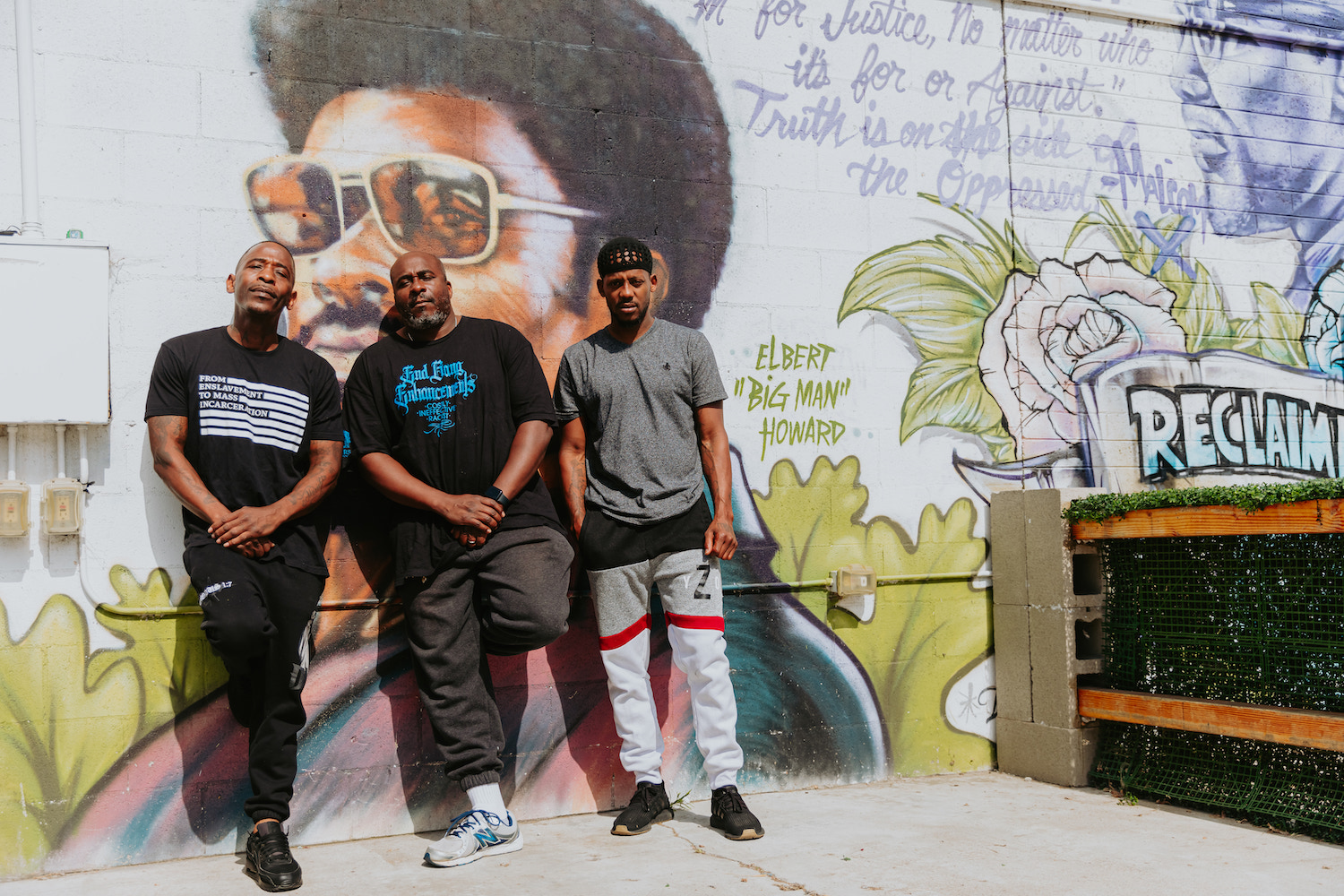
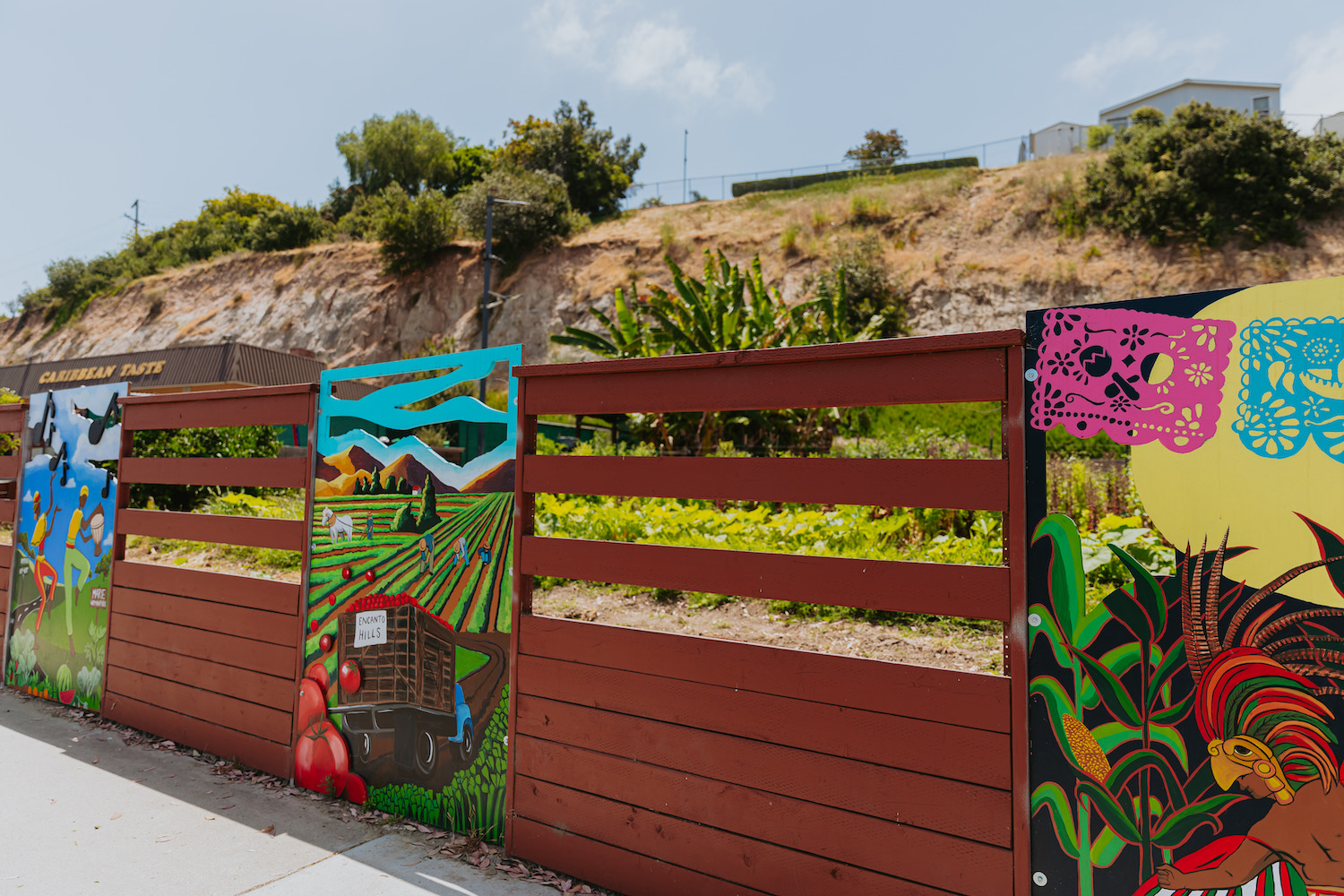
The housing market in the area is on the rise, with the median price of an Encanto home up 13 percent from last year to around $735,000. Beside the trolley tracks, two modern housing developments tower over Imperial Avenue, where nearly all of the neighborhood’s businesses are located. In 2022, the nine-block stretch of Imperial Avenue from 61st Street to 69th Street was designated the San Diego Black Arts & Culture District, part of a plan to revitalize the area and preserve its history. Vibrant murals decorate buildings and electrical boxes.
Photo Credit: Becka Vance
However, Encanto has faced recent challenges, as well. It was severely impacted by the extreme rainfall in January, which devastated homes and swept cars away in floodwaters. And the local economy is struggling: Interspersed between the taco shops, beauty parlors, and churches are boarded-up storefronts—evidence of what some call a “business desert.” But the area appears to be on the precipice of change.
Encanto is one of San Diego’s most culturally diverse neighborhoods—it was one of the first parts of San Diego where Black and Mexican families were allowed to buy homes, due to discriminatory housing laws in other areas of the city. Local resident David Peña says his grandfather was one of those buyers. He purchased a house in Encanto in 1960 after moving here from Tijuana, and the property has been passed down through the family. “It’s nice how there’s still a lot of land out here,” Peña says. “But it’s crazy how this area is starting to get gentrified.”
Courtesy of Black Lowriders Association of San Diego
Things to Do in Encanto, San Diego
Roll with the Black Lowriders Association
Black lowriding culture has been a part of Southeast San Diego since the 1950s, and the Encanto-based Black Lowriders Association of San Diego is keeping the tradition alive. Members meet in Marie Widman Memorial Park to showcase their classic cars and impressive hydraulics. But they aren’t just here to cruise Imperial—part of their mission statement is to be a positive influence in the area. They organize bike giveaways and charity drives. “I love those guys,” Baraka says. “They are giving back 100 percent to the community.”
Jamaican Bites at Caribbean Taste
Decorated with images of palm trees and sunsets, Caribbean Taste in Trolley Stop Plaza draws a constant stream of customers through its doors. It’s been there almost 20 years, Baraka says, and he knows the owner, Frank, by name. “The jerk chicken is the best I’ve had in San Diego,” he asserts, but he also recommends the goat stew, and, of course, the oxtail. “Caribbean Taste is bomb.”
Great Brisket at Coop’s West Texas BBQ
Although not within Encanto’s borders, this nearby BBQ joint in Lemon Grove is one of Baraka’s favorites. “The brisket is off the chain,” he says. Before he had a storefront, owner Brad Cooper would deliver directly to barber shops and beauty parlors in the area. “I’ve got a lot of respect for Brad,” Baraka adds. “Everybody does.” Coop’s only accepts cash, so come prepared.
Photo Credit: Becka Vance
Facts About Encanto
The area’s land was once owned by Abraham Klauber, whose daughter chose the name Encanto (Spanish for “enchantment”) when he was subdividing his property.
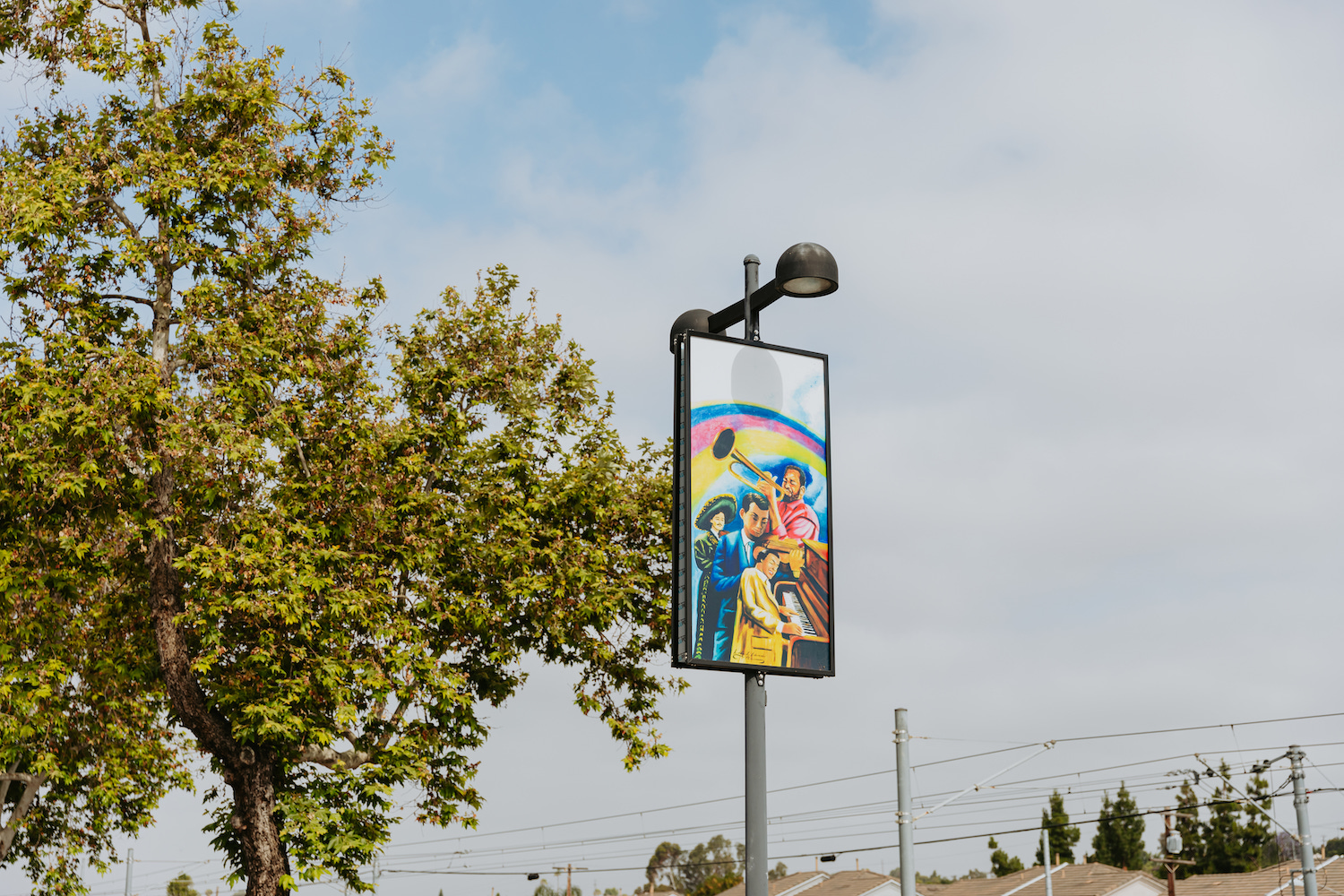
In 1993, the artist Eddie Edwards was commissioned to paint 24 panels depicting life in Encanto. You can still see them hanging from lamp posts on the median of Imperial Avenue.
In 1994, the Encanto Neighborhood Park was renamed Marie Widman Memorial Park to honor Marie Widman, who advocated for the creation of parks in Southeast San Diego and served as the secretary of the local branch of the NAACP.
Dennis Newsome, a capoeira master whose studio is on Imperial, was inducted into the USA Martial Arts Hall of Fame back in 2007 as a “Black Pioneer of African Martial Arts.” He also choreographed fight scenes for the movie Lethal Weapon.
The exterior of Imperial Avenue’s World Famous Imperial Barbershop is plastered with murals. The inside is steeped in history. Photos of Black leaders and organizers cover the walls. “That’s Marcus Garvey’s only living son,” says owner Tau Baraka, pointing to one of the frames. “All these people used to come to San Diego, to this area, all the time. I want to see that happen again.”
The barbershop has become a cornerstone of the neighborhood, collecting charity donations and hosting potlucks. As the demographics of the area change, Baraka says, he gets customers of all ethnicities in the shop. “And we give them love; we build friendships,” he continues. “We need to have people from all cultures come together.” Here’s where he likes to gather with the community in Encanto.
Photo Credit: Becka Vance
What’s Next for Encanto
In 2023, Encanto’s San Diego Black Arts & Culture District announced a partnership with the NewSchool of Architecture & Design in downtown to develop plans for the area’s revitalization. The district, overseen by The San Diego African American Museum of Fine Art, wants to prioritize the arts in these urban development plans by preserving historic buildings and creating spaces for youth creativity, while keeping a focus on the elements of the community that make up the Black experience.
The City of San Diego’s community plan for Encanto, which was adopted in 2015, includes improving the streets and sidewalks, restoring canyon trails, and bringing more businesses back to the area. The new apartment buildings by the trolley tracks are part of that plan—they’re intended to create higher density housing developments along the public transit corridor while maintaining the hillsides full of single-family homes that give the neighborhood its semi-rural character. Marie Widman Memorial Park is due for a facelift, as well. The city aims to enhance the park with ADA improvements and an upgraded “tot lot.” But these plans are still in the preliminary engineering phase, and funding has yet to be secured.
The changes aren’t limited to Imperial Avenue. In March, a 30,493-square-foot lot at 6353 Broadway sold for $1.35 million. The only building at the address is an abandoned church, but the property is permitted for the development of 11 accessory dwelling units (ADUs).
Baraka says that the gentrification in the area is a double-edged sword. “People with businesses may look at it as prosperous, but a lot of people who have been here for years are scared of the change,” he explains. But his vision for the future is optimistic. “I love the people, I know what [Encanto] can become,” he says. “It was once a vibrant cultural place—we can do that again.”
Today’s seniors are more connected than ever, with a renewed focus on retirement as a time of discovery and enriching experiences. The ultimate reward for a retirement well-earned is the wisdom to appreciate it all, and what better place to enjoy that unique perspective than Vi at La Jolla Village, in the heart of San Diego.
All-access pass to good living.
As a Continuing Care Retirement Community (CCRC), Vi provides access to a connected and fulfilling community while making it easy to plan for future care, should the need ever arise. With a care plan in place, residents enjoy greater financial predictability and long-term value, freeing them to focus on making the most out of retirement.
Resort-style amenities at the epicenter of a cultural hub like San Diego offer a retirement experience unlike any other. Paired with exceptional dining, spacious accommodations and dedicated staff, the best of maintenance-free living is all around. And with the introduction of Vista 360 Well-Being, Vi’s panoramic approach to wellness, there are more ways than ever for residents to access it all.
The harmony of mind, body and community.
Courtesy of Vi at La Jolla Village
The key to longevity is striking the right balance in maintaining an active lifestyle with an active mind in a fulfilling community. With newly renovated community spaces and restaurants, Vista brings a variety of opportunities for residents to elevate their well-being through Vi-exclusive “Signature Experiences.”
Vista Enrich takes an evidence-based approach to brain vitality, keeping residents at the forefront of cognitive health through exergaming (exercising + gaming), nutritional plans and informative workshops. It is also home to The Brain Vitality Studio, an innovative facility dedicated to cognitive fitness that has garnered national recognition.
Vista Discover invites residents into stimulating educational experiences, from chef-led cooking demos and guided wine tastings to lectures at local universities and intimate lectures following cultural outings.
While Vista Enrich focuses on brain health and Vista Discover engages residents intellectually, Vista Explore cultivates a sense of adventure through curated travel and local excursions. But broadening one’s horizons doesn’t always require a plane ticket. One recent event brought a taste of the world right to the community: an onsite “jazz cruise” featuring live music and global cuisine served at a series of themed “ports” all within the community’s own ballroom.
“Location, location, location”
Courtesy of Vi at La Jolla Village
One of the biggest perks of life at Vi at La Jolla Village is its proximity to just about everything. With easy access to transportation and local attractions just steps away, residents can explore and engage with their community at their own pace.
“There are trolley and bus stops within a 5-minute walk that will get you to the beach, UCSD Campus, medical appointments, downtown La Jolla or San Diego, et cetera. We rarely use our car,” said resident Tom Yager.
With the best of San Diego just steps away, residents don’t just live in the city, they live within reach of everything that makes it special.
The best of all worlds.
Courtesy of Vi at La Jolla Village
At Vi at La Jolla Village, retirement isn’t a chapter to slow down; it’s an invitation to discover more. Tailored community experiences created by Vista, paired with the vibrant pulse of San Diego just outside the door, mean that residents don’t have to choose between security and adventure, connection and independence. They get all of it.
This is what an all-access pass to good living looks like: the comforts of an elevated lifestyle, a community built for growth and a city made for discovery – all in one place.
To learn more about Vi at La Jolla Village or for details on available floor plans, visit ViatLaJollaVillage.com/SDM.
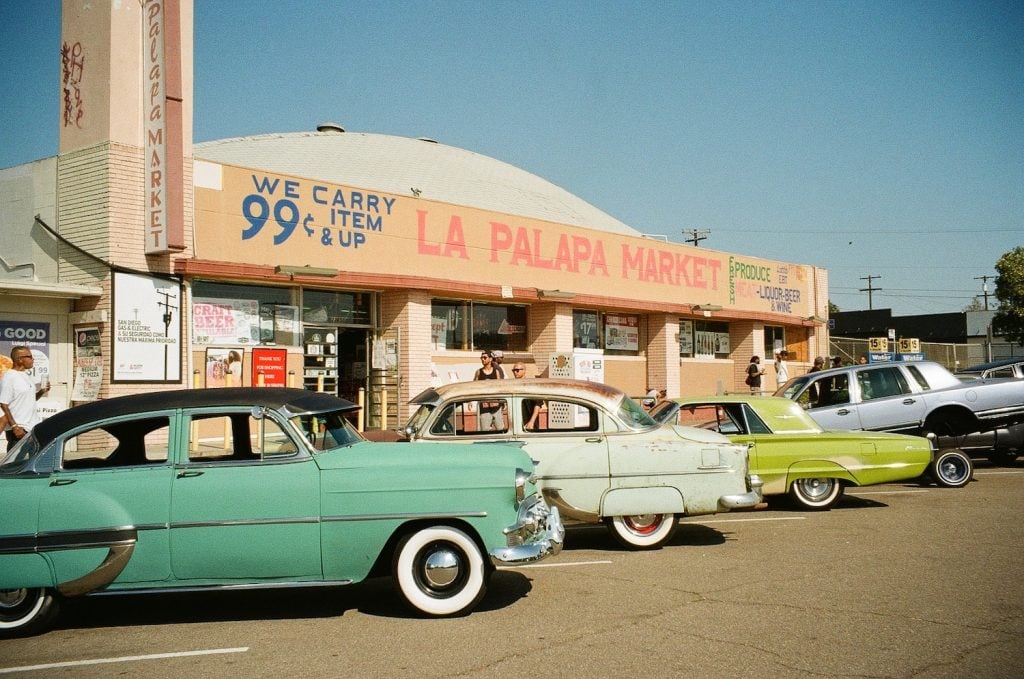
“La Palapa is on Reo Drive in the first neighborhood I grew up in, Paradise Hills. I remember going there with my mom. There were no major stores around, no Walmart,” Delgado says. “That block is stuck in time. Getting that lucky shot of all those cars lined up… it’s just the perfect encapsulation of the colors and the richness and everything I love.”
Delana Delgado, Paradise Hills, 2021
Delgado nabbed this shot of two South Bay women hanging out at a car show. “It’s their homie’s car, and they were just putting on eyelashes and talking,” she recalls. “They were so beautiful and cool.”
Delana Delgado, Tijuana & San Ysidro, 2023
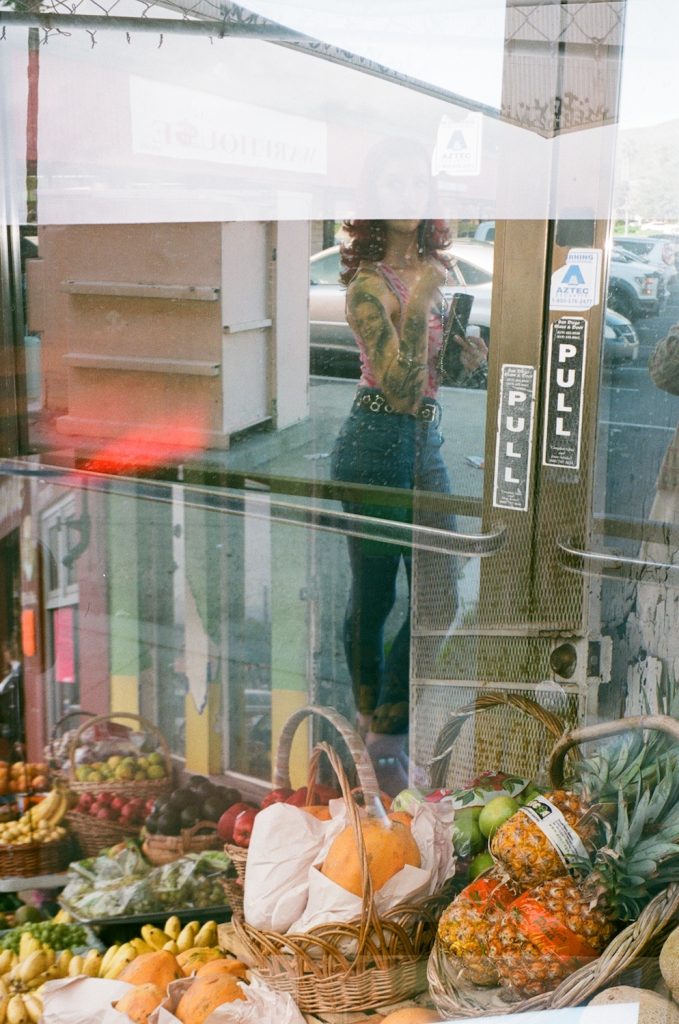
This image is an inadvertent double exposure. “The photo that I had taken originally, that’s in Tijuana. It’s a fruit market. It’s not supposed to be art, but the way that they decorate it every day, it has a personality, you know?” Delgado says.
“It happened to go over [a photo from] my project where I was documenting shopping culture [in South Bay]. My friend Angelica Grijalva, who is also an amazing photographer, was my model, and we were going to those mega discount stores in San Ysidro. These kinds of stores thrive here. They are affordable, accessible. They give us enough to feel stylish and have our personality shine through. These are the safe spaces for us to find our identities.
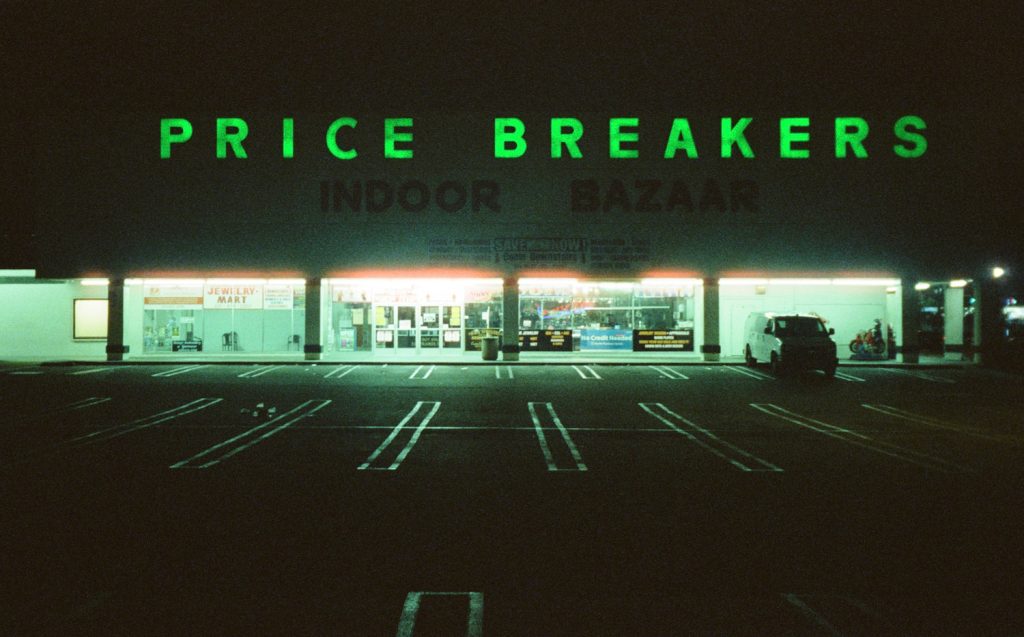
Serna-Rosas took this picture of National City’s iconic Price Breakers shopping center during a night drive through the area. “I chose a specific stock of film … that’s supposed to have more of a cinematography type of feel,” she recalls. “So I was thinking, If I made a movie about South Bay, what would I photograph?”
Delana Delgado, Chula Vista, 2023
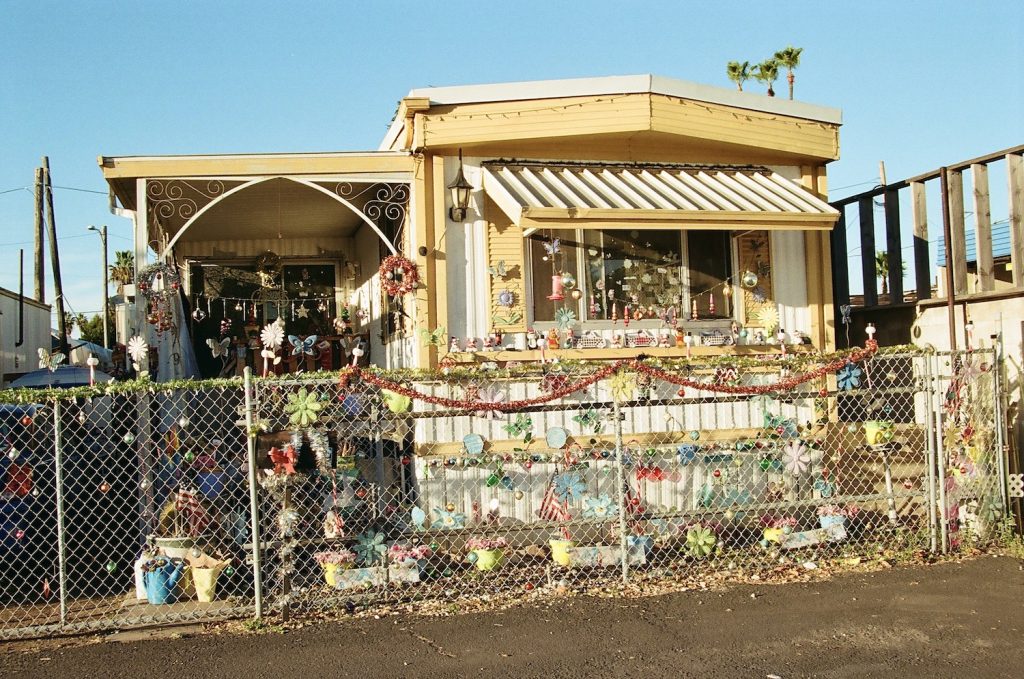
“In the whole coastal area of South Bay, it’s really common to have these trailer homes,” Delgado says. “This house was one of the first in the row. This style of excess, I guess it would be called tacky [by] the mainstream, but I think people that are from this area appreciate it.”
Delana Delgado, Chula Vista, 2023
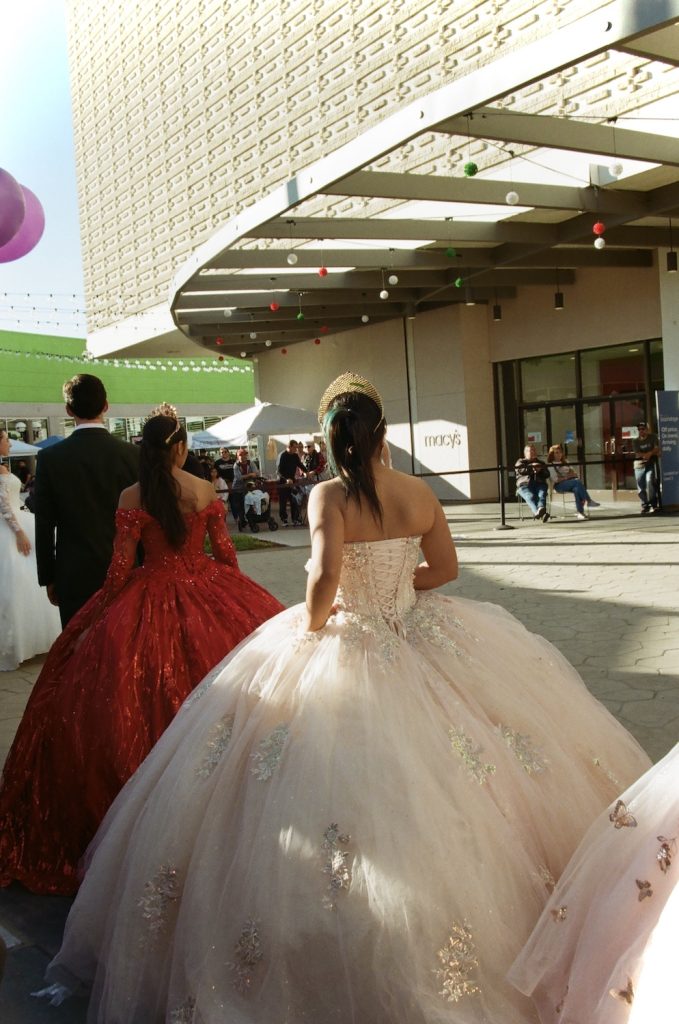
“Quinceañeras are such a huge celebration of the majority of young people’s lives in this area,” says Delgado, who snapped this photo at the Chula Vista Mall. “They were doing a fashion show on this day. There was a huge crowd. I love that these young girls are having fun and embracing their womanhood, their girlhood, and their culture.”
Delana Delgado, National City, 2021
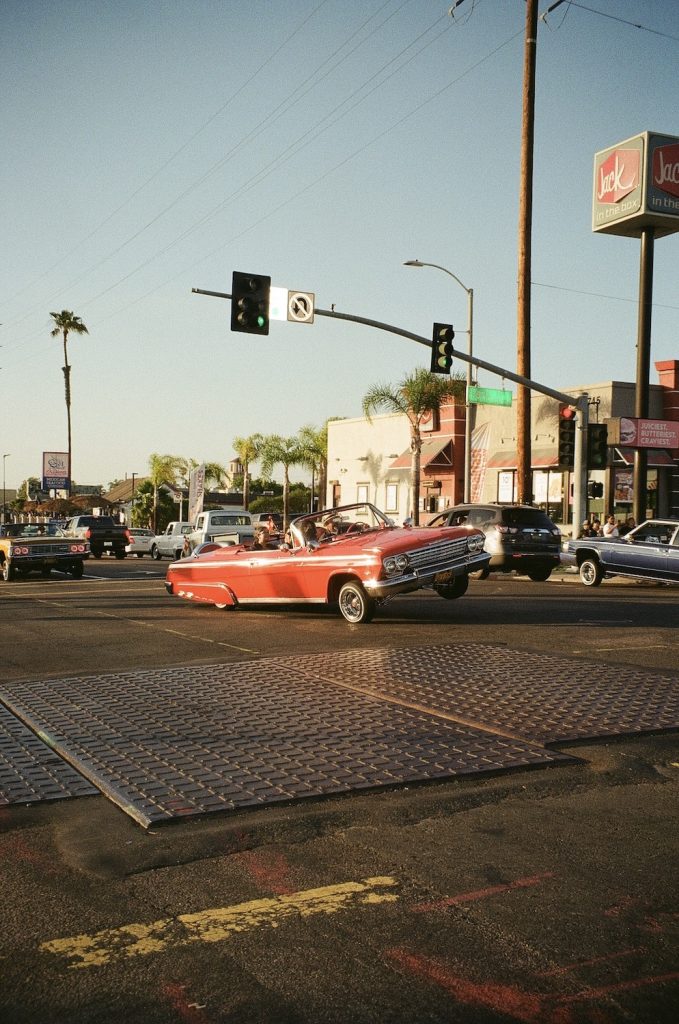
Delgado captured a car show at a popular intersection in National City, photographing this cherry-red lowrider and the group of friends inside. “You could tell they’ve been homies forever,” she says. “People from South Bay, they just love nostalgia. I think that the cool thing is that all generations are there. These guys, maybe in their 40s or 50s. Me and my friends, standing on the corner taking photos. Young kids walking around with their parents. Those moments are so special to me.”
Beth Demmon is an award-winning writer and podcaster whose work regularly appears in national outlets and San Diego Magazine. Her first book, The Beer Lover's Guide to Cider, is now available. Find out more on bethdemmon.com.
His love for South Bay is one he wishes more people shared. “It’s somewhere that’s constantly overlooked,” he says. “But South San Diego is the heart of San Diego.” Because the area offers so much, it was hard for Moon to pin down just a few ways to spend the day in the area—but he somehow managed.
To start a morning off right, Moon heads to Home Coffee in National City. The bright, airy space has plenty of room to work alone or chill with friends, making it a hub for the community that’s easily accessible off the 805 and 54 freeways. Plus, a set of outdoor swings are sure to bring out the kid in anyone. “I prefer it to Starbucks,” Moon laughs, recommending the Tahitian vanilla latte.
Courtesy of Exclusive Cuts Barber Shop
Moon says he’s had the same barber, Ray Muñoz, since high school. “Initially, he started cutting hair out of his garage then moved into shops,” he recalls. “I got to see his journey, and for him to live his dream is pretty cool.” Moon now visits him at Exclusive Cuts Barber Shop, the spot Muñoz owns in Imperial Beach.
After a fresh trim, Moon hits San Diego Kabob Shack in Chula Vista for a chicken kebab plate or Poke Etc. in National City for spicy mayo ahi tuna. As someone who focuses on eating healthy, Moon says both options hit the spot, especially after a workout.
Courtesy of Element Design Build
To unwind, Moon points to Thr3e Punk Ales in Chula Vista. “I don’t drink too much, honestly, but I have a great relationship with the owners,” he says. “If I do ever crave a drink every now and then, I prefer to go there.” Moon says he reaches for lighter beers like Mexican lagers, but pretty much anything coming out of the brewhouse promises to satisfy.
Beth Demmon is an award-winning writer and podcaster whose work regularly appears in national outlets and San Diego Magazine. Her first book, The Beer Lover's Guide to Cider, is now available. Find out more on bethdemmon.com.
NewBridge School is San Diego’s only school dedicated to the education of students with dyslexia and related learning profiles. For 30 years we have successfully served students with dyslexia, dysgraphia, dyscalculia, receptive/expressive language disorders, ADHD, executive functioning and memory deficits. Students transition successfully into academically rigorous high schools and colleges across the country. Why NewBridge? Training, training, training (plus intensive individualization, and comprehensive program design). All teachers are trained and retrained biennially in Orton-Gillingham, the only approach proven to remediate dyslexia based on Science of Reading research, and complete a year-long training program. Every aspect of our program is designed around our students’ learning styles and needs. Every class is taught by a highly-trained expert, and our Speech/Language and Occupational Therapy teams embed throughout the day. Our multisensory, multi-tiered math program has been developed in conjunction with sister schools and experts across the country. Don’t wait—early intervention is magic!